
Eleusine coracana, or finger millet, also known as ragi in India, Kodo in Nepal, is an annual herbaceous plant widely grown as a cereal crop in the arid and semiarid areas in Africa and Asia. It is a tetraploid and self-pollinating species that probably evolved from its wild relative Eleusine Africana.
Finger millet is native to the Ethiopian and Ugandan highlands.[rx] Interesting crop characteristics of finger millet are the ability to withstand cultivation at altitudes over 2000 m above sea level, its high drought tolerance, and the long storage time of the grains.[rx]
| Finger millet Quick Facts | |
|---|---|
| Name: | Finger millet |
| Scientific Name: | Eleusine coracana |
| Origin | Africa and Asia |
| Colors | White, red, brown or black (Seed) |
| Shapes | Nearly globose to somewhat flattened, smooth or tugose up to 2 mm in diameter (Seed) |
| Taste | Sweet, astringent, Acrid, bitter |
| Health benefits | Controls Diabetes, Reverts Skin Aging, Helps in Weight Loss, Battles Anemia, Relaxes the Body, Bone health, Anti-cancer potential, Helps Digestion, Increases Lactation, Reduces Cholesterol |
Finger Millet, also known as Ragi is considered important millet is grown extensively in numerous regions of India and Africa. Its scientific name is Eleusine coracana. It ranks sixth in production after wheat, rice, maize, sorghum, and bajra in India. It is an annual herbaceous plant that belongs to Eleusine Gaertn. (goosegrass) genus and Poaceae ⁄ Gramineae (Grass family). The plant is native to Africa, Asia, Ethiopian and Ugandan highlands. Interesting crop characteristics of finger millet are the ability to withstand cultivation at altitudes over 2000 m above sea level, its high drought tolerance, and the long storage time of the grains. Few of the popular common names of the plant are Coracan, Korean, Korakan, Raggee corn, finger millet, African finger millet, goosegrass, African millet, caravan millet, ragi, ragi millet, wild finger millet, rapoko grass, and Indian Millet. It is considered a tetraploid and self-pollinating species that probably progressed from its wild relative Eleusine Africana.
Plant Description
Finger Millet is a robust, free-tillering, tufted annual herbaceous plant that grows about 210-620 mm tall. The plant is found growing in marshy and water-logged places. The plant can grow on various soils, including highly weathered tropical lateritic soils. Additionally, it can tolerate soil salinity up to a certain extent. Its ability to bear water logging is limited, so good drainage of the soils and moderate water-holding capacity is optimal. It can tolerate moderately acidic soils (pH 5), but also moderately alkaline soils. The plant has an exceptionally strong root system that is shallow, branched, and fibrous and it is difficult to pull out of the ground by hand. The stem is slender, erect, or geniculately ascending, glabrous, and smooth, sometimes branching, rooting at lower nodes.
Leaves
Leaf-blades are shiny, strongly keeled, and difficult to break, and are 220-500 mm long and 6-10 mm wide. The leaves and culms are typically green in color. The culms and the leaf sheaths are prominently flattened. The ligule is a fringed membrane.
Flowers
The inflorescence is a whorl of 2-8 (normally 4-6), digitate, straight, or slightly curved spikes 12.5-15 cm long, about 1.3 cm broad. Branches are slender to robust, linear to oblong, up to 24 cm long, reflexed when slender or straight to incurved at the tip when robust, sometimes with secondary branches, each branch with 60–80 spikelets.
Spikelets
Spikelets are ovoid-ellipsoid, up to 10 mm long and 4 mm wide, mostly arranged in two rows along one side of the rachis, (3–12)-flowered. The lower glume is 1–4 mm long, with a 3-veined keel; the upper glume is 2–5 mm long, with a 3–7 veined keel. Florets are bisexual, but terminal ones are sometimes sterile or male, arranged in 2 opposite rows. Lemma is narrowly ovate, 2–5 mm long, palea slightly shorter than lemma; stamens 3. The ovary is superior, with 2 freestyles ending in plumose stigmas. The spikelets do not disarticulate (break apart at the joints) at maturity.
Seeds
Spikelets consist of grain with free, soft fruit walls, 4–7 per spikelet. They are nearly globose to somewhat flattened, smooth or rugose up to 2 mm in diameter. They may be white, red, brown or black; pericarp remaining distinct during development and at maturity appearing as a papery structure surrounding the seed.
History
Eleusine coracana is found in warm temperate regions of the world from India to Africa and also in Japan and Australia. It is present in archaeological records of early Indian and African agriculture that date back 5000 years, and it probably originated somewhere in the area that today is Uganda (National Research Council 1996). It is an important staple crop in many parts of India (mainly in the hilly region) and has been cultivated in eastern and southern Africa since the beginning of the Iron Age. Before maize was introduced it was the staple crop of the southern African region. The oldest record of it from an archaeological site is from Africa 8th century AD.
Health benefits of Finger Millet
Listed below are few of the popular health benefits of consuming finger millet
1. Controls Diabetes
Regular consumption of finger millet has been found to reduce the risk of Diabetes Mellitus because of its high content of dietary fibers and polyphenols. It has a higher amount of fiber compared to rice, wheat or any other grains. The high level of fibers in finger millet slows down the pace of digestion thus helping in lowering blood sugar levels. It also has a low glycemic index that makes it an ideal snack to prevent late-night food cravings and help to maintain blood sugar within a safe range.
2. Reverts Skin Aging
Finger millet not only helps in maintaining proper health and keeping diseases at bay but also works miracles for maintaining youth and vitality of skin by blocking premature aging. It can be used to be the most effective natural anti-aging drink. The vital amino acids Methionine and Lysine are present in the cereal which helps in the creation and maintenance of collagen. It is a substance that supports the skin tissues to make it supple and lively thus making it less prone to wrinkles and sagging.
3. Battles Anemia
Finger millet is an excellent source of natural iron and thus a boon for anemic patients and also for those with low hemoglobin levels. Once finger millet is allowed to sprout, the Vitamin C levels tend to increase and lead to easy absorption of iron into the bloodstream. For the optimum absorption of iron, you can consume it in the form of Dosa or Balls, with plenty of vegetables and a generous squeeze of lime or a bowl of tangy Sambar.
4. Bone health
Finger millet is a good source of calcium and helps join bones. It is defined as an excellent source of nutrition for growing children and aging people. Consumption of finger millet can help develop bones in growing children and maintain the bone strength of adults. It is also instrumental in keeping ailments like osteoporosis away and can also cut down the risk of fracture. It is good for providing strength and cooling effect to your body on summer days.
5. Anti-cancer potential
Finger millet is also rich in antioxidants, which have sort of become a byword in health books today. Antioxidants prevent excessive oxidation (how surprising!), which could otherwise cause cancer and ageing because of cell damage. Phenolic acids, flavonoids, and tannins present in finger millet seed coats have very effective antioxidant properties. In general, it has been shown that people on millet-based diets have lower frequencies of esophageal cancer than those on wheat or maize diets.
6. Helps Digestion
High level of dietary fiber in this cereal aids in proper digestion, normal bowel movement and prevents constipation. Insoluble fibers present in finger millet assist the movement of food through the intestines while the insoluble fibers retain water thus easing the passage of waste. Include it in your daily diet in order to protect your digestive system and avoid risks of constipation and other digestive disorders.
7. Increases Lactation
Finger millet is a great source of nutrition for new mothers that also help in improving hemoglobin levels. Lactating mothers are recommended to include finger millet in their daily diet in order to improve milk production. It also enriches the milk with all the essential minerals for the body like iron, calcium, and vital amino acids that is extremely important for the child as well as the mother.
8. Reduces Cholesterol
Finger millet has been proved to work wonders in bringing down blood cholesterol levels and is one of the best home remedies for heart health. It controls the cholesterol level by reducing plaque formation and preventing blockage of blood vessels thus cutting down the risk of stroke and other heart diseases. The key amino acids Lecithin and Methionine present in the cereal helps in lowering cholesterol by extracting and cutting out excess fat from the liver, and the amino acid Threonine prevents the formation of fat in the liver. Finger millet, in the unripe, green form can also help in controlling high blood pressure and hypertension.
9. Relaxes the Body
Regular consumption of Finger millet is extremely beneficial in dealing with conditions of anxiety, depression, and insomnia. The presence of antioxidants, mainly Tryptophan and amino acids, helps as they work as natural relaxants. As per a study conducted by Medindia in 2000, its consumption is also useful for migraines.
10. Helps in Weight Loss
The high amount of dietary fiber combine keeps the stomach full for longer and prevents unwanted cravings. This in turn leads to a minimized appetite and weight loss. “Finger millet flour lowers your blood sugar levels in the body by activating insulin. As mentioned previously, it is best consumed in the morning to make the most of its qualities and keep you full through the day.
Traditional uses and benefits of Finger millet
- Seed is astringent, tonic and cooling.
- It is used in the treatment of fevers, biliousness and hepatitis.
- The leaf juice has been given to women in childbirth, and the plant is reported to be diaphoretic, diuretic, and vermifuge.
- The plant is a folk remedy for treating leprosy, liver disease, measles, pleurisy, pneumonia, and smallpox.
- Finger Millet is useful in muscle repairing and formation of the bones.
- Finger millet is essential for maintaining skin health and the body’s metabolism.
- It delays digestion which controls the eating urge and keeps the stomach full for a long time.
- Finger Millet is a good source of calcium and helps to reduce the risk of Osteoporosis and Fracture.
- It is a good herbal remedy to prevent Diabetes. It regulates the blood glucose level in the body.
- It removes the excess fat from the liver and reduces cholesterol levels in the body.
- Consumption of Finger Millet gives iron to the body. This helps to treat Anemia.
- It provides a relaxing effect on the body, mind, and soul.
- It is an effective remedy to cure depression, anxiety, and insomnia.
- It is a healthy diet for lactating mothers. It increases the hemoglobin levels in women and improves milk production.
- Finger millet is used as a medicine for women at childbirth in northwest Vietnam.
- Regular consumption of finger millet is good for bone health and keeps diseases such as osteoporosis at bay and could reduce the risk of fracture.
- Finger millet is recommended for conditions of blood pressure, liver disorders, and asthma, and heart weakness.
- If consumed regularly, finger millet could help in keeping malnutrition, degenerative diseases, and premature aging at bay.
- Juice of a mixture of finger millet leaves and leaves of Plumbago zeylanica L. are taken as an internal remedy for leprosy in Southern Africa.
- Traditionally it is also used for prevention from cold, cough, and indigestion-related problems.
Ayurvedic health benefits of Finger millet
- Obesity: Mix Finger Millet flour to daily use flour in an equal proportion. Eat 2-4 bread, twice a day for a month.
- Diabetes: Prepare porridge of Finger Millet. Take it, once a day for two weeks.
- Night blindness: Take 5 to 6 Turkey Berry. Fry in Ghee. Have it with Finger Millet once a day for one month. (Attention: It may be taken again after a break of one month if needed.)
Culinary Uses
- Seeds are cooked and used as millet; the seed can be cooked whole or ground and used as flour.
- It is used in cakes, puddings, porridge, etc.
- Flour makes very fair unleavened bread if it is first soaked overnight in water.
- Flour is often used in making fermented foods.
- Finger millet is the main food grain for many peoples, especially in dry areas of India, Nepal, and Sri Lanka.
- Grain is higher in protein, fat, and minerals than rice, corn, or sorghum.
- When consumed as the food it provides a sustaining diet, mainly for people doing hard work.
- Grain may also be malted and flour of the malted grain is used as a nourishing food for infants and invalids.
- Finger millet is considered an especially wholesome food for diabetics.
- They are highly valued as a reserve food in times of famine.
- It is consumed by grinding the grains up for porridge or, as in Indonesia, eaten as a vegetable.
- Sometimes it is ground into flour and used for bread or various other baked products.
- Sprouted seeds are a nutritious and easily digested food that is recommended for infants and the elderly.
- In Ethiopia, a powerful distilled liquor called brake is made from finger millet.
- Finger millet is widely enjoyed as a popped grain in India.
- Flour is made into flatbreads, including thin, leavened dosa and thicker, unleavened roti.
- Finger millet is consumed and satva, pole, bhakri, ambil (a sour porridge), pappad are common preparations.
- Biscuits prepared with Finger millet flour are also available in some bakeries in Mumbai and Navi Mumbai areas.
- A type of flatbread is prepared using finger millet flour in the Northern districts of Karnataka.
- Finger millet malt called Hambali is consumed in the morning as breakfast in Telangana state.
- In Kerala, putu a traditional breakfast dish is usually made with rice powder with grated coconut and steamed in a cylindrical steamer. The preparation is also made with finger millet powder.
- In Nepal, a thick dough (ḍhĩḍo ढिंडो) made of millet flour is cooked and eaten by hand.
- Dough, on other hand, can be made into thick bread spread over a flat utensil and heating it.
- Fermented millet is used to make a beer chhaang (छ्याङ) and the mash is distilled to make liquor (rakśi रक्शी).
- Whole grain millet is fermented to make tongba (तोङवा).
- Because of its high nutritional content, its flour is recommended as a weaning food especially in the southern parts of India.
Recipes
Finger Millet Ladoo
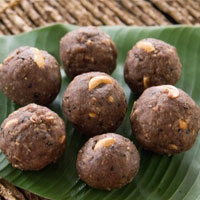
Ingredients
- Finger Millet flour: 1 cup
- Ghee: ½ cup
- Palm Sugar: ½ cup
- Grated Fresh Coconut: ¼ cup
- Black Sesame: 2 tbsp.
- Groundnuts: 2 tbsp.
- Almonds: 8-10
- Cardamom powder: ¼ tsp.
Directions
- In a shallow pan and low heat, dry roast black sesame, groundnuts, and grated fresh coconut separately. Keep them aside to cool.
- Remove the skin from the groundnuts.
- Add a tsp. of ghee to the pan and toast the almonds for a minute or two and keep them aside.
- Add the Finger millet flour to the pan along with 2-3 tbsp. of ghee and roast for 15-20 minutes. Add more ghee if needed.
- Add the roasted almonds, groundnuts, coconut, and black sesame. Keep stirring.
- Add the palm sugar and cardamom powder. Stir for another 2 minutes.
- Take off the heat and let it cool.
- Apply ghee onto your palm; take 3-4 tbsp. of the mixture and roll into a ladoo. Add more ghee if needed to make a firm, round ladoo.
Finger millet Halwa
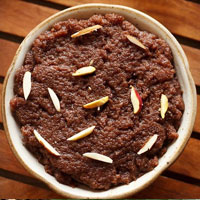
Ingredients
- Finger millet Flour: 1.5 cups
- Jaggery or Coconut Sugar or Sugar: 1.5 cups
- Coconut Oil or Ghee: 1/2 cup
- Cashews: 1/2 cup
- Cardamoms (powdered – seeds only): 4
- Water : 3 cups
- Coconut Oil or Ghee (to sauté the cashews): 1 tbsp.
Tip: Jaggery and coconut sugar go well with coconut oil; sugar goes well with ghee.
Directions
- Sauté the cashews in 1 tbsp. coconut oil or ghee. Keep aside.
- Mix Finger millet flour and water into a paste.
- Heat the mixture in a thick-bottomed vessel on medium heat, stirring constantly.
- After 3 minutes, mix in the powdered sugar and cardamom powder.
- Start adding the coconut oil, 2 tablespoons at a time. Keep mixing until all the oil (or ghee) is used.
- Lower the heat and keep stirring for another 3–4 minutes. The mixture will start coming together from a pasty consistency to a ball. Add the sautéed cashews.
- Cook for another 2–3 minutes, mixing constantly. As the mixture cooks, the oil will start to separate from the Finger millet ball. Drain the excess oil and transfer the halwa to a glass bowl. Serve warm.
Finger millet Pakoda
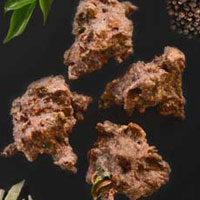
Ingredients
- Finger millet flour: 2 cups
- Roasted gram/chickpea flour: 1/2 cup
- Cabbage (shredded) 2 cups
- Capsicum/Bell pepper (chopped small): 1/2 cup
- Curry leaves: 1 tablespoon
- Coriander leaves: 1/4 cup
- Ginger: 1-inch piece
- Cashew pieces: 1/2 cup
- White sesame seeds: 1 tablespoon
- Black pepper powder: 1/2 teaspoon
- Groundnut/Peanut oil: 200ml
- Salt: 1 teaspoon
- Chat masala: 1/2 teaspoon
Directions
- Peel and mince the ginger. Coarsely chop the coriander and curry leaves. Mix the veggies and herbs – cabbage, capsicum, ginger, and coriander and curry leaves in a bowl.
- Mix the dry ingredients Finger millet flour, besan, cashew pieces, sesame seeds, salt, and black pepper powder/chili powder in a large mixing bowl.
- Heat the oil for frying. Add 2 tablespoons of this hot oil to the dry mix. Now add the vegetables to the dry ingredients and mix well. Add just enough water to form dough. Make bite-sized pakodas pieces and fry them in hot oil.
- Sprinkle with chat masala before serving.
Finger millet Cookies
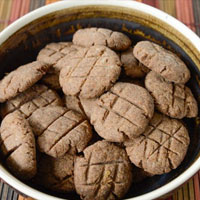
Ingredients
- Finger millet Flour: 2/3 cup
- Whole Wheat Flour: 2/3 cup
- Butter: ½ cup
- Brown Sugar: ½ cup
- Yogurt: 1 tbsp.
- Baking Powder: ¼ tsp.
- Freshly Ground Cardamom: 1 – 2 tsp.
- Vanilla Extract: 1 tsp.
Directions
- Mix the flours and spread them in a flat baking pan.
- Roast the flours in the pre-heated oven (180°C) shaking the baking pan every few minutes, until toasted (6-7 minutes.)
- Meanwhile, beat the butter and sugar until soft and creamy.
- Dissolve the baking powder in the yogurt, and then add the spices.
- Once the flour mixture is cooled, mix all the ingredients together to form a ball.
- Divide the ball into 4 equal pieces.
- From each piece form five balls.
- Place each one on a greased cookie sheet (baking pan) and use a fork to flatten each ball, making crossed lines on top.
- Bake for 12 minutes at 180°C.
- Let the cookies cool before removing.
- Keep in an airtight tin for one day to let the flavors develop.
Finger millet Soup
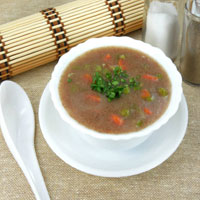
Ingredients
- Finger millet Flour- 3/4th Cup
- Tomatoes-1 Chopped
- Onion-1 Chopped
- Cauliflower– 1/2 Cup Chopped
- Green Peas-1/4th Cup
- Carrots – 1/4th Cup Chopped
- Garlic – 4 Cloves Chopped
- Water-1 Liter
- Milk– 2 Cups
- Sugar-1 Tablespoon
- Salt and Red Chili Powder-To taste
For Tempering:
- Coconut Oil-1 Tablespoon
- Cumin Seeds– 1 Tablespoon
- Bay Leaves– Few
Direction
- Take the water in a deep pan, bring to boil and add onion and garlic to it followed by carrots, cauliflower, green peas, tomatoes, salt, sugar and chili powder.
- Let it boil for 10 minutes.
- Heat the coconut oil in a pan and add the tempering ingredients to it, let it splutter and add it to the soup.
- Follow it up with the milk and Ragi flour dissolved in plain water.
- Let it simmer for 10 minutes, garnish with chopped coriander and serve hot.
Breakfast Muffin with Finger Millets
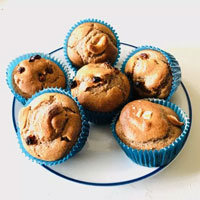
Ingredients
- Finger Millet Flour: 1/3 Cup
- Wheat Flour: 1/3 Cup
- All Purpose Flour: 1/3 Cup
- Baking Powder: 3/4 Teaspoon
- Baking Soda: 1/4 Teaspoon
- Sugar( white/Brown): 3/4 Cup
- Any Vegetable Oil: 1/3 Cup
- Plain Yogurt: 1/3 Cup
- Milk (preferably chilled): 1/3 Cup
- Vanilla Essence: 1/2 Teaspoon
- Salt: A pinch
Directions
- Sieve all the dry ingredients except sugar & keep it ready. If using white sugar, powder it and keep it ready.
- For the wet ingredients, beat curd, milk & sugar for around 7 minutes or until it gets frothy. Add oil after that and beat for around 2-3 minutes.
- Add the dry ingredients slowly with the wet ones and fold till no lumps are there. Spatula can do the trick.
- Fill the muffin tins or liners either 1/2 or 3/4th full. If using raisins fill it in between the batter to avoid getting burnt. If using nuts, you can use it on top.
- Preheat the oven to 180C/350f for 10 minutes & keep it ready. Once the muffin tray is filled with batter leave it inside for 20-25 minutes.
- After 25 minutes check with a fork if it is done.
Processing and Utilization
In India, usually finger millet is pulverized and the whole meal is utilized for the preparation of traditional foods, such as roti (unleavened flat breads), kazhi (finger millet balls), and kanji (thin porridge). In addition to these traditional foods, finger millet is also processed to prepare popped, malted, and fermented products. The nonconventional products from finger millet are papads, noodles, soup, etc. Recently, decorticated finger millet has been developed. A brief account of the nature of processing and the quality characteristics of the products are given below.
Milling
Finger millet kernel has a delicate endosperm with an intact seed coat, and due to these characteristic features, the grain cannot be polished and cooked in the grain or grit form similar to rice or other cereals. Hence the grain needs to be invariably pulverized or milled for preparation of flour. Generally, foods based on whole meal finger millet are darker, less attractive. In view of this and to overcome the drawbacks, efforts had been made to prepare refined or seed coat free flour similar to white flour or “maida” (refined wheat flour). Refined flour is comparatively whiter and fairly free from the seed coat matter (SCM). However, the refined flour may have higher glycemic responses (GRs) compared to the whole meal-based products owing to its predominant starch content and lower levels of dietary fiber.
Decortication
This is a very recent process developed for finger millet. The debranning or decortication methods followed for most of the cereals were not effective in the case of finger millet owing to the intactness of the seed coat with highly fragile endosperm. Therefore to decorticate, finger millet is hydro-thermally processed (hydration, steaming, and drying) to harden the soft endosperm to enable it to withstand the mechanical impact during decortication. Decorticated finger millet could be cooked as discrete grains similar to rice.
Malting
Among the various tropical cereals, finger millet has good malting characteristics. Generally barley is preferred among cereals for malting both in brewing and in food industries. However, attempts were made as early as 1939 to study the malting characteristics of finger millet, and Sastri reported the conditions of producing good quality malt. Malt flour is a good source of amylases and is therefore termed as “Amylase-rich food.” Malt flour is a substitute to maltodextrin and can be blended with milk and spray dried to prepare infant food.
Popping
This is one of the important processing techniques widely used to prepare ready-to-eat products, which involves high-temperature short time treatment (HTST) to finger millet using sand as heat transfer media, where finger millet starch gelatinizes and the endosperm bursts open. Popped finger millet possesses a highly desirable flavor and aroma. It is used as a snack after seasoning with spices and condiments. Popped finger millet flour is commonly known as hurihittu in the state of Karnataka, India. It is a whole-grain product rich in macronutrients, micronutrients, dietary fiber, and usually mixed with vegetable or milk protein sources such as popped engal gram, milk powder, and oil seeds, sweetened with jiggery or sugar to prepare ready-to-eat nutritious supplementary food.
Propagation and sowing
Propagation in finger millet farming is done mainly by seeds. In rainfed cropping, four sowing methods are used:
Broadcasting
Seeds are directly sown in the field. This is the common method because it is the easiest way and no special machinery is required. The organic weed management with this method is a problem, because it is difficult to distinguish between weed and crop.
Line Sowing
It is an improved sowing compared to broadcasting. Facilitates organic weed management due to better distinction of weed and crop. In this method, spacing of 22 cm to 30 cm between lines and 8 cm to 10 cm within lines should be maintained. Seeds should be sown about 3 cm deep in the soil.
Drilling in rows
Seeds are sown directly in the untreated soil by using a direct-seed drill. This method is used in conservation agriculture.
Transplanting the seedlings
Raise the seedlings in nursery beds and transplant to the main field. Leveling and watering of beds is required during transplanting. Seedlings with 4 weeks age should be transplanted in the field. For early Rabi and Kharif season, seedlings should be transplanted at 25 cm x 10 cm and for late Kharif season at 30 cm x 10 cm. planting should be done 3 cm depth in the soil.
Other facts
- Finger millet is also widely used as a food cereal, especially during times of scarcity.
- Seed can be stored without damage for as long as 50 years.
- Finger millet straw makes good fodder and contains up to 61% total digestible nutrients.
- Parts of the plant (the leaves and culms) are used to plait bracelets.
- Eleusine coracana is probably the most important weed in cultivated lands in southern Africa due to its exceptionally strong root system that make it difficult to control mechanically.
- It can be stored as grain for long periods without insecticides.
- Its use in holy Hindu practices is banded especially by upper castes in Nepal.
- Plants tiller strongly and root from the lower nodes; they provide excellent protection against soil erosion.
- Fiber from the plant is used in paper making.
- The straw is used for thatching and plaiting.
- Leaves are sometimes used to make a string.
- Finger millet straw is used as forage for cattle, sheep and goats.
- By-products of finger millet beer production are fed to chickens, pigs and other animals in Uganda.
- Finger millet straw is used for thatching and plaiting and in China for paper making.
How to Prepare Finger Millet
Millet can be found in a variety of different forms. Dried millet, ground millet, and puffed millet are all common styles that can be found in supermarkets and health food stores.
Dried millet is cooked similarly to rice or quinoa. Ground millet can be substituted for wheat flour, and puffed millet can be used in place of puffed rice. Finger millet is a healthy addition to most diets. Here are some ways to enjoy finger millet:
- Use ground finger millet instead of wheat flour in pancakes
- Use millet instead of rice in stuffed peppers
- Make millet bread
- Use millet instead of bread in stuffing
- Use puffed millet to make marshmallow squares
- Try millet pilaf
- Include millet in curry
Finger millet side effects
Finger millet may cause kidney stone
Consumption of Finger millet more than the general levels should be avoided as it is high in calcium and may increase the level of oxalic acid present in the body. Patient suffering from kidney stones or urinary calculi are recommended to avoid the use of finger millets as much as they can.
Finger millet may cause thyroid
Goitrogen is a component present in millet which can interfere with the production of the thyroid hormones and may prevent the iodine uptake by the thyroid gland. Therefore, patients suffering from thyroid should consult their doctor before consuming Finger millet.
Finger millet may cause goiter
Deficiency of iodine in the body may lead to goiter which is the development of an enlarged thyroid gland. Goiter may lead to symptoms like dry skin, anxiety, slow thinking, and depression. So, if you are suffering from goiter, it is best to avoid Finger millet.
References






