Filebeat and Elastic Observability

Patient Tools

Read, save, and share this guide

Use these quick tools to make this medical article easier to read, print, save, or share with a family member.

Patient Mode

Understand this article easily

Switch between simple English and easy Bangla patient notes. This is for education and does not replace a doctor consultation.

The ability to access the internal state of your application ecosystem is critical to optimizing your applications and the experience of your users. Elastic Cloud on Microsoft Azure gives you access to Elastic observability allowing you to monitor your infrastructure and see how every signal...

For severe symptoms, danger signs, pregnancy, child illness, or sudden worsening, seek urgent medical care.

বাংলা রোগী নোট এখনো যোগ করা হয়নি। পোস্ট এডিটরে “RX Bangla Patient Mode” বক্স থেকে সহজ বাংলা সারাংশ যোগ করুন।

এই তথ্য শিক্ষা ও সচেতনতার জন্য। এটি ডাক্তারি পরীক্ষা, রোগ নির্ণয় বা প্রেসক্রিপশনের বিকল্প নয়।

Article Summary

The ability to access the internal state of your application ecosystem is critical to optimizing your applications and the experience of your users. Elastic Cloud on Microsoft Azure gives you access to Elastic observability allowing you to monitor your infrastructure and see how every signal interrelates by utilizing a wide variety of resources that can be deployed in minutes. By using our Elasticsearch managed service...

Key Takeaways

  • This article explains Ingesting logs in simple medical language.
  • This article explains Download and install Filebeat in simple medical language.
  • This article explains Configure Filebeat in simple medical language.
  • This article explains Create an Event Hub in simple medical language.
Educational health guideWritten for patient understanding and clinical awareness.
Reviewed content workflowUse writer and reviewer profiles for stronger trust.
Emergency safety firstUrgent warning signs are highlighted below.

Seek urgent medical care if you notice

These warning signs are general safety guidance. Local emergency numbers and clinical judgment should always come first.

  • Severe symptoms, breathing difficulty, fainting, confusion, or rapidly worsening illness.
  • New weakness, severe pain, high fever, or symptoms after a serious injury.
  • Any symptom that feels urgent, unusual, or unsafe for the patient.
1

Emergency now

Use emergency care for severe, sudden, rapidly worsening, or life-threatening symptoms.

2

See a doctor

Book a professional medical evaluation if symptoms persist, worsen, recur often, affect daily activities, or occur in a high-risk patient.

3

Learn safely

Use this article to understand possible causes, tests, treatment options, prevention, and questions to ask your clinician.

Before reading

RX Patient Tools

Use these quick guides before reading the article, or return to them when you need help preparing questions for a doctor.

Start here Choose the right pathway for symptoms, reports, medicines, or urgent warning signs. Disease article roadmap Read this topic step by step: meaning, symptoms, warning signs, diagnosis, treatment, prevention, and follow-up. Treatment planner Prepare questions about treatment choices, benefits, risks, side effects, and follow-up. Family & caregiver guide Organize symptoms, reports, medicines, questions, and follow-up safely. Nutrition & diet guide Prepare food, hydration, supplement, and medicine-timing questions safely. Prevention guide Organize risk factors, protective habits, screening, and warning signs. Recovery guide Prepare a safe plan for activity, rehabilitation, warning signs, and follow-up.

The ability to access the internal state of your application ecosystem is critical to optimizing your applications and the experience of your users. Elastic Cloud on Microsoft Azure gives you access to Elastic observability allowing you to monitor your infrastructure and see how every signal interrelates by utilizing a wide variety of resources that can be deployed in minutes.

By using our Elasticsearch managed service on Azure, you get to take advantage of benefits such as one-click upgrades and much more, simplifying your IT operations. For more details go to Elastic Cloud. We help you bring your logs, metrics, and APM traces together at scale so you can easily assess the current state of your system. You can also use machine learning to detect anomalies and alerting to let you know what is awry, so you can quickly react to events happening in your environment.

The first step towards observability is usually log aggregation/analytics. With that being said, what is Filebeat? Well, Filebeat is a lightweight shipper for forwarding and centralizing log data and files. By installing Filebeat as an agent on your servers, you’re able to collect log events and forward them to either Elasticsearch or Logstash for indexing.

In a previous blog, Getting Started with Elastic Cloud on Microsoft Azure, we showed you how easy it is to get up and running with Elastic Cloud on Azure, taking full advantage of integrated billing. Check it out if you have not already spun up your deployment in anticipation of this blog. Signing up for the Elastic Cloud (Elasticsearch managed service) through the Azure Marketplace takes a short time and offers great flexibility, so try it out today.

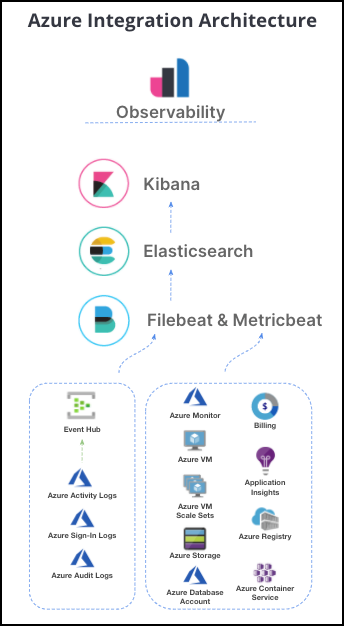
The intent here is to show you how easy it is to get Azure activity logs into Elasticsearch with Filebeat and visualize the aggregated data with Kibana. Kibana provides powerful out-of-the-box visualizations and dashboards to search and analyze your data, reducing the amount of time and effort to get started.

With the Elasticsearch managed service on Azure you can:

  • Monitor your activity, sign-in, and audit logs using the Filebeat Azure module with Event Hub
  • Analyze your compute, container, database storage, billing, and application insight metrics using the Metricbeat Azure module (covered in a future blog)

Analyze them all under one Elastic Observability solution!
Filebeat and Elastic Observability

Ingesting logs

Kibana, the visualization and administrative interface for the Elastic Stack, you’ll find instructions for the installation of Filebeat, which we’ll use to ingest the Azure activity, sign-in, and/or audit logs mentioned earlier.

Download and install Filebeat

Starting with deployment version 7.10*, from the Kibana Home page click Install Filebeat.

*If you have not yet upgraded your deployment to 7.10, take the time to visit our Upgrade versions documentation. The upgrades are designed to be automated while helping mitigate unplanned downtime.

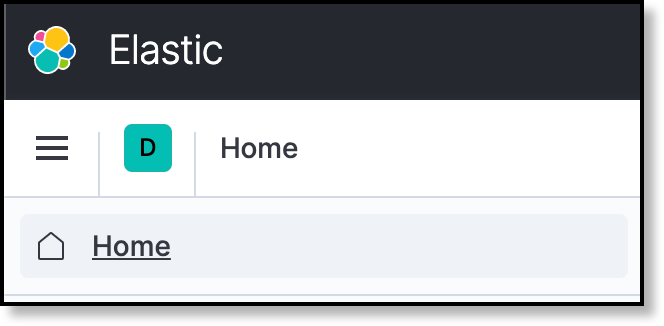
To begin with, click the navigation menu and then Home.
Filebeat and Elastic Observability

Click Add data.

Filebeat and Elastic Observability

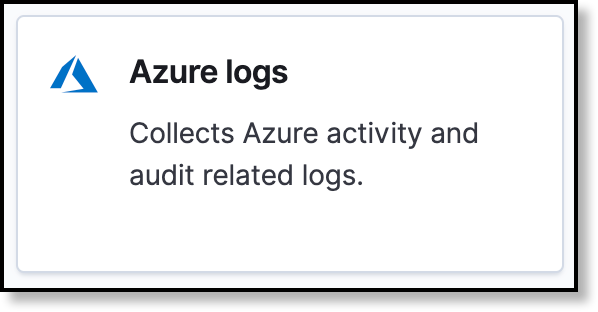
This has taken us to the Add data menu, where we will choose Azure logs.
Filebeat and Elastic Observability

Follow the steps to install Filebeat on your system. You can click the View exported fields and Learn more links to reference additional Filebeat information.

You can leave this page open for when you’ve completed the following configurations, as we will come back to it.

Configure Filebeat

Once Filebeat for your particular system has been downloaded and installed, you will need to modify the filebeat.yml file.

On a Linux system, this is typically found under /etc/filebeat.

The great thing about running through this process from Kibana, is that it will show you how to add the necessary entries to that file in order to communicate with your Elastic Cloud deployment – two variables cloud.id and cloud.auth that you must modify.

For those who have Elastic Stack running self-managed in their own Azure account, please refer to the Connect to Elastic Stack Filebeat Quick start guide.

Tip: Not sure where to get these values? Refer to our documentation for more details.

Create an Event Hub

This solution requires the use of Azure Event Hub for the activity, sign-in, and/or audit logs, as well as access to a storage blob. If you do not have such an event hub set up, please refer to the Create an Azure event hub quick start documentation for details. You will then need to refer to the instructions on sending activity logs to the event hub.

When creating an event hub, you can add it to an existing namespace if you already have one, or you can create an entirely new one, as we will demonstrate here.

From your Azure portal Event Hubs, click Add.

You must select a resource group, and then name it: for example, elastic-eventhub.

Choose the location and pricing tier and then proceed, adding optional tags if desired, then click Create.

Click Shared access policies.

Filebeat and Elastic Observability

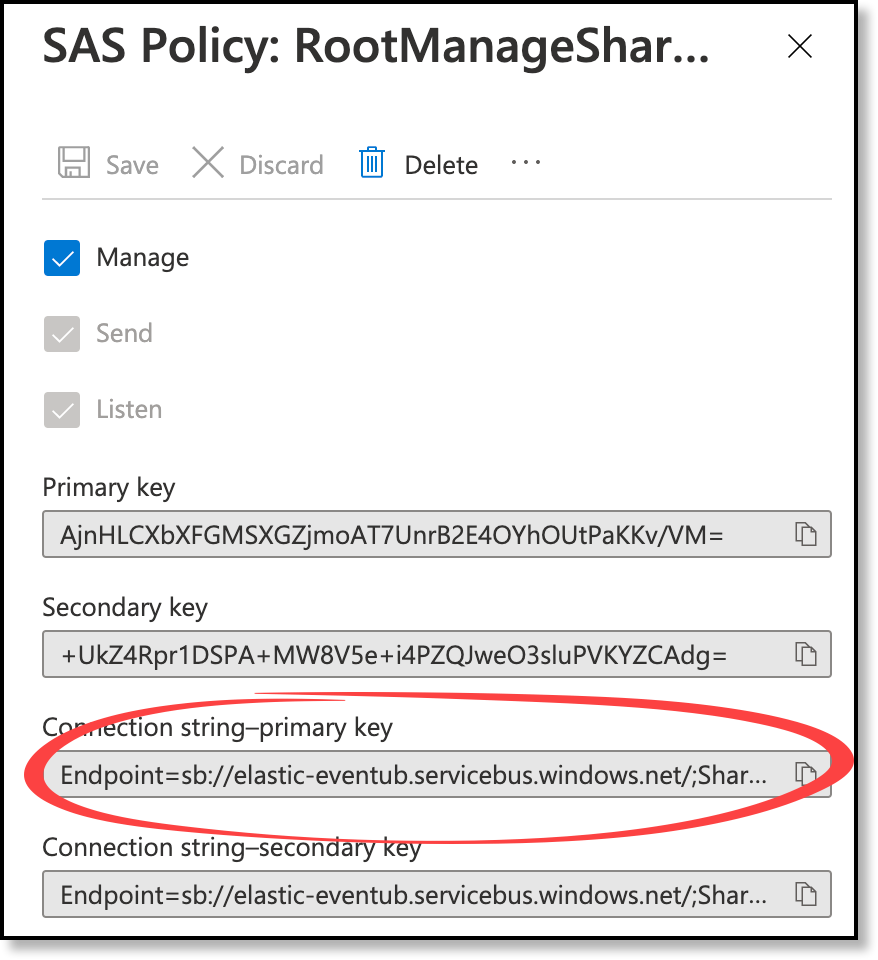
Click the default policy that appears, named RootManageSharedAccessKey and then click to copy the connection string. Paste that somewhere safe, as it will be used to configure the Filebeat Azure module configuration file, azure.yml.
Filebeat and Elastic Observability

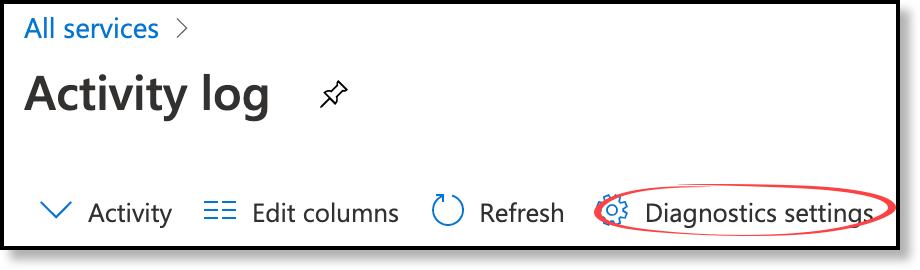
Navigate to Activity Logs and then click Diagnostics settings.
Filebeat and Elastic Observability

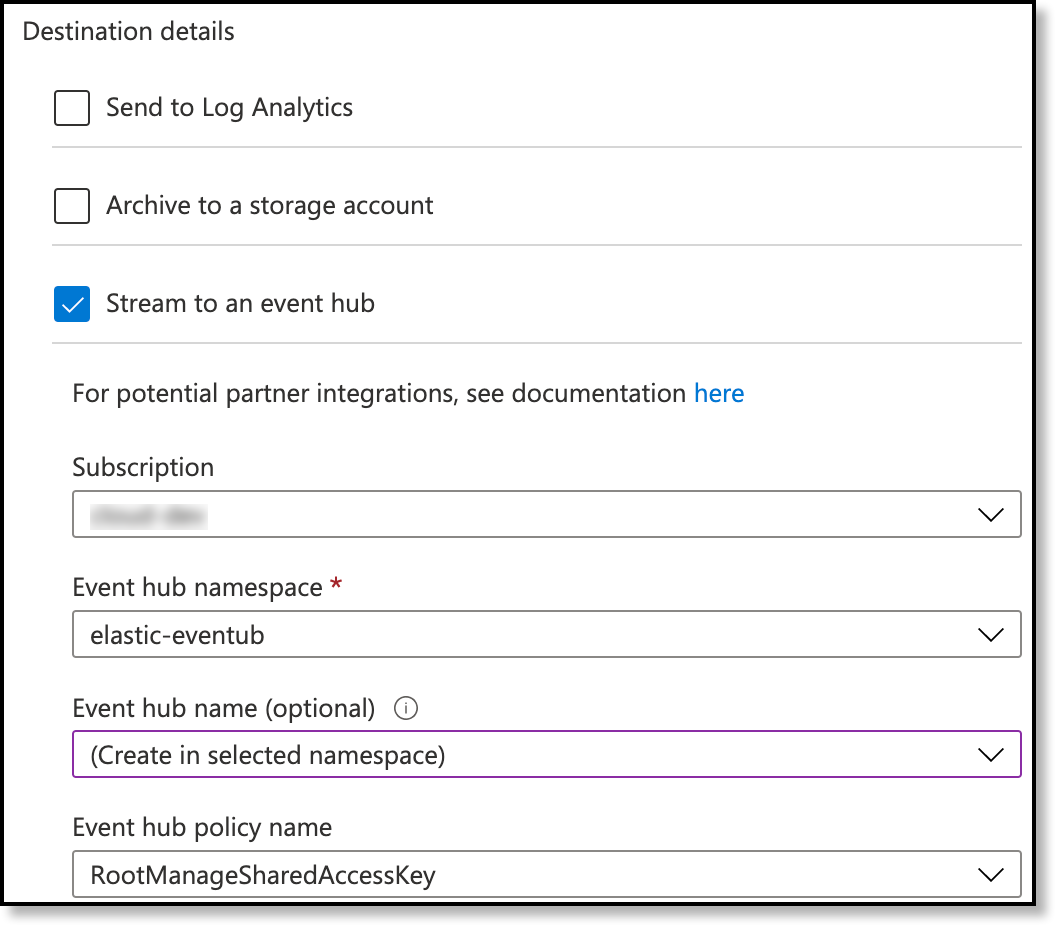
Click Add diagnostic setting and name it elastic-diag.

Select the logs of your choice, and then be sure to also select Stream to an event hub.

Choose the elastic-eventhub namespace, select the (Create in selected namespace) option for the event hub name, then select the RootManageShareAccessKey policy.

An event hub named insights-activity-logs will be created for you, appearing under the elastic-eventhub namespace, for which we will use in the azure.yml configuration file.
Filebeat and Elastic Observability

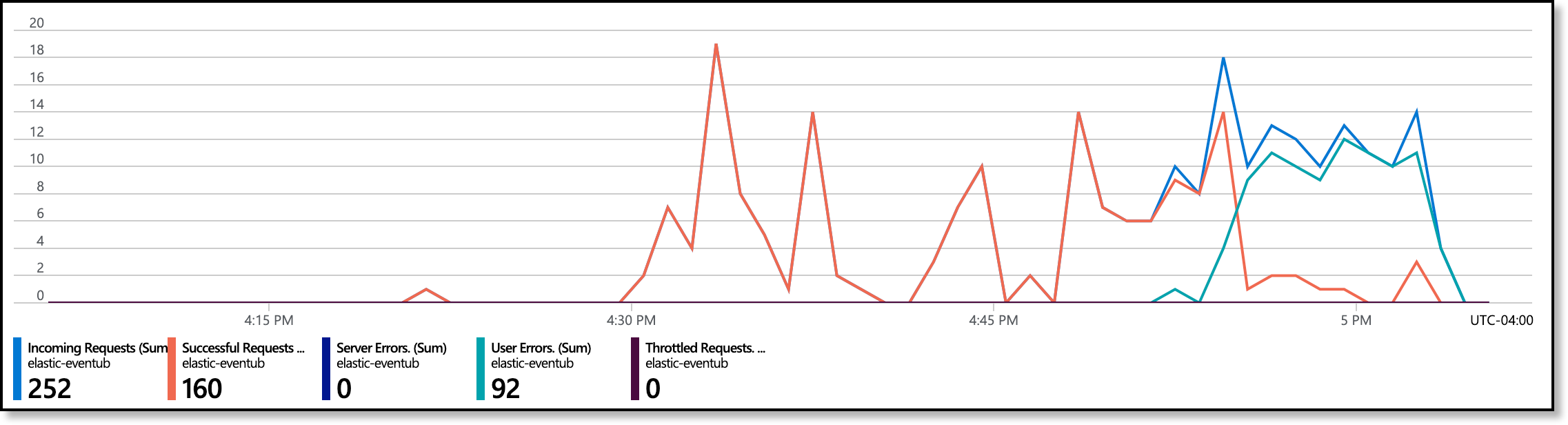
Click Save, then optionally navigate back to elastic-eventhub and to see the event metrics coming in.
Filebeat and Elastic Observability

Enable and configure the Azure module

Simply run one command which enables the Azure module. This is depicted from the page within Kibana, where we started, as step three.

This will ensure that the azure.yml configuration file becomes active, in order to communicate with your Azure subscription.

The command to enabled the module on Linux is:

sudo filebeat modules enable azure

To list all modules, displaying the enabled ones at the top, run:

sudo filebeat modules list

To disable the module, simply run:

sudo filebeat modules disable azure

You have to configure the azure.yml file after enabling it. On Linux this is typically found under the /etc/filebeat/modules.d directory. If a module is not enabled, there will be a .disabled extension in that directory as well.

Only the activitylogs is enabled by default within the Azure module, expressed by enabled: true.

In order to configure the auditlogs and signinlogs, you must be a global administrator or security administrator of your Azure account. You can refer to the instruction on how to export audit and sign-in logs to the event hub for more details. You can then enable them by changing the enabled: false to true.

Important: If you do not have sufficient permissions to configure the audit and sign-in logs, then those modules in the azure.yml file must remain disabled.

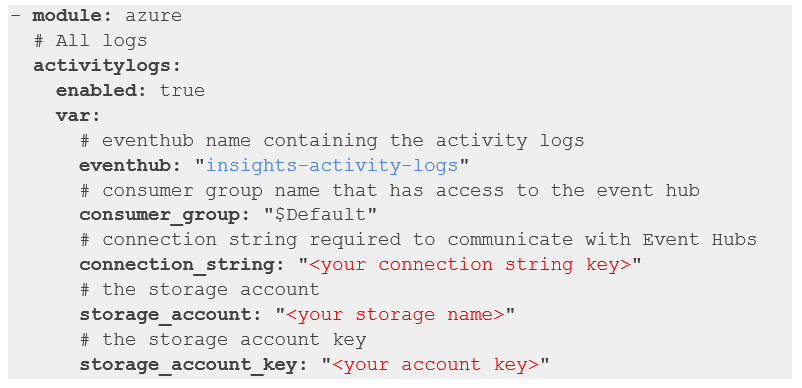
Time to add the information to azure.yml configuration file. All you need to add is the eventhub and connection_string entry details saved earlier, and then the storage account details.

Pro Tip: The storage account name and key needed can be found from the Storage account you want to utilize. Click Access keys. You can also refer to the Microsoft Azure Manage storage account access keys for help.

Your configuration file, assuming you are only configuring the activity logs, would be similar to the following.
Filebeat and Elastic Observability

For more information on this configuration, please refer to the module configuration documentation. The storage account/key is necessary in order to maintain the sequence of logs should the Filebeat service stop.

Pro tip: The eventhub is the instance name, rather than the Event Hub Namespace. Event Hub namespaces are the grouping container for multiple event hubs, and you are billed at the namespace level. Refer to the Event Hubs FAQ on Microsoft’s docs site for more details on this.

Setting up and starting Filebeat

Now that Filebeat, an event hub, and storage account have been configured it is time to kick things off by running setup and starting Filebeat.

Back on the Kibana page where we started downloading and configuring Filebeat, step four outlines the following commands which are needed at this point.

Because we used RPM to install Filebeat as a service, it must also be used to run it as a service. Depending on the type of system you are using, it could be slightly different. Please refer to the Filebeat and systemd for more details on running Filebeat as a service for DEB and RPM packages, or refer to the Filebeat quick start if running on a different platform.

First we need to run the setup step, which will load such things as predefined assets, indexes, and visualizations which are used by the predefined Azure Cloud dashboards. The setup command takes advantage of all the out-of-the-box integrations Elastic has with Azure, alleviating the need to develop your own, however, everything is fully customizable and there are many community developed integrations.

Run the setup:

sudo filebeat setup

You can also run the setup command with a -e for which will send logging data to the display, rather than to the syslog, useful to see what steps are being taken.

sudo filebeat setup -e

Then, start the service:

sudo service filebeat start

To check the status:

sudo service filebeat status

To stop Filebeat:

sudo service filebeat stop

To check and validate, with a running dialog, the service is running healthy:

sudo journalctl -u filebeat -f

Visualizing in Kibana

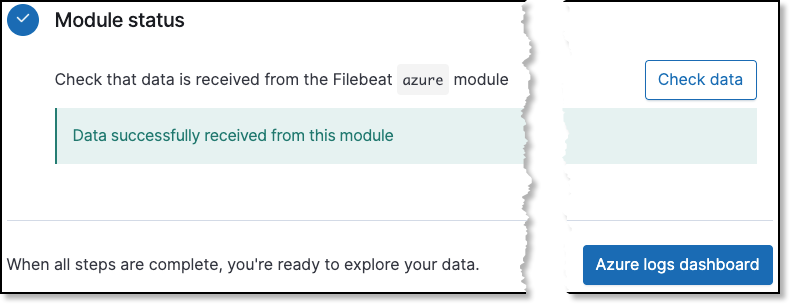
Now that we have the activity logs being collected by the event hub, and, in turn, being sent to Elasticsearch  by Filebeat, we can visualize them in Kibana.
Filebeat and Elastic Observability

Assuming you still have the page open where we initiated the Filebeat configuration, you should be able to Check data and then finally click Azure logs dashboard, which will take you right to the dashboard

Conclusion

We hope you found this to be a helpful resource for getting started with Filebeat, ingesting Azure activity logs with the use of an event hub.

The next step is to collect your Azure compute, container, database storage, billing, and application insight metrics using the Metricbeat Azure module.

Doctor visit helper

Prepare before seeing a doctor

A simple rural-patient checklist to help you explain symptoms clearly, ask better questions, and avoid unsafe self-treatment.

Safety note: This is not a prescription or diagnosis. For severe symptoms, pregnancy danger signs, children with serious illness, chest pain, breathing difficulty, stroke-like weakness, or major injury, seek urgent care.

Which doctor may help?

Start with a registered doctor or the nearest qualified health center.

What to tell the doctor

  • Write when the problem started and how it changed.
  • Bring old prescriptions, investigation reports, and current medicines.
  • Write allergies, pregnancy status, diabetes, kidney/liver disease, and major past illnesses.
  • Bring one family member if the patient is weak, elderly, confused, or a child.

Questions to ask

  • What is the most likely cause of my symptoms?
  • Which danger signs mean I should go to hospital quickly?
  • Which tests are necessary now, and which can wait?
  • How should I take medicines safely and what side effects should I watch for?
  • When should I come for follow-up?

Tests to discuss

  • Vital signs: temperature, pulse, blood pressure, oxygen saturation
  • Basic physical examination by a clinician
  • CBC, urine test, blood sugar, or imaging only when clinically needed

Avoid these mistakes

  • Do not use antibiotics, steroid tablets/injections, or strong painkillers without proper medical advice.
  • Do not hide pregnancy, kidney disease, ulcer, allergy, or blood thinner use.
  • Do not delay emergency care when danger signs are present.

Medicine safety and first-aid guide

This section is for patient education only. It does not replace a doctor, pharmacist, or emergency care.

Safe first steps

  • Rest, drink safe water, and observe symptoms carefully.
  • Keep a written note of symptoms, duration, temperature, medicines already taken, and allergy history.
  • Seek medical care quickly if symptoms are severe, worsening, or unusual for the patient.

OTC medicine safety

  • For mild pain or fever, ask a registered pharmacist or doctor before using common over-the-counter pain/fever medicines.
  • Do not combine multiple pain medicines without advice, especially if you have kidney disease, liver disease, stomach ulcer, asthma, pregnancy, or take blood thinners.
  • Do not give adult medicines to children unless a qualified clinician advises it.

Avoid these mistakes

  • Do not start antibiotics without a proper medical decision.
  • Do not use steroid tablets or injections casually for quick relief.
  • Do not delay emergency care because of home remedies.

Get urgent help if

  • Severe symptoms, confusion, fainting, breathing difficulty, chest pain, severe dehydration, or sudden weakness need urgent medical care.
Medicine names, dose, and timing must be decided by a qualified clinician or pharmacist after checking age, pregnancy, allergy, other diseases, and current medicines.

For rural patients and family caregivers

Patient health record and symptom diary

Write your symptoms, medicines already taken, test results, and questions before visiting a doctor. This note stays on your device unless you print or copy it.

Doctor to discuss: Doctor / qualified healthcare provider
Tests to discuss with doctor
  • Basic vital signs: temperature, pulse, blood pressure, oxygen level if needed
  • Relevant blood, urine, imaging, or specialist tests only after clinical assessment
Questions to ask
  • What is the most likely cause of my symptoms?
  • Which warning signs mean I should go to emergency care?
  • Which tests are really needed now?
  • Which medicines are safe for my age, pregnancy status, allergy, kidney/liver/stomach condition, and current medicines?

Emergency warning signs such as chest pain, severe breathing difficulty, sudden weakness, confusion, severe dehydration, major injury, or loss of bladder/bowel control need urgent medical care. Do not wait for online information.

Safe pathway to proper treatment

Care roadmap for: Filebeat and Elastic Observability

Use this simple roadmap to understand the next safe steps. It is educational and does not replace examination by a doctor.

Go to emergency care if you notice:
  • Severe or rapidly worsening symptoms
  • Breathing difficulty, chest pain, fainting, confusion, severe weakness, major injury, or severe dehydration
Doctor / service to discuss: Qualified healthcare provider; specialist depends on symptoms and examination.
  1. Step 1

    Check danger signs first

    If danger signs are present, seek emergency care and do not wait for online information.

  2. Step 2

    Record the symptom story

    Write when symptoms started, severity, medicines already taken, allergies, pregnancy status, and test results.

  3. Step 3

    Visit a qualified clinician

    A doctor, nurse, or qualified healthcare provider can examine you and decide which tests or treatment are needed.

  4. Step 4

    Do only useful tests

    Do tests after clinical assessment. Avoid unnecessary tests, random antibiotics, or repeated medicines without diagnosis.

  5. Step 5

    Follow up and return early if worse

    If symptoms worsen, new warning signs appear, or treatment is not helping, return for review quickly.

Rural patient practical tips
  • Take a written symptom diary and all previous prescriptions/test reports.
  • Do not hide medicines already taken, even herbal or over-the-counter medicines.
  • Ask which warning signs mean urgent referral to hospital.

This roadmap is for education. A real diagnosis and treatment plan requires history, examination, and clinical judgment.

RX Patient Help

Ask a health question safely

Write your symptom story. A health professional or site editor can review it before any answer is prepared. This box is not for emergency care.

Emergency first: Severe chest pain, breathing trouble, unconsciousness, stroke signs, severe injury, heavy bleeding, or rapidly worsening symptoms need urgent local medical care now.

Frequently Asked Questions

Is this article a replacement for a doctor?

No. It is educational content only. Patients should consult a qualified clinician for diagnosis and treatment.

When should I seek urgent care?

Seek urgent care for severe symptoms, rapidly worsening condition, breathing difficulty, severe pain, neurological changes, or any emergency warning sign.

References

Add references, clinical guidelines, textbooks, journal articles, or trusted medical sources here. You can edit this area from the RX Article Professional Blocks panel.