Sea lettuce, which has the scientific name of Ulva lactuca and belongs to the family Ulvaceae, is perennial green seaweed that has a broad, translucent frond, which are two cell layers thick. It is the type species of the genus Ulva. A synonym is U. fenestrata, referring to its “windowed” or “holed” appearance. Sea lettuce, which is sometimes called green laver, is usually grown in Europe, Central America, New Zealand, Africa, Asia, Australia, the Caribbean Islands, China, the Indian-Ocean Islands, the Pacific Islands, North America, and South America. However, the place where it grows most abundantly is in Irish shoreline. Apart from sea lettuce it is also known as Green Laver.
Sea Lettuce Facts
| Name | Sea lettuce |
|---|---|
| Scientific Name | Ulva lactuca |
| Native | Worldwide: Europe, North America (west and east coasts), Central America, Caribbean Islands, South America, Africa, Indian Ocean Islands, South-west Asia, China, Pacific Islands, Australia and New Zealand |
| Common Names | Sea lettuce, Green Laver |
| Name in Other Languages | Afrikaans: Seeslaai waskom Albanian: Marule deti Amharic: Yebahiri selat’a (የባህር ሰላጣ) Arabic: Khas albahr (خس البحر), ‘awlafa khsya (أولفا خسية) Armenian: Tsovayin gazar (ծովային գազար) Azerbaijani: dəniz kahı Basque: Itsas uraza Bengali: Sāmudrika lēṭusa (সামুদ্রিক লেটুস) Bulgarian: Morska salata (морска салата) Burmese: Painlaal s laat (ပင်လယ်ဆလတ်) Catalan: Enciam de mar Chinese: Hǎi shēngcài (海生菜), Shí chún (石蓴) Croatian: Morska salata Czech: Mořský salát, porost locikový Danish: Hav salat, Søsalat Dutch: Zeesla English: Sea lettuce, Green Laver Esperanto: Mara laktuko Estonian: Meresalat Filipino: Litsugas ng dagat Finnish: Merisalaatti French: Laitue de mer Galician: Leituga de mar Georgian: Zghvis salati (ზღვის სალათი) German: Seesalat, Meersalat, Meerlattich Greek: Maroúli (μαρούλι) Gujarati: Samudra lēṭīsa (સમુદ્ર લેટીસ) Hausa: Letas teku Hebrew: חסה ים Hindi: Samudree salad (समुद्री सलाद) Hungarian: Tengeri saláta Icelandic: Sjávarsalat, Maríusvunta Indonesian: Selada laut Irish: Leitís farraige, Glasán Italian: Lattuga di mare Japanese: Shīretasu (シーレタス), オオバアオサ (ô-baaosa) Javanese: Lettuce segara Kannada: Samudra leṭis (ಸಮುದ್ರ ಲೆಟಿಸ್) Kazakh: Teñiz salatı (теңіз салаты) Korean: Bada sangchu (바다 상추) Kurdish: Kasa marûyê Lao: Lettuce thale Latin: Mare lactucis agrestibus Latvian: Jūras salāti Lithuanian: Jūros salotos Macedonian: Morska zelena salata (морска зелена салата), morska marula (морска марула) Malagasy: Lettuce ranomasina Malay: Selada laut Malayalam: Kaṭal cīra (കടൽ ചീര) Maltese: Ħass tal-baħar Marathi: Samudra kōśimbirīsāṭhī vāparaṇyāta yēṇārā ēka pālā va tyācē jhāḍa (समुद्र कोशिंबिरीसाठी वापरण्यात येणारा एक पाला व त्याचे झाड) Mongolian: Dalain shantsainy urgamal (далайн шанцайны ургамал) Nepali: Samudree salad (समुद्री सलाद) Northern Sami: Ruonástuollá, Ruonáassi Norwegian: Sjøsalat Oriya: ସମୁଦ୍ର ଲେଥୁସ୍ | Pashto: D bahriin lyټywas (د بحري لیټیوس) Persian: کاهو دریایی Polish: Sałata morska, Ulwa sałatowa Portuguese: Alface do mar Punjabi: Samudarī salāda (ਸਮੁੰਦਰੀ ਸਲਾਦ) Romanian: Salata de mare Russian: Morskoy salat (морской салат), ul’va latuk (ульва латук), uliva salatnaya (ульва салатная) Scottish Gaelic: Glasag, Glasagan Serbian: Morska salata (морска салата) Sindhi: سامونڊي کاڻ Sinhala: Muhudu salāda koḷa (මුහුදු සලාද කොළ) Slovenian: Morska solata Spanish: Lechuga de mar Sudanese: Apu laut Swedish: Havssallad, Havssallat Tajik: Salat ʙahr (салат баҳр) Tamil: Kaṭal kīrai (கடல் கீரை) Telugu: Samudra pālakūra (సముద్ర పాలకూర) Thai: P̄hạk kād thale (ผักกาดทะเล) Turkish: Deniz marulu Ukrainian: Morsʹkyy salat (морський салат) Urdu: سمندری لیٹش Uzbek: Dengiz marul Vietnamese: Rau diếp Welsh: Letys môr Zulu: Ulethisi wolwandle |
| Plant Growth Habit | Thin flat green algae |
| Growing Climates | Grows attached to cobbles, boulders and bedrock in protected and semi-protected habitats, moderately exposed rocks and shores, in pools and shallow waters near the low watermark, brackish waters |
| Plant Size | May reach 45 cm or more in length, though generally much less, and up to 30 centimeters (12 in) across |
| Leaf | Sea lettuce has beautiful, translucent, light- to emerald-green leaves. The shape varies from circular to oval to long and narrow, with waved or ruffled margins |
| Plant Parts Used | Whole plant |
| Health benefits |
|
| Traditional Uses |
|
| Other Facts |
|
Sea Lettuce Scientific Classification
Scientific Name: Ulva lactuca
| Rank | Scientific Name & (Common Name) |
|---|---|
| Kingdom | Plantae (Plants) |
| Subkingdom | Viridiplantae (green plants) |
| Infrakingdom | Chlorophyta (green algae) |
| Superdivision | |
| Division | Chlorophyta (green algae, algues vertes) |
| Sub Division | Chlorophytina |
| Class | Ulvophyceae |
| Subclass | |
| Super Order | |
| Order | Ulvales |
| Family | Ulvaceae |
| Genus | Ulva Linnaeus, 1753 |
| Species | Ulva lactuca Linnaeus, 1753 |
| Variety |
|
| Synonyms |
|
Plant Description
Sea Lettuce is a thin flat green algae that normally may reach 45 cm or more in length, though generally much less, and up to 30 centimeters (12 in) across. The plant is found growing attached to cobbles, boulders and bedrock in protected and semi-protected habitats, moderately exposed rocks and shores, in pools and shallow waters near the low watermark, brackish waters and other surfaces using a small holdfast or living in rock pools if it has become detatched. The detatched fronds continue to grow and can create large floating colonies. It thrives in brackish waters, particularly in waters with organic enrichment.
The plant composed of lobed, ruffle-edged leaves that are coarse and sheet-like and resemble a leaf of lettuce. The leaves may appear flat, thin, broad, and often rounded or oval. Its leaves are often perforated with holes of various sizes. Almost no stalk exists at the point of attachment, and no true roots are present. When dried by the sun, its color can range from white to black. Plants tend to be pale green when young, bright green when mature and dark green when old. The chloroplast is cup-shaped in some references but as a parietal plate in others with one to three pyrenoids. There are other species of Ulva that are similar and not always easy to differentiate.
Health Benefits of Sea Lettuce
Seaweeds, including sea lettuce, are good sources of iodine which helps stimulate and maintain the proper functioning of the thyroid gland. Sea lettuce also contains high amounts of protein and iron. People who eat sea vegetables can enjoy the following health benefits:
1. Prevent Coronary Heart
Sea lettuce which is already popular in Japan has been confirmed that the population in Okinawa, Japan has a smaller coronary heart diseases risk up to 82 percent when compared with Americans. It is because the people in Japan frequently consume the sea lettuce in their daily life.
2. Bone Health
100 grams of sea lettuce provide about 490 milligrams of calcium and 3200 milligrams of magnesium. While everyone knows that calcium is good for our bones and teeth, most people don’t realize that we also need magnesium to help us absorb it. Since sea lettuce is rich in both minerals, it is an ideal food for building bones and preventing osteoporosis.
3. Eye Health
Eyes health is very important to be maintained because the eyes just like as our windows to see the world. In order to keep your eyes healthy, consuming the sea lettuce is recommended because sea lettuce is high in beta-carotene content. It is very needed to maintain eye health as well as a source of very high antioxidants.
4. Regulate Blood Sugar Levels
Sea lettuce leaves are very good in sugar content, because of its low sugar content. This is certainly very useful; due to the high sugar content can harm health. If these diabetics consume the lettuce, there has not to worry about the sugar content. Lettuce leaves have a low sugar content and safe for consumption even in large quantities though.
5. Performs Antioxidant Activity
Cultivated Sea lettuce is stated to be a multi-organ protector by enhancing antioxidant defense system. It is found to have anti-inflammatory and anti-tumoral properties which may help in cancer prevention and detoxification.
6. Prevent Anemia
Studies have shown the importance of having adequate amounts of iron in your body. Iron-fortified foods are counted among the best sources of iron. Sea lettuce is a natural source of iron (14 mg/100 g) and adding this food to your diet may help prevent iron deficiency.
7. Prevent Stroke
Research has shown that people, who consume foliate in their diet, have a lower chance of developing a stroke. Consuming 2s to 3 servings of sea lettuce will provide the amount of folate required by the body, so it can reduce the risk of stroke.
8. Helps to lose weight
For those who want to lose weight or are in the process of diet program, you may try to consume the sea lettuce. Consuming sea lettuce is much recommended for weight loss because 100 grams of sea lettuce consists of 130 calories, high fiber, and low fat which may help to lose your weight as soon as possible.
9. Regulate Cholesterol Levels
Being overweight or obesity tends to raise your LDL cholesterol level (bad cholesterol) and reduce your HDL level (good cholesterol). Research study had shown that oral administration of Ulva lactuca extract has caused a significant decrease in triglycerides and LDL- cholesterol levels and increased HDL cholesterol concentration.
10. Develop Muscles
Those who love to exercise can consume sea lettuce. As mentioned before sea lettuce consists of a protein which can act as a builder of muscle mass. Moreover, sea lettuce is also a good source of animal protein that you can consume daily without worrying about weight gain.
11. Increases longevity
Sea lettuce is consumed worldwide; it is mainly popular in Okinawan in Japan and Crete in Greece. Perhaps it is coincidental, but the residents of these two locations are well-known for their longevity. Research found that the residents of Okinawa are 82 percent less likely than the average American to suffer from coronary heart disease. Moreover, another research found that the morality rate of those who favor a Mediterranean diet is nine percent lower than those who favor the standard Western diet. Seafood – including sea vegetables like sea lettuce dominate the diets of these people, so it is possible that these mineral-rich foods are responsible for such long-term healthfulness.
12. Digestive Health
The high fiber present in the sea lettuce is also very useful to smooth the digestive process as well as dispose of waste that gathers in the body. It can also treat the digestive problem such as constipation.
Culinary Uses
- It is locally used in Scotland in soups and salads.
- Ulva lactuca is edible and can be consumed fresh, or dried in flakes and powders.
- It can be used in cooking, soups, with meats and fish.
- Eat it fresh with lemon juice or chopped in a green salad, and it is excellent in any stir-fry.
- Sea lettuce is a delicious addition to any omelet, and can be added to breads such as focaccia.
- It can be added to any meaty casserole or cooked with fish to impart a wonderful flavor and added health benefits associated with eating sea vegetables.
- It can also be added to broth along with vegetables, miso and tofu to make the delicious Japanese miso soup.
Sea Lettuce Soup

Ingredients
- 4 cups chicken stock
- 2 sheets Ulva
- 2 eggs
- Salt and pepper
- ½ tsp. sesame oil
- 1 or 2 green scallions
Directions
- Bring stock to a boil.
- Add sea lettuce and stir.
- When sea lettuce is soft, stir in well- beaten eggs and boil for a few seconds then remove from heat.
- Add salt and pepper to taste.
- Add sesame oil, garnish with onion, and serve.
Sea Lettuce Butter Crust
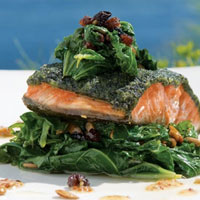
Ingredients
- 1/2 cup (125 mL) sea lettuce, fresh, chopped coarsely (substitute wakame)
- 1/4 cup (60 mL) unsalted butter, room temperature
- 1/2 cup (125 mL) Japanese bread crumbs (panko)
Directions
- Process all ingredients in food processor for 3 to 4 minutes or until well blended and no butter lumps appear.
- Remove from processor and roll between two pieces of parchment paper until 1/4 in (6 mm) thick.
- Roll the mixture into a large rectangle.
- Refrigerate until ready to use.
Precautions
- For some people, lettuce can create an allergic effect and also affect the central nervous system.
- Avoid consuming any lettuce for up to 2 weeks before surgery begins.
- People who have kidney problem are also not recommended to consume sea lettuce.
- If you are taking any prescription medications, especially in the case of thyroid disorders, please consult your healthcare professional before consuming Irish Sea Lettuce.
References
- https://www.ncbi.nlm.nih.gov/books/NBK218749/
- https://www.ncbi.nlm.nih.gov/books/NBK551014/
- https://www.ncbi.nlm.nih.gov/books/NBK551727/
- https://www.ncbi.nlm.nih.gov/books/NBK65874/
- https://www.ncbi.nlm.nih.gov/books/NBK304428/
- https://www.ncbi.nlm.nih.gov/books/NBK218759/
- https://www.ncbi.nlm.nih.gov/books/NBK556048/
- https://www.ncbi.nlm.nih.gov/books/NBK218749/
- https://www.niehs.nih.gov/health/topics/agents/essential-oils/index.cfm
- https://www.sciencedirect.com/book/9780443062414/essential-oil-safety
- https://www.sciencedirect.com/topics/agricultural-and-biological-sciences/essential-oils
- https://www.elsevier.com/books/essential-oil-safety/tisserand/978-0-443-06241-4
- https://www.amazon.com/Essential-Oils-Fully-Revised-Updated/dp/1787752291
- https://www.frontiersin.org/articles/257193
- https://www.tandfonline.com/toc/tjeo20/current
- https://www.intechopen.com/chapters/68027
- https://onlinelibrary.wiley.com/doi/full/10.1002/ptr.6854
- https://www.nature.com/articles/s41598-020-68823-4
- https://www.cancer.gov/about-cancer/treatment/cam/patient/aromatherapy-pdq
- https://www.researchgate.net/publication/254247133_
- https://link.springer.com/article/10.1365/s10337-010-1680-0
- https://fdc.nal.usda.gov/ndb/foods/show/
- https://www.nccih.nih.gov/health/herbsataglance
- https://portal.nifa.usda.gov/web/crisprojectpages/0092887
- https://academic.oup.com/database/article/doi/10.1093/database/bau120
- https://www.cambridge.org/core/journals/weed-science/article/herbicide-effects-of-essential-oils/
- https://www.fs.fed.us/wildflowers/ethnobotany/oils.shtml
- https://www.karger.com/Article/Abstract/501062
- https://en.wikipedia.org/wiki/Fish_oil
- https://en.wikipedia.org/wiki/Essential_oil
- https://en.wikipedia.org/wiki/List_of_essential_oils
- https://en.wikipedia.org/wiki/Types_of_plant_oils
- https://www.britannica.com/topic/essential-oil
- https://www.planttherapy.com/
- https://academic.oup.com/plphys/article/54/4/560/
- https://www.healthbenefitstimes.com/category/oils/
- https://www.aromaweb.com/essentialoils/default.asp
- https://books.google.com/books/about/Herbs_And_Essential_Oils_Book.html?
- https://books.google.com/books/about/Herbal_Oils_for_Health_Beauty.html?id=C_MX9tKpttMC
- https://books.google.com/books/about/375_Essential_Oils_and_Hydrosols.html?id=-y68r63LPYgC
- https://books.google.com/books/about/375_Essential_Oils_and_Hydrosols.html?id=-y68r63LPYgC
- https://books.google.com/books/about/Herbal_Oils_for_Health_Beauty.html?id=C_MX9tKpttMC
- https://www.nytimes.com/wirecutter/reviews/best-essential-oil-diffusers/
- https://www.niehs.nih.gov/health/topics/agents/essential-oils/index.cfm
- https://www.nccih.nih.gov/health/atoz
- https://clinicaltrials.gov/ct2/show/NCT02764567
- https://fda.report/Company/Young-Living-Essential-Oils-Lc
- http://www.fao.org/3/ad420e/ad420e.pdf
- https://www.healthywa.wa.gov.au/Articles/A_E/Essential-oils
- https://www.niehs.nih.gov/health/topics/agents/essential-oils/index.cfm
- https://www.consumerreports.org/health-product-recalls/walmart-recalls-better-homes-gardens-aromatherapy-room-spray-a3078352126/
- https://time.com/5203122/are-essential-oils-safe/
- https://www.itis.gov/servlet/SingleRpt/SingleRpt?search_topic=TSN&search_value=6562#null
- https://gd.eppo.int/taxon/ULVLA
- https://en.wikipedia.org/wiki/Ulva_lactuca
- https://www.centralcoastbiodiversity.org/sea-lettuce-bull-ulva-lactuca.html