
Fractures Bones is a medical condition in which there is a partial or complete break in the continuity of the bone. In more severe cases, the bone may be broken into several pieces.[rx] A bone fracture may be the result of high force impact or stress, or a minimal trauma injury as a result of certain medical conditions that weaken the bones, such as osteoporosis, osteopenia, bone cancer, or osteogenesis imperfecta, where the fracture is then properly termed a pathologic fracture.[rx]
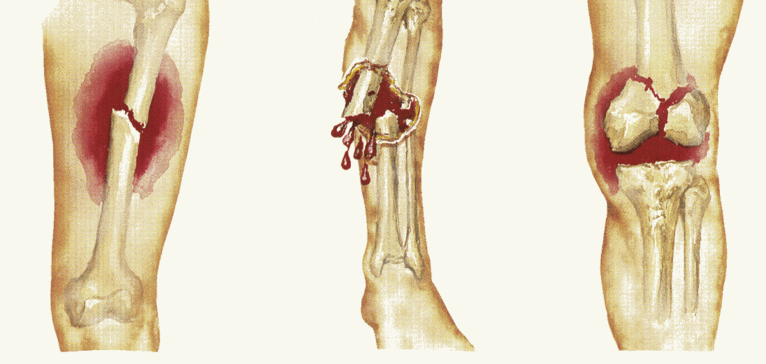
Types of Fractures Bones
Mechanism
- Traumatic fracture – This is a fracture due to sustained trauma. e.g., fractures caused by a fall, road traffic accident, fight, etc.
- Pathologic fracture – A fracture through a bone that has been made weak by some underlying disease is called pathological fracture. e.g., a fracture through a bone weakened by metastasis. Osteoporosis is the most common cause of pathological fracture.
- Periprosthetic fracture – This is a fracture at the point of mechanical weakness at the end of an implant
Soft-tissue involvement
- Closed fractures are those in which the overlying skin is intact
- Open/compound fractures involve wounds that communicate with the fracture, or where fracture hematoma is exposed, and may thus expose bone to contamination. Open injuries carry a higher risk of infection.
- Clean fracture
- Contaminated fracture
Displacement
- Non-displaced
- Displaced
- Translated, or ad latus, with sideways displacement.[11]
- Angulated
- Rotated
- Shortened
Fracture Pattern
- Linear fracture – A fracture that is parallel to the bone’s long axis
- Transverse fracture – A fracture that is at a right angle to the bone’s long axis
- Oblique fracture – A fracture that is diagonal to a bone’s long axis (more than 30°)
- Spiral fracture – A fracture where at least one part of the bone has been twisted
- Compression fracture/wedge fracture – usually occurs in the vertebrae, for example when the front portion of a vertebra in the spine collapses due to osteoporosis (a medical condition which causes bones to become brittle and susceptible to fracture, with or without trauma)
- Impacted fracture – A fracture caused when bone fragments are driven into each other
- Avulsion fracture – A fracture where a fragment of bone is separated from the main mass
Fragments
- Incomplete fracture – Is a fracture in which the bone fragments are still partially joined, in such cases, there is a crack in the osseous tissue that does not completely traverse the width of the bone.
- Complete fracture – Is a fracture in which bone fragments separate completely.
- Comminuted fracture – Is a fracture in which the bone has broken into several pieces.

Anatomical Classifications
Fracture types
- Avulsion fracture
- Articular surface injuries
- Bone contusion
- Chondral fracture
- Subchondral fracture
- Subchondral insufficiency fracture
Osteochondral fracture
- Complete fracture
- Transverse fracture
- Oblique fracture
- Spiral fracture
- Longitudinal fracture
- Comminuted fracture
- segmental fracture
- Incomplete fracture
- Bowing fracture
- Buckle fracture (torus)
- Greenstick fracture
- Compound fracture
- Gustilo Anderson classification (compound fracture)
- Pathological fracture
- Stress fracture
- insufficiency fracture
- fatigue fracture
- grey cortex sign
Fracture displacement
- Fracture translation > off-ended fracture
- Fracture angulation
- Fracture rotation
- Fracture length
- distraction
- impaction
- shortening
Skull Fractures
- The base of skull fractures
- Occipital condyle fracture
- Temporal bone fractures
- Longitudinal fractures
- Transverse fractures
- Mixed fractures
- Transsphenoidal basilar skull fracture
- Skull vault fractures
- Depressed skull fracture
- Ping pong skull fracture
Facial fractures
- Fractures involving a single facial buttress
- Alveolar process fractures
- Frontal sinus fracture
- Isolated zygomatic arch fractures
- Mandibular fracture
- Nasal bone fracture
- Orbital blow-out fracture
- Paranasal sinus fractures
Complex fractures
- Complex midfacial fracture
- Le Fort fractures
- Naso-orbitoethmoid (NOE) complex fracture
- Zygomaticomaxillary complex fracture
Cervical spine fracture classification systems
- AO classification of upper cervical injuries
- AO classification of subaxial injuries
- Anderson and D’Alonzo classification (odontoid fracture)
- Levine and Edwards classification (hangman fracture)
- Roy-Camille classification (odontoid process fracture )
- Allen and Ferguson classification (subaxial spine injuries)
- subaxial cervical spine injury classification (SLIC)
Thoracolumbar spinal fracture classification systems
- AO classification of thoracolumbar injuries
- Magerl classification
- McAfee classification
- Thoracolumbar injury classification and severity score (TLICS)
- Limbus fractures
-
- Three column concept of spinal fractures (Denis classification)
- Classification of sacral fractures
- AO classification of sacral injuries
Cervical spine fractures
- clay-shoveler’s fracture
- dens fracture
- hangman fracture
- Jefferson fracture
- extension teardrop fracture
- flexion teardrop fracture
- cervical spine floating pillar
Thoracic spine fractures
- Chance fracture
- Transverse process fracture
- Spondylolysis
- lumbar spine fractures
- sacral fractures
Spinal fracture types
- Burst fracture
- Chance fracture
- Clay-shoveler fracture
- Chalk stick fracture
- Dens fracture
- Extension teardrop fracture
- Flexion teardrop fracture
- Hangman fracture
- Jefferson fracture
- Vertebra plana
- Wedge fracture
Rib fractures
- Flail chest
- Stove-in chest
- Sternal fractures
Upper limb fractures classification
- Rockwood classification (acromioclavicular joint injury)
- Neer classification (proximal humeral fracture)
- AO classification (proximal humeral fracture)
- Milch classification (lateral humeral condyle fracture)
- Weiss classification (lateral humeral condyle fracture)
- Bado classification of Monteggia fracture-dislocations (radius-ulna)
- Mason classification (radial head fractures
- Frykman classification (distal radial fracture)
Mayo classification (scaphoid fracture)
- Hintermann classification (gamekeeper’s thumb)
- Eaton classification (volar plate avulsion injury)
- Keifhaber-Stern classification (volar plate avulsion injury)
Upper limb fractures by region
Shoulder
- Clavicular fracture
- Scapular fracture
- Acromion fracture
- Coracoid process fracture
- Glenoid fracture
- Bankart lesion
- reverse Bankart lesion
Humeral head fracture
- Hill-Sachs lesion
- reverse Hill-Sachs lesion
- proximal humeral fracture
- humeral neck fracture
Arm
- Humeral shaft fracture
Elbow
- Humeral condyle fracture
- Lateral humeral condyle fracture
- Medial humeral condyle fracture
- Epicondyle fracture
- Medial epicondyle fracture
- Lateral epicondyle fracture
- Olecranon fracture
- Supracondylar fracture (extension)
- Supracondylar fracture (flexion)
- Radial head fracture
- Radial neck fracture
Forearm
- Forearm fracture-dislocation
- Essex-Lopresti fracture-dislocation
- Galeazzi fracture-dislocation
- Monteggia fracture-dislocation
- Forearm fracture
- nightstick fracture
-
Wrist > distal radial fracture
- Chauffeur fracture
- Colles fracture
- Smith fracture
- Barton fracture
- reverse Barton fracture
Distal ulnar fracture
- Ulnar styloid fracture
- Carpal bones
- Humpback deformities
- Scaphoid fracture
- Scaphoid non-union
- A scaphoid non-union advanced collapse
Lunate fracture
- Perilunate fracture-dislocation
- Lunate dislocation
- Capitate fracture
- Triquetral fracture
- Pisiform fracture
- Hamate fracture
- Hook of hamate fracture
- Trapezoid fracture
- Trapezium fracture
Hand
- Metacarpal fractures > boxer fracture & reverse Bennett fracture-dislocation
Fractures of the thumb
- Gamekeeper thumb
- Epibasal fracture of the thumb
- Rolando fracture
- Bennett fracture-dislocation
Phalanx fractures
- Proximal phalanx fracture
- Middle phalanx fracture
- Volar plate avulsion injury
- Distal phalanx fracture
- Jersey finger
- mallet finger
Lower limb fractures > classification by region
- pelvis
- Judet and Letournel classification (acetabular fracture)
- Young and Burgess classification of pelvic ring fractures
Hip
- Pipkin classification (femoral head fracture)
- Garden classification (hip fracture)
- American Academy of Orthopedic Surgeons classification (periprosthetic hip fracture)
- Cooke and Newman classification (periprosthetic hip fracture)
- Johansson classification (periprosthetic hip fracture)
- Vancouver classification (periprosthetic hip fracture)
Femoral
- Winquist classification (femoral shaft fracture)
Knee
- Schatzker classification (tibial plateau fracture)
- Meyers and McKeevers classification (anterior cruciate ligament avulsion fracture)
Tibia/fibula
- Watson-Jones classification (tibial tuberosity avulsion fracture)
Ankle
- Lauge-Hansen classification (ankle injury)
- Danis-Weber classification (ankle fracture)
Foot
- Berndt and Harty classification (osteochondral lesions of the talus)
- Sanders CT classification (calcaneal fracture)
- Hawkins classification (talar neck fracture)
- Myerson classification (Lisfranc injury)
- Nunley-Vertullo classification (Lisfranc injury)
Lower limb fractures by region> pelvic fracture
- Malgaigne fracture
- Wind-swept pelvis fracture
- Pelvic bucket handle fracture
- Pelvic insufficiency fracture
- Parasymphyseal insufficiency fracture
- anterior inferior iliac spine avulsion
- Duverney fracture
- Open book fracture
- Pubic rami fracture
- Anterior superior iliac spine (ASIS) avulsion
Sacral fracture
- Sacral insufficiency fractures
- Honda sign
Hip
- Acetabular fracture
- Femoral head fracture
- Femoral neck fracture
- subcapital fracture
- transcervical fracture
- basicervical fracture
Trochanteric fracture
- Pertrochanteric fracture
- Intertrochanteric fracture
- Subtrochanteric fracture
Thigh
- Mid-shaft fracture
- Bisphosphonate-related fracture
Knee > avulsion fractures
- Segond fracture
- Reverse Segond fracture
- Anterior cruciate ligament avulsion fracture
- Posterior cruciate ligament avulsion fracture
- Arcuate complex avulsion fracture (arcuate sign)
- Biceps femoris avulsion fracture
- Iliotibial band avulsion fracture
- Semimembranosus tendon avulsion fracture
- Stieda fracture (MCL avulsion fracture)
- Patella fracture
- Tibial plateau fracture
leg
- Tibial tuberosity avulsion fracture
- Tibial shaft fracture
- Fibular shaft fracture
- Maisonneuve fracture
Ankle
- Bimalleolar fracture
- Trimalleolar fracture
- Triplane fracture
- Tillaux fracture
- Bosworth fracture
- Pilon fracture
- Wagstaffe-Le Forte fracture
Foot
- Tarsal bones
- Chopart fracture
- Calcaneal fracture
- Lover’s fracture
- Calcaneal tuberosity avulsion fracture
Talus fracture
- Talar body fractures
- Talar dome osteochondral fracture
- Posterior talar process fracture
- Lateral talar process fracture
- Talar neck fracture
- aviator fracture
- talar head fracture
- navicular fracture
- medial cuneiform fracture
- intermediate cuneiform fracture
- lateral cuneiform fracture
- cuboid fracture
- nutcracker fracture
Metatarsal Bones
- March fracture
- Lisfranc fracture-dislocation
- 5th metatarsal fracture
- Stress fracture of the 5th metatarsal
- Jones fracture
- Pseudo-Jones fracture
- Avulsion fracture of the proximal 5th metatarsal
- phalanges
Symptoms of Fractures Bones
Although bone tissue itself contains no nociceptors, the bone fracture is painful for several reasons:[rx]
- Breaking in the continuity of the periosteum, with or without similar discontinuity in endosteum, as both contain multiple pain receptors.
- Edema of nearby soft tissues caused by bleeding of broken periosteal blood vessels evokes pressure pain.
- Involuntary muscle spasms trying to hold bone fragments in place.
- Hematoma on the fracture site.
Damage to adjacent structures such as nerves, muscles or blood vessels, spinal cord, and nerve roots (for spine fractures), or cranial contents (for skull fractures) may cause other specific signs and symptoms.
Diagnosis
History
Your doctor in the emergency department may ask the following questions
-
How – How was the fracture created, and, if chronic, why is it still open? (underlying etiology)
-
When – How long has this fracture been present? (e.g., chronic less than 1 month or acute, more than 6 months)
- Where – Where on the body parts is it located? Is it in an area that is difficult to offload, complicated, or keep clean? Is it in an area of high skin tension? Is it near any vital organ and structures such as a major artery?
- What is your Past – Has your previous medical history of fracture? Are you suffering from any chronic disease, such as hypertension, blood pressure, diabetes mellitus, previous major surgery? What kind of medicine did you take? What is your food habits, geographic location, Alcohol, tea, coffee consumption habit, anabolic steroid uses for athletes, etc?
Physical
Physical examination is done by your doctor, consisting of palpation of the fracture site, eliciting boney tenderness, edema, swelling. If the fracture is in the dept of a joint, the joint motion, normal movement will aggravate the pain.
- Inspection – Your doctor also check superficial tissue, skin color, involving or not only the epidermal layer or Partial-thickness affects the epidermis and extend into the dermis, but full-thickness also extends through the dermis and into the adipose tissues or full-thickness extends through the dermis, and adipose exposes muscle, bone, evaluate and measure the depth, length, and width of the fracture. Access surrounding skin tissue, fracture margins for tunneling, rolled, undermining fibrotic changes, and if unattached and evaluate for signs and symptoms of infect warm, pain, delayed healing.
- Palpation – Physical examination may reveal tenderness to palpation, swelling, edema, tenderness, worm, temperature, open fracture, closed fracture, microtrauma, and ecchymosis at the site of fracture. Condition of the surrounding skin and soft tissue, quality of vascular perfusion and pulses, and the integrity of nerve function.
- Motor function – Your doctor may ask the patient to move the injured area to assist in assessing muscle, ligament, and tendon function. The ability to move the joint means only that the muscles and tendons work properly, and does not guarantee bone integrity or stability. The concept that “it can’t be fractured because you can move it” is not correct. The jerk test and manual test are also performed to investigate the motor function.
- Sensory examination – assesses sensations such as light touch, worm, paresthesia, itching, numbness, and pinprick sensations, in its fracture side. Sensory 2-point discrimination
- Range of motion – A range of motion examination of the fracture associate joint and it’s surrounding joint may be helpful in assessing the muscle, tendon, ligament, cartilage stability. Active assisted, actively resisted exercises are performed around the injured area joint.
- Blood pressure and pulse check – Blood pressure is the term used to describe the strength of blood with which your blood pushes on the sides of your arteries as it’s pumped around your body. An examination of the circulatory system, feeling for pulses, blood pressure, and assessing how quickly blood returns to the tip of a toe to heart and it is pressed the toe turns white (capillary refill).
Lab Test
Laboratory tests should be done as an adjunct in overall medical status for surgical treatment.
- CBC, ESR test
- Random blood sugar, glucose, and routine diabetes test if the patient has diabetes mellitus.
- Microscopic urine examination test, and stool test.
- ECG, EKG test for heart abnormality is present
- Ultrasonography test in some cases.
- Normalized hemoglobin, hematocrit test
- Coagulation profile with bleeding time and coagulation time test, prothrombin time (PT) test for surgery if needed,
- Partial thromboplastin time (PTT), and platelet counts will be needed for operative intervention.
- Serum creatinine test,
- Serum lipid profile
- Serum uric acid test
Treatment
Do no HARM for 72 hours after injury
- Heat – Heat applied to fracture and injured side by hot baths, electric heat, saunas, heat packs, etc has the opposite effect on the blood flow. Heat may cause more fluid accumulation in the fracture joints by encouraging blood flow. Heat should be avoided when inflammation is developing in the acute stage. However, after about 72 hours, no further inflammation is likely to develop and heat can be soothing.
- Alcohol – stimulates the central nervous system that can increase bleeding and swelling and decrease healing.
- Running and movement – Running and walking may cause further damage, and causes healing delay.
- Massage – A massage also may increase bleeding and swelling. However, after 72 hours of your fracture, you can take a simple message, and applying heat may be soothing the pain.
Medication
The following medications may be considered by your doctor to relieve acute and immediate pain, long term treatment
- Antibiotic – Cefuroxime or Azithromycin, or Flucloxacillin or any other cephalosporin/quinolone, meropenem antibiotic must be used to prevent infection or clotted blood removal to prevent further swelling, inflammation, and edema.
- NSAIDs – Prescription-strength drugs that reduce both pain and inflammation. Pain medicines and anti-inflammatory drugs help to relieve pain and stiffness, allowing for increased mobility and exercise. There are many common over-the-counter medicines called non-steroidal anti-inflammatory drugs (NSAIDs). They include first choice NSAIDs is Ketorolac, then Etoricoxib, then Aceclofenac, naproxen. As you are taking pain medication or NSAIDs, your doctor must prescribe a standard anti-ulcer drug, such as omeprazole, pantoprazole, esomeprazole, dexlansoprazole, etc.
- Muscle Relaxants – These medications provide relief from spinal muscle spasms, spasticity. Muscle relaxants, such as baclofen, tolperisone, eperisone, methocarbamol, carisoprodol, and cyclobenzaprine, may be prescribed to control postoperative muscle spasms, spasticity, stiffness, contracture.
- Calcium & vitamin D3 – To improve bone health, blood clotting, helping muscles to contract, regulating heart rhythms, nerve functions, and healing fractures. As a general rule, too absorbed more minerals for men and women age 50 and older should consume 1,200 milligrams of calcium a day, and 600 international units of vitamin D a day to heal back pain, fractures, osteoarthritis.
- Neuropathic Agents – Drugs(pregabalin & gabapentin) that address neuropathic—or nerve-related—pain. This includes burning, numbness, tingling sensation, and paresthesia.
- Glucosamine & Diacerein, Chondroitin sulfate – can be used to tighten the loose tendon, cartilage, ligament, and cartilage, ligament regenerates cartilage or inhabits the further degeneration of cartilage, ligament. The dosage of glucosamine is 15oo mg per day in divided dosage and chondroitin sulfate approximately 500mg per day in different dosages, and diacerein minimum of 50 mg per day may be taken if the patient suffers from osteoarthritis, rheumatoid arthritis, and any degenerative joint disease.[rx]
- Topical Medications and essential oil – These prescription-strength creams, gels, ointments, patches, and sprays help relieve pain and inflammation in acute trauma, pain, swelling, tenderness through the skin. If the fracture is closed and not open fracture then you can use this item.
- Antidepressants – A drug that blocks pain messages from your brain and boosts the effects of endorphins in your body’s natural painkillers. It also helps in neuropathic pain, anxiety, tension, and proper sleep.
- Corticosteroids – Also known as oral steroids, these medications reduce inflammation. To heal the nerve inflammation and clotted blood in the joints.
- Dietary supplement – To eradicate the healing process from fracture your body needs a huge amount of vitamin C, and vitamin E. From your dietary supplement, you can get it, and also need to remove general weaknesses & improved health.
- Cough Syrup – If your doctor finds any chest congestion or fracture-related injury in your chest, dyspnoea, post-surgical breathing problem, then advice you to take bronchodilator cough syrup.
What To Eat and What to avoid
Eat Nutritiously During Your Recovery
All bones and tissues in the body need certain micronutrients in order to heal properly and in a timely manner. Eating a nutritious and balanced diet that includes lots of minerals and vitamins is proven to help heal broken bones and all types of fractures. Therefore, focus on eating lots of fresh food produce (fruits and veggies), whole grains, cereal, beans, lean meats, seafood, and fish to give your body the building blocks needed to properly repair your fracture. In addition, drink plenty of purified mineral water, milk, and other dairy-based beverages to augment what you eat.
- Broken bones or fractures bones need ample minerals (calcium, phosphorus, magnesium, boron, selenium, omega-3) and protein to become strong and healthy again.
- Excellent sources of minerals/protein include dairy products, tofu, beans, broccoli, nuts and seeds, sardines, sea fish, and salmon.
- Important vitamins that are needed for bone healing include vitamin C (needed to make collagen that your body essential element), vitamin D (crucial for mineral absorption, or machine for mineral absorber from your food), and vitamin K (binds calcium to bones and triggers more quickly collagen formation).
- Conversely, don’t consume food or drink that is known to impair bone/tissue healing, such as alcoholic beverages, sodas, fried fast food, most fast food items, and foods made with lots of refined sugars and preservatives.
Complications of Fractures Bones
An old fracture with nonunion of the fracture fragments
Some fractures may lead to serious complications including a condition known as compartment syndrome. If not treated, eventually, compartment syndrome may require amputation of the affected limb. Other complications may include non-union, where the fractured bone fails to heal or mal-union, where the fractured bone heals in a deformed manner.
Complications of fractures may be classified into three broad groups, depending upon their time of occurrence. These are as follows –
- Immediate complications – occurs at the time of the fracture.
- Early complications – occurring in the initial few days after the fracture.
- Late complications – occurring a long time after the fracture.
| Immediate complications | Early complications | Late complications |
|---|---|---|
Systemic
|
Systemic
|
Imperfect union of the fracture
|
Local
|
Local
|
Others
|
References
- https://www.ncbi.nlm.nih.gov/pmc/articles/PMC5298214/
- https://www.ncbi.nlm.nih.gov/pmc/articles/PMC3010169/
- https://www.ncbi.nlm.nih.gov/pmc/articles/PMC4311337/
- https://en.wikipedia.org/wiki/Bone_fracture
- https://www.sciencedirect.com/topics/medicine-and-dentistry/colles-fracture
- https://www.sciencedirect.com/topics/veterinary-science-and-veterinary-medicine/colles-fracture
- https://medlineplus.gov/ency/patientinstructions/000896.htm


