
10 TED Talks on Procrastination For Instant Motivation

Patient Tools

Read, save, and share this guide

Use these quick tools to make this medical article easier to read, print, save, or share with a family member.

Medical guide Rx Entrepreneurs, Leadership, Motivational Quotes, and Speech Feb 8, 2026 45 reads
Related reading

Patient Mode

Understand this article easily

Switch between simple English and easy Bangla patient notes. This is for education and does not replace a doctor consultation.

There are two types of people in this world; one who wants to complete their work as early as possible and one who wants to delay it as much as they can. The first category of this depicts ‘procrastinators’ and the latter one is termed...

For severe symptoms, danger signs, pregnancy, child illness, or sudden worsening, seek urgent medical care.

বাংলা রোগী নোট এখনো যোগ করা হয়নি। পোস্ট এডিটরে “RX Bangla Patient Mode” বক্স থেকে সহজ বাংলা সারাংশ যোগ করুন।

এই তথ্য শিক্ষা ও সচেতনতার জন্য। এটি ডাক্তারি পরীক্ষা, রোগ নির্ণয় বা প্রেসক্রিপশনের বিকল্প নয়।

Article Summary

There are two types of people in this world; one who wants to complete their work as early as possible and one who wants to delay it as much as they can. The first category of this depicts ‘procrastinators’ and the latter one is termed ‘procrastinators’. Much has been researched and published about procrastination; most of the studies term it as detrimental to one’s health...

Key Takeaways

  • This article explains 1. Inside the Mind of a Master Procrastinator, by Tim Urban in simple medical language.
  • This article explains 2. The Surprising Habits Of Original Thinkers, by Adam Grant in simple medical language.
  • This article explains 3. An End To Procrastination, by Archana Murthy in simple medical language.
  • This article explains 4. Why We Procrastinate, by Vik Nithy in simple medical language.
Educational health guideWritten for patient understanding and clinical awareness.
Reviewed content workflowUse writer and reviewer profiles for stronger trust.
Emergency safety firstUrgent warning signs are highlighted below.

Seek urgent medical care if you notice

These warning signs are general safety guidance. Local emergency numbers and clinical judgment should always come first.

  • Severe symptoms, breathing difficulty, fainting, confusion, or rapidly worsening illness.
  • New weakness, severe pain, high fever, or symptoms after a serious injury.
  • Any symptom that feels urgent, unusual, or unsafe for the patient.
1

Emergency now

Use emergency care for severe, sudden, rapidly worsening, or life-threatening symptoms.

2

See a doctor

Book a professional medical evaluation if symptoms persist, worsen, recur often, affect daily activities, or occur in a high-risk patient.

3

Learn safely

Use this article to understand possible causes, tests, treatment options, prevention, and questions to ask your clinician.

Before reading

RX Patient Tools

Use these quick guides before reading the article, or return to them when you need help preparing questions for a doctor.

Start here Choose the right pathway for symptoms, reports, medicines, or urgent warning signs. Disease article roadmap Read this topic step by step: meaning, symptoms, warning signs, diagnosis, treatment, prevention, and follow-up. Treatment planner Prepare questions about treatment choices, benefits, risks, side effects, and follow-up. Family & caregiver guide Organize symptoms, reports, medicines, questions, and follow-up safely. Nutrition & diet guide Prepare food, hydration, supplement, and medicine-timing questions safely. Prevention guide Organize risk factors, protective habits, screening, and warning signs. Recovery guide Prepare a safe plan for activity, rehabilitation, warning signs, and follow-up.
Definition

There are two types of people in this world; one who wants to complete their work as early as possible and one who wants to delay it as much as they can. The first category of this depicts ‘procrastinators’ and the latter one is termed ‘procrastinators’.

Much has been researched and published about procrastination; most of the studies term it as detrimental to one’s health and adding to stress levels. Though, there are ‘procrastinating apologists’ as you would call them who proclaim there are a few benefits of it as well. But scientists have argued that the detriments of procrastination far outweigh its short-term benefits of it.

Everybody procrastinates, but not everybody is a procrastinator. Procrastination is habitual, not situational.

For an employee, it means piling up work until the end hours of their shift and then completing it in a hurry. For a student, it means not studying for an exam that is due the next week and cramming up the whole book one night before.

If you fall into this category, do not worry, there have also been articles published and speeches given by successful leaders on how procrastinators aren’t so bad after all.

Here are 10 of the best TED Talks about procrastination that will help you regain motivation:

1. Inside the Mind of a Master Procrastinator, by Tim Urban

Tim Urban gives his funny uptake on procrastination and dives deep into how a procrastinator’s mind functions. He goes ahead and tells the audience about how ‘procrastinators’ have a rational decision-maker in their mind but in a procrastinator’s mind, there are two other entities existing — the ‘instant gratification monkey’ and ‘the panic monster’

From the video, you will learn how to stay aware of the ‘instant gratification monkey’ whenever you have to complete a task.

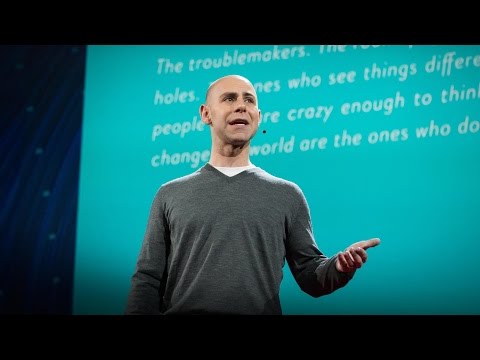
2. The Surprising Habits Of Original Thinkers, by Adam Grant
10 TED Talks on Procrastination For Instant Motivation

In this video, Adam Grant builds on the concepts of ‘instant gratification monkey’ and ‘the panic monster,’ and marks a balance between ‘precrastinators’ and procrastinators giving existence to a productive and creative persona.

He talks about how a lot of great personalities in the course of history were procrastinators giving the example of Martin Luther King Jr. delaying the writing of his speech. ‘I have a dream was not in the script but was an original phrase by the leader; he opened himself to every possible avenue by not going with the script.

You can learn about how one has to be different and better rather than be the first-mover, going deep into the correlation between original thinkers and procrastinators.

3. An End To Procrastination, by Archana Murthy

10 TED Talks on Procrastination For Instant Motivation

According to a survey,[1] 20% of Americans are chronic procrastinators. Study after study shows chronic procrastination isn’t just laziness and poor time-management but is a byproduct of negative emotions such as guilt, anxiety, depression, and low self-worth — which is different from the contrary belief.

Archana Murthy gives us an insight into the procrastinator’s plight and provides ways to help the procrastinator in you.

For a fellow procrastinator, you should check out her good advice on how to end it.

4. Why We Procrastinate, by Vik Nithy

10 TED Talks on Procrastination For Instant Motivation

Vik Nithy has already found 23 companies before coming to give his speech on procrastination. He puts forward the structure of our brain, showing the prefrontal cortex as the intelligent one telling us to complete the assignment due the next day.

Procrastinators are threatened by complex work which gives them anxiety and that is where Amygdala comes in telling us to find pleasure in other activities.

Going ahead, you’ll from him how to overcome procrastination i.e. planning for goals, time, resources, processes, distractions, and failure.

5. Trust The Procrastinator, by Valerie Brown

10 TED Talks on Procrastination For Instant Motivation

Frankly, this is one of the best speeches on procrastination given on the TedTalks platform. Valerie Brown tells us that we live in a society where everybody wants everything right now and procrastinators aren’t among those ‘right-now’ people.

She gives us an example of great procrastinators like Leonardo Da Vinci, who regarded himself as a failure at one point in time and took 16 years to complete the Mona Lisa. She gives us another perspective on procrastinators that it isn’t necessarily bad for one’s career or health.

6. Procrastination Is The Key To Problem Solving, by Andrea Jackson

10 TED Talks on Procrastination For Instant Motivation

Andrea Jackson gives us her two categories of procrastinators: accidental procrastinators and deliberate procrastinators. She puts Leonardo Da Vinci in the former category and Thomas Edison in the latter one.

There is a part where she labels procrastinators as unlocking a supersonic jigsaw puzzle in their head when they procrastinate; it means bringing thousands of ideas into one’s head when one procrastinates and keeps thinking about it. She calls Salvador Dali and Aristotle deliberate procrastinators who used to delay work to achieve a more creative result.

In this video, you’ll learn a new perspective about procrastinators.

7. The Vaccination For Procrastination, by Bronwyn Clee

10 TED Talks on Procrastination For Instant Motivation

Bronwyn Clee takes us into the psychology of a procrastinator, telling us that fear stops us from taking up new work.

She shares how she taught herself to be a decision-maker and not to fear if she will be able to take an action or not. From this video, you will learn how to bring change in yourself and end procrastination.

8. I’m Not Lazy, I’m Procrastinating, by Victoria Gonzalez

10 TED Talks on Procrastination For Instant Motivation

Coming from a millennial, this is more relatable to the younger generation.

Victoria Gonzalez tells us that procrastination has nothing to do with time-management skills. A procrastinator puts off work but completes it; lazy people are the opposite of that who don’t even try.

9. Change Anything! Use Skillpower Over Willpower, by AI Wisler

10 TED Talks on Procrastination For Instant Motivation

Al Wisler, the cofounder of VitalSmarts, gives us an example of her mother’s smoking habits which she wanted to quit but she just couldn’t even after trying for years. Eventually, she died of cancer.

He reminds us of the need to take control of the forces that influence our decisions, rather than letting them take control of ourselves.

In this video, you’ll learn the importance of self-reflection, identifying your behaviors, and getting to work on them.

10. How To Motivate Yourself To Change Your Behaviour, by Tali Sharot

10 TED Talks on Procrastination For Instant Motivation

Tali Sharot, a neuroscientist explains how we behave when put through alternating situations.

She has found that people get to work when they are rewarded for action immediately. Procrastinators can get themselves to work and reward themselves for it, which will lead to a change in their behavior if they start that process of working sooner and completing it.

In this video, you’ll learn about the role of celebrating small wins and tracking your progress when you’re trying to reach your goals.

The Bottom Line

Procrastinators can find all kinds of advice on TedTalks.

A few of them, defend the idea and proclaim that it allows for a more creative process and one that people shouldn’t feel so guilty about. Some of them, give suggestions on how to put an end to it and make you a faster worker.


Doctor visit helper

Prepare before seeing a doctor

A simple rural-patient checklist to help you explain symptoms clearly, ask better questions, and avoid unsafe self-treatment.

Safety note: This is not a prescription or diagnosis. For severe symptoms, pregnancy danger signs, children with serious illness, chest pain, breathing difficulty, stroke-like weakness, or major injury, seek urgent care.

Which doctor may help?

Orthopedic doctor, rheumatologist, or physiotherapist depending on cause.

What to tell the doctor

  • Write which joints hurt, swelling, morning stiffness duration, fever, injury, and walking difficulty.
  • Bring X-ray, uric acid, ESR/CRP, rheumatoid factor, or previous reports if available.

Questions to ask

  • Is this injury, osteoarthritis, rheumatoid arthritis, gout, infection, or another cause?
  • Which exercises, supports, or lifestyle changes are safe?
  • Do I need blood tests or X-ray?

Tests to discuss

  • Joint examination and range of motion
  • X-ray when chronic arthritis or injury is suspected
  • ESR/CRP, uric acid, rheumatoid tests when inflammatory arthritis is suspected

Avoid these mistakes

  • Do not ignore hot swollen joint with fever.
  • Avoid repeated steroid injections/tablets without a clear diagnosis and follow-up.

Medicine safety and first-aid guide

This section is for patient education only. It does not replace a doctor, pharmacist, or emergency care.

Safe first steps

  • Rest, drink safe water, and observe symptoms carefully.
  • Keep a written note of symptoms, duration, temperature, medicines already taken, and allergy history.
  • Seek medical care quickly if symptoms are severe, worsening, or unusual for the patient.

OTC medicine safety

  • For mild pain or fever, ask a registered pharmacist or doctor before using common over-the-counter pain/fever medicines.
  • Do not combine multiple pain medicines without advice, especially if you have kidney disease, liver disease, stomach ulcer, asthma, pregnancy, or take blood thinners.
  • Do not give adult medicines to children unless a qualified clinician advises it.

Avoid these mistakes

  • Do not start antibiotics without a proper medical decision.
  • Do not use steroid tablets or injections casually for quick relief.
  • Do not delay emergency care because of home remedies.

Get urgent help if

  • Severe symptoms, confusion, fainting, breathing difficulty, chest pain, severe dehydration, or sudden weakness need urgent medical care.
Medicine names, dose, and timing must be decided by a qualified clinician or pharmacist after checking age, pregnancy, allergy, other diseases, and current medicines.

For rural patients and family caregivers

Patient health record and symptom diary

Write your symptoms, medicines already taken, test results, and questions before visiting a doctor. This note stays on your device unless you print or copy it.

Doctor to discuss: Doctor / qualified healthcare provider
Tests to discuss with doctor
  • Basic vital signs: temperature, pulse, blood pressure, oxygen level if needed
  • Relevant blood, urine, imaging, or specialist tests only after clinical assessment
Questions to ask
  • What is the most likely cause of my symptoms?
  • Which warning signs mean I should go to emergency care?
  • Which tests are really needed now?
  • Which medicines are safe for my age, pregnancy status, allergy, kidney/liver/stomach condition, and current medicines?

Emergency warning signs such as chest pain, severe breathing difficulty, sudden weakness, confusion, severe dehydration, major injury, or loss of bladder/bowel control need urgent medical care. Do not wait for online information.

Safe pathway to proper treatment

Care roadmap for: 10 TED Talks on Procrastination For Instant Motivation

Use this simple roadmap to understand the next safe steps. It is educational and does not replace examination by a doctor.

Go to emergency care if you notice:
  • Severe or rapidly worsening symptoms
  • Breathing difficulty, chest pain, fainting, confusion, severe weakness, major injury, or severe dehydration
Doctor / service to discuss: Qualified healthcare provider; specialist depends on symptoms and examination.
  1. Step 1

    Check danger signs first

    If danger signs are present, seek emergency care and do not wait for online information.

  2. Step 2

    Record the symptom story

    Write when symptoms started, severity, medicines already taken, allergies, pregnancy status, and test results.

  3. Step 3

    Visit a qualified clinician

    A doctor, nurse, or qualified healthcare provider can examine you and decide which tests or treatment are needed.

  4. Step 4

    Do only useful tests

    Do tests after clinical assessment. Avoid unnecessary tests, random antibiotics, or repeated medicines without diagnosis.

  5. Step 5

    Follow up and return early if worse

    If symptoms worsen, new warning signs appear, or treatment is not helping, return for review quickly.

Rural patient practical tips
  • Take a written symptom diary and all previous prescriptions/test reports.
  • Do not hide medicines already taken, even herbal or over-the-counter medicines.
  • Ask which warning signs mean urgent referral to hospital.

This roadmap is for education. A real diagnosis and treatment plan requires history, examination, and clinical judgment.

RX Patient Help

Ask a health question safely

Write your symptom story. A health professional or site editor can review it before any answer is prepared. This box is not for emergency care.

Emergency first: Severe chest pain, breathing trouble, unconsciousness, stroke signs, severe injury, heavy bleeding, or rapidly worsening symptoms need urgent local medical care now.

Frequently Asked Questions

Is this article a replacement for a doctor?

No. It is educational content only. Patients should consult a qualified clinician for diagnosis and treatment.

When should I seek urgent care?

Seek urgent care for severe symptoms, rapidly worsening condition, breathing difficulty, severe pain, neurological changes, or any emergency warning sign.

A global war against illness

Help this medical guide reach someone who may need it

Share reliable health information with a patient, family member, caregiver, or colleague. Reading and awareness can help people ask better questions and seek appropriate care.

Continue exploring

Explore this topic across the RX Medical Library

Open a focused A–Z pathway or continue with closely related indexed articles. These links are educational and do not replace personal medical care.

Search this topic
Diseases A–Z Drugs A–Z Lab Tests A–Z Cancer A–Z