
Latissimus Dorsi Muscle Strain, Causes, Symptoms, Treatment

Patient Tools

Read, save, and share this guide

Use these quick tools to make this medical article easier to read, print, save, or share with a family member.

Patient Mode

Understand this article easily

Switch between simple English and easy Bangla patient notes. This is for education and does not replace a doctor consultation.

Latissimus Dorsi Muscle Strain/Latissimus Dorsi Muscle is a broad, flat muscle that occupies the majority of the lower posterior thorax. The muscle's primary function is of the upper extremity but is also considered to be a respiratory accessory muscle. Due to this muscle's broad attachment...

For severe symptoms, danger signs, pregnancy, child illness, or sudden worsening, seek urgent medical care.

বাংলা রোগী নোট এখনো যোগ করা হয়নি। পোস্ট এডিটরে “RX Bangla Patient Mode” বক্স থেকে সহজ বাংলা সারাংশ যোগ করুন।

এই তথ্য শিক্ষা ও সচেতনতার জন্য। এটি ডাক্তারি পরীক্ষা, রোগ নির্ণয় বা প্রেসক্রিপশনের বিকল্প নয়।

Article Summary

Latissimus Dorsi Muscle Strain/Latissimus Dorsi Muscle is a broad, flat muscle that occupies the majority of the lower posterior thorax. The muscle's primary function is of the upper extremity but is also considered to be a respiratory accessory muscle. Due to this muscle's broad attachment on the spinous processes, ongoing research is looking at what, if any, role the muscle plays in the trunk movement....

Key Takeaways

  • This article explains Origin of Latissimus Dorsi Muscle in simple medical language.
  • This article explains Actions of Latissimus Dorsi Muscle in simple medical language.
  • This article explains Nerve supply of Latissimus Dorsi Muscle in simple medical language.
  • This article explains Blood Supply of Latissimus Dorsi Muscle in simple medical language.
Educational health guideWritten for patient understanding and clinical awareness.
Reviewed content workflowUse writer and reviewer profiles for stronger trust.
Emergency safety firstUrgent warning signs are highlighted below.

Seek urgent medical care if you notice

These warning signs are general safety guidance. Local emergency numbers and clinical judgment should always come first.

  • Severe symptoms, breathing difficulty, fainting, confusion, or rapidly worsening illness.
  • New weakness, severe pain, high fever, or symptoms after a serious injury.
  • Any symptom that feels urgent, unusual, or unsafe for the patient.
1

Emergency now

Use emergency care for severe, sudden, rapidly worsening, or life-threatening symptoms.

2

See a doctor

Book a professional medical evaluation if symptoms persist, worsen, recur often, affect daily activities, or occur in a high-risk patient.

3

Learn safely

Use this article to understand possible causes, tests, treatment options, prevention, and questions to ask your clinician.

Before reading

RX Patient Tools

Use these quick guides before reading the article, or return to them when you need help preparing questions for a doctor.

Start here Choose the right pathway for symptoms, reports, medicines, or urgent warning signs. Disease article roadmap Read this topic step by step: meaning, symptoms, warning signs, diagnosis, treatment, prevention, and follow-up. Treatment planner Prepare questions about treatment choices, benefits, risks, side effects, and follow-up. Family & caregiver guide Organize symptoms, reports, medicines, questions, and follow-up safely. Nutrition & diet guide Prepare food, hydration, supplement, and medicine-timing questions safely. Prevention guide Organize risk factors, protective habits, screening, and warning signs. Recovery guide Prepare a safe plan for activity, rehabilitation, warning signs, and follow-up.

Latissimus Dorsi Muscle tendon. সহজ বাংলা: মাংসপেশি/টেনডনে টান।" data-rx-term="strain" data-rx-definition="A strain is injury to a muscle or tendon. সহজ বাংলা: মাংসপেশি/টেনডনে টান।">Strain/Latissimus Dorsi Muscle is a broad, flat muscle that occupies the majority of the lower posterior thorax. The muscle’s primary function is of the upper extremity but is also considered to be a respiratory accessory muscle. Due to this muscle’s broad attachment on the spinous processes, ongoing research is looking at what, if any, role the muscle plays in the trunk movement. Currently, the evidence is mixed on how much influence this muscle has on spine extension, lateral flexion, or rotation. Even though the muscle has a broad attachment to the trunk and strong actions on the humerus, the use of this muscle for surgical transposition appears to have a limited effect on or restriction of normal function.

The latissimus dorsi muscle is a broad, flat muscle that occupies the majority of the lower posterior thorax. The muscle’s primary function is of the upper extremity but is also considered to be a respiratory accessory muscle. Due to this muscle’s broad attachment on the spinous processes, ongoing research is looking at what, if any, role the muscle plays in the trunk movement. Currently, the evidence is mixed on how much influence this muscle has on spine extension, lateral flexion, or rotation. Even though the muscle has a broad attachment to the trunk and strong actions on the humerus, the use of this muscle for surgical transposition appears to have a limited effect on or restriction of normal function.

Origin of Latissimus Dorsi Muscle

Depending on the origin, one can distinguish four parts

  • Vertebral part – originating from the spinous processes of the 7th to 12th thoracic vertebrae and the thoracolumbar fascia
  • Iliacal part – starting from the iliac crest
  • Costal part – having origins from the 9th to 12th ribs
  • Scapular part – starting from the inferior angle of the scapula (inconstant)
  • Thoracolumbar fascia.
  • The inferior angle of the scapula.
  • Lower three or four ribs.

All fibers together attach to the floor of the intertubercular sulcus of the humerus between the pectoralis major and teres major. During its course, the fibers turn spirally around the teres major (torsion) so that the lower part of the latissimus dorsi inserts proximally at the humerus and the upper part more distally.

Insertion

The floor of the intertubercular (bicipital) groove of the humerus.

Actions of Latissimus Dorsi Muscle

Depression, adducts, extends and internally rotates the arm at the shoulder[rx]
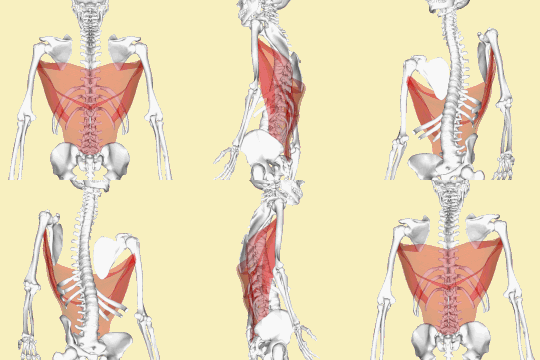
 

Latissimus Dorsi Muscle Strain, Causes, Symptoms, Treatment

Primary Actions of the Latissimus Dorsi

Adduction of the arm at the shoulder

  • Agonists: Pectoralis Major, Teres Major, Triceps Brachii (long head)
  • Antagonists: Deltoid (middle) Supraspinatus

Extension of the arm at the shoulder

  • Angonists: Deltoid (posterior) Triceps brachii (long head), Pectoralis Major (sternal head)
  • Antagonists: Deltoid (anterior) Biceps brachii, Coracobrachialis, Pectoralis Major (clavicular head)

Internal rotation of the arm at the shoulder

  • Agonists: Subscapularis, Deltoid (anterior), Pectoralis Major, Teres Major
  • Antagonists: Infraspinatus, Teres minor, Deltoid (posterior)

Secondary Actions of the Latissimus Dorsi

Assists with the extension of the trunk

  • Agonists: Longissimus thoracis, Iliocostalis lumborum, Iliocostalis thoracic
  • Antagonists: Rectus abdominis

Assists with flexion of the trunk

  • Agonist: Rectus abdominis
  • Antagonists: Longissimus thoracis, Iliocostalis lumborum, Iliocostalis thoracic

Assists with lateral flexion of the trunk

  • Agonist: Quadratus lumborum, Rectus abdominis
  • Antagonists: Longissimus thoracis, Iliocostalis lumborum, Iliocostalis thoracic

Assists with anterior and lateral pelvic tilt

  • Agonist: Rectus abdominis
  • Antagonists: Semitendinosus, Semimembranosus, Biceps femoris

Assists with depression of the scapula

  • Agonists: Serratus Anterior (lower fibers), Trapezius (lower fibers), Pectoralis minor
  • Antagonists: Levator Scapulae, Trapezius (upper fibers)

Assist with protraction of the scapula

Assists with deep inspiration and forced expiration 

Latissimus Dorsi Muscle Strain, Causes, Symptoms, Treatment

Nerve supply of Latissimus Dorsi Muscle

The latissimus dorsi is innervated by the sixth, seventh, and eighth cervical nerves through the thoracodorsal (long scapular) nerve. Electromyography suggests that it consists of six groups of muscle fibers that can be independently coordinated by the central nervous system.[rx]

Blood Supply of Latissimus Dorsi Muscle

The thoracodorsal nerve runs with the thoracodorsal artery and vein to supply the latissimus dorsi muscle. The nerve is close to the lymphatic vessels of the axilla, which are relevant during axillary lymph node dissection procedures. The subscapular lymph nodes are located in the posterior axillary fold, receiving lymph from the posterior thoracic wall and scapular region. Injury to the thoracodorsal nerve during axillary lymph node dissection is less frequent than other complications, including lymphedema and seroma formation.


What are the Symptoms of Latissimus Dorsi Pain?

The latissimus dorsi muscle covers the width of the middle and lower back and is more commonly known as the lats.

It may be difficult to tell whether the pain is located in the latissimus dorsi or other muscles in the shoulders or back. When the latissimus dorsi is injured, a person may feel pain in several places, including

These could be symptoms of a more severe condition.

Causes of Latissimus Dorsi Muscle Pain

The most common causes of pain result from overuse of the muscle and poor technique when working out.

The latissimus dorsi is used in everyday activities, including:

  • expanding the chest for breathing
  • pushing against armrests of a chair to stand
  • weightlifting with the upper body
  • rowing
  • throwing
  • performing bench-presses
  • overuse of the muscle
  • poor technique
  • exercising without warming up
  • have poor posture
  • continually reach overhead
  • chop wood
  • frequently shovel
  • golf
  • play baseball
  • row
  • ski
  • swim
  • play tennis
  • do exercises such as pull-ups or lat pulldowns

It is possible to tear the latissimus dorsi, and athletes are at a particular risk. Some athletes most likely to injure this muscle include:

  • water skiers
  • golfers
  • pitchers
  • gymnasts

Treatment of Latissimus Dorsi Muscle Pain

Treating for latissimus dorsi pain usually involves rest and physical therapy. While you rest, your doctor may recommend something called the RICE protocol:

  • R: resting your back and shoulders from, and cutting back on, physical activities
  • I: icing the painful area with an ice pack or cold compress
  • C: using compression by applying an elastic bandage
  • E: elevating the area by sitting upright or placing pillows behind your upper back or shoulder

You can also take nonsteroidal anti-inflammatory drugs, such as aspirin or ibuprofen, to help with the pain. If you have severe pain, your doctor may prescribe something stronger. Alternative treatments, such as cryotherapy or acupuncture, may also help.

Exercises For Relief of Latissimus Dorsi Muscle Pain

Make a complete back workout by including exercises for your upper back and lower back.
  • One Arm Row on One Leg
  • Lat Pulls With Bands.
  • Barbell Rows
  • Dumbbell Pullovers
  • Renegade Row.
  • Pull-Ups
  • Dumbbell Rows.
  • One Arm Row.
  • Certain exercises can alleviate pain associated with the latissimus dorsi and strengthen the muscle to prevent further injury.
  • It is essential that a person consult an expert, such as a doctor or personal trainer, to ensure that the exercises are right for them and that they are using correct form.
  • The following two exercises can reduce latissimus dorsi pain. A doctor can recommend how often a person should perform these exercises. Never continue an exercise that is painful or too uncomfortable:

Back bow

Latissimus Dorsi Muscle Strain, Causes, Symptoms, Treatment

The back bow yoga pose can help reduce pain and strengthen the muscle. This pose is often referred to as “the Superman,” because it resembles how he flies.

To perform back bow:

  • Lay facedown on a yoga mat.
  • Extend straightened legs and arms away from the body, so that the arms are in front of the head.
  • Use the back to raise the shoulders and extended limbs toward the ceiling.
  • Hold the position for 10 seconds before lowering.

Pelvic raise or lift

  • To perform this exercise, a person should:
  • Lay flat on the back with the arms at the sides.
  • Bend the legs so that the heels are closer to the buttocks.
  • Lift the pelvis toward the ceiling.
  • Slowly lower it to the floor, keeping the hands and feet in place.


Prevention

A person can make certain lifestyle changes to prevent latissimus dorsi pain. These include:

  • using proper form during sports and exercise
  • avoiding overuse of the muscle
  • applying a heating pad to the area before exercising
  • warming up and cooling down before and after a workout
  • stretching gently after warming up and before cooling down
  • staying hydrated
  • getting occasional massages

References

Latissimus Dorsi Muscle Strain, Causes, Symptoms, Treatment


Doctor visit helper

Prepare before seeing a doctor

A simple rural-patient checklist to help you explain symptoms clearly, ask better questions, and avoid unsafe self-treatment.

Safety note: This is not a prescription or diagnosis. For severe symptoms, pregnancy danger signs, children with serious illness, chest pain, breathing difficulty, stroke-like weakness, or major injury, seek urgent care.

Which doctor may help?

Orthopedic doctor, rheumatologist, or physiotherapist depending on cause.

What to tell the doctor

  • Write which joints hurt, swelling, morning stiffness duration, fever, injury, and walking difficulty.
  • Bring X-ray, uric acid, ESR/CRP, rheumatoid factor, or previous reports if available.

Questions to ask

  • Is this injury, osteoarthritis, rheumatoid arthritis, gout, infection, or another cause?
  • Which exercises, supports, or lifestyle changes are safe?
  • Do I need blood tests or X-ray?

Tests to discuss

  • Joint examination and range of motion
  • X-ray when chronic arthritis or injury is suspected
  • ESR/CRP, uric acid, rheumatoid tests when inflammatory arthritis is suspected

Avoid these mistakes

  • Do not ignore hot swollen joint with fever.
  • Avoid repeated steroid injections/tablets without a clear diagnosis and follow-up.

Medicine safety and first-aid guide

This section is for patient education only. It does not replace a doctor, pharmacist, or emergency care.

Safe first steps

  • Avoid heavy lifting, sudden bending, and prolonged bed rest.
  • Use comfortable posture and gentle movement as tolerated.
  • Discuss physiotherapy, X-ray, or MRI only when clinically needed.

OTC medicine safety

  • For mild back pain, pain-relief medicine may be discussed with a doctor or pharmacist.
  • Avoid repeated painkiller use if you have kidney disease, stomach ulcer, uncontrolled blood pressure, or are taking blood thinners.

Avoid these mistakes

  • Do not start antibiotics without a proper medical decision.
  • Do not use steroid tablets or injections casually for quick relief.
  • Do not delay emergency care because of home remedies.

Get urgent help if

  • Back pain with leg weakness, numbness around private area, loss of urine/stool control, fever, cancer history, or major injury needs urgent care.
Medicine names, dose, and timing must be decided by a qualified clinician or pharmacist after checking age, pregnancy, allergy, other diseases, and current medicines.

For rural patients and family caregivers

Patient health record and symptom diary

Write your symptoms, medicines already taken, test results, and questions before visiting a doctor. This note stays on your device unless you print or copy it.

Doctor to discuss: Orthopedic / spine specialist, physical medicine doctor, or qualified clinician
Tests to discuss with doctor
  • Neurological examination for leg power, sensation, reflexes, and straight leg raise
  • X-ray only if injury, deformity, long-lasting pain, or doctor suspects bone problem
  • MRI discussion if severe nerve symptoms, weakness, bladder/bowel problem, or persistent symptoms
Questions to ask
  • What is the most likely cause of my symptoms?
  • Which warning signs mean I should go to emergency care?
  • Which tests are really needed now?
  • Which medicines are safe for my age, pregnancy status, allergy, kidney/liver/stomach condition, and current medicines?
  • Is physiotherapy, posture correction, or activity modification needed?

Emergency warning signs such as chest pain, severe breathing difficulty, sudden weakness, confusion, severe dehydration, major injury, or loss of bladder/bowel control need urgent medical care. Do not wait for online information.

Safe pathway to proper treatment

Care roadmap for: Latissimus Dorsi Muscle Strain, Causes, Symptoms, Treatment

Use this simple roadmap to understand the next safe steps. It is educational and does not replace examination by a doctor.

Go to emergency care if you notice:
  • Severe or rapidly worsening symptoms
  • Breathing difficulty, chest pain, fainting, confusion, severe weakness, major injury, or severe dehydration
Doctor / service to discuss: Qualified healthcare provider; specialist depends on symptoms and examination.
  1. Step 1

    Check danger signs first

    If danger signs are present, seek emergency care and do not wait for online information.

  2. Step 2

    Record the symptom story

    Write when symptoms started, severity, medicines already taken, allergies, pregnancy status, and test results.

  3. Step 3

    Visit a qualified clinician

    A doctor, nurse, or qualified healthcare provider can examine you and decide which tests or treatment are needed.

  4. Step 4

    Do only useful tests

    Do tests after clinical assessment. Avoid unnecessary tests, random antibiotics, or repeated medicines without diagnosis.

  5. Step 5

    Follow up and return early if worse

    If symptoms worsen, new warning signs appear, or treatment is not helping, return for review quickly.

Rural patient practical tips
  • Take a written symptom diary and all previous prescriptions/test reports.
  • Do not hide medicines already taken, even herbal or over-the-counter medicines.
  • Ask which warning signs mean urgent referral to hospital.

This roadmap is for education. A real diagnosis and treatment plan requires history, examination, and clinical judgment.

RX Patient Help

Ask a health question safely

Write your symptom story. A health professional or site editor can review it before any answer is prepared. This box is not for emergency care.

Emergency first: Severe chest pain, breathing trouble, unconsciousness, stroke signs, severe injury, heavy bleeding, or rapidly worsening symptoms need urgent local medical care now.

Frequently Asked Questions

Is this article a replacement for a doctor?

No. It is educational content only. Patients should consult a qualified clinician for diagnosis and treatment.

When should I seek urgent care?

Seek urgent care for severe symptoms, rapidly worsening condition, breathing difficulty, severe pain, neurological changes, or any emergency warning sign.

References

Add references, clinical guidelines, textbooks, journal articles, or trusted medical sources here. You can edit this area from the RX Article Professional Blocks panel.
