
Posterior Abdominal Wall Muscles – Origin, Nerve Supply

Patient Tools

Read, save, and share this guide

Use these quick tools to make this medical article easier to read, print, save, or share with a family member.

Patient Mode

Understand this article easily

Switch between simple English and easy Bangla patient notes. This is for education and does not replace a doctor consultation.

Posterior Abdominal Wall Muscles/The abdominal wall is a complex organ with many functions that contribute to a patient's quality of life. The anatomical core of the anterolateral abdominal wall is mainly comprised of 4 paired symmetrical muscles. Classically the anterolateral abdominal wall has been described...

For severe symptoms, danger signs, pregnancy, child illness, or sudden worsening, seek urgent medical care.

বাংলা রোগী নোট এখনো যোগ করা হয়নি। পোস্ট এডিটরে “RX Bangla Patient Mode” বক্স থেকে সহজ বাংলা সারাংশ যোগ করুন।

এই তথ্য শিক্ষা ও সচেতনতার জন্য। এটি ডাক্তারি পরীক্ষা, রোগ নির্ণয় বা প্রেসক্রিপশনের বিকল্প নয়।

Article Summary

Posterior Abdominal Wall Muscles/The abdominal wall is a complex organ with many functions that contribute to a patient's quality of life. The anatomical core of the anterolateral abdominal wall is mainly comprised of 4 paired symmetrical muscles. Classically the anterolateral abdominal wall has been described as separate layers from superficial to deep as follows Chief layers of the abdominal wall include Skin, Superficial fascia (the...

Key Takeaways

  • This article explains Muscles of the Abdominal Wall in simple medical language.
  • This article explains Function in simple medical language.
Educational health guideWritten for patient understanding and clinical awareness.
Reviewed content workflowUse writer and reviewer profiles for stronger trust.
Emergency safety firstUrgent warning signs are highlighted below.

Seek urgent medical care if you notice

These warning signs are general safety guidance. Local emergency numbers and clinical judgment should always come first.

  • Severe symptoms, breathing difficulty, fainting, confusion, or rapidly worsening illness.
  • New weakness, severe pain, high fever, or symptoms after a serious injury.
  • Any symptom that feels urgent, unusual, or unsafe for the patient.
1

Emergency now

Use emergency care for severe, sudden, rapidly worsening, or life-threatening symptoms.

2

See a doctor

Book a professional medical evaluation if symptoms persist, worsen, recur often, affect daily activities, or occur in a high-risk patient.

3

Learn safely

Use this article to understand possible causes, tests, treatment options, prevention, and questions to ask your clinician.

Before reading

RX Patient Tools

Use these quick guides before reading the article, or return to them when you need help preparing questions for a doctor.

Start here Choose the right pathway for symptoms, reports, medicines, or urgent warning signs. Disease article roadmap Read this topic step by step: meaning, symptoms, warning signs, diagnosis, treatment, prevention, and follow-up. Treatment planner Prepare questions about treatment choices, benefits, risks, side effects, and follow-up. Family & caregiver guide Organize symptoms, reports, medicines, questions, and follow-up safely. Nutrition & diet guide Prepare food, hydration, supplement, and medicine-timing questions safely. Prevention guide Organize risk factors, protective habits, screening, and warning signs. Recovery guide Prepare a safe plan for activity, rehabilitation, warning signs, and follow-up.
Definition

Posterior Abdominal Wall Muscles/The abdominal wall is a complex organ with many functions that contribute to a patient’s quality of life. The anatomical core of the anterolateral abdominal wall is mainly comprised of 4 paired symmetrical muscles. Classically the anterolateral abdominal wall has been described as separate layers from superficial to deep as follows
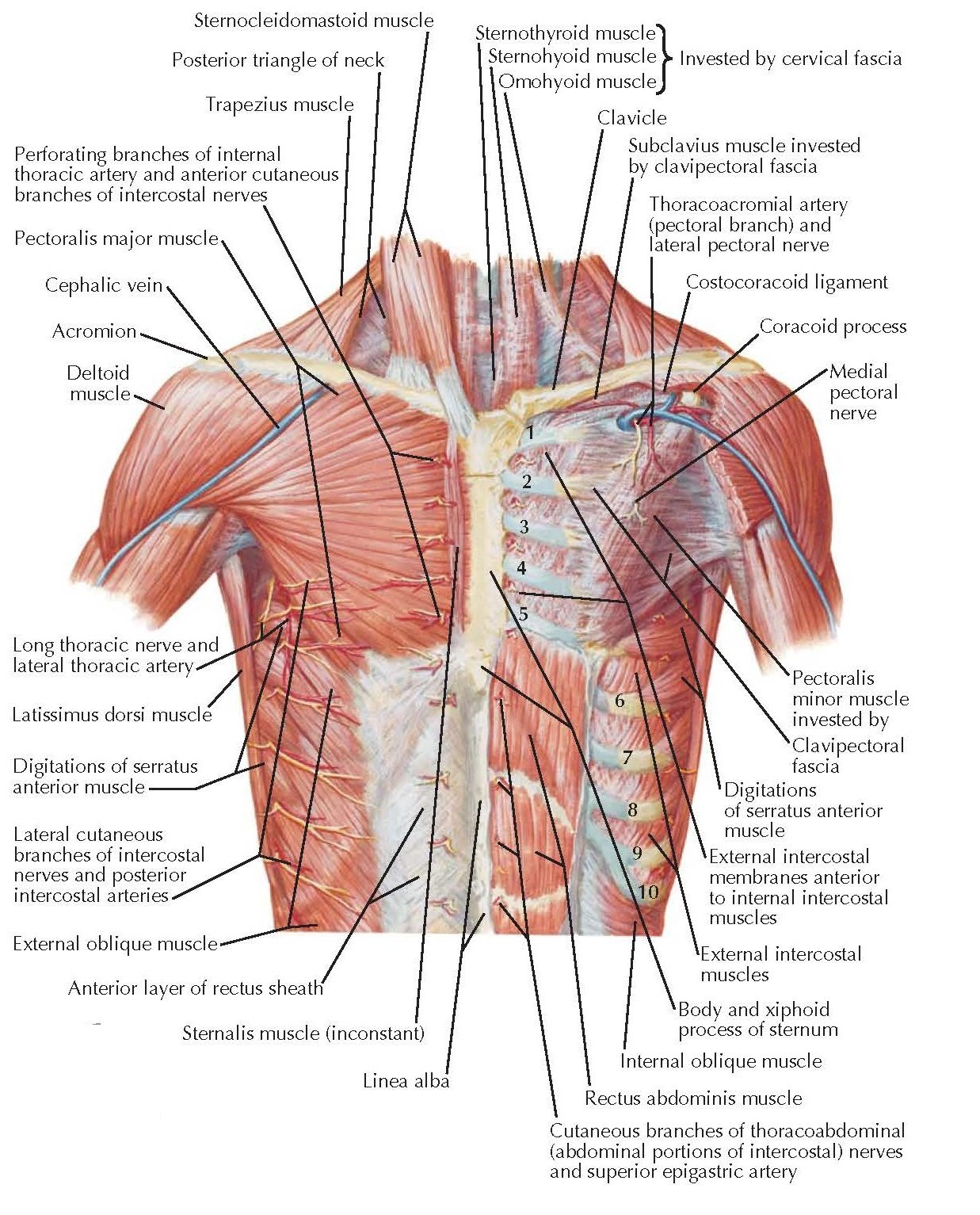
Posterior Abdominal Wall Muscles - Origin, Nerve Supply

Chief layers of the abdominal wall include

  • Skin,
  • Superficial fascia (the subcutaneous tissue which forms the thin, single layer above the umbilicus. Below the umbilicus, it is divided into two layers (1) the fatty superficial layer called Camper’s fascia and (2) the deep layer called Scarpa’s fascia. Blood vessels and nerves run between these two layers.)
  • Muscle,
  • Fascia,
  • Parietal peritoneum.

Muscles of the Abdominal Wall

Anterolateral Abdominal Wall Muscles

  • Anterior chest wall strength and movement receive contributions laterally by three layers of large flat paired muscles: the external oblique, internal oblique, and transversus abdominis. Anteromedially these layers fuse to form a rectus sheath that encloses the rectus abdominis and pyramidalis muscles. In the midline, the combined aponeuroses of these muscles fuse to form the linea alba.

External Oblique

  • The external oblique is the most superficial of the anterolateral abdominal wall muscles. Its fibers arise from the fifth through twelfth ribs and run inferomedially. As it approaches the midclavicular line, its fibers form an aponeurotic sheath, which travels superficially across the rectus abdominis to the linea alba in the midline. Together with the internal oblique, contraction causes rotation and lateral flexion of the vertebral column. Its inferior border forms the inguinal ligament, which runs between the ASIS and pubic tubercle.

Internal Oblique

  • This muscle lies immediately deep to external oblique. Together with the external oblique, contraction causes rotation and lateral flexion of the vertebral column. It originates from the lumbar fascia, iliac crest, and lateral inguinal ligament. Its fibers run superomedially, orthogonal to the external oblique before also becoming aponeurotic. Medially, its contributions to the rectus sheath differ between its upper fibers and lower fibers.
  • Upper fibers divide to enclose the rectus sheath anteriorly and posteriorly. Inferiorly, all fibers travel anterior to the rectus abdominal muscle. This portion of the rectus sheath will be deficient posteriorly, with no aponeurotic layer between the rectus abdominis and the transversal fascia. The inferior end of the posterior rectus sheath is called the “arcuate line.” Irrespective of their relationship to rectus abdominis, all layers continue medially to join the linea alba in the midline.

Transversus Abdominis

  • This muscle is the deepest of the anterolateral muscles. It arises from the fifth through tenth costal cartilages, lumbar fascia, iliac crest, and lateral inguinal ligament. Its fibers run transversely before becoming aponeurotic and running into the rectus sheath. Its upper portion travels posteriorly to the rectus abdominal muscles, contributing to the posterior rectus sheath.
  • Below the arcuate line, its aponeurosis runs anteriorly to the muscle, contributing to the anterior sheath. The contraction of the transversus abdominis causes compression of abdominal contents. The inferior edge of the internal oblique and transversus abdominis form the conjoint tendon.

Rectus Abdominis

  • This muscle is long and narrow, running in the rectus sheath vertically and parallel to the linea alba. It arises from the pubic symphysis and crest and runs superiorly to attach to the fifth through seventh costal cartilages. It is a powerful flexor of the vertebral column.
  • Each muscle belly is divided by three tendinous intersections into four discrete muscle segments. The tendinous intersections have a tether to the overlying anterior rectus sheath. In an athlete, these may be visible and described as a ‘six-pack.’

Pyramidalis

  • This muscle is a minor triangular muscle that sits anteriorly to the rectus abdominis in the inferior rectus sheath. Its origin is from the body of the pubis and tenses the linea alba when contracting. It is present bilaterally in 80% of people.

Posterior Abdominal Wall Muscles

Quadratus Lumborum

  • This muscle originates from the iliolumbar ligament and iliac crest and runs superomedially to insert into the twelfth rib and L1-4 transverse processes. Contraction can cause lateral flexion and extension of the vertebral column, and depression of the rib cage.

Psoas Major

  • This muscle originates from the transverse processes of T12 and L1-4 vertebrae and lateral surfaces of the intervening intervertebral discs. It runs inferiorly, joining the iliacus to insert into the lesser trochanter of the femur. Contraction causes flexion of the thigh.

Flat Muscles

  • External Oblique – the most superficial and also the largest flat muscle of the abdominal wall. It runs in an inferior-medial direction and at the midline, its fibers form an aponeurosis and in the midline merge with the linea alba. This fibrous structure extends from the xiphoid process to the pubic symphysis.
  • Internal Oblique – located deeper to the external oblique and is much thinner and smaller. Its fibers run superomedial and near the midline form aponeurosis which contribute to the linea alba.
  • Transversus Abdominis – the deepest of the flat muscles and its fibers run transversely. It also continues to the linea alba in the midline. Just beneath the transversus abdominis muscle is the transversalis fascia.

Vertical Muscles

  • Rectus Abdominis – long paired vertical muscle located on either side of the midline. It is divided into two segments by the linea alba. The lateral border of the muscle is called the linea semilunaris. At several locations, the muscle is intersected by fibrous intersections which give rise to the “six-pack” seen in athletes. The rectus abdominis compresses the abdominal viscera, prevents herniation, and stabilizes the pelvis during ambulation.
  • Pyramidalis – vertical muscle shaped like a triangle. It is located superficial to the rectus abdominis and located at the base of the pubic bone. The apex of the triangle attaches to the linea alba.

Function

The major functions of the abdominal wall include:

  • Providing a durable and flexible covering to prevent the abdominal viscera from leaving the abdominal cavity.
  • Protecting internal abdominal organs from trauma/injury.
  • Maintaining the anatomical position of the abdominal organs.
  • Assisting expiration by pushing the abdominal organs towards the diaphragm.
  • Assisting in coughing and vomiting by increasing intra-abdominal pressure.

References

Doctor visit helper

Prepare before seeing a doctor

A simple rural-patient checklist to help you explain symptoms clearly, ask better questions, and avoid unsafe self-treatment.

Safety note: This is not a prescription or diagnosis. For severe symptoms, pregnancy danger signs, children with serious illness, chest pain, breathing difficulty, stroke-like weakness, or major injury, seek urgent care.

Which doctor may help?

General physician, gastroenterologist, surgeon, or emergency service if severe.

What to tell the doctor

  • Write pain location, vomiting, fever, stool/urine changes, pregnancy possibility, and food history.

Questions to ask

  • Could this be appendicitis, gallbladder, ulcer, kidney stone, infection, or gynecological emergency?
  • Do I need ultrasound or urgent surgical review?

Tests to discuss

  • Abdominal examination
  • CBC, urine test, pregnancy test when relevant
  • Ultrasound abdomen when indicated

Avoid these mistakes

  • Do not delay care for severe pain, rigid abdomen, persistent vomiting, black stool, pregnancy pain, or fainting.

Medicine safety and first-aid guide

This section is for patient education only. It does not replace a doctor, pharmacist, or emergency care.

Safe first steps

  • Avoid heavy lifting, sudden bending, and prolonged bed rest.
  • Use comfortable posture and gentle movement as tolerated.
  • Discuss physiotherapy, X-ray, or MRI only when clinically needed.

OTC medicine safety

  • For mild back pain, pain-relief medicine may be discussed with a doctor or pharmacist.
  • Avoid repeated painkiller use if you have kidney disease, stomach ulcer, uncontrolled blood pressure, or are taking blood thinners.

Avoid these mistakes

  • Do not start antibiotics without a proper medical decision.
  • Do not use steroid tablets or injections casually for quick relief.
  • Do not delay emergency care because of home remedies.

Get urgent help if

  • Back pain with leg weakness, numbness around private area, loss of urine/stool control, fever, cancer history, or major injury needs urgent care.
Medicine names, dose, and timing must be decided by a qualified clinician or pharmacist after checking age, pregnancy, allergy, other diseases, and current medicines.

For rural patients and family caregivers

Patient health record and symptom diary

Write your symptoms, medicines already taken, test results, and questions before visiting a doctor. This note stays on your device unless you print or copy it.

Doctor to discuss: Orthopedic / spine specialist, physical medicine doctor, or qualified clinician
Tests to discuss with doctor
  • Neurological examination for leg power, sensation, reflexes, and straight leg raise
  • X-ray only if injury, deformity, long-lasting pain, or doctor suspects bone problem
  • MRI discussion if severe nerve symptoms, weakness, bladder/bowel problem, or persistent symptoms
Questions to ask
  • What is the most likely cause of my symptoms?
  • Which warning signs mean I should go to emergency care?
  • Which tests are really needed now?
  • Which medicines are safe for my age, pregnancy status, allergy, kidney/liver/stomach condition, and current medicines?
  • Is physiotherapy, posture correction, or activity modification needed?

Emergency warning signs such as chest pain, severe breathing difficulty, sudden weakness, confusion, severe dehydration, major injury, or loss of bladder/bowel control need urgent medical care. Do not wait for online information.

Safe pathway to proper treatment

Care roadmap for: Posterior Abdominal Wall Muscles – Origin, Nerve Supply

Use this simple roadmap to understand the next safe steps. It is educational and does not replace examination by a doctor.

Go to emergency care if you notice:
  • Severe or rapidly worsening symptoms
  • Breathing difficulty, chest pain, fainting, confusion, severe weakness, major injury, or severe dehydration
Doctor / service to discuss: Qualified healthcare provider; specialist depends on symptoms and examination.
  1. Step 1

    Check danger signs first

    If danger signs are present, seek emergency care and do not wait for online information.

  2. Step 2

    Record the symptom story

    Write when symptoms started, severity, medicines already taken, allergies, pregnancy status, and test results.

  3. Step 3

    Visit a qualified clinician

    A doctor, nurse, or qualified healthcare provider can examine you and decide which tests or treatment are needed.

  4. Step 4

    Do only useful tests

    Do tests after clinical assessment. Avoid unnecessary tests, random antibiotics, or repeated medicines without diagnosis.

  5. Step 5

    Follow up and return early if worse

    If symptoms worsen, new warning signs appear, or treatment is not helping, return for review quickly.

Rural patient practical tips
  • Take a written symptom diary and all previous prescriptions/test reports.
  • Do not hide medicines already taken, even herbal or over-the-counter medicines.
  • Ask which warning signs mean urgent referral to hospital.

This roadmap is for education. A real diagnosis and treatment plan requires history, examination, and clinical judgment.

RX Patient Help

Ask a health question safely

Write your symptom story. A health professional or site editor can review it before any answer is prepared. This box is not for emergency care.

Emergency first: Severe chest pain, breathing trouble, unconsciousness, stroke signs, severe injury, heavy bleeding, or rapidly worsening symptoms need urgent local medical care now.

Frequently Asked Questions

Is this article a replacement for a doctor?

No. It is educational content only. Patients should consult a qualified clinician for diagnosis and treatment.

When should I seek urgent care?

Seek urgent care for severe symptoms, rapidly worsening condition, breathing difficulty, severe pain, neurological changes, or any emergency warning sign.

References

Add references, clinical guidelines, textbooks, journal articles, or trusted medical sources here. You can edit this area from the RX Article Professional Blocks panel.
