
Epithelial Tissue – Types and Functions

Patient Tools

Read, save, and share this guide

Use these quick tools to make this medical article easier to read, print, save, or share with a family member.

Patient Mode

Understand this article easily

Switch between simple English and easy Bangla patient notes. This is for education and does not replace a doctor consultation.

Epithelial tissues are widespread throughout the body. They form the covering of all body surfaces, line body cavities, and hollow organs, and are the major tissue in glands. They perform a variety of functions that include protection, secretion, absorption, excretion, filtration, diffusion, and sensory reception. The human...

For severe symptoms, danger signs, pregnancy, child illness, or sudden worsening, seek urgent medical care.

বাংলা রোগী নোট এখনো যোগ করা হয়নি। পোস্ট এডিটরে “RX Bangla Patient Mode” বক্স থেকে সহজ বাংলা সারাংশ যোগ করুন।

এই তথ্য শিক্ষা ও সচেতনতার জন্য। এটি ডাক্তারি পরীক্ষা, রোগ নির্ণয় বা প্রেসক্রিপশনের বিকল্প নয়।

Article Summary

Epithelial tissues are widespread throughout the body. They form the covering of all body surfaces, line body cavities, and hollow organs, and are the major tissue in glands. They perform a variety of functions that include protection, secretion, absorption, excretion, filtration, diffusion, and sensory reception. The human body consists of four types of tissue: epithelial, connective, muscular, and nervous. Epithelial tissue covers the body, lines all cavities,...

Key Takeaways

  • This article explains Types of Epithelial Tissue in simple medical language.
Educational health guideWritten for patient understanding and clinical awareness.
Reviewed content workflowUse writer and reviewer profiles for stronger trust.
Emergency safety firstUrgent warning signs are highlighted below.

Seek urgent medical care if you notice

These warning signs are general safety guidance. Local emergency numbers and clinical judgment should always come first.

  • Severe symptoms, breathing difficulty, fainting, confusion, or rapidly worsening illness.
  • New weakness, severe pain, high fever, or symptoms after a serious injury.
  • Any symptom that feels urgent, unusual, or unsafe for the patient.
1

Emergency now

Use emergency care for severe, sudden, rapidly worsening, or life-threatening symptoms.

2

See a doctor

Book a professional medical evaluation if symptoms persist, worsen, recur often, affect daily activities, or occur in a high-risk patient.

3

Learn safely

Use this article to understand possible causes, tests, treatment options, prevention, and questions to ask your clinician.

Before reading

RX Patient Tools

Use these quick guides before reading the article, or return to them when you need help preparing questions for a doctor.

Start here Choose the right pathway for symptoms, reports, medicines, or urgent warning signs. Disease article roadmap Read this topic step by step: meaning, symptoms, warning signs, diagnosis, treatment, prevention, and follow-up. Treatment planner Prepare questions about treatment choices, benefits, risks, side effects, and follow-up. Family & caregiver guide Organize symptoms, reports, medicines, questions, and follow-up safely. Nutrition & diet guide Prepare food, hydration, supplement, and medicine-timing questions safely. Prevention guide Organize risk factors, protective habits, screening, and warning signs. Recovery guide Prepare a safe plan for activity, rehabilitation, warning signs, and follow-up.
Definition

Epithelial tissues are widespread throughout the body. They form the covering of all body surfaces, line body cavities, and hollow organs, and are the major tissue in glands. They perform a variety of functions that include protection, secretion, absorption, excretion, filtration, diffusion, and sensory reception.

The human body consists of four types of tissue: epithelial, connective, muscular, and nervous. Epithelial tissue covers the body, lines all cavities, and composes the glands.

Key Points

Epithelial tissue is composed of cells laid together in sheets with the cells tightly connected to one another. Epithelial layers are avascular but innervated.

Epithelial cells have two surfaces that differ in both structure and function.

Glands, such as exocrine and endocrine, are composed of epithelial tissue and classified based on how their secretions are released.

Key Terms

epithelium: A membranous tissue composed of one or more layers of cells that form the covering of most internal and external surfaces of the body and its organs.

avascular: Lacking blood vessels.

vascular: Containing blood vessels.

Functions of the Epithelium

Epithelial tissue forms boundaries between different environments and nearly all substances must pass through the epithelium. In its role as an interface tissue, epithelium accomplishes many functions, including:

  • Protection for the underlying tissues from radiation, desiccation, toxins, and physical trauma.
  • Absorption of substances in the digestive tract lining with distinct modifications.
  • Regulation and excretion of chemicals between the underlying tissues and the body cavity.
  • The secretion of hormones into the blood vascular system. The secretion of sweat, mucus, enzymes and other products that are delivered by ducts come from the glandular epithelium.
  • The detection of sensation.

Characteristics of Epithelial Layers

Epithelial tissue is composed of cells laid out in sheets with strong cell-to-cell attachments. These protein connections hold the cells together to form a tightly connected layer that is avascular but innervated in nature.

The epithelial cells are nourished by substances diffusing from blood vessels in the underlying connective tissue. One side of the epithelial cell is oriented towards the surface of the tissue, body cavity, or external environment and the other surface is joined to a basement membrane. The basement layer is non-cellular in nature and helps to cement the epithelial tissue to the underlying structures.

Types of Epithelial Tissue

Epithelial tissues are identified by both the number of layers and the shape of the cells in the upper layers. There are eight basic types of epithelium: six of them are identified based on both the number of cells and their shape; two of them are named by the type of cell (squamous) found in them. Epithelial tissue is classified based on the number of cells, the shape of those cells, and the types of those cells.

Epithelial Tissue Cells
Cells Locations Function
Simple squamous epithelium 

Epithelial Tissue - Types and Functions

Air sacs of the lungs and  the lining of the heart, blood vessels and lymphatic vessels Allows materials to pass through by diffusion and filtration, and secretes lubricating substances
Simple cuboidal epithelium 

Epithelial Tissue - Types and Functions

In ducts and secretory portions of small glands and in kidney tubules Secretes and absorbs
Simple columnar epithelium 

Epithelial Tissue - Types and Functions

Ciliated tissues including the bronchi, uterine tubes, and uterus; smooth (nonciliated tissues) are in the digestive tract bladder Absorbs; it also secretes mucous and enzymes.
Pseudostratified columnar epithelium 

Epithelial Tissue - Types and Functions

Ciliated tissue lines the trachea and much of the upper respiratory tract Secrete mucous; ciliated tissue moves mucous
Stratified squamous epithelium 

Epithelial Tissue - Types and Functions

Lines the esophagus, mouth, and vagina Protects against abrasion
Stratified cuboidal epithelium 

Epithelial Tissue - Types and Functions

Sweat glands, salivary glands, and mammary glands Protective tissue
Stratified columnar epithelium 

Epithelial Tissue - Types and Functions

The male urethra and the ducts of some glands. Secretes and protects
Transitional epithelium 

Epithelial Tissue - Types and Functions

Lines the bladder, urethra and ureters Allows the urinary organs to expand and stretch

Types of Epithelial Tissue

Epithelial tissue is classified by cell shape and the number of cell layers.

Key Points

There are three principal cell shapes associated with epithelial cells: squamous epithelium, cuboidal epithelium, and columnar epithelium.

There are three ways of describing the layering of epithelium: simple, stratified, and pseudostratified.

Pseudostratified epithelium possesses fine hair-like extensions called cilia and unicellular glands called goblet cells that secrete mucus. This epithelium is described as ciliated pseudostratified epithelium.

Stratified epithelium differs from simple epithelium in that it is multilayered. It is therefore found where body linings have to withstand mechanical or chemical insult.

In keratinized epithelia, the most apical layers (exterior) of cells are dead and contain a tough, resistant protein called keratin. An example of this is found in mammalian skin that makes the epithelium waterproof.

Transitional epithelia are found in tissues such as the urinary bladder where there is a change in the shape of the cell due to stretching.

Key Terms

simple columnar: A columnar epithelium that is uni-layered.

pseudostratified epithelium: A type of epithelium that, though comprising only a single layer of cells, has its cell nuclei positioned in a manner suggestive of stratified epithelia.

squamous: Flattened and scale-like.

cuboidal: Resembling a cube.

Keratinized: To produce or become like keratin.

columnar: Having the shape of a column.

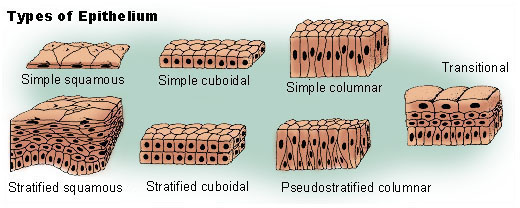
Most epithelial tissue is described with two names. The first name describes the number of cell layers present and the second describes the shape of the cells. For example, simple squamous epithelial tissue describes a single layer of cells that are flat and scale-like in shape.
Epithelial Tissue - Types and Functions

Epithelial Tissue: There are three principal classifications associated with epithelial cells. Squamous epithelium has cells that are wider than they are tall. Cuboidal epithelium has cells whose height and width are approximately the same. The columnar epithelium has cells taller than they are wide.

Simple Epithelia

The simple epithelium consists of a single layer of cells. They are typically where absorption, secretion  and filtration occur. The thinness of the epithelial barrier facilitates these processes.

Simple epithelial tissues are generally classified by the shape of their cells. The four major classes of simple epithelium are: 1) simple squamous; 2) simple cuboidal; 3) simple columnar; and 4) pseudostratified.

Simple Squamous

Simple squamous epithelium cells are flat in shape and arranged in a single layer. This single layer is thin enough to form a membrane that compounds can move through via passive diffusion. This epithelial type is found in the walls of capillaries, linings of the pericardium, and the linings of the alveoli of the lungs.

Simple Cuboidal

The simple cuboidal epithelium consists of single-layer cells that are as tall as they are wide. The important functions of the simple cuboidal epithelium are secretion and absorption. This epithelial type is found in the small collecting ducts of the kidneys, pancreas, and salivary glands.

Simple Columnar

The simple columnar epithelium is a single row of tall, closely packed cells, aligned in a row. These cells are found in areas with high secretory function (such as the wall of the stomach), or absorptive areas (as in the small intestine ). They possess cellular extensions (e.g., microvilli in the small intestine or the cilia found almost exclusively in the female reproductive tract).

Pseudostratified

These are simple columnar epithelial cells whose nuclei appear at different heights, giving the misleading (hence pseudo) impression that the epithelium is stratified when the cells are viewed in cross-section.

Pseudostratified epithelium can also possess fine hair-like extensions of their apical (luminal) membrane called cilia. In this case, the epithelium is described as ciliated pseudostratified epithelium. Ciliated epithelium is found in the airways (nose, bronchi), but is also found in the uterus and fallopian tubes of females, where the cilia propel the ovum to the uterus.

Stratified Epithelium

Stratified epithelium differs from simple epithelium by being multilayered. It is therefore found where body linings have to withstand mechanical or chemical insults.

Stratified epithelia are more durable and protection is one their major functions. Since stratified epithelium consists of two or more layers, the basal cells divide and push towards the apex, and in the process flatten the apical cells.

Stratified epithelia can be columnar, cuboidal, or squamous type. However, it can also have the following specializations:

Keratinized Epithelia

In keratinized epithelia, the most apical layers (exterior) of cells are dead and lose their nucleus and cytoplasm. They contain a tough, resistant protein called keratin. This specialization makes the epithelium waterproof, and it is abundant in mammalian skin. The lining of the esophagus is an example of a non-keratinized or moist stratified epithelium.

Transitional Epithelia

Transitional epithelia are found in tissues that stretch and it can appear to be stratified cuboidal when the tissue is not stretched, or stratified squamous when the organ is distended and the tissue stretches. It is sometimes called the urothelium since it is almost exclusively found in the bladder, ureters, and urethra.


Doctor visit helper

Prepare before seeing a doctor

A simple rural-patient checklist to help you explain symptoms clearly, ask better questions, and avoid unsafe self-treatment.

Safety note: This is not a prescription or diagnosis. For severe symptoms, pregnancy danger signs, children with serious illness, chest pain, breathing difficulty, stroke-like weakness, or major injury, seek urgent care.

Which doctor may help?

Start with a registered doctor or the nearest qualified health center.

What to tell the doctor

  • Write when the problem started and how it changed.
  • Bring old prescriptions, investigation reports, and current medicines.
  • Write allergies, pregnancy status, diabetes, kidney/liver disease, and major past illnesses.
  • Bring one family member if the patient is weak, elderly, confused, or a child.

Questions to ask

  • What is the most likely cause of my symptoms?
  • Which danger signs mean I should go to hospital quickly?
  • Which tests are necessary now, and which can wait?
  • How should I take medicines safely and what side effects should I watch for?
  • When should I come for follow-up?

Tests to discuss

  • Vital signs: temperature, pulse, blood pressure, oxygen saturation
  • Basic physical examination by a clinician
  • CBC, urine test, blood sugar, or imaging only when clinically needed

Avoid these mistakes

  • Do not use antibiotics, steroid tablets/injections, or strong painkillers without proper medical advice.
  • Do not hide pregnancy, kidney disease, ulcer, allergy, or blood thinner use.
  • Do not delay emergency care when danger signs are present.

Medicine safety and first-aid guide

This section is for patient education only. It does not replace a doctor, pharmacist, or emergency care.

Safe first steps

  • Rest, drink safe water, and observe symptoms carefully.
  • Keep a written note of symptoms, duration, temperature, medicines already taken, and allergy history.
  • Seek medical care quickly if symptoms are severe, worsening, or unusual for the patient.

OTC medicine safety

  • For mild pain or fever, ask a registered pharmacist or doctor before using common over-the-counter pain/fever medicines.
  • Do not combine multiple pain medicines without advice, especially if you have kidney disease, liver disease, stomach ulcer, asthma, pregnancy, or take blood thinners.
  • Do not give adult medicines to children unless a qualified clinician advises it.

Avoid these mistakes

  • Do not start antibiotics without a proper medical decision.
  • Do not use steroid tablets or injections casually for quick relief.
  • Do not delay emergency care because of home remedies.

Get urgent help if

  • Severe symptoms, confusion, fainting, breathing difficulty, chest pain, severe dehydration, or sudden weakness need urgent medical care.
Medicine names, dose, and timing must be decided by a qualified clinician or pharmacist after checking age, pregnancy, allergy, other diseases, and current medicines.

For rural patients and family caregivers

Patient health record and symptom diary

Write your symptoms, medicines already taken, test results, and questions before visiting a doctor. This note stays on your device unless you print or copy it.

Doctor to discuss: Doctor / qualified healthcare provider
Tests to discuss with doctor
  • Basic vital signs: temperature, pulse, blood pressure, oxygen level if needed
  • Relevant blood, urine, imaging, or specialist tests only after clinical assessment
Questions to ask
  • What is the most likely cause of my symptoms?
  • Which warning signs mean I should go to emergency care?
  • Which tests are really needed now?
  • Which medicines are safe for my age, pregnancy status, allergy, kidney/liver/stomach condition, and current medicines?

Emergency warning signs such as chest pain, severe breathing difficulty, sudden weakness, confusion, severe dehydration, major injury, or loss of bladder/bowel control need urgent medical care. Do not wait for online information.

Safe pathway to proper treatment

Care roadmap for: Epithelial Tissue – Types and Functions

Use this simple roadmap to understand the next safe steps. It is educational and does not replace examination by a doctor.

Go to emergency care if you notice:
  • Severe or rapidly worsening symptoms
  • Breathing difficulty, chest pain, fainting, confusion, severe weakness, major injury, or severe dehydration
Doctor / service to discuss: Qualified healthcare provider; specialist depends on symptoms and examination.
  1. Step 1

    Check danger signs first

    If danger signs are present, seek emergency care and do not wait for online information.

  2. Step 2

    Record the symptom story

    Write when symptoms started, severity, medicines already taken, allergies, pregnancy status, and test results.

  3. Step 3

    Visit a qualified clinician

    A doctor, nurse, or qualified healthcare provider can examine you and decide which tests or treatment are needed.

  4. Step 4

    Do only useful tests

    Do tests after clinical assessment. Avoid unnecessary tests, random antibiotics, or repeated medicines without diagnosis.

  5. Step 5

    Follow up and return early if worse

    If symptoms worsen, new warning signs appear, or treatment is not helping, return for review quickly.

Rural patient practical tips
  • Take a written symptom diary and all previous prescriptions/test reports.
  • Do not hide medicines already taken, even herbal or over-the-counter medicines.
  • Ask which warning signs mean urgent referral to hospital.

This roadmap is for education. A real diagnosis and treatment plan requires history, examination, and clinical judgment.

RX Patient Help

Ask a health question safely

Write your symptom story. A health professional or site editor can review it before any answer is prepared. This box is not for emergency care.

Emergency first: Severe chest pain, breathing trouble, unconsciousness, stroke signs, severe injury, heavy bleeding, or rapidly worsening symptoms need urgent local medical care now.

Frequently Asked Questions

Is this article a replacement for a doctor?

No. It is educational content only. Patients should consult a qualified clinician for diagnosis and treatment.

When should I seek urgent care?

Seek urgent care for severe symptoms, rapidly worsening condition, breathing difficulty, severe pain, neurological changes, or any emergency warning sign.

References

Add references, clinical guidelines, textbooks, journal articles, or trusted medical sources here. You can edit this area from the RX Article Professional Blocks panel.