
Sandoricum koetjape, the santol, Sentul, or cotton fruit, is a tropical fruit native to maritime Southeast Asia (Malesia). There are two varieties of santol fruit, previously considered two different species, the yellow variety, and the red. The difference is in the color that the older leaves turn before falling. The red appears to be more common and the reddish leaves mixed with the green ones add to the distinction and attractiveness of the tree. The fruits are often the size, shape, and slightly fuzzy texture of peaches, with a reddish tinge. Both types have skin that may be a thin peel to a thicker rind, according to the variety. It is often edible and in some cultivars may contain a milky juice. The central pulp near the seeds may be sweet or sour and contains inedible brown seeds. In some varieties, the outer rind is thicker and is the main edible portion, with a mild peachy taste combined with some taste and the pulpy texture of apples. In others, the outer rind is thinner and harder and the inner whitish pulp around the seeds is eaten. This may be rather sour in many cultivars, which has reduced the general acceptance of the tree. Most improved varieties have increased the thickness of the edible outer rind, which can be eaten with a spoon leaving just the outer skin, and should increase the acceptance of the santol worldwide.
The fruit grows on a fast-growing tree that may reach 150 feet in height. It bears ribbed leaves and pink or yellow-green flowers about 1 centimeter long.
| Santol fruit Quick Facts | |
|---|---|
| Name: | Santol fruit |
| Scientific Name: | Sandoricum koetjape |
| Origin | Indochina and Peninsular Malaysia, and has been introduced into India, Borneo, Indonesia, Mauritius, the Andaman Islands, and the Philippines |
| Colors | Yellowish to brownish-golden, sometimes blushed with pink |
| Shapes | Globose or oblate capsule, with prominent or shallow wrinkles extending a short distance from the base, 4.5–7.5 cm across |
| Flesh colors | White, translucent, juicy, sweet |
| Taste | Sweet-and-sour taste |
| Health benefits | Reduce Bad Cholesterol (LDL), Prevent Diabetes, Prevent Cancers, Control Body Weight, Prevent Hemorrhoids, Immune System Booster, Treatment of Diarrhea and Constipation, Maintain Healthy Teeth, Bone Health, Prevent Anemia, Prevent Alzheimer, Delay Aging Process, Anti-allergy, Treating Leucorrhea and Other Vaginal Infections, Tonic after childbirth, Termite Repellent and Insecticide, Mosquito Repellent |
Santol also referred to as Kechapi, Lolly Fruit is an ornamental evergreen tree belonging to the Mahogany family Meliaceae. Known scientifically as Sandoricum koetjape, the plant goes by several other common names including Kechapi, Lolly Fruit, Santol, Santol, Wild Mangosteen, Red santol, cotton fruit, sandal, sentul, Sayai and Visayan. The plant is native to Indochina and Peninsular Malaysia and has been introduced into India, Borneo, Indonesia, Mauritius, the Andaman Islands, and the Philippines where it has become naturalized. It has also been introduced into China, Taiwan, Australia, and into a few locations in Central America and Southern Florida. It is usually cultivated in Asian countries and its fruits are abundant in local markets during the season. It is around, juicy fruit as big as a big apple in size.
The Filipinos like it even in sour conditions and are generally eat with some salt. In the local markets of the Philippines, the santol is always for sale in normal quantity. Santol is also used to make marmalade. Several parts of the santol plant have anti-inflammatory properties. They are used for the treatment of diarrhea and dysentery. These are also used vinegar and a mixture of water as a carminative. It is also used for tanning fishing nets. The aromatic, caustic root is also a potent remedy for diarrhea. The root is a tonic for stomachic and antispasmodic.
Plant Description
Santol fruit is a deciduous, small to large ornamental evergreen tree up to 50 m tall with a straight trunk, flaky or fissured, lenticellate, and greyish to pale pinkish-brown bark which exudes a milky latex when bruised. Bole, which is sometimes straight but often crooked or fluted, is branchless for up to 18 meters. It has a diameter up to 100 cm and buttresses up to 3 meters high. The plant is found growing in dry as well as moist lowland dipterocarp forest, and also in kangas. It occurs scattered in primary, sometimes in secondary rain forests. It can be grown in acid sandy soil and oolitic limestone. The tree is completely intolerant to frost.
Leaves
The plant has alternated; trifoliolate long-stalked compound leaves are spirally arranged. The petiole is up to 18.5 cm long. Each leaf has 3 leaflets that are elliptic to oblong-ovate with pointed tips and rounded bases, and entire or wavy leaf margins. The apical leaflets are 6–26 cm long and 3–16 cm wide, and the lateral leaflets are smaller, 4–20 cm long, and 2–15 cm wide. Leaflets have sunken veins that create an uneven leaf texture. Leaflets are glossy green above, pale green below, and the undersides can be densely covered by short, soft brown hairs. Dark green leaves become bright red before dying.
Flower
Flowers are fragrant, bisexual, that is pinkish-yellow, yellowish-green, or white-yellow, about 1 by 1.3 cm, possessing five free petals. The calyx is a cup-shaped, 5-lobed; staminal tube cylindrical with 10 split teeth at the apex. The flowers are loosely arranged in axillary branched inflorescences known as panicles (15 to 30 cm in length). Flowering typically occurs once a year.
Fruit
The fruit is a globose-depressed capsule, with prominent or shallow wrinkles extending a short distance from the base, 4.5–7.5 cm across. The thin or thick rind has a wrinkled, softly hairy surface and contains a milky juice. They are initially green turning to yellowish to brownish-golden, sometimes blushed with pink. The white edible, translucent juicy pulp surrounding the seeds (known as arils) may be sour to sweet. The fruit has 3 – 5 brown, ovate to ellipsoid inedible seeds that are 2–3.5 cm long, which are usually tightly clinging or sometimes free from the pulp. It easily reproduces by seed, to be planted within a few days, as it has a short-lasting germination capability. In this case, we shall have to wait 5-7 years for seeing the first blooming.
Varieties
The various Santol is distinguished as botanical species rather than as cultivars. There are two general types of santol: the Yellow (formerly S. Indicum or S. nervosum); and the Red (formerly S. koetjape).
1. Yellow Santol
The leaflets of the Yellow type santol fruit are 6 in (15 cm) long, turn yellow when old. Flowers are pinkish-yellow in panicles to 6 in (15 cm) long. The fruit has a thin rind and the pulp is 1/4 to 1/2 in (0.6-1.25 cm) thick around the seeds and typically sweet. The fruit may not fall when ripe. Only the Yellow is now found wild in Malayan forests.
2. Red Santol
The leaflets of the Red type santol fruit are 12 in (30 cm) long, velvety beneath, turn red when old. Flowers are greenish or ivory, in panicles to 12 in (30 cm) long; Fruit has a thick rind, frequently to 1/2 in (1.25 cm); there is less pulp around the seeds, and it is sour. The fruit falls when it gets ripe.
Health benefits of Santol Fruit
Santol fruit is wildly known for its many health benefits from its leaves, fruit skin, and barks. People from Indochina, Malaysia, Indonesia, and Sri Lanka use the plant as traditional medicine. Let’s take a closer look at the health benefits of santol fruit below:
1. Reduce Bad Cholesterol (LDL)
Santol fruit consists of pectins, a soluble fiber. Pectin, along with good cholesterol (HDL) will bind with bad cholesterol (LDL) in the intestines, preventing the fats to be absorbed into our circulatory system. High level of LDL contributes to hypertension, stroke, and heart disease.
2. Prevent Diabetes
Santol fruit is good for diabetic people. Santol fruits are rich in fiber and have a low glycemic index. Fiber slows down foods digestion, therefore decreasing the absorption of sugar into the blood. This effect will control blood sugar levels. This is good for controlling body weight too.
3. Prevent Cancers
As stated earlier, santol fruit consists of plenty of antioxidants that help to prevent the growth of cancer cells. In one research, rats with mammary tumors were given extracts from whole santol fruits every day, and after some time, the number and size of the tumors were much reduced. The more recent study was able to separate a new ring-A secotriterpene and koetjapic acid. The 2 compounds exhibited cytotoxic activity against cancer cells.
4. Control Body Weight
Santol fruits consist of both soluble and insoluble fibers. Foods that are rich in fiber can fill us up and help us feel full longer. It makes our food cravings lower while improving our overall health with all the nutritional compounds it has. Many health problems are associated with obesity, such as cardiomyopathy, stroke, hypertension, diabetes hormonal disorders, and sleep disorder.
5. Prevent Hemorrhoids
Hemorrhoids are vascular structures in the anal canal, they help control the stool. It becomes a disease when they are swollen, inflamed, bleed, and have thrombosis. Vitamin C in santol fruits helps promote healthy endothelin blood vessels. Fibers help keep the stool in soft consistency. When the stool is soft, we don’t need to strain in defecating process. Constant straining during the defecating process is known to make thrombosis hemorrhoids. The increase of abdomen pressure during the defecating process will make the blood can’t circulate normally around the lower abdomen, and then thrombosis will be formed.
6. Immune System Booster
Santol fruits contain quercetin, an antioxidant that can help boost our immune system. Quercetin is a flavonoid that can be found in most vegetables and fruits. It is supposed to promote the prevention and treatment of cancer, but it still needs more research about the relationship between quercetin and cancer.
Since antioxidants are needed in our body, it doesn’t hurt to consume quercetin, including the one that is contained in santol fruits. Our body needs antioxidants to prevent cell damage and to keep the cells growing normally. Vitamin C contained in these fruits also boosts our stamina.
7. Treatment of Diarrhea and Constipation
The fiber contained in Santol fruits can help the defecation process. Fibers can either pull water from out of our colon or absorb excess water from our stool to keep our stool in soft consistency. This makes the defecating process much easier.
8. Maintain Healthy Teeth
Just like apples, biting and chewing santol fruits stimulate salivary glands to produce more saliva, thus reducing dental caries by lowering the number of mouth bacteria.
9. Bone Health
Calcium and phosphorus in this fruit help maintain the density of bones and teeth, thus preventing osteoporosis and maintaining strong enamel in teeth.
10. Prevent Anemia
Anemia is a condition of lacking healthy red blood cells. Santol fruits consist of iron, a very important mineral for producing red blood cells. These fruits also contain vitamin C. Vitamin C is known to help the intestine absorb iron effectively.
11. Prevent Alzheimer
Recent research reported that drinking santol juice regularly can keep Alzheimer away, thanks to the high antioxidants contained in this fruit. The antioxidants can fight the aging process of the brain.
12. Delay Aging Process
The high production of collagen makes our skin look youthful and tight. Vitamin C is also known as an antioxidant along with carotenes and quercetin contained in the fruits. Routine consumption can heal minor inflammations that make our skin wrinkle. Vitamin C also prevents scurvy.
13. Anti-allergy
Santol fruits consist of Sandorinic acid and Bryonotic acid. Both of these compounds are good agents for preventing and treating allergies. If you have allergies, you can eat some santol fruits regularly.
14. Treating Leucorrhea and Other Vaginal Infections
For vagina infection, the bark is boiled, and then the water is used to wash the vulva and vagina daily.
15. Tonic after childbirth
People in Malaysia use the water of boiled santol bark as a tonic after childbirth, to restore systems of the body.
16. Termite Repellent and Insecticide
The bark extract of the santol tree can be used to repel termites; the quality is the same as commercial products. But the killing effect is not quick, we need to apply the extract daily for a few days. Since it is a natural insecticide, it is environmentally friendly, organic, has no unpleasant odors, and doesn’t contain dangerous chemicals.
17. Mosquito Repellent
There was a study in the Philippines about how to convert santol stalks into mosquito coils. The study was successful to make santol mosquito coils. The product has no side effects to humans and animals. Santol mosquito coils effectively repel the mosquitoes, thus reducing the number of malaria, dengue fever, and any mosquito diseases that happen frequently in tropical countries.
Traditional uses and benefits of Santol Fruit
- Fruit, leaves, bark, roots, the sap of the santol tree is variously used medicinally in traditional medicine.
- The preserved fruit pulp is used medicinally as an astringent.
- The seed consists of an amorphous bitter principle.
- Pounded leaves are sudorific when applied to the skin for skin infections or rashes.
- Leaves are used to make a decoction against diarrhea, fever, and as a tonic after childbirth.
- Fresh leaves are placed on the body to cause sweating and a patient is bathed in a santol herbal tea to bring down fevers in the Philippines.
- A poultice of powdered bark is used to treat ringworm.
- Bark consists of traces of a bitter principle, a toxic alkaloid, and bitter sandoricum acid.
- Aromatic roots are used as an anti-diarrheic, anti-spasmodic, carminative, antiseptic, astringent, and stomachic and are prescribed as a general tonic after childbirth.
- Bitter roots, bruised with vinegar and water, are a carminative; used for diarrhea and dysentery.
- Fresh or recently dried roots are swallowed for colic.
- Traditionally, a decoction of the bark is used by Malays as a tonic after childbirth in Malaysia.
- It maintains muscle nerve movement and strengthens the muscles.
- It prevents diseases like Alzheimer’s disease and slows down the process of cell degeneration.
- It improves the blood flow to the Heart.
- It helps in eliminating excess cholesterol from the body.
- The antibacterial properties of Santol fruit reduce bad breath and cavities in the mouth.
- Santol fruit has phytonutrient content which prevents the multiplication of cancerous cells.
- Santol fruit prevents the body from allergies. It flushes the allergens and toxins out of the body.
- Santol fruit is rich in fiber and has a low glycemic index. It prevents sudden rise and fall of sugar levels in the blood.
- Santol fruit is also considered good for Diarrhea.
- Pounded leaves are sudorific when applied to the skin and are used to make a decoction against diarrhea and fever.
- Powdered bark is an effective treatment for ringworm, and contains triterpenes with anti-cancer activity.
Culinary Uses
- Ripe fruit is usually consumed raw plain or with spices added.
- Both the rind, as well as the pulp which adheres tightly to the seeds, is edible and can be eaten straight off the tree.
- With the seeds removed, the pulp is also cooked and candied or made into marmalade, jam, or preserved in syrup.
- Santol marmalade in glass jars is exported from the Philippines to Oriental food dealers in the United States and probably elsewhere.
- Very ripe fruits are naturally vinous and are fermented with rice to make an alcoholic drink.
- Young fruits are candied in Malaysia by paring, removing the seeds, boiling in water, and then boiling a second time with sugar.
- In Filipino cuisine, the grated rind is cooked in coconut milk (with bits of pork and hot pepper) and served as sinantolan in Southern Luzon.
- The partly ripe sour fruits are also used as a souring agent in sour broth dishes like sinigang.
- In Thai cuisine, this fruit is used to make some tam when still not fully ripe. It is also one of the main ingredients in the santol and pork and santol and prawn Thai curries.
Other Facts
- Santol tree makes an excellent shade tree.
- Besides being planted for its fruits, it is often planted for aesthetic purposes along avenues and in parks and also use as a boundary or barrier or support tree.
- The tree is important in soil conservation; its roots form vesicular-arbuscular mycorrhizae which improves the soil.
- Fruits are used as fish bait in Sarawak and the seeds have an insecticidal effect.
- Santol also provides valuable moderately hard and heavy timber which is useful for house-posts, interior construction, light-framing, barrels, cabinetmaking, carvings, ceiling, framing, furniture, hat-racks, posts, sculpture, boats, carts, sandals, clogs, butcher’s blocks, household utensils, fences, and carvings.
- The fragrant wood is used in perfumery.
- Bark yield tannin which is used in tanning fishing lines.
- Extracts from santol seeds also have insecticidal properties.
- Poles from the tree are used for fencing.
- It is used to make good quality charcoal.
Recipes
Ginataang Santol
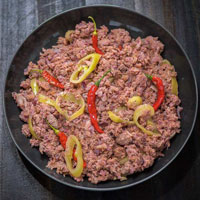
Ingredients
- 4 pieces of santol peeled and seeds removed
- 1/4 lb. ground pork
- 3 cups coconut cream
- 2 pieces long green pepper siling passing sliced crosswise
- 5 pieces Thai chili or siling labuyo
- 3 tablespoons shrimp paste
- 1 medium red onion minced
- 3 cloves garlic crushed
- 3 tablespoons cooking oil
Directions
- Mince (cut into very small pieces) the santol using a food processor. Note: you can also do it manually if preferred.
- Place the minced santol in the middle of a cheesecloth. Secure the santol inside the cloth and then wring until all the liquid comes out. Set aside.
- Heat oil in a pan. Saute garlic and onion.
- Once the onion starts to get translucent, add the ground pork. Continue to cook until the pork turns light brown.
- Add the minced santol. Cook for 3 to 5 minutes.
- Pour coconut milk into the pan. Let boil. Stir and cover the pan. Continue to cook in medium heat until the liquid reduces to half.
- Add shrimp paste, siling passing, and Thai chili. Stir. Continue to cook until the liquid completely evaporates.
- Transfer to a serving plate. Serve.
- Share and enjoy!
Santol Juice
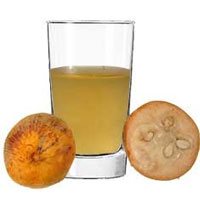
Ingredients
- 4-6 pcs. santol
- 3 cups + 2 cups water (1 cup is 8 oz.)
- 1 ½ cup refined sugar
- Ice cubes
Direction
- Peel the santol fruits. Scoop out the seeds and immerse them in 1 cup of water while peeling santol fruit.
- Chop the peeled santol inner flesh into tiny cubes, soak it in 1 cup water.
- Squeezed out the juice from the soaked seeds. Add it to the minced santol flesh.
- Prepare the syrup by boiling 3 cups of water with 1 cup of sugar.
- Pour in the soaked santol water without the flesh. Let it boil and turn off the heat. Let it cool.
- Transfer the juice into a pitcher and add in the cubed santol flesh. Stir it well. Allow the santol juice to soak in for a few hours inside the refrigerator.
- Optional: you can squeeze calamansi juice or lime for an added flavor.
- Serve it chilled with ice cubes. Enjoy!
References
- https://www.ncbi.nlm.nih.gov/pmc/articles/PMC3649719/
- https://www.ncbi.nlm.nih.gov/pmc/articles/PMC6315720/
- https://www.ncbi.nlm.nih.gov/pmc/articles/PMC3419346/
- https://www.ncbi.nlm.nih.gov/books/NBK11795/
- https://www.ncbi.nlm.nih.gov/pmc/articles/PMC5291486/
- https://fruits.edpsciences.org/articles/fruits/abs/2012/05/fruits120033/fruits120033.html
- http://www.fao.org/3/cb2395en/CB2395EN.pdf
- https://www.fao.org/in-action/inpho/crop-compendium/fruits-vegetables/en/
- https://www.fao.org/3/cb2395en/online/src/html/fruit-and-vegetables.html
- http://www.fao.org/3/cb2395en/CB2395EN.pdf
- https://en.wikipedia.org/wiki/Fruit
- https://en.wikipedia.org/wiki/List_of_food_plants_native_to_the_Americas
- https://en.wikipedia.org/wiki/List_of_culinary_fruits
- https://www.hsph.harvard.edu/nutritionsource/what-should-you-eat/vegetables-and-fruits/
- https://www.betterhealth.vic.gov.au/health/healthyliving/fruit-and-vegetables
- https://www.cdc.gov/healthyweight/healthy_eating/fruits_vegetables.html
- https://www.botanical-online.com/en/botany/fruits-types-characteristics
- https://www.fda.gov/food/laboratory-methods-food/mpm-v-9-fruits-and-fruit-products-v-51-v-78
- https://www.fda.gov/food/food-labeling-nutrition/nutrition-information-raw-fruits-vegetables-and-fish
- https://onlinelibrary.wiley.com/doi/abs/10.1111/mcn.12208
- http://news.discovery.com/earth/
- https://www.cabi.org/isc/datasheet/
- https://www.science.org/
- https://plants.ces.ncsu.edu/plants/
- https://www.sciencedirect.com/topics/agricultural-and-biological-sciences/fruit-vegetable
- https://www.researchgate.net/publication/
- https://www.ams.usda.gov/grades-standards/fruits
- https://www.aphis.usda.gov/aphis/resources/traveler/intl-travel/fruits-vegetables/fruits-vegetables
- https://snaped.fns.usda.gov/seasonal-produce-guide
- https://www.nass.usda.gov/Publications/Highlights/2015/FruitsNutsBerries_AgCensusHighlights.pdf
- https://plants.usda.gov/home/plantProfile?
- https://www.fs.fed.us/wildflowers/ethnobotany/food/nuts.shtml
- https://downloads.usda.library.cornell.edu/usda-esmis/files/zs25x846c/sf269213r/6t054c23t/ncit0521.pdf
- https://agr.wa.gov/departments/business-and-marketing-support/farm-to-school-toolkit/
- https://health.gov/sites/default/files/2020-01/DGA2000.pdf
- https://www.farmers.gov/archived/cfap2/specialty
- https://www.hsph.harvard.edu/nutritionsource/
- https://www.foodsafety.gov/food-safety-charts/food-safety-during-power-outage
- https://clinicaltrials.gov/ct2/show/
- https://botany.org/home/careers-jobs/careers-in-botany/what-is-botany.html
- https://www.healthbenefitstimes.com/category/fruits
- http://www.hear.org/pier/species/
- https://www.itis.gov/servlet/SingleRpt/SingleRpt?
- http://www.theplantlist.org/tpl1.1/record/
- https://www.fs.fed.us/database/feis/plants/tree/
- https://www.itis.gov/servlet/SingleRpt/SingleRpt?
- https://www.itis.gov/servlet/SingleRpt/SingleRpt?search_topic=TSN&search_value=896505#null
- http://www.hear.org/pier/species/sandoricum_koetjape.htm
- https://npgsweb.ars-grin.gov/gringlobal/taxonomydetail.aspx?id=33013
- https://plants.usda.gov/core/profile?symbol=SAKO4
- https://en.wikipedia.org/wiki/Sandoricum_koetjape
- https://www.cabi.org/isc/datasheet/50416
- http://www.theplantlist.org/tpl1.1/record/kew-2601089
- https://uses.plantnet-project.org/en/Sandoricum_koetjape_(PROSEA)
- http://www.tropicaltimber.info/specie/sentul-sandoricum-koetjape/#lower-content
- http://tropical.theferns.info/viewtropical.php?id=Sandoricum+koetjape
- https://gd.eppo.int/taxon/SNOKO
- http://old.worldagroforestry.org/treedb/AFTPDFS/Sandoricum_koetjape.PDF
- https://davesgarden.com/guides/pf/go/102884/#b

