
Red grapes are not just meant for making the world’s finest wine. There are more than 200 varieties of red grapes all over the world. Red varieties include red globe, cardinal, emperor, and flame seedless. There are numerous health benefits of red grapes for skincare and hair care benefits.
Red grapes contain fewer calories than green grapes. They are used to make red wine, jams, jellies, grape juice, or consumed just raw. Red grapes contain Vitamins A, C, B6, potassium, calcium, iron, phosphorus, folate, magnesium, and selenium. Flavonoids are the most powerful antioxidants found in grapes that contribute to ocular health.
| Red grapes Quick Facts | |
|---|---|
| Name: | Red grapes |
| Scientific Name: | Vitis vinifera |
| Origin | Mediterranean region, central Europe, and southwestern Asia |
| Colors | Green when young turning to red as they matures |
| Shapes | Berry, ellipsoid to globose, 6–25 mm diameter, with soft skin adhering to the pulp |
| Taste | Sweet and tarty taste |
| Calories | 104 Kcal./cup |
| Major nutrients | Copper (21.33%) Carbohydrate (21.02%) Vitamin K (18.33%) Vitamin B6 (10.00%) Vitamin B1 (8.67%) |
| Health benefits | Hair Care, Improve Cognition, Healthy Heart, Beautiful Skin, Weight Loss Anti-ageing, Helps your Kidneys, Antibacterial Activity, Asthma Fights Neuro-degenerative Diseases, Good for Eyes, Helps Knees, Improves Eyesight Healthy Brain, Fights Cancer, Anti- Inflammatory Properties |
Red grapes are synonymous with good health. Although it’s true that white grapes also are beneficial to our well-being, darker grapes possess a greater number of antioxidants. There are people who don’t distinguish between the flavors of different grapes. Those who do understand the difference appreciate a nice bunch of red grapes above any other type.
Red grapes are not just meant for making the world’s finest wine. There are more than 200 varieties of red grapes all over the world. Red varieties include red globe, cardinal, emperor, and flame seedless. Having been cultivated for thousands of years, dating back to the ancient Egyptians, grapes have always played an important part in global cultures. Purple grapes were likely the first to be cultivated, but red grapes have been cultivated for at least 1,200 years.
Red grapes contain fewer calories than green grapes. Red grapes contain Vitamins A, C, B6, potassium, calcium, iron, phosphorus, folate, magnesium and selenium. Flavonoids are the most powerful antioxidants found in grapes that contribute to ocular health.
Red grapes are a popular fruit in fruit salads and eaten raw, but are also important components for grape juice and wine. These grapes have a particular combination of pigment cells and resveratrol in the skin that gives them their distinctive color; for example, yellow and green grapes have lower resveratrol content than red grapes. One of the most commonly found grape varieties around the world, red grapes come in seeded and seedless varieties.
Popular Red grape varieties
The most popular red grape varieties today are Cabernet Sauvignon, Merlot, Pinot Noir, Syrah/Shiraz, and Zinfandel. You can find these grapes in varietal wines and place-name wines.
1. Cabernet Sauvignon
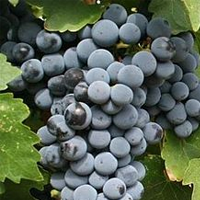
Cabernet Sauvignon is an honorable grape variety that grows well in just about any climate that isn’t very cool. It became famous through the red wines of the Médoc district of Bordeaux. Today, California is an equally important region for Cabernet Sauvignon not to mention Washington state, southern France, Italy, Australia, South Africa, Chile, and Argentina. The Cabernet Sauvignon grape makes wines that are high in tannin and are medium- to full-bodied.
2. Merlot
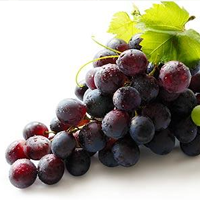
Deep color, full body, high alcohol, and low tannin are the characteristics of wines made from the Merlot grape. Aromas and flavors can be plummy or sometimes chocolaty, or they can recommend tea leaves.
3. Pinot Noir
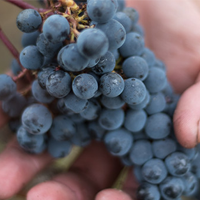
The Pinot Noir grape variety is finicky, troublesome, mysterious, and challenging. But a great Pinot Noir can be one of the greatest wines ever. The prototype for Pinot Noir wine is red Burgundy, from France, where tiny vineyard plots produce rare treasures of wine made entirely from Pinot Noir. Pinot Noir wine is lighter in color than Cabernet or Merlot.
4. Syrah/Shiraz
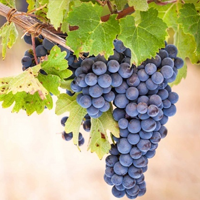
The northern part of France’s Rhône Valley is the classic home for great wines from the Syrah grape. Syrah produces deeply colored wines with full-body, firm tannin, and aromas/flavors that can recommend berries, smoked meat, black pepper, tar, or even burnt rubber (believe it or not).
5. Zinfandel
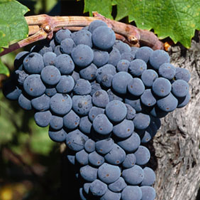
Zinfandel is one of the oldest grapes in California, and it, therefore, enjoys a certain stature there. For decades, wine authorities were uncertain of its origins. They have finally proven that Zinfandel’s origin is an obscure Croatian grape. It makes rich, dark wines that are high in alcohol and medium to high in tannin. They can have a blackberry or raspberry aroma and flavor, a spicy or tarry character, or even a jammy flavor.
6. Barbera
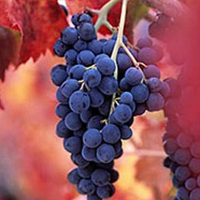
Barbera is most popular in northern Italy –Alba, Asti- and Argentina. Wines made from Barbera grapes are medium to full-bodied, with tannins on the light side, thus easy to drink. You can expect a sweet fruit flavor, reminiscent of red berries and spice. It is grown mainly in Italy -Alba, Asti.
7. Cabernet Franc
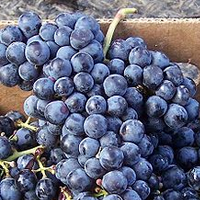
Cabernet Franc is mainly grown in Bordeaux, where it is used for blending with Cabernet Sauvignon and Merlot, and the Loira Valley, where it is cultivated for varietals it is the only grape used in some high-quality wines. This grape is the origin of lighter red wines than those made from Cabernet Sauvignon, a very close variety. Cabernet Franc wines have more to them than Merlot wines.
8. Carignan
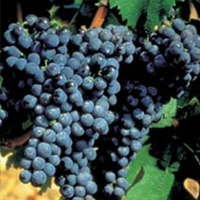
This variety grows in the south of France, Spain, and parts of California. Carignan produces fairly tannic, full-bodied wines with profound color and uncomplicated berry flavors.
9. Cinsaut
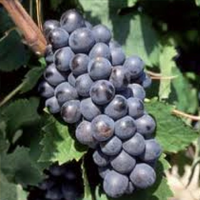
This variety grows widely in the south of France and Corsica. This is a pale-colored grape with a sweet, spicy aroma. Though mainly used in blends it produces a varietal rosé worthy of note.
10. Dolcetto
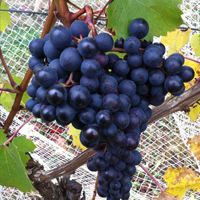
Dolcetto origins are in the Italian Piedmont. Dolcetto wines are adorably easy to drink, bringing flavors of cherries, almonds, and red fruit and deep color. Wines made from Dolcetto grapes are best when young.
11. Gamay
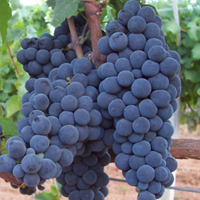
It is a grape with dazzling cherry flavors and a colorful pink-purple tint. It makes low tannin, very drinkable wines. Gamay grows in many areas of France and Europe but shines in Beaujolais.
12. Grenache
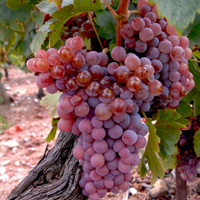
A grape from Spanish origins, where it is known as Garnacha, producer of moist, pale, very alcoholic, cherry and pepper flavored wines. In the right conditions, the wines can be deep-colored, full of fruity aromas and flavors with a hint of raspberries. This variety is mostly used in blends. There is some in Argentina, but it grows mainly in Spain, Rioja, Priorato- France –Cahors, Bordeaux.
13. Malbec
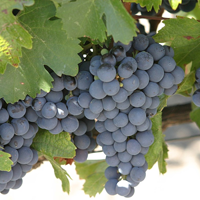
It is a vigorous red grape variety full of spicy red berry flavors. Cultivated in France and more widely in Argentina, where it makes of deep colored wines with powerful tannins.
14. Pinotage
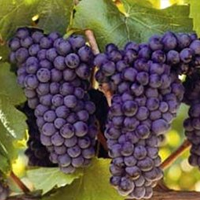
Pinotage is a cross between Pinot Noir and Cinsaut, totally a 20th-century variety. Pinotage keeps the berry sweet flavor from Pinot and gets the fruity spiciness from Cinsaut. It is widely cultivated in South Africa but it has not yet taken out of that region.
Nutritional value of Grapes, red or green (European type, such as Thompson seedless), raw
| Proximity | Amount | % DV |
|---|---|---|
| Water | 121.62 g | N/D |
| Energy | 104 Kcal | N/D |
| Energy | 435 kJ | N/D |
| Protein | 1.09 g | 2.18% |
| Total Fat (lipid) | 0.24 g | 0.69% |
| Ash | 0.72 g | N/D |
| Carbohydrate | 27.33 g | 21.02% |
| Total dietary Fiber | 1.4 g | 3.68% |
| Total Sugars | 23.37 g | N/D |
| Sucrose | 0.23 g | N/D |
| Glucose (dextrose) | 10.87 g | N/D |
| Fructose | 12.28 g | N/D |
| Minerals | Amount | % DV |
|---|---|---|
| Calcium, Ca | 15 mg | 1.50% |
| Iron, Fe | 0.54 mg | 6.75% |
| Magnesium, Mg | 11 mg | 2.62% |
| Phosphorus, P | 30 mg | 4.29% |
| Potassium, K | 288 mg | 6.13% |
| Sodium, Na | 3 mg | 0.20% |
| Zinc, Zn | 0.11 mg | 1.00% |
| Copper, Cu | 0.192 mg | 21.33% |
| Manganese, Mn | 0.107 mg | 4.65% |
| Selenium, Se | 0.2 µg | 0.36% |
| Iodine | µg | 0.00% |
| Chromium | µg | 0.00% |
| Molybdenum | µg | 0.00% |
| Chloride | mg | 0.00% |
| Fluoride | 11.8 µg | 0.30% |
| Vitamins | Amount | % DV |
|---|---|---|
| Water-soluble Vitamins | ||
| Vitamin B1 (Thiamin) | 0.104 mg | 8.67% |
| Vitamin B2 (Riboflavin) | 0.106 mg | 8.15% |
| Vitamin B3 (Niacin) | 0.284 mg | 1.78% |
| Vitamin B5 (Pantothenic acid) | 0.076 mg | 1.52% |
| Vitamin B6 (Pyridoxine) | 0.13 mg | 10.00% |
| Vitamin B9 (Folate) | 3 µg | 0.75% |
| Folate, food | 3 µg | N/D |
| Folate, DEF | 3 µg | N/D |
| Choline | 8.5 mg | 1.55% |
| Vitamin B-12 (Cobalamine) | µg | 0.00% |
| Vitamin B7, H (Biotin) | µg | 0.00% |
| Vitamin C (Ascorbic acid) | 4.8 mg | 5.33% |
| Fat-soluble Vitamins | ||
| Vitamin A, RAE | 5 µg | 0.71% |
| Vitamin A, IU | 100 IU | N/D |
| Beta Carotene | 59 µg | N/D |
| Alpha Carotene | 2 µg | N/D |
| Betaine | 0.2 mg | N/D |
| Lutein + zeaxanthin | 109 µg | N/D |
| Vitamin E (alpha-tocopherol) | 0.29 mg | 1.93% |
| Tocopherol, gamma | 0.11 mg | N/D |
| Vitamin K (phylloquinone) | 22 µg | 18.33% |
| Lipids | Amount | % DV |
|---|---|---|
| Fatty acids, total saturated | 0.082 g | N/D |
| Myristic acid 14:00(Tetradecanoic acid) | 0.002 g | N/D |
| Palmitic acid 16:00 (Hexadecanoic acid) | 0.069 g | N/D |
| Stearic acid 18:00 (Octadecanoic acid) | 0.009 g | N/D |
| Fatty acids, total monounsaturated | 0.011 g | N/D |
| Oleic acid 18:1 (octadecenoic acid) | 0.011 g | N/D |
| Fatty acids, total polyunsaturated | 0.072 g | N/D |
| Linoleic acid 18:2 (octadecadienoic acid) | 0.056 g | N/D |
| Linolenic acid 18:3 (Octadecatrienoic acid) | 0.017 g | N/D |
| Phytosterols | 6 mg | N/D |
| Amino acids | Amount | % DV |
|---|---|---|
| Tryptophan | 0.017 g | 3.86% |
| Threonine | 0.033 g | 1.88% |
| Isoleucine | 0.017 g | 1.02% |
| Leucine | 0.033 g | 0.89% |
| Lysine | 0.041 g | 1.23% |
| Methionine | 0.014 g | N/D |
| Cystine | 0.015 g | N/D |
| Phenylalanine | 0.029 g | N/D |
| Tyrosine | 0.015 g | N/D |
| Valine | 0.033 g | 1.56% |
| Arginine | 0.196 g | N/D |
| Histidine | 0.033 g | 2.68% |
| Alanine | 0.033 g | N/D |
| Aspartic acid | 0.057 g | N/D |
| Glutamic acid | 0.122 g | N/D |
| Glycine | 0.024 g | N/D |
| Proline | 0.121 g | N/D |
| Serine | 0.033 g | N/D |
*Above mentioned Percent Daily Values (%DVs) are based on 2,000 calorie diet intake. Daily values (DVs) may be different depending upon your daily calorie needs. Mentioned values are recommended by the U.S. Department of Agriculture. They are not rxharun.com recommendations. Calculations are based on average age of 19 to 50 years and weigh 194 lbs. Source: https://ndb.nal.usda.gov/
Health benefits of Red Grapes
Red grapes are rich in nutrients such as potassium, calcium, iron, phosphorus, folate, magnesium, selenium, and Vitamin A, Vitamin C, and Vitamin B6. These nutrients have a direct impact on your health. Listed below are just a few benefits of adding Red Grapes to your lives:
1. Hair Care
Red grapes consist of high levels of vitamin K, vitamin C, and iron, as well as inflammation-reducing antioxidants, these grapes can help to improve hair health by protecting follicles, reducing hair loss, and boosting the luster of your locks. Grape juice has even been used in some cultures as a hair tonic and scalp lotion that can speed the improvement process for your hair.(1)
2. Improve Cognition
Research has been done on resveratrol and its impact on brain health. In neurodegenerative diseases, this compound shows great promise in reducing oxidative stress and plaque deposition, helping to keep your mind and memory clear as you age. It is also known to improve your powers of concentration and knowledge retention.(2)
3. Healthy Heart
A healthy heart is essential for a happy life, and red grapes can help achieve that. Red grapes get their red color from flavonoids that help protect from heart diseases by preventing blood clots and oxidation. The skin of these grapes is made up of anthocyanins; according to studies conducted anthocyanins protect the heart. The red grapes also consist of resveratrol, which may possibly help in curing atherosclerosis, which carries heart diseases as a risk factor. Research in the International Journal of Cardiology in 2013, states that grape skin extract can improve arteries after participants used them for 30 days. (3)
4. Beautiful Skin
It has been found that resveratrol helps to reverse signs of aging and helps tackle other skin issues. It can also help tackle acne if used with the common acne medication benzoyl peroxide. Antioxidants inside the grapes and their seeds are 50 times more powerful than vitamin E and 20 times stronger than Vitamin C. these help in protecting the skin from pollution, toxin damage and they can also help in repairing the collagen. (4)
5. Weight Loss
Red Grapes do not have a lot of calories, a half-cup serving of red grapes contains only 23 calories, on the other hand, they are heavy on nutrients and can help keep up your nutrition. One serving is filled with numerous vitamins and can provide the 5 percent of Vitamin C that men need and 6 percent of what women need. Research published in the International Journal of Sports Nutrition and Exercise Metabolism in 2014 stated that the resveratrol inside the grapes helped the participants burn more calories, as their muscles were using a larger amount of energy as opposed to what they usually did. (5)
6. Anti-ageing
The skin and seeds of red grapes consist of resveratrol that helps to control the aging process. Resveratrol is a strong antioxidant that helps to maintain the health of the skin.
7. Helps your Kidneys
Red Grapes helps in reducing the levels of uric acid in our bodies which helps the body to remove the acid from inside the system and reduce the workload of kidneys.
8. Antibacterial Activity
Red grapes possess antibacterial and antiviral properties. Thus, they protect you from many infections. Antiviral properties are also useful to fight against the poliovirus and herpes simplex virus.
9. Asthma
Red grapes have well-known therapeutic values that can cure asthma. The assimilatory power of grapes is high, which increases the moisture in the lungs which in turns cure asthma.
10. Fights Neuro-degenerative Diseases
Resveratrol inside the red grapes has been found to be useful against Alzheimer’s disease; it is a neurodegenerative disease and forms because of free radicals and oxidative stress. Alzheimer’s can be controlled through antioxidants that are prevalent in Red Grapes. These agents increase the speed of learning and boost memory.
11. Good for Eyes
Research done in the University I Miami, Florida has discovered that grapes counter oxidative stress and promote eye health by directly making changes on the cellular level. Grapes reduce inflammation and increase protective proteins in retinas. Flavonoids in these fruits consist of oxidants that can decrease and get rid of free radicals to stop cataracts from forming.
12. Helps Knees
It has been verified by research conducted by the Texas Woman’s University that eating grapes daily can give one relief from knee pain, particularly if it is triggered by symptomatic osteoarthritis. Grapes improve the flexibility and mobility of the joints as it consists of antioxidants that are polyphenols. Grapes can also help lower the levels of uric acid in our body that cause pain in the knees.
13. Improves Eyesight
As red grapes are very rich sources of the powerful antioxidant, resveratrol, they perform the function of a blocking agent against a few specific enzymes that degenerate the tissue.
14. Healthy Brain
A healthy mind in a healthy body is vital for a healthy lifestyle, but it needs upkeep and protection. Along with numerous nutrients that help the body function, red grapes can also help you have a healthy mind as the resveratrol inside it helps boost cognition. Research conducted on adults discovered that activity increased in the hippocampus, a part of the brain that deals with memory, after administrating it for 26 weeks. Researchers learned that it could increase learning speed and fight memory diseases.
15. Fights Cancer
Resveratrol found abundantly in red grapes protects the skin from the harmful UVB rays produced by the sun and helps it protect from skin cancer. Researchers have found out that resveratrol can positively help in controlling cancer. They also help in protecting the body from radiation during cancer treatments.
16. Anti- Inflammatory Properties
There are two types of inflammation. Acute Inflammation– It is a defense mechanism that increases blood flow to fight infection and Chronic Inflammation that stays for months and years and becomes worrisome. It has been found that grapes consist of certain enzymes that counteract inflammation in our bodies. This brings about many repair functions in the body, relief to arteries, and helps in keeping the heart healthy.
Traditional uses and benefits of Red Grapes
- Grapes are a nourishing and slightly laxative fruit that can support the body through illness, especially of the gastrointestinal tract and liver.
- The fresh fruit is an anti-lithic, constructive, cooling, diuretic, and strengthening.
- Fruit is especially recommended in the treatment of torpid liver or sluggish biliary function.
- Fruit is also helpful in the treatment of varicose veins, hemorrhoids, and capillary fragility.
- Dried fruit is demulcent, cooling, mildly expectorant, laxative, and stomachic.
- Leaves, especially red leaves, are anti-inflammatory and astringent.
- A decoction is used in the treatment of threatened abortion, internal and external bleeding, cholera, dropsy, diarrhea, and nausea.
- It is also used as a wash for mouth ulcers and as douche for treating vaginal discharge.
- Red grape leaves are also helpful in the treatment of varicose veins, hemorrhoids, and capillary fragility.
- The sap of young branches is used as a remedy for skin diseases and is also an excellent lotion for the eyes.
- Tendrils are astringent and a decoction is used in the treatment of diarrhea.
- It reduces the level of cholesterol and prevents the occurrence of Atherosclerosis.
- It eases blood vessels and lowers blood pressure.
- It enhances blood circulation and improves the absorption of nutrients in the body.
- It prevents the growth of Cancerous cells and forces the already developed cancerous cells to undergo apoptosis.
- It reduces the risk of colon cancer and breast cancer.
- It eases bowel movements and increases the production of digestive enzymes.
- It cures stomach irritation, indigestion, and constipation.
- Regular consumption may curb the problem of iron deficiency and relieves fatigue and anemia.
- It fights free radicals and prevents the signs of aging by reducing wrinkles and fine lines.
- It enhances the blood circulation in the scalp which promotes hair growth.
- It cures the dryness of hair and treats dandruff.
- A Malaga made from the seed is said to be a folk remedy for condylomata of the joints.
- Fruit, prepared in various manners, is said to remedy mola, uterine tumors, hardness of the liver, tumors, and cancer.
- Juice, prepared in various manners, is said to remedy tumors of the tonsils, excrescences of the seat, tumors of the fauces, indurations, and tumors of the neck, chronic tumors, and hard cancers.
- Leaves are used to stop bleeding, pain, and inflammation of hemorrhoids.
- Unripe grapes were used for treating sore throats, and raisins were given as treatments for tuberculosis, constipation, and thirst.
- Ripe grapes were used for the treatment of cancer, cholera, smallpox, nausea, skin and eye infections as well as kidney and liver diseases.
Ayurvedic Health benefits of Red Grapes
- High Blood Pressure: Extract the juice of grapes and drink one cup daily.
- Rheumatism: Take one cup of fresh grape juice twice a day.
- Teething problems: During teething, if a child faces cold, fever, and diarrhea, give one tsp of fresh grape juice twice a day.
- Constipation: Put 8-10 grapes in one cup of boiled milk and drink. It will give immediate relief to constipation.
- Joint Pain: Drink one glass of grape juice once a day daily.
- Liver Diseases: Extract the juice of grapes. Take one glass per day. OR Have a bowl of grapes every day.
- Blood Purifier: Eat 10-15 grapes every day.
- Jaundice: Drink one cup of fresh grapes juice. OR Eat one bowl of grapes daily.
- Menopause: Take one glass of fresh juice of grapes daily. OR Eat one cup of grapes daily.
- Palpitations: Dip 10-15 grapes in 10 ml of Rosewater for 10 minutes. Eat the grapes and drink the water.
- Prickly Heat: Eat grapes after every 2-3 hours.
- Skin Diseases: Extract out the liquid from the young branches of grapes. Apply on the affected part once a day.
- Ulcers: Drink one glass of grapes juice twice a day.
- Wrinkles: Taking grapes daily reduces wrinkles. OR Take grape juice daily. OR Rub the juice of green seedless grapes over the affected area. Wash after 20 minutes.
- Alcoholism: Add grapes to your daily diet.
- Migraine: Take one glass of grape juice once a day. It cures Migraine. OR Eat 50 grams of Grapes daily.
- Nose bleed: Take one glass of grape juice. Add little honey and drink it.
- Dysuria: Drink 100 ml of grape juice once a day. It helps to reduce the burning sensation during urination.
- Cough: Extract the juice of grapes by crushing them. Add 1 tsp of honey in half tsp of obtained juice. Have it twice a day.
- Mouth Cancer: Eat 15-20 grapes daily. OR Squeeze out the fresh juice of grapes. Drink 3 to 4 glasses a day.
- High Cholesterol: Eat 15 to 20 grapes per day.
- Antibacterial: Grapes reduce the diseases caused by infection. Have a bowl of grapes daily.
- Blood impurity: Grapes purifies the blood. Have a bowl of grapes daily.
- Kidney pain: Crush the grape’s leaves to make a paste. Add it to water. Filter. Drink it twice a day by adding a pinch of salt in it.
- Gall stones: Consume one cup of grape juice once a day. It helps to remove them through urine.
- Asthma: Extract the juice of grapes. Warm it and drink them twice a day.
- Mucolytic: Mix 1 tsp each of grape juice and honey. Have it thrice a day.
- Kidney stones: Drink one glass of grapes juice regularly. Or eat one cup of grapes daily to remove kidney stones.
- Gout: Drink one glass of grapes juice by adding 2 pinches of Black pepper once a day.
- Coryza: Eat fresh 20 to 30 grapes daily. It is a beneficial treatment for Coryza.
- Pancreatic Cancer: Consume one cup of Red grapes daily.
- Back pain: Eating 10-15 grapes daily helps to deal with back pain.
- Vaginal Discharge: Have a cup of fresh grape juice daily. OR Add half a tbsp of honey to a cup of Grape juice and have it daily for 1 week.
- Infertility: Grape seed extract is used to cure a bacterial infection of reproductive organs in both men and women. It tones the reproductive organs.
- Constipation: Take golden shower fruit pulp, wine grapes pulp, fennel, rose, coriander seeds. Mix them in a jug of water. Soak overnight. Strain. Drink twice a day.
- Sexual Debility: Mix 2 tbsp each of coriander seeds, watermelon seeds, licorice, seeds of grapes, almond, coriander seeds, and bottle gourd seeds with one cup pulp of ripe Azadirachta indica fruit. Add 2 cups each of ghee and sugar. Heat till the moisture is eliminated. Cool and store. Take one tbsp twice a day. It is good for sexual debility.
- Indigestion: Squeeze out the juice of grape leaves. Add two pinches of black pepper and cumin in one tsp of juice. Boil in a glass of water and strain. Drink once a day.
- Eye problems: Take 1 tbsp of Raisins and 2 to 4 grapes. Boil them in a cup of milk. Drink once a day.
- Oligospermia: Take 4 pieces each of grapes, date palm, and black currant. Eat them once a day.
- Phlegm: Take one tsp of each grapes juice and honey. Mix Have it thrice a day for a week.
- Indigestion: Take 50 g grapes and 20 g fennel seed. Soak them in water overnight. Mesh the content in the same water. Strain. Add some sugar to the liquid and drink.
- Dull Skin: Mash 5-6 grapes and mix this pulp with orange juice. Apply this mixture on your face and leave it for 30 minutes. Wash it off with cold water. Use this mixture regularly for the best results.
Culinary uses
- Red grapes are a popular fruit in fruit salads and eaten raw.
- They are also important components of grape juice and wine.
- Fruit juice can be concentrated and used as a sweetener.
- This fruit is widely used in making wine.
- Young leaves are wrapped around other foods and then baked, they impart a pleasant flavor.
- Young leaves are eaten as a vegetable.
- Grape leaves are a popular ingredient in many cuisines in the Middle East including Armenian, Turkish, Egyptian, Algerian, Syrian, Lebanese and Albanian, and Greek.
- Flower clusters are used as a vegetable.
- Edible oil similar to sunflower oil is obtained from the seed.
- Sap raw can be used as a drink, it has a sweet taste.
- The roasted seed is coffee.
- Grapevine leaves are stuffed with rice, pine nuts, and fresh herbs to make the Greek dolmathakia.
Other Facts
- Red grapes have been cultivated for at least 1,200 years.
- Dried fruits are the raisins, sultanas, and currants of commerce, different varieties producing the different types of dried fruit.
- Fully ripened fresh fruit is sweet, juicy, and delicious.
- A yellow dye is obtained from fresh or dried leaves.
- Oil from the seed is used for lighting and as an ingredient in soaps, paints, etc.
- Residue from pressed grapes is used as livestock feed or used to make tannin and cream of tartar.
- Grape seeds yield a drying that is used for lighting, paints, and cooking.
- The grapevine is a perennial plant that can survive and produce fruit for centuries.
References
- https://www.ncbi.nlm.nih.gov/pmc/articles/PMC3649719/
- https://www.ncbi.nlm.nih.gov/pmc/articles/PMC6315720/
- https://www.ncbi.nlm.nih.gov/pmc/articles/PMC3419346/
- https://www.ncbi.nlm.nih.gov/books/NBK11795/
- https://www.ncbi.nlm.nih.gov/pmc/articles/PMC5291486/
- https://fruits.edpsciences.org/articles/fruits/abs/2012/05/fruits120033/fruits120033.html
- http://www.fao.org/3/cb2395en/CB2395EN.pdf
- https://www.fao.org/in-action/inpho/crop-compendium/fruits-vegetables/en/
- https://www.fao.org/3/cb2395en/online/src/html/fruit-and-vegetables.html
- http://www.fao.org/3/cb2395en/CB2395EN.pdf
- https://en.wikipedia.org/wiki/Fruit
- https://en.wikipedia.org/wiki/List_of_food_plants_native_to_the_Americas
- https://en.wikipedia.org/wiki/List_of_culinary_fruits
- https://www.hsph.harvard.edu/nutritionsource/what-should-you-eat/vegetables-and-fruits/
- https://www.betterhealth.vic.gov.au/health/healthyliving/fruit-and-vegetables
- https://www.cdc.gov/healthyweight/healthy_eating/fruits_vegetables.html
- https://www.botanical-online.com/en/botany/fruits-types-characteristics
- https://www.fda.gov/food/laboratory-methods-food/mpm-v-9-fruits-and-fruit-products-v-51-v-78
- https://www.fda.gov/food/food-labeling-nutrition/nutrition-information-raw-fruits-vegetables-and-fish
- https://onlinelibrary.wiley.com/doi/abs/10.1111/mcn.12208
- http://news.discovery.com/earth/
- https://www.cabi.org/isc/datasheet/
- https://www.science.org/
- https://plants.ces.ncsu.edu/plants/
- https://www.sciencedirect.com/topics/agricultural-and-biological-sciences/fruit-vegetable
- https://www.researchgate.net/publication/
- https://www.ams.usda.gov/grades-standards/fruits
- https://www.aphis.usda.gov/aphis/resources/traveler/intl-travel/fruits-vegetables/fruits-vegetables
- https://snaped.fns.usda.gov/seasonal-produce-guide
- https://www.nass.usda.gov/Publications/Highlights/2015/FruitsNutsBerries_AgCensusHighlights.pdf
- https://plants.usda.gov/home/plantProfile?
- https://www.fs.fed.us/wildflowers/ethnobotany/food/nuts.shtml
- https://downloads.usda.library.cornell.edu/usda-esmis/files/zs25x846c/sf269213r/6t054c23t/ncit0521.pdf
- https://agr.wa.gov/departments/business-and-marketing-support/farm-to-school-toolkit/
- https://health.gov/sites/default/files/2020-01/DGA2000.pdf
- https://www.farmers.gov/archived/cfap2/specialty
- https://www.hsph.harvard.edu/nutritionsource/
- https://www.foodsafety.gov/food-safety-charts/food-safety-during-power-outage
- https://clinicaltrials.gov/ct2/show/
- https://botany.org/home/careers-jobs/careers-in-botany/what-is-botany.html
- https://www.healthbenefitstimes.com/category/fruits
- http://www.hear.org/pier/species/
- https://www.itis.gov/servlet/SingleRpt/SingleRpt?
- http://www.theplantlist.org/tpl1.1/record/
- https://www.fs.fed.us/database/feis/plants/tree/
- https://www.itis.gov/servlet/SingleRpt/SingleRpt?
- https://eol.org/pages/
- http://www.theplantlist.org/tpl1.1/record/kew-2457006
- https://plants.usda.gov/core/profile?symbol=VIVI5
- https://www.itis.gov/servlet/SingleRpt/SingleRpt?search_topic=TSN&search_value=28629#null
- http://www.hear.org/pier/species/vitis_vinifera.htm
- https://npgsweb.ars-grin.gov/gringlobal/taxonomydetail.aspx?id=41905
- https://www.pfaf.org/user/plant.aspx?latinname=Vitis+vinifera
- http://www.floracatalana.net/vitis-vinifera-l-

