
Prunus salicina commonly called the Japanese plum or Chinese plum is a small deciduous tree native to China. It is now also grown in fruit orchards in Korea, Japan, the United States, and Australia. Although a native of China, the common name Japanese plum is used because the first imports of this fruit tree to the USA were from Japan. The fruit used both as food and as medicine, is related to apples, peaches, and other members of the Rosaceae family. The Chinese plum is also known by its species name Prunus mume and by other common names, including Japanese apricot and mei flower. Few of the popular common names of the plant are Japanese plum, Chinese plum, plum and willow leaf cherry
| Chinese Plum Quick Facts | |
|---|---|
| Name: | Chinese Plum |
| Scientific Name: | Prunus salicina |
| Origin | China |
| Colors | Black, purple, red, green or yellow |
| Shapes | Round to oval shaped drupe 4-7 cm in diameter |
| Flesh colors | Yellow-pink |
| Taste | Sour |
| Health benefits | Whetting appetite, Liver Cirrhosis, Hematemesis, Sore Throat, Increase energy, Intestinal Health, Skin Health, Dysentery, Purifying blood, Aid Digestion, Weight loss, Easing the symptoms of hangovers, Dealing with pregnancy nausea and vomiting |
Globally, Japanese plum production is larger than that of European plum, Prunus domestica L. Japanese plums are grown mostly in temperate zones, but there are cultivars adapted to the subtropics. China is the largest producer, with significant quantities also in Europe and the USA. There is great variability in both peel and flesh color of Japanese plum cultivars. Peel color may be black, purple, red, green or yellow. Flesh color can be yellow or red, with many shades of both colors and some cultivars having a combination of both yellow and red flesh. Cultivars with red/black peel and red flesh are commonly called blood plums.
Plant Description
Chinese plum is a small deciduous fruit-bearing tree that grows up to 10 meters (33 ft.) tall. The plant is found growing in sparse forests, forest margins, scrub, along trails in mountains, beside streams in valleys, thickets, shrubland, open forest, hillsides, and along the roadsides. The plant does best in well-drained, deep, loamy soil rich in moderate organic content, (acidic to slightly acidic). Leaves are 6-12 cm long and 2.5-5 cm broad, with a serrated margin. Flowers are produced in early spring, 2 cm diameter with five white petals. Flowering normally takes place from April. Fertile flowers are followed by round to oval-shaped drupe 4-7 cm in diameter with yellow-pink flesh. It can be harvested in the summer. The single seed is enclosed in a hard woody shell. The fruit has yellow or red flesh, with many shades of both colors and some cultivars having a combination of both yellow and red flesh.
Health benefits of Chinese Plum
Listed below are some of the popular health benefits of using Chinese plum in your daily routine
1. Whetting appetite
Long-term loss of appetite is the result of dysfunction of some organs, like stomach and large intestine. Additionally, illness can cause a loss of appetite as well. But you need to eat more to help a quick recovery. So, eating Chinese Plum a day can make a difference to your appetite problems.
2. Liver Cirrhosis
Fresh Chinese plums consist of various amino acids, such as glutamine, serine, glycine, and proline, which make the fruit an excellent choice as dietary therapy for patients with liver cirrhosis and hepatocellular carcinoma.
3. Increase energy
When blood is cleansed, the metabolism will be thus enhanced and the body’s energy restored naturally. Citric acid helps in the absorption of vitamins and enzymes, let alone prevents disease and reduces fatigue.
4. Intestinal Health
Kernels of Chinese plums consist of amygdalin and a lot of fat oil which have significant diuretic and anti-hypertensive effect, and can speed up intestinal peristalsis, promote the discharge of dry stool.
5. Purifying the blood
Modern people love refined foods, such as refined grains, refined white bread, refined white flour pasta, refined sugar, chemical seasonings, and meats. Regrettably, these foods may cause a dramatic increase in the buildup of toxins in the blood. As time goes by, worsening of blood circulation will lead to the occurrence of acid. Consuming Chinese Plum a day can help clean the blood to normalize the blood flow, and get rid of excess acid.
6. Aid Digestion
Chinese plum is rich in soluble fiber, which in turn is effective at enhancing the digestive tract. Also, the sour taste of the fruit would increase appetite, promote salivation and stimulate digestive power.
7. Easing the symptoms of hangovers
It can bring relief to bad breath and hangover. Sucking down a few extra drinks is quite common when celebrating the festive season. But the hangover is completely unpleasant when you wake up the following day. If you feel a splitting headache, Chinese Plum can be a great comfort.
8. Hematemesis
Powdered salvia Chinensis root, ginseng, and donkey-hide gelatin can be taken with syrup of Chinese Plum to deal with hematemesis.
9. Dysentery
Dried oriental motherwort and ash from burning salted plums are powdered and taken with ginger soup to treat dysentery and severe diarrhea with mucus or blood in the feces.
10. Weight loss
It is edible and available in the forms of dried plums, sweet plums, salted plums, and others. It can help lose weight because its dietary fiber contains water-soluble dietary fiber and insoluble fiber. The advantage of water-soluble dietary fiber is that it takes a long time to be digested. That’s to say, it takes a longer time to feel hungry again after that the mm has been consumed. The strength of the water-insoluble dietary fiber is its chewy nature, which can give people the deceptive feeling of a full stomach actually it isn’t. So, it can prevent people from bingeing. What’s more, water-insoluble dietary fiber not only absorbs water to make people feel full but also encourages the body’s detoxifying ability.
11. Dealing with pregnancy nausea and vomiting
This is quite normal that many pregnant women desire sour food instead of greasy foods and sweets. This is because when women get pregnant their blood acidity becomes a little higher, followed by reduced energy and stomach and liver function. When a pregnant women’s body is acidic, something bad, like loose teeth and volatile moods, will just come. And the Chinese Plum seems to be helpful in this regard.
12. Sore Throat
Pills made from borax, salted and dried Chinese plum can help to treat a sore throat.
13. Skin Health
Salted Chinese plum and vermilion can be pounded and applied externally to treat eczema blisters with yellow pus.
Traditional uses and benefits of Chinese Plum
- In small quantities, hydrogen cyanide has been shown to stimulate respiration and improve digestion, it is also claimed to be of benefit in the treatment of cancer.
- The fruit is stomachic.
- It is said to be good for allaying thirst and is given in the treatment of arthritis.
Culinary Uses
- Fruit can be consumed raw or cooked.
- Sweet and juicy, it can be eaten out of hand, made into pies, preserves, etc., or be dried for later use.
- Seed can be consumed raw or cooked.
- Do not eat the seed if it is too bitter.
- In China, candied fruits are also sold preserved, flavored with sugar, salt, and licorice.
- In Japan, it is also used as half ripe as a flavoring in a liqueur called Sumitomo shu.
- In China liquor is made from fruits.
Japanese Plum Liqueur
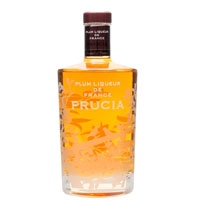
Ingredients
- 2 – 2.5 lbs. (1 – 1.5 kg) Ume (Japanese plum)
- 2 pounds or more (about 950 g) crystal sugar
- 4 qt (2.4 liters) neutral shochu (white liqueur) (25 – 30% al)
Directions
- Rinse the Ume. Pick any stem’s end attached to the skin and discard. Pat dry them very well.
- Put 1/3 of the Ume into the jar, followed by 1/3 of the crystal sugar. Repeat twice more.
- Pour the white shochu into the jar.
- Cover tightly and let it rest in a cool area (avoid direct sunlight) for 6 months.
- Pour some of the liquid into a glass (with a piece or two of the Ume) and enjoy.
Japanese Plum Rice
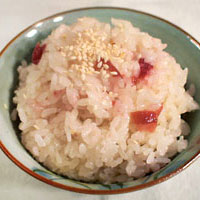
Ingredient
- 2 1/2 Cups Rice
- 2 Large size Japanese Plum
- 3 Tbsp Dashi Soy
- Sesame Seeds by taste
Directions
- Rinse the rice with water 30 minutes before cooking and leave it in a strainer. Put the rice, Japanese plum, and the Dashi Soy in the rice cooker.
- When the rice is done cooking, let it steam for 10 minutes, take the seed out of the Japanese plums and mix it all together.
- Put the rice in rice bowls and sprinkle sesame seeds on top.
Other Facts
- A green dye can be obtained from the leaves.
- Dark grey to green dye can be obtained from the fruit.
- The tree will begin fruiting in 3-5 growing seasons.
Precautions
- Hydrogen cyanide, the toxin is found mainly in the leaves and seed and is readily detected by its bitter taste.
- It is usually present in too small a quantity to do any harm but any very bitter seed or fruit should not be eaten.
- In excess, however, it can cause respiratory failure and even death.
- It shouldn’t be used by Patients with excessive pathogens.
- It shouldn’t be used by Patients with colds and fever, in particular, accompanied by cough, excessive phlegm, stuffy feeling in the chest, and other symptoms.
- It shouldn’t be used by patients of bacillary dysentery and the initial stage of enteritis.
- It shouldn’t be used by Pre and postnatal women.
- It shouldn’t be used by Women during normal menstrual periods.
References
- https://www.ncbi.nlm.nih.gov/pmc/articles/PMC3649719/
- https://www.ncbi.nlm.nih.gov/pmc/articles/PMC6315720/
- https://www.ncbi.nlm.nih.gov/pmc/articles/PMC3419346/
- https://www.ncbi.nlm.nih.gov/books/NBK11795/
- https://www.ncbi.nlm.nih.gov/pmc/articles/PMC5291486/
- https://fruits.edpsciences.org/articles/fruits/abs/2012/05/fruits120033/fruits120033.html
- http://www.fao.org/3/cb2395en/CB2395EN.pdf
- https://www.fao.org/in-action/inpho/crop-compendium/fruits-vegetables/en/
- https://www.fao.org/3/cb2395en/online/src/html/fruit-and-vegetables.html
- http://www.fao.org/3/cb2395en/CB2395EN.pdf
- https://en.wikipedia.org/wiki/Fruit
- https://en.wikipedia.org/wiki/List_of_food_plants_native_to_the_Americas
- https://en.wikipedia.org/wiki/List_of_culinary_fruits
- https://www.hsph.harvard.edu/nutritionsource/what-should-you-eat/vegetables-and-fruits/
- https://www.betterhealth.vic.gov.au/health/healthyliving/fruit-and-vegetables
- https://www.cdc.gov/healthyweight/healthy_eating/fruits_vegetables.html
- https://www.botanical-online.com/en/botany/fruits-types-characteristics
- https://www.fda.gov/food/laboratory-methods-food/mpm-v-9-fruits-and-fruit-products-v-51-v-78
- https://www.fda.gov/food/food-labeling-nutrition/nutrition-information-raw-fruits-vegetables-and-fish
- https://onlinelibrary.wiley.com/doi/abs/10.1111/mcn.12208
- http://news.discovery.com/earth/
- https://www.cabi.org/isc/datasheet/
- https://www.science.org/
- https://plants.ces.ncsu.edu/plants/
- https://www.sciencedirect.com/topics/agricultural-and-biological-sciences/fruit-vegetable
- https://www.researchgate.net/publication/
- https://www.ams.usda.gov/grades-standards/fruits
- https://www.aphis.usda.gov/aphis/resources/traveler/intl-travel/fruits-vegetables/fruits-vegetables
- https://snaped.fns.usda.gov/seasonal-produce-guide
- https://www.nass.usda.gov/Publications/Highlights/2015/FruitsNutsBerries_AgCensusHighlights.pdf
- https://plants.usda.gov/home/plantProfile?
- https://www.fs.fed.us/wildflowers/ethnobotany/food/nuts.shtml
- https://downloads.usda.library.cornell.edu/usda-esmis/files/zs25x846c/sf269213r/6t054c23t/ncit0521.pdf
- https://agr.wa.gov/departments/business-and-marketing-support/farm-to-school-toolkit/
- https://health.gov/sites/default/files/2020-01/DGA2000.pdf
- https://www.farmers.gov/archived/cfap2/specialty
- https://www.hsph.harvard.edu/nutritionsource/
- https://www.foodsafety.gov/food-safety-charts/food-safety-during-power-outage
- https://clinicaltrials.gov/ct2/show/
- https://botany.org/home/careers-jobs/careers-in-botany/what-is-botany.html
- https://www.healthbenefitstimes.com/category/fruits
- http://www.hear.org/pier/species/
- https://www.itis.gov/servlet/SingleRpt/SingleRpt?
- http://www.theplantlist.org/tpl1.1/record/
- https://www.fs.fed.us/database/feis/plants/tree/
- https://www.itis.gov/servlet/SingleRpt/SingleRpt?
- https://www.itis.gov/servlet/SingleRpt/SingleRpt?search_topic=TSN&search_value=506231#null
- https://davesgarden.com/guides/pf/go/56638/
- http://www.theplantlist.org/tpl1.1/record/rjp-7973
- https://gd.eppo.int/taxon/PRNMM
- https://npgsweb.ars-grin.gov/gringlobal/taxonomydetail.aspx?id=30048
- https://pfaf.org/user/Plant.aspx?LatinName=Prunus+mume
- http://www.missouribotanicalgarden.org/PlantFinder/PlantFinderDetails.aspx?taxonid=286543&isprofile=0&
- https://plants.usda.gov/core/profile?symbol=PRMU5
- https://www.iucnredlist.org/species/50026548/50026551
- https://en.wikipedia.org/wiki/Prunus_mume

