
Morus alba, known as white mulberry, common mulberry, and silkworm mulberry, is a fast-growing, small to a medium-sized mulberry tree that grows to 10–20 m (33–66 ft) tall. It is generally a short-lived tree with a lifespan comparable to that of humans, although there are some specimens known to be more than 250 years old. The species is native to central China and is widely cultivated and naturalized elsewhere (including the United States, Mexico, Australia, Kyrgyzstan, Argentina, Turkey, Iran, India, and many others).
The white mulberry is widely cultivated to feed the silkworms employed in the commercial production of silk. It is also notable for the rapid release of its pollen, which is launched at greater than half the speed of sound.[rx] Its berries are edible when ripe.
| Mulberry Quick Facts | |
|---|---|
| Name: | Mulberry |
| Scientific Name: | Morus nigra |
| Origin | Native to southwestern Asia. |
| Colors | Dark purple to black |
| Shapes | 2 to 3 centimeters (0.8 to 1.2 inches) long |
| Taste | Sweet |
| Calories | 60 Kcal./cup |
| Major nutrients | Vitamin C (56.67%) Iron (32.38%) Vitamin B2 (10.85%) Carbohydrate (10.55%) Copper (9.33%) |
| Health benefits | Prevent cancer, Eye health, Improve immunity, Strengthen bones, Supports digestion |
Mulberries are the sweet fruits of the genus Morus L. and the family Moraceae. It is a deciduous tree which is grown in various temperate areas of the world. For a long time, Black mulberry has been cultivated for its edible fruit and is naturalized West across much of Europe including Ukraine, and east into China. It is believed to be originated in mountainous areas of Persia and Mesopotamia and has widely spread in Iraq, Afghanistan, Pakistan, India, Iran, Turkey, and Syria. In the 17th century, Black mulberry was imported to Britain with the hope that it is effective in silkworm cultivation. It was not successful as silkworms prefer white mulberry.
Mulberries are highly appreciated for their sweet fruit with a unique flavor and abundant composition of nutrients. The scientific name of Mulberries differs from which species are looking for. Morus australis and Morus nigra are the most common types of Mulberries. The berries grow fast while they are young but slowly change their color from white or green to red or pink and settle on black or dark purple.
Poor blood circulation and anemia could be treated with mulberry juice. The mulberry juice if mixed with Chinese medicine helps to enhance blood circulation and prevents anemia. It can soothe the nerves when it is mixed with ligustrum and Chinese schizandra. The report of the American Journal of Clinical Nutrition states that the chances of blood clots and strokes could be reduced and blood pressure could be lowered if one consumes five ounces of mixed berries a day. According to the Epidemiological study, the chances of arthritis and atherosclerosis could be reduced by cyanidin 3-glucoside present in mulberry. It also helps to reduce inflammation.
Plant
A deciduous tree grows up to 12 meters tall and 15 meters broad. The tree has a short and rough trunk. Leaves are 6 10 cm broad and 10 to 20 cm long with a rough upper surface having short and stiff hairs and downy on the underside. It has unisexual flowers, the sexes are separate in catkins or spikes which are less cylindrical. Fruit is oblong, short-stalked measuring 2 to 3 centimeters long, and dark purple to black in color which grows in a cluster of several small drupes. Mulberries have a refreshing, saccharine, subacid taste with a fine aroma.
Nutritional value of Mulberries, raw
Calories 60 Kcal. Calories from Fat 4.95 Kcal.
| Proximity | Amount | % DV |
|---|---|---|
| Water | 122.75 g | N/D |
| Energy | 60 Kcal | N/D |
| Energy | 252 kJ | N/D |
| Protein | 2.02 g | 4.04% |
| Total Fat (lipid) | 0.55 g | 1.57% |
| Ash | 0.97 g | N/D |
| Carbohydrate | 13.72 g | 10.55% |
| Total dietary Fiber | 2.4 g | 6.32% |
| Insoluble Fiber | 11.34 g | N/D |
| Minerals | Amount | % DV |
|---|---|---|
| Calcium, Ca | 55 mg | 5.50% |
| Iron, Fe | 2.59 mg | 32.38% |
| Magnesium, Mg | 25 mg | 5.95% |
| Phosphorus, P | 53 mg | 7.57% |
| Potassium, K | 272 mg | 5.79% |
| Sodium, Na | 14 mg | 0.93% |
| Zinc, Zn | 0.17 mg | 1.55% |
| Copper, Cu | 0.084 mg | 9.33% |
| Selenium, Se | 0.8 µg | 1.45% |
| Vitamins | Amount | % DV |
|---|---|---|
| Water-soluble Vitamins | ||
| Vitamin B1 (Thiamin) | 0.041 mg | 3.42% |
| Vitamin B2 (Riboflavin) | 0.141 mg | 10.85% |
| Vitamin B3 (Niacin) | 0.868 mg | 5.43% |
| Vitamin B6 (Pyridoxine) | 0.07 mg | 5.38% |
| Vitamin B9 (Folate) | 8 µg | 2.00% |
| Folate, food | 8 µg | N/D |
| Folate, DEF | 8 µg | N/D |
| Choline | 17.2 mg | 3.13% |
| Vitamin C (Ascorbic acid) | 51 mg | 56.67% |
| Fat-soluble Vitamins | ||
| Vitamin A, RAE | 1 µg | 0.14% |
| Vitamin A, IU | 35 IU | N/D |
| Beta Carotene | 13 µg | N/D |
| Alpha Carotene | 17 µg | N/D |
| Lutein + zeaxanthin | 190 µg | N/D |
| Vitamin E (alpha-tocopherol) | 1.22 mg | 8.13% |
| Vitamin K (phylloquinone) | 10.9 µg | 9.08% |
| Lipids | Amount | % DV |
|---|---|---|
| Fatty acids, total saturated | 0.038 g | N/D |
| Palmitic acid 16:00 (Hexadecanoic acid) | 0.008 g | N/D |
| Stearic acid 18:00 (Octadecanoic acid) | 0.028 g | N/D |
| Fatty acids, total monounsaturated | 0.057 g | N/D |
| Oleic acid 18:1 (octadecenoic acid) | 0.057 g | N/D |
| Fatty acids, total polyunsaturated | 0.29 g | N/D |
| Linoleic acid 18:2 (octadecadienoic acid) | 0.288 g | N/D |
| Linolenic acid 18:3 (Octadecatrienoic acid) | 0.001 g | N/D |
| Flavonols | Amount | % DV |
|---|---|---|
| Quercetin | 3.5 mg | N/D |
*Above mentioned Percent Daily Values (%DVs) are based on 2,000 calorie diet intake. Daily values (DVs) may be different depending upon your daily calorie needs. Mentioned values are recommended by the U.S. Department of Agriculture. They are not rxharun.com recommendations. Calculations are based on average age of 19 to 50 years and weigh 194 lbs. Source: https://ndb.nal.usda.gov/
Health Benefits of Mulberries
Mulberries are a great source of nutrients such as iron, riboflavin, phosphorus, potassium, Vitamin C, calcium, and Vitamin K. Besides this, it contains dietary fiber as well as organic compounds such as anthocyanins, phytonutrients, zeaxanthin, anthocyanins, resveratrol, and other polyphenolic compounds. Mulberries assist in weight loss, promote digestive health, lower cholesterol, promote the immune system, increase blood circulation, slow down the aging process, lower blood pressure, build bone tissue, prevent certain cancers, improve overall metabolism of the body and protect the eye health.
- Prevent cancer
Mulberries are packed with antioxidants that act as a main line of defense against free radicals that form a harmful byproduct of cellular metabolism and could damage healthy cells which cause them to mutate into cancerous cells. Mulberries have a diverse range of antioxidants that could neutralize free radicals before it makes too much damage.
- Eye health
Mulberries are beneficial to eye or vision health. It has zeaxanthin which is a carotenoid that is connected directly to lower oxidative stress on some ocular cells including retina macula lutea. Besides this, zeaxanthin acts as antioxidant and prevents damage to the retinae such as damage caused by free radicals that could cause cataracts and macular degeneration.
- Improve immunity
Mulberries are helpful for immunity health. Vitamin C acts as a defensive for any illness and foreign pathogen in the body which antioxidants do not take care of. Add mulberries to the diet to know the improvement in immunity health.
- Strengthen bones
Mulberries have magnesium, phosphorus, iron, calcium, and vitamin K which is helpful to build tissues of bones. Speeding the healing process, maintaining strong bones, and reversing the damage of bone degradation is essential with aging for preventing the health conditions such as bone disorders and osteoporosis. So, consume mulberries regularly to achieve these health benefits.
- Supports digestion
Mulberries possess dietary fiber which supports to promotes digestive health as it adds bulk to stool and also speeds up food movement through the digestive tract by lowering the chances of cramping, constipation, and bloating. Furthermore, fiber supports regulating cholesterol levels and promotes heart health.
- Prevent cardiovascular problems
Mulberries are helpful for maintaining heart health and blood pressure. Mulberries have resveratrol which is a vital flavonoid antioxidant that affects the functions of mechanisms in blood vessels directly by making them less prone to damage caused by angiotensin that may cause constriction in blood vessels. Resveratrol promotes the production of nitric acid which acts as a vasodilator that helps to lower the formation of a blood clot by relaxing blood vessels and prevent heart problems such as stroke and heart attacks.
- Promote circulation
Mulberries have a high content of iron which promotes the production of RBC in the body which means that body will promote the distribution of oxygen to essential tissues as well as organ systems and also assist to enhance the metabolism of the body and upgrade the functionality of the body systems.
- Healthy skin
Mulberries are loaded with high content of Vitamin E and A with carotenoid components such as zeaxanthin, lutein, alpha-carotene, and beta carotene. These components act as antioxidants that affect the hair, skin, tissue health, and also other areas of the body where the free radicals may cause damage. Intake of mulberries assists the skin looking smooth, the lower appearance of age spots and maintains healthy and shiny hair.
- Effective for human prostate cancer
Various studies have been conducted for the anti-proliferative activity of various extracts of different Morus species. The study was conducted for evaluating phenolic composition as well as antioxidant activity of dimethyl sulfoxide extract of Morus nigra. The study investigated the effect of pro-apoptotic and anti-proliferative properties of extract of Morus nigra on prostate cancer cells. With Vivo biological activity investigations, the phytochemical studies together are vita for complete understanding the medicinal applications. (1)
- Assist in retention of hair color
Some traditional Chinese herbs if combined with Mulberries helps to prevent early graying of hair. Mulberries have nutrients such as iron, calcium, Vitamin B, and C which is vital for doing so.
Types of Mulberry
Black Mulberry
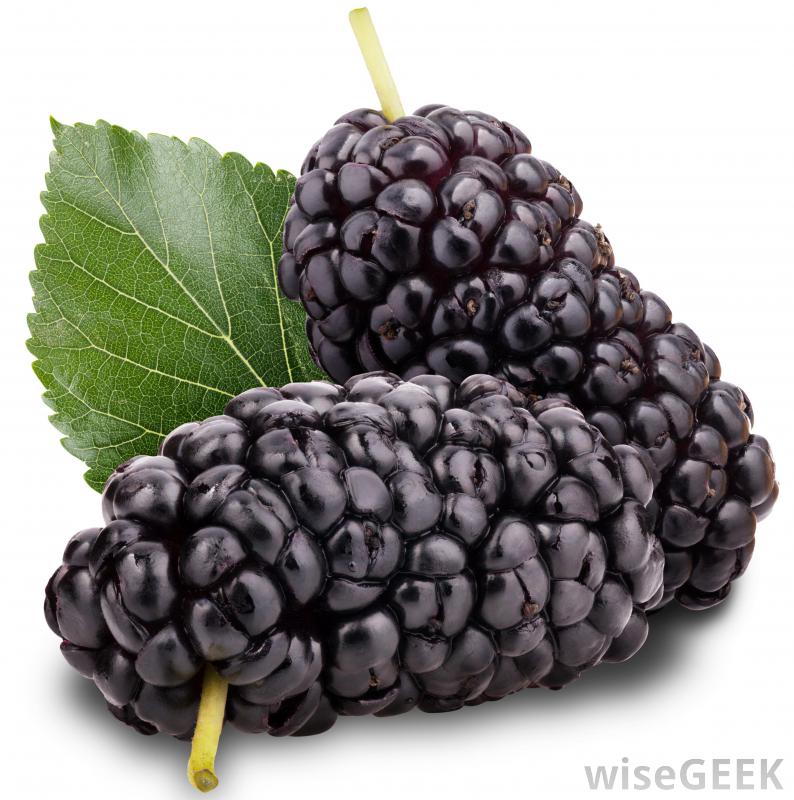
The black mulberry is used to cure mouth diseases, epilepsy, insomnia, diabetes, urinary tract infections, throat, depression, and dizziness. The diarrhea is cured by fresh immature mulberries and mature one is used as a laxative. The black mulberry leaves are used for blood sugar control and it is used in tea to treat diabetes.
White Mulberry
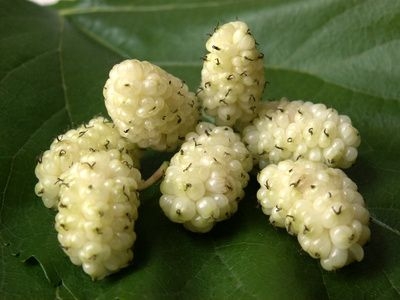
White mulberry serves the purposes such as stain removal, skin whitening, and spotting due to its presence of inhibitors which lessens the synthesis of melanin. It is used in cosmetic products for cleansing and toning the face, anti-aging skin treatment. It aids in eye diseases, arthritis, weakness, and eases the nervous system. The author of the book “Plants Against Cancer”; Jonathan Hartwell believes that throat cancer can be cured with white mulberry juice.
How to select and store mulberries
At the end of the summer, black mulberries get mature. The mulberries which are plump and rich in color should be purchased. Pale mulberries should be avoided as it is not ripe. It should be stored in an air-tight container. Berries should be washed before storing as well as using it. It could be refrigerated for 3 days. Mulberries could be kept in a freezer for 3 months.
Traditional uses
- Leaves are internally used for treating influenza, colds, nosebleeds, and eye infections.
- The tincture made from the bark is used to provide relief from toothache.
- Fruits are used for treating tinnitus, urinary incontinence, constipation, and premature greying of hair.
- Use the root bark internally for treating coughs, asthma, edema, bronchitis, diabetes, and hypertension.
- The bark is used to eliminate tapeworms.
- The plant extracts possess fungicidal and antibacterial activities.
- It is also used to treat diabetes.
- Use it as a gargle to provide relief from sore throat.
How to Eat
- Due to its tart or sweet flavor, it is used for making jellies, jams, sherbets, pies, fruit tarts, teas, wines, and cordials.
- Mulberries and their leaves are used for making teas and other beverages.
- It is also used as a filling for pies.
- Add it to desserts.
- Use it in smoothies, ice creams, and yogurt.
Side effects of Mulberries
- Skin cancer
Mulberries could cause skin cancer. Mulberries contain arbutin which is a compound that supports to lighten skin and makes the skin fair. Arbutin is hydroquinone that assists in the prevention of melanin release by containing tyrosinase enzyme. Research has shown that hydroquinone has carcinogenic side effects which could cause skin cancer.
- Kidney problems
Mulberries are packed with potassium which worsens gall bladder pains or kidney disorders. Besides the health benefits of potassium, patients of kidney problems should avoid consuming more potassium and mulberries. Also, avoid consuming mulberry tea if one has kidney stones or other problems.
- Hypoglycemia
Mulberries help to reduce blood sugar and could cause hypoglycemia. Hypoglycemia is a condition that results in hunger, headache, dizziness, blurred vision, confusion, excessive sweating, and tremors. One should consume mulberries in moderate amounts with caution.
- Obstruct in the absorption of carbohydrates
Mulberries obstruct the absorption of carbohydrates. It could hamper carbohydrate and triacylglycerol absorption.
- Side effects
Some people might experience allergic reactions after the consumption of mulberry. Allergic reactions might be swelling of the skin, skin rashes, the appearance of red spots, inflammation, and itching.
- Liver ailments
The patients with liver problems if consumed mulberries cause load on liver and damages organ. So avoid the people having liver problems.
- Stomach problems
Some people experience side effects such as irritation, pain, and cramps after consuming mulberries.
- Hallucination
Some might experience hallucinations after consuming mulberry.
- Avoid by pregnant and breastfeeding women
It might cause harmful side effects in pregnant and breastfeeding women. So pregnant women should consult the doctor before consuming mulberries to remain on the safe side.
Other Facts
- The leaves of Mulberry grow in bunches which are known as drupes and are a favorite of silkworms.
- After 10 years of plantation only, the trees produce fruit.
- Mulberry essential oil is added to shampoos, lotions, candles, and soaps.
Mulberry Crisp Recipe
Crumble Topping
- 3/4 -1 cup coconut flour
- 4 tablespoons coconut oil or ghee
- 1 teaspoon vanilla extract
- 1 teaspoon ground cinnamon
- ½ teaspoon (1 dropperful) liquid stevia
- ½ teaspoon sea salt
- optional- add in ground nuts of your choice, seeds such as chia and/or oats
Fruit Layer
- 4 cups wild mulberries
- ¼ cup fresh lemon juice
- 1 tablespoon arrowroot powder
- 2 tablespoons vanilla extract
- ½ teaspoon (about 1 dropperful) liquid stevia (or 1 tablespoon honey)
Instructions:
- Preheat oven to 350 degrees.
- Combine fruit layer ingredients in a bowl and then pour the mixture into a fitting casserole dish.
- Mix with the crumble topping components (mix in coconut flour, slowly, till it reaches a crumble regularity).
- Equally distribute crumble mixture on top of the fruit layer.
- Cook for 40 minutes. You can serve hot or cold with your favorite organic topping or its delicious just plain.
Mulberry Jam
The mulberry jam could be made with this recipe:
Ingredients:
- Mulberry berries 3.36 lbs. (1.5 kg)
- Cane sugar 10.5 oz. (300 grams)
- Pectin 1 bag
Preparation:
- Clean and rinse the berries. Remove all the peduncles.
- Put in a large bowl and cover it with cane sugar and pectin.
- Over low heat, stir the mixture until the sugar melts.
- Prepare bottles to be used to store the jam, by sterilizing it in hot boiling water.
- The dried bottles are then placed in a large pot of water (that will be used as the boiling bath). Pour the jam into these bottles and boil it for 10 minutes.
- Then immediately cover the bottles, cool and refrigerate.
References
- https://www.ncbi.nlm.nih.gov/pmc/articles/PMC3649719/
- https://www.ncbi.nlm.nih.gov/pmc/articles/PMC6315720/
- https://www.ncbi.nlm.nih.gov/pmc/articles/PMC3419346/
- https://www.ncbi.nlm.nih.gov/books/NBK11795/
- https://www.ncbi.nlm.nih.gov/pmc/articles/PMC5291486/
- https://fruits.edpsciences.org/articles/fruits/abs/2012/05/fruits120033/fruits120033.html
- http://www.fao.org/3/cb2395en/CB2395EN.pdf
- https://www.fao.org/in-action/inpho/crop-compendium/fruits-vegetables/en/
- https://www.fao.org/3/cb2395en/online/src/html/fruit-and-vegetables.html
- http://www.fao.org/3/cb2395en/CB2395EN.pdf
- https://en.wikipedia.org/wiki/Fruit
- https://en.wikipedia.org/wiki/List_of_food_plants_native_to_the_Americas
- https://en.wikipedia.org/wiki/List_of_culinary_fruits
- https://www.hsph.harvard.edu/nutritionsource/what-should-you-eat/vegetables-and-fruits/
- https://www.betterhealth.vic.gov.au/health/healthyliving/fruit-and-vegetables
- https://www.cdc.gov/healthyweight/healthy_eating/fruits_vegetables.html
- https://www.botanical-online.com/en/botany/fruits-types-characteristics
- https://www.fda.gov/food/laboratory-methods-food/mpm-v-9-fruits-and-fruit-products-v-51-v-78
- https://www.fda.gov/food/food-labeling-nutrition/nutrition-information-raw-fruits-vegetables-and-fish
- https://onlinelibrary.wiley.com/doi/abs/10.1111/mcn.12208
- http://news.discovery.com/earth/
- https://www.cabi.org/isc/datasheet/
- https://www.science.org/
- https://plants.ces.ncsu.edu/plants/
- https://www.sciencedirect.com/topics/agricultural-and-biological-sciences/fruit-vegetable
- https://www.researchgate.net/publication/
- https://www.ams.usda.gov/grades-standards/fruits
- https://www.aphis.usda.gov/aphis/resources/traveler/intl-travel/fruits-vegetables/fruits-vegetables
- https://snaped.fns.usda.gov/seasonal-produce-guide
- https://www.nass.usda.gov/Publications/Highlights/2015/FruitsNutsBerries_AgCensusHighlights.pdf
- https://plants.usda.gov/home/plantProfile?
- https://www.fs.fed.us/wildflowers/ethnobotany/food/nuts.shtml
- https://downloads.usda.library.cornell.edu/usda-esmis/files/zs25x846c/sf269213r/6t054c23t/ncit0521.pdf
- https://agr.wa.gov/departments/business-and-marketing-support/farm-to-school-toolkit/
- https://health.gov/sites/default/files/2020-01/DGA2000.pdf
- https://www.farmers.gov/archived/cfap2/specialty
- https://www.hsph.harvard.edu/nutritionsource/
- https://www.foodsafety.gov/food-safety-charts/food-safety-during-power-outage
- https://clinicaltrials.gov/ct2/show/
- https://botany.org/home/careers-jobs/careers-in-botany/what-is-botany.html
- https://www.healthbenefitstimes.com/category/fruits
- http://www.hear.org/pier/species/
- https://www.itis.gov/servlet/SingleRpt/SingleRpt?
- http://www.theplantlist.org/tpl1.1/record/
- https://www.fs.fed.us/database/feis/plants/tree/
- https://www.itis.gov/servlet/SingleRpt/SingleRpt?
- https://eol.org/pages/
- https://www.itis.gov/servlet/SingleRpt/SingleRpt?search_topic=TSN&search_value=506448#nullS
- http://www.pfaf.org/user/Plant.aspx?LatinName=Antidesma+bunius
- https://drhealthbenefits.com/food-bevarages/fruits/health-benefits-bignay-fruit
- http://www.stylecraze.com/articles/health-benefits-nutrition-values-of-bignay/#grefhttps://en.wikipedia.org/wiki/Antidesma_buniu
- shttp://www.stuartxchange.com/Bignay.html
- http://wikiwel.com/wikihealing/index.php?title=Bignay
