
RX Patient Tools
Use these quick guides before reading the article, or return to them when you need help preparing questions for a doctor.
Dragon Fruit/A pitaya or pitahaya is the fruit of several different cactus species indigenous to the Americas. Pitaya usually refers to the fruit of the genus Stenocereus, while pitahaya or dragon fruit refers to the fruit of the genus Selenicereus (formerly Hylocereus), both in the family Cactaceae. Dragon fruit is cultivated in Mexico, Southeast Asia, India, the United States, the Caribbean, Australia, Mesoamerica, and throughout tropical and subtropical world regions.
| Dragon Fruit Quick Facts | |
|---|---|
| Name: | Dragon Fruit |
| Scientific Name: | Hylocereus undatus |
| Colors | Pink, red, yellow |
| Shapes | Subglobose, ellipsoid, oblong to oval, 5 to 12.5 cm long by 4 to 9 cm across |
| Flesh colors | Red |
| Taste | Mildly sweet |
| Calories | 264 Kcal./cup |
| Major nutrients | Carbohydrate (63.18%) Calcium (10.70%) Vitamin C (10.22%) Protein (7.14%) Total dietary Fiber (4.74%) |
| Health benefits | Lowers cholesterol, Boost immunity, Digestive health, Prevent insulin is low or not working well. সহজ বাংলা: রক্তে চিনি বেশি থাকার রোগ।" data-rx-term="diabetes" data-rx-definition="Diabetes is a condition where blood sugar stays too high because insulin is low or not working well. সহজ বাংলা: রক্তে চিনি বেশি থাকার রোগ।">diabetes, Healthy heart |
Dragon fruit is a fast-growing vine-like cactus. The fruit is spherical, red-colored with notable scales. It has slim rind skin which is protected in scales. The pulp of the fruit is white or red and tastes fairly sweet. Generally, the dragon fruit is deep red in color but some varieties might be pink or yellow. Belonging to the cactus family, it got its generic name from what the locals of Southeast Asia refer it as dragon crystal, dragon scales, green dragon, and dragon pearl fruit. It is inherent to Southern and Central America and is brought to Southeast Asian countries such as Indonesia, Malaysia, Thailand, Taiwan, Bangladesh, Sri Lanka, and Vietnam.
The vining or terrestrial cactus achieves a height of 6 to 10 meters. The plant grows over the ground or climbs on trees for making aerial roots. Usually, the flowers are delightful and elaborate and various related varieties are spread as ornamentals. The flavor of Dragon fruit could be explained as the mixture of kiwi fruit and pear. It possesses a sensitive flavor and is much less fairly sweet. The flower blooms at night time and mostly lasts just one night where pollination is necessary for producing fruit. Dragon fruit plants in full production have 4 to 6 fruiting cycles each year. It could tolerate temperature ranges to 104 F, short period frost, and lengthy cold destroy the plant.
Dragon fruit prefers dried, exotic, and subtropical environments with annual rainfall from 20-50″ each year. Plants also develop effectively in wet and exotic zones but might have difficulties in producing fruit dependably. Generally, the plants are not picky as to soil type but due to their epiphytic nature, it is suggested to grow them in soil with high quantities of organic material.
Dragon fruit is also known as King of the fruit because it has a glowing red color appearance and is olive-shaped. Each fruit measures 500 to 1200 grams. The red or white flesh has fairly sweet taste with mild aroma. Additionally, it is referred to as Belle of the Night, Cinderella Plant, Dragon Common Night Blooming Cereus, Fruit, Night Blooming Cereus, Nanettika Fruit, Pitahaya, Red Pitahaya, Strawberry Pear, Queen Of The Night, White-fleshed Pitahaya, White-fleshed Dragon Fruit, Common night blooming-cereus, Night-blooming cactus, Parsley fern, and Strawberry cactus pear.
Plant
Dragon fruit is a scrambling or climbing cactus which reaches a height of 6 to 10 meters having to spread and drooping branches. Stems are three-winged. Each wing measures 2 to 3 cm wide, is crenate having fleshy, green, and much-branched stems with scalloped and horny margins. It scrambles over bushes or rocks, climbs and forms dense masses in trees. Areoles measure 2 to 5 mm diameter, 4 to 6 cm apart with 1 to 4 conical spines of 1 to 3 mm long. Fragrant flowers are nocturnal of 25 to 30 cm long. Sepaloid perianth parts are linear to linear-lanceolate, greenish-white and measure 10 to 15 cm long and 1 to 1.5 cm wide. Inner perianth parts are oblanceolate, white, 10 to 15 cm long, and 2.5 cm wide. There are numerous stamens with long cream-colored staminal filaments. Fruits are large and red berry in ellipsoid, subglobose, oblong to oval measuring 5 to 12.5 cm long by 4 to 9 cm across. It has white or deep red pulp which tastes sweet and contains tiny, black seeds which is partly hollow.
Nutritional value of DRAGON FRUIT
Calories 264 Kcal.
| Proximity | Amount | % DV |
|---|---|---|
| Energy | 264 Kcal | N/D |
| Protein | 3.57 g | 7.14% |
| Carbohydrate | 82.14 g | 63.18% |
| Total dietary Fiber | 1.8 g | 4.74% |
| Total Sugars | 82.14 g | N/D |
| Minerals | Amount | % DV |
|---|---|---|
| Calcium, Ca | 107 mg | 10.70% |
| Sodium, Na | 39 mg | 2.60% |
| Vitamins | Amount | % DV |
|---|---|---|
| Water-soluble Vitamins | ||
| Vitamin C (Ascorbic acid) | 9.2 mg | 10.22% |
*Above mentioned Percent Daily Values (%DVs) are based on 2,000 calorie diet intake. Daily values (DVs) may be different depending upon your daily calorie needs. Mentioned values are recommended by the U.S. Department of Agriculture. They are not rxharun.com recommendations. Calculations are based on average age of 19 to 50 years and weigh 194 lbs. Source: https://ndb.nal.usda.gov/
Health Benefits of Dragon Fruit
Dragon fruits are loaded with phytonutrients. They have a high content of antioxidants, Vitamin C, polyunsaturated fatty acids, Vitamin B, protein, and carotene. Calcium is vital for maintaining strong teeth and bones. Phosphorus and iron is essential for healthy blood and the formation of tissues. It helps to strengthen the immune system and fasten the healing process of wounds and bruises as well as maintains respiratory health. It contains zero complex carbohydrates so, with the help of other Vitamins B and thiamin, foods are broken down easily in the body. Captin is also found in this fruit which is a phytochemical used to treat heart ailments and oil in seed acts as a mild laxative. Seeds contain rich content of polyunsaturated fats which helps to lower triglycerides and reduce the chances of cardiovascular ailments. Consumption of Dragon fruit assists the body to carry out normal functions such as elimination of toxic heavy metals and improving eyesight.
- Lowers cholesterol
Dragon fruit has a low content of cholesterol, trans fats, and saturated fats. Intake of this fruit helps to refresh and maintains heart health for the long run. It is helpful for those people who are trying to lose weight. Seeds contain omega 3, omega 6 fatty acids, and polyunsaturated fats which are helpful for wellbeing. In addition to numerous antioxidants, Dragon fruit makes a great choice to counteract harmful levels of LDL cholesterol.
- Boost immunity
Dragon fruit is loaded with flavonoids and Vitamin C which is helpful for the immune system. It has a high content of antioxidants which eliminates free radicals. It also contains Vitamin B2, B1, B3, phosphorus, calcium, protein, iron, fiber, and niacin which maintains a healthy immune system. Dragon fruit has impressive amounts of macronutrients. The study shows observed flavonoid and polyphenol and their effects on several cancer cell lines from the extract of peel and flesh of white and red dragon fruit. The extracts showed anticancer activities and the direct correlation between antioxidant effect and phenolic content which suggests that this extract is a valuable ingredient in foods, cosmetics, pharmaceutical, and nutraceutical applications. This is because of immune-boosting properties.
- Digestive health
It is known to all that fiber supports digestion which could be obtained from Dragon fruit. It assists with the movement of the bowels. It also prevents constipation and IBS problems. More fiber could be obtained from the skin of Dragon fruit. It has oligosaccharides that support digestion as it acts as prebiotics that promotes digestion and gut health. Functional compounds such as prebiotics in the diet help to prevent cancer, obesity, vascular disease, hypersensitivity, and degenerative ailments.
- Prevent insulin is low or not working well. সহজ বাংলা: রক্তে চিনি বেশি থাকার রোগ।" data-rx-term="diabetes" data-rx-definition="Diabetes is a condition where blood sugar stays too high because insulin is low or not working well. সহজ বাংলা: রক্তে চিনি বেশি থাকার রোগ।">diabetes
Fiber content assists with digestion. It also helps to stabilize levels of blood sugar and normalizes blood sugar. This fruit prevents spikes of sugar after consumption of high glycemic index foods. Study shows that positive results have been observed on oxidative stress which suggests the consumption in lowering issues related to insulin is low or not working well. সহজ বাংলা: রক্তে চিনি বেশি থাকার রোগ।" data-rx-term="diabetes" data-rx-definition="Diabetes is a condition where blood sugar stays too high because insulin is low or not working well. সহজ বাংলা: রক্তে চিনি বেশি থাকার রোগ।">diabetes. Further research is conducted to examine the benefits of insulin resistance on obese mice found that consumption of Dragon fruit lowers the chances of diabetes and diabetes symptoms.
- Healthy heart
The study shows that Dragon fruit lowers bad cholesterol by promoting good cholesterol which makes it a great cholesterol-lowering food. Additionally, being a great source of monounsaturated fats, it maintains a healthy heart. The tiny seeds found in Dragon fruit are a source of omega-6 and omega-3 fatty acids. The research shows that Omega-6s and Omega-3s could lower triglycerides reducing the chances of cardiovascular problems.
- Slows down the aging process
Antioxidants in form of Vitamin C helps to make skin firm and tight providing a youthful appearance. Moreover, phosphorus found in Dragon fruit promotes anti-aging properties. Phosphorus is a vital mineral found in everybody’s cells that makes about one percent of total body weight. As it is found in every cell, it effectively repairs cells which is vital for the youthfulness of skin and prevents premature aging.
- Prevents cancer
Dragon fruit has phytoalbumin, Vitamin C, and minerals which makes them highly valuable for their antioxidant activities and cancer-preventing properties. It assists in preventing cancers due to the content of lycopene. Lycopene is also present on tomatoes which offer rich color and results obtained from studies show that it might contain chemopreventive effects for breast, prostate, liver, lung and skin cancer. Another study shows that cancerous cells when treated with lycopene significantly lowered. The evaluation of cancer showed a reduction in cancerous cell numbers after treating from lycopene. Dragon fruit is a cancer-fighting food due to the content of lycopene.
- Boost metabolism
Protein is essential for the healthy functions of the body to carry out. Dragon fruit is an excellent source of protein. The protein is metabolized by enzymes of the body and converted into usable proteins that speed up the repair of cells, promote metabolism, strength and assist to lose weight, and promote muscle mass.
- Prevent bacteria
Dragon fruit has antibacterial and antifungal properties which boost the immune system. It increases the count of white blood cells in the body that defends the body from toxins and also inhibits the growth of bacterial and fungal infections in organ systems. It also stimulates the regeneration of cells and speeds up the healing process of bruises and wounds faster.
- Treats acne
Being a great source of Vitamin C, Dragon fruit is helpful in treating acne problems. Consuming the fruit also lowers the occurrence of acne. Apply the paste of pulp over the affected area and wash it after 20 to 25 minutes. It will assist to heal the acne faster.
History of Dragon Fruit
The French colonies of Vietnam first launched the Hylocereus Updated to the West. In the beginning, the dragon fruit was cultivated just for the king, however, the delicious treat rapidly become popular among the rich classes. Right now, the fruit thrives in American states just like Texas and is particularly cultivated in Mexico along with other South American nations just like Argentina as well as Peru.
Malaysia is yet another location in which you are certain to get the dragon fruit. It was initially launched in 1999 within the Sitiawan, Johor as well as Kuala Pilah areas. Colombia as well as Nicaragua is also another location exactly where pitaya fruit is developed for industrial reasons.
These days, nations all through Southeast Asia as well as Israel trade this particular variety of dragon fruit. The 2 main cactus types of dragon fruit originated from the rain forests as well as highlands of South and Central America. In the beginning, eaten by the local communities, modern-day farms exist through the entire area particularly to develop this particular scrumptious fruit.
These types of regions verify the truth that Pitaya cactus fruit needs a comfortable environment, therefore, prospers well within semi-arid areas. Growing the fruit possesses extremely high prospects since it’s industrially utilized in juices, producing wine as well as seasonings, keeping in mind its medical worth which a large number of individuals have grown to believe.
Types of Dragon Fruit
Dragon fruit is actually a blooming cactus as well as vine plant which provides fruit roughly the dimensions of a grapefruit. The wonderfully colored dragon fruit offers a number of health advantages and is also an excellent source of vitamins A as well as C. Even though initially developed within the rainforests of Vietnam, the modern dragon fruit is available in about three types; they grow in dry conditions within the American Southwest, South, and Central America.
• Yellow Dragon Fruit
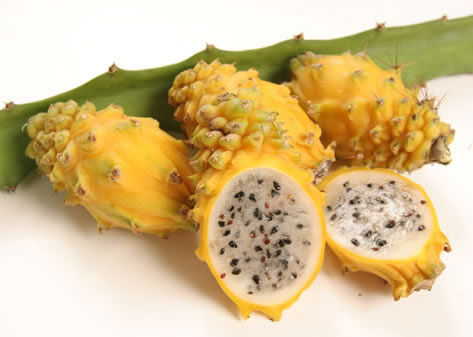
Yellow dragon fruit has the title of the sweetest of all of the sweet pitaya, it is the yellow pitaya (Hylocereus megalanthus). The yellow pitaya is smaller sized as compared to each of the red-skinned varieties and since its title implies it features a vibrant yellow skin along with white flesh. Since the very best of all the dragon fruits, the yellow pitaya is really worth developing in your own home if you’re able to locate it as well as growing conditions where you reside are appropriate.
Yellow dragon fruit plants develop like trailing, vine-like cactus. The plants can easily develop into a huge size (along with stems as much as 20ft / 6m long) and therefore need a powerful trellis for assistance for the greatest productiveness outside of them. The stems can generate aerial roots anyplace alongside their length which will help them to point onto neighborhood trees along with other surfaces when they grow. Yellow dragon fruit plants are epiphytic as well as will need hardly any soil to live, however, they may also be developed in-ground just like standard plants. Yellow pitaya may also be developed in storage containers that have been simply half full of planting mixture, since they will turn out to be big plants the pot also have to be huge (close to 15 gallons / 50 liters).
The fruits of the yellow dragon fruit have got an incredibly useful, built-in timer which implies when they’re ripe. When they’re unripe they may be protected within groups of notable spines around the apex of every knob of the fruit. Since the fruit mature these types of spines, which usually assisted to maintain the creatures away whilst the fruits were premature, fall off leaving behind a prickle-free fruit prepared to pick.
Colour is yet another method to inform the ripeness of these fruit as the skin will turn from green to yellow on ripening, even though occasionally completely ripe fruit is still somewhat tinged along with green.
•Red Dragon Fruit with Red Interior

Red dragon fruit (Hylocereus Polyrhizus) develops alongside a trellis or even fence lines within Central America. The exterior of the fruit is really a fushia color along with elegant flowering palms around the bulb. The interior of the red dragon fruit is comparable in color to the external as well as marked along with tiny black seeds. The red dragon fruit along with red internal is usually utilized to make sorbets as well as jams and also to taste syrups.
• Red Dragon Fruit with White Interior
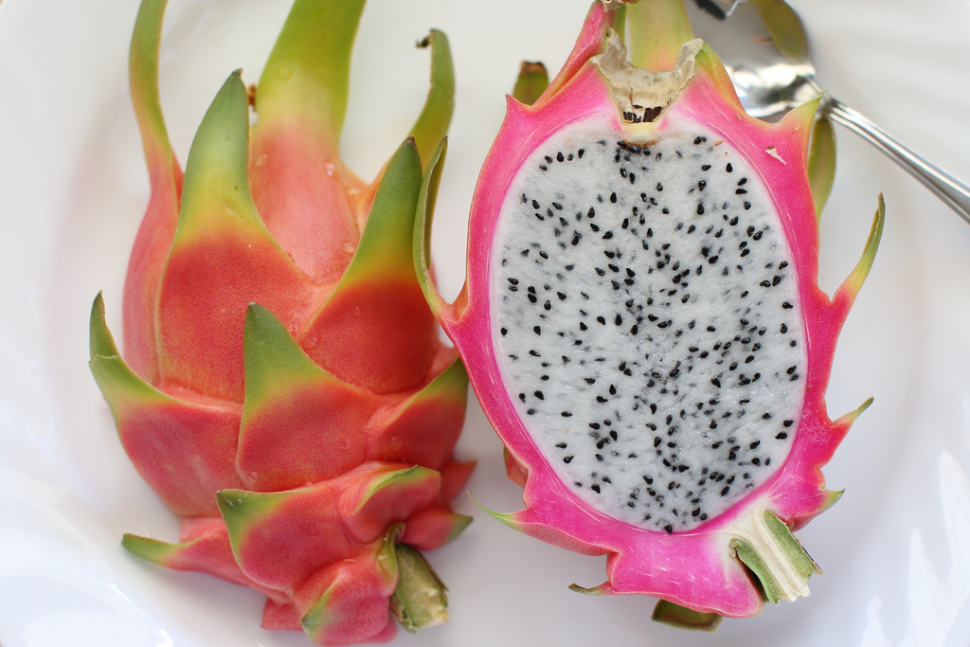
The red dragon fruit along with white internal (Hylocereus Undatus) develops within the American southwest as well as areas of northern Central America. This particular range is especially stinky, despite the fact that smaller sized compared to some other types. The outer skin of the red dragon fruit is actually vibrant pink along with small, spiked folds across the sides. Below appropriate circumstances, the red dragon fruit with a white-colored interior will certainly blossom throughout the night.
Precautions
- Consume Dragon fruit in moderate amounts.
- Due to the high content of fructose levels, it should not be consumed in excess.
How to Eat
- Cut it in half and consume the flesh.
- Mix the juicy flesh with sugar or milk, use it in jellies, marmalades, soft drinks, and ices.
- The syrup made from the fruit is used to color candy and pastries.
- Unopened flower buds are consumed as vegetables.
- Flowers are added to soups.
- It could be made into juice or sorbet.
References
- https://www.ncbi.nlm.nih.gov/pmc/articles/PMC3649719/
- https://www.ncbi.nlm.nih.gov/pmc/articles/PMC6315720/
- https://www.ncbi.nlm.nih.gov/pmc/articles/PMC3419346/
- https://www.ncbi.nlm.nih.gov/books/NBK11795/
- https://www.ncbi.nlm.nih.gov/pmc/articles/PMC5291486/
- https://fruits.edpsciences.org/articles/fruits/abs/2012/05/fruits120033/fruits120033.html
- http://www.fao.org/3/cb2395en/CB2395EN.pdf
- https://www.fao.org/in-action/inpho/crop-compendium/fruits-vegetables/en/
- https://www.fao.org/3/cb2395en/online/src/html/fruit-and-vegetables.html
- http://www.fao.org/3/cb2395en/CB2395EN.pdf
- https://en.wikipedia.org/wiki/Fruit
- https://en.wikipedia.org/wiki/List_of_food_plants_native_to_the_Americas
- https://en.wikipedia.org/wiki/List_of_culinary_fruits
- https://www.hsph.harvard.edu/nutritionsource/what-should-you-eat/vegetables-and-fruits/
- https://www.betterhealth.vic.gov.au/health/healthyliving/fruit-and-vegetables
- https://www.cdc.gov/healthyweight/healthy_eating/fruits_vegetables.html
- https://www.botanical-online.com/en/botany/fruits-types-characteristics
- https://www.fda.gov/food/laboratory-methods-food/mpm-v-9-fruits-and-fruit-products-v-51-v-78
- https://www.fda.gov/food/food-labeling-nutrition/nutrition-information-raw-fruits-vegetables-and-fish
- https://onlinelibrary.wiley.com/doi/abs/10.1111/mcn.12208
- http://news.discovery.com/earth/
- https://www.cabi.org/isc/datasheet/
- https://www.science.org/
- https://plants.ces.ncsu.edu/plants/
- https://www.sciencedirect.com/topics/agricultural-and-biological-sciences/fruit-vegetable
- https://www.researchgate.net/publication/
- https://www.ams.usda.gov/grades-standards/fruits
- https://www.aphis.usda.gov/aphis/resources/traveler/intl-travel/fruits-vegetables/fruits-vegetables
- https://snaped.fns.usda.gov/seasonal-produce-guide
- https://www.nass.usda.gov/Publications/Highlights/2015/FruitsNutsBerries_AgCensusHighlights.pdf
- https://plants.usda.gov/home/plantProfile?
- https://www.fs.fed.us/wildflowers/ethnobotany/food/nuts.shtml
- https://downloads.usda.library.cornell.edu/usda-esmis/files/zs25x846c/sf269213r/6t054c23t/ncit0521.pdf
- https://agr.wa.gov/departments/business-and-marketing-support/farm-to-school-toolkit/
- https://health.gov/sites/default/files/2020-01/DGA2000.pdf
- https://www.farmers.gov/archived/cfap2/specialty
- https://www.hsph.harvard.edu/nutritionsource/
- https://www.foodsafety.gov/food-safety-charts/food-safety-during-power-outage
- https://clinicaltrials.gov/ct2/show/
- https://botany.org/home/careers-jobs/careers-in-botany/what-is-botany.html
- https://www.healthbenefitstimes.com/category/fruits
- http://www.hear.org/pier/species/
- https://www.itis.gov/servlet/SingleRpt/SingleRpt?
- http://www.theplantlist.org/tpl1.1/record/
- https://www.fs.fed.us/database/feis/plants/tree/
- https://www.itis.gov/servlet/SingleRpt/SingleRpt?
- https://eol.org/pages/
- https://www.itis.gov/servlet/SingleRpt/SingleRpt?search_topic=TSN&search_value=503101#null
- http://foodfacts.mercola.com/dragon-fruit.html
- http://eresources.nlb.gov.sg/infopedia/articles/SIP_768_2005-01-11.html
- https://draxe.com/dragon-fruit-benefits/
- https://www.organicfacts.net/health-benefits/fruit/health-benefits-of-dragon-fruit.html

