
Canistel/Pouteria campechiana (commonly known as the cupcake fruit or canistel) is an evergreen tree native to, and cultivated in, southern Mexico, Belize, Guatemala, and El Salvador. It is cultivated in other countries, such as India, Costa Rica, Brazil, the United States, the Dominican Republic, Australia, Cambodia, Vietnam, Indonesia, India, Sri Lanka, Nigeria, and the Philippines. The edible part of the tree is its fruit, which is colloquially known as an egg fruit.[rx]
The canistel grows up to 10 m (33 ft) high and produces orange-yellow fruit, also called yellow sapote, up to 7 cm (2.8 in) long, which are edible raw. Canistel flesh is sweet, with a texture often compared to that of hard-boiled egg yolk, hence its colloquial name “eggfruit”. It is closely related to the lucuma, mamey sapote, and abiu.
| Canistel Quick Facts | |
|---|---|
| Name: | Canistel |
| Scientific Name: | Pouteria campechiana |
| Origin | Southern Mexico, Belize, Guatemala, and El Salvador |
| Colors | Lemon-yellow, golden-yellow or pale orange-yellow |
| Shapes | Berry, ellipsoid, variable in shape and size, ovoid, obovoid, subglobose, ellipsoid often beaked, 7–12.5 cm long by 4–7.5 cm wide |
| Flesh colors | Yellow, relatively firm, dry to mealy, sweet, more or less musky, with a few fine fibers |
| Taste | Sweet, Astringent |
| Health benefits | Healthy for Heart, Lowers the risk of diabetes, Lower the Risk of Cataract, Treats osteoarthritis, Prevents Cancer, Immunity Booster, Good for the eyes, Prevents Cough and Flu, Great for Digestion, Prevent Anemia, Treats Arthritis, Promotes Healthy Bone, Reduce the Risk of Alzheimer’s |
Pouteria campechiana commonly known as the canistel or Yellow Sapote or egg fruit is an evergreen tree belonging to the Pouteria genus and Sapotaceae – Sapodilla family. The plant is native to Southern Mexico, Belize, Guatemala, and El Salvador. It is also cultivated in other countries, such as Costa Rica, Brazil, the United States, the Dominican Republic, Australia, Cambodia, Vietnam, Indonesia, India, Sri Lanka, Nigeria, and the Philippines. Few of the popular common names of the plant are Egg Fruit, Egg Fruit Tree, Mexican Sapodilla, Ti-Es, Yellow Sapote, Amarillo, Boracho, Caca de nino, Cahixo, Caniste, Canizte, Costiczapotl, Cucumu, Fruta huevo, Gema-de-ovo, Guaicume, Guicume, Huicon, Huicumo, Kanis, Kaniste, Kanixte, Khema, Limoncillo, Mamee ciruela, Mamey cerera, Mamey cerilla, Mzeituni, Sapota-amarelo, Sapote amarillo, Sapote borracho, Siguapa, Ti-essa, Tiesa, Tiyesa, Toesa, Yellow sapote, Zapote mante, Zapotillo, Zubul and rata lawulu. The edible part of the tree is its fruit, which is colloquially known as an egg fruit. The flesh of canistel fruit is very sweet and this fruit is often consumed fresh though canistel fruit is also able to be made into marmalade or jam.
Plant Description
Canistel is a medium-sized, erect, evergreen, lactiferous tree that grows about 8–20 m high with a 25–60 cm wide. The plant is found growing in moist or wet mixed forests, sometimes in pine forests, often on limestone. The plant is tolerant of a diversity of soils–calcareous, lateritic, acid-sandy, heavy clay. It makes the best vegetative growth in deep, fertile, well-drained soil but is said to be more fruitful on shallow soil. It can be cultivated on soil considered too thin and poor for most other fruit trees. The canistel flourishes in a frost-free tropical or subtropical climate with hot or warm summers and cool winters. In Florida, it survives winter cold as far north as Palm Beach and Punta Gorda and in protected areas of St. Petersburg. It requires no more than moderate precipitation and does well in regions with a long dry season. The plant has finely-ribbed, dark gray trunk and horizontal branches. It is rich in white gummy latex in every part of the tree. Young branches are velvety brown.
Leaves
Leaves are alternate, but mostly grouped as whorls at the tips of the branches, obovate-elliptic, 6-28 cm long and 2.5-8 cm wide, glossy, bright green and bluntly pointed at the apex, more sharply tapered at the base. The petioles are 5-25 cm long.
Flowers
Flowers are bisexual, fragrant, and solitary or in small clusters, borne in the leaf axils or at leafless nodes on slender pedicles which are 5-12 cm long. They are 5 or 6 lobed, cream-colored, silky hairy about 8-11 mm long. Sepals are ovate to sub orbiculate, 5–11 mm long; petals are creamy-white, 8–12 mm long, petaloid staminodes, 2–4 mm. The sexual system is hermaphrodite. Flowering normally takes place from January to June.
Fruits
Fertile flowers are followed by fruits that are variable shaped (round, ovoid, obovoid, sub-globose, spindle) berry, often with pointed apex. The unripe fruit is green-skinned, hard, and gummy internally. On ripening, the skin turns lemon yellow, golden yellow, or pale orange-yellow, very smooth and glossy. The calyxes are 5 pointed at the base, which may be rounded or with a distinct depression. Immediately beneath the skin, the yellow skin is relatively firm and mealy with a few fine fibers. Towards the center of the fruit it is softer and pastier. The flavor is sweet more or less musky. They may be 1-4 hard freestone seeds, 2-5.3 cm long and 1.3-3.2 cm wide, near oval or oblong oval, glossy and chestnut brown, except for the straight or curved ventral side which is dull light brown, tan or grayish-white. Both ends of the seeds are sharp-tipped.
History
Canistel is a native of Central America. It occurs wild only in southern Mexico (including Yucatan), Belize, Guatemala and El Salvador. It is cultivated in its native range and in Costa Rica, Nicaragua, Panama, Puerto Rico, Jamaica, Cuba, the Bahamas, southern Florida, Columbia, Honduras, Kenya, Myanmar, Indonesia, Philippines, Sri Lanka, Seychelles, India, Tanzania, Uganda, and the Florida Keys. It has been introduced into Brazil, the Philippines and later to other Southeast Asian countries and Taiwan and Australia.
Health Benefits of Canistel
Just like most other fruits, canistel is also rich in a wide range of nutrients including many essential vitamins, minerals and antioxidants. These nutrients contribute to the various health benefits offered by this fruit. Given below are some of the reasons why you should consider adding canistel to your regular diet
1. Healthy for Heart
If you are presently suffering symptoms of high blood pressure, it means there is something wrong with your heart. Consuming canistel fruit help you regulating blood pressure and at the same time promoting healthy heart because canistel fruit is loaded with certain minerals especially potassium to prevent the worst effect of sodium in your blood stream to your heart.
2. Lowers the risk of diabetes
Canistel is a wonderful source of niacin. A chemical substance known as Niacinamide is a constituent of niacin that has been found to be effective in preventing diabetes. According to research, niacin amide helps in improving the effectiveness of the oral drugs that are used in the treatment of diabetes. In addition to the effects of niacin, the fiber contained in this fruit also helps in regulating blood sugar levels.
3. Lower the Risk of Cataract
The bright yellow color is the clear sign that this fruit is an excellent source of beta-carotene. One of the health benefits of beta-carotene is lowering the risk of all kind of diseases caused by macular cell degeneration mostly occur in senior age and among those diseases, cataract is the most common case.
4. Treats osteoarthritis
Niacin and Niacin amide present in canistel has been found to be effective in the treatment of arthritis. Niacin amide helps in increasing joint mobility and niacin helps in improving muscle strength, rebuilding worn-out cartilage and in reducing weakness of muscles and joints. According to “Inflammation Research”, patients with osteoarthritis found that they had improved flexibility of joints and reduced inflammation after being treated with niacin amide for a period of 12 weeks. Because of these properties, canistel may be considered to be effective in treating osteoarthritis. Niacin also has anti-inflammatory effect, which makes it a good remedy for rheumatoid arthritis.
5. Prevents Cancer
As mentioned previously, canistel fruit is an excellent source of vitamin A, vitamin C, and beta-carotene. They are some types of antioxidants that have been proven to be effective in preventing the development of cancerous cells. Additionally, this fruit is also packed with some vitamin from vitamin B complex that well known to be effective to fight cancer.
6. Immunity Booster
Canistel fruit is an excellent and natural immunity booster due to its vitamin C benefits. The bright yellow color of canistel fruit is enough proof that this fruit is packed with high dosage of vitamin C. This vitamin is super potent antioxidants that will provide protection to your body.
7. Good for the eyes
Just like all the other yellow-orange-colored fruits, Canistel is also a rich source of pro-vitamin A carotenoids. These carotenoids are converted into Vitamin A inside the body. Vitamin A is essential for good vision. It is found to be effective for the treatment of dry eyes. Carotenoids have antioxidant properties and hence protect the eyes from the harmful effects of free radicals. They play an important role in lowering the risks of cataracts and age-related macular degeneration (AMD).
8. Prevents Cough and Flu
Cough and flu could be really annoying and a lot of people prefer home remedy to fight them instead of taking medicine or meeting a doctor. It is actually an excellent solution because taking medicine is only making your body lazy to learn to fight it naturally but consuming fruit like canistel fruit will help your body fight the flu and cough efficiently in a natural way.
9. Great for Digestion
Canistel is an excellent source of dietary fiber, making it a perfect fruit for improving the health of your digestive system. Fiber helps in promoting regular bowel movements by adding bulk to the stools and removing it easily from the system. As a result you are protected from digestive disorders like constipation and irregular bowel syndrome. Fiber also helps in regulating the blood glucose levels and in eliminating the bad cholesterol from the body.
10. Prevent Anemia
Due to the high amount of iron present in Canistel, it is very beneficial for our overall health and it also helps to prevent the risk of anemia. As we all know anemia is a disease of iron deficiency in our body and Canistel is highly rich in iron. So consumption of canistel on a regular basis can provide sufficient iron in our body and helps in preventing the risk of anemia.
Iron helps to improve the production of hemoglobin in our blood cells. Hemoglobin helps to bind the oxygen and nutrition in red blood cells and carry them to each part of our body cells, so that our body cells can get sufficient amount of oxygen and nutrition for the proper growth and development. Studies have been proven that consumption of canistel on a regular basis can reduce various types of iron deficiency problems, such as fatigue, headaches, body weakness, etc.
11. Treats Arthritis
Canistel fruit is also an excellent source of anti-inflammatory properties so it is considered an excellent treatment for arthritis. Though further studies are required to find out more about the possibility of this fruit being used as a natural pain killer.
12. Promotes Healthy Bone
Several researches have stated that canistel fruit is packed with certain minerals such as calcium, iron and phosphorus. It is common knowledge that calcium and phosphorus are excellent for bone health and iron is essential for the production of red blood cells that are prominent in body and bone development.
13. Reduce the Risk of Alzheimer’s
Due to the high amount of iron present in canistel, is very beneficial to improve the brain health and also helps to improve the oxygenated blood flow to the brain that helps to prevent the risk of nervous system disorders, such as Alzheimer’s disease and dementia.
How to store Canistel
Canistel may be bought unripe, because it will continue to ripen even after being harvested. At room temperature it take about ten days to ripen and if you want to speed up the ripening the process, keep the fruit in a brown bag along with bananas. Make sure not to allow the fruit to overripe and become soft and mushy. Canistel will keep fresh for one to two months if stored in the refrigerator at 14 degrees Centigrade and 80 percent relative humidity. The pulp when stored in the freezer will keep up to six months. Some people mix the pulp with sugar prior to freezing for obtaining best results.
Traditional uses and benefits of Canistel
- Decoction of the astringent bark is taken as a febrifuge in Mexico and applied on skin eruptions in Cuba.
- Preparation of the seeds has been used as a remedy for ulcers and the fruits for anemia.
- Fresh Fruit is used to cure Anemia.
- Decoction prepared from the bark of this plant is used to cure Fever, Skin Diseases.
- Seeds are used as a cure for Ulcers.
- It is used to cure Insomnia and Depression.
- Egg fruit aids in skin regeneration and provides a radiant skin, makes hair healthy and shiny, also, protect eyes.
- It is used as a cure for Coronary Heart Diseases.
- Herb has neuroprotective properties which aid in the treatment of Epilepsy and other Brain disorders.
- The plant is rich in nutrient called carotenoids, which fights Cancer.
- Canistel fruits are also used for treating a number of other health problems, including liver problems, coronary diseases, skin complaints and ulcers.
Culinary Uses
- Ripe fruit pulp is edible fresh, but is not highly regarded as it is dry, not crispy and juicy like so many other fruits and has the consistency and texture of hard-boiled egg yolk.
- It is eaten with salt, pepper and lime or lemon juice or mayonnaise, either fresh or after light baking.
- Pureed flesh may be used in custards or added to ice cream mix just before freezing.
- Rich milkshake, or “eggfruit nog”, is made by combining ripe canistel pulp, milk, sugar, vanilla, nutmeg or other seasoning in an electric blender.
- Pulp can be made into canistel pancakes, cupcakes, jam, marmalade and “pie butter” for spreading on toast.
- Pulp can be dehydrated, powdered and utilized as a rich food additive or for use in pudding mixes.
- It can be eaten raw or used in desserts or drinks.
- Fruit is excellent when eaten raw; it can also be used in cakes, pies, ice creams, puddings, etc.
- It has a yellow to orange pulp that is soft and mealy in texture with a very rich, sweet flavor that is somewhat reminiscent of a baked sweet potato.
- It is not highly regarded by many people because it is not crispy and juicy like so many other fruits.
- Ripe flesh is blended with milk and other ingredients to make a shake, and pureed; it is sometimes added to custards or used in making ice cream.
- Fresh pulp is also cooked in puddings, pies, cakes, and it is used to flavor ice creams and various drinks.
- Lucmo is ground into a meal that extends the availability of the fruit in Peru.
Canistel Recipe
Crème de Canistel Ice cream
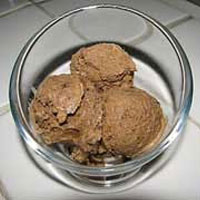
Ingredients
- 1 cup canistel pulp
- 1/4 cup blanched almonds
- 2 cups milk
- 2/3 cup heavy cream
- 3 egg yolks
- 1/2 cup sugar
Directions
- Add the canistel, milk and heavy cream to a bowl and mix thoroughly together to a smooth mixture.
- In separate a bowl, mix the egg yolks and sugar until light and fluffy.
- Add the Canistel mixture and mix well with wooden spoon.
- Return the mixture to the saucepan.
- Stir over medium-low heat until the custard thickens and coats the back of a spoon, do not boil.
- Strain custard into a clean bowl and refrigerate until cold.
- Process custard in ice cream maker according to manufacturer’s instruction.
- Transfer to covered container and freeze until firm.
Canistel Pie
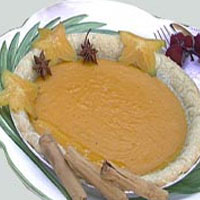
Ingredients
- 1 1/3 cups mashed canistel
- 1 teaspoon lime juice
- 2/3 cup brown sugar
- 2 beaten eggs
- 1/2 teaspoon salt
- 1 1/4 cups low-fat evaporated milk
- 1/4 teaspoon nutmeg
- 1-9 inch pie crust
- 1 teaspoon cinnamon
Directions
- Mix dry ingredients first, add remaining ingredients, except pie shell.
- Pour into unbaked pie shell and bake at 230 degrees C for 10 minutes.
- Reduce heat to 120 degrees C and continue baking about 50 more minutes.
- Serve warm or chilled, with whipped cream.
Canistel Coconut Bread
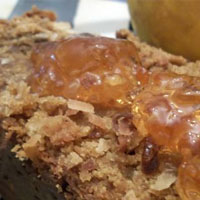
Ingredients
- 2 cups flour
- 1⁄2 teaspoon baking soda
- 1⁄4 teaspoon salt
- 1⁄8 teaspoon clove
- 1⁄8 teaspoon cinnamon
- 1⁄2 cup softened butter
- 1 cup sugar
- 2 eggs
- 1 cup milk
- 1⁄2 teaspoon vanilla
- 2 cups mashed ripe canistel
- 1 cup grated coconut
Directions
- Preheat oven to 350°F.
- In a small bowl, combine flour, salt, baking soda and spices.
- In a large bowl, blend butter and sugar, then blend in eggs. Slowly stir in milk, then vanilla and canistel.
- Stir in flour mixture, and mix in coconut.
- Spoon into a greased 8½ X 4½ x 2½ in loaf pan, making sure to leave ¾ inch at the top to allow the bread to rise.
- Bake 40 minutes or until a toothpick comes out clean.
Canistel Custard
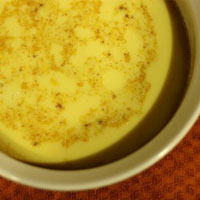
Ingredients
- 3/4 cup ripe canistel, mashed
- 3 eggs
- 2 1/4 cups milk (scalded)
- 1/2 cup sugar
- 1/4 tsp. salt
- 1 Tbsp. lime juice
- 1 tsp. cinnamon
Direction
- Beat eggs lightly. Stir in sugar, fruit & lime, salt & cinnamon.
- Add hot milk slowly, while stirring. Pour into buttered custard cups.
- Set in a pan of hot water about 1 inch deep.
- Bake at 350º F for about 30-40 minutes, until custard is done.
Other facts
- Latex extracted from the tree has been used to adulterate chicle in Central America.
- Fine-grained, compact, strong, heavy and hard timber is used for planks and rafters in construction.
- Wood is used in construction particularly for planks and rafters.
- It is used in agro forestry systems in Asia due to its multiple uses.
Precautions
- If you are allergic to fruit like star apple and it is better for you to avoid canistel fruit because they come from the same family with similar texture, appearance and flavor.
- Canistel fruit has sweet flavor, so those who have been diagnosed with certain types of diabetes should avoid this fruit at all cost to prevent the spike of blood sugar level.
- This fruit is excellent source for energy but those who are currently in weight loss program should avoid this fruit.
References
- https://www.ncbi.nlm.nih.gov/pmc/articles/PMC3649719/
- https://www.ncbi.nlm.nih.gov/pmc/articles/PMC6315720/
- https://www.ncbi.nlm.nih.gov/pmc/articles/PMC3419346/
- https://www.ncbi.nlm.nih.gov/books/NBK11795/
- https://www.ncbi.nlm.nih.gov/pmc/articles/PMC5291486/
- https://fruits.edpsciences.org/articles/fruits/abs/2012/05/fruits120033/fruits120033.html
- http://www.fao.org/3/cb2395en/CB2395EN.pdf
- https://www.fao.org/in-action/inpho/crop-compendium/fruits-vegetables/en/
- https://www.fao.org/3/cb2395en/online/src/html/fruit-and-vegetables.html
- http://www.fao.org/3/cb2395en/CB2395EN.pdf
- https://en.wikipedia.org/wiki/Fruit
- https://en.wikipedia.org/wiki/List_of_food_plants_native_to_the_Americas
- https://en.wikipedia.org/wiki/List_of_culinary_fruits
- https://www.hsph.harvard.edu/nutritionsource/what-should-you-eat/vegetables-and-fruits/
- https://www.betterhealth.vic.gov.au/health/healthyliving/fruit-and-vegetables
- https://www.cdc.gov/healthyweight/healthy_eating/fruits_vegetables.html
- https://www.botanical-online.com/en/botany/fruits-types-characteristics
- https://www.fda.gov/food/laboratory-methods-food/mpm-v-9-fruits-and-fruit-products-v-51-v-78
- https://www.fda.gov/food/food-labeling-nutrition/nutrition-information-raw-fruits-vegetables-and-fish
- https://onlinelibrary.wiley.com/doi/abs/10.1111/mcn.12208
- http://news.discovery.com/earth/
- https://www.cabi.org/isc/datasheet/
- https://www.science.org/
- https://plants.ces.ncsu.edu/plants/
- https://www.sciencedirect.com/topics/agricultural-and-biological-sciences/fruit-vegetable
- https://www.researchgate.net/publication/
- https://www.ams.usda.gov/grades-standards/fruits
- https://www.aphis.usda.gov/aphis/resources/traveler/intl-travel/fruits-vegetables/fruits-vegetables
- https://snaped.fns.usda.gov/seasonal-produce-guide
- https://www.nass.usda.gov/Publications/Highlights/2015/FruitsNutsBerries_AgCensusHighlights.pdf
- https://plants.usda.gov/home/plantProfile?
- https://www.fs.fed.us/wildflowers/ethnobotany/food/nuts.shtml
- https://downloads.usda.library.cornell.edu/usda-esmis/files/zs25x846c/sf269213r/6t054c23t/ncit0521.pdf
- https://agr.wa.gov/departments/business-and-marketing-support/farm-to-school-toolkit/
- https://health.gov/sites/default/files/2020-01/DGA2000.pdf
- https://www.farmers.gov/archived/cfap2/specialty
- https://www.hsph.harvard.edu/nutritionsource/
- https://www.foodsafety.gov/food-safety-charts/food-safety-during-power-outage
- https://clinicaltrials.gov/ct2/show/
- https://botany.org/home/careers-jobs/careers-in-botany/what-is-botany.html
- https://www.healthbenefitstimes.com/category/fruits
- http://www.hear.org/pier/species/
- https://www.itis.gov/servlet/SingleRpt/SingleRpt?
- http://www.theplantlist.org/tpl1.1/record/
- https://www.fs.fed.us/database/feis/plants/tree/
- https://www.itis.gov/servlet/SingleRpt/SingleRpt?
- https://www.itis.gov/servlet/SingleRpt/SingleRpt?search_topic=TSN&search_value=23830#null
- https://npgsweb.ars-grin.gov/gringlobal/taxonomydetail.aspx?id=102607
- https://davesgarden.com/guides/pf/go/99187/
- https://pfaf.org/user/Plant.aspx?LatinName=Pouteria+campechiana
- https://plants.usda.gov/core/profile?symbol=POCA23
- https://en.wikipedia.org/wiki/Pouteria_campechiana
- http://luirig.altervista.org/schedenam/fnam.php?taxon=Pouteria+campechiana
- http://www.theplantlist.org/tpl/record/kew-163988
- https://indiabiodiversity.org/species/show/265557
- https://gd.eppo.int/taxon/POJCA
- https://evols.library.manoa.hawaii.edu/bitstream/10524/49150/1/canistel.pdf
- https://hort.purdue.edu/newcrop/morton/canistel.html
- https://www.cabi.org/isc/datasheet/43708
- http://swbiodiversity.org/seinet/taxa/index.php?taxon=49534

