
The breadnut or chataigne (Artocarpus camansi Blanco) qualifies as a commodity with a unique flavor, high fiber content, a high percentage of complex carbohydrates, and the ability to be utilized in a myriad of ways. Further, with its current use in ethnic cuisine and in traditional medicine, it is expected that it will increase in importance as an item in international trade. The breadnut is a member of the Moraceae family, which consists of nearly fifty species of trees all native of Southeastern Asia and the Pacific islands. The fruit is a syncarp, with its rind covered with fleshly prickles or spines. It has a fibrous core with 50 to 100 nut-like seeds embedded in a white, flaky, and spongy-like pulp. The fruit is highly perishable with a shelf life of not more than two days under ambient conditions. The breadnut rapidly transforms when harvested mature green. After two days it has a very soft texture, the milky-white seed develops a brown net-like hard rind while the flesh changes from a white color to a light yellow color. The fruit is very chilling sensitive. The combined effects of rapid softening and high susceptibility to chilling injury contribute immensely to its short shelf life.
| Breadnut Quick Facts | |
|---|---|
| Name: | Breadnut |
| Scientific Name: | Brosimum alicastrum |
| Origin | Papua New Guinea and possibly the Moluccas (Indonesia) and the Philippines |
| Colors | Yellowish green and reddish-orange when ripe |
| Shapes | Oval or ovoid shape and measure 10-15 cm long by 7-12 cm wide |
| Flesh colors | Yellow-whitish when ripened |
| Taste | Sweet |
| Calories | 587 Kcal./cup |
| Major nutrients | Copper (436.44%) Carbohydrate (97.71%) Iron (92.00%) Tryptophan (85.00%) Vitamin B6 (84.31%) |
| Health benefits | Assists to avoid anemia, Assist in blood clotting, Treats Dandruff, Itchiness & Hair Breakage, Avoids chronic Skin Inflammation, Enhances the Immune System, Heals Skin Diseases, Suitable For Sexual Increase, Dental hygiene, Avoids bone loss, Diabetes, Lowers the chance of Cardiac Arrest, Resistance against Infections, Aids digestion, Heals Rheumatoid Arthritis |
Breadnut is famous with many names such as the Maya nut, Ramon. Its scientific name is Brosimum Alicastrum and is a tree species in the Moraceae family of flowering plants whose other genera include figs and mulberries. The plant is native to Papua New Guinea and possibly the Moluccas (Indonesia) and the Philippines and is also produced in surrounding countries. The humid lowland tropical forests which experience heavy rainfall are the suitable type for its growth. The plant is known by a range of names in indigenous Mesoamerican and other languages, including Maya nut, Snakewood, Ramon, Ojoche, Ujushte, Ramon tree, Breadnut, Janita, Muiratinga, Guamaro, Berba, Cacique, Nuez de pan, Castana, Kamansi, mei kakano, chataigne, katahar, dulugian, kolo, pakau, ugod,kelur, kulor, kulur, kuror and pana de pepitas. It has many advantages because of the contents of folic acid, zinc and B vitamins in the high levels. It’s richly filled with antioxidants and has a low glycemic index. It is utilized as a vegetable in soups and normally eaten at a growing stage. Despite the name, it’s not a nut at all but rather a fruit.
Plant Description
Breadnut is a large, evergreen tropical tree that grows about 20-25 m in height and trunk to 50-90 cm DBH, but it can grow to a height of up to 35-40 m and 150 cm DBH. The trunk is straight with typically well-developed buttresses. Upswept branches form a rounded or pyramid-shaped crown. The tree has rough, blackish-gray colored bark, frequently with large, square scales. Internal bark displays a sticky, rosy-colored sap or latex when in contact with air.
Leaves
Breadnut tree bears alternate leaves that are large and measure anything between 40 cm and 60 cm in length. Leaves are normally dissected having four to six pairs of lobes in addition to sinuses that are cut almost to the middle of the midrib. New leaves on relatively younger trees may often be 76 cm long or sometimes even longer. Leaves are compactly pubescent and have several white-hued or reddish-white hairs on their upper as well as lower veins, under surface as well as petiole. The blade of the breadnut tree has a pale green hue with greenish veins. Bud is enclosed by two large green-hued stipules, whose color changes to yellow prior to dehiscing.
Flower
Flowers of breadnuts are monoecious in nature and they appear at the terminal of the branches. The male inflorescence appears first followed by the female inflorescence. Male flowers are shaped like clubs and measure a maximum of 3 cm across, while they may be anything between 25 cm and 35 cm in length or sometimes even longer. On the other hand, the female inflorescence comprises a large number of reduced flowers (anything between 1500 and 2000) that are attached to a soft sponge-like core. Different from the flowers of the breadfruit tree, the inflorescences of the breadnut tree are free and do not fuse all along their length.
Fruit
Fruits of breadnuts are large syncarp that is very fleshy. They have an oval or ovoid shape and measure about 10-15 cm long by 7-12 cm wide and each fruit weighs roughly 800 grams. The color of the fruit’s skin may vary from pale green to greenish-yellow when they are ripe. The texture of these fruits is somewhat spiny that is attributed to the long, pointed, flexible tips of the plant’s flowers. The pulp of the fruit is scanty and its hue changes of yellow-whitish when ripened. They have a sweet flavor and aroma when ripe. Each breadnut fruit encloses about 12 to 150 seeds that may be flattened or rounded. Seeds are thin and measure roughly 2.5 cm in length. The external seed coat has a pale brown color and is ornate with darker veins. Each seed weighs anything between 7 grams to 10 grams and makes up about 30 percent to 50 percent of the total weight of the fruit. Its seeds and leaves may be used for food and forage, and several medicines and beverages can be made from parts of the tree.
Nutritional value of Breadnut tree seeds, dried
Calories 587 K cal. Calories from Fat 24.21 K cal.
| Proximity | Amount | % DV |
|---|---|---|
| Water | 10.4 g | N/D |
| Energy | 587 Kcal | N/D |
| Energy | 2458 kJ | N/D |
| Protein | 13.79 g | 27.58% |
| Total Fat (lipid) | 2.69 g | 7.69% |
| Ash | 6.1 g | N/D |
| Carbohydrate | 127.02 g | 97.71% |
| Total dietary Fiber | 23.8 g | 62.63% |
| Minerals | Amount | % DV |
|---|---|---|
| Calcium, Ca | 150 mg | 15.00% |
| Iron, Fe | 7.36 mg | 92.00% |
| Magnesium, Mg | 184 mg | 43.81% |
| Phosphorus, P | 285 mg | 40.71% |
| Potassium, K | 3218 mg | 68.47% |
| Sodium, Na | 85 mg | 5.67% |
| Zinc, Zn | 3.06 mg | 27.82% |
| Copper, Cu | 3.928 mg | 436.44% |
| Manganese, Mn | 0.485 mg | 21.09% |
| Selenium, Se | 3 µg | 5.45% |
| Vitamins | Amount | % DV |
|---|---|---|
| Water-soluble Vitamins | ||
| Vitamin B1 (Thiamin) | 0.048 mg | 4.00% |
| Vitamin B2 (Riboflavin) | 0.224 mg | 17.23% |
| Vitamin B3 (Niacin) | 3.36 mg | 21.00% |
| Vitamin B5 (Pantothenic acid) | 3 mg | 60.00% |
| Vitamin B6 (Pyridoxine) | 1.096 mg | 84.31% |
| Vitamin B9 (Folate) | 181 µg | 45.25% |
| Folate, food | 181 µg | N/D |
| Folate, DEF | 181 µg | N/D |
| Vitamin C (Ascorbic acid) | 74.6 mg | 82.89% |
| Fat-soluble Vitamins | ||
| Vitamin A, RAE | 18 µg | 2.57% |
| Vitamin A, IU | 346 IU | N/D |
| Lipids | Amount | % DV |
|---|---|---|
| Fatty acids, total saturated | 0.726 g | N/D |
| Palmitic acid 16:00 (Hexadecanoic acid) | 0.482 g | N/D |
| Stearic acid 18:00 (Octadecanoic acid) | 0.246 g | N/D |
| Fatty acids, total monounsaturated | 0.342 g | N/D |
| Palmitoleic acid 16:1 (hexadecenoic acid) | 0.014 g | N/D |
| Oleic acid 18:1 (octadecenoic acid) | 0.328 g | N/D |
| Fatty acids, total polyunsaturated | 1.434 g | N/D |
| Linoleic acid 18:2 (octadecadienoic acid) | 1.104 g | N/D |
| Linolenic acid 18:3 (Octadecatrienoic acid) | 0.331 g | N/D |
| Amino acids | Amount | % DV |
|---|---|---|
| Tryptophan | 0.374 g | 85.00% |
| Threonine | 0.536 g | 30.45% |
| Isoleucine | 0.781 g | 46.71% |
| Leucine | 1.496 g | 40.48% |
| Lysine | 0.602 g | 18.00% |
| Methionine | 0.08 g | N/D |
| Cystine | 0.216 g | N/D |
| Phenylalanine | 0.651 g | N/D |
| Tyrosine | 1.014 g | N/D |
| Valine | 1.334 g | 63.16% |
| Arginine | 1.269 g | N/D |
| Histidine | 0.211 g | 17.13% |
| Alanine | 0.627 g | N/D |
| Aspartic acid | 1.522 g | N/D |
| Glutamic acid | 8.33 g | N/D |
| Glycine | 0.866 g | N/D |
| Proline | 0.686 g | N/D |
| Serine | 0.923 g | N/D |
*Above mentioned Percent Daily Values (%DVs) are based on 2,000 calorie diet intake. Daily values (DVs) may be different depending upon your daily calorie needs. Mentioned values are recommended by the U.S. Department of Agriculture. They are not rxharun.com recommendations. Calculations are based on average age of 19 to 50 years and weigh 194 lbs. Source: https://ndb.nal.usda.gov/
Health benefits of Breadnuts
Breadnut is popular for its rich healthy ingredients. It’s brimming full of important fibers such as B-complex, vitamin A, C, calcium, and others which provide a pristine working of the body organs. Being high in Zinc it is preferable between many men who are trying for reducing Zinc deficiencies in the healthier method. Listed below are some of the popular health benefits of breadnuts
1. Heals Rheumatoid Arthritis
Histidine property noticed in Breadnut acquired the effecting pain-relieving qualities upon which are essential in healing rheumatoid arthritis. Its potency has been supported by various researches which detect it exceedingly beneficial in reducing the allergic symptoms in the prophylaxis of low RBC and Hemoglobin levels in the blood.
2. Aids digestion
Dietary fiber found in breadnuts helps to empty the toxic property from the intestine, helping in the rightful working of the bowel and intestines. It avoids metabolism-related illnesses such as heartburn, acidity, ulcer, and gastritis, destroying toxic substances from the gut. Breadfruit guards the colon’s mucous network by siphoning off cancer-inducing chemicals from the colon tract.
3. Resistance against Infections
Breadfruit consists of an abundance volume of antioxidants, which aids the body to grow fighting towards infections viral activity. It also destroys dangerous free radicals from the body that contributed to aging and other age-related illness.
4. Lowers the chance of Cardiac Arrest
Breadnut consists of a good amount of Histidine which is quite supportive for loosening of the blood veins, in effect has been trusted to reduce the greater chance of heart disorders. Breadfruit also consists of potassium. This heart-effective nutrition helps to lower blood flows in the body and control the heartbeat by lowering the risk of sodium. It offers an electrical impulse that permeates muscular contraction in the skeletal network such as the heart.
5. Diabetes
Dietary fiber in breadnut delays the digestion of glucose from the meal we consumed, thus regulating diabetes. It also consists of substances, which are necessary for the pancreas for assimilating insulin into the body. Breadnut is also high in manganese, another important micronutrient that is very advantageous for the human body, though needed to reduce volume. Manganese has shown and detected its ability in the regulate blood glucose levels in the body. Manganese increases the normal working of the pancreas, by increasing normal and acquired injection of insulin to regulate and de-assimilate sugar in the body.
6. Avoids bone loss
The fruit consists of a high amount of magnesium that helps to promote the function of calcium to grow and enhance bones. Research has proven that those who consume foods rich in potassium and magnesium have larger bone density detection and healthy bones related to those who didn’t.
7. Dental hygiene
Consuming boiled breadnuts can aid to alleviate toothache. Spreading mashed breadnuts on the tongue can also heal gum infections.
8. Suitable For Sexual Increase
As mentioned before the fruit consists of a good amount of histidine. This amino acid functioned greatly for sexual enhancement. Obtaining it from a native source like breadnut happens to be richly advantageous than the laboratory-produced amino acids. Consuming it on a periodical basis aids alleviate some of your sexual worries.
9. Heals Skin Diseases
Latex of the breadnut tree can be spread evenly on skin surfaces suffering from skin diseases like eczema, psoriasis, and inflammation.
10. Enhances the Immune System
Breadnut consists of a good amount of Vitamin-C, a native antioxidant that heals patients out of injury. It aids to develop the body’s immune system with the assistance of ascorbic acid which is an important nutritional substance. It attacks back the virus until it eliminates it off and thus, it regulates the immunity levels to achieve a better working.
11. Avoids chronic Skin Inflammation
Fresh breadnut essence may aid to lowered unnecessary inflammation. It delays the growth of pro-inflammatory enzymes and avoids the large production of nitric oxides, thus avoiding unnecessary inflammation.
12. Treats Dandruff, Itchiness & Hair Breakage
Breadnut is a great origin of omega 3 and omega 6 fatty acids, which natively moist the hair, lowering hair break down. Fatty acids noticed in breadnuts control the process of the substance in the scalp, lowering dandruff and allergies. It also hinders scalp infections and cell death, avoiding hair loss.
13. Assist in blood clotting
The fruit also consists of a good amount of calcium, a mineral that is not only advantageous to bones but also performs an active involvement in blood clotting. Include it in your diet for beneficial outcomes.
14. Assists to avoid anemia
Consuming this beneficial fruit can assist to add the iron supplement in the body to avoid infrequent blood illnesses namely anemia.
Traditional uses and benefits of breadnuts
- There is a belief in Yucatan that if the seeds are eaten by nursing women the flow of milk is increased.
- Latex is mixed with water, warmed, and drunk as a treatment for dry coughs and for itchy sore throat.
- Latex is applied directly on sores in the mouth and other parts of the body for healing.
- Fruits, leaves, latex, and bark of B. alicastrum are all used pharmaceutically in various parts of Mexico.
- Leaf infusions are used as cough suppressants and in the treatment of kidney ailments.
- Diluted latex is used to aid the extraction of teeth.
- A tonic made from the bark is also used to treat chest pains and asthma.
- It is also useful in reducing allergic reactions, especially in the prophylaxis of low red blood cells (erythrocytes) as well as the hemoglobin levels in the blood.
- The sap of this tree is used to cure asthma and anemia in Central American and South American countries.
Culinary Uses
- The raw seed has some bitterness, whilst the roasted seed develops a nutty, cacao-like flavor.
- Seed can also be boiled and mashed like potatoes or made into juice and marmalade.
- Ground-up seeds can be made into a mash to mix with corn when making tortillas.
- When steeped in water, the seeds make a coffee-like beverage.
- Milky latex, which flows freely when the trunk is cut, resembles cream and when diluted with water is said to afford a substitute for cow’s milk.
- Latex is also mixed with chicle.
- In many instances, seeds were boiled, mashed, and eaten as a substitute for root crops.
- Dessert was also made by combining the ground seeds with honey.
- Ground seeds can also be added to cold milk along with sugar to prepare a nutritious milkshake.
- It is reported that a cream like latex can be mixed with water and used as a satisfactory milk substitute.
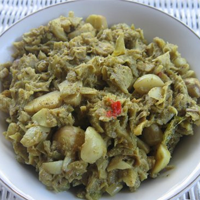
- The flesh and seeds of the breadnut are often made into a curry and cooked with coconut milk.
- Normally, people eat the fruit when it is still unripe. They cut the fruits into thin slices and boil them in soups.
Other facts
- Good forage plant for domestic animals.
- Leaves and branches cut for fodder for horses and mules.
- Latex is obtained from the stems. It is sometimes mixed with chicle to make chewing gum.
- Heartwood is a yellowish to dark brown, tinged with red around knots and other defects; the thick band of sapwood is yellowish to nearly white.
- Wood is hard, heavy, very strong, tough, not very durable, being particularly vulnerable to insect attack.
- Wood is used for general construction, carpentry, flooring, furniture, cabinet making, etc.
- Its wood is important in a variety of local uses, such as in interior carpentry and construction, and simple furniture, particleboard, plywood, forms, lasts, saddles, tools, and sports equipment.
- Wood is also used for firewood and charcoal.
- Fruit yield range from 50-75 kg/tree.
- Wood is also used for fuel by many rural Mexicans.
- It is planted as an ornamental plant around the home.
- It is used in Southern Veracruz as a living fence and in several areas as a shade tree in coffee plantations.
- The tree produces up to 800 fruits a year!
- When the stocks of maize run low, the Mayan people use the seeds of this plant to make their native bread.
Curry Chataigne ( breadnut)
Ingredients
- 2 medium chataigne ( breadnut) or 3 small
- 1 medium onion, chopped
- 2 pimento peppers, chopped
- 4 cloves garlic, chopped
- 3 tbsp curry
- 1 tsp jeera powder
- 1/2 tsp saffron (turmeric) powder
- 1 tsp amchur masala
- 2 tbsp green seasoning
- 3/4 cup coconut powder (about 75g)
- 2 tbsp coconut oil
- 1 1/2 tsp salt
- Water
Directions
- Rub a bit of oil on your hands. This will prevent your hands from getting sticky.
- Peel the thick outer skin.
- Cut into quarters and remove the heart.
- Separate the seeds from the flesh.
- Chop the chatline flesh finely
- When you’re separating the seeds try to leave the flesh intact. This will make chopping it finely much easier.
- Remove the skin from the seed.
- Place in a large bowl of water and wash
- Mix the curry, masala, green seasoning, genera, and turmeric with 4 tbsp of water.
- Heat oil and saute garlic, pimento peppers, and onion.
- Add the curry mixture and allow reduction to an almost sticky paste.
- Add the champagne.
- Coat evenly with the curry and add salt to taste.
- Mix the coconut powder in 1 cup of water.
- Add to chataigne and simmer for 1 minute.
- Pressure cook for 6 – 8 minutes. The dish is ready.
References
- https://www.ncbi.nlm.nih.gov/pmc/articles/PMC3649719/
- https://www.ncbi.nlm.nih.gov/pmc/articles/PMC6315720/
- https://www.ncbi.nlm.nih.gov/pmc/articles/PMC3419346/
- https://www.ncbi.nlm.nih.gov/books/NBK11795/
- https://www.ncbi.nlm.nih.gov/pmc/articles/PMC5291486/
- https://fruits.edpsciences.org/articles/fruits/abs/2012/05/fruits120033/fruits120033.html
- http://www.fao.org/3/cb2395en/CB2395EN.pdf
- https://www.fao.org/in-action/inpho/crop-compendium/fruits-vegetables/en/
- https://www.fao.org/3/cb2395en/online/src/html/fruit-and-vegetables.html
- http://www.fao.org/3/cb2395en/CB2395EN.pdf
- https://en.wikipedia.org/wiki/Fruit
- https://en.wikipedia.org/wiki/List_of_food_plants_native_to_the_Americas
- https://en.wikipedia.org/wiki/List_of_culinary_fruits
- https://www.hsph.harvard.edu/nutritionsource/what-should-you-eat/vegetables-and-fruits/
- https://www.betterhealth.vic.gov.au/health/healthyliving/fruit-and-vegetables
- https://www.cdc.gov/healthyweight/healthy_eating/fruits_vegetables.html
- https://www.botanical-online.com/en/botany/fruits-types-characteristics
- https://www.fda.gov/food/laboratory-methods-food/mpm-v-9-fruits-and-fruit-products-v-51-v-78
- https://www.fda.gov/food/food-labeling-nutrition/nutrition-information-raw-fruits-vegetables-and-fish
- https://onlinelibrary.wiley.com/doi/abs/10.1111/mcn.12208
- http://news.discovery.com/earth/
- https://www.cabi.org/isc/datasheet/
- https://www.science.org/
- https://plants.ces.ncsu.edu/plants/
- https://www.sciencedirect.com/topics/agricultural-and-biological-sciences/fruit-vegetable
- https://www.researchgate.net/publication/
- https://www.ams.usda.gov/grades-standards/fruits
- https://www.aphis.usda.gov/aphis/resources/traveler/intl-travel/fruits-vegetables/fruits-vegetables
- https://snaped.fns.usda.gov/seasonal-produce-guide
- https://www.nass.usda.gov/Publications/Highlights/2015/FruitsNutsBerries_AgCensusHighlights.pdf
- https://plants.usda.gov/home/plantProfile?
- https://www.fs.fed.us/wildflowers/ethnobotany/food/nuts.shtml
- https://downloads.usda.library.cornell.edu/usda-esmis/files/zs25x846c/sf269213r/6t054c23t/ncit0521.pdf
- https://agr.wa.gov/departments/business-and-marketing-support/farm-to-school-toolkit/
- https://health.gov/sites/default/files/2020-01/DGA2000.pdf
- https://www.farmers.gov/archived/cfap2/specialty
- https://www.hsph.harvard.edu/nutritionsource/
- https://www.foodsafety.gov/food-safety-charts/food-safety-during-power-outage
- https://clinicaltrials.gov/ct2/show/
- https://botany.org/home/careers-jobs/careers-in-botany/what-is-botany.html
- https://www.healthbenefitstimes.com/category/fruits
- http://www.hear.org/pier/species/
- https://www.itis.gov/servlet/SingleRpt/SingleRpt?
- http://www.theplantlist.org/tpl1.1/record/
- https://www.fs.fed.us/database/feis/plants/tree/
- https://www.itis.gov/servlet/SingleRpt/SingleRpt?
- https://eol.org/pages/
- https://www.itis.gov/servlet/SingleRpt/SingleRpt?search_topic=TSN&search_value=19075#null
- https://davesgarden.com/guides/pf/go/102567/
- http://www.hear.org/pier/species/brosimum_alicastrum.htm
- https://npgsweb.ars-grin.gov/gringlobal/taxonomydetail.aspx?id=7895
- https://pfaf.org/user/Plant.aspx?LatinName=Brosimum+alicastrum
- https://plants.usda.gov/core/profile?symbol=BRAL3
- http://www.theplantlist.org/tpl1.1/record/kew-2683579
- https://www.cabi.org/isc/datasheet/10224
- http://www.tropicaltimber.info/specie/ramon-brosimum-alicastrum/
- https://wikivividly.com/wiki/Brosimum_alicastrum
- http://www.tropicalfruits.com.my/pdf/Breadnut.pdf
- https://en.wikipedia.org/wiki/Brosimum_alicastrum

