
RX Patient Tools
Use these quick guides before reading the article, or return to them when you need help preparing questions for a doctor.
Araucaria bidwillii, commonly known as the bunya pine and sometimes referred to as the false monkey puzzle tree, is a large evergreen coniferous tree in the plant family Araucariaceae. The plant is native to south-east Queensland Australia and two small disjunct populations in northeastern Queensland’s World Heritage-listed Wet Tropics. It has been distributed between Gympie and the Bunya Mountain on the northeastern side of Dalby, Mt. Lewis and Cunnabullen falls north of Queensland. Other places where the Bunya trees are found include parts of Argentina, Chile, New Caledonia, Southern Brazil, New Guinea, and Norfolk Island. Bunya-bunya (Aust.), Bunya nut, Bunya pine, Monkey puzzle tree, Queensland pine, Bunya pine, Moreton-bay-pine, Bunya bunya, Bunya, bunya-bunya tree, and false monkey-puzzle tree are a few of the popular common names of the plant.
| Bunya nuts Quick Facts | |
|---|---|
| Name: | Bunya nuts |
| Scientific Name: | Araucaria bidwillii |
| Origin | South-east Queensland Australia and two small disjunct populations in northeastern Queensland’s |
| Colors | Dark green |
| Shapes | Ovoid-sub globose, 30 cm (12 in) long, 20 cm (8 in) wide, weighing up to 20 kg (44 lbs.) |
| Taste | Mild, slightly sweet, nutty flavor similar to almond meal |
Bunya Nuts Facts
| Name | Bunya nuts |
|---|---|
| Scientific Name | Araucaria bidwillii |
| Native | South-east Queensland Australia and two small disjunct populations in northeastern Queensland’s World Heritage-listed Wet Tropics. It has been scattered between Gympie and the Bunya Mountain on the northeastern side of Dalby, Mt. Lewis and Cunnabullen falls north of Queensland. Other places where the Bunya trees are found include parts of Argentina, Chile, New Caledonia, Southern Brazil, New Guinea, and Norfolk Island |
| Common Names | Bunya-bunya, Bunya nut, Bunya pine, Monkey puzzle tree, Queensland pine, Bunya pine, Moreton-bay-pine, Bunya bunya, Bunya, bunya-bunya tree, false monkey-puzzle tree |
| Name in Other Languages | Arabic: Arukaria biduilia (أروكاريا بدويلية) Catalan: Araucària d’Austràlia, Pi de Bunya Chinese: Da ye nan yang shan (大叶南洋杉), Ōba nan’yōsugi (大葉南洋杉), Kuo ye nan yang shan (闊葉南洋杉), Guǎng yè nányáng shān (廣葉南洋杉) Dutch: Bunya-bunya English: Bunya-bunya, Bunya nut, Bunya pine, Monkey puzzle tree, Queensland pine, Bunya pine, Moreton-bay-pine, Bunya bunya, Bunya, bunya-bunya tree, false monkey-puzzle tree Esperanto: Kvinslanda araŭkario Finnish: Queenslandinaraukaria French: Araucaria d’Australie, pin Bunya, araucaria de Bidwill, bunya-bunya, pin bunya German: Queensland-Araukarie, Bunya-Bunya-Baum, Bunya Schmucktanne Hungarian: Bunya bunya délfenyő, Ausztráliai araucaria Italian: Araucaria di Bidwill, pino Bunya Japanese: Bunyabunya (ブンヤブンヤ), Hiroha nonanyou sugi (ヒロハノナンヨウスギ) Persian: کاج بونیا Polish: Araukaria australijska, Araukaria Bidwilla Portuguese: Araucária-da-Austrália, bunia-bunia, Araucária, Bunya-bunya, Pinheiro-australiano, Pinheiro-bunya-bunya, araucária-da-queenslándia, pinheiro-bunia Russian: Araukariia Bidvilla (Араукария Бидвилла), buniya-buniya (буния-буния) Spanish: Araucaria australiana, Pino bunya, araucaria de Bidwill, pino de Bunya Swedish: Bunya-bunyaträd Thai: S̄n h̄nām (สนหนาม) Ukrainian: Araukariya Bidvilla (Араукарія Бідвілла) |
| Plant Growth Habit | Large, evergreen, broadleaf, coniferous tree |
| Growing Climates | Grows in moist valley floors, upper slopes, ridgetops, rich volcanic soils in moist valleys at low elevations near the coast. Normally found as an emergent tree over tropical rainforest, in humid areas where mists are frequent |
| Soil | Favorable in loamy soils which are well-drained |
| Plant Size | 45 meters (about 148 feet), a diameter of 1.5 meters (around 4 feet), and a spread of 15 meters (49 feet) |
| Trunk | The thick and sturdy trunk is very straight and is brown to black in color. The trunk is often said to resemble the leg of an elephant or a dinosaur in appearance |
| Bark | Varies from dark brown to black. The thickness of the bark ranges from 5 to 10 cm (2 to 4 inches) and is deeply furrowed on mature trees |
| Leaf | Up to 7 cm (3 in) long, narrow, lance-shaped on young trees, changing to triangular-shaped on older branches |
| Cone Shape & Size | Ovoid-sub globose, 30 cm (12 in) long, 20 cm (8 in) wide, weighing up to 20 kg (44 lbs.) |
| Cone Color | Dark green |
| Cone Weight | Up to 10 kilograms |
| Seed | About 1 inch (2.5 cm) long, elongate-elliptic, wingless and encased in a thin, tough, buff-colored protective shell |
| Propagation | By seed or cuttings |
| Flavor/Aroma | Earthy, sweet, nutty aroma, similar to almond or macadamia |
| Taste | Mild, slightly sweet, nutty flavor similar to almond meal |
| Lifespan | More than 600 years |
| Season | September to October |
| Precautions |
|
Bunya nuts Scientific Classification
Scientific Name: Araucaria bidwillii
| Rank | Scientific Name & (Common Name) |
|---|---|
| Kingdom | Plantae (Plants) |
| Subkingdom | Tracheobionta (Vascular plants) |
| Infrakingdom | Streptophyta (land plants) |
| Superdivision | Spermatophyta (Seed plants) |
| Division | Coniferophyta (Conifers) |
| Sub Division | Spermatophytina (spermatophytes, seed plants, phanérogames) |
| Class | Pinopsida |
| Order | Pinales |
| Family | Araucariaceae (Araucaria family) |
| Genus | Araucaria Juss. (araucaria) |
| Species | Araucaria bidwillii Hook. (bunya bunya) |
| Synonyms |
|
Plant Description
Bunya nuts is a large, evergreen, broadleaf, coniferous tree that normally grows about 45 meters (about 148 feet) tall, a diameter of 1.5 meters (around 4 feet), and a spread of 15 meters (49 feet) wide. The tallest presently living is one in Bunya Mountains National Park, Queensland which was reported by Robert Van Pelt in January 2003 to be 169 feet (51.5 m) in height. These softwood trees have horizontal branches which are evenly spaced and arranged in regular tiers till the apex of the tree. The thick and sturdy trunk is very straight and is brown to black in color. The trunk is often said to resemble the leg of an elephant or a dinosaur in appearance. The bark of the tree varies from dark brown to black. The thickness of the bark ranges from 5 to 10 cm (2 to 4 inches) and is deeply furrowed on mature trees. Bunya trees are characterized by their symmetrical dome-shaped crown. The branches grow until they are long enough and eventually fall off as they get hit by a falling cone. Hence the tree retains a dome-shaped profile. The branches below the dome do not reach the size of the crown branches.
Leaves
As the trunk and branches, the leaves of the bunya pine are unusual. The leaves are up to 7 cm (3 in) long, narrow, lance-shaped on young trees, changing to triangular-shaped on older branches. These emerge lime green, become dark glossy green with age, and are stiff, sharply pointed and near stalkless. They are spirally arranged along the branches and remain on the tree in all seasons.
| Leaf arrangement | Spiral |
| Leaf type | Simple |
| Leaf margin | Entire |
| Leaf shape | Linear, needle-like (filiform), lanceolate |
| Leaf venation | Parallel |
| Leaf type and persistence | Evergreen, needled evergreen |
| Leaf-blade length | Less than 2 inches |
| Leaf color | Green |
| Fall color | No color change |
| Fall characteristic | Not showy |
Seed Cone
Seed cones usually appear in April and mature in between September or October about 17 months after pollination. Trees begin to bear cones at about 14 years of age. Bunya Pine usually bears female and male cones on the same tree. But as is common with many conifers, male and female cones tend to appear at different stages of the tree’s life. Usually, male cones appear first. Then, in middle-age, female cones appear too, and the tree commences fruiting. Fertile cones are dark green, ovoid-sub globose, 30 cm (12 in) long, 20 cm (8 in) wide, weighing up to 20 kg (44 lbs.), though are more typically 5 to 10 kg (11 to 22 lbs.). They take two to three years to reach maturity, at which time they self-detach and fall to the ground, landing with a bump.
It is dangerous to hang around under the bunya trees during their fruiting time as the ripe cones fall to the ground. Once the cones become ripe, they should be harvested and processed or kept frozen within a week. Inside the cone, the nuts are enclosed in a wooden shell. Boiling the nuts can help in removing the shell easily. Bunya nuts are nutritionally rich and offer several health benefits.
Nuts and Seeds
Each cone consists of 50-100 seeds that are about 1 inch (2.5 cm) long, elongate-elliptic, wingless, and encased in a thin, tough, buff-colored protective shell, which will split when boiled or put in a fire. Once this is done, the seed coat or shell of the nut must be opened with a nutcracker or hammer to reveal the large and very tasty seed inside. The flavor of the kernel is similar to a chestnut. They are opened by large birds, such as cockatoos, or disintegrate when mature to release the large seeds or nuts.
| Fruit shape | Oval, cone |
| Fruit length | 3 to 6 inches, 6 to 12 inches |
| Fruit covering | Dry or hard |
| Fruit color | Brown |
| Fruit characteristics | Does not attract wildlife; showy; fruit/leaves a litter problem |
Medicinal benefits
Research showed the results that extract of bunya nuts has anti-bacterial properties. Thus, bunya nuts have the ability to be used as an additional substance in foods that serve to slow the decay of foods that are normally caused by bacteria. In addition, the properties of bunya nuts may also be used to inhibit foodborne illness.
Instead of using chemical preservatives, people can start using these nuts to preserve food, because of their natural addictive properties. In the medical field, the anti-bacterial properties of bunya nuts may also be useful for use as antibiotics or anti-microbial agents. However, the medicinal properties of the tree are unknown. Professional discussion is always suggested before using the plant medically.
Culinary Uses
- Seed can be consumed raw, cooked, or ground into a powder.
- Starchy and delicious, it has the texture of a waxy boiled potato with the flavor of chestnuts.
- Germinating seed produces an underground ‘earth nut’ which has a coconut-like flavor.
- Nuts were additionally ground and made into a paste, which was eaten directly or cooked in hot coals to make bread.
- Nuts were also stored in the mud of running creeks, and eaten in a fermented state.
- When the nuts are boiled in water, the water turns red, making a flavorsome tea.
- Bunya nut is nowadays used as an ingredient in making a vast variety of dishes including casseroles, pies, quiches, pasta, pancakes, porridge, hummus, pesto, biscuits, dessert, cakes, and bread.
Different Uses
Bunya nuts have several uses which can be categorized into the following:
Edible Uses
Seeds of the bunya pine are edible. They are eaten raw, roasted, or grounded into a powder. These nuts are an important source of food and a delicacy for the Aborigines of Australia. Its taste has a texture of chestnut and a boiled potato.
Functional Uses
Bunya nuts tree provides valuable timber for cabinets, wood makers, and flooring. The softwood of the bunya pine is in great demand for making acoustic guitar soundboards. The branches are used by the locals for fencing and fuel.
Service Uses
The tall bunya trees act as a windbreaker and also provide shade and shelter.
Ornamental Uses
The distinctive trees are placed as a decorative plant for parks, landscapes, avenues and can also be used as a house plant.
Storing bunya nuts
Bunya nuts taste best when eaten fresh. However, if you want to store them, the ideal way is to freeze the nuts in their shells. Before putting the nuts in the refrigerator, you can store the nuts in a string bag and place the bag in a dry and well-aired place away from direct sunlight. This will help to prevent the growth of fungus. Storing the nuts inside the refrigerator keeps them fresh and prevents them from sprouting.
Method of preparing the bunya nut for cooking
Bunya nuts come in different sizes and shapes. While some are white, small, and round, others are brown and oval in shape. The brown colored ones have a creamy texture and the white ones have a coarse texture. Bunyas fall to the ground when they are ready to harvest. If the cones are intact after hitting the ground, you need to break open the cone and separate the nuts from it. Unlike other nuts like walnuts, the bunya nuts have a leathery and tough shell and will not break open easily. You may need to use tools like a cleaver or serrated knife to get the job done. Once the nuts are extracted, keep them in water for a few minutes to get rid of the thin brown skin. Boiling is the most recommended way of preparing the bunya nut, because other methods like frying and roasting may cause the flesh to dry out. The nuts need to be cooked for a good 30 to 45 minutes. Some people choose to boil them in brine, as this method tends to give the nuts a salty and savory taste.
Bunya Nuts Recipe
Charred Courgette, Bunya Nuts, and Herbs
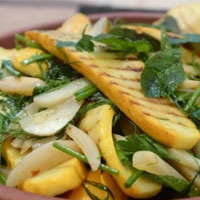
Ingredients
- 4 yellow courgettes
- 1/2 cup bunya nuts, roasted and chopped (or replace with pine nuts or almonds)
- 2 cups mixed herbs like parsley, mint, dill, and whatever you like the flavor of
- 1 lemon
Directions
- Slice the courgette lengthways about 5mm thick.
- Drizzle with oil and cook on a really hot wood grill, chargrill or griddle pan. Only cook on one side.
- Once done place into a bowl with the bunya nuts or roast almonds.
- Zest in the lemon rind then squeezes in the juice.
- Add the herbs and a dash of good olive oil.
- Season with salt and black pepper. Serve.
Other Facts
- Branches are used for fencing and fuel.
- Tallest presently living is one in Bunya Mountains National Park, Queensland which was reported by Robert Van Pelt in January 2003 to be 169 feet (51.5 m) in height.
- Indigenous Australians ate bunya shoots and utilized the tree’s bark as kindling.
- Wood pulp is used for making paper.
- General-purpose softwood is used in making plywood, interior joinery, flooring, linings, moldings, furniture, and general, interior construction.
- Musical instruments, especially sought after for guitar soundboards.
References
- https://www.ncbi.nlm.nih.gov/pmc/articles/PMC3649719/
- https://www.ncbi.nlm.nih.gov/pmc/articles/PMC6315720/
- https://www.ncbi.nlm.nih.gov/pmc/articles/PMC3419346/
- https://www.ncbi.nlm.nih.gov/books/NBK11795/
- https://www.ncbi.nlm.nih.gov/pmc/articles/PMC5291486/
- https://fruits.edpsciences.org/articles/fruits/abs/2012/05/fruits120033/fruits120033.html
- http://www.fao.org/3/cb2395en/CB2395EN.pdf
- https://www.fao.org/in-action/inpho/crop-compendium/fruits-vegetables/en/
- https://www.fao.org/3/cb2395en/online/src/html/fruit-and-vegetables.html
- http://www.fao.org/3/cb2395en/CB2395EN.pdf
- https://en.wikipedia.org/wiki/Fruit
- https://en.wikipedia.org/wiki/List_of_food_plants_native_to_the_Americas
- https://en.wikipedia.org/wiki/List_of_culinary_fruits
- https://www.hsph.harvard.edu/nutritionsource/what-should-you-eat/vegetables-and-fruits/
- https://www.betterhealth.vic.gov.au/health/healthyliving/fruit-and-vegetables
- https://www.cdc.gov/healthyweight/healthy_eating/fruits_vegetables.html
- https://www.botanical-online.com/en/botany/fruits-types-characteristics
- https://www.fda.gov/food/laboratory-methods-food/mpm-v-9-fruits-and-fruit-products-v-51-v-78
- https://www.fda.gov/food/food-labeling-nutrition/nutrition-information-raw-fruits-vegetables-and-fish
- https://onlinelibrary.wiley.com/doi/abs/10.1111/mcn.12208
- https://www.cabi.org/isc/datasheet/
- https://www.science.org/
- https://www.sciencedirect.com/topics/agricultural-and-biological-sciences/fruit-vegetable
- https://www.researchgate.net/publication/
- https://www.ams.usda.gov/grades-standards/fruits
- https://www.aphis.usda.gov/aphis/resources/traveler/intl-travel/fruits-vegetables/fruits-vegetables
- https://snaped.fns.usda.gov/seasonal-produce-guide
- https://www.nass.usda.gov/Publications/Highlights/2015/FruitsNutsBerries_AgCensusHighlights.pdf
- https://plants.usda.gov/home/plantProfile?
- https://www.fs.fed.us/wildflowers/ethnobotany/food/nuts.shtml
- https://downloads.usda.library.cornell.edu/usda-esmis/files/zs25x846c/sf269213r/6t054c23t/ncit0521.pdf
- https://agr.wa.gov/departments/business-and-marketing-support/farm-to-school-toolkit/
- https://health.gov/sites/default/files/2020-01/DGA2000.pdf
- https://www.farmers.gov/archived/cfap2/specialty
- https://www.hsph.harvard.edu/nutritionsource/
- https://www.foodsafety.gov/food-safety-charts/food-safety-during-power-outage
- https://clinicaltrials.gov/ct2/show/
- https://botany.org/home/careers-jobs/careers-in-botany/what-is-botany.html
- https://www.healthbenefitstimes.com/category/fruits
- http://www.hear.org/pier/species/
- https://www.itis.gov/servlet/SingleRpt/SingleRpt?
- http://www.theplantlist.org/tpl1.1/record/
- https://www.fs.fed.us/database/feis/plants/tree/
- https://www.itis.gov/servlet/SingleRpt/SingleRpt?search_topic=TSN&search_value=506779#null
- https://pfaf.org/user/Plant.aspx?LatinName=Araucaria+bidwillii
- https://plants.usda.gov/core/profile?symbol=ARBI12
- https://www.cabi.org/isc/datasheet/7151
- https://landscapeplants.oregonstate.edu/plants/araucaria-bidwillii
- https://davesgarden.com/guides/pf/go/54481/#b
- https://en.wikipedia.org/wiki/Araucaria_bidwillii
- https://www.conifers.org/ar/Araucaria_bidwillii.php
- https://www.flowersofindia.net/catalog/slides/Bunya%20Pine.html
- http://www.theplantlist.org/tpl1.1/record/kew-14343
- https://gd.eppo.int/taxon/ARUBI

