
The acai palm Euterpe oleracea is a species of palm tree (Arecaceae) cultivated for its fruit (açaí berries, or simply açaí), hearts of palm (a vegetable), leaves, and trunk wood. Global demand for the fruit has expanded rapidly in the 21st century, and the tree is cultivated for that purpose primarily.
The species is native to Brazil, Ecuador, Venezuela, Colombia, Guyana, French Guiana, Suriname and Trinidad and Tobago, mainly in swamps and floodplains. Açaí palms are tall, slender trees growing to more than 25 m (82 ft) tall, with pinnate leaves up to 3 m (9.8 ft) long.[rx] The fruit is small, round, and black-purple in color. The fruit became a staple food in floodplain areas around the 18th century,[rx][rx] but its consumption in urban areas and promotion as a health food only began in the mid-1990s along with the popularization of other Amazonian fruits outside the region.[rx]
| Acai berry Quick Facts | |
|---|---|
| Name: | Acai berry |
| Scientific Name: | Euterpe oleracea |
| Origin | Brazil, Trinidad, and other countries of northern South America |
| Colors | Initially, green turning to blackish purple as they mature |
| Shapes | Small, round, black-purple drupe about 1 inch (25 mm) in circumference, similar in appearance to a grape |
| Flesh colors | Fibrous, fleshy |
| Taste | Bitter |
| Calories | 165 Kcal./cup |
| Major nutrients | Vitamin B-12 (376.67%) Vitamin B6 (225.08%) Vitamin E (197.00%) Manganese (192.00%) Vitamin A (184.29%) |
| Health benefits | Prevent Cancer, Regulate Blood Pressure, Delay Premature Aging, Skin Care, Boost Immunity, Aphrodisiac, Improve Cardiovascular Health, Aid in Digestion, Weight Loss, Improve Metabolism, Boost Energy, Boost Cognition, Promote Wound Healing |
Acai plum scientifically known as Euterpe oleracea is a slender, multi-stemmed, monoecious palm in the Arecaceae ⁄ Palmae (Palm family) cultivated for its fruit, hearts of palm, leaves, and trunk wood. The plant is native to Brazil, Trinidad, and other countries of northern South America, mainly in swamps and floodplains. Acai berries pronounced ah-sigh-EE, come from the acai palm tree. Few of the common names of the plant are Assai palm, Cabbage palm, acai, Euterpe Palm, acai palm, jussara, Para palm, Asai, Naidi, Pinot, Pina palm, Palmito acai, Palmiteiro, Pina, Ucai, Manaka, Acai-do-para, Jucara, Wasei and Pina. The genus epithet ‘Euterpe’ comes from a Greek mythological name for one of the nine goddesses of the liberal arts. The species epithet ‘oleracea’ means ‘vegetable’ in Latin, in reference to the heart of the stem, which is eaten as a vegetable. Global demand for the fruit expanded rapidly in the 21st century and so the tree is cultivated for that purpose primarily.
Acai berries are one of the newest and most popular organic solutions for a wide range of health concerns. It is being actively used by alternative medical practitioners. The different varieties are often said to have different benefits, with the white acai berries not being nearly as potent or powerful as the dark red or purple varieties. The berry has a large seed in the middle which makes up approximately 80% of the fruit, but the remaining endocarp, pulp, and skin all contain beneficial nutrients.
Plant Description
Acai plum is a tall, slim, multi-stemmed evergreen palm tree that grows more than 25 m (82 ft.) tall. The plant is found growing in swampy ground, often in sandy soils. Most commonly found along river edges and seasonally flooded habitats. The plant prefers well-drained, organic soils that are acid-rich, like peat, moss, and pine needles. An average mature plant may possess 4–8 slender gray-brown stems, each of which is about 25 meters (82 feet) tall and generally no greater than 20 cm (about 8 inches) in diameter from a single root system. Each stem performs like an individual tree and bears 3-5 bunches with each carrying hundreds of berries much similar to areca or date palm. Leaves are fronds pinnate (feather-shaped), arching, ascending to spreading, about 2 to3 m long. Leaflets are 50 cm long and 4 cm wide.
Flower & Fruits
Small brown-purple flowers are either staminate (male) or pistillate (female) and are borne on large branching inflorescences that hang from the tops of the stems. Flowers are followed by small, round, black-purple drupe about 1 inch (25 mm) in circumference, similar in appearance to a grape, but smaller and with less pulp and produced in branched panicles of 500 to 900 fruits. Exocarp is initially green turning to blackish purple, though the fruit of some populations remains green at maturity. The mesocarp is pulpy and thin, with a constant thickness of 1 mm or less. It surrounds the voluminous and hard endocarp, which contains a single large seed about 0.25–0.40 inches (7–10 mm) in diameter. The seed makes up about 80% of the fruit. Two crops of fruit are produced each year. The fruits can be harvested and consumed. Each acai stem can produce up to eight bunches of fruit a year, with each bunch weighing up to 6 kg (13 pounds).
Nutritional value of Acai berry drink, fortified
Calories 165 K cal. Calories from Fat 19.89 K cal.
| Proximity | Amount | % DV |
|---|---|---|
| Water | 225.78 g | N/D |
| Energy | 165 Kcal | N/D |
| Energy | 692 kJ | N/D |
| Protein | 2.21 g | 4.42% |
| Total Fat (lipid) | 2.21 g | 6.31% |
| Ash | 1.65 g | N/D |
| Carbohydrate | 34.13 g | 26.25% |
| Total dietary Fiber | 3.2 g | 8.42% |
| Total Sugars | 29.53 g | N/D |
| Sucrose | 2.13 g | N/D |
| Glucose (dextrose) | 9.84 g | N/D |
| Fructose | 17.56 g | N/D |
| Minerals | Amount | % DV |
|---|---|---|
| Calcium, Ca | 51 mg | 5.10% |
| Iron, Fe | 0.43 mg | 5.38% |
| Magnesium, Mg | 29 mg | 6.90% |
| Phosphorus, P | 35 mg | 5.00% |
| Potassium, K | 346 mg | 7.36% |
| Sodium, Na | 35 mg | 2.33% |
| Zinc, Zn | 0.29 mg | 2.64% |
| Copper, Cu | 0.202 mg | 22.44% |
| Manganese, Mn | 4.416 mg | 192.00% |
| Vitamins | Amount | % DV |
|---|---|---|
| Water soluble Vitamins | ||
| Vitamin B1 (Thiamin) | 0.08 mg | 6.67% |
| Vitamin B2 (Riboflavin) | 0.106 mg | 8.15% |
| Vitamin B3 (Niacin) | 24.1 mg | 150.63% |
| Vitamin B5 (Pantothenic acid) | 8.866 mg | 177.32% |
| Vitamin B6 (Pyridoxine) | 2.926 mg | 225.08% |
| Vitamin B9 (Folate) | 11 µg | 2.75% |
| Folate, food | 11 µg | N/D |
| Folate, DEF | 11 µg | N/D |
| Vitamin B-12 (Cobalamine) | 9.04 µg | 376.67% |
| Vitamin B-12, added | 9.04 µg | 30.13% |
| Vitamin C (Ascorbic acid) | 112 mg | 124.44% |
| Fat-soluble Vitamins | ||
| Vitamin A, RAE | 1290 µg | 184.29% |
| Vitamin A, IU | 25797 IU | N/D |
| Beta Carotene | 15385 µg | N/D |
| Alpha Carotene | 122 µg | N/D |
| Beta Cryptoxanthin | 61 µg | N/D |
| Lycopene | 2391 µg | 47.82% |
| Lutein + zeaxanthin | 2083 µg | N/D |
| Vitamin E (alpha-tocopherol) | 29.55 mg | 197.00% |
| Vitamin E, added | 17.95 mg | N/D |
| Tocopherol, gamma | 0.27 mg | N/D |
| Vitamin K (phylloquinone) | 44.4 µg | 37.00% |
*Above mentioned Percent Daily Values (%DVs) are based on 2,000 calorie diet intake. Daily values (DVs) may be different depending upon your daily calorie needs. Mentioned values are recommended by the U.S. Department of Agriculture. They are not rxharun.com recommendations. Calculations are based on average age of 19 to 50 years and weigh 194 lbs. Source: https://ndb.nal.usda.gov/
Health Benefits of Acai Berries
Acai berries have been heralded for centuries for their healing, immune-stimulating, energy-boosting properties. Research reveals this antioxidant-rich berry may help suppress and repair oxidative damage. The most researched health benefits of acai berries are explained below.
1. Prevent Cancer
Acai berry consists of a good amount of Vitamin C that helps to improve your ability to fight off many diseases like cancer. Ellagic acid in acai berries also aids in fighting against cancerous cells. Acai is loaded with polyphenols, which battle cancerous cell growth on a molecular level and also prevent it from multiplying and metastasizing. Acai berry can stop the growth of cancer cells by up to 80%, which is one of the most positive rates for alternative medical treatments. There have also been specific attention placed on acai berry’s effect on prostate cancer in men. (1), (2)
2. Regulate Blood Pressure
Acai berries consist of plenty of plant sterols, which act as vasodilators and relax blood vessels to decrease blood pressure, prevent blood clots that can lead to strokes and heart attacks, and generally improve circulation and oxygenation of the blood.(3), (4)
3. Delay Premature Aging
Acai berries consist of a huge amount of antioxidants that help to slow down the aging process. Antioxidants help to remove the free radicals that cause the breakdown of skin, hair, teeth, and eye health, often related to premature aging. Regular consumption of acai berry juice helps to reduce the damaging effects of free radicals, tooth decay, hair loss, macular degeneration, and cataract formation. Furthermore, the application of acai oil to certain areas of the skin helps prevent wrinkle formation. Cellular oxidative damage and various types of inflammation can also be reduced with the frequent use of acai berries.(5), (6)
4. Skin Care
Antioxidant properties of acai berry powder aids in skin care. Acai oil is frequently used in cosmetic products because the antioxidants can relieve irritation and redness and moisturize the skin. Also, if acai berries are ingested, they can give the skin a healthy, attractive glow. In fact, in Brazil, the pulp of the acai berry has been used for generations to treat or reduce the number of skin conditions and diseases.(7)
5. Boost Immunity
Acai juice is a wonderful source of vitamin C, which is a well-known immunity booster. Its antioxidant properties fight against the free radicals and keep you healthy, away from many life-threatening diseases.(8)
6. Aphrodisiac
Although the direct impact of acai berries on sexual stamina and sex drive is not completely known, they do have the ability to increase blood circulation throughout the body. Since lack of blood flow is one of the primary causes of erectile dysfunction and lack of sexual stamina, acai berry juice is commonly used as an alternative medicine for helping people with these conditions.(9)
7. Improve Cardiovascular Health
Acai berries consist of high levels of anthocyanins, which are a form of plant antioxidants. Antioxidants seek out and eliminate the free radicals that are liable for a wide variety of diseases and conditions, including heart diseases. Anthocyanins are also related to regulating blood cholesterol by decreasing the LDL (bad) cholesterol, thus lowering the risk of atherosclerosis, stroke, and heart attack.(10)
8. Aid in Digestion
Acai berry juice has strong detoxifying effects on the human body, which helps cleanse the body’s digestive system and eliminates the build-up of hazardous toxins. It consists of natural fiber, which aids in the digestion and absorption of nutrients from food. It bulks up the bowel movements, making the excretory processes regular, and decreasing the chances of constipation and other uncomfortable digestive issues. Consuming fiber-rich acai berries can also give bulk to the stool and reduce the chances of diarrhea as well. (11)
9. Weight Loss
Research shows that the pulp of acai berry can help in weight loss. It not only encourages weight loss but also helps people maintain a healthy weight by decreasing the negative impact of high-fat diets. In recent years, acai weight loss supplements and pills have become wildly popular and although the results are not uniformly successful, there have been a number of positive recommendations regarding the same.
One research found that 30 days of using acai berries resulted in a lower level of fasting insulin and glucose levels, as well as a reduction in total cholesterol levels. The high fiber content of acai berries can also reduce appetite and stop hunger pain related with overeating and weight gain.(12)
10. Improve Metabolism
The antioxidant properties of acai berries are its most celebrated aspect, and they can also benefit healthy cellular metabolism and functioning. They decrease the chances of unhealthy apoptosis (cell death) and increase the efficiency of the cell’s absorption of nutrients and the subsequent translation into useful energy.(13), (14)
11. Boost Energy
Acai berry extract is a well-known supplement used to boost instant energy. It also aids in combating fatigue and mental exhaustion.(15)
12. Boost Cognition
In terms of brain health and function, acai berry juice has been associated with increased mental functioning and sharpness of mind. Berries also improve memory and protect the brain from the development of neural disorders. (16)
13. Promote Wound Healing
Acai berries have anti-inflammatory properties because of which acai berry water extracts are used to speed wound healing.(17)
Traditional uses and benefits of acai berry
- Acai berry is effective in achieving beautiful and lustrous hair. It keeps the hair healthy and helps restore its radiance.
- Acai berry is of great value in providing relief to the tired eyes and therefore, keeps the eyes healthy by protecting them against various eye problems.
- It prevents the growth of Cancer Cells and tumors in the human body.
- It is also helpful in countering sleeplessness and enabling sound sleep.
- It is an advantageous remedy for counteracting heart ailments like an irregular beating of the Heart.
- Due to the presence of Vitamin B6 and B12, it prevents the body from Heart Diseases, Atherosclerosis, Carpal tunnel Syndrome and Anemia.
- It is effective in strengthening the Immune system of our body.
- It is a good herbal remedy for combating body pains, fever, and cold due to Influenza, familiar as Flu.
- It controls the deadly disease like malaria caused due to a mosquito bite.
- It is effective in stimulating the rapid reduction of body weight, thus, helping in toning up the body.
- It also helps in mitigating a person’s diet, thus, improving the functionality of the digestive system.
- It guards the liver against various ailments, as a result, it provides energy to the body to work and stay fit.
- It is a favorable remedy for the skin as it reduces the possibility of untimely signs of ageing. Thus, it helps a person in achieving an ideal and dazzling Skin.
- It works effectively in curing diseases like Eczema, Psoriasis; which causes red patches. It helps in healing cuts, wounds, and bruises.
- It is effective in maintaining the blood pressure of the Body, particularly high blood pressure.
- It is also beneficial in the modulation of body cholesterol.
- It is a good herbal remedy for counteracting diabetes, which leads to an increase in the Blood Sugar level in our body, thus, inviting various other ailments.
- It also relieves joint ailments like Arthritis that results in discomfort and enlargement of the joints.
- It is effective in providing relief from loose stool familiar as diarrhea and constipation.
- It calms the irritation and pain during the Menstrual Cycle.
- It enhances brain function and stabilizes mood.
- It protects against Alzheimer’s.
- Acai Palm contains folate that helps in the proper working of the brain.
- It is important during pregnancy. It reduces the risk of spinal and mental defects in the fetus.
- Coldwater infusion of wood used as an external wash by Surinam Tirio women for a contraceptive.
- Sap applied to cuts as hemostatic.
- The heart is dried, pulverized, and used in plaster to cicatrize open cuts.
- The liquid extracted from warm palm-heart is patted on an open wound.
- The sap is used to treat hemorrhage, scorpion bites, and in the treatment of wounds and cuts.
- Infusion of the whole seedling used to treat shot wounds from hunting.
- It is roasted and applied to soothe the pain of scorpion stings.
- Leaves are used medicinally used for hemorrhages, fevers, wounds, scorpion stings, diarrhea, and jaundice.
Culinary Uses
- Açaí is sold as frozen pulp, juice, or an ingredient in various products from beverages, including grain alcohol, smoothies, foods, cosmetics, and supplements.
- It is commonly eaten as Açaí na tigela in Brazil.
- It is often used to make a drink that is very popular in the Amazon region of Brazil.
- Juice is served ice cold with (or sometimes without) sugar and tapioca flour.
- It is a nourishing and refreshing drink that is also used to produce ice cream, liquor, mousses, and sweets in general.
- Juice is also added to various foods such as tapioca, cassava, and porridge.
- Leaves when cooked are crunchy, with a sweet flavor.
- Edible oil is obtained from the seed.
Recipes
Acai Smoothie
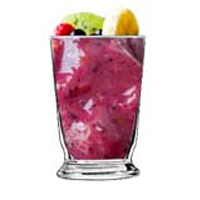
Ingredients
- Handful of ice
- 1 scoop of low-fat vanilla yogurt
- Splash of acai juice/puree
- Strawberries as required
- Bananas as required
- Blueberries as required
Directions
- Take a bowl; add ice, vanilla yogurt, acai juice/puree to the bowl.
- Blend the mixture for 45 – 50 seconds on a high setting.
- Add the fruits you wish and pulse the blender to frappe the shake.
- Refrigerate and serve.
Acai Berry Cupcakes

Ingredients:
- 1/4 cup of milk
- 1 tbsp baking powder
- 2 eggs
- 1 cup sugar (if needed can add more)
- 1/2 cup of butter
- 1 – 2 cups of acai berry pulp
- 1 – 2 cups of Cake Flour
Directions
- Preheat to 350 degrees Fahrenheit. While heating put liners on the cup cake pan.
- Cream the butter and sugar in a large bowl for about 3 – 5 minutes or wait till it becomes fluffy.
- Add eggs to the mixture and beat it well.
- Sift together the cake flour and baking powder in a separate bowl.
- Now slowly beat the flour and baking powder in the creamed mixture and then alternate this with the milk.
- Using a spatula, fold the acai berry pulp into the mixture.
- Pour into the cupcake liners and bake for 20-25 minutes.
- Yummy acai berry cake is ready.
Other facts
- Leaves may be made into hats, baskets, brooms, and roof thatch for homes, and trunk wood, resistant to pests, for building construction.
- Tree trunks may be processed to yield minerals.
- Palm’s heart is widely exploited as a delicacy.
- Seeds are a source of polyunsaturated and saturated fatty acids.
- Wood is used locally for rafters, laths, rustic buildings, etc.
- Leaves are used for weaving mats etc.
- It is used locally for making rustic buildings, rafters, laths, etc.
- Each bunch weighs up to 6 kg (13 pounds).
Precautions
- Avoid it during Hypersensitivity.
- If you are on chemotherapy, consult your doctor before taking Acai.
- Do not take it with other cancer-fighting medicines.
- Overconsumption of acai berries may cause diarrhea, irritation in the intestinal tract, headaches, and reduced vision.
- Juice from the fruit is a refreshing drink that is often served ice cold or made into ice cream, liquor, mousses, and sweets in general.
- Experts advise using caution if you are pregnant.
- Avoid acai if you have an allergic reaction to plants in the palm family.
- These berries should not be consumed by people who have pollen allergies since they are known to aggravate these allergies further.
- Fruit and its juice consist of sugars and calories, which can be detrimental to weight loss attempts and can also, be very dangerous for diabetics if consumed in bulk.
- Consuming bad quality or processed acai berry supplements can lead to a build-up of toxins in the body and cause heart problems.
- Acai berries should not be consumed by underweight people since they might suppress appetite and induce weight loss.
- Acai berries should not be consumed with caffeine as they cause stomach troubles.
References
- https://www.ncbi.nlm.nih.gov/pmc/articles/PMC3649719/
- https://www.ncbi.nlm.nih.gov/pmc/articles/PMC6315720/
- https://www.ncbi.nlm.nih.gov/pmc/articles/PMC3419346/
- https://www.ncbi.nlm.nih.gov/books/NBK11795/
- https://www.ncbi.nlm.nih.gov/pmc/articles/PMC5291486/
- https://fruits.edpsciences.org/articles/fruits/abs/2012/05/fruits120033/fruits120033.html
- http://www.fao.org/3/cb2395en/CB2395EN.pdf
- https://www.fao.org/in-action/inpho/crop-compendium/fruits-vegetables/en/
- https://www.fao.org/3/cb2395en/online/src/html/fruit-and-vegetables.html
- http://www.fao.org/3/cb2395en/CB2395EN.pdf
- https://en.wikipedia.org/wiki/Fruit
- https://en.wikipedia.org/wiki/List_of_food_plants_native_to_the_Americas
- https://en.wikipedia.org/wiki/List_of_culinary_fruits
- https://www.hsph.harvard.edu/nutritionsource/what-should-you-eat/vegetables-and-fruits/
- https://www.betterhealth.vic.gov.au/health/healthyliving/fruit-and-vegetables
- https://www.cdc.gov/healthyweight/healthy_eating/fruits_vegetables.html
- https://www.botanical-online.com/en/botany/fruits-types-characteristics
- https://www.fda.gov/food/laboratory-methods-food/mpm-v-9-fruits-and-fruit-products-v-51-v-78
- https://www.fda.gov/food/food-labeling-nutrition/nutrition-information-raw-fruits-vegetables-and-fish
- https://onlinelibrary.wiley.com/doi/abs/10.1111/mcn.12208
- http://news.discovery.com/earth/
- https://www.cabi.org/isc/datasheet/
- https://www.science.org/
- https://plants.ces.ncsu.edu/plants/
- https://www.sciencedirect.com/topics/agricultural-and-biological-sciences/fruit-vegetable
- https://www.researchgate.net/publication/
- https://www.ams.usda.gov/grades-standards/fruits
- https://www.aphis.usda.gov/aphis/resources/traveler/intl-travel/fruits-vegetables/fruits-vegetables
- https://snaped.fns.usda.gov/seasonal-produce-guide
- https://www.nass.usda.gov/Publications/Highlights/2015/FruitsNutsBerries_AgCensusHighlights.pdf
- https://plants.usda.gov/home/plantProfile?
- https://www.fs.fed.us/wildflowers/ethnobotany/food/nuts.shtml
- https://downloads.usda.library.cornell.edu/usda-esmis/files/zs25x846c/sf269213r/6t054c23t/ncit0521.pdf
- https://agr.wa.gov/departments/business-and-marketing-support/farm-to-school-toolkit/
- https://health.gov/sites/default/files/2020-01/DGA2000.pdf
- https://www.farmers.gov/archived/cfap2/specialty
- https://www.hsph.harvard.edu/nutritionsource/
- https://www.foodsafety.gov/food-safety-charts/food-safety-during-power-outage
- https://clinicaltrials.gov/ct2/show/
- https://botany.org/home/careers-jobs/careers-in-botany/what-is-botany.html
- https://www.healthbenefitstimes.com/category/fruits
- http://www.hear.org/pier/species/
- https://www.itis.gov/servlet/SingleRpt/SingleRpt?
- http://www.theplantlist.org/tpl1.1/record/
- https://www.fs.fed.us/database/feis/plants/tree/
- https://www.itis.gov/servlet/SingleRpt/SingleRpt?
- http://www.theplantlist.org/tpl1.1/record/kew-83095
- https://plants.usda.gov/core/profile?symbol=EUOL2
- https://www.itis.gov/servlet/SingleRpt/SingleRpt?search_topic=TSN&search_value=506722#null
- https://davesgarden.com/guides/pf/go/59773/
- http://www.hear.org/pier/species/euterpe_oleracea.htm
- https://pfaf.org/user/Plant.aspx?LatinName=Euterpe+oleracea
- https://www.healthline.com/health/acai-berry-facts
- https://www.drugs.com/npp/acai.html
- https://en.wikipedia.org/wiki/A%C3%A7a%C3%AD_palm

