
Symptoms, Causes of Piriformis Syndrome

Patient Tools

Read, save, and share this guide

Use these quick tools to make this medical article easier to read, print, save, or share with a family member.

Patient Mode

Understand this article easily

Switch between simple English and easy Bangla patient notes. This is for education and does not replace a doctor consultation.

Symptoms, Causes of Piriformis Syndrome is a neuromuscular condition characterized by hip and buttock pain. This syndrome is often overlooked in clinical settings because its presentation may be similar to that of lumbar radiculopathy, primary sacral dysfunction, or innominate dysfunction. The ability to recognize piriformis syndrome requires an understanding of...

For severe symptoms, danger signs, pregnancy, child illness, or sudden worsening, seek urgent medical care.

বাংলা রোগী নোট এখনো যোগ করা হয়নি। পোস্ট এডিটরে “RX Bangla Patient Mode” বক্স থেকে সহজ বাংলা সারাংশ যোগ করুন।

এই তথ্য শিক্ষা ও সচেতনতার জন্য। এটি ডাক্তারি পরীক্ষা, রোগ নির্ণয় বা প্রেসক্রিপশনের বিকল্প নয়।

Article Summary

Symptoms, Causes of Piriformis Syndrome is a neuromuscular condition characterized by hip and buttock pain. This syndrome is often overlooked in clinical settings because its presentation may be similar to that of lumbar radiculopathy, primary sacral dysfunction, or innominate dysfunction. The ability to recognize piriformis syndrome requires an understanding of the structure and function of the piriformis muscle and its relationship to the sciatic nerve. The authors review the anatomic and clinical features...

Key Takeaways

  • This article explains Anatomy of Piriformis Syndrome in simple medical language.
  • This article explains Causes of Piriformis Syndrome in simple medical language.
  • This article explains Symptoms of Piriformis Syndrome in simple medical language.
Educational health guideWritten for patient understanding and clinical awareness.
Reviewed content workflowUse writer and reviewer profiles for stronger trust.
Emergency safety firstUrgent warning signs are highlighted below.

Seek urgent medical care if you notice

These warning signs are general safety guidance. Local emergency numbers and clinical judgment should always come first.

  • New or worsening weakness, numbness, or loss of coordination.
  • Loss of bladder or bowel control, or numbness around the groin or saddle area.
  • Back or neck pain with fever, recent major injury, cancer history, or unexplained weight loss.
1

Emergency now

Use emergency care for severe, sudden, rapidly worsening, or life-threatening symptoms.

2

See a doctor

Book a professional medical evaluation if symptoms persist, worsen, recur often, affect daily activities, or occur in a high-risk patient.

3

Learn safely

Use this article to understand possible causes, tests, treatment options, prevention, and questions to ask your clinician.

Before reading

RX Patient Tools

Use these quick guides before reading the article, or return to them when you need help preparing questions for a doctor.

Start here Choose the right pathway for symptoms, reports, medicines, or urgent warning signs. Disease article roadmap Read this topic step by step: meaning, symptoms, warning signs, diagnosis, treatment, prevention, and follow-up. Treatment planner Prepare questions about treatment choices, benefits, risks, side effects, and follow-up. Family & caregiver guide Organize symptoms, reports, medicines, questions, and follow-up safely. Nutrition & diet guide Prepare food, hydration, supplement, and medicine-timing questions safely. Prevention guide Organize risk factors, protective habits, screening, and warning signs. Recovery guide Prepare a safe plan for activity, rehabilitation, warning signs, and follow-up.
Definition

Symptoms, Causes of Piriformis Syndrome is a neuromuscular condition characterized by hip and buttock pain. This syndrome is often overlooked in clinical settings because its presentation may be similar to that of lumbar pain, numbness, tingling, or weakness. সহজ বাংলা: নার্ভ রুট চাপা/জ্বালায় ব্যথা বা অবশভাব।" data-rx-term="radiculopathy" data-rx-definition="Radiculopathy means nerve-root irritation or compression causing pain, numbness, tingling, or weakness. সহজ বাংলা: নার্ভ রুট চাপা/জ্বালায় ব্যথা বা অবশভাব।">radiculopathy, primary sacral dysfunction, or innominate dysfunction. The ability to recognize piriformis syndrome requires an understanding of the structure and function of the piriformis muscle and its relationship to the sciatic nerve. The authors review the anatomic and clinical features of this condition, summarizing the osteopathic medical approach to diagnosis and management. A holistic approach to diagnosis requires a thorough neurologic history and physical assessment of the patient based on the pathologic characteristics of piriformis syndrome. The authors note that several nonpharmacologic therapies, including osteopathic manipulative treatment, can be used alone or in conjunction with pharmacotherapeutic options in the management of piriformis syndrome.[Rx]

Piriformis syndrome (PS) is a painful musculoskeletal condition, characterized by a combination of symptoms including buttock or hip pain due to compressed and/or irritated sciatic nerve by the piriformis muscle as it passes deeply through your buttock, resulting in pain. It is an uncommon neuromuscular disorder that is caused when the piriformis muscle compresses the sciatic nerve.[Rx]

Piriformis syndrome is an often misdiagnosed cause of sciatica, leg, or buttock pain, and disability. The sciatic nerve may be compressed within the buttock by the piriformis muscle, with pain increased by muscular contraction, palpation, or prolonged sitting. A thorough medical history and physical examination are essential to proper diagnosis. Diagnostic testing may be used to differentiate piriformis syndrome from other causes of pain traveling along the sciatic nerve, often from lower back to leg. সহজ বাংলা: কোমর থেকে পায়ে নামা নার্ভের ব্যথা।" data-rx-term="sciatica" data-rx-definition="Sciatica means pain traveling along the sciatic nerve, often from lower back to leg. সহজ বাংলা: কোমর থেকে পায়ে নামা নার্ভের ব্যথা।">sciatica, lower extremity weakness, and pain. This article reviews the pathophysiology and management of piriformis syndrome.

The piriformis is a flat, pyramid-shaped muscle that lies parallel to (in line with) the gluteus medius muscle’s back margin and underneath the gluteus maximus muscle in the hip area.

Symptoms, Causes of Piriformis Syndrome

Pain in your buttocks and radiating sciatic pain is sometimes the result of piriformis syndrome, or tightening and irritation of the piriformis muscle.

Anatomy of Piriformis Syndrome

Sciatic nerve

  • Inferior to piriformis
  • Superior to superior gemellus

Muscles

External rotators of the thigh include (superior to inferior)

  • Piriformis
  • Superior gemellus
  • Obturator internus
  • Inferior gemellus
  • Obturator externus
  • Quadratus femoris

Causes of Piriformis Syndrome

  • Muscle spasm in the piriformis muscle, either because of irritation in the piriformis muscle itself, or irritation of a nearby structure such as the sacroiliac joint or hip
  • Repetitive, improper movements or physical activities, such as those commonly found in long-distance running, sitting for lengthy periods of time and/or sports
  • Sudden injury, trauma or accident causing irritation to the piriformis muscle or nearby areas, such as the hip or sacroiliac joint
  • Previous injuries near the back, pelvis, piriformis muscle or sciatic nerve
  • an injury, such as a fall, a blow to the area, or a car accident
  • overuse, such as from frequent running, excessive exercise, or over-stretching
  • a sedentary lifestyle, especially with long periods of sitting
  • changing from a sedentary lifestyle to more frequent exercise
  • buttock muscles wasting away
  • Tightening of the muscle, in response to injury or spasm
  • Swelling of the piriformis muscle, due to injury or spasm
  • Bleeding in the area of the piriformis muscle.
  • muscle tension and excess weight due to pregnancy

Causes of piriformis syndrome include the following: [2]

  • Trauma to the hip or buttock area
  • Piriformis muscle hypertrophy (often seen in athletes during periods of increased weightlifting requirements or pre-season conditioning)
  • Sitting for prolonged periods (taxi drivers, office workers, bicycle riders)

Anatomic anomalies

  • Bipartite piriformis muscle
  • Sciatic nerve course/branching variations with respect to the piriformis muscle
  • Early (proximal) divisions of the sciatic nerve into its tibial and common peroneal components can predispose patients to piriformis syndrome, with these branches passing through and below the piriformis muscle or above and below the muscle [4]
  • In >80% of the population, the sciatic nerve courses deep to and exits inferiorly to the piriformis muscle belly/tendon [3]
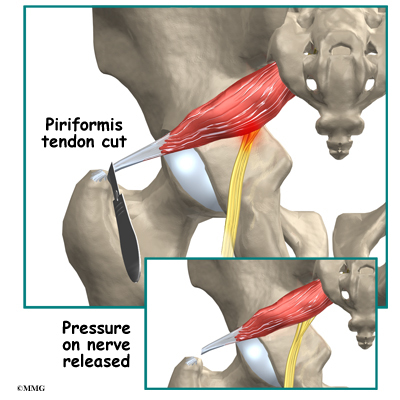
Symptoms, Causes of Piriformis Syndrome

Symptoms of Piriformis Syndrome

  • pain when an area is touched or pressed. সহজ বাংলা: চাপ দিলে ব্যথা।" data-rx-term="tenderness" data-rx-definition="Tenderness means pain when an area is touched or pressed. সহজ বাংলা: চাপ দিলে ব্যথা।">Tenderness, pain, numbness or tingling in the buttocks or along the back of the leg that intensifies without activity
  • Pain in the buttock or hip area is the most common symptom.
  • Pain may radiate from the buttock area down into the lower leg along the path of the sciatic nerve. Some patients may complain of low back pain.
  • There may be numbness and tingling in the buttock area, which can sometimes radiate down to the lower leg.
  • Pain with bowel movements may be present.
  • Women can sometimes experience painful intercourse.
  • There may be pain when an area is touched or pressed. সহজ বাংলা: চাপ দিলে ব্যথা।" data-rx-term="tenderness" data-rx-definition="Tenderness means pain when an area is touched or pressed. সহজ বাংলা: চাপ দিলে ব্যথা।">tenderness in the buttock area when pressure is applied. Certain patients may have a palpable “sausage-shaped” mass in the buttock area from piriformis muscle contraction/spasm.
  • Difficulty participating in daily activities
  • Aching, soreness or tightness in the buttocks that can worsen with long periods of sitting, running or walking up or down stairs
  • A noticeably reduced range of motion through the hip joint
  • Discomfort when light pressure is applied over the p
  • Sciatic pain is sharp and searing, rather than dull, and is described as “pins and needles.” You may also experience numbness and weakness in this leg. This pain can be debilitating and make it difficult to stand and walk.

Common complaints associated with piriformis syndrome include

References

Symptoms, Causes of Piriformis Syndrome

Doctor visit helper

Prepare before seeing a doctor

A simple rural-patient checklist to help you explain symptoms clearly, ask better questions, and avoid unsafe self-treatment.

Safety note: This is not a prescription or diagnosis. For severe symptoms, pregnancy danger signs, children with serious illness, chest pain, breathing difficulty, stroke-like weakness, or major injury, seek urgent care.

Which doctor may help?

Orthopedic doctor, spine specialist, neurologist, or physiotherapist depending on severity.

What to tell the doctor

  • Mark pain area and whether pain travels to leg.
  • Write numbness, weakness, bladder/bowel problem, fever, injury, or night pain if present.
  • Bring previous X-ray/MRI and medicine list.

Questions to ask

  • Is this muscle pain, disc problem, nerve pressure, arthritis, infection, or another cause?
  • Do I need X-ray or MRI now?
  • Which activities should I avoid and which exercises are safe?
  • When can I return to work?

Tests to discuss

  • Spine and neurological examination
  • Straight leg raise or similar nerve tension tests
  • X-ray if trauma/deformity/chronic pain is suspected
  • MRI if leg weakness, sciatica, or red flags are present

Avoid these mistakes

  • Avoid heavy lifting, long bed rest, and untrained spinal manipulation.
  • Avoid NSAIDs if ulcer, kidney disease, blood thinner use, pregnancy, or allergy unless doctor says safe.

Medicine safety and first-aid guide

This section is for patient education only. It does not replace a doctor, pharmacist, or emergency care.

Safe first steps

  • Avoid heavy lifting, sudden bending, and prolonged bed rest.
  • Use comfortable posture and gentle movement as tolerated.
  • Discuss physiotherapy, X-ray, or MRI only when clinically needed.

OTC medicine safety

  • For mild back pain, pain-relief medicine may be discussed with a doctor or pharmacist.
  • Avoid repeated painkiller use if you have kidney disease, stomach ulcer, uncontrolled blood pressure, or are taking blood thinners.

Avoid these mistakes

  • Do not start antibiotics without a proper medical decision.
  • Do not use steroid tablets or injections casually for quick relief.
  • Do not delay emergency care because of home remedies.

Get urgent help if

  • Back pain with leg weakness, numbness around private area, loss of urine/stool control, fever, cancer history, or major injury needs urgent care.
Medicine names, dose, and timing must be decided by a qualified clinician or pharmacist after checking age, pregnancy, allergy, other diseases, and current medicines.

For rural patients and family caregivers

Patient health record and symptom diary

Write your symptoms, medicines already taken, test results, and questions before visiting a doctor. This note stays on your device unless you print or copy it.

Doctor to discuss: Orthopedic / spine specialist, physical medicine doctor, or qualified clinician
Tests to discuss with doctor
  • Neurological examination for leg power, sensation, reflexes, and straight leg raise
  • X-ray only if injury, deformity, long-lasting pain, or doctor suspects bone problem
  • MRI discussion if severe nerve symptoms, weakness, bladder/bowel problem, or persistent symptoms
Questions to ask
  • What is the most likely cause of my symptoms?
  • Which warning signs mean I should go to emergency care?
  • Which tests are really needed now?
  • Which medicines are safe for my age, pregnancy status, allergy, kidney/liver/stomach condition, and current medicines?
  • Is physiotherapy, posture correction, or activity modification needed?

Emergency warning signs such as chest pain, severe breathing difficulty, sudden weakness, confusion, severe dehydration, major injury, or loss of bladder/bowel control need urgent medical care. Do not wait for online information.

Safe pathway to proper treatment

Care roadmap for: Symptoms, Causes of Piriformis Syndrome

Use this simple roadmap to understand the next safe steps. It is educational and does not replace examination by a doctor.

Go to emergency care if you notice:
  • Severe or rapidly worsening symptoms
  • Breathing difficulty, chest pain, fainting, confusion, severe weakness, major injury, or severe dehydration
Doctor / service to discuss: Qualified healthcare provider; specialist depends on symptoms and examination.
  1. Step 1

    Check danger signs first

    If danger signs are present, seek emergency care and do not wait for online information.

  2. Step 2

    Record the symptom story

    Write when symptoms started, severity, medicines already taken, allergies, pregnancy status, and test results.

  3. Step 3

    Visit a qualified clinician

    A doctor, nurse, or qualified healthcare provider can examine you and decide which tests or treatment are needed.

  4. Step 4

    Do only useful tests

    Do tests after clinical assessment. Avoid unnecessary tests, random antibiotics, or repeated medicines without diagnosis.

  5. Step 5

    Follow up and return early if worse

    If symptoms worsen, new warning signs appear, or treatment is not helping, return for review quickly.

Rural patient practical tips
  • Take a written symptom diary and all previous prescriptions/test reports.
  • Do not hide medicines already taken, even herbal or over-the-counter medicines.
  • Ask which warning signs mean urgent referral to hospital.

This roadmap is for education. A real diagnosis and treatment plan requires history, examination, and clinical judgment.

RX Patient Help

Ask a health question safely

Write your symptom story. A health professional or site editor can review it before any answer is prepared. This box is not for emergency care.

Emergency first: Severe chest pain, breathing trouble, unconsciousness, stroke signs, severe injury, heavy bleeding, or rapidly worsening symptoms need urgent local medical care now.

Frequently Asked Questions

Is this article a replacement for a doctor?

No. It is educational content only. Patients should consult a qualified clinician for diagnosis and treatment.

When should I seek urgent care?

Seek urgent care for severe symptoms, rapidly worsening condition, breathing difficulty, severe pain, neurological changes, or any emergency warning sign.

References

Add references, clinical guidelines, textbooks, journal articles, or trusted medical sources here. You can edit this area from the RX Article Professional Blocks panel.
