How To Lose Thigh Fat

Patient Tools

Read, save, and share this guide

Use these quick tools to make this medical article easier to read, print, save, or share with a family member.

Patient Mode

Understand this article easily

Switch between simple English and easy Bangla patient notes. This is for education and does not replace a doctor consultation.

Targeting a particular body part to lose fat does not involve rocket science. If you are leading a healthy, well-balanced lifestyle, your body will shed fat overall, and not just from the thighs. Thigh fat is mainly subcutaneous fat that is present beneath the skin....

For severe symptoms, danger signs, pregnancy, child illness, or sudden worsening, seek urgent medical care.

বাংলা রোগী নোট এখনো যোগ করা হয়নি। পোস্ট এডিটরে “RX Bangla Patient Mode” বক্স থেকে সহজ বাংলা সারাংশ যোগ করুন।

এই তথ্য শিক্ষা ও সচেতনতার জন্য। এটি ডাক্তারি পরীক্ষা, রোগ নির্ণয় বা প্রেসক্রিপশনের বিকল্প নয়।

Article Summary

Targeting a particular body part to lose fat does not involve rocket science. If you are leading a healthy, well-balanced lifestyle, your body will shed fat overall, and not just from the thighs. Thigh fat is mainly subcutaneous fat that is present beneath the skin. You will need to do high-intensity workouts that target specific areas to help tone the thighs. These workouts, along with...

Key Takeaways

  • This article explains How To Lose Thigh Fat in simple medical language.
Educational health guideWritten for patient understanding and clinical awareness.
Reviewed content workflowUse writer and reviewer profiles for stronger trust.
Emergency safety firstUrgent warning signs are highlighted below.

Seek urgent medical care if you notice

These warning signs are general safety guidance. Local emergency numbers and clinical judgment should always come first.

  • Severe symptoms, breathing difficulty, fainting, confusion, or rapidly worsening illness.
  • New weakness, severe pain, high fever, or symptoms after a serious injury.
  • Any symptom that feels urgent, unusual, or unsafe for the patient.
1

Emergency now

Use emergency care for severe, sudden, rapidly worsening, or life-threatening symptoms.

2

See a doctor

Book a professional medical evaluation if symptoms persist, worsen, recur often, affect daily activities, or occur in a high-risk patient.

3

Learn safely

Use this article to understand possible causes, tests, treatment options, prevention, and questions to ask your clinician.

Before reading

RX Patient Tools

Use these quick guides before reading the article, or return to them when you need help preparing questions for a doctor.

Start here Choose the right pathway for symptoms, reports, medicines, or urgent warning signs. Disease article roadmap Read this topic step by step: meaning, symptoms, warning signs, diagnosis, treatment, prevention, and follow-up. Treatment planner Prepare questions about treatment choices, benefits, risks, side effects, and follow-up. Family & caregiver guide Organize symptoms, reports, medicines, questions, and follow-up safely. Nutrition & diet guide Prepare food, hydration, supplement, and medicine-timing questions safely. Prevention guide Organize risk factors, protective habits, screening, and warning signs. Recovery guide Prepare a safe plan for activity, rehabilitation, warning signs, and follow-up.
Definition

Targeting a particular body part to lose fat does not involve rocket science. If you are leading a healthy, well-balanced lifestyle, your body will shed fat overall, and not just from the thighs.

Thigh fat is mainly subcutaneous fat that is present beneath the skin. You will need to do high-intensity workouts that target specific areas to help tone the thighs. These workouts, along with a healthy diet and lifestyle changes, can help you get sustainable results.

How To Lose Thigh Fat

You need a triangular approach to get good results – specific exercises, a healthy diet, and lifestyle management.

1. Exercises To Reduce Thigh Fat At Home

  • Leg Up
How To Lose Thigh Fat

This a good thigh exercise. It will help you shed fat from the lower body

Steps
  1. Lie down on the floor, facing the ceiling.
  2. Keep your palms on the sides, facing the floor, and relax.
  3. Lift both the legs at a 30-degree angle from the ground.
  4. Hold for about five seconds. Bring the legs down to the floor slowly.
  5. Repeat 10 times.

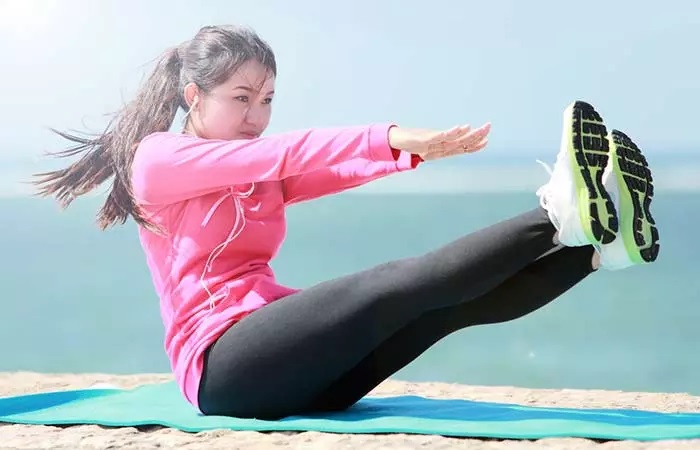
Leg Stretch

How To Lose Thigh Fat

This stretching exercise will ensure proper blood circulation.

Steps
  1. Sit upright with your legs joined and stretched.
  2. Slowly move the legs apart as far as you can.
  3. Breathe in as you bend right to touch the toes of the right foot with both your hands.
  4. Try to touch the knees with your head. Relax and hold for 5 seconds.
  5. Slowly lift your head and bring your hands to each side of your pelvis. Breathe out while doing so.
  6. Do this for the left side.
  7. Repeat 10 times.

Air CyclingHow To Lose Thigh Fat

This is an effective way to lose fat from the thighs. Air cycling also takes care of your pelvic and knee joints.

Steps
  1. Lie on your back and face the ceiling.
  2. Lift your legs to 90 degrees with the floor.
  3. Start moving your legs as if you are cycling in the forward direction.
  4. Do this for 1 minute and then slowly put your legs down and relax.
  5. Move your legs up to 90 degrees and start air cycling in the backward direction for 1 minute.
  6. Repeat the set 5 times.

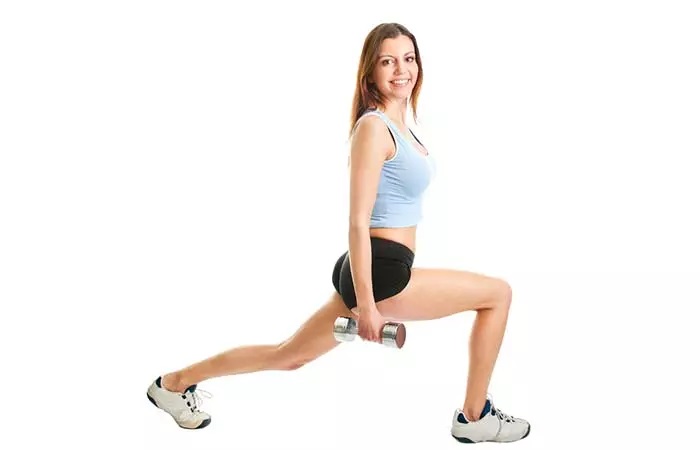
Lunges

How To Lose Thigh FatLunges are the perfect workout for your inner thighs. They also take care of the gluteal muscles and help shed a few extra pounds from your buttocks.
Steps
  1. Stand straight with your feet about 3 cm apart.
  2. Hold light weights in each hand.
  3. Step forward with your right leg and bend your left leg to come to a “proposing” position.
  4. Do this with the left leg.
  5. Repeat the set 10 times.

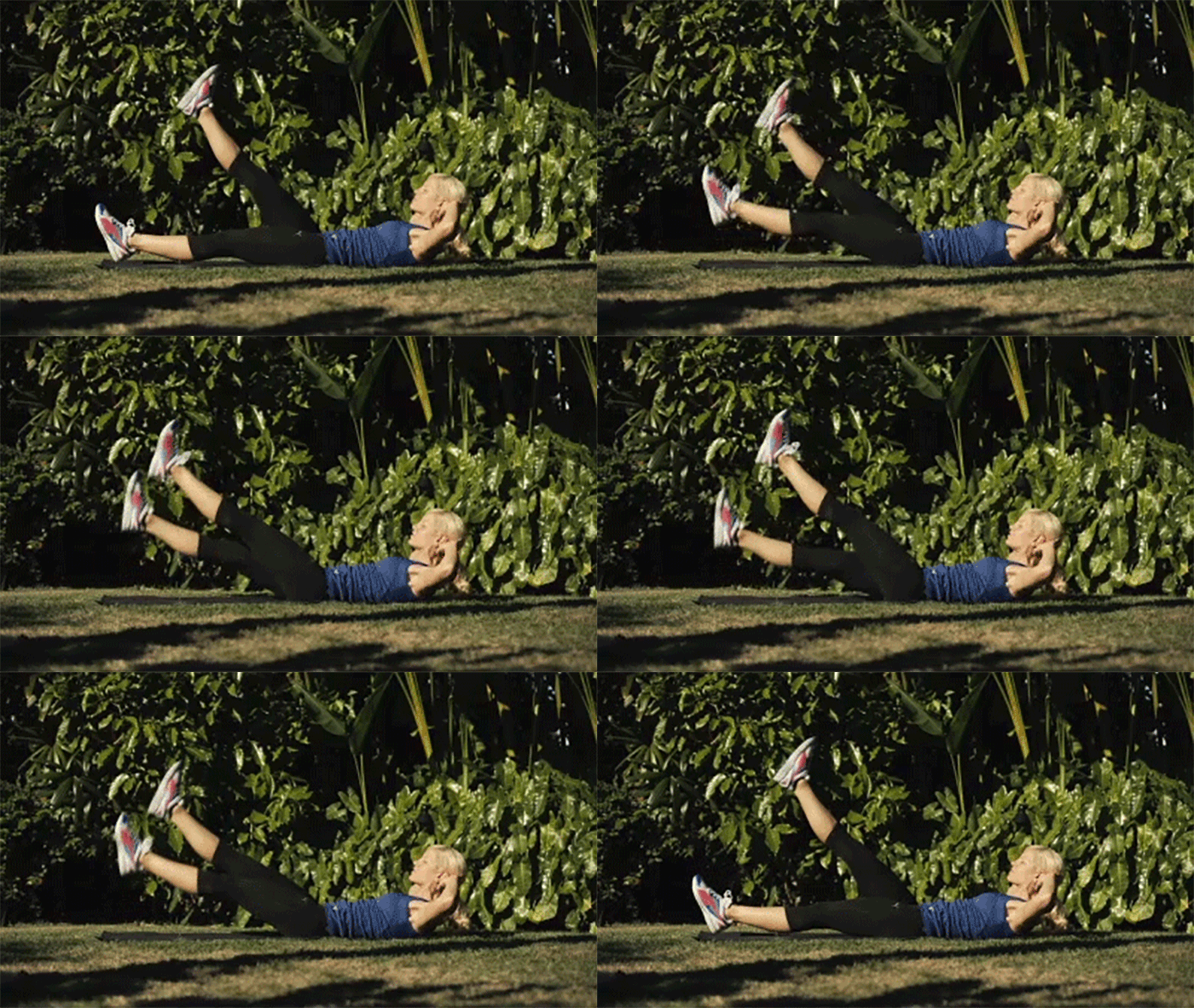
Scissor Kick

How To Lose Thigh Fat
This will work your thighs and buttock muscles and tone them as well.

Steps
  1. Lie straight on the mat. Hold your head up by placing the palms of your hands behind your head.
  2. Lift your leg slowly and keep both legs straight.
  3. Move them apart vertically, bring them together, and move them apart again.
  4. Repeat 15 times with each leg.

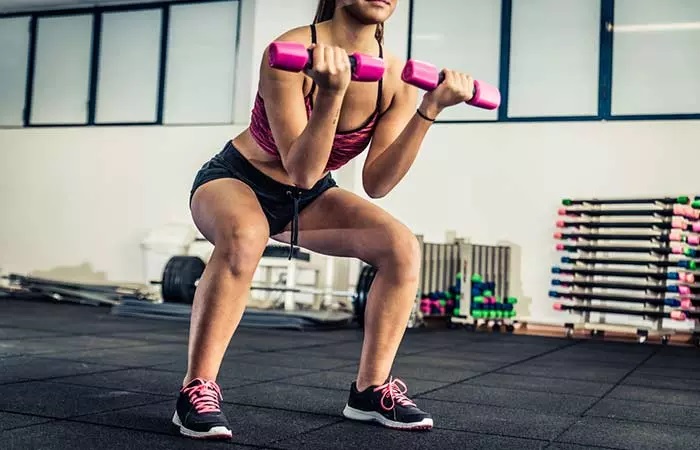
Squat

Do this only when you have lost a good amount of fat from your thighs. This exercise helps to build muscles. Without losing the fat, if you build muscle, you may actually end up making your thighs look bigger. 

Steps
  1. Stand with your shoulders relaxed and legs apart. Point your toes outward.
  2. Keep your upper body straight. Inhale and slowly lower your buttocks until you come to a sitting position.
  3. Hold for about 5-10 seconds.
  4. Repeat this 10 times.

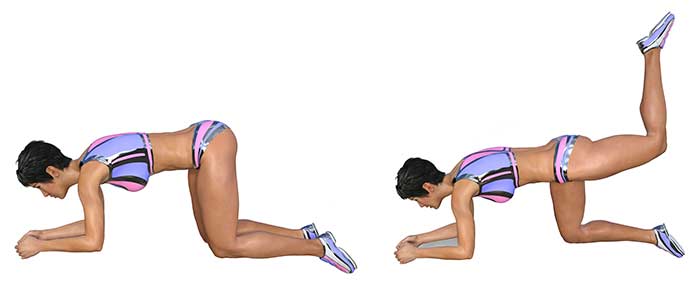
Back Kick

How To Lose Thigh Fat

This is a good exercise to work on the thigh and glute muscles.

Steps
  1. Get down on all fours, with the elbows straight and toes pointing toward the wall behind you.
  2. Look down at the floor so that the spine is parallel to it.
  3. Kick high at an angle such that the sole is parallel to the ceiling, and the thighs and calves are perpendiculars.
  4. After a few seconds, get back on all fours.
  5. Repeat this 15 times and do it with the other leg post that. You can increase the number of kicks based on your convenience.

Here are some additional exercises you can do:

  • Cardiovascular exercises can be very effective in slimming your thighs. These include working out on cardio equipment like a stationary bike, treadmill, or elliptical trainer. Half an hour of cardio for at least five days a week helps in slimming down the lower body and maintaining healthy body weight.
  • Aerobic exercises help in burning fat on your inner thighs and the rest of the body as well. Certain exercises like stair climbing, brisk walking, running, and dancing increase the heart rate and work out your thigh muscles. Hence, make it a point to indulge in aerobic exercises for at least 45 minutes a day, five days a week.

2. Dietary Changes

A healthy diet plays a key role in toning down the entire body, including the thighs. You need to follow some basic guidelines:

Check On Your Calorie Intake – Reduce your calorie consumption to 1200-1500 calories based on age, sex, and physical activity. As a result, your body will start utilizing the extra fat as a source of fuel. Cut down on empty-calorie sources and replace them with healthy foods.

Eat Healthy Protein – Include lean meat, eggs, pulses, and legumes as sources of protein in your diet. Aim to include protein sources in all your meals as protein is not only a major nutrient to build up muscles, but it also promotes satiety and regulates hunger (1). Have protein snacks between meals to curb hunger pangs.

Healthy Fat – Dieting does not mean you need to avoid fat. Fat is one of the important macros that help maintain the elasticity of the skin and make it smooth and control your hunger. A study found that consuming a PUFA-rich diet for 7 days decreased fasting ghrelin levels and promoted satiety levels (2). Consume nuts and seeds mixed with one teaspoon of clarified butter to enhance the taste.

Have More Fruits And Vegetables – Fruits and vegetables are low in calories and natural sources of fiber, which provides bulk to stool and helps in curbing hunger pangs (3). A study showed that increasing vegetable intake can help in maintaining weight (4).

Always consult with a doctor or nutritionist/dietitian before incorporating any changes in your lifestyle. 

Turn Your Lifestyle Around

  • We tend to accumulate a lot of fat when we overwork our body or mind. Proper rest is highly recommended for women who want to lose thigh fat or weight in general. Less than 7 hours of sleep can make you gain weight (5).
  • Managing stress is very important. If you cannot control stress, the cortisol levels increase, which, in turn, stimulates the hunger hormone (6). Combine the above-mentioned exercises with some deep breathing practices to manage stress.
  • Playing any sport, at least thrice a week, will help you in many ways. It can be playing fetch with your dog or playing soccer with your toddler. The adrenaline and the good hormones will help you lose weight and keep your hunger pangs at bay.
  • Try and take out time for hiking, biking, or traveling to places that you always wanted to. Hiking and biking will help tone your thigh muscles, and traveling will help you see places and people that will open up a new world to you.

Conclusion

Shedding stubborn fat takes time, and there is no short cut method to achieve it without surgery. Though diet and lifestyle factors play a role, if you are lethargic and do not exercise, you will not be able to achieve your goal. Focus on healthy practices. As you lose total body fat, your legs and thighs will automatically get toned up. 

Doctor visit helper

Prepare before seeing a doctor

A simple rural-patient checklist to help you explain symptoms clearly, ask better questions, and avoid unsafe self-treatment.

Safety note: This is not a prescription or diagnosis. For severe symptoms, pregnancy danger signs, children with serious illness, chest pain, breathing difficulty, stroke-like weakness, or major injury, seek urgent care.

Which doctor may help?

Start with a registered doctor or the nearest qualified health center.

What to tell the doctor

  • Write when the problem started and how it changed.
  • Bring old prescriptions, investigation reports, and current medicines.
  • Write allergies, pregnancy status, diabetes, kidney/liver disease, and major past illnesses.
  • Bring one family member if the patient is weak, elderly, confused, or a child.

Questions to ask

  • What is the most likely cause of my symptoms?
  • Which danger signs mean I should go to hospital quickly?
  • Which tests are necessary now, and which can wait?
  • How should I take medicines safely and what side effects should I watch for?
  • When should I come for follow-up?

Tests to discuss

  • Vital signs: temperature, pulse, blood pressure, oxygen saturation
  • Basic physical examination by a clinician
  • CBC, urine test, blood sugar, or imaging only when clinically needed

Avoid these mistakes

  • Do not use antibiotics, steroid tablets/injections, or strong painkillers without proper medical advice.
  • Do not hide pregnancy, kidney disease, ulcer, allergy, or blood thinner use.
  • Do not delay emergency care when danger signs are present.

Medicine safety and first-aid guide

This section is for patient education only. It does not replace a doctor, pharmacist, or emergency care.

Safe first steps

  • Avoid heavy lifting, sudden bending, and prolonged bed rest.
  • Use comfortable posture and gentle movement as tolerated.
  • Discuss physiotherapy, X-ray, or MRI only when clinically needed.

OTC medicine safety

  • For mild back pain, pain-relief medicine may be discussed with a doctor or pharmacist.
  • Avoid repeated painkiller use if you have kidney disease, stomach ulcer, uncontrolled blood pressure, or are taking blood thinners.

Avoid these mistakes

  • Do not start antibiotics without a proper medical decision.
  • Do not use steroid tablets or injections casually for quick relief.
  • Do not delay emergency care because of home remedies.

Get urgent help if

  • Back pain with leg weakness, numbness around private area, loss of urine/stool control, fever, cancer history, or major injury needs urgent care.
Medicine names, dose, and timing must be decided by a qualified clinician or pharmacist after checking age, pregnancy, allergy, other diseases, and current medicines.

For rural patients and family caregivers

Patient health record and symptom diary

Write your symptoms, medicines already taken, test results, and questions before visiting a doctor. This note stays on your device unless you print or copy it.

Doctor to discuss: Doctor / qualified healthcare provider
Tests to discuss with doctor
  • Basic vital signs: temperature, pulse, blood pressure, oxygen level if needed
  • Relevant blood, urine, imaging, or specialist tests only after clinical assessment
Questions to ask
  • What is the most likely cause of my symptoms?
  • Which warning signs mean I should go to emergency care?
  • Which tests are really needed now?
  • Which medicines are safe for my age, pregnancy status, allergy, kidney/liver/stomach condition, and current medicines?

Emergency warning signs such as chest pain, severe breathing difficulty, sudden weakness, confusion, severe dehydration, major injury, or loss of bladder/bowel control need urgent medical care. Do not wait for online information.

Safe pathway to proper treatment

Care roadmap for: How To Lose Thigh Fat

Use this simple roadmap to understand the next safe steps. It is educational and does not replace examination by a doctor.

Go to emergency care if you notice:
  • Severe or rapidly worsening symptoms
  • Breathing difficulty, chest pain, fainting, confusion, severe weakness, major injury, or severe dehydration
Doctor / service to discuss: Qualified healthcare provider; specialist depends on symptoms and examination.
  1. Step 1

    Check danger signs first

    If danger signs are present, seek emergency care and do not wait for online information.

  2. Step 2

    Record the symptom story

    Write when symptoms started, severity, medicines already taken, allergies, pregnancy status, and test results.

  3. Step 3

    Visit a qualified clinician

    A doctor, nurse, or qualified healthcare provider can examine you and decide which tests or treatment are needed.

  4. Step 4

    Do only useful tests

    Do tests after clinical assessment. Avoid unnecessary tests, random antibiotics, or repeated medicines without diagnosis.

  5. Step 5

    Follow up and return early if worse

    If symptoms worsen, new warning signs appear, or treatment is not helping, return for review quickly.

Rural patient practical tips
  • Take a written symptom diary and all previous prescriptions/test reports.
  • Do not hide medicines already taken, even herbal or over-the-counter medicines.
  • Ask which warning signs mean urgent referral to hospital.

This roadmap is for education. A real diagnosis and treatment plan requires history, examination, and clinical judgment.

RX Patient Help

Ask a health question safely

Write your symptom story. A health professional or site editor can review it before any answer is prepared. This box is not for emergency care.

Emergency first: Severe chest pain, breathing trouble, unconsciousness, stroke signs, severe injury, heavy bleeding, or rapidly worsening symptoms need urgent local medical care now.

Frequently Asked Questions

Is this article a replacement for a doctor?

No. It is educational content only. Patients should consult a qualified clinician for diagnosis and treatment.

When should I seek urgent care?

Seek urgent care for severe symptoms, rapidly worsening condition, breathing difficulty, severe pain, neurological changes, or any emergency warning sign.

References

Add references, clinical guidelines, textbooks, journal articles, or trusted medical sources here. You can edit this area from the RX Article Professional Blocks panel.