
What are the symptoms of Coccydynia? Diagnosis

Patient Tools

Read, save, and share this guide

Use these quick tools to make this medical article easier to read, print, save, or share with a family member.

Patient Mode

Understand this article easily

Switch between simple English and easy Bangla patient notes. This is for education and does not replace a doctor consultation.

What are the symptoms of Coccydynia? DiagnosisCoccydynia means the inflammation of the tailbone (coccyx or bony area located deep between the buttocks above the anus) is referred to as coccydynia. Coccydynia is associated with pain and tenderness at the tip of the tailbone between the...

For severe symptoms, danger signs, pregnancy, child illness, or sudden worsening, seek urgent medical care.

বাংলা রোগী নোট এখনো যোগ করা হয়নি। পোস্ট এডিটরে “RX Bangla Patient Mode” বক্স থেকে সহজ বাংলা সারাংশ যোগ করুন।

এই তথ্য শিক্ষা ও সচেতনতার জন্য। এটি ডাক্তারি পরীক্ষা, রোগ নির্ণয় বা প্রেসক্রিপশনের বিকল্প নয়।

Article Summary

What are the symptoms of Coccydynia? DiagnosisCoccydynia means the inflammation of the tailbone (coccyx or bony area located deep between the buttocks above the anus) is referred to as coccydynia. Coccydynia is associated with pain and tenderness at the tip of the tailbone between the buttocks. Sitting often worsens coccyx pain. Another Names of Coccydynia Coccygodynia (also referred to as coccydynia, coccalgia, coccygalgia, or coccygeal pain)...

Key Takeaways

  • This article explains Another Names of Coccydynia in simple medical language.
  • This article explains Anatomy of Coccyx in simple medical language.
  • This article explains Causes of Coccydynia in simple medical language.
  • This article explains What are the symptoms of Coccydynia?  in simple medical language.
Educational health guideWritten for patient understanding and clinical awareness.
Reviewed content workflowUse writer and reviewer profiles for stronger trust.
Emergency safety firstUrgent warning signs are highlighted below.

Seek urgent medical care if you notice

These warning signs are general safety guidance. Local emergency numbers and clinical judgment should always come first.

  • New or worsening weakness, numbness, or loss of coordination.
  • Loss of bladder or bowel control, or numbness around the groin or saddle area.
  • Back or neck pain with fever, recent major injury, cancer history, or unexplained weight loss.
1

Emergency now

Use emergency care for severe, sudden, rapidly worsening, or life-threatening symptoms.

2

See a doctor

Book a professional medical evaluation if symptoms persist, worsen, recur often, affect daily activities, or occur in a high-risk patient.

3

Learn safely

Use this article to understand possible causes, tests, treatment options, prevention, and questions to ask your clinician.

What are the symptoms of Coccydynia? DiagnosisCoccydynia means the infection, or irritation, often causing pain, swelling, heat, or redness. সহজ বাংলা: শরীরের প্রদাহ; ব্যথা, ফোলা বা লালভাব হতে পারে।" data-rx-term="inflammation" data-rx-definition="Inflammation is the body’s response to injury, infection, or irritation, often causing pain, swelling, heat, or redness. সহজ বাংলা: শরীরের প্রদাহ; ব্যথা, ফোলা বা লালভাব হতে পারে।">inflammation of the tailbone (coccyx or bony area located deep between the buttocks above the anus) is referred to as coccydynia. Coccydynia is associated with pain and tenderness at the tip of the tailbone between the buttocks. Sitting often worsens coccyx pain.

What are the symptoms of Coccydynia? Diagnosis

Another Names of Coccydynia

Coccygodynia (also referred to as coccydynia, coccalgia, coccygalgia, or coccygeal pain) is a painful syndrome affecting the tailbone (coccygeal) region. The word coccyx is derived from the Greek word kokkyx (“cuckoo”), on the basis of this structure’s resemblance to the shape of a cuckoo’s beak (see the image below).

CocWhat are the symptoms of Coccydynia? Diagnosiscyx as compared with cuckoo’s beak.
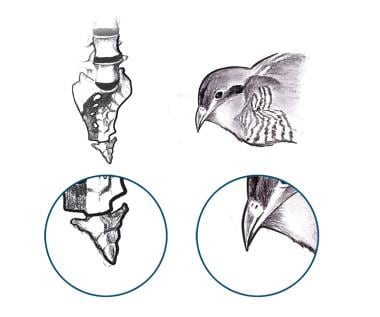
Coccygodynia is a rare condition but can be highly unpleasant when it does occur. Patients’ chief complaint is pain, which typically is triggered by or occurs while sitting on hard surfaces. The pain often varies and sometimes is aggravated by arising from the sitting position.

Direct trauma to the tailbone is the most common cause of coccydynia, and usually leads to infection, or irritation, often causing pain, swelling, heat, or redness. সহজ বাংলা: শরীরের প্রদাহ; ব্যথা, ফোলা বা লালভাব হতে পারে।" data-rx-term="inflammation" data-rx-definition="Inflammation is the body’s response to injury, infection, or irritation, often causing pain, swelling, heat, or redness. সহজ বাংলা: শরীরের প্রদাহ; ব্যথা, ফোলা বা লালভাব হতে পারে।">inflammation surrounding the coccyx, which contributes to pain and discomfort.

There are many cases reported in which pain begins with no identifiable origin (called idiopathic coccydynia

What are the symptoms of Coccydynia? Diagnosis

Anatomy of Coccyx

The coccyx or tailbone –  is the very bottom portion of the spine. It is a small triangular bone at the base of the spinal column (backbone). It is located just above the cleft in the buttocks and curves forwards so that it points towards the front of the body. It represents a vestigial tail or the tail bone. It consists of 3-5  very small bones fused together. Movement between the bones is permitted by the fibrous joints and ligaments.

Derivation – The word coccyx is derived from the Greek word for cuckoo. It resembles the beak of a cuckoo.

Articulations – The coccyx articulates with the sacrum through a vestigial disc and is also connected to the sacrum with ligaments. There is very limited movement between the coccyx and the sacrum. The attachment is either a symphysis (Fibrocartilaginous fusion between 2 bones) or is a true synovial joint.

Ventral side (part facing front) – This part is slightly concave and dorsal side is convex.

Transverse grooves Present on both ventral and dorsal sides. These grooves show where the vestigial coccyx units had fused previously

The coccyx bones become more flexible – in pregnant women to facilitate them to give birth more easily . Coccydynia is typically caused by the following underlying anatomical issues:

  • Hypermobility, or too much movement of the coccyx puts added stress on the joint between the sacrum and coccyx and on the coccyx itself. Too much mobility can also pull the pelvic floor muscles that attach to the coccyx, resulting in tailbone and pelvic pain.
  • Limited mobility of the coccyx causes the tailbone to jut outward when sitting, and can put increased pressure on the bones and the sacrococcygeal joint. Limited coccyx movement may also result in pelvic floor muscle tension, adding to discomfort.
  • In rare cases, part of the sacrococcygeal joint may become dislocated at the front or back of the tailbone, causing coccyx pain.
  • A fall onto the tailbone in the seated position, usually against a hard surface, is the most common cause of coccyx injuries.
  • A direct blow to the tailbone, such as those that occur during contact sports, can injure the coccyx.
  • The coccyx can be injured or fractured during childbirth.
  • Repetitive straining or friction against the coccyx (as happens in bicycling or rowing) can injure the coccyx.
  • Sometimes, the cause of coccyx injuries is unknown.
  • Less common causes of coccyx injuries include bone spurs, compression of nerve roots, injuries to other parts of the spine, local infections, and tumors.
  • Coccyx bears the weight of our body when we sit down.
  • Muscles inserting on the anterior coccyx include the levator ani, which is sometimes considered as several separate muscle parts including the coccygeus, iliococcygeus and pubococcygeus muscles. This important muscle group supports the pelvic floor (preventing inferior sagging of the intrapelvic contents) and plays a role in maintaining faecal continence. Muscles originating on the posterior coccyx include Gluteus maximus, which is the largest of the gluteal muscle (buttock muscle) and functions to extend the thigh during ambulation.

Function of coccyx

  • Coccyx serves as a weight-bearing structure when a person is seated, thus completing the tripod of weight bearing composed of the coccyx and the bilateral ischium.
  • The coccyx bears more weight when the seated person is leaning backward. Therefore many patients with coccydynia sit leaning forward which shifts more of the weight to the bilateral ischium rather than coccyx.
  • Alternatively, patients with coccydynia may sit toward one side so that the body weight is exerted mainly on the ischial tuberosity with less pressure on coccyx. Such side leaning may lead to concomitant ischial bursitis in addition to the antecedent coccydynia.

The above factors may result from an injury to the coccyx, or may develop as idiopathic coccydynia.

Causes of Coccydynia

A diagnosis of coccydynia will usually identify one of the following underlying causes of pain

  • Local trauma A direct injury to the coccyx is probably the most common cause of coccydynia. A fall on the tailbone can inflame the ligaments and injure the coccyx or the coccygeal attachment to the sacrum. Coccygeal trauma usually results in a bruised bone, but may also result in a fracture or dislocation either in the front or back of the coccyx.
  • Repetitive stress Activities that put prolonged pressure on the tailbone, such as horseback riding and sitting on hard surfaces for long periods of time, may cause the onset of coccyx pain. Tailbone pain from these causes usually is not permanent, but if infection, or irritation, often causing pain, swelling, heat, or redness. সহজ বাংলা: শরীরের প্রদাহ; ব্যথা, ফোলা বা লালভাব হতে পারে।" data-rx-term="inflammation" data-rx-definition="Inflammation is the body’s response to injury, infection, or irritation, often causing pain, swelling, heat, or redness. সহজ বাংলা: শরীরের প্রদাহ; ব্যথা, ফোলা বা লালভাব হতে পারে।">inflammation and symptoms are not managed, the pain may become chronic and cause long-term altered mobility of the sacrococcygeal joint.
  • Childbirth – During delivery, the baby’s head passes over the top of the coccyx, and the pressure against the coccyx can sometimes result in injury to the coccygeal structures (the disc, ligaments, and bones). While uncommon, the pressure can also cause a fracture in the coccyx.
  • Tumor or infection –  Rarely, coccydynia can be caused by a nearby tumor or infection that puts pressure on the coccyx.
  • Referred coccyx pain In rare cases pain will be referred to the coccyx from elsewhere in the spine or pelvis, such as a lumbar herniated disc or degenerative lumbar disc.
  • Obesity – Pelvic rotation, including movement of the coccyx, is usually lessened in individuals who are overweight, leading to more continual stress being placed on the coccyx and increasing the chances of developing coccyx pain. One study found that a Body Mass Index (BMI) of more than 27.4 in women and 29.4 in men increases the risk for coccydynia following repetitive stress or a one-time injury.
  • Gender Women have a higher chance of developing coccydynia than men, due to a wider pelvic angle as well as trauma to the coccyx endured during childbirth.

If pain is mild or moderate, it may not be necessary to identify the exact cause of coccydynia. In some cases, however, coccyx pain is severe or of a serious origin, so it is important to have a general idea why pain has developed so that it can be treated most effectively.

What are the symptoms of Coccydynia? 

Because coccydynia strictly refers to infection, or irritation, often causing pain, swelling, heat, or redness. সহজ বাংলা: শরীরের প্রদাহ; ব্যথা, ফোলা বা লালভাব হতে পারে।" data-rx-term="inflammation" data-rx-definition="Inflammation is the body’s response to injury, infection, or irritation, often causing pain, swelling, heat, or redness. সহজ বাংলা: শরীরের প্রদাহ; ব্যথা, ফোলা বা লালভাব হতে পারে।">inflammation in or near the tailbone, symptoms are highly localized. An individual experiencing coccydynia may encounter-

  • Pain in the coccygeal region (tip of the tailbone)
  • Local tenderness
  • The pain can range from mild to severe. It is usually worse when
    • Sitting down
    • Moving from sitting to a standing position
    • When touched or when some pressure falls on the coccyx
  • Worsens with constipation, feels better after bowel movement
  • Some people can tolerate sitting in the same position for only a few minutes. They feel restless after a few minutes. They have to get up and move around to get relieved of the pain
  • Pain makes everyday activities difficult Ex. Driving, bending over, sitting down etc.
  • Sitting on a soft surface may be more painful than sitting on something hard. Sitting on a soft surface places most of your weight on your coccyx rather than on the hard bones below your pelvis.
  • Difficulty in sitting and leaning against the buttocks

Other symptoms of coccydynia

  • Backache
  • Shooting pain down the legs
  • Pain before or when stools are passed
  • Pain during sex (aggravates at or after sex)
  • Painful buttocks and hips
  • Increased pain during monthly periods in women
  • Difficulty to sleep comfortably at night, you may need to keep changing the positions while you sleep
  • Symptoms usually improve with relief of pressure when standing or walking
  • Pain in the tailbone area that worsens when sitting or leaning against something
  • Tenderness and redness in the affected area
  • Discomfort during bowel movements
  • Difficulty standing up from a resting position and performing other everyday activities, such as driving or bending down
  • Bruising near the coccyx
  • Some low back pain
  • Deep, intense aches in the tailbone region
  • Sharp pangs in the coccyx area

Test for coccygeal pain

  • A local anaesthesia is injected into the coccygeal area. If the pain is related to the coccyx, it reduces and there is immediate relief.
  • If this anaesthetic test is positive then a dynamic (sit/stand) X-ray or MRI scan show whether the coccyx dislocates when the patient sits

Other investigations

  • Stool guaiac test – should be done for occult test to assess for Gastro-intestinal pathology
  • Dynamic radiographs – obtained in both sitting and standing positions may be more useful than static
  • X-rays – because they allow for measurement of the saggital rotation of the pelvis and the coccygeal angle of incidence. A comparison of sitting and standing films will yield radiographic abnormalities in up to 70% of symptomatic coccydynia
  • MRI and technetium Tc-99m bone scans – may demonstrate inflammation of sacrococcygeal area indicative of coccygeal hypermobility
  • Provocative testing – of the coccyx such as pressing on the region with a blunted needle to elicit pain and pain relief with injection of local anaesthesia under fluoroscopic guidance may be helpful in diagnosis
  • Basically the diagnosis of coccydynia is done by a health care professional by taking a thorough medical history from the patient and completing a physical examination
  • X-ray of the sacrum and coccyx – to rule out an obvious fracture or a large tumour
  • An MRI scan to rule out infection or spinal tumour as a cause of pain
  • Bone scans and CT scans – give little information. They are generally not done. Typically all imaging studies will be negative.
  • thorough inspection / palpation of this area is needed to detect any abnormal masses or abscesses (infections)
  • lateral X-ray of the coccyx – is taken to help detect any significant coccygeal pathology such as a fracture

Differential Diagnosis

Coccyx Fracture (broken tailbone)
It presents with –

  • Pain that increases in severity when sitting or getting up from a chair or when experiencing a bowel movement
  • Provoked pain over the tailbone
  • Nausea
  • Bruising or swelling in the tailbone area

Sacro-coccygeal dislocation

  • It is a rare injury
  • Presents with pain in the sacro-coccygeal area generally followed by a fall or injury
  • On examination, a step will be felt in the continuity of sacrum and coccyx
  • The tip of the coccyx will not be palpable
  • Per rectal examination reveals a small bump on running the finger along the sacrococcygeal curvature
  • Plain radiographs of sacrococcygeal region – reveals anterior dislocation of coccyx over sacrum

Intracoccygeal dislocation – Here there is dislocation of one coccygeal segment from the other

Intrapelvic malignancy and / or metastatic lesions ,Ischial bursitis / Ischiogluteal bursitis

  • Ischial bursa (small sac filled with lubricating fluid) is located in the upper buttock area
  • Inflammation in this bursa is called Ischial bursitis
  • It causes dull pain in this area which is most noticeable when climbing uphill
  • The pain sometimes occurs after prolonged sitting on hard surfaces
  • It is also called as ‘weaver’s bottom’ or ‘tailor’s bottom’

Sacro-iliac joint pain or Sacroiliac joint dysfunction

  • It presents with pain in sacroiliac joint
  • Pain is experienced often in the lower back or at the back of the hips
  • Pain is sometimes present in the groins and thighs
  • Pain is typically worse with standing and walking and improves while lying down
  • Stiffness and burning sensation can be felt in the pelvis

References

Doctor visit helper

Prepare before seeing a doctor

A simple rural-patient checklist to help you explain symptoms clearly, ask better questions, and avoid unsafe self-treatment.

Safety note: This is not a prescription or diagnosis. For severe symptoms, pregnancy danger signs, children with serious illness, chest pain, breathing difficulty, stroke-like weakness, or major injury, seek urgent care.

Which doctor may help?

Orthopedic doctor, spine specialist, neurologist, or physiotherapist depending on severity.

What to tell the doctor

  • Mark pain area and whether pain travels to leg.
  • Write numbness, weakness, bladder/bowel problem, fever, injury, or night pain if present.
  • Bring previous X-ray/MRI and medicine list.

Questions to ask

  • Is this muscle pain, disc problem, nerve pressure, arthritis, infection, or another cause?
  • Do I need X-ray or MRI now?
  • Which activities should I avoid and which exercises are safe?
  • When can I return to work?

Tests to discuss

  • Spine and neurological examination
  • Straight leg raise or similar nerve tension tests
  • X-ray if trauma/deformity/chronic pain is suspected
  • MRI if leg weakness, sciatica, or red flags are present

Avoid these mistakes

  • Avoid heavy lifting, long bed rest, and untrained spinal manipulation.
  • Avoid NSAIDs if ulcer, kidney disease, blood thinner use, pregnancy, or allergy unless doctor says safe.

Medicine safety and first-aid guide

This section is for patient education only. It does not replace a doctor, pharmacist, or emergency care.

Safe first steps

  • Avoid heavy lifting, sudden bending, and prolonged bed rest.
  • Use comfortable posture and gentle movement as tolerated.
  • Discuss physiotherapy, X-ray, or MRI only when clinically needed.

OTC medicine safety

  • For mild back pain, pain-relief medicine may be discussed with a doctor or pharmacist.
  • Avoid repeated painkiller use if you have kidney disease, stomach ulcer, uncontrolled blood pressure, or are taking blood thinners.

Avoid these mistakes

  • Do not start antibiotics without a proper medical decision.
  • Do not use steroid tablets or injections casually for quick relief.
  • Do not delay emergency care because of home remedies.

Get urgent help if

  • Back pain with leg weakness, numbness around private area, loss of urine/stool control, fever, cancer history, or major injury needs urgent care.
Medicine names, dose, and timing must be decided by a qualified clinician or pharmacist after checking age, pregnancy, allergy, other diseases, and current medicines.

For rural patients and family caregivers

Patient health record and symptom diary

Write your symptoms, medicines already taken, test results, and questions before visiting a doctor. This note stays on your device unless you print or copy it.

Doctor to discuss: Orthopedic / spine specialist, physical medicine doctor, or qualified clinician
Tests to discuss with doctor
  • Neurological examination for leg power, sensation, reflexes, and straight leg raise
  • X-ray only if injury, deformity, long-lasting pain, or doctor suspects bone problem
  • MRI discussion if severe nerve symptoms, weakness, bladder/bowel problem, or persistent symptoms
Questions to ask
  • What is the most likely cause of my symptoms?
  • Which warning signs mean I should go to emergency care?
  • Which tests are really needed now?
  • Which medicines are safe for my age, pregnancy status, allergy, kidney/liver/stomach condition, and current medicines?
  • Is physiotherapy, posture correction, or activity modification needed?

Emergency warning signs such as chest pain, severe breathing difficulty, sudden weakness, confusion, severe dehydration, major injury, or loss of bladder/bowel control need urgent medical care. Do not wait for online information.

Safe pathway to proper treatment

Care roadmap for: What are the symptoms of Coccydynia? Diagnosis

Use this simple roadmap to understand the next safe steps. It is educational and does not replace examination by a doctor.

Go to emergency care if you notice:
  • Severe or rapidly worsening symptoms
  • Breathing difficulty, chest pain, fainting, confusion, severe weakness, major injury, or severe dehydration
Doctor / service to discuss: Qualified healthcare provider; specialist depends on symptoms and examination.
  1. Step 1

    Check danger signs first

    If danger signs are present, seek emergency care and do not wait for online information.

  2. Step 2

    Record the symptom story

    Write when symptoms started, severity, medicines already taken, allergies, pregnancy status, and test results.

  3. Step 3

    Visit a qualified clinician

    A doctor, nurse, or qualified healthcare provider can examine you and decide which tests or treatment are needed.

  4. Step 4

    Do only useful tests

    Do tests after clinical assessment. Avoid unnecessary tests, random antibiotics, or repeated medicines without diagnosis.

  5. Step 5

    Follow up and return early if worse

    If symptoms worsen, new warning signs appear, or treatment is not helping, return for review quickly.

Rural patient practical tips
  • Take a written symptom diary and all previous prescriptions/test reports.
  • Do not hide medicines already taken, even herbal or over-the-counter medicines.
  • Ask which warning signs mean urgent referral to hospital.

This roadmap is for education. A real diagnosis and treatment plan requires history, examination, and clinical judgment.

RX Patient Help

Ask a health question safely

Write your symptom story. A health professional or site editor can review it before any answer is prepared. This box is not for emergency care.

Emergency first: Severe chest pain, breathing trouble, unconsciousness, stroke signs, severe injury, heavy bleeding, or rapidly worsening symptoms need urgent local medical care now.

Frequently Asked Questions

Is this article a replacement for a doctor?

No. It is educational content only. Patients should consult a qualified clinician for diagnosis and treatment.

When should I seek urgent care?

Seek urgent care for severe symptoms, rapidly worsening condition, breathing difficulty, severe pain, neurological changes, or any emergency warning sign.

References

Add references, clinical guidelines, textbooks, journal articles, or trusted medical sources here. You can edit this area from the RX Article Professional Blocks panel.
