RX Patient Tools
Use these quick guides before reading the article, or return to them when you need help preparing questions for a doctor.
Gastrointestinal Disorders refer to diseases involving the gastrointestinal tract, namely the esophagus, stomach, small intestine, large intestine and rectum, and the accessory organs of digestion, the liver, gallbladder, and pancreas.
Gastrointestinal disorders such as chronic or acute diarrhea, malabsorption, abdominal pain, and inflammatory bowel diseases can indicate immune deficiency. The gastrointestinal tract is the largest lymphoid organ in the body, so it is not surprising that intestinal diseases are common among immunodeficient patients. Gastroenterologists, therefore, must be able to diagnose and treat patients with primary immunodeficiency. Immune-related gastrointestinal diseases can be classified as those that develop primarily via autoimmunity, infection, an inflammatory response, or malignancy. Immunodeficient and immunocompetent patients with gastrointestinal diseases present with similar symptoms. However, intestinal biopsy specimens from immunodeficient patients often have distinct histologic features, and these patients often fail to respond to conventional therapies. Therefore, early recognition of symptoms and referral to an immunologist for a basic immune evaluation is required to select appropriate treatments. Therapies for primary immunodeficiency comprise immunoglobulin replacement, antibiotics, and, in severe cases, bone marrow transplantation. Treatment of immunodeficient patients with concomitant gastrointestinal disease can be challenging, and therapy with immunomodulators often is required for severe disease. This review aims to guide gastroenterologists in the diagnosis and treatment of patients with primary immunodeficiency.
| Target | Mechanism | Potential and documented clinical utility |
|---|---|---|
| 5-HT1receptor family | Agonist | FD; IBS-D |
| Antagonist | FD; IBS; GERD | |
| 5-HT2receptor family | Agonist | None |
| Antagonist | IBS-D (women only) | |
| 5-HT3receptor | Agonist | GERD; constipation-predominant IBS |
| Antagonist | IBS-D; FD; nocturnal GERD; chemotherapy-induced nausea and vomiting; radiation induced nausea and vomiting; post-operative vomiting | |
| 5-HT4receptor | Agonist | Chronic constipation; gastroparesis; GERD; IBS-C; IBS-M; FD |
| Antagonist | GERD | |
| 5-HT7receptor | Agonist | No known applications in GI disorders, however, receptor is thought to mediate colonic relaxation, therefore a potential role in functional GI disorders |
| Antagonist |
Abbreviations: FD, functional dyspepsia; GI, gastrointestinal; IBS-C, constipation-predominant irritable bowel syndrome; IBS-M, mixed IBS; GERD, gastroesophageal reflux disease; IBS-D, diarrhea-predominant IBS; 5-HT, 5-hydroxytryptamine.
Types of Gastrointestinal Disorders
Oral disease
Even though anatomically part of the GI tract, diseases of the mouth are often not considered alongside other gastrointestinal diseases. By far the most common oral conditions are plaque-induced diseases (e.g. gingivitis, periodontitis, dental caries). Some diseases which involve other parts of the GI tract can manifest in the mouth, alone or in combination, including:
- Gastroesophageal reflux disease can cause acid erosion of the teeth and halitosis.
- Gardner’s syndrome can be associated with failure of tooth eruption, supernumerary teeth, and dentigerous cysts.
- Peutz–Jeghers syndrome can cause dark spots on the oral mucosa or on the lips or the skin around the mouth.
- Several GI diseases, especially those associated with malabsorption, can cause recurrent mouth ulcers, atrophic glossitis, and angular cheilitis (e.g. Crohn’s disease is sometimes termed orofacial granulomatosis when it involves the mouth alone).
- Sideropenic dysphagia can cause glossitis, angular cheilitis.
Oesophageal disease
Oesophageal diseases include a spectrum of disorders affecting the oesophagus. The most common condition of the oesophagus in Western countries is gastroesophageal reflux disease,which in chronic forms is thought to result in changes to the epithelium of the oesophagus, known as Barrett’s oesophagus.
Acute disease might include infections such as oesophagitis, trauma caused ingestion of corrosive substances, or rupture of veins such as oesophageal varices, Boerhaave syndrome or Mallory-Weiss tears. Chronic diseases might include congenital diseases such as Zenker’s diverticulum and esophageal webbing, and oesophageal motility disorders including the nutcracker oesophagus, achalasia, diffuse oesophageal spasm, and oesophageal stricture.
Oesophageal disease may result in a sore throat, throwing up blood, difficulty swallowing or vomiting. Chronic or congenital diseases might be investigated using barium swallows, endoscopy and biopsy, whereas acute diseases such as reflux may be investigated and diagnosed based on symptoms and a medical history alone.
Gastric disease
Gastric diseases refer to diseases affecting the stomach. infection, or irritation, often causing pain, swelling, heat, or redness. সহজ বাংলা: শরীরের প্রদাহ; ব্যথা, ফোলা বা লালভাব হতে পারে।" data-rx-term="inflammation" data-rx-definition="Inflammation is the body’s response to injury, infection, or irritation, often causing pain, swelling, heat, or redness. সহজ বাংলা: শরীরের প্রদাহ; ব্যথা, ফোলা বা লালভাব হতে পারে।">Inflammation of the stomach by infection from any cause is called gastritis, and when including other parts of the gastrointestinal tract called gastroenteritis. When gastritis persists in a chronic state, it is associated with several diseases, including atrophic gastritis, pyloric stenosis, and gastric cancer. Another common condition is gastric ulceration, peptic ulcers. Ulceration erodes the gastric mucosa, which protects the tissue of the stomach from the stomach acids. Peptic ulcers are most commonly caused by a bacterial
As well as peptic ulcers, vomiting blood may result from abnormal arteries or veins that have ruptured, including Dieulafoy’s lesion and Gastric antral vascular ectasia. Congenital disorders of the stomach include pernicious anaemia, in which a targeted immune response against parietal cells results in an inability to absorb vitamin B12. Other common symptoms that stomach disease might cause include indigestion or dyspepsia, vomiting, and in chronic disease, digestive problems leading to forms of malnutrition. In addition to routine tests, an endoscopy might be used to examine or take a biopsy from the stomach.
Intestinal disease
The small and large intestines may be affected by infectious, autoimmune, and physiological states. Inflammation of the intestines is called enterocolitis, which may lead to diarrhoea.
Acute conditions affecting the bowels include infectious diarrhoea and mesenteric ischaemia. Causes of constipation may include faecal impaction and bowel obstruction, which may in turn be caused by ileus, intussusception, volvulus. Inflammatory bowel disease is a condition of unknown aetiology, classified as either Crohn’s disease or ulcerative colitis, that can affect the intestines and other parts of the gastrointestinal tract. Other causes of illness include intestinal pseudoobstruction, and necrotizing enterocolitis.
Diseases of the intestine may cause vomiting, diarrhoea or constipation, and altered stool, such as with blood in stool. Colonoscopy may be used to examine the large intestine, and a person’s stool may be sent for culture and microscopy. Infectious disease may be treated with targeted antibiotics, and inflammatory bowel disease with immunosuppression. Surgery may also be used to treat some causes of bowel obstruction,
Small intestine
The small intestine consists of the duodenum, jejunum and ileum. Inflammation of the small intestine is called enteritis, which if localised to just part is called duodenitis, jejunitis and ileitis, respectively. Peptic ulcers are also common in the duodenum.
Chronic diseases of malabsorption may affect the small intestine, including the autoimmune coeliac disease, infective Tropical sprue, and congenital or surgical short bowel syndrome. Other rarer diseases affecting the small intestine include Curling’s ulcer, blind loop syndrome, Milroy disease and Whipple’s disease. Tumours of the small intestine include gastrointestinal stromal tumours, lipomas, hamartomas and carcinoid syndromes.
Diseases of the small intestine may present with symptoms such as diarrhoea, malnutrition, fatigue and weight loss. Investigations pursued may include blood tests to monitor nutrition, such as iron levels, folate and calcium, endoscopy and biopsy of the duodenum, and barium swallow. Treatments may include renutrition, and antibiotics for infections.
Large intestine
Diseases that affect the large intestine may affect it in whole or in part. Appendicitis is one such disease, caused by inflammation of the appendix. Generalised inflammation of the large intestine is referred to as colitis, which when caused be the bacteria Clostridium difficile is referred to as pseudomembranous colitis. Diverticulitis is a common cause of abdominal pain resulting from outpouchings that particularly affects the colon. Functional colonic diseases refer to disorders without a known cause, and include irritable bowel syndrome and intestinal pseudoobstruction. Constipation may result from lifestyle factors, impaction of a rigid stool in the rectum, or in neonates, Hirschprung’s disease.
Diseases affecting the large intestine may cause blood to be passed with stool, may cause constipation, or may result in abdominal pain or a fever. Tests that specifically examine the function of the large intestine include barium swallows, abdominal x-rays, and colonoscopy.
Rectum and anus
Diseases affecting the rectum and anus are extremely common, especially in older adults. Hemorrhoids, vascular outpouchings of skin, are very common, as is pruritus ani, referring to anal itchiness. Other conditions, such as anal cancer may be associated with ulcerative colitis or with sexually transmitted infections such as HIV. Inflammation of the rectum is known as proctitis, one cause of which is radiation damage associated with radiotherapy to other sites such as the prostate. Faecal incontinence can result from mechanical and neurological problems, and when associated with a lack of voluntary voiding ability is described as encopresis. Pain on passing stool may result from anal abscesses, small inflamed nodules, anal fissures, and anal fistulas.
Rectal and anal disease may be asymptomatic, or may present with pain when passing stools, fresh blood in stool, a feeling of incomplete emptying, or pencil-thin stools. In addition to regular tests, medical tests used to investigate the anus and rectum include the digital rectal exam and proctoscopy.
Functional Gastrointestinal Disorders
In 2013, a CDC study reported that gastrointestinal (GI)- related dysfunction was responsible for 13,011 annual outpatient office visits. These disorders can be classified as functional, structural, or biochemical, and they differ in presentation, symptoms, location, and severity of disease/ symptoms. Functional GI disorders (FGIDs) are the most common, affecting 40% of patients. This review does not cover all possible GI disorders; the goal is to present an overview of FGIDs commonly seen in an ambulatory/hospital setting.
GI tract disorders are treated, but also exacerbated, by several different classes of medications. The goal for health care providers is to treat the causative factor(s), not just the symptoms. The clinician’s evaluation and involvement in medication management are vital components of the treatment of GI disorders.
What is an FGID?
FGIDs encompass dysfunctions in motility, mucosal membranes, the central nervous system, normal gut flora, and the immune system, as well as organ hypersensitivity. In addition, the normal motility of the GI tract may be shallower or prolonged and spasms may or may not be present, which can create pain ranging from mild to extremely intense. The three most important features of FGIDs are brain-gut dysfunction, sensation, and peristalsis.
There are multiple exogenous factors that may hinder normal peristalsis, including the following:
• Diet lacking in fiber or including excessive amounts of dairy products
• Inadequate intake of water
• Lack of exercise
• Change in lifestyle or daily routine
• Refusal to execute a bowel movement
• Use/overuse of certain medications
• Pregnancy
• Stress
The average adult in the Western hemisphere produces 2 to 3 bowel movements per day, 2 to 3 times per week. Therefore, when motility is affected, so are bowel habits. These sensorial changes occur because the nerves within the GI tract are highly sensitive, which cause an individual to experience pain while the body performs normal activities such as digestion. Braingut irregularities are caused by a malfunction in communication between these organ systems. Diagnostic tools, such as x-rays, may not detect obstructions and other structural abnormalities because these abnormalities are not a manifestation of functional disorders.
The Rome Foundation is an independent nonprofit dedicated to the treatment and awareness of FGIDs. The newest edition of its diagnostic criteria, Rome IV, outlines common symptoms, physiological abnormalities, typical pain experience, disease severity, and any other biological markers that are synonymous with the suspected disorder. The goal is refinement in the clinician’s treatment, accurate diagnosis of GI disorders, and improved quality of life for patients.
Functional Disorders of the GI System
The GI system is an expansive system in the body. Disorders tend to be managed with OTC treatments for too long by patients rather than seeking proper attention from a health care professional. The diseases discussed in this section are the most common condition resulting from FGIDs for which patients seek treatment.
Infections top the list, with 135 million (33%) patients affected. These typically are related to other common conditions that disrupt the homeostasis of normal gut flora, such as gastroesophageal reflux disease (GERD), nausea, and vomiting, all of which may put the GI tract, especially the stomach and esophagus, at risk due to erosion of the epithelium lining from the stomach acid. The causative agents that are customarily responsible for GI infections are Escherichia coli, Shigella, Campylobacter, Clostridium difficile, rotavirus, and parasites such as giardia.
GERD (more commonly known as acid reflux) is characterized by the backflow of stomach acid, secondary to inadequate closure of the lower esophageal sphincter muscles that separate the esophagus and the stomach. As a chronic disorder, GERD causes many patients to seek OTC interventions for relief, which makes clinician involvement imperative for the proper diagnosis and treatment of this disease.
 Constipation and hemorrhoids are similar in that they have the greatest relation to a patient’s external habits and exposures. The most common origin of these disorders is insufficient fiber intake, although opioid use is a major risk factor. These simple disorders have the potential to escalate into more serious problems such as anal fissures, fistulas, or abscesses.
Diverticulitis, another result of inadequate fiber intake, is the occurrence of protrusions of the muscular wall of the intestines that can weaken the structure to the point of creating severe complications, including infection, obstruction, inflammation, and bleeding.
Peptic ulcer disease (PUD) encompasses ulcerations that jut deep into the muscularis mucosae of the GI tract. Helicobacter pylori, overuse of nonsteroidal anti-inflammatory drugs, and stress are the 3 main causes agents of PUD. Diet, tobacco use, and excessive amounts of stress must be reduced substantially to properly treat PUD. It is critical to balance pharmacologic and nonpharmacologic interventions to appropriately treat this disorder.
Irritable bowel syndrome (IBS), irritable bowel disease (IBD), and celiac disease make up the remaining common FGIDs. IBS is the byproduct of a spastic colon, which causes sporadic and uncontrollable bowel habits, gas, and bloating. IBDs, such as ulcerative colitis (UC) and Crohn’s disease (CD) occur because of lesions within the GI tract. This immunological disease can be more difficult to treat because it originates from hypersensitive immunoresponses. CD affects a patient’s ability to properly absorb key nutrients. Therefore, patients who consume gluten expose their digestive tracts to a heightened immune response, which results in problematic bowel habits, bloating, vomiting, weight loss, anemia, or seizures.
Pharmacological Therapy for FGIDS
In general, antibiotic drug therapy consists of various therapy categories, and may include beta-lactams, vancomycin, and fluoroquinolones.
Anaerobic coverage may be maximized with the addition of metronidazole and piperacillin-tazobactam. Vancomycin is frequently used in patients who are allergic to beta-lactams or cephalosporins. Prebiotics and probiotics help to replenish normal flora after antibiotic use. Overall, the selection of antibiotic coverage is determined by the suspected infecting organism and microbiology cultures and requires a thoughtful review of patient history, microbiology cultures, and previous antibiotic treatment. Table enumerates the drug therapies used in infectious gastroenteritis.
When selecting an appropriate drug therapy, it is important to ensure that both the disorder’s underlying cause and the patient’s symptoms are being treated. The appropriate dosage also is critical, as the best therapeutic option may require a plan that encompasses pharmacologic and nonpharmacologic selections. Further, with the increased frequency of administration and use of multiple drugs, clinicians must be vigilant about the risk of patients’ nonadherence to treatment plans/medications and of drug–drug interactions.
Proton pump inhibitors (PPIs) and histamine2 (H2)-receptor antagonists are staples of many GI disorders. Because these are OTC medications, it is important to monitor their use and counsel patients on possible adverse effects (AEs). H2-receptor antagonists block the H2 receptor within the stomach, which prevents the secretion of acid. Similarly, PPIs block the secretion of hydrogen ions. Clostridium difficile overgrowth is common with overuse of these medications. Ultimately, thesemedications increase the pH of the stomach. Calcium analogs also may be used to increase the pH of the stomach; however, they usually do not have enough potency to provide relief.
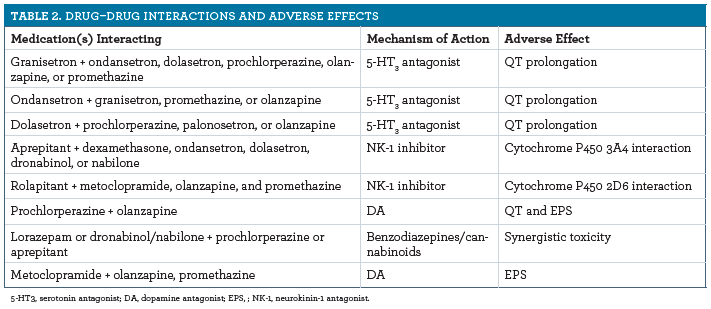 Antiemetics are the most common medications used in GI disorders; examples include serotonin antagonists (5-HT3), dopamine antagonists (DAs), and neurokinin-1 receptor antagonists. These classes collectively inhibit the chemoreceptor trigger zone of the brain, which ameliorates nausea and vomiting in some patients. Utilization of a 5-HT3 or a DA may generate a drug–drug interaction and result in QT prolongation. When macrolides are used as prokinetic agents and combined with antiemetics, patients should be monitored carefully and their comorbid conditions evaluated. In some patient groups, a diagnostic electrocardiogram and the possibility of cardiac arrhythmia should be considered. Many of these agents may have interactions with cytochrome P450 (table 2). The nontraditional antiemetics that may be used in some instances are steroids, benzodiazepines, and cannabinoids.
Biologics and nonbiologics are classes exclusive to CD because of their immunosuppressant activity. Patients receiving these medications should have their liver, kidney, and cardiac functions monitored, as well as their differential white blood cell count, depending on the medication. They should avoid live vaccines and individuals with infectious disease(s) or those at risk of contracting them. Steroids used for UC and CD also can be grouped into this immunosuppressant pharmacotherapy class. Aminosalicylates provide local immunosuppression and are reserved for lesions of the GI tract.
Medication that worsen GI function
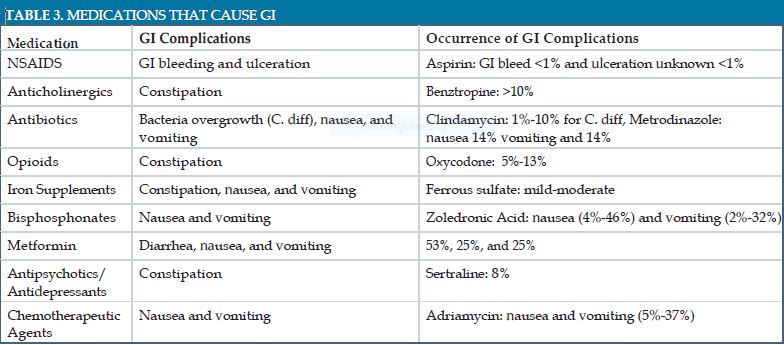
When evaluating patient choices, it is important to assess the risk–benefit ratio being presented. GI-protective medications, such as PPIs or misoprostol, reduce the risk of complications. Some cases, however, necessitate a GI-toxic medication.online table 3 reviews common medications and their AEs on the GI system.
Clinical involvement
Treatment for GI disorders should include pharmacologic and nonpharmacologic methodologies,with modifications to patients’ diets and lifestyles and the institution of an exercise regimen serving as the foundation. Clinicians should stress the importance of adequate nutrition, fiber intake, hydration, and exercise; avoiding tobacco smoking/chewing, overuse of alcohol, and abuse of prescription/illicit drugs; and specific, measurable, attainable, realistic, and time-based goals. In counseling patients, clinicians must educate patients on why they need to adhere to all aspects of the treatment plan.
GERD: When Medication Management Fails
More than 60 million Americans experience heartburn at least once a month and 15 million suffer daily. Heartburn and acid regurgitation are hallmark gastroesophageal reflux disease (GERD) symptoms.
Lifestyle interventions and anti-secretory medications like proton pump inhibitors (PPIs) are commonly used for GERD management. Seventeen to 32% of patients experience persistent symptoms despite medical therapy and are considered to have refractory GERD.
Physicians can manage refractory GERD surgically, but must consider its phenotype. Reflux hypersensitivity may only partially respond to surgery and functional heartburn should not be managed surgically.
A June 2017 article published in Journal of Gastrointestinal Surgery explores surgical advancements in management of GERD.
Laparoscopic Nissen fundoplication and concurrent hiatal hernia repair, if necessary, is the backbone in surgical GERD treatment. GERD and obesity are closely related and symptoms improve with weight loss. Laparoscopic Roux-en-Y gastric bypass surgery is recommended in obese patients who meet American Society for Metabolic and Bariatric Surgery.
Researchers are currently studying other GERD treatment technologies.
The Linx Reflux Management System uses a circular ring of magnetic beads to augment the lower esophageal sphincter (LES) and demonstrates symptomatic improvement in patients with small hiatal hernias.
Lower Esophageal Sphincter Stimulation for GERD (LESS-GERD) is a randomized, controlled, trial studying EndoStim LES stimulation system in patients who respond partially to PPIs. Here, electrodes are placed anteriorly along the esophagus at the gastroesophageal junction. LESS-GERD results seems to result in esophageal acid exposure and less PPI use.
Other novel technologies and minimally invasive endoscopic methods exist, but they lack long-term evidence and are not consistently used.
Surgical and endoscopic GERD management methods have similar risks including infection, postoperative dysphagia, and recurrent symptoms. Studies show surgical management is effective for refractory patients and outcomes to depend on appropriate procedure selection.