
Obturator Internus Muscle – Origin, Nerve Supply, Function

Patient Tools

Read, save, and share this guide

Use these quick tools to make this medical article easier to read, print, save, or share with a family member.

On this page4 sections

Article Summary

Obturator Internus Muscle is important in adult chronic noninfectious pelvic, perineal, gluteal, and retrotrochanteric pain syndromes. Evaluation and management of these patients' pain can be challenging because of the complex anatomy of this region, broad differential diagnosis, and lack of specific physical examination findings. Consequently, several clinicians have advocated the use of image-guided injections to assist in the accurate diagnosis of OI-related symptoms and provide...

Key Takeaways

  • This article explains Origin of Obturator Internus Muscle in simple medical language.
  • This article explains Nerve Supply of Obturator Internus Muscle in simple medical language.
  • This article explains Blood Supply in simple medical language.
  • This article explains Function in simple medical language.
Before reading

RX Patient Tools

Use these quick guides before reading the article, or return to them when you need help preparing questions for a doctor.

Start here Choose the right pathway for symptoms, reports, medicines, or urgent warning signs. Disease article roadmap Read this topic step by step: meaning, symptoms, warning signs, diagnosis, treatment, prevention, and follow-up. Treatment planner Prepare questions about treatment choices, benefits, risks, side effects, and follow-up. Family & caregiver guide Organize symptoms, reports, medicines, questions, and follow-up safely. Nutrition & diet guide Prepare food, hydration, supplement, and medicine-timing questions safely. Prevention guide Organize risk factors, protective habits, screening, and warning signs. Recovery guide Prepare a safe plan for activity, rehabilitation, warning signs, and follow-up.
Educational health guideWritten for patient understanding and clinical awareness.
Reviewed content workflowUse writer and reviewer profiles for stronger trust.
Emergency safety firstUrgent warning signs are highlighted below.
Definition

Obturator Internus Muscle is important in adult noninfectious pelvic, perineal, gluteal, and retrotrochanteric syndromes. Evaluation and management of these patients’ pain can be challenging because of the complex of this region, broad , and lack of specific physical examination findings. Consequently, several clinicians have advocated the use of image-guided injections to assist in the accurate of OI-related symptoms and provide symptomatic relief to affected patients. We present 2 case series describing a novel fluoroscopically guided contrast controlled transperineal approach to intrapelvic OI injections.
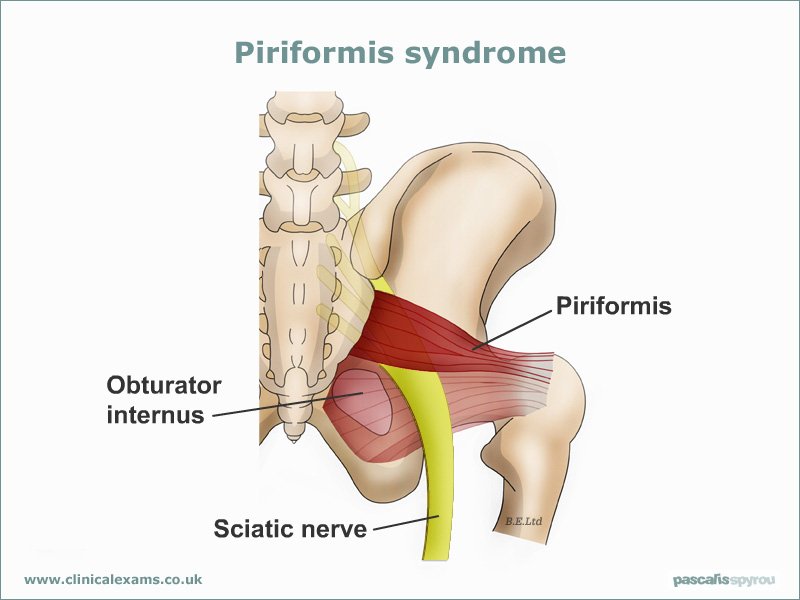
Obturator Internus Muscle - Origin, Nerve Supply, Function

Origin of Obturator Internus Muscle

  • It arises from the inner surface of the anterolateral wall of the , where it surrounds the greater part of the obturator foramen, being attached to the inferior pubic ramus and ischium, and at the side to the inner surface of the hip bone below and behind the pelvic brim, reaching from the upper part of the greater sciatic foramen above and behind to the obturator foramen below and in front.
  • It also arises from the pelvic surface of the obturator membrane except in the posterior part, from the tendinous arch which completes the canal for the passage of the obturator vessels and nerve, and to a slight extent from the obturator , which covers the muscle.
  • The fibers converge rapidly toward the lesser sciatic foramen, and end in four or five tendinous bands, which are found on the deep surface of the muscle; these bands are reflected at a right angle over the grooved surface of the ischium between its spine and tuberosity. The inserts on the greater trochanter of the proximal .

Nerve Supply of Obturator Internus Muscle

  • Obturator internus is innervated by the nerve to obturator internus, derived from spinal roots L5 and S1.

Blood Supply

  • The blood supply of obturator internus is mainly provided by branches of the obturator .
  • However, the extra pelvic portion of the muscle can also receive arterial blood from the Gellar branches of the internal pudendal artery.

Function

  • Due to their attachment on the greater trochanter of the femur, obturator internus and the Gemelli’s muscles act as external (lateral) rotators of the extended thigh. They also abduct the flexed thigh.
  • In addition to this prime mover role, the obturator internus muscle, along with the other short muscles of the hip (piriformis, superior and inferior Gemelli, pectineus, quadratus femoris, and obturator externus), acts as an important postural muscle, providing stability to the , particularly when the thigh is flexed.
  • Due to their attachment on the greater trochanter of the femur, obturator internus and the Gemelli’s muscles act as external (lateral) rotators of the extended thigh. They also abduct the flexed thigh.
  • In addition to this prime mover role, the obturator internus muscle, along with the other short muscles of the hip (piriformis, superior and inferior Gemelli, pectineus, quadratus femoris, and obturator externus), acts as an important postural muscle, providing stability to the hip joint, particularly when the thigh is flexed.

References

Doctor visit helper

Prepare before seeing a doctor

A simple rural-patient checklist to help you explain symptoms clearly, ask better questions, and avoid unsafe self-treatment.

Safety note: This is not a prescription or diagnosis. For severe symptoms, pregnancy danger signs, children with serious illness, chest pain, breathing difficulty, stroke-like weakness, or major injury, seek urgent care.

Which doctor may help?

Start with a registered doctor or the nearest qualified health center.

What to tell the doctor

  • Write when the problem started and how it changed.
  • Bring old prescriptions, investigation reports, and current medicines.
  • Write allergies, pregnancy status, diabetes, kidney/liver disease, and major past illnesses.
  • Bring one family member if the patient is weak, elderly, confused, or a child.

Questions to ask

  • What is the most likely cause of my symptoms?
  • Which danger signs mean I should go to hospital quickly?
  • Which tests are necessary now, and which can wait?
  • How should I take medicines safely and what side effects should I watch for?
  • When should I come for follow-up?

Tests to discuss

  • Vital signs: temperature, pulse, blood pressure, oxygen saturation
  • Basic physical examination by a clinician
  • CBC, urine test, blood sugar, or imaging only when clinically needed

Avoid these mistakes

  • Do not use antibiotics, steroid tablets/injections, or strong painkillers without proper medical advice.
  • Do not hide pregnancy, kidney disease, ulcer, allergy, or blood thinner use.
  • Do not delay emergency care when danger signs are present.

Medicine safety and first-aid guide

This section is for patient education only. It does not replace a doctor, pharmacist, or emergency care.

Safe first steps

  • Avoid heavy lifting, sudden bending, and prolonged bed rest.
  • Use comfortable posture and gentle movement as tolerated.
  • Discuss physiotherapy, X-ray, or MRI only when clinically needed.

OTC medicine safety

  • For mild back pain, pain-relief medicine may be discussed with a doctor or pharmacist.
  • Avoid repeated painkiller use if you have kidney disease, stomach ulcer, uncontrolled blood pressure, or are taking blood thinners.

Avoid these mistakes

  • Do not start antibiotics without a proper medical decision.
  • Do not use steroid tablets or injections casually for quick relief.
  • Do not delay emergency care because of home remedies.

Get urgent help if

  • Back pain with leg weakness, numbness around private area, loss of urine/stool control, fever, cancer history, or major injury needs urgent care.
Medicine names, dose, and timing must be decided by a qualified clinician or pharmacist after checking age, pregnancy, allergy, other diseases, and current medicines.

For rural patients and family caregivers

Patient health record and symptom diary

Write your symptoms, medicines already taken, test results, and questions before visiting a doctor. This note stays on your device unless you print or copy it.

Doctor to discuss: Doctor / qualified healthcare provider
Tests to discuss with doctor
  • Basic vital signs: temperature, pulse, blood pressure, oxygen level if needed
  • Relevant blood, urine, imaging, or specialist tests only after clinical assessment
Questions to ask
  • What is the most likely cause of my symptoms?
  • Which warning signs mean I should go to emergency care?
  • Which tests are really needed now?
  • Which medicines are safe for my age, pregnancy status, allergy, kidney/liver/stomach condition, and current medicines?

Emergency warning signs such as chest pain, severe breathing difficulty, sudden weakness, confusion, severe dehydration, major injury, or loss of bladder/bowel control need urgent medical care. Do not wait for online information.

Safe pathway to proper treatment

Care roadmap for: Obturator Internus Muscle – Origin, Nerve Supply, Function

Use this simple roadmap to understand the next safe steps. It is educational and does not replace examination by a doctor.

Go to emergency care if you notice:
  • Severe or rapidly worsening symptoms
  • Breathing difficulty, chest pain, fainting, confusion, severe weakness, major injury, or severe dehydration
Doctor / service to discuss: Qualified healthcare provider; specialist depends on symptoms and examination.
  1. Step 1

    Check danger signs first

    If danger signs are present, seek emergency care and do not wait for online information.

  2. Step 2

    Record the symptom story

    Write when symptoms started, severity, medicines already taken, allergies, pregnancy status, and test results.

  3. Step 3

    Visit a qualified clinician

    A doctor, nurse, or qualified healthcare provider can examine you and decide which tests or treatment are needed.

  4. Step 4

    Do only useful tests

    Do tests after clinical assessment. Avoid unnecessary tests, random antibiotics, or repeated medicines without diagnosis.

  5. Step 5

    Follow up and return early if worse

    If symptoms worsen, new warning signs appear, or treatment is not helping, return for review quickly.

Rural patient practical tips
  • Take a written symptom diary and all previous prescriptions/test reports.
  • Do not hide medicines already taken, even herbal or over-the-counter medicines.
  • Ask which warning signs mean urgent referral to hospital.

This roadmap is for education. A real diagnosis and treatment plan requires history, examination, and clinical judgment.
