
Fourth Week of Development of Embryo (the embryonic disc) will grow from about 2 to about 6 mm. The processes of the third week (neural tube formation, development of blood circulation) continue in the fourth week. At the same time, the amnion increases enormously in size, while the yolk sac does not. This is the cause of a great change in the form.
This is primarily due to the folding of the germinal disk, to the differentiation of the somites and to the rapid development of the nervous system. In the fourth week the embryo has a length of 1.5 to 3.5 mm. At the beginning of the week it is almost straight.
Fourth Week of Development of Embryo
The fourth week of gestation is characterized by the flexion of the superior portion of the neural tube to create the mesencephalon.
Key Points
Neural tube flexion patterns determine neural development, including the positioning and differentiation of the prosencephalon and rhombencephalon, as well as the optical vesicle.
Important changes occur to the embryonic heart as well, including development of the pharyngeal arches.
At the end of the fourth week, the yolk sac presents the appearance of a small pear-shaped vesicle (the umbilical vesicle) that opens into the digestive tube by a long, narrow tube—the vitelline duct.
Key Terms
- mesencephalon: A part of the brain located rostral to the pons and caudal to the thalamus and the basal ganglia, composed of the tectum (dorsal portion) and the tegmentum (ventral portion).
- mandibular arch: The first pharyngeal arch, also called the mandibular arch, is the first of six aortic arches that develops in fetal life during the fourth week of development.
- optical vesicle: The eyes begin to develop as a pair of diverticula from the lateral aspects of the forebrain. These diverticula make their appearance before the closure of the anterior end of the neural tube; after the closure of the tube they are known as the optic vesicles.
Placentation
Trophoblast cells surrounding the embryonic cells proliferate and invade deeper into the uterine lining. They will eventually form the placenta and embryonic membranes. At the end of the fourth week the yolk sac presents the appearance of a small pear-shaped vesicle (the umbilical vesicle) opening into the digestive tube by a long narrow tube, the vitelline duct.
The chorion undergoes rapid proliferation and forms numerous processes. The chorionic villi, which invade and destroy the uterine decidua and at the same time absorb from it nutritive materials for the growth of the embryo. Until about the end of the second month of pregnancy the villi cover the entire chorion, and are almost uniform in size, but after this they develop unequally.
Mesencephalon Development
Late in the fourth week of gestation, the superior part of the neural tube flexes at the level of the future midbrain, the mesencephalon. Superior to the mesencephalon is the prosencephalon (future forebrain) and inferior to it is the rhombencephalon (future hindbrain). The optical vesicle (which will eventually become the optic nerve, retina, and iris) forms at the basal plate of the prosencephalon.

Embryo brain at four weeks: At four weeks the embryo’s brain can be differentiated into the proscephalon, mesencephalon, and rhombencephalon. A white circle represents the area of the optical vesicle.
Pharyngeal Arch Development
The embryonic heart attains functionality and starts beating at 22 days after conception (about five weeks after the last menstrual period). It can sometimes be seen as flickering in the embryonic chest by an ultrasound performed during the fourth week after conception.
During the fourth week of development, the first pharyngeal arch, also called the mandibular arch, is the first of six pharyngeal arches that begins to develop. It is located between the stomodeum and the first pharyngeal groove.

Developing fetus: A schematic of a developing fetus with the first, second, and third arches labeled.
The growth of the amnion
In the third week, the embryonic disc got thickness and a symmetry-axis. The tissues of the embryonic disc extend into the tissues of the peripheral organs: ectoderm into the amnion membrane, entoderm into the wall of the yolk sac and mesoderm into the extra-embryonic mesoderm and the connective stalk. The embryo is still an open disc on all sides, with ectoderm on the backside and entoderm on the breastside.
In order to let an independent body come into being, a skin has be formed around the entire embryo. This happens by a dramatic growth of the amnion, that is pushed to the outside through the pressure of the amniotic fluid. The yolk sac is not growing and its liquid does not give pressure, which results in a yolk sac that hangs loose. By these growth-movements, the amnion enfolds around the embryonic disc. This happens all around: at the head, the tail and on both lateral sides. It happens faster at the head side than at the tail side.
In figures 28 to 31 this enfolding process is shown. It is difficult to imagine this three-dimensional process. It is advisable to compare the drawn sections, copy them and draw other cross-sections (eg. through the heart) in order to understand the process better.
What happens?
- With the growth of the amnion the relatively large heart is moved from its cranial position above the head to its destination in the chest.
- A little later the connective stalk is pushed towards the belly, to a place somewhat caudal from the heart. The umbilical cord will eventually develop around it.
- The neural tube thickens quickly on the cranial end, causing the cranial end to fold inside.
- The amnion pushes the yolk sac to the inside on the cranial and caudal as well as the lateral sides. The solidity that the notochord gives to the embryonic disc causes the embryonic disc to stay more or less straight. Ectoderm and entoderm are joined together at the mouth membrane and at the cloacal membrane by hinging points. This leads to the formation of the digestive tract.
- The formation of the digestive tract goes from the tips to the centre.
- The umbilical cord is created in the centre. It attaches the embryo to the chorion and it transports nutrients and waste products.
- In the umbilical cord the connective stalk, the yolk sac and allantois are found.
- In the enclosing of the embryonic disc by the amnion, a part of the chorion is included in the embryo as the body cavity (the intra-embryonic coelom; .
- The embryo becomes more or less cylindrical, and later it makes a wrapping movement in longitudinal direction .
- Once it is formed, the digestive tract grows rapidly.
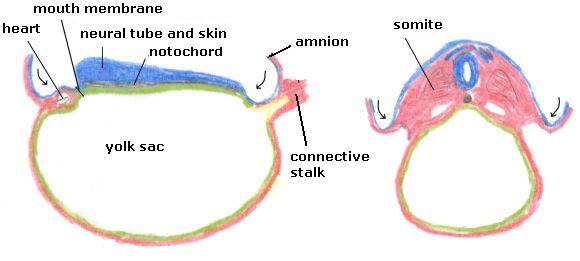
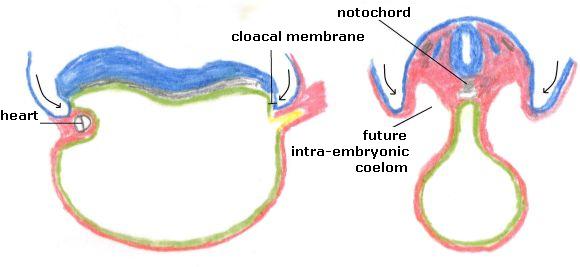
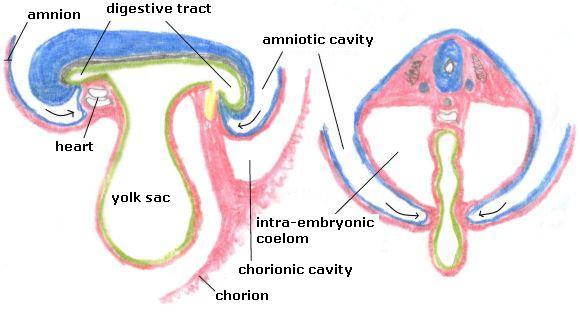

Shows two side views of the embryo in the fourth week. In the drawing from the middle of the fourth week, the 24th day the amnion surrounds the embryonic disc and the cylindrical embryo is created. Visible is the large hump of the heart that has been pushed from its cranial position above the head to a location in the chest. The neural tube is still open on both sides. The connective stalk and the yolk sac are visible.
At the end of the fourth week, the 28th day, the complete enclosure of the amnion and the umbilical cord (containing blood vessels, connective stalk, yolk sac and allantois) are visible. The heart has grown and descended a bit more and now lies on its final place adjacent to the umbilical cord. The embryo has a short tail and has become rounder. The head and tail are bent to the inside. The head is large; the headside develops faster then the tailside. At the head folds have appeared, caused by the fast thickening of the tissue of the neural tube that thereby bends the head downward. The first arch is the mandibulary arch, from which the upper jaw grows. The last two folds are called branchial (gill) arches, similar to the folds in fish. The beginning of an eye and an ear are visible. The limbs grow, the first beginnings of an arm and a leg can be seen (see the next page for the development of the limbs).
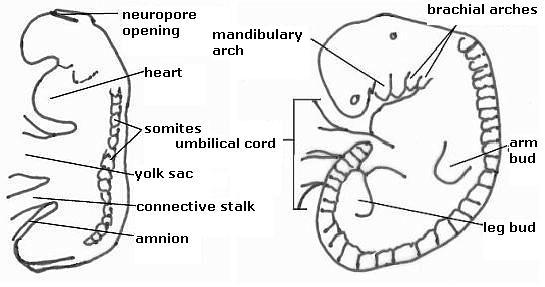
Figure 32. Left: an embryo on day 24, right on 28 days, respectively. 2 and 5 mm long.
Neural tube and digestive tract
The neural tube arises from the centre, the digestive tract from the extremities. In the neural tube there is clear amniotic fluid, which exerts pressure on the wall. In the digestive tract is turbid yolk liquid, which does not. The neural tube is mainly a straight tube, the digestive tract is a tube that winds in and out (the intestines). The neural tube consists of ectoderm, the digestive tract of entoderm. Ectoderm comes from the back, which may be called the antipathy-side of the body (to turn your back on someone). Entoderm comes from the front side, the sympathy-side of our body. With ectoderm we demarcate ourselves and create distance (observing), with entoderm we create connections (digestion of food).
| neural tube | digestive tract | |
| arises from | the middle | the extremities |
| fluid | clear amniotic fluid, exerts pressure | trouble yolk fluid, no pressure |
| tissue | ectoderm | entoderm |
| form | straight | winding |
| where | backside = antipathy-side | frontside = sympathy-side |
Differences between the neural tube and the digestive tract
Characteristics
The processes of the third week gave the embryo volume, but did not give the embryonic disc a boundary. At the beginning of the fourth week, the embryonic disc extends into the enclosing tissues of amnion, chorion and yolk sac. The enclosing movement of the amnion separates the embryo from the enclosing tissues and emancipates the embryonic disc. It still takes a long time before the embryo is independent, but the beginning is there, now that the body gets its first form and is connected to the nourishing tissues by the umbilical cord. Steiner called this stage “Paradise Man”, by which he meant to say that this is the first separation of man from his environment.
Now the body is apart and three-dimensional. The body bends and is directed towards a centre (Fig. 32). Hartmann uses the name “Animal Man”.
The enveloping movement of the amnion has as a result, that the back-side is now on the outside and what was on the ventral side now lies within. It is an enveloping gesture.
The umbilical cord is on the ventral side of the embryo. It started as the connective stalk at the backside, then it moved to the tail and now it shifts to the abdomen. The nourishment came from behind in the stage of the “Plant Man”; from the front in the stage of the “Animal Man”.
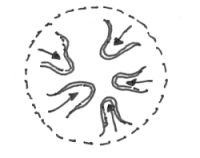
Figure 33. Animal Man (from Van der Wal, by Hartmann)
Indicated is that an animal is an organism with content or volume. It is focused inwardly on a centre.
The three tissues of the embryonic disc and what arises from them
The embryonic disc consists of three germ layers:
- Ectoderm
- Entoderm
- Mesoderm
From the ectoderm arise:
- The skin
- The nervous system
- The senses
From the entoderm arise:
- The digestive tract and digestive organs (liver, pancreas)
- The lungs
- The bladder (from the allantois)
The mesoderm can create three types of tissues:
- It can concentrate and grow inward to form muscles, tendons, ligaments and bones;
- And the kidneys, spleen and reproductive organs.
- It can go to the periphery to form body cavities, such as the pericardium, the lung cavity, the abdominal cavity, etc.
- It can do both at once and form blood cells, blood vessels and the heart.
References
- https://www.ncbi.nlm.nih.gov/books/NBK279385/
- https://www.ncbi.nlm.nih.gov/books/NBK535404/
- https://www.ncbi.nlm.nih.gov/books/NBK482385/
- https://www.ncbi.nlm.nih.gov/books/NBK499861/
- https://www.ncbi.nlm.nih.gov/books/NBK441896/
- https://www.ncbi.nlm.nih.gov/books/NBK554544/
- https://www.ncbi.nlm.nih.gov/books/NBK544228/
- https://www.ncbi.nlm.nih.gov/books/NBK441859/
- https://www.ncbi.nlm.nih.gov/books/NBK532934/
- https://www.ncbi.nlm.nih.gov/books/NBK499952/
- https://www.ncbi.nlm.nih.gov/books/NBK507815/
- https://www.ncbi.nlm.nih.gov/books/NBK431105/
- https://www.ncbi.nlm.nih.gov/books/NBK459218/
- https://www.ncbi.nlm.nih.gov/books/NBK470390/
- https://www.ncbi.nlm.nih.gov/books/NBK536971/
- https://www.sciencedirect.com/book/9781437709872/
- https://medlineplus.gov/ency/article/000500.htm
- https://www.nice.org.uk/guidance/ng148
- https://www.nhs.uk/conditions/acute-kidney-injury/
- https://www.mayoclinic.org/diseases-conditions/kidney-failure/diagnosis-treatment/drc-20369053
- https://en.wikipedia.org/wiki/Acute_kidney_injury
- https://www.ncbi.nlm.nih.gov/pmc/articles/PMC5198510/
- https://www.aafp.org/afp/2012/1001/p631.html
- https://www.kidney.org/atoz/content/what-creatinine
- https://www.nuh.nhs.uk/creatinine-clearance-calculator
- https://www.sciencedirect.com/topics/medicine-and-dentistry/uremia
- https://en.wikipedia.org/wiki/Uremia
- https://www.mayoclinic.org/diseases-conditions/polycystic-kidney-disease/symptoms-causes/syc-20352820
- https://medlineplus.gov/genetics/condition/polycystic-kidney-disease/
- https://www.kidney.org/atoz/content/AcuteKidneyInjury
- https://tomvangelder.antrovista.com/the-fourth-week-the-form-emerges-158m77.html

