Bony Landmarking of Human Bones – Anatomy and Feature

Patient Tools

Read, save, and share this guide

Use these quick tools to make this medical article easier to read, print, save, or share with a family member.

Article Summary

Bony Landmarking of Human Bones /Bone markings are invaluable to the identification of individual bones and bony pieces and aid in the understanding of functional and evolutionary anatomy. They are used by clinicians and surgeons, especially orthopedists, radiologists, forensic scientists, detectives, osteologists, and anatomists. Although bone markings may be overlooked by the untrained eye as contours of the bone, they are not as simple. Bone...

Key Takeaways

  • This article explains Common Bone Markings in simple medical language.
Educational health guideWritten for patient understanding and clinical awareness.
Reviewed content workflowUse writer and reviewer profiles for stronger trust.
Emergency safety firstUrgent warning signs are highlighted below.

Seek urgent medical care if you notice

These warning signs are general safety guidance. Local emergency numbers and clinical judgment should always come first.

  • Severe symptoms, breathing difficulty, fainting, confusion, or rapidly worsening illness.
  • New weakness, severe pain, high fever, or symptoms after a serious injury.
  • Any symptom that feels urgent, unusual, or unsafe for the patient.
1

Emergency now

Use emergency care for severe, sudden, rapidly worsening, or life-threatening symptoms.

2

See a doctor

Book a professional medical evaluation if symptoms persist, worsen, recur often, affect daily activities, or occur in a high-risk patient.

3

Learn safely

Use this article to understand possible causes, tests, treatment options, prevention, and questions to ask your clinician.

Bony Landmarking of Human Bones /Bone markings are invaluable to the identification of individual bones and bony pieces and aid in the understanding of functional and evolutionary anatomy. They are used by clinicians and surgeons, especially orthopedists, radiologists, forensic scientists, detectives, osteologists, and anatomists. Although bone markings may be overlooked by the untrained eye as contours of the bone, they are not as simple. Bone markings play an important role in human and animal anatomy and physiology. The functionality of bone markings ranges from enabling joints to slide past each other or lock bones in place, providing structural support to muscle and connective tissue, and providing circumferential stabilization and protection to nerves, vessels, and connective tissue. Understanding the importance of bone markings provides a new appreciation and understanding of bony anatomy and its functional relationships with soft tissues.

Bony Landmarking of Human Bones - Anatomy and Feature

Common Bone Markings

  • Angles – Sharp bony angulations which may serve as bony or soft tissue attachments but often are used for precise anatomical description. Examples include the superior, inferior, and acromial angles of the scapula and the superior, inferior, lateral angles of the occiput.
  • Body – Usually refers to the largest most prominent segment of bone. Examples include the diaphysis or shaft of long bones like the femur and humerus.
  • Condyle – Refers to a large prominence which often provides structural support to the overlying hyaline cartilage. It bares the brunt of the force exerted from the joint. Examples include the knee joint (hinge joint), formed by the femoral lateral and medial condyles, and the tibial lateral and medial condyles. Additionally, the occiput has an occipital condyle which articulates with atlas(C1) and accounts for approximately 25 degrees of cervical flexion and extension.
  • Crest – A raised or prominent part of the edge of a bone. Crests are often the sites where connective tissue attaches muscle to bone. The iliac crest is found on the ilium.
  • Diaphysis – Refers to the main part or the shaft of a long bone. Long bones including the femur, humerus, and tibia all have a shaft.
  • Epicondyle – A prominence that sits atop of a condyle. The epicondyle attaches muscle and connective tissue to bone, providing support to this musculoskeletal system. Examples include the femoral medial and lateral epicondyles, and humeral medial and lateral epicondyles.
  • Epiphysis – The articulating segment of a bone, usually at the proximal and distal poles of the bone. It usually has a larger diameter than the shaft (diaphysis). The epiphysis is critical for the growth of bone because it sits adjacent to the physical line, also known as the growth plate.
  • Facet – A smooth, flat surface that forms a joint with another flat bone or another facet, together forming a gliding joint. Examples can be seen in the facet joints of the vertebrae, which allow for flexion and extension of the spine.
  • Fissure – An open slot in a bone that usually houses nerves and blood vessels. Examples include superior and inferior orbital fissure.
  • Foramen – A hole through which nerves and blood vessels pass. Examples include supraorbital foramen, infraorbital foramen, and mental foramen on the cranium.
  • Fossa – A shallow depression in the bone surface. Here it may receive another articulating bone, or act to support brain structures. Examples include trochlear fossa, posterior, middle, and anterior cranial fossa.
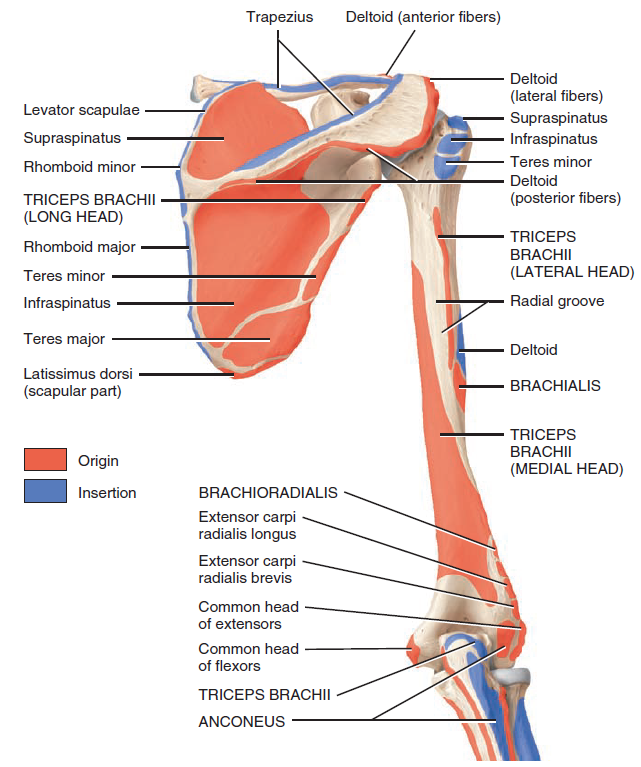
  • Groove – A furrow in the bone surface that runs along the length of a vessel or nerve, providing space to avoid compression by adjacent muscle or external forces. Examples include a radial groove and the groove for the transverse sinus.
  • Head – A rounded, prominent extension of bone that forms part of a joint. It is separated from the shaft of the bone by the neck. The head is usually covered in hyaline cartilage inside of a synovial capsule, as it is the main articulating surface with the adjacent bone, together forming a “ball-and-socket” joint.
  • Margin – The edge of any flat bone. It can be used to accurately define a bone’s borders. For example, the edge of the temporal bone articulating with the occipital bone is called the occipital margin of the temporal bone. And vice versa, the edge of the occipital bone articulating with the temporal bone is called the temporal margin of the occipital bone.
  • Meatus – A tube-like channel that extends within the bone, which may provide passage and protection to nerves, vessels, and even sound. Examples include external acoustic meatus and internal auditory meatus.
  • Neck – The segment between the head and the shaft of a bone. It is often demarcated from the head by the presence of the physical line in pediatric patients and the physical scar (physeal line remnant) in adults. It is often separated into the surgical neck and anatomical neck. The anatomical neck, which may represent the old epiphyseal plate, is often demarcated by its attachment to capsular ligaments. The surgical neck is often more distal and is demarcated by the site on the neck that is most commonly fractured. For example, in the humerus, the anatomical neck runs obliquely from the greater tuberosity to just inferior to the humeral head. The surgical neck runs horizontally and a few centimeters distal to the humeral tuberosities.
  • Notch – A depression in a bone which often, but not always, provides stabilization to an adjacent articulating bone. The articulating bone will slide into and out of the notch, guiding the range of motion of the joint. Examples include the trochlear notch on the ulna, radial notch of the ulna, suprasternal notch, and the mandibular notch.
  • Ramus  The curved part of a bone that gives structural support to the rest of the bone. Examples include the superior/inferior pubic ramus and ramus of the mandible.
  • Sinus – A cavity within any organ or tissue. Examples include paranasal sinuses and dural venous sinuses.
  • Spinous Process – A raised, sharp elevation of bone where muscles and connective tissue attach. It is different than a normal process in that a spinous process is more pronounced.
  • Trochanter – A large prominence on the side of the bone. Some of the largest muscle groups and most dense connective tissues attach to the trochanter. The most notable examples are the greater and lesser trochanters of the femur.
  • Tuberosity – A moderate prominence where muscles and connective tissues attach. Its function is similar to that of a trochanter. Examples include the tibial tuberosity, deltoid tuberosity, and ischial tuberosity.
  • Tubercle – A small, rounded prominence where connective tissues attach. Examples include the greater and lesser tubercle of the humerus.

References

Patient safety assistant

Check your symptom safely

Hi, I am RX Symptom Navigator. I can help you understand what to read next and what warning signs need care.
Warning: Do not use this in emergencies, pregnancy, severe illness, or as a substitute for a doctor. For children or teens, use with a parent/guardian and clinician.
A rural-friendly guide: warning signs, when to see a doctor, related articles, tests to discuss, and OTC safety education.
1 Symptom 2 Severity 3 Safe guidance
First safety question

Is there chest pain, breathing trouble, fainting, confusion, severe bleeding, stroke-like weakness, severe injury, or pregnancy danger sign?

Choose quickly

Browse by body area
Start here: Write or select a symptom. The guide will show warning signs, doctor guidance, diagnostic tests to discuss, OTC safety education, and related RX articles.

Important: This tool is educational only. It cannot diagnose, treat, or replace a doctor. OTC information is not a prescription. In an emergency, contact local emergency services or go to the nearest hospital.

Doctor visit helper

Prepare before seeing a doctor

A simple rural-patient checklist to help you explain symptoms clearly, ask better questions, and avoid unsafe self-treatment.

Safety note: This is not a prescription or diagnosis. For severe symptoms, pregnancy danger signs, children with serious illness, chest pain, breathing difficulty, stroke-like weakness, or major injury, seek urgent care.

Which doctor may help?

Start with a registered doctor or the nearest qualified health center.

What to tell the doctor

  • Write when the problem started and how it changed.
  • Bring old prescriptions, investigation reports, and current medicines.
  • Write allergies, pregnancy status, diabetes, kidney/liver disease, and major past illnesses.
  • Bring one family member if the patient is weak, elderly, confused, or a child.

Questions to ask

  • What is the most likely cause of my symptoms?
  • Which danger signs mean I should go to hospital quickly?
  • Which tests are necessary now, and which can wait?
  • How should I take medicines safely and what side effects should I watch for?
  • When should I come for follow-up?

Tests to discuss

  • Vital signs: temperature, pulse, blood pressure, oxygen saturation
  • Basic physical examination by a clinician
  • CBC, urine test, blood sugar, or imaging only when clinically needed

Avoid these mistakes

  • Do not use antibiotics, steroid tablets/injections, or strong painkillers without proper medical advice.
  • Do not hide pregnancy, kidney disease, ulcer, allergy, or blood thinner use.
  • Do not delay emergency care when danger signs are present.

Medicine safety and first-aid guide

This section is for patient education only. It does not replace a doctor, pharmacist, or emergency care.

Safe first steps

  • Avoid heavy lifting, sudden bending, and prolonged bed rest.
  • Use comfortable posture and gentle movement as tolerated.
  • Discuss physiotherapy, X-ray, or MRI only when clinically needed.

OTC medicine safety

  • For mild back pain, pain-relief medicine may be discussed with a doctor or pharmacist.
  • Avoid repeated painkiller use if you have kidney disease, stomach ulcer, uncontrolled blood pressure, or are taking blood thinners.

Avoid these mistakes

  • Do not start antibiotics without a proper medical decision.
  • Do not use steroid tablets or injections casually for quick relief.
  • Do not delay emergency care because of home remedies.

Get urgent help if

  • Back pain with leg weakness, numbness around private area, loss of urine/stool control, fever, cancer history, or major injury needs urgent care.
Medicine names, dose, and timing must be decided by a qualified clinician or pharmacist after checking age, pregnancy, allergy, other diseases, and current medicines.

For rural patients and family caregivers

Patient health record and symptom diary

Write your symptoms, medicines already taken, test results, and questions before visiting a doctor. This note stays on your device unless you print or copy it.

Doctor to discuss: Doctor / qualified healthcare provider
Tests to discuss with doctor
  • Basic vital signs: temperature, pulse, blood pressure, oxygen level if needed
  • Relevant blood, urine, imaging, or specialist tests only after clinical assessment
Questions to ask
  • What is the most likely cause of my symptoms?
  • Which warning signs mean I should go to emergency care?
  • Which tests are really needed now?
  • Which medicines are safe for my age, pregnancy status, allergy, kidney/liver/stomach condition, and current medicines?

Emergency warning signs such as chest pain, severe breathing difficulty, sudden weakness, confusion, severe dehydration, major injury, or loss of bladder/bowel control need urgent medical care. Do not wait for online information.

Safe pathway to proper treatment

Patient care roadmap

Use this simple roadmap to understand the next safe steps. It is educational and does not replace examination by a doctor.

Go to emergency care if you notice:
  • Severe or rapidly worsening symptoms
  • Breathing difficulty, chest pain, fainting, confusion, severe weakness, major injury, or severe dehydration
Doctor / service to discuss: Qualified healthcare provider; specialist depends on symptoms and examination.
  1. Step 1

    Check danger signs first

    If danger signs are present, seek emergency care and do not wait for online information.

  2. Step 2

    Record the symptom story

    Write when symptoms started, severity, medicines already taken, allergies, pregnancy status, and test results.

  3. Step 3

    Visit a qualified clinician

    A doctor, nurse, or qualified healthcare provider can examine you and decide which tests or treatment are needed.

  4. Step 4

    Do only useful tests

    Do tests after clinical assessment. Avoid unnecessary tests, random antibiotics, or repeated medicines without diagnosis.

  5. Step 5

    Follow up and return early if worse

    If symptoms worsen, new warning signs appear, or treatment is not helping, return for review quickly.

Rural patient practical tips
  • Take a written symptom diary and all previous prescriptions/test reports.
  • Do not hide medicines already taken, even herbal or over-the-counter medicines.
  • Ask which warning signs mean urgent referral to hospital.

This roadmap is for education. A real diagnosis and treatment plan requires history, examination, and clinical judgment.

RX Patient Help

Ask a health question safely

Write your symptom story. A health professional or site editor can review it before any answer is prepared. This box is not for emergency care.

Emergency first: Severe chest pain, breathing trouble, unconsciousness, stroke signs, severe injury, heavy bleeding, or rapidly worsening symptoms need urgent local medical care now.

Frequently Asked Questions

Is this article a replacement for a doctor?

No. It is educational content only. Patients should consult a qualified clinician for diagnosis and treatment.

When should I seek urgent care?

Seek urgent care for severe symptoms, rapidly worsening condition, breathing difficulty, severe pain, neurological changes, or any emergency warning sign.

References

Add references, clinical guidelines, textbooks, journal articles, or trusted medical sources here. You can edit this area from the RX Article Professional Blocks panel.