RX Patient Tools
Use these quick guides before reading the article, or return to them when you need help preparing questions for a doctor.
Lilac or common lilac scientifically known as Syringa vulgaris is a species of flowering plant in the olive family Oleaceae. The plant is native to open woodlands, rocky hills and scrubby areas in Balkan Peninsula in Southeastern Europe. It has been naturalized throughout much of the northeastern half the US and Canada, as well as into some western states. Grown for its scented pink flowers in spring, this large shrub or small tree is widely cultivated and has been naturalized in parts of Europe and North America. It is not regarded as an aggressive species, found in the wild in widely scattered sites, usually in the vicinity of past or present human habitations. Common Lilac, French Lilac, Syringa, Lilac and Purple lilac are few of the popular common names of the Lilac plant.
Genus name comes from the Greek word syrinx meaning tube or pipe in reference to the pith-filled but easily-hollowed stems of some genus plants. The specific epithet (vulgaris) is a Latin word meaning common or usual. The lilac is a very popular ornamental plant in gardens and parks, because of its attractive, sweet-smelling flowers, which appear in early summer just before many of the roses and other summer flowers come into bloom. Numerous cultivars have been introduced over time in both single and double-flowered forms. Cultivars extend the range of available flower colors to include shades of white, cream, rose, magenta, pinkish-purple, lavender and purple.
Common Lilac Facts
| Name | Common Lilac |
|---|---|
| Scientific Name | Syringa vulgaris |
| Native | Balkan Peninsula in Southeastern Europe. It has been naturalized throughout much of the northeastern half the US and Canada, as well as into some western states |
| Common Names | Common Lilac, French Lilac, Syringa, Lilac, Purple lilac |
| Name in Other Languages | Afrikaans: Lila Albanian: Jargavan Arabic: Arijwani (أرجواني) Armenian: Yasaman (յասաման) Azerbaijani: Yasəmən Basque: Lila Belarusian: Bez (бэз) Bengali: Bēguni (বেগুনি) Bosnian: Lila Bulgarian : Ljuljak, obiknoven lyulyak (обикнлвен люляк), lyulyak (люляк) Catalan: Arbre de sant josep, Josepet, Lilera, Lilà, Lilà blanc Cebuano: Lilac Chichewa: Lilac Chinese: Zǐ dīngxiāng (紫丁香) Croatian: Obični jorgovan, lila Czech : Šeoík Obecný, Šeřík Obecný, Orgován oby, serik Danish : Almindelig Siren, Syren, Almindelig siren, lilla Dutch : Gewone Sering, Sering, lila English: Lilac, Common lilac, Purple lilac Estonian : Harilik Sirel, lilla Esperanto : Siringo Filipino: Lila Finnish : Pihasyreeni, Yleinen Sireenipuu, lehtosaarni, liila French : Bois De Lilas, Lilas, Lilas Commun, Lilas Vulgaire, Lilas des jardins, lilas Galician: Lilás Georgian: Lilac German : Flieder, Garten-Flieder, Gemeiner Flieder, Gewöhnlicher Flieder, Gewöhnlicher Flieder Lilac, Lila, Lilak, Nagelblume, Nägelchenbaum, Nägelein, Pfeifenstrauch, Spanischer Flieder, Türkischer Holunder Greek: Paschaliá (πασχαλιά) Gujarati: Saphēda phūlavāḷō chōḍa (સફેદ ફુલવાળો છોડ) Haitian Creole: Lila Hausa: Lilac Hebrew: לִילָך Hindi: Bakain (बकाइन) Hmong: Lilac Hungarian : Orgona, Orgona Növény, Kerti orgona, májusi orgona, halványlila Icelandic : Dísarunni, Garðasýrena, lilac Igbo: Lilac Indonesian: Ungu Irish: Lilac Italian : Lilacco Commune, Lilla, Lilla Commune, Lillatro, Serenella, Siringa, Siringa Lilla, fior di Maggio Japanese: Murasaki-hashidoi (ムラサキハシドイ), Rairakku (ライラック) Javanese: Lilac Kannada: Nilaka (ನೀಲಕ) Kazakh: Jupargül (жұпаргүл) Khmer: Lilac Korean: Laillag kkoch (라일락 꽃) Lao: Lilac Latin: Lilac Latvian: Parastais ceriņš, ceriņi Lithuanian: Paprastoji alyva, paprastosios alyvos, alyvinis Macedonian: Jorgovanom (јоргованот) Malagasy: Lilac Malay: Ungu Malayalam: Niyamasabhayile (നിയമസഭയിലെ) Maltese: Lelà Maori: Lilac Marathi: Phikaṭa (फिकट) Mongolian: Golt boryn (голт борын) Myanmar (Burmese): Lilac Nepali: Bakain (बकाइन) Norwegian : Syrin Occitan: Lillac, Lillà Persian: یاس بنفش Polish : Lilak, Lilak Pospolity, liliowy Portuguese : Lilás, Lilazeiro, lilaz –branco, lilaz-roxo, lilazeiro, lilás-da-pérsia Romanian: Liliac, liliac carpatin Russian: siren’ obyknovennaya (сирень обыкновенная), siren (сирень) Serbian: Jorgovan (јоргован) Sesotho: Lilac Sinhala: Lilac Slovak: Orgován obyčajný, orgován Slovene: Lipovka, španski bezeg Slovenian: Lila Slovencina : Orgován Obyčajný Somali: Lilac Spanish : Lila, Lilo, cinamoma, lila común, lilar Swahili: Lilac Swedish : Syren, Pihasyreeni, Vanlig siren, almindelig siren, lila Tajik: Lilac Tamil: Iḷañcivappu (இளஞ்சிவப்பு) Telugu: Lilak (లిలక్) Thai: M̀wng (ม่วง) Turkish : Leylak Ukrainian: Buzok zvychaynyy (бузок звичайний), buzok (бузок) Urdu: Bi’ana (بان) Uzbek: Nastarin Vietnamese: Lilac Welsh: Lelog Yiddish: בעז Yoruba: Lilac Zulu: Lilac |
| Plant Growth Habit | Fragrant, spring-flowering upright multi-stemmed, large deciduous shrub or small, multi-stemmed tree |
| Growing Climates | Found in woodlands, scrub on rocky hills, Inland cliffs, rock pavements, outcrops, vacant lots, roadsides, thickets, and areas around abandoned dwellings |
| Soil | Prefers neutral to slightly alkaline soils rich in organic matter. It thrives best in well-drained soils in full sun |
| Plant Size | 6–7 m (20–23 ft.) high |
| Bark | Bark of large old stems is gray to gray-brown, somewhat rough-textured, slightly shredded, and sometimes shallowly furrowed. The bark of young stems is gray to brown and smooth, while new shoots are green and glabrous |
| Twigs | Stout, angled (almost 4 sided) or ridged, lustrous brown, glabrous, numerous raised lenticels; leaf scars raised, crescent-shaped; buds large, green but turning purple in the winter. |
| Leaf | Simple, 4–12 cm (2–5 in) and 3–8 cm broad, light green to glaucous, oval to cordate, with pinnate leaf venation, a mucronate apex, and an entire margin. They are arranged in opposite pairs or occasionally in whorls of three |
| Flowering season | May |
| Flower | Flowers have tubular base to the corolla 6–10 mm long with an open four-lobed apex 5–8 mm across, usually lilac to mauve, occasionally white. They are arranged in dense, terminal panicles 8 18 cm (3–7 in) long. |
| Fruit Shape & Size | Dry, smooth, shiny brown capsule, 1–2 cm (0.4-0.8 inch) long, splitting in two to release the two-winged compressed seeds |
| Fruit Color | Initially green, but they become brown at maturity |
| Seed | Seeds are somewhat flattened and winged |
| Propagation | By cuttings, layering, grafting and from seed |
| Taste | Bitter, Acrid |
| Plant Parts Used | Flower (edible), Root Bark, Leaves, seed |
| Season | August |
| Precautions |
|
Common Lilac Scientific Classification
Scientific Name: Syringa vulgaris
| Rank | Scientific Name & (Common Name) |
|---|---|
| Kingdom | Plantae (Plants) |
| Subkingdom | Tracheobionta (Vascular plants) |
| Infrakingdom | Streptophyta (land plants) |
| Super Division | Spermatophyta (Seed plants) |
| Division | Magnoliophyta (Flowering plants) |
| Sub Division | Spermatophytina (spermatophytes, seed plants, phanérogames) |
| Class | Magnoliopsida (Dicotyledons) |
| Sub-Class | Asteridae |
| Super Order | Asteranae |
| Order | Scrophulariales |
| Family | Oleaceae (Olive family) |
| Genus | Syringa L. (lilac) |
| Species | Syringa vulgaris L. (common lilac) |
| Synonyms |
|
Plant Description
Lilac is a fragrant, spring-flowering upright multi-stemmed, large deciduous shrub or small, multi-stemmed tree that normally grows about 6–7 m (20–23 ft.) tall. The plant is found growing in woodlands, scrub on rocky hills, inland cliffs, rock pavements, outcrops, vacant lots, roadsides, thickets, and areas around abandoned dwellings. The plant prefers neutral to slightly alkaline soils rich in organic matter. It also thrives best in well-drained soils in full sun. The root system gradually develops clonal offsets that can form a thicket of shrubs after a sufficient length of time. Bark of large old stems is gray to gray-brown, somewhat rough-textured, slightly shredded, and sometimes shallowly furrowed. The bark of young stems is gray to brown and smooth, while new shoots are green and glabrous. Twigs are stout, angled (almost 4 sided) or ridged, lustrous brown, glabrous, numerous raised lenticels. Leaf scars are raised, crescent-shaped. Buds are large, green but turning purple in the winter.
Leaves
A pair of opposite leaves occur along the young stems and shoots. Individual leaves are 4–12 cm (2-5 inches) long and 3–8 cm (1½-3½ inches) across. They are cordate to ovate and smooth along their margins. The upper leaf surface is yellowish-green to dark green and hairless, while the lower surface is pale green and hairless. The slender petioles are ½-1½ inches long, light green, and glabrous.
Flowers
Elongated panicles of flowers about 3-7 inches long develop from the stems of the preceding year. The panicles taper gradually toward their tops and they are ascending to erect. Individual flowers are about ¼ inches (6 mm.) across and 1/3 inches (8 mm.) long, consisting of a narrowly tubular corolla with 4 spreading lobes, a short tubular calyx with 4 teeth, a pistol with a single style, and 2 inserted stamens. On different shrubs, the corollas can be purple, lavender, light blue, pink, or white, although lavender is the most common color. The branches of each panicle are light green and glabrous. The blooming period occurs during late spring for about 2-3 weeks. The flowers are very fragrant.
Fruit
Fertile flowers are replaced by dry, smooth, ellipsoid seed capsules about ½ inches long. Capsules are initially green, but they become brown at maturity, dividing into 2 segments. Each capsule contains up to 4 seeds. The seeds are somewhat flattened and winged; they are distributed to some extent by the wind.
Popular Varieties
There are several popular varieties of common lilacs. Lilacs have very few variations, but you can identify them depending on their color, shrubs, and blooms and how much they can grow. Here you will find some popular varieties of common lilac along with their characteristics.
1. Ludwig Spaeth Lilac
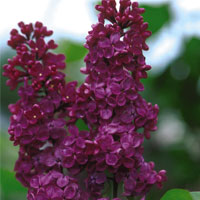
This beautiful type was first to come out and appears in 1883. It still is one of the best purple lilacs you can find. Usually, it will grow early in summer while prolonging the blooming season.
2. Madame Lemoine Lilac
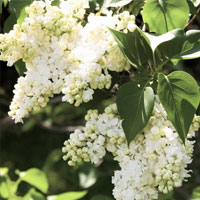
Madame Lemoine is an upright, deciduous shrub with large, showy panicles packed with amazingly fragrant, double, white flowers. Opening from creamy buds in late spring, the abundant blossoms last 3-4 weeks and make a wonderful display of glistening white.
3. Albert F. Holden Lilac
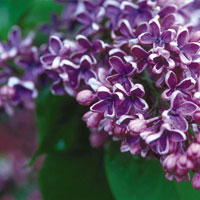
Albert F. Holden is an upright, deciduous shrub with large, loosely open panicles packed with fragrant, single, deep violet flowers in late spring. Each blossom is decorated with a silvery blush on the reverse of the petals, creating a nice bicolor effect. The open branches are clothed in light green, heart-shaped leaves that remain attractive in summer.
4. Andenken an Ludwig Spath
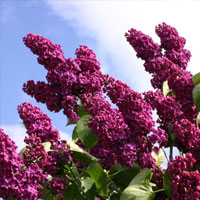
Andenken an Ludwig Spath is an upright, deciduous shrub with slender panicles, up to 12 in. long (30 cm), packed with amazingly fragrant, single, deep wine-red flowers. Blooming in late spring, the abundant blossoms last 3-4 weeks and make a dramatic display. The erect, open branches are clothed in dark green, heart-shaped leaves that remain attractive in summer.
5. Avalanche Lilac
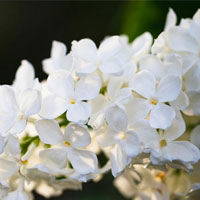
It is deciduous shrub with showy upright panicles of very large, fragrant, white florets in late spring. The open branches are clothed in light green, heart-shaped leaves that remain attractive in summer.
6. Beauty of Moscow Lilac
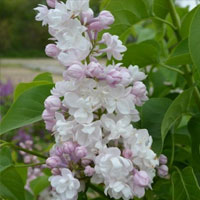
Beauty of Moscow is a deciduous shrub with showy upright panicles of highly fragrant, double flowers in late spring. Opening from pinkish-lilac buds, the double white florets are adorned with a very pale pink blush, creating a stunning bicolor effect. The open branches are clothed in light green, heart-shaped leaves that remain attractive in summer.
7. Blue Skies Lilac
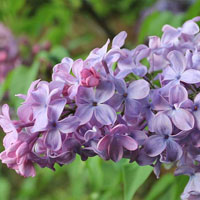
Blue Skies is an upright deciduous shrub with very showy racemes of sweetly fragrant, pale lavender-blue, single flowers in late spring. It opens from lilac-pink buds; the dense, arching panicles cover the shrub in a ravishing bicolor display. The open branches are clothed in light green, heart-shaped leaves that remain attractive in summer.
8. Charles Joly Lilac
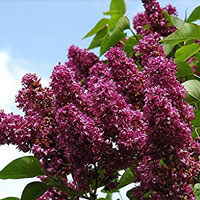
Charles Joly Lilac is an upright, deciduous shrub with showy panicles packed with amazingly fragrant, magenta, double flowers. Opening from purple buds in late spring, the abundant blossoms last 3-4 weeks and make a dramatic display.
9. Katherine Havemeyer Lilac
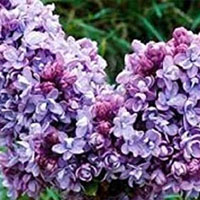
Katherine Havemeyer is an upright, deciduous shrub, spreading with age, with dense panicles packed with amazingly fragrant, double, lavender-purple flowers which fade to lilac-pink. Blooming in late spring, the abundant blossoms last 3-4 weeks and make a wonderful display of lavender, purple and pink.
10. Monge Lilac
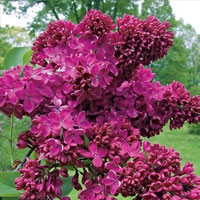
Monge Lilac is an upright, deciduous shrub with incredibly showy panicles, 9 in. long (22 cm), packed with wonderfully fragrant, single, reddish-purple flowers. Blooming in late spring, the abundant blossoms last 3-4 weeks and make a dramatic display.
11. President Grevy Lilac
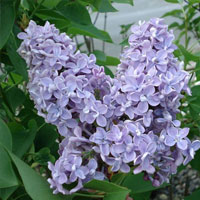
President Grevy is an upright deciduous shrub with immense panicles packed with highly fragrant, double lavender-blue florets in late spring. The open branches are clothed in light green, heart-shaped leaves that remain attractive in summer.
12. President Lincoln Lilac
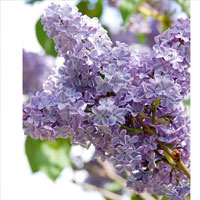
President Lincoln is an upright, deciduous shrub with large, showy panicles packed with wonderfully fragrant, single, lavender-blue flowers. Blooming in late spring, this is a fast-growing, leafy lilac with open branches clothed in light green, heart-shaped leaves that remain attractive in summer, but may tend to hide the flowers.
13. Primrose Lilac
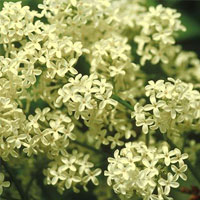
Primrose is an upright, deciduous shrub with conical panicles of slightly fragrant, pale creamy-yellow flowers. Blooming in late spring, the ravishing blossoms last 3-4 weeks and makes a rare and beautiful display. The erect, open branches are clothed in light green, heart-shaped leaves that remain attractive in summer.
14. Sensation Lilac
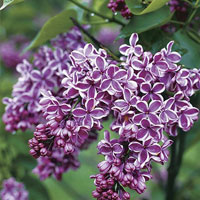
Sensation Lilac is an upright, deciduous shrub noted for its unusual bicolor flowers. Sweetly scented, they form large, pyramidal panicles of purplish red florets adorned with white edges.
15. Wedgewood Blue Lilac
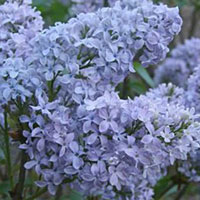
Wedgwood Blue is an upright deciduous shrub with very showy racemes of sweetly fragrant, lavender-blue, single flowers in late spring. Opening from lilac-pink buds, the dense, arching panicles cover the shrub in a ravishing bicolor display.
16. Yankee Doodle Lilac
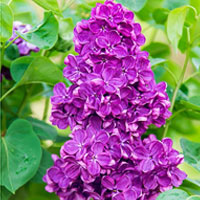
Yankee Doodle Lilac is an upright, deciduous shrub with incredibly showy panicles, 8 in. long (20 cm), packed with wonderfully fragrant, single, deep purple flowers. Blooming in late spring, the abundant blossoms last 3-4 weeks and make a dramatic display.
Traditional uses and benefits of Common Lilac
- Decoction of leaves is used as astringent and anti-pyretic, and macerated flower in oil is used to soothe the skin in Italy.
- Bark, fruits and leaves are crushed and boiled in water and used as appetizer and antipyretic in Bulgaria.
- Leaves and the fruit are antiperiodic, febrifuge, tonic and vermifuge.
- Bark or leaves have been chewed by children as a treatment for sore mouth.
- In the past, lilac was ingested to rid the intestines of parasitic worms, and was also used in the treatment of malaria.
- In the 19th century, lilac was used by doctors to treat fevers.
- Some modern herbalists use the essential oil of lilac to treat skin ailments such as rashes, sunburns and minor cuts and scrapes.
- Lutein in lilac petals may help to reduce the likelihood of developing cataracts.
- It may also be useful for preventing macular degeneration.
- Practitioners of folk medicine at one time used lilac to help rid the body of intestinal worms.
- Lilacs soaked in warm spring water for 30 minutes, strained, bottled and refrigerated can be used on the face as a tonic and as a healing spritz for some facial afflictions.
- Lilacs have been used to treat diphtheria (both internally and as a gargle).
- Lilac tea can be used as a hair tonic.
- Michael Moore indicates that the California lilac is, “An excellent home remedy for menstrual cramps, nosebleeds, bleeding hemorrhoids, and old ulcers as well as capillary ruptures from coughing or vomiting.
- The Chinese apply it externally to treat frostbite.
- Root is considered an abortifacient, anticoagulant, purgative and visicant.
Culinary Uses
- Flowers can be eaten raw and in yogurt or folded into the batter and fried to make fritters.
- Flowers can be crystallized by beating in egg white and rolling in granulated sugar.
- Lilac flower is edible and can also be crystallized and used as candy on cookies, cakes, and pies, or simply be added to brown rice and salads.
- Sorbet can be made by mixing the flowers with sugar and water.
Other Facts
- Planted worldwide in temperate areas as ornamental for the showy and sweet-scented flowers.
- In Ukraine special selections are cultivated for the essential oil from the flowers.
- An essential oil obtained from the flowers is used in perfumery.
- A green dye is obtained from the flowers.
- Green and brown dyes can be obtained from the leaves.
- Yellow-orange dye is obtained from the twigs.
- Plants can be grown as an informal hedge.
- The plant is often used as a rootstock for the various ornamental cultivars of lilac.
- Its main disadvantage is that it can sucker very freely.
- You can simply add lilac blossoms to your bath for a soothing aromatherapy remedy for stress and anxiety.
- Once established, it grows at about 12 to 18 inches per year with a slow to the moderate growth rate.
- Deciduous leaves become yellowish-brown during the autumn.
- Flowers are used as cut flowers in classic bouquets.
Different Uses
Lilacs have various usages. You can use lilac as your various purposes, and it is a good health beneficiary for your needs. When you lack ideas about giving a gift to a friend, if you have a lilac garden then you can use it to give a surprise. Lilac is largely beneficial for your health issues. Below is some basic usage of lilacs.
Lilac as a decorative element
Lilacs have many different colors and shapes. You can use lilac as a decorative item. You can use lilacs to give a present to your friend. Choose mixed bouquets and add lilac to use as a featured gift, create card covers and even you can decorate your cake toppers.
As a Cut-Flower
Using lilac as cut flowers to increase the fragrance is a great way to have a great odor. To have the great odor you need to cut the stems in the morning when flowers are barely open. By cutting stems under water and removing leaves, you will get spoil water in the vase. Pour lime soda and water in the vase. This will last longer cut-flowers.
As a Culinary Ingredient
Lilac has plenty of usage in culinary ingredients. You can crystallize them and later use as a decorative item in cookies, pies and cakes, rice dishes, and fresh green salads. You can also mix lilac blossoms with honey and also mix with yogurt to create a stylish dessert. Create a special drink by mixing sugar and water with lilac flowers.
Uses as a Fragrance
Using lilac as a fragrant is a common thing as lilac itself is a fragrant flower. You can use lilac to create a special odor in your home, washroom and use this in the bathtub to have a nice and refreshing bath. You can mix lilac in soap or scrub to use in the shower.
Uses as a Tool for Animals
You can use lilac as an attracting tool for animals. Lilac lures birds by creating natural nesting, and they feel safer from other animals and this cause birds to feed on insects as insects grow many in numbers on lilac trees and bushes. Butterflies also work to help pollinate other garden plants. You can also use lilac as a distracting tool. If deer are the problem in your area, then use the lilac plants around your garden to distract them.
Making Lilac Oil
Now, we will see how you can make lilac oil-
- Get some fresh lilac flowers
- Place the blossoms on top while lining a bowl with food protector cloth
- Get two cups of water while making sure flowers submerged properly
- Keep it overnight by covering the bowl
- Later on, the next day, pull the corner part of cloth together
- Then keeping flowers in the center, twist it into a packet
- Tie it with a string
- Let lilac water to boil before lilac water should bring into a vessel
- Put sachet in water and let the water boil for an hour and cool it
- Pour water in a bottle and add five drops of glycerin
- Shake well before use
Recipes
Lilac Wine
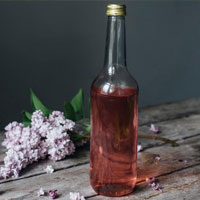
Ingredients
- 3-1/2 quarts lilac flowers
- 1-1/2 lb. granulated sugar
- 5 oz. can of Welch’s 100% white grape juice frozen concentrate
- 1-1/2 tsp. citric acid
- 1/8 tsp. tannin powder
- 7-1/4 pts water
- 1 tsp. yeast nutrient
- Champagne yeast
Directions
- Put water on to boil while culling through and rinsing flowers.
- Put flowers in primary and when water boils pour over flowers.
- Cover primary tightly and set aside for 48 hours.
- tendon. সহজ বাংলা: মাংসপেশি/টেনডনে টান।" data-rx-term="strain" data-rx-definition="A strain is injury to a muscle or tendon. সহজ বাংলা: মাংসপেশি/টেনডনে টান।">Strain flowers through nylon straining bag and squeeze to extract all flavors, then discard pulp.
- Bring 2 cups of must to boil and add sugar, stirring constantly until dissolved.
- Stir in frozen grape concentrate and immediately pour into primary.
- Stir in remaining ingredients except yeast.
- When must returns to lukewarm, sprinkle dry yeast on top without stirring or add activated yeast. Cover primary and ferment 5 days.
- Transfer liquid to secondary and fit airlock.
- Ferment 30 days and rack, top up and refit airlock.
- Rack again every 30 days until wine is clear and no longer dropping sediment.
- Rack into bottles and allow to age 3-6 months.
Lilac Ice cream
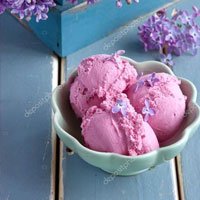
Ingredients
- about 100 lilac florets
- 150 ml milk
- 25 g sugar
- pinch of salt
- 2 egg yolks
- 200 ml heavy cream
Directions
- Pick the florets off a bloom of lilac and rinse them.
- Warm the milk, sugar, salt and lilac florets in a small, heavy saucepan over a medium heat, stirring to dissolve.
- Remove from the heat when the milk is starting to steam and before it actually starts to simmer.
- Taste at this point to check the level of lilac flavor, remembering that the flavor will dissipate somewhat with the addition of the other ingredients. For a stronger flavor, leave the mixture to infuse and taste periodically. When ready, tendon. সহজ বাংলা: মাংসপেশি/টেনডনে টান।" data-rx-term="strain" data-rx-definition="A strain is injury to a muscle or tendon. সহজ বাংলা: মাংসপেশি/টেনডনে টান।">strain off the lilac florets and warm (but don’t simmer) the mixture again.
- Break the egg yolks into a small bowl and stir them together.
- Gradually add some of the warmed milk to the yolks, stirring constantly, then adds the warmed yolk and milk mixture back into the saucepan with the rest of the milk.
- Cook the egg and milk mixture (or we can call it custard now) over a low heat, stirring frequently, until it’s thick enough to coat your spoon or spatula (this took me around 12 minutes or so).
- Now pour the custard mixture into the cream, stirring to combine.
- Chill the mixture by sitting it in an ice bath and then freeze either using an ice cream maker, if you’ve got one, or as follows, if you don’t:
- Put the mixture in a deep baking dish or bowl and place in the freezer. After about 45 minutes, once the mixture has started to freeze around the edges, remove the bowl and beat the mixture vigorously, using a whisk or a hand blender to break up any ice crystals that have started forming. Return the mixture to the freezer and repeat this roughly every 30 minutes until the ice cream is frozen which, depending on your freezer, may take 3-6 hours.
Lilac Blossom Almond Scones
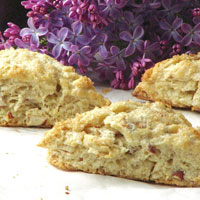
Ingredients
- 3 cups flour, all-purpose
- 1/3 cup sugar
- 2 1/2 teaspoons baking powder
- 1/2 teaspoon baking soda
- One teaspoon salt
- 12 tablespoons unsalted butter, chilled
- 1 cup buttermilk, shaken well
- One teaspoon vanilla extract
- 1/2 cup toasted, chopped almonds
- 1 cup lilac flowers
Directions
- Prepare your oven and preheat it to 425 degrees
- In a bowl, mix flour sugar, baking powder, baking soda, and salt
- Mix it well and Cut the butter into small chops and leave it to dry mixture
- Use your finger, hands and work on butter and flour mixture
- Add buttermilk, vanilla extract, almonds and lilac blossoms, fold altogether in a bowl
- Roll the dough into a ball
- Flatten the dough by hand and cut the dough into triangles
- You can spread some sugar on those
- Put in oven and bake at least 15 minutes until desired color and tastiness comes.
Lilac Honey Cake
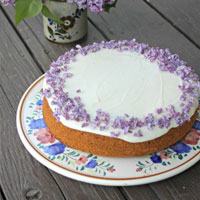
Ingredients
- Half cup Salted Butter softened
- 3-4 tablespoon of Sugar
- Half cup Lilac Blossoms packed tightly
- 2 Eggs
- Two teaspoons Vanilla
- 2 and a half cups Unbleached, All-Purpose Flour
- 1 Tablespoon Baking Powder
- Half Cup Buttermilk
- Half Cup Honey
Direction
- Prepare your oven and preheat it to 370 degrees and prepare a pan.
- Mix the flour, baking powder, the honey and buttermilk
- Cream together the butter, sugar, and lilac blossoms until light and fluffy
- Add the eggs and vanilla extract
- Add the flour mixture with the buttermilk
- Pour the batter into the pan
- Bake in the preheated oven for 40-45 minutes
- Cool in pan for 10 minutes
- Keep in refrigerator for your needs
References
- https://www.itis.gov/servlet/SingleRpt/SingleRpt?
- http://www.hear.org/pier/species/pyrus_calleryana.htm
- https://npgsweb.ars-grin.gov/gringlobal/taxon/taxonomydetail?
- https://pfaf.org/user/Plant.aspx?
- https://www.wildflower.org/plants/result.php?
- http://www.missouribotanicalgarden.org/PlantFinder/PlantFinderDetails.aspx?
- https://plants.usda.gov/core/profile?
- https://www.invasive.org/browse/subinfo.cfm?
- https://www.cabi.org/isc/datasheet/46188
- https://www.cal-ipc.org/plants/profile/pyrus-calleryana-profile/
- http://www.efloras.org/florataxon.aspx?
- https://texasinvasives.org/plant_database/detail.php?
- http://www.iucngisd.org/gisd/species.php?
- http://www.theplantlist.org/tpl1.1/record/rjp-6009
- https://en.wikipedia.org/wiki/vegetables
- https://gd.eppo.int/taxon/PYUCA
- https://www.illinoiswildflowers.info/savanna/plants/
- https://uses.plantnet-project.org/en/
- https://www.theplantlist.org/tpl1.1/record/
- https://training.ars-grin.gov/gringlobal/taxon/taxonomydetail?
- http://hort.ufl.edu/database/documents/pdf/tree_fact_sheets/
- https://www.illinoiswildflowers.info/trees/plants/callery_pear.htm
- https://www.ncbi.nlm.nih.gov/books/NBK218749/
- https://www.ncbi.nlm.nih.gov/books/NBK551014/
- https://www.ncbi.nlm.nih.gov/books/NBK551727/
- https://www.ncbi.nlm.nih.gov/books/NBK65874/
- https://www.ncbi.nlm.nih.gov/books/NBK304428/
- https://www.ncbi.nlm.nih.gov/books/NBK218759/
- https://www.ncbi.nlm.nih.gov/books/NBK556048/
- https://www.ncbi.nlm.nih.gov/books/NBK218749/
- https://www.niehs.nih.gov/health/topics/agents/vegetables/index.cfm
- https://www.sciencedirect.com/book/9780443062414/vegetable
- https://www.amazon.com/Essential-Oils-Fully-Revised-Updated/dp/1787752291
- https://www.healthbenefitstimes.com/category/herbs-and-spices/
- https://www.frontiersin.org/articles/257193
- https://www.tandfonline.com/toc/tjeo20/current
- https://www.intechopen.com/chapters/68027
- https://onlinelibrary.wiley.com/doi/full/10.1002/ptr.6854
- https://www.nature.com/articles/s41598-020-68823-4
- https://www.cancer.gov/about-cancer/treatment/cam/patient/aromatherapy-pdq
- https://www.researchgate.net/publication/254247133_
- https://link.springer.com/article/10.1365/s10337-010-1680-0
- https://fdc.nal.usda.gov/ndb/foods/show/herb
- https://www.nccih.nih.gov/health/herbsataglance
- https://portal.nifa.usda.gov/web/crisprojectpages/0092887
- https://academic.oup.com/database/article/doi/10.1093/database/bau120
- https://www.cambridge.org/core/journals/weed-science/article/herbicide-effects-of-vegetable/
- https://www.fs.fed.us/wildflowers/ethnobotany/vegetable
- https://www.karger.com/Article/Abstract/501062
- https://en.wikipedia.org/wiki/List_of_plant
- https://en.wikipedia.org/wiki/Types_of_plant_harb
- https://www.britannica.com/topic/cereals
- https://www.planttherapy.com/
- https://academic.oup.com/plphys/article/54/4/560/
- https://www.healthbenefitstimes.com/category/oils/
- https://www.aromaweb.com/essentialoils/default.asp
- https://books.google.com/books/about/Herbs_And_Essential_Oils_Book.html?
- https://books.google.com/books/about/Herbal_herb_for_Health_Beauty.html?id=C_MX9tKpttMC
- https://books.google.com/books/about/Herbal_vegetable_for_Health_Beauty.html?id=C_MX9tKpttMC
- https://www.niehs.nih.gov/health/topics/agents/
- https://www.botanical.com/botanical/mgmh/l/
- https://www.nccih.nih.gov/health/atoz
- https://clinicaltrials.gov/ct2/show/NCT02764567
- https://fda.report/Company/Young-Living-Essential-Oils-Lc
- http://www.fao.org/3/ad420e/ad420e.pdf
- https://www.healthywa.wa.gov.au/Articles/A_E/
- https://www.niehs.nih.gov/health/topics/agents/
- https://www.consumerreports.org/health-product-recalls/
- https://www.itis.gov/servlet/SingleRpt/SingleRpt?search_topic=TSN&search_value=42325#null
- https://www.cabi.org/isc/datasheet/46654
- https://www.itis.gov/servlet/SingleRpt/SingleRpt?search_topic=TSN&search_value=506060#null
- https://www.itis.gov/servlet/SingleRpt/SingleRpt?search_topic=TSN&search_value=784875#null
- https://www.itis.gov/servlet/SingleRpt/SingleRpt?
- https://en.wikipedia.org/wiki/Syringa_vulgaris
- https://www.itis.gov/servlet/SingleRpt/SingleRpt?search_topic=TSN&search_value=32996#null
- https://pfaf.org/user/Plant.aspx?LatinName=Syringa+vulgaris
- http://www.missouribotanicalgarden.org/PlantFinder/PlantFinderDetails.aspx?kempercode=m490
- http://www.floracatalana.net/syringa-vulgaris-l-https://www.botanical.com/botanical/mgmh/l/lilacs20.html
- https://plants.usda.gov/core/profile?symbol=SYVU
- https://npgsweb.ars-grin.gov/gringlobal/taxonomydetail.aspx?id=36122
- http://luirig.altervista.org/flora/taxa/index1.php?scientific-name=syringa+vulgaris
- http://www.theplantlist.org/tpl1.1/record/kew-356495
- http://www.catalogueoflife.org/col/details/species/id/7d202c4a957e81190889c4e01f4bed93
- https://gd.eppo.int/taxon/SYRVU
- https://www.kansasforests.org/conservation_trees/products/shrubs/lilac.html
- https://www.cabi.org/isc/datasheet/52378
- https://www.illinoiswildflowers.info/trees/plants/lilac.html
- https://en.wikibooks.org/wiki/Horticulture/Syringa_vulgaris
- https://davesgarden.com/guides/pf/go/1443/#bhttps://bie.ala.org.au/species/NZOR-6-18273