Jasminum sambac also known as jasmine sambac is a species of jasmine in the genus Jasminum which contains approximately 217 to 229 species and belongs to the family of the Oleaceae (Olive Family). The plant is native to a small region in the eastern Himalayas in Bhutan and neighboring Bangladesh, India, and Pakistan. It is cultivated in many places, particularly across much of South and Southeast Asia. It is naturalized in many distributed localities: Mauritius, Madagascar, the Maldives, Cambodia, Indonesia, Christmas Island, Chiapas, Central America, southern Florida, the Bahamas, Cuba, Hispaniola, Jamaica, Puerto Rico, and the Lesser Antilles. In India it is popularly known as Mogra. It is also known by several different names like Arabian Jasmine, Asian Jasmine, Asiatic Jasmine, Indian Jasmine, Jasmin, Maid of Orleans, Sacred Jasmine, Sambac Jasmine, Tuscan Jasmine and pikake.
Genus name is a Medieval Latin name for the Persian name Yasmin or Yasmin. Specific epithet comes from the Medieval Arabic word zanbaq meaning jasmine flower oil. Arabian jasmine is commonly used in perfumes and teas, Arabian jasmine can be a garden or houseplant and it is usually grown as a medium-size shrub, although it will grow as a vine with proper care. In China, dried flowers are used to scent jasmine tea. In Hawaii (where commonly called pikake), flowers are used in leis. This species is the national flower of the Philippine Islands.
Plant Description
Arabian Jasmine is a straggling, erect or climbing, evergreen shrub that grows up to 0.5 to 3 m (1.6 to 9.8 ft.) tall with pubescent, terete, angular twigs. The plant is found growing in disturbed sites, secondary forests, coastal areas, abandoned gardens, and orchards near villages, managed forests, plantations and coastal areas. The plant grows on almost any soil type with soil pH of 4.9–8.3 and sufficient water supply and in full sun, mostly in rich loam, clay loam or sandy soils. Branchlets are terete or slightly compressed, sometimes hollow and sparsely pubescent.
Leaves
Leaves are opposite or in whorls of three, entire, elliptic or broad elliptic to sub orbicular, obtuse at both ends, very variable in size, up to 4 to 12.5 cm (1.6 to 4.9 in) long and 2 to 7.5 cm (0.79 to 2.95 in) wide, glabrous, shining green above, nerves 4–6 on each side of midrib prominent beneath; petiole short, pubescent. They are smooth (glabrous) except for a few hairs at the venation on the base of the leaf.
Flower
The flowers bloom all throughout the year and are produced in clusters of 3 to 12 together at the ends of branches. They are strongly scented, with a white corolla 2 to 3 cm (0.79 to 1.18 in) in diameter with 5 to 9 lobes. The flowers open at night (usually around 6 to 8 in the evening), and close in the morning, a span of 12 to 20 hours. Flowering normally takes place from May to August.
Fruit
Fertile flowers are followed by simple or didymous, globose berry that is 1 cm (0.39 in) in diameter. The fruit is initially green turning to purplish black as they mature.
Different Cultivars
There are numerous cultivars of Jasminum sambac which differ from each other by the shape of leaves and the structure of the corolla. The cultivars recognized include:
1. Maid of Orleans
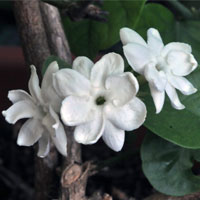
It possesses flowers with a single layer of five or more oval shaped petals. It is the variety most commonly referred to as sampaguita and pikake. It is also known as Mograw, Motiya, or Bela.
2. Belle of India
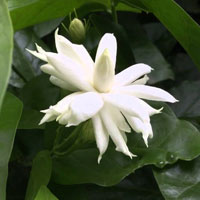
It possesses flowers with a single or double layer of elongated petals
3. Grand Duke of Tuscany
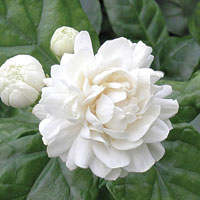
It possesses flowers with a doubled petal count. They look like small white roses and are less fragrant than the other varieties. It is also known as Rose jasmine and Butt Mograw. In the Philippines, it is known as kampupot.
4. Mysore Mallige
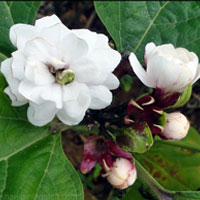
It resembles the Belle of India cultivar but has somewhat shorter petals with distinct and immense fragrance.
5. Arabian Nights
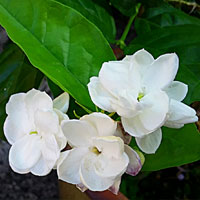
It possesses a double layer of petals but is smaller in size than the Grand Duke of Tuscany cultivar.
Health Benefits of Arabian Jasmine
Listed below are a few of the popular health benefits of Arabian Jasmine
1. Reduces Body Odor
Body odor is a horrible smell given off by the body most commonly due to excess sweat leading to the bacterial build-up on the skin; mainly in the areas such as armpits. Also, it produces a negative impact on your personality to the people you interrelate with. Generally, people tend to use the latest deodorants or body sprays to avoid smelling bad. In that regard, the Arabian jasmine flower’s oil along with other essential oil can be used as a spray on your armpits to smell good.
2. Alleviates Pain and Inflammation
Suffering from a headache or a backache? Apply a drop of jasmine oil and massage. Yes, it heals, and it is a confirmed grandma’s home remedy for different kinds of pains and aches, including those from arthritis and rheumatism.
3. Regulates Cholesterol Levels in Blood
Jasmine, when consumed as tea, is known to lower the levels of bad cholesterol in the blood. It also keeps a tab on the cholesterol levels and keeps health conditions such as heart attacks and strokes at bay.
4. Reduces Stress
With the increase in individual needs, the current generation is undergoing stress every day so as to meet them. Stress these days are caused due to various factors such as work pressure, negative thoughts, busy lifestyle, lack of proper communication, etc. All of these can be effectively reduced by smelling a handful of these magical white flowers. The fragrance of these flowers is known to soothe the mind and relax individuals thus bringing positive energy.
5. Camouflages Scars
As mentioned before, the Jasmine flower is well known for bringing moisture to your skin. In addition to that, it is also helpful in hiding the scars of the skin and thus leaving your skin toned and beautiful. For this, you will have to use jasmine oil along with coconut oil or petroleum jelly and apply on the affected areas. Continue doing it for some days and wait for it to make wonders.
6. Induces Weight Loss
Change in lifestyle has funded much in the weight gain among individuals. Apart from a regular diet and exercise, an extra supplement is essential to speed up the process. In that regard, drinking a minimum of 3 cups of tea made with fresh jasmine flowers is a proven solution for aiding in weight loss. It is a tradition followed method to support weight loss by cutting down the unwanted fat accumulation, in a natural and organic way without the use of harmful chemicals.
7. Promotes Hair Growth
Jasmine flowers help in conditioning the hair, it is thus helpful in making your hair grow thick and long. Try mixing jasmine extracts along with coconut oil or almond oil, apply it on your scalp, and leave it to rest for a while. This particular treatment is followed in spa and is beneficial in providing strength to the hair roots thus preventing hair fall and breakage due to weak hair.
8. Aids in Digestion
An unhealthy digestive system is an entryway of several harmful and disease-causing bacteria. In order to stay fit, it is necessary to keep your gut healthy. Bad food habit will bring in the digestion-related problems such as constipation, gastritis, ulcer, indigestion, etc. All of these can be healed by drinking jasmine tea on a regular basis. Apart from aiding digestion, the tea is equally beneficial in healing nausea and vomiting sensations caused due digestive disorders thus helping your digestive system to flourish in the growth of good bacteria.
9. Makes Skin Soft
If you are one suffering with dry skin and its beauty spoiling effects; worry not! Try using the jasmine oil by mixing it along with aloe Vera gel and gently applying it on the dry areas of your skin. By doing this, you can feel your skin moisturized and nourished; better than before. Also, using the oil to your bath routine will also help achieve soft and smooth skin. Also, with its antibacterial properties, its helps in keeping skin infection at bay.
10. Enhances Libido
Jasmine flower is in use for spreading an ambient fragrance that helps in activating the sex hormones in both men and women. It is therefore considered as a natural aphrodisiac and it contributes in enhancing the libido by relaxing the person completely and making the person express his sexual desires without any limitation.
11. Improves Blood Circulation
Improper blood circulation is the major cause of the occurrence of stroke in humans. Also, it leads to fluctuations in blood pressure levels. However, all these difficulties can be kept at bay by drinking jasmine flower tea or by applying a few drops of jasmine oil over the body parts followed by a gentle massage. This will help in the free circulation of the blood to all the body parts.
12. Clears Phlegm
With the onset of monsoon, also comes the most irritable health ailment of all time; cold and phlegm. It begins as runny nose and then slowly gathers phlegm in the respiratory tract causing difficulty in breathing. Also, the troubles they come along with including continuous sneezing as a result of which you feel lethargic and low. This can be solved by using jasmine flower oil. Take a few drops of the oil and inhale it deeply; this method is known to clear phlegm from the respiratory system and also calms cough by struggling against infectious germs.
13. Suppresses the Growth of Tumor Cells
The surprising and most beneficial health benefit about the flower is that it is very helpful in suppressing the growth of the tumor-causing cells and avoids it from spreading further. Jasmine flowers were crushed manually and the extract was used as a medicine that was applied on the breast as a remedy for breast cancer. This is because of the anti-carcinogenic property they possess.
14. Natural Antispasmodic
Jasmine flower extracts are good in alleviating pain and hence are known as natural antispasmodics. Even the pain that did not go away upon application of several other chemical medicines will come under control when this particular flower is used as a medicine. Common painful situations such as the joint pain, feeling of soreness in muscles can be alleviated upon application of the extracts of jasmine flower. It is also helpful in reducing the pain caused due to swelling and redness with just application of few drops of its oil on the affected area.
15. Reduces Lice Attack
Head lice are a major problem for female hair, particularly when you are exposed to frequent bacterial attacks on the scalp. Also, for those who have dry and itchy scalp, head lice will create further damage and makes the condition worse. To reduce this, mix jasmine oil with any carrier oil such as coconut oil, jojoba oil, etc. and apply it on the scalp followed with a gentle massage. The antimicrobial properties will help in keeping scalp free from infections.
16. Heals Wounds and Infections
In the past centuries, jasmine flower was included as part of the medicine to heal several simple infections. With the antiseptic property they possess, they are good in healing wounds and infections when applied directly on the affected area. For better results, it is advisable to use jasmine oil for healing wounds and avoid the onset of further infections.
17. Snoring Aid
People with the habit of snoring disturb the sleep of all the others near to them. Major cause of snoring is said to be the block in the nasal air passage. By clearing the air passage, the breath will be normal and the snoring will be reduced. This can be achieved by inhaling the fragrance of the jasmine flower or the essential oil made out of it. It helps in clearing the throat too and avoids the necessity of any other snoring aid.
18. Aids in Relaxing Your Body
The essential oil obtained from the jasmine flowers as well the leaves of the flower can be used for massaging the entire body in order to give you a relaxed feeling. Also, simple aches such as the head ache, back ache, etc. can be effectively overcome by massaging the affected area with a few drops of the jasmine flower oil. Further, with its anti-inflammatory properties it allows faster recovery from mild to severe inflammations in the body.
19. Conditions Your Hair
As we all know, jasmine flower has a lovely fragrance, using it on hair will make your hair smell good and also conditions your hair. For this, you will have to soak a few flowers in warm water and allow it to rest until all the essence is mixed with the water. When on hair shower, make sure to use this water at the end and rinse well. This method works well and helps in managing the curly hair and reduces the frizz in your hair by giving your hair a smooth and soft texture.
Traditional uses and benefits of Arabian Jasmine
- All parts of the plant have been used in traditional folk medicine in Asia.
- It possesses many beneficial medicinal properties such as thermo genic, aphrodisiac, antiseptic, emollient, anthelmintic and tonic and is commonly used for stomatitis, ulcers and skin diseases.
- The action of jasmine is considered warming, opening and relieving of spasm and recommended where there is cold, listlessness, spasm, depression, catarrh or other discharge.
- Arabian Jasmine has a long history of use as a major therapy for male and female reproductive conditions; it is said to help prevent postnatal depression and infertility and is ranked among the ‘aphrodisiac’ herbs and is considered calmative in India.
- Arabian Jasmine is extensively used in manufacturing high-grade aromatherapy oils in India.
- In aromatherapy, jasmine oil is recommended for any kind of physical pain.
- It is regarded to be a powerful antiseptic, sedative and tonic recommended for breathing difficulties, coughing and nervous debility.
- In traditional Chinese medicine, jasmine flowers are used to regulate energy in the body and balance the internal region and are deemed good for abdominal pains, diarrhea, dermatitis and conjunctivitis.
- Flowers act as lactifuge and are said to arrest the secretion of milk in puerperal states in case of threatened abscess.
- Flowers are applied to the breast for breast cancer in India.
- An infusion of flowers is used as a facial wash because of its fragrance, cleansing and soothing properties in Malaysia.
- Flowers are used in ben oil or coconut oil for hair, facial or body use or as a perfume oil or perfume base.
- Flowers are also digested with vegetable oil to make oil tinctures or ointments.
- Flowers are used by Malays in Malaysia in a paste compounded with Gardenia flowers and the root of Acacia Myriophyllum and applied to the head for congestive headache.
- Eye lotions are also made with jasmine flowers and the juice from Conocephalus or the rhizome of Kaempferia .
- Flowers have also been used to cure sapraemia.
- Flowers and leaves are also reported to be anti-pyretic and decongestant.
- Leaf decoction is used for fever and used for poulticing skin complaints and wounds in Malaysia.
- Leaves are more effective as lactifuge and are so used in Indonesia and with success in India.
- Juices from the leaves of J. sambac are applied to treat ulcers, to remove corns and are used in expelling worms, regulating menstrual flow and cleaning kidney waste and treating inflamed and bloodshot eyes.
- Leaves are chewed and used in the treatment of ulcerations of the mouth.
- Leaves and roots of the plant are used for treating diarrhea and fever and as an anesthetic and an analgesic, respectively.
- Root is considered purgative, analgesic, expectorant and anthelmintic—active against ringworm and tapeworm and is used to treat headache, paralysis and rheumatism.
- Root is given fresh for venereal diseases in Malaysia and used with leaves to make an eye lotion.
- Root is taken for fever in Indonesia.
- Bruised leaves or flowers are applied as a poultice to the breasts of lactating women to discourage the production of breast milk.
- An infusion of the flowers is applied to the eyelids as a decongestant.
- An infusion is used in the treatment of pulmonary catarrh, bronchitis, and also asthma.
- Stems are used as an antipyretic and in the treatment of abscesses.
- Roots are used externally as poultices for sprains and fractures.
Culinary uses
- Jasmine flowers are edible, primarily used in teas and flavoring; the flowers are also a source of an essential oil used as flavoring.
- Flowers are also added to dry food stuff (tea, rice) for fragrance.
- Flower is processed and used as the main ingredient in jasmine tea in China.
- It is likewise used in Java to flavor tea to prepare jasmine tea.
- Flowers are also used for flavoring in other herbal and black teas and used in dessert, e.g. jasmine and strawberry dessert.
- Flowers can be used to infuse simple syrups, and the syrups are used as a base for sorbets or ice cream or it can be poured over melons, figs and peaches.
- Aromatic water prepared from the flowers is popular in Thai cookery, especially for making desserts.
How to Use Arabian Jasmine
Arabian Jasmine can be used in various methods
Jasmine Tea
Mix the petals and green tea leaves and let them infuse overnight. Remove the jasmine petals and store the green tea in a tight jar. Take a pitcher and add hot water to it. Now, add the green tea leaves and leave for 3-5 minutes. Strain in a cup, add sweetener and pour into a cup. Jasmine tea is ready to savor!
Jasmine Potpourri
For this air-freshener, use up dried jasmine flowers and mix it up with cinnamon sticks, cloves, mace, and dried rose petals. Now, put a few drops of jasmine essential oil and store in an earthen pot for spreading the natural fragrance everywhere!
Jasmine Massage Oil
To use jasmine as massage oil, mix a few drops of jasmine essential oil with any unrefined carrier oil of your choice. It works the best when added to coconut and almond oil, though. Massage the oil throughout your body and take a warm bath for relieving stress.
Other facts
- Jasmine is also a popular ornamental plant.
- Jasmine flower oil is important in high-grade perfumes and cosmetics, such as creams, oils, soaps and shampoos.
- Jasmine flowers give a yellow dye which is used as a substitute for saffron.
- Jasmine is the national flower of the Philippines.
- Jasmines are threaded into thick strands and worn as a hair adornment or as neck garlands for respected guests in South India.
- Flowers of one of the double varieties are held sacred to Vishnu and are used as ritual offerings in Hindu religious ceremonies.
- Jasmine flowers single or double forms are used to make fragrant leis in Hawaii.
- Jasmine essential oil is one of the most expensive oils used in cosmetics, the pharmaceutical industry, perfumery and aromatherapy.
- It is widely cultivated as an ornamental plant for its fragrant and showy flowers.
- Flowers are widely used for their scent and their cooling effect, either directly or in perfumes.
- Flower is used as an offering to the Buddha in Cambodia.
- Flowers are used in Buddhist temples and in ceremonial garlands.
References
- https://www.itis.gov/servlet/SingleRpt/SingleRpt?
- http://www.hear.org/pier/species/pyrus_calleryana.htm
- https://npgsweb.ars-grin.gov/gringlobal/taxon/taxonomydetail?
- https://pfaf.org/user/Plant.aspx?
- https://www.wildflower.org/plants/result.php?
- http://www.missouribotanicalgarden.org/PlantFinder/PlantFinderDetails.aspx?
- https://plants.usda.gov/core/profile?
- https://www.invasive.org/browse/subinfo.cfm?
- https://www.cabi.org/isc/datasheet/46188
- https://www.cal-ipc.org/plants/profile/pyrus-calleryana-profile/
- http://www.efloras.org/florataxon.aspx?
- https://texasinvasives.org/plant_database/detail.php?
- http://www.iucngisd.org/gisd/species.php?
- http://www.theplantlist.org/tpl1.1/record/rjp-6009
- https://en.wikipedia.org/wiki/vegetables
- https://gd.eppo.int/taxon/PYUCA
- https://www.illinoiswildflowers.info/savanna/plants/
- https://uses.plantnet-project.org/en/
- https://www.theplantlist.org/tpl1.1/record/
- https://training.ars-grin.gov/gringlobal/taxon/taxonomydetail?
- http://hort.ufl.edu/database/documents/pdf/tree_fact_sheets/
- https://www.illinoiswildflowers.info/trees/plants/callery_pear.htm
- https://www.ncbi.nlm.nih.gov/books/NBK218749/
- https://www.ncbi.nlm.nih.gov/books/NBK551014/
- https://www.ncbi.nlm.nih.gov/books/NBK551727/
- https://www.ncbi.nlm.nih.gov/books/NBK65874/
- https://www.ncbi.nlm.nih.gov/books/NBK304428/
- https://www.ncbi.nlm.nih.gov/books/NBK218759/
- https://www.ncbi.nlm.nih.gov/books/NBK556048/
- https://www.ncbi.nlm.nih.gov/books/NBK218749/
- https://www.niehs.nih.gov/health/topics/agents/vegetables/index.cfm
- https://www.sciencedirect.com/book/9780443062414/vegetable
- https://www.amazon.com/Essential-Oils-Fully-Revised-Updated/dp/1787752291
- https://www.healthbenefitstimes.com/category/herbs-and-spices/
- https://www.frontiersin.org/articles/257193
- https://www.tandfonline.com/toc/tjeo20/current
- https://www.intechopen.com/chapters/68027
- https://onlinelibrary.wiley.com/doi/full/10.1002/ptr.6854
- https://www.nature.com/articles/s41598-020-68823-4
- https://www.cancer.gov/about-cancer/treatment/cam/patient/aromatherapy-pdq
- https://www.researchgate.net/publication/254247133_
- https://link.springer.com/article/10.1365/s10337-010-1680-0
- https://fdc.nal.usda.gov/ndb/foods/show/herb
- https://www.nccih.nih.gov/health/herbsataglance
- https://portal.nifa.usda.gov/web/crisprojectpages/0092887
- https://academic.oup.com/database/article/doi/10.1093/database/bau120
- https://www.cambridge.org/core/journals/weed-science/article/herbicide-effects-of-vegetable/
- https://www.fs.fed.us/wildflowers/ethnobotany/vegetable
- https://www.karger.com/Article/Abstract/501062
- https://en.wikipedia.org/wiki/List_of_plant
- https://en.wikipedia.org/wiki/Types_of_plant_harb
- https://www.britannica.com/topic/
- https://www.planttherapy.com/
- https://academic.oup.com/plphys/article/54/4/560/
- https://www.healthbenefitstimes.com/category/oils/
- https://www.aromaweb.com/essentialoils/default.asp
- https://books.google.com/books/about/Herbs_And_Essential_Oils_Book.html?
- https://books.google.com/books/about/Herbal_herb_for_Health_Beauty.html?id=C_MX9tKpttMC
- https://books.google.com/books/about/Herbal_vegetable_for_Health_Beauty.html?id=C_MX9tKpttMC
- https://www.niehs.nih.gov/health/topics/agents/
- https://www.botanical.com/botanical/mgmh/l/
- https://www.nccih.nih.gov/health/atoz
- https://www.inaturalist.org/taxa
- https://clinicaltrials.gov/ct2/show/NCT02764567
- https://fda.report/Company/Young-Living-Essential-Oils-Lc
- http://www.fao.org/3/ad420e/ad420e.pdf
- https://www.healthywa.wa.gov.au/Articles/A_E/
- https://www.niehs.nih.gov/health/topics/agents/
- https://www.consumerreports.org/health-product-recalls/
- https://www.ncbi.nlm.nih.gov/pmc/articles/PMC3931199/
http://nbrienvis.nic.in/files/Wrightia%20antidysenterica.pdf
http://www.worldagroforestry.org/treedb2/AFTPDFS/Wrightia_tinctoria.PDF
https://en.wikipedia.org/wiki/Wrightia_antidysenterica
http://tropical.theferns.info/viewtropical.php?id=Wrightia+antidysenterica
https://looking-at-plants.com/plants_a_-_z/wrightia_antidysenterica
https://www.1mg.com/ayurveda/kutaj-159
https://easyayurveda.com/2013/10/17/kutaja-benefits-usage-dose-side-effects-ayurveda-details/