
Phaseolus vulgaris/White kidney beans are also referred to as Cannellini beans or folia beans. They have a firm, ivory-colored skin, creamy texture, and mild flavor.
The navy bean, haricot, pearl haricot bean, Boston bean, white pea bean, or pea bean is a variety of the common bean (Phaseolus vulgaris) native to the Americas, where it was first domesticated.[rx] It is a dry white bean that is smaller than many other types of white beans, and has an oval, slightly flattened shape.[rx] It features in such dishes as baked beans,[rx] various soups such as Senate bean soup,[rx] and even pies. The green bean plants[rx] that produce navy beans may be either of the bush type or vining type, depending on which cultivar they are.[rx]
Other white beans include cannellini, “Great Northern”, the lima beans known as “butter beans”, and the runner bean.
| White Kidney Beans Quick Facts | |
|---|---|
| Name: | White Kidney Beans |
| Scientific Name: | Phaseolus vulgaris |
| Origin | Central and South America |
| Colors | Pale creamy-white (Bean) |
| Shapes | Smooth, plump 1/2 inch long (1 cm) with a traditional kidney shape and tough seed coat (Bean) |
| Taste | Mildly earthy taste with a nutty undertone |
| Calories | 249 Kcal./cup |
| Major nutrients | Iron (82.75%) Copper (57.11%) Manganese (49.48%) Tryptophan (46.82%) Isoleucine (45.93%) |
| Health benefits | Blood Sugar Control, Weight Loss, Optimizes Blood Circulation, Aids Digestion, Cancer-Fighting, Crohn’s Disease, Good for the Heart, Boosts and Maintains Energy, Better Memory and Mental Health, Detoxification of Sulfites, Maintain Wrinkles free Skin |
White kidney beans scientifically known as Phaseolus vulgaris is an herbaceous annual plant in the Fabaceae (legume or bean family) that originated in Central and South America and is now grown in many parts of the world for its beans, which can be harvested and eaten immature, still in the edible pod, or when mature, shelled, and dried. Other common names of the beans are Cannellini beans, Italian kidney beans, Northern beans, Fasolia beans, Lobia, Safaid Lobia, Haricot Blanc, Lingot Monette, Coco and Flageolet. Genus name comes from the Greek word for fava beans or an ancient Greek one for a species of Vigna. Specific epithet from Latin means common. It is grown in every continent except Antarctica. Brazil and India are the largest producers of dry beans, while China produces, by far, the largest quantity of green beans. Worldwide, 23 million tons of dry common beans and 17.1 million tons of green beans were grown in 2010.
Common green beans in edible pods are the most important food legume in the world today. The plant is grown worldwide for its edible fruit, either the dry seed or the unripe fruit, both of which are referred to as beans. The leaf is also occasionally used as a vegetable, and the straw can be used for fodder. They are famous for their flavor and texture, apart from the ability to absorb flavors.
Plant Description
White Kidney Beans are an herbaceous annual plant that has a climbing habit, but the many cultivars are classified as bush beans or pole beans, depending on their style of growth. These include the kidney bean, the navy bean, the pinto bean, and the wax bean. Bush varieties are 20–60 cm (8–20 in) tall, while pole or running varieties form vines that are 2–3 m (7–10 ft.) long. The plant is found growing in areas of degraded vegetation, along trails, on fences, and in thickets. They normally prefer consistently moist, fertile, organically-rich, well-drained loams. Leaves are alternate, green or purple leaves, which are divided into three oval, smooth-edged leaflets, each 6–15 cm (2–6 in) long and 3–11 cm (1–4 in) wide.
Flower & Fruit
The plant bears white, pink, or purple flowers that are about 1 cm long, and they give way to pods that are 8–20 cm (3–8 in) long and 1–1.5 cm wide. Pods may be green, yellow, black, or purple in color, each containing 4–6 beans. The beans are smooth, plump, and kidney-shaped, up to 1.5 cm long, range widely in color, and are often mottled in two or more colors. White kidney beans are normally pale creamy-white colored and have a mildly earthy taste with a nutty undertone.
History
Cannellini beans (White Kidney Beans), as part of the larger bean family, originated in South America, most likely in Peru or Argentina. Like all beans, they were imported to Europe in the 15th century by Spanish explorers. Beans are a high source of protein and fiber while maintaining a low-calorie count, and they’re inexpensive to buy. They’re also stapled items in many parts of Asia, Europe, and North America.
Today, cannellini beans are commercially produced almost exclusively in Italy and used in a variety of popular Italian dishes, such as minestrone, pasta e Fagioli, and a common side dish of bean stew with garlic and rosemary. Residents of Tuscany have been lovingly nicknamed “mangiafagioli,” which means “bean eaters.”
Nutritional value of white, mature seeds, raw
Calories 673 Kcal. Calories from Fat 15.48 Kcal.
| Proximity | Amount | % DV |
|---|---|---|
| Water | 22.87 g | N/D |
| Energy | 673 Kcal | N/D |
| Energy | 2814 kJ | N/D |
| Protein | 47.19 g | 94.38% |
| Total Fat (lipid) | 1.72 g | 4.91% |
| Ash | 8.48 g | N/D |
| Carbohydrate | 121.75 g | 93.65% |
| Total dietary Fiber | 30.7 g | 80.79% |
| Total Sugars | 4.26 g | N/D |
| Minerals | Amount | % DV |
|---|---|---|
| Calcium, Ca | 485 mg | 48.50% |
| Iron, Fe | 21.09 mg | 263.63% |
| Magnesium, Mg | 384 mg | 91.43% |
| Phosphorus, P | 608 mg | 86.86% |
| Potassium, K | 3626 mg | 77.15% |
| Sodium, Na | 32 mg | 2.13% |
| Zinc, Zn | 7.41 mg | 67.36% |
| Copper, Cu | 1.988 mg | 220.89% |
| Manganese, Mn | 3.628 mg | 157.74% |
| Selenium, Se | 25.9 µg | 47.09% |
| Vitamins | Amount | % DV |
|---|---|---|
| Water-soluble Vitamins | ||
| Vitamin B1 (Thiamin) | 0.883 mg | 73.58% |
| Vitamin B2 (Riboflavin) | 0.295 mg | 22.69% |
| Vitamin B3 (Niacin) | 0.968 mg | 6.05% |
| Vitamin B5 (Pantothenic acid) | 1.479 mg | 29.58% |
| Vitamin B6 (Pyridoxine) | 0.642 mg | 49.38% |
| Vitamin B9 (Folate) | 784 µg | 196.00% |
| Folate, food | 784 µg | N/D |
| Folate, DEF | 784 µg | N/D |
| Choline | 133.7 mg | 24.31% |
| Fat-soluble Vitamins | ||
| Vitamin E (alpha-tocopherol) | 0.42 mg | 2.80% |
| Vitamin K (phylloquinone) | 11.3 µg | 9.42% |
| Lipids | Amount | % DV |
|---|---|---|
| Fatty acids, total saturated | 0.442 g | N/D |
| Myristic acid 14:00(Tetradecanoic acid) | 0.002 g | N/D |
| Palmitic acid 16:00 (Hexadecanoic acid) | 0.414 g | N/D |
| Stearic acid 18:00 (Octadecanoic acid) | 0.026 g | N/D |
| Fatty acids, total monounsaturated | 0.149 g | N/D |
| Oleic acid 18:1 (octadecenoic acid) | 0.149 g | N/D |
| Fatty acids, total polyunsaturated | 0.735 g | N/D |
| Linoleic acid 18:2 (octadecadienoic acid) | 0.4 g | N/D |
| Linolenic acid 18:3 (Octadecatrienoic acid) | 0.335 g | N/D |
| Amino Acids | Amount | % DV |
|---|---|---|
| Tryptophan | 0.56 g | 127.27% |
| Threonine | 1.986 g | 112.84% |
| Isoleucine | 2.083 g | 124.58% |
| Leucine | 3.767 g | 101.92% |
| Lysine | 3.238 g | 96.83% |
| Methionine | 0.709 g | N/D |
| Cystine | 0.513 g | N/D |
| Phenylalanine | 2.551 g | N/D |
| Tyrosine | 1.329 g | N/D |
| Valine | 2.468 g | 116.86% |
| Arginine | 2.921 g | N/D |
| Histidine | 1.313 g | 106.57% |
| Alanine | 1.978 g | N/D |
| Aspartic acid | 5.707 g | N/D |
| Glutamic acid | 7.193 g | N/D |
| Glycine | 1.842 g | N/D |
| Proline | 2 g | N/D |
| Serine | 2.567 g | N/D |
| Others | Amount | % DV |
|---|---|---|
| Flavan-3-ols | ||
| (-)-Epicatechin | 0.2 mg | N/D |
| Flavonols | ||
| Kaempferol | 6.9 mg | N/D |
| Isoflavones | ||
| Genistein | 0.02 mg | N/D |
| Glycitein | 0.02 mg | N/D |
| Total isoflavones | 0.04 mg | N/D |
| Biochanin A | 0.02 mg | N/D |
| Proanthocyanidin | ||
| Proanthocyanidin dimers | 0.1 mg | N/D |
*Above mentioned Percent Daily Values (%DVs) are based on 2,000 calorie diet intake. Daily values (DVs) may be different depending upon your daily calorie needs. Mentioned values are recommended by the U.S. Department of Agriculture. They are not healthbenefitstimes.com recommendations. Calculations are based on average age of 19 to 50 years and weigh 194 lbs. Source: https://ndb.nal.usda.gov/
Health benefits of White Kidney Beans
White kidney beans are a healthy option since they are high in fiber, vitamins, minerals, and protein. As they have high fiber content, they help you lose weight by keeping you full for longer and reducing untimely cravings. Kidney beans offer various health benefits to you. It can help you fight diseases and improve overall health. The health benefits offered are listed below
1. Good for the Heart
White kidney beans consist of the high amount of Vitamin B9 content, which is also known as folic acid. Folate or folic acid helps in reducing the levels of amino acid homocysteine in the bloodstream.
As per publications of the American Medical Association in their 2002 journal, the risk of a heart attack in Americans would reduce by about 10 percent if they consumed the required amount of folate. Thus a cup of white kidney beans serving makes up for half of your daily folate requirement. (1), (2), (3)
2. Crohn’s Disease
The high fiber content in the beans may help out those who suffer from Crohn’s disease. It has recently been shown that, if you consume a lot of fiber, it may benefit you if you suffer from the disease.(4)
3. Help to Maintain Wrinkles free Skin
White kidney beans protect the skin against premature aging. Skin ages prematurely due to exposure to sunlight. It also prevents the formation of wrinkles. Thus, white kidney beans keep you in good health and looking younger for longer. (5)
4. Cancer-Fighting
Legumes like white kidney beans are rich in antioxidant content. Antioxidants help to destroy free radicals produced by the body. Free radicals are compounds, which are produced when the body metabolizes.
Free radicals on binding to cells cause aging, cancer, and other chronic diseases. White kidney beans can help you counter these harmful effects of free radicals from antioxidants.(6)
5. Blood Sugar Control
Being a source of slow-release carbohydrates, kidney beans are a great nutritional choice for maintaining proper blood sugar levels. These rank very low on the glycemic index and lead to a gradual rise in blood sugar levels. Thus, it is a good choice for you if you suffer from diabetes.(7), (8)
6. Aids Digestion
As we all know that white kidney beans as well as other legumes are rich in fiber content. This aids in proper digestion, avoiding problems such as Irritable Bowel Syndrome and Diverticulitis. These kidney beans consist of soluble as well as insoluble dietary fiber. Different digestible food should be included in your diet. Insoluble dietary fiber is also called alpha-galactosides, which may cause problems like diarrhea in some people. Limit starch is also found in white kidney beans.
7. Weight Loss
Extracts made from white kidney beans are quite helpful in weight loss. They are known to be “starch blockers” and work on weight loss when taken along with carb-filled meals. It inhibits the digestion of starches.
Supplements of white bean extract, when taken 15 minutes before a meal on a regular basis help in the reduction of weight as well as inches from the waist area. This extract ensures that the weight loss is unwanted body mass and not lean muscle.
8. Detoxification of Sulfites
White Kidney beans consist of a trace mineral called molybdenum. It is a key constituent of an enzyme called sulfite oxidase. This enzyme cleanses sulfites present in foods such as salad bars. But, if you are sensitive to sulfites, you may experience adverse side effects such as headaches or rapid heartbeats.
9. Better Memory and Mental Health
White kidney beans are a good source of vitamin B1 or thiamine. This vitamin is quite essential for the development and operation of brain cells. B1 also helps in improving your memory and overall mental health.
A daily serving of one cup of white kidney beans can be helpful for the maintenance and improvement of your mental health on an overall basis.
10. Boosts and Maintains Energy
White kidney beans have a low glycemic index and soluble fiber content. Together, these abilities provide an immediate energy boost to the body. Abundant amounts of protein in the white kidney beans also provide the body with a lot of energy and keep it feeling satisfied and active for more extended time periods.
11. Optimizes Blood Circulation
White kidney bean consists of huge amount of Magnesium. Magnesium is found to be highly effective in nerve impulse conduction, muscle contraction, and maintenance of heart rhythm. It is also helpful in keeping the arteries healthy. Thus, white kidney beans are highly beneficial for optimal flow of blood in the entire body.
Traditional uses and benefits of White Kidney Beans
- Green pods are mildly diuretic and contain a substance that reduces the blood sugar level.
- The dried pod is used in the treatment of diabetes.
- Seed is diuretic, hypoglycemia, and hypotensive.
- Ground into flour, it is used externally in the treatment of ulcers.
- Seed is also used in the treatment of cancer of the blood.
- When bruised and boiled with garlic they have cured intractable coughs.
- The root is dangerously narcotic.
- A homeopathic remedy is made from the entire fresh herb.
- It is used in the treatment of rheumatism and arthritis, plus disorders of the urinary tract.
- Eating these beans can help you lose weight because of the way they inhibit your body from absorbing excess carbohydrates.
- The antioxidant content of cannellini beans allows them to keep your heart healthy while also protecting your eyes.
- Cannellini effectively regulates blood glucose levels.
Ayurvedic Health benefits of White Kidney Beans
- Mercury Poisoning: Prepare a soup of beans. Add sugar according to taste. Take a cup once a day.
- Kidney Stones: Soak 500 g kidney beans for a night. Boil them in 2-liter water in the morning. Boil until beans get dissolved in it. Strain and drink whenever feel thirsty.
- Osteoporosis: Regular intake of kidney beans prevents Osteoporosis and helps to maintain strong bones.
- Cough: Prepare a soup of kidney beans. Add some garlic. Take a cup once a day.
- Throat Disorder: Take kidney beans and garlic in the ratio of 5:1. Make soup and have a cup once a day.
- Tumors: Take one cup of fresh leaf juice from the blossoming kidney beans plant. Boil it with a double quantity of fresh cream and half a pound of honey in an earthen pot. Remove from heat when it is reduced to half. Apply it thrice a day as a poultice to cure cancer or tumors.
Culinary Uses
- Immature seedpods are consumed raw or cooked.
- Green pods are commonly used as a vegetable; they have a mild flavor and should only be cooked for a short time.
- When growing the plant for its seedpods, be sure to pick them whilst they are still small and tender.
- Immature seeds are boiled or steamed and used as a vegetable.
- Mature seeds are dried and stored for future use.
- They must be thoroughly cooked before being eaten and are best soaked in water for about 12 hours prior to this.
- They can be boiled, baked, pureed, ground into a powder, or fermented into ‘tempeh’ etc.
- The powdered seed makes a protein-enriching additive to flour; it can also be used in soups etc.
- Seed can also be sprouted and used in salads or cooked.
- Roasted seeds have been used as a coffee substitute.
- Young leaves are consumed raw or cooked as a potherb.
- Very young leaves are sometimes eaten as a salad, the older leaves are cooked.
Other Facts
- A brown dye is obtained from red kidney beans.
- The plant contains phaseolin, which has fungicidal activity.
- Water from the cooked beans is very effective in reviving woolen fabrics.
- Plant residue remaining after harvesting the dried beans is a source of biomass.
- They are named “kidney” beans because they have the shape of the body’s kidneys.
- Cannellini beans are most popular in Italy and are a vital part of several traditional Italian dishes.
- When buying these beans, look for shiny, off-white cannellini with firm skins.
- Cannellini beans have a nutty, earthy flavor and are creamy and savory.
Side Effects of White Kidney Beans
Despite the various benefits offered, white kidney beans are toxic when consumed without boiling properly. You may also experience bloating or flatulence due to the consumption of white kidney beans. It is, therefore wise to limit consumption as per individual suitability.
1. Toxicity
Raw beans are high in toxicity content because of high levels of the toxic protein. Humans, as well as animals, have suffered from poisoning due to kidney beans. Symptoms of kidney beans poisoning are vomiting and diarrhea. In some cases, it may also require hospitalization. To avoid the negative effects of toxicity, you must soak kidney beans in water overnight or for at least 5 hours before cooking. Before consumption, you should boil it well for at least 10 minutes. This makes the beans safe to consume and free of toxicity.
2. Anti-nutrients
Uncooked or semi-cooked kidney beans consist of anti-nutrients. These anti-nutrients reduce the nutritional value of the beans by reducing its ability to absorb nutrients from the digestive tract. But, if the beans are properly soaked and boiled beforehand, these anti-nutrients can be eliminated or reduced.
3. Bloating
You may feel bloated after the consumption of white kidney beans if they are not properly cooked. This is because of the presence of insoluble fibers. Other symptoms include flatulence and diarrhea. It may also increase symptoms of Irritable Bowel Syndrome. These effects can be countered by properly cooking kidney beans prior to consumption.
Some Popular Recipes
Italian White Bean Chicken
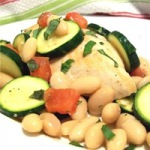
Ingredients
- 2 clove garlic, sliced
- 2 skinless, boneless chicken breast halves
- 2 zucchinis, sliced
- 1 (15.5 ounces) can of white kidney beans, drained
- 1 Roma tomato, chopped
- 5 fresh basil leaves
- Black pepper and salt to taste
Directions
- Prepare a skillet with some extra virgin olive oil and place it over medium heat.
- Cook the garlic in the skillet until browned, remove and set aside.
- Add the chicken and cook until slightly browned, about 3 minutes per side.
- Stir the zucchini and white beans into the skillet; cover and cook for about 3 minutes.
- Scatter the tomato over the dish; cover again and cook another 2 minutes.
- Add the garlic back to the pan, cover, and cook 2-5 minutes longer.
- Add the basil leaves and cook 1 minute more, or until chicken is no longer pink in the middle.
- Season with salt and black pepper to serve.
Pasta e Fagioli
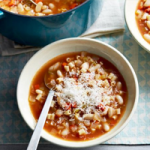
Ingredients
- 2 tablespoons (2 turns around the pan) extra-virgin olive oil
- 1/8 pound (about 3 slices) pancetta, chopped
- Two 4 to 6-inch sprigs of rosemary, left intact
- One 4 to 6-inch sprig thyme with several sprigs on it, left intact
- 1 large fresh bay leaf or 2 dried bay leaves
- 1 medium onion, finely chopped
- 1 small carrot, finely chopped
- 1 rib celery, finely chopped
- 4 large cloves garlic, chopped
- Coarse salt and pepper
- Two 15-ounce cans of cannellini beans
- 1 cup canned tomato sauce or canned crushed tomatoes
- 2 cups water
- 1-quart chicken stock
- 1 1/2 cups ditalini
- Grated Parmigiano or Romano, for the table
- Crusty bread, for mopping
Directions
- Heat a deep pot over medium-high heat and add oil and pancetta.
- Brown the pancetta bits lightly, and add herb stems, bay leaf, chopped vegetables, and garlic.
- Season vegetables with salt and pepper.
- Add beans, tomato sauce, water, and stock to the pot and raise heat to high.
- Bring soup to a rapid boil and add pasta. Reduce heat to medium and cook soup, stirring occasionally, 6 to 8 minutes or until pasta is cooked al dente.
- Rosemary and thyme leaves will separate from stems as soup cooks.
- Remove herb stems and bay leaf from soup and place pot on the table on a trivet.
- Let the soup rest and begin to cool for a few minutes.
- Ladle soup into bowls and top with lots of grated cheese. Pass crusty bread for bowl mopping.
White Kidney Bean and Spinach Soup
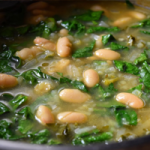
Ingredients
- 1 tablespoon extra-virgin olive oil
- 1 large onion diced
- 1 celery rib sliced
- 3-4 garlic cloves minced
- 4 cups vegetable stock
- 1 large potato peeled and grated
- 1 bay leaf
- 1/2 teaspoon thyme dried
- 1 19-ounce can white kidney beans, drained and rinsed
- 10-12 ounces spinach chopped, tough stems removed
- 1 tablespoon fresh parsley minced
- 1 tablespoon lemon juice freshly squeezed
- 1-2 tablespoons grated Pecorino Romano or Parmigiano Reggiano cheese. optional
- salt and pepper to taste
Directions
- Drizzle olive oil in a large stockpot set over medium heat.
- Add the onions and celery; and sauté for about 5 minutes or until onions are translucent.
- Add the garlic and cook for barely a minute, stirring frequently.
- Add the vegetable stock, grated potato, bay leaf, and thyme.
- Bring to a boil, then reduce heat to medium, cover and simmer for 15 minutes.
- Add the white kidney beans and simmer for another 5 minutes.
- Stir in the spinach and simmer for 1 more minute.
- Remove from heat and add lemon juice and parsley.
- Adjust salt and pepper seasonings.
- If using, garnish with cheese.
- Serve immediately
References
- https://www.ncbi.nlm.nih.gov/pmc/articles/PMC3257681/
- https://www.ncbi.nlm.nih.gov/pmc/articles/PMC5748761/
- https://www.ncbi.nlm.nih.gov/pmc/articles/PMC4711439/
- https://www.ncbi.nlm.nih.gov/pmc/articles/PMC3257681/
- https://www.ncbi.nlm.nih.gov/pmc/articles/PMC7294352/
- https://www.ncbi.nlm.nih.gov/pmc/articles/PMC4608274/
- https://www.ncbi.nlm.nih.gov/pmc/articles/PMC7915747/
- https://www.ncbi.nlm.nih.gov/pmc/articles/PMC7294352/
- https://www.ncbi.nlm.nih.gov/pmc/articles/PMC5066953/
- https://www.ncbi.nlm.nih.gov/books/NBK76060/
- https://www.ncbi.nlm.nih.gov/pmc/articles/PMC4188247/
- https://www.elsevier.com/books/nuts-and-seeds-in-health-and-disease-prevention/preedy/978-0-12-818553-7
- https://www.elsevier.com/books/nuts-and-seeds-in-health-and-disease-prevention/preedy/978-0-12-375688-6
- https://www.amazon.com/Nuts-Seeds-Improving-Your-Health/dp/1526725886
- https://books.google.com/books/about/Nuts_and_Seeds_in_Health_and_Disease_Pre.html?id=C6lYoH8rwywC
- https://www.sciencedirect.com/book/9780123756886/nuts-and-seeds-in-health-and-disease-prevention
- https://www.sciencedirect.com/book/9780128185537/nuts-and-seeds-in-health-and-disease-prevention
- https://link.springer.com/article/10.1007/s42452-019-1576-z
- https://www.tandfonline.com/doi/full/10.1080/10408398.2019.1657062
- https://academic.oup.com/nutritionreviews/article/73/6/335/1845023
- https://www.researchgate.net/publication/289036515_Nuts_and_seeds
- https://www.nature.com/articles/s43016-019-0026-9
- https://www.cambridge.org/core/journals/british-journal-of-nutrition/article/nuts-source-of-energy-and-macronutrients/AAAEDDA038B08C0A00C802F00A7F4171
- https://onlinelibrary.wiley.com/doi/full/10.1111/1541-4337.12730
- https://doi.org/10.1128/9781555818463.ch9
- https://en.wikipedia.org/wiki/Nut_(fruit)
- https://en.wikipedia.org/wiki/Cereal
- https://en.wikipedia.org/wiki/List_of_breakfast_cereals
- https://www.frontiersin.org/articles/10.3389/fchem.2016.00032/full
- https://www.nejm.org/doi/full/10.1056/nejmoa130735
- https://www.betterhealth.vic.gov.au/health/healthyliving/nuts-and-seeds
- https://www.bhf.org.uk/informationsupport/heart-matters-magazine/nutrition/ask-the-expert/nuts-as-a-healthy-snack
- https://www.bbcgoodfood.com/howto/guide/health-benefits-nuts
- https://www.olivemagazine.com/recipes/vegetarian/sticky-miso-nuts-and-seeds/
- https://www.researchgate.net/publication/232710843_Health_Benefits_of_Nut_Consumption
- https://www.itis.gov/servlet/SingleRpt/SingleRpt?search_topic=TSN&search_value=26857#null
- https://davesgarden.com/guides/pf/go/397/
- https://www.healthline.com/nutrition/white-beans-nutrition
- https://npgsweb.ars-grin.gov/gringlobal/taxonomydetail.aspx?id=27632
- https://www.pfaf.org/user/plant.aspx?LatinName=Phaseolus+vulgaris
- http://www.missouribotanicalgarden.org/PlantFinder/PlantFinderDetails.aspx?taxonid=280470&isprofile=0&=
- http://www.floracatalana.net/phaseolus-vulgaris-l-
- http://www.theplantlist.org/tpl1.1/record/ild-2934
- https://plants.usda.gov/core/profile?symbol=PHVU
- https://en.wikipedia.org/wiki/Phaseolus_vulgaris
- https://www.cabi.org/isc/datasheet/40626
- https://www.feedipedia.org/node/266
- https://gobotany.newenglandwild.org/species/phaseolus/vulgaris/
- https://hort.purdue.edu/newcrop/duke_energy/Phaseolus_vulgaris.html
- https://www.camelliabrand.com/4-types-of-white-beans-whats-the-difference/#:~:text=Cannellini%20beans%20are%20the%20largest,in%20Italian%20dishes%20like%20Minestrone.
- https://healthyeating.sfgate.com/benefits-white-kidney-beans-4420.html

