
Adhesive Capsulitis link Diabetes Neuropathy

Patient Tools

Read, save, and share this guide

Use these quick tools to make this medical article easier to read, print, save, or share with a family member.

Patient Mode

Understand this article easily

Switch between simple English and easy Bangla patient notes. This is for education and does not replace a doctor consultation.

Adhesive capsulitis (also known as frozen shoulder) is a painful and disabling disorder of unclear cause in which the shoulder capsule, the connective tissue surrounding the glenohumeral joint of the shoulder, becomes inflamed and stiff, greatly restricting motion and causing chronic pain. Pain is usually constant, worse at night, and with cold...

For severe symptoms, danger signs, pregnancy, child illness, or sudden worsening, seek urgent medical care.

বাংলা রোগী নোট এখনো যোগ করা হয়নি। পোস্ট এডিটরে “RX Bangla Patient Mode” বক্স থেকে সহজ বাংলা সারাংশ যোগ করুন।

এই তথ্য শিক্ষা ও সচেতনতার জন্য। এটি ডাক্তারি পরীক্ষা, রোগ নির্ণয় বা প্রেসক্রিপশনের বিকল্প নয়।

Article Summary

Adhesive capsulitis (also known as frozen shoulder) is a painful and disabling disorder of unclear cause in which the shoulder capsule, the connective tissue surrounding the glenohumeral joint of the shoulder, becomes inflamed and stiff, greatly restricting motion and causing chronic pain. Pain is usually constant, worse at night, and with cold weather. Certain movements or bumps can provoke episodes of tremendous pain and cramping. The condition is thought to be caused...

Key Takeaways

  • This article explains Adhesive Capsulitis linked to Diabetes Neuropathy in simple medical language.
Educational health guideWritten for patient understanding and clinical awareness.
Reviewed content workflowUse writer and reviewer profiles for stronger trust.
Emergency safety firstUrgent warning signs are highlighted below.

Seek urgent medical care if you notice

These warning signs are general safety guidance. Local emergency numbers and clinical judgment should always come first.

  • Fever with very low white blood cells or known immune suppression.
  • Unusual bruising, persistent bleeding, black stools, or severe weakness.
  • Shortness of breath, fainting, confusion, or rapidly worsening fatigue.
1

Emergency now

Use emergency care for severe, sudden, rapidly worsening, or life-threatening symptoms.

2

See a doctor

Book a professional medical evaluation if symptoms persist, worsen, recur often, affect daily activities, or occur in a high-risk patient.

3

Learn safely

Use this article to understand possible causes, tests, treatment options, prevention, and questions to ask your clinician.

Adhesive capsulitis (also known as frozen shoulder) is a painful and disabling disorder of unclear cause in which the shoulder capsule, the connective tissue surrounding the glenohumeral joint of the shoulder, becomes inflamed and stiff, greatly restricting motion and causing chronic pain. Pain is usually constant, worse at night, and with cold weather. Certain movements or bumps can provoke episodes of tremendous pain and cramping. The condition is thought to be caused by injury or trauma to the area and may have an autoimmune component.

Adhesive capsulitis commonly known as frozen shoulder—can make routine activities like getting dressed and changing your insulin pump, nearly impossible. It is the most prevalent upper body musculoskeletal injury in people with diabetes.

Diabetic neuropathies are nerve-damaging disorders associated with insulin is low or not working well. সহজ বাংলা: রক্তে চিনি বেশি থাকার রোগ।" data-rx-term="diabetes" data-rx-definition="Diabetes is a condition where blood sugar stays too high because insulin is low or not working well. সহজ বাংলা: রক্তে চিনি বেশি থাকার রোগ।">diabetes mellitus. These conditions are thought to result from a diabetic microvascular injury involving small blood vessels that supply nerves (vasa nervorum) in addition to macrovascular conditions that can accumulate in diabetic pain, numbness, tingling, or weakness. সহজ বাংলা: স্নায়ুর ক্ষতি/সমস্যা।" data-rx-term="neuropathy" data-rx-definition="Neuropathy means nerve damage or irritation causing pain, numbness, tingling, or weakness. সহজ বাংলা: স্নায়ুর ক্ষতি/সমস্যা।">neuropathy. Relatively common conditions which may be associated with diabetic neuropathy include third, fourth, or sixth cranial nerve palsy; mononeuropathy; mononeuropathy multiplex; diabetic amyotrophy; a painful polyneuropathy; autonomic pain, numbness, tingling, or weakness. সহজ বাংলা: স্নায়ুর ক্ষতি/সমস্যা।" data-rx-term="neuropathy" data-rx-definition="Neuropathy means nerve damage or irritation causing pain, numbness, tingling, or weakness. সহজ বাংলা: স্নায়ুর ক্ষতি/সমস্যা।">neuropathy; and thoracoabdominal neuropathy.

Adhesive Capsulitis linked to insulin is low or not working well. সহজ বাংলা: রক্তে চিনি বেশি থাকার রোগ।" data-rx-term="diabetes" data-rx-definition="Diabetes is a condition where blood sugar stays too high because insulin is low or not working well. সহজ বাংলা: রক্তে চিনি বেশি থাকার রোগ।">Diabetes pain, numbness, tingling, or weakness. সহজ বাংলা: স্নায়ুর ক্ষতি/সমস্যা।" data-rx-term="neuropathy" data-rx-definition="Neuropathy means nerve damage or irritation causing pain, numbness, tingling, or weakness. সহজ বাংলা: স্নায়ুর ক্ষতি/সমস্যা।">Neuropathy

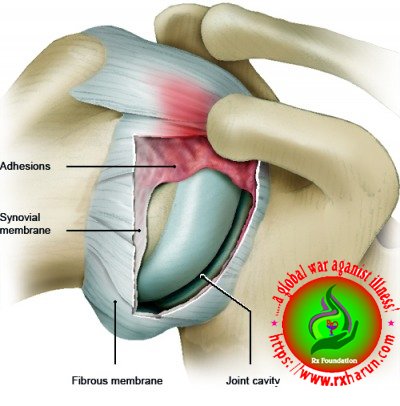
The pain and stiffness of a frozen shoulder can wake you up at night and make routine activities like changing your insulin pump and getting dressed extremely challenging. Adhesive casulitis, also known as frozen should, is a rheumatic condition which can leave you unable to reach above your head or behind your back. It results from inflammatory changes in the connective tissue of an area called the shoulder capsule. Over time, the tissue can thicken and become tight. Stiff bands of tissue called adhesions develop, making movement of the joint painful and even blocking the shoulder joint’s normal range of motion.

Adhesive Capsulitis link Diabetes Neuropathy

Eventually the shoulder becomes extremely stiff and extremely painful to move, as if it’s “frozen” in place. If you wear an insulin pump, this condition can be especially challenging.

Diabetic Lifestyle Editorial Board Member Amy Hess Fischl, MS, RD, LDN, BC-ADM, CDE says she’s worked with several type 1 women diagnosed with frozen shoulder. “One of my patients who had long used an insulin pump, had to switch back to insulin injections until her shoulder issue resolved since inserting infusion sets was too difficult,” Hess Fischl explained. “Fortunately, she was able to resume her insulin pump after several months of regular physical therapy but in the interim more frequent communication was required between us to help her adjust her insulin doses to account for the pain, reduced sleep and less activity.”

There are two types of adhesive capsulitis.In the first, there is no direct explanation for the condition and pain and stiffness come on so gradually that you may not notice it until it interferes with your daily activities. The second type is caused by some kind of trauma, such as a fall, where pain and stiffness does not disappear over time.

Who Is At Risk?Adhesive Capsulitis link Diabetes Neuropathy

About three percent of the general population get frozen shoulder, compared to about 20% of people with insulin-dependent and non-insulin dependent diabetes and in those with prediabetes. Women are more likely to develop the condition than men, and it mainly affects people between the ages of 40-65.
Although there is no conclusive link to high sugars or insulin use, long-term complications of diabetes may include changes in the connective tissue that occur as a result of high glucose levels.

People who have a history of adhesive capsulitis are at an increased risk to develop the condition on the other side of the body. Recurrence on the affected side is also possible, particularly in patients with diabetes.

Other risk factors include:

  • Thyroid problems
  • Changes in your hormones, such as during menopause
  • Shoulder injury
  • Shoulder surgery
  • Open heart surgery
  • Cervical disk disease of the neck
  • Parkinson’s Disease
  • Cardiac disease or surgery.

According to Dr. John M. Vasudevan, MD, assistant professor of clinical physical medicine and rehabilitation and assistant professor of orthopedic surgery in the Perelman School of Medicine at the University of Pennsylvania, there may be a genetic predisposition for the condition, but evidence for this is unclear.

What Are The Symptoms?

The condition causes progressive pain, stiffness, limited activity and passive range of motion of the shoulder joints, and night pain. The pain is often described as a poorly localized, dull ache or if localized, in the area of the shoulder capsule. Pain can radiate down the biceps, and be significant enough to disturb sleep.

Adhesive capsulitis is often described as having three stages – a painful stage, a frozen stage, and a thawing stage. But the American Family Physicians’ guide to treating adhesive capsulitis notes that there is little evidence for this sequential progression. Pain and loss of range of motion can occur throughout the condition, and often lasts for one to two years.

How Is It Diagnosed?
Adhesive Capsulitis link Diabetes Neuropathy

Frozen shoulder is a diagnosis of exclusion. If you cannot lift your arm without significant pain your doctor may order imaging tests to help him diagnose the problem that can usually be treated without surgery.

Your doctor will take a thorough shoulder history to determine if there has been an injury and perform a physical exam. Because the diagnosis is often one of exclusion, she may also order x-rays of the shoulder to determine that there is no other problem, such as osteoarthritis.

An MRI exam is better for soft tissue problems such as a rotator cuff issue and may reveal inflammation, but imaging tests do not show specific signs to diagnose frozen shoulder.

What Is The Treatment?

There are a number of treatments for adhesive capsulitis.

Early and active treatment is recommended by the American Family Physicians. Care should be taken to prevent the shoulder from remaining immobile.

Over 90 to 95 % of patients improve with nonsurgical treatments, including physical therapy, heat, corticosteroid injections and anti-inflammatory medications .

“Even if there is a small remaining difference in range of motion, it is rarely enough to hinder activity of daily living,” says Dr. Vasudevan. “The bad news is that it can take from 6 months to two years to achieve complete recovery.”

Since corticosteroids can raise glucose levels, injections may be limited for people with diabetes.

For people with diabetes, particularly those who are insulin dependent or with poor glycemic control, a cortisone shot can potentially cause a spike in blood sugar in the first several days after injection.I would strongly recommend that an injection be performed with image guidance—ultrasound or fluoroscopy—to accurately deliver the medication into the deep shoulder joint. This not only maximizes the amount of steroid distributed to the painful region, but minimizes the amount that can be absorbed into the bloodstream and cause elevation in blood glucose.”

If there has been no improvement with nonsurgical treatment after two months, surgery may be recommended.

One surgical approach involves manipulation of the shoulder while a patient is under anesthesia, where the surgeon forces the shoulder to move and causes the joint capsule to tear or stretch.

“Manipulation Under Anesthesia (MUA) is used for difficult cases and not required for most people who suffer the condition,” says Dr. Vasudevan. “Anesthesia is required for the pain, and to allow muscles to adequately relax, which allows for greater range of motion during the manipulation.”

While forcing the joint through and beyond its range of motion can temporarily exacerbate inflammatory pain in the shoulder “this is acceptable if the shoulder range of motion can be increased as a result,” the doctor explains.

A second surgical option is arthroscopic surgery, where several small incisions are made in and around the shoulder. A small camera helps the surgeon to see instruments inserted through the incisions. The instruments cut through the joint capsule’s tight portions, allowing the shoulder to move. In many cases, both types of surgery are used to obtain the best results.

After surgery you may receive pain blocks or shots so physical therapy can be performed.

What Is The Prognosis?

Treatment with physical therapy and NSAIDs often restores motion and function of the shoulder within a year. Left untreated, the shoulder may heal in two years. For about 10% of patients, however, the condition never fully disappears.

After surgery restores range of motion, you must continue physical therapy for several weeks or months to prevent frozen shoulder from returning.

How You Can Prevent Frozen Shoulder?

“Unfortunately, there is very little information on how to prevent frozen shoulder,” said Dr. Vasudevan. “Many cases are without cause. People with diabetes may have an elevated risk, but there are so many known causes that it is definitely hard to pin the problem to diabetes itself.”

Adhesive Capsulitis link Diabetes Neuropathy

One risk factor, however, is to avoid the temptation to reduce use of the shoulder after sustaining an injury. “If you sustain an injury keep moving and using the shoulder as much as much as you can tolerate: use it or lose it!”


References

Doctor visit helper

Prepare before seeing a doctor

A simple rural-patient checklist to help you explain symptoms clearly, ask better questions, and avoid unsafe self-treatment.

Safety note: This is not a prescription or diagnosis. For severe symptoms, pregnancy danger signs, children with serious illness, chest pain, breathing difficulty, stroke-like weakness, or major injury, seek urgent care.

Which doctor may help?

Start with a registered doctor or the nearest qualified health center.

What to tell the doctor

  • Write when the problem started and how it changed.
  • Bring old prescriptions, investigation reports, and current medicines.
  • Write allergies, pregnancy status, diabetes, kidney/liver disease, and major past illnesses.
  • Bring one family member if the patient is weak, elderly, confused, or a child.

Questions to ask

  • What is the most likely cause of my symptoms?
  • Which danger signs mean I should go to hospital quickly?
  • Which tests are necessary now, and which can wait?
  • How should I take medicines safely and what side effects should I watch for?
  • When should I come for follow-up?

Tests to discuss

  • Vital signs: temperature, pulse, blood pressure, oxygen saturation
  • Basic physical examination by a clinician
  • CBC, urine test, blood sugar, or imaging only when clinically needed

Avoid these mistakes

  • Do not use antibiotics, steroid tablets/injections, or strong painkillers without proper medical advice.
  • Do not hide pregnancy, kidney disease, ulcer, allergy, or blood thinner use.
  • Do not delay emergency care when danger signs are present.

Medicine safety and first-aid guide

This section is for patient education only. It does not replace a doctor, pharmacist, or emergency care.

Safe first steps

  • Stop activity and seek urgent medical evaluation.
  • Chest pain should not be managed only with home medicine.
  • Discuss ECG and cardiac blood tests with emergency care when appropriate.

OTC medicine safety

  • Do not take random painkillers to hide chest pain before medical evaluation.

Avoid these mistakes

  • Do not start antibiotics without a proper medical decision.
  • Do not use steroid tablets or injections casually for quick relief.
  • Do not delay emergency care because of home remedies.

Get urgent help if

  • Chest pressure, sweating, breathlessness, fainting, pain spreading to arm/jaw/back, or known heart disease needs emergency care.
Medicine names, dose, and timing must be decided by a qualified clinician or pharmacist after checking age, pregnancy, allergy, other diseases, and current medicines.

For rural patients and family caregivers

Patient health record and symptom diary

Write your symptoms, medicines already taken, test results, and questions before visiting a doctor. This note stays on your device unless you print or copy it.

Doctor to discuss: Doctor / qualified healthcare provider
Tests to discuss with doctor
  • Basic vital signs: temperature, pulse, blood pressure, oxygen level if needed
  • Relevant blood, urine, imaging, or specialist tests only after clinical assessment
Questions to ask
  • What is the most likely cause of my symptoms?
  • Which warning signs mean I should go to emergency care?
  • Which tests are really needed now?
  • Which medicines are safe for my age, pregnancy status, allergy, kidney/liver/stomach condition, and current medicines?

Emergency warning signs such as chest pain, severe breathing difficulty, sudden weakness, confusion, severe dehydration, major injury, or loss of bladder/bowel control need urgent medical care. Do not wait for online information.

Safe pathway to proper treatment

Care roadmap for: Adhesive Capsulitis link Diabetes Neuropathy

Use this simple roadmap to understand the next safe steps. It is educational and does not replace examination by a doctor.

Go to emergency care if you notice:
  • Severe or rapidly worsening symptoms
  • Breathing difficulty, chest pain, fainting, confusion, severe weakness, major injury, or severe dehydration
Doctor / service to discuss: Qualified healthcare provider; specialist depends on symptoms and examination.
  1. Step 1

    Check danger signs first

    If danger signs are present, seek emergency care and do not wait for online information.

  2. Step 2

    Record the symptom story

    Write when symptoms started, severity, medicines already taken, allergies, pregnancy status, and test results.

  3. Step 3

    Visit a qualified clinician

    A doctor, nurse, or qualified healthcare provider can examine you and decide which tests or treatment are needed.

  4. Step 4

    Do only useful tests

    Do tests after clinical assessment. Avoid unnecessary tests, random antibiotics, or repeated medicines without diagnosis.

  5. Step 5

    Follow up and return early if worse

    If symptoms worsen, new warning signs appear, or treatment is not helping, return for review quickly.

Rural patient practical tips
  • Take a written symptom diary and all previous prescriptions/test reports.
  • Do not hide medicines already taken, even herbal or over-the-counter medicines.
  • Ask which warning signs mean urgent referral to hospital.

This roadmap is for education. A real diagnosis and treatment plan requires history, examination, and clinical judgment.

RX Patient Help

Ask a health question safely

Write your symptom story. A health professional or site editor can review it before any answer is prepared. This box is not for emergency care.

Emergency first: Severe chest pain, breathing trouble, unconsciousness, stroke signs, severe injury, heavy bleeding, or rapidly worsening symptoms need urgent local medical care now.

Frequently Asked Questions

Adhesive Capsulitis linked to Diabetes NeuropathyThe pain and stiffness of a frozen shoulder can wake you up at night and make routine activities like changing your insulin pump and getting dressed extremely challenging. Adhesive casulitis, also known as frozen should, is a rheumatic condition which can leave you unable to reach above your head or behind your back. It results from inflammatory changes in the connective tissue of an area called the shoulder capsule. Over time, the tissue can thicken and become tight. Stiff bands of tissue called adhesions develop, making movement of the joint painful and even blocking the shoulder joint’s normal range of motion.Eventually the shoulder becomes extremely stiff and extremely painful to move, as if it’s “frozen” in place. If you wear an insulin pump, this condition can be especially challenging.Diabetic Lifestyle Editorial Board Member Amy Hess Fischl, MS, RD, LDN, BC-ADM, CDE says she’s worked with several type 1 women diagnosed with frozen shoulder. “One of my patients who had long used an insulin pump, had to switch back to insulin injections until her shoulder issue resolved since inserting infusion sets was too difficult,” Hess Fischl explained. “Fortunately, she was able to resume her insulin pump after several months of regular physical therapy but in the interim more frequent communication was required between us to help her adjust her insulin doses to account for the pain, reduced sleep and less activity.”There are two types of adhesive capsulitis.In the first, there is no direct explanation for the condition and pain and stiffness come on so gradually that you may not notice it until it interferes with your daily activities. The second type is caused by some kind of trauma, such as a fall, where pain and stiffness does not disappear over time. Who Is At Risk? About three percent of the general population get frozen shoulder, compared to about 20% of people with insulin-dependent and non-insulin dependent diabetes and in those with prediabetes. Women are more likely to develop the condition than men, and it mainly affects people between the ages of 40-65. Although there is no conclusive link to high sugars or insulin use, long-term complications of diabetes may include changes in the connective tissue that occur as a result of high glucose levels.People who have a history of adhesive capsulitis are at an increased risk to develop the condition on the other side of the body. Recurrence on the affected side is also possible, particularly in patients with diabetes.Other risk factors include:Thyroid problems Changes in your hormones, such as during menopause Shoulder injury Shoulder surgery Open heart surgery Cervical disk disease of the neck Parkinson’s Disease Cardiac disease or surgery.According to Dr. John M. Vasudevan, MD, assistant professor of clinical physical medicine and rehabilitation and assistant professor of orthopedic surgery in the Perelman School of Medicine at the University of Pennsylvania, there may be a genetic predisposition for the condition, but evidence for this is unclear. What Are The Symptoms? The condition causes progressive pain, stiffness, limited activity and passive range of motion of the shoulder joints, and night pain. The pain is often described as a poorly localized, dull ache or if localized, in the area of the shoulder capsule. Pain can radiate down the biceps, and be significant enough to disturb sleep.Adhesive capsulitis is often described as having three stages - a painful stage, a frozen stage, and a thawing stage. But the American Family Physicians’ guide to treating adhesive capsulitis notes that there is little evidence for this sequential progression. Pain and loss of range of motion can occur throughout the condition, and often lasts for one to two years. How Is It Diagnosed?

Frozen shoulder is a diagnosis of exclusion. If you cannot lift your arm without significant pain your doctor may order imaging tests to help him diagnose the problem that can usually be treated without surgery. Your doctor will take a thorough shoulder history to determine if there has been an injury and perform a physical exam. Because the diagnosis is often one of exclusion, she may also order x-rays of the shoulder to determine that there is no other problem,…

References

Add references, clinical guidelines, textbooks, journal articles, or trusted medical sources here. You can edit this area from the RX Article Professional Blocks panel.