
Not all recommended security headers are installed

Patient Tools

Read, save, and share this guide

Use these quick tools to make this medical article easier to read, print, save, or share with a family member.

Patient Mode

Understand this article easily

Switch between simple English and easy Bangla patient notes. This is for education and does not replace a doctor consultation.

Do you want to add HTTP security headers in WordPress? HTTP security headers allow you to add an extra layer of security to your WordPress website. They can help block common malicious activity from affecting your website performance. In this beginner’s guide, we’ll show you...

For severe symptoms, danger signs, pregnancy, child illness, or sudden worsening, seek urgent medical care.

বাংলা রোগী নোট এখনো যোগ করা হয়নি। পোস্ট এডিটরে “RX Bangla Patient Mode” বক্স থেকে সহজ বাংলা সারাংশ যোগ করুন।

এই তথ্য শিক্ষা ও সচেতনতার জন্য। এটি ডাক্তারি পরীক্ষা, রোগ নির্ণয় বা প্রেসক্রিপশনের বিকল্প নয়।

Article Summary

Do you want to add HTTP security headers in WordPress? HTTP security headers allow you to add an extra layer of security to your WordPress website. They can help block common malicious activity from affecting your website performance. In this beginner’s guide, we’ll show you how to easily add HTTP security headers in WordPress. What are HTTP Security Headers? HTTP security headers are a security...

Educational health guideWritten for patient understanding and clinical awareness.
Reviewed content workflowUse writer and reviewer profiles for stronger trust.
Emergency safety firstUrgent warning signs are highlighted below.

Seek urgent medical care if you notice

These warning signs are general safety guidance. Local emergency numbers and clinical judgment should always come first.

  • Severe symptoms, breathing difficulty, fainting, confusion, or rapidly worsening illness.
  • New weakness, severe pain, high fever, or symptoms after a serious injury.
  • Any symptom that feels urgent, unusual, or unsafe for the patient.
1

Emergency now

Use emergency care for severe, sudden, rapidly worsening, or life-threatening symptoms.

2

See a doctor

Book a professional medical evaluation if symptoms persist, worsen, recur often, affect daily activities, or occur in a high-risk patient.

3

Learn safely

Use this article to understand possible causes, tests, treatment options, prevention, and questions to ask your clinician.

Before reading

RX Patient Tools

Use these quick guides before reading the article, or return to them when you need help preparing questions for a doctor.

Start here Choose the right pathway for symptoms, reports, medicines, or urgent warning signs. Disease article roadmap Read this topic step by step: meaning, symptoms, warning signs, diagnosis, treatment, prevention, and follow-up. Treatment planner Prepare questions about treatment choices, benefits, risks, side effects, and follow-up. Family & caregiver guide Organize symptoms, reports, medicines, questions, and follow-up safely. Nutrition & diet guide Prepare food, hydration, supplement, and medicine-timing questions safely. Prevention guide Organize risk factors, protective habits, screening, and warning signs. Recovery guide Prepare a safe plan for activity, rehabilitation, warning signs, and follow-up.
Definition

Do you want to add HTTP security headers in WordPress?

HTTP security headers allow you to add an extra layer of security to your WordPress website. They can help block common malicious activity from affecting your website performance.

In this beginner’s guide, we’ll show you how to easily add HTTP security headers in WordPress.

What are HTTP Security Headers?

HTTP security headers are a security measure that allows your website’s server to prevent some common security threats before it affects your website.

When a user visits your website, your web server sends an HTTP header response back to their browser. This response tells browsers about error codes, cache control, and other statuses.

The normal header response issues a status called HTTP 200. After which your website loads in the user’s browser. However, if your website is having difficulty then your web server may send a different HTTP header.

For example, it may send a 500 internal server error, or a not found 404 error code.

HTTP security headers are a subset of these headers and are used to prevent websites from common threats like click-jacking, cross-site scripting, brute force attacks, and more.

Let’s have a quick glance at what HTTP security headers look like and what they do to protect your website.

HTTP Strict Transport Security (HSTS)

HTTP Strict Transport Security (HSTS) header tells web browsers that your website uses HTTPs and should not be loaded using insecure protocol like HTTP.

If you have moved your WordPress website from HTTP to HTTPs, then this security header allows you to stop browsers from loading your website on HTTP.

X-XSS Protection

X-XSS Protection header allows you to block cross-site scripting from loading on your WordPress website.

X-Frame-Options

X-Frame-Options security header prevents cross-domain iframes or click-jacking.

X-Content-Type-Options

X-Content-Type-Options blocks content mime-type sniffing.

That being said, let’s take a look at how to easily add HTTP security headers in WordPress.

Adding HTTP Security Headers in WordPress

HTTP security headers work best when they are set at the web server level (i.e your WordPress hosting account). This allows them to be triggered early on during a typical HTTP request and provides maximum benefit.

They work even better if you are using a DNS-level website application firewall like Sucuri or Cloudflare. We’ll show you each method, and you can choose one that works best for you.

Here are quick links to different methods, you can jump to the one that suits you.

  • Adding HTTP security headers using Sucuri
  • Adding HTTP security headers using Cloudflare
  • Adding HTTP security headers using .htaccess
  • Adding HTTP security headers using WordPress Plugin
  • Testing HTTP security headers

1. Adding HTTP Security Headers in WordPress using Sucuri

Sucuri is the best WordPress security plugin on the market. If you are using their website firewall service too, then you can set HTTP security headers without writing any code.

First, you will need to sign up for a Sucuri account. It is a paid service that comes with a sever level website firewall, security plugin, CDN, and malware removal guarantee.

During sign up, you will answer simple questions, and Sucuri documentation will help you set up the website application firewall on your website.

After signing up, you need to install and activate the free Sucuri plugin. For more details, see our step by step guide on how to install a WordPress plugin.

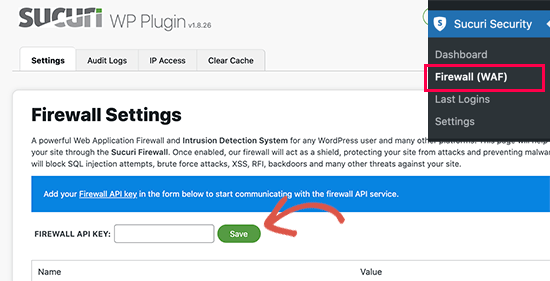
Upon activation, go to Sucuri Security » Firewall (WAF) page and enter your Firewall API key. You can find this information under your account on Sucuri website.
Not all recommended security headers are installed

Click on the Save button to store your changes.

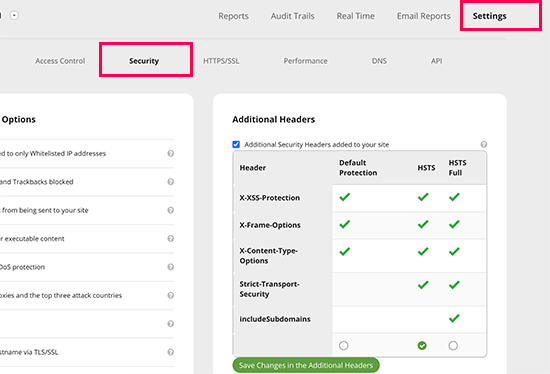
Next, you need to switch to your Sucuri account dashboard. From here, click on the Settings menu on top and then switch to the Security tab.
Not all recommended security headers are installed

From here you can choose three sets of rules. The default protection, HSTS, and HSTS Full. You will see which HTTP security headers will be applied for each set of rules.

Click on the ‘Save Changes in The Additional Headers’ button to apply your changes.

That’s all, Sucuri will now add your selected HTTP security headers in WordPress. Since it is a DNS level WAF, your website traffic is protected from hackers even before they reach your website.

2. Adding HTTP Security Headers in WordPress using Cloudflare

Cloudflare offers a basic free website firewall and CDN service. It lacks advanced security features in their free plan, so you will need to upgrade to their Pro plan which are more expensive.

To add Cloudflare on your site, see our tutorial on how to add Cloudflare free CDN in WordPress.

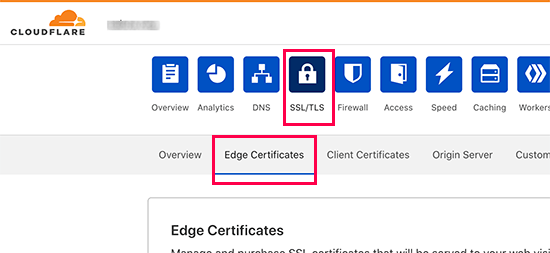
Once Cloudflare is active on your website, go to the SSL/TLS page under your Cloudflare account dashboard and then switch to the Edge Certificates tab.
Not all recommended security headers are installed

Now, scroll down to the HTTP Strict Transport Security (HSTS) section and click on the ‘Enable HSTS’ button.

Not all recommended security headers are installed

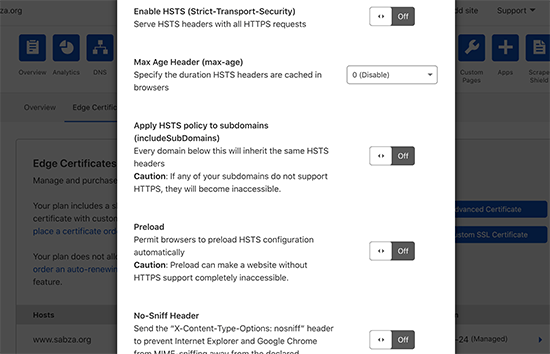
This will bring up a popup with instructions telling you that you must have HTTPS enabled on your WordPress blog before using this feature. Click on the Next button to continue, and you will see the options to add HTTP security headers.
Not all recommended security headers are installed

From here, you can enable HSTS, no-sniff header, apply HSTS to subdomains (if they are using HTTPS), and preload HSTS.

This method provides basic protection using HTTP security headers. However, it does not let you add X-Frame-Options and Cloudflare doesn’t have a user interface to do that.

You can still do that by creating a script using the Workers feature. However, creating an HTTPS security header script may cause unexpected issues for beginners which is why we wouldn’t recommend it.

3. Adding HTTP Security Headers in WordPress using .htaccess

This method allows you to set the HTTP security headers in WordPress at the server level.

It requires you to edit the .htaccess file on your website. It is a server configuration file used by the most commonly used Apache webserver software.

Simply connect to your website using an FTP client, or the file manager app in your hosting control panel. In the root folder of your website, you need to locate the .htaccess file and edit it.
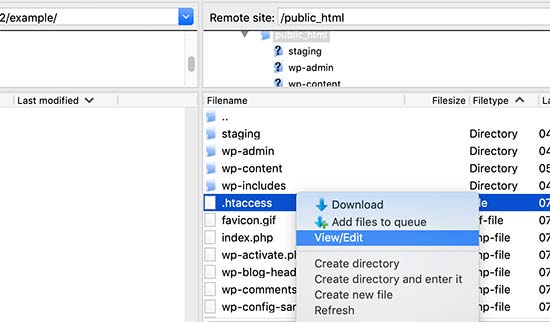
Not all recommended security headers are installed

This will open the file in a plain text editor. At the bottom of the file, you can add the code to add HTTPS security headers to your WordPress website.

You can use the following sample code as a starting point, it sets the most commonly used HTTP security headers with optimal settings:

1
2
3
4
5
6
7
<ifModule mod_headers.c>
Header set Strict-Transport-Security "max-age=31536000" env=HTTPS
Header set X-XSS-Protection "1; mode=block"
Header set X-Content-Type-Options nosniff
Header set X-Frame-Options DENY
Header set Referrer-Policy: no-referrer-when-downgrade
</ifModule>

Don’t forget to save your changes and visit your website to make sure that everything is working as expected.

Note: Incorrect headers or conflicts in .htaccess file may trigger 500 Internal server error on most web hosts.

4. Adding HTTP Security Headers in WordPress using Plugin

This method is a little less effective as it relies on a WordPress plugin to modify the headers. However, it is also the easiest way to add HTTP security headers to your WordPress website.

First, you need to install and activate the Redirection plugin. For more details, see our step by step guide on how to install a WordPress plugin.

Upon activation, the plugin will show a set up wizard that you can just follow along to set up the plugin. After that, go to Tools » Redirection page and switch to the ‘Site’ tab.
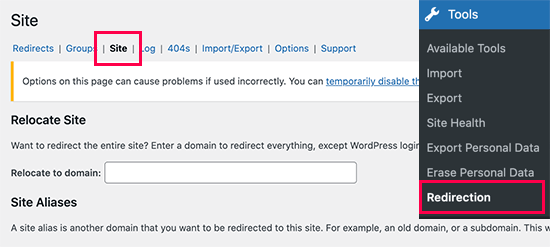
Not all recommended security headers are installed

Next, you need to scroll down to the bottom of the page to the HTTP Headers section and click on the ‘Add Header’ button. From the drop-down menu, you need to select ‘Add Security Presets’ option.
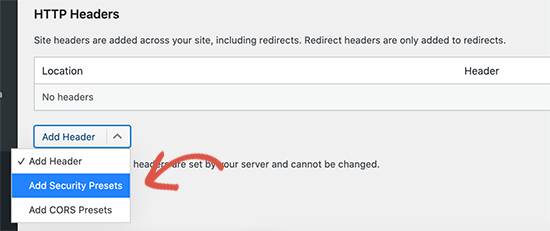
Not all recommended security headers are installed

After that, you will need to click on it again to add those options. Now, you will see a preset list of HTTP security headers appear in the table.
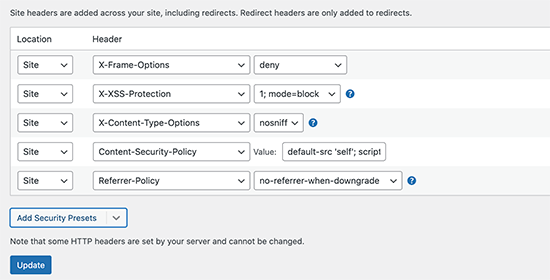
Not all recommended security headers are installed

These headers are optimized for security, you can review them and change them if needed. Once you are done, don’t forget to click on the Update button to save your changes.

You can now visit your website to make sure that everything is working fine.

How to Check HTTP Security Headers for a Website

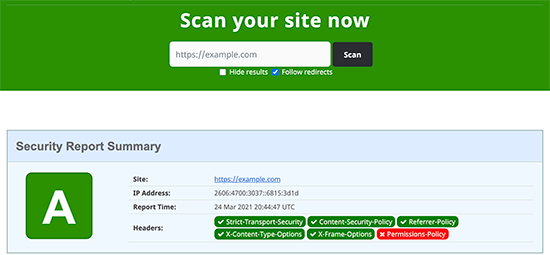
Now that, you have added HTTP Security headers to your website. You can test your configuration using the free Security Headers tool. Simply enter your website URL and click on the Scan button.
Not all recommended security headers are installed

It will then check HTTP security headers for your website and will show you a report. The tool would generate a so-called grade label which you can ignore as most websites would get a B or C score at best without affecting user experience.

It will show you which HTTP security headers are sent by your website and which security headers are not included. If the security headers that you wanted to set are listed there, then you are done.

That’s all, we hope this article helped you learn how to add HTTP security headers in WordPress. You may also want to see our complete WordPress security guide, and our expert pick of the best WordPress plugins for business websites.

Doctor visit helper

Prepare before seeing a doctor

A simple rural-patient checklist to help you explain symptoms clearly, ask better questions, and avoid unsafe self-treatment.

Safety note: This is not a prescription or diagnosis. For severe symptoms, pregnancy danger signs, children with serious illness, chest pain, breathing difficulty, stroke-like weakness, or major injury, seek urgent care.

Which doctor may help?

Start with a registered doctor or the nearest qualified health center.

What to tell the doctor

  • Write when the problem started and how it changed.
  • Bring old prescriptions, investigation reports, and current medicines.
  • Write allergies, pregnancy status, diabetes, kidney/liver disease, and major past illnesses.
  • Bring one family member if the patient is weak, elderly, confused, or a child.

Questions to ask

  • What is the most likely cause of my symptoms?
  • Which danger signs mean I should go to hospital quickly?
  • Which tests are necessary now, and which can wait?
  • How should I take medicines safely and what side effects should I watch for?
  • When should I come for follow-up?

Tests to discuss

  • Vital signs: temperature, pulse, blood pressure, oxygen saturation
  • Basic physical examination by a clinician
  • CBC, urine test, blood sugar, or imaging only when clinically needed

Avoid these mistakes

  • Do not use antibiotics, steroid tablets/injections, or strong painkillers without proper medical advice.
  • Do not hide pregnancy, kidney disease, ulcer, allergy, or blood thinner use.
  • Do not delay emergency care when danger signs are present.

Medicine safety and first-aid guide

This section is for patient education only. It does not replace a doctor, pharmacist, or emergency care.

Safe first steps

  • Rest, drink safe water, and observe symptoms carefully.
  • Keep a written note of symptoms, duration, temperature, medicines already taken, and allergy history.
  • Seek medical care quickly if symptoms are severe, worsening, or unusual for the patient.

OTC medicine safety

  • For mild pain or fever, ask a registered pharmacist or doctor before using common over-the-counter pain/fever medicines.
  • Do not combine multiple pain medicines without advice, especially if you have kidney disease, liver disease, stomach ulcer, asthma, pregnancy, or take blood thinners.
  • Do not give adult medicines to children unless a qualified clinician advises it.

Avoid these mistakes

  • Do not start antibiotics without a proper medical decision.
  • Do not use steroid tablets or injections casually for quick relief.
  • Do not delay emergency care because of home remedies.

Get urgent help if

  • Severe symptoms, confusion, fainting, breathing difficulty, chest pain, severe dehydration, or sudden weakness need urgent medical care.
Medicine names, dose, and timing must be decided by a qualified clinician or pharmacist after checking age, pregnancy, allergy, other diseases, and current medicines.

For rural patients and family caregivers

Patient health record and symptom diary

Write your symptoms, medicines already taken, test results, and questions before visiting a doctor. This note stays on your device unless you print or copy it.

Doctor to discuss: Doctor / qualified healthcare provider
Tests to discuss with doctor
  • Basic vital signs: temperature, pulse, blood pressure, oxygen level if needed
  • Relevant blood, urine, imaging, or specialist tests only after clinical assessment
Questions to ask
  • What is the most likely cause of my symptoms?
  • Which warning signs mean I should go to emergency care?
  • Which tests are really needed now?
  • Which medicines are safe for my age, pregnancy status, allergy, kidney/liver/stomach condition, and current medicines?

Emergency warning signs such as chest pain, severe breathing difficulty, sudden weakness, confusion, severe dehydration, major injury, or loss of bladder/bowel control need urgent medical care. Do not wait for online information.

Safe pathway to proper treatment

Care roadmap for: Not all recommended security headers are installed

Use this simple roadmap to understand the next safe steps. It is educational and does not replace examination by a doctor.

Go to emergency care if you notice:
  • Severe or rapidly worsening symptoms
  • Breathing difficulty, chest pain, fainting, confusion, severe weakness, major injury, or severe dehydration
Doctor / service to discuss: Qualified healthcare provider; specialist depends on symptoms and examination.
  1. Step 1

    Check danger signs first

    If danger signs are present, seek emergency care and do not wait for online information.

  2. Step 2

    Record the symptom story

    Write when symptoms started, severity, medicines already taken, allergies, pregnancy status, and test results.

  3. Step 3

    Visit a qualified clinician

    A doctor, nurse, or qualified healthcare provider can examine you and decide which tests or treatment are needed.

  4. Step 4

    Do only useful tests

    Do tests after clinical assessment. Avoid unnecessary tests, random antibiotics, or repeated medicines without diagnosis.

  5. Step 5

    Follow up and return early if worse

    If symptoms worsen, new warning signs appear, or treatment is not helping, return for review quickly.

Rural patient practical tips
  • Take a written symptom diary and all previous prescriptions/test reports.
  • Do not hide medicines already taken, even herbal or over-the-counter medicines.
  • Ask which warning signs mean urgent referral to hospital.

This roadmap is for education. A real diagnosis and treatment plan requires history, examination, and clinical judgment.

RX Patient Help

Ask a health question safely

Write your symptom story. A health professional or site editor can review it before any answer is prepared. This box is not for emergency care.

Emergency first: Severe chest pain, breathing trouble, unconsciousness, stroke signs, severe injury, heavy bleeding, or rapidly worsening symptoms need urgent local medical care now.

Frequently Asked Questions

Is this article a replacement for a doctor?

No. It is educational content only. Patients should consult a qualified clinician for diagnosis and treatment.

When should I seek urgent care?

Seek urgent care for severe symptoms, rapidly worsening condition, breathing difficulty, severe pain, neurological changes, or any emergency warning sign.

References

Add references, clinical guidelines, textbooks, journal articles, or trusted medical sources here. You can edit this area from the RX Article Professional Blocks panel.
