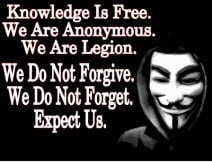
Hacking Cybercrime, Types, Process, Tutorial

Patient Tools

Read, save, and share this guide

Use these quick tools to make this medical article easier to read, print, save, or share with a family member.

Article Summary

Hacking Cybercrime/ Hacking is identifying weakness in computer systems or networks to exploit its weaknesses to gain access. Using password cracking algorithm to gain access to a system Computers have become mandatory to run a successful businesses. It is not enough to have isolated computers systems; they need to be networked to facilitate communication with external businesses. This exposes them to the outside world and...

Key Takeaways

  • This article explains Who is a Hacker? Types of Hackers in simple medical language.
  • This article explains Types of Hacking in simple medical language.
  • This article explains What is Cybercrime? in simple medical language.
  • This article explains Type of Cybercrime in simple medical language.
Educational health guideWritten for patient understanding and clinical awareness.
Reviewed content workflowUse writer and reviewer profiles for stronger trust.
Emergency safety firstUrgent warning signs are highlighted below.

Seek urgent medical care if you notice

These warning signs are general safety guidance. Local emergency numbers and clinical judgment should always come first.

  • Severe symptoms, breathing difficulty, fainting, confusion, or rapidly worsening illness.
  • New weakness, severe pain, high fever, or symptoms after a serious injury.
  • Any symptom that feels urgent, unusual, or unsafe for the patient.
1

Emergency now

Use emergency care for severe, sudden, rapidly worsening, or life-threatening symptoms.

2

See a doctor

Book a professional medical evaluation if symptoms persist, worsen, recur often, affect daily activities, or occur in a high-risk patient.

3

Learn safely

Use this article to understand possible causes, tests, treatment options, prevention, and questions to ask your clinician.

Hacking Cybercrime/ Hacking is identifying weakness in computer systems or networks to exploit its weaknesses to gain access. Using password cracking algorithm to gain access to a system Computers have become mandatory to run a successful businesses. It is not enough to have isolated computers systems; they need to be networked to facilitate communication with external businesses. This exposes them to the outside world and hacking. Hacking means using computers to commit fraudulent acts such as fraud, privacy invasion, stealing corporate/personal data, etc. Cyber crimes cost many organizations millions of dollars every year. Businesses need to protect themselves against such attacks.

Who is a Hacker? Types of Hackers

Hacker is a person who finds and exploits the weakness in computer systems and/or networks to gain access. Hackers are usually skilled computer programmers with knowledge of computer security.

Hackers are classified according to the intent of their actions. The following list classifies hackers according to their intent.

SymbolDescription
Hacking Cybercrime, Types, Process, TutorialEthical Hacker (White hat): A hacker who gains access to systems with a view to fix the identified weaknesses. They may also perform penetration Testing and vulnerability assessments.
Hacking Cybercrime, Types, Process, TutorialCracker (Black hat): A hacker who gains unauthorized access to computer systems for personal gain. The intent is usually to steal corporate data, violate privacy rights, transfer funds from bank accounts etc.
Hacking Cybercrime, Types, Process, TutorialGrey hat: A hacker who is in between ethical and black hat hackers. He/she breaks into computer systems without authority with a view to identify weaknesses and reveal them to the system owner.
Hacking Cybercrime, Types, Process, TutorialScript kiddies: A non-skilled person who gains access to computer systems using already made tools.
Hacking Cybercrime, Types, Process, TutorialHacktivist: A hacker who use hacking to send social, religious, and political, etc. messages. This is usually done by hijacking websites and leaving the message on the hijacked website.
Hacking Cybercrime, Types, Process, TutorialPhreaker: A hacker who identifies and exploits weaknesses in telephones instead of computers.

Types of Hacking

Several subgroups of the computer underground with different attitudes use different terms to demarcate themselves from each other, or try to exclude some specific group with whom they do not agree.

White hat

A white hat hacker breaks security for non-malicious reasons, either to test their own security system, perform penetration tests, or vulnerability assessments for a client – or while working for a security company which makes security software. The term is generally synonymous with ethical hacker, and the EC-Council,[rx] among others, have developed certifications, courseware, classes, and online training covering the diverse arena of ethical hacking.[rx]

Black hat

A “black hat” hacker is a hacker who “violates computer security for little reason beyond maliciousness or for personal gain” (Moore, 2005).[rx] The term was coined by Richard Stallman, to contrast the maliciousness of a criminal hacker versus the spirit of playfulness and exploration in hacker culture, or the ethos of the white hat hacker who performs hacking duties to identify places to repair or as a means of legitimate employment.[rx] Black hat hackers form the stereotypical, illegal hacking groups often portrayed in popular culture, and are “the epitome of all that the public fears in a computer criminal”.[rx]

Grey hat

A grey hat hacker lies between a black hat and a white hat hacker. A grey hat hacker may surf the Internet and hack into a computer system for the sole purpose of notifying the administrator that their system has a security defect, for example. They may then offer to correct the defect for a fee.[rx] Grey hat hackers sometimes find the defect of a system and publish the facts to the world instead of a group of people. Even though grey hat hackers may not necessarily perform hacking for their personal gain, unauthorized access to a system can be considered illegal and unethical.

Elite hacker

A social status among hackers, elite is used to describe the most skilled. Newly discovered exploits circulate among these hackers. Elite groups such as Masters of Deception conferred a kind of credibility on their members.[rx]

Script kiddie

A script kiddie (also known as a skid or skiddie) is an unskilled hacker who breaks into computer systems by using automated tools written by others (usually by other black hat hackers), hence the term script (i.e. a prearranged plan or set of activities) kiddie (i.e. kid, child—an individual lacking knowledge and experience, immature),[rx] usually with little understanding of the underlying concept.

Neophyte

A neophyte (“newbie”, or “noob”) is someone who is new to hacking or phreaking and has almost no knowledge or experience of the workings of technology and hacking.[rx]

Blue hat

A blue hat hacker is someone outside computer security consulting firms who is used to bug-test a system prior to its launch, looking for exploits so they can be closed. Microsoft also uses the term BlueHat to represent a series of security briefing events.[rx][rx]

What is Cybercrime?

Cyber crime is the use of computers and networks to perform illegal activities such as spreading computer viruses, online bullying, performing unauthorized electronic fund transfers, etc. Most cybercrimes are committed through the internet. Some cybercrimes can also be carried out using Mobile phones via SMS and online chatting applications.

Type of Cybercrime

  • The following list presents the common types of cybercrimes:
  • Computer Fraud – Intentional deception for personal gain via the use of computer systems.
  • Privacy violation – Exposing personal information such as email addresses, phone number, account details, etc. on social media, websites, etc.
  • Identity Theft – Stealing personal information from somebody and impersonating that person.
  • Sharing copyrighted files/information – This involves distributing copyright protected files such as eBooks and computer programs etc.
  • Electronic funds transfer – This involves gaining an un-authorized access to bank computer networks and making illegal fund transfers.
  • Electronic money laundering – This involves the use of the computer to launder money.
  • ATM Fraud – This involves intercepting ATM card details such as account number and PIN numbers. These details are then used to withdraw funds from the intercepted accounts.
  • Denial of Service Attacks – This involves the use of computers in multiple locations to attack servers with a view of shutting them down.
  • Spam – Sending unauthorized emails. These emails usually contain advertisements.

What is Ethical Hacking?

Ethical Hacking is identifying weakness in computer systems and/or computer networks and coming with countermeasures that protect the weaknesses. Ethical hackers must abide by the following rules.

  • Get written permission from the owner of the computer system and/or computer network before hacking.
  • Protect the privacy of the organization been hacked.
  • Transparently report all the identified weaknesses in the computer system to the organization.
  • Inform hardware and software vendors of the identified weaknesses.

Why Ethical Hacking?

  • Information is one of the most valuable assets of an organization. Keeping information secure can protect an organization’s image and save an organization a lot of money.
  • Hacking can lead to loss of business for organizations that deal in finance such as PayPal. Ethical hacking puts them a step ahead of the cyber criminals who would otherwise lead to loss of business.

Legality of Ethical Hacking

Ethical Hacking is legal if the hacker abides by the rules stipulated in the above section on the definition of ethical hacking. The International Council of E-Commerce Consultants (EC-Council) provides a certification program that tests individual’s skills. Those who pass the examination are awarded with certificates. The certificates are supposed to be renewed after some time.

References

Patient safety assistant

Check your symptom safely

Hi, I am RX Symptom Navigator. I can help you understand what to read next and what warning signs need care.
Warning: Do not use this in emergencies, pregnancy, severe illness, or as a substitute for a doctor. For children or teens, use with a parent/guardian and clinician.
A rural-friendly guide: warning signs, when to see a doctor, related articles, tests to discuss, and OTC safety education.
1 Symptom 2 Severity 3 Safe guidance
First safety question

Is there chest pain, breathing trouble, fainting, confusion, severe bleeding, stroke-like weakness, severe injury, or pregnancy danger sign?

Choose quickly

Browse by body area
Start here: Write or select a symptom. The guide will show warning signs, doctor guidance, diagnostic tests to discuss, OTC safety education, and related RX articles.

Important: This tool is educational only. It cannot diagnose, treat, or replace a doctor. OTC information is not a prescription. In an emergency, contact local emergency services or go to the nearest hospital.

Doctor visit helper

Prepare before seeing a doctor

A simple rural-patient checklist to help you explain symptoms clearly, ask better questions, and avoid unsafe self-treatment.

Safety note: This is not a prescription or diagnosis. For severe symptoms, pregnancy danger signs, children with serious illness, chest pain, breathing difficulty, stroke-like weakness, or major injury, seek urgent care.

Which doctor may help?

Start with a registered doctor or the nearest qualified health center.

What to tell the doctor

  • Write when the problem started and how it changed.
  • Bring old prescriptions, investigation reports, and current medicines.
  • Write allergies, pregnancy status, diabetes, kidney/liver disease, and major past illnesses.
  • Bring one family member if the patient is weak, elderly, confused, or a child.

Questions to ask

  • What is the most likely cause of my symptoms?
  • Which danger signs mean I should go to hospital quickly?
  • Which tests are necessary now, and which can wait?
  • How should I take medicines safely and what side effects should I watch for?
  • When should I come for follow-up?

Tests to discuss

  • Vital signs: temperature, pulse, blood pressure, oxygen saturation
  • Basic physical examination by a clinician
  • CBC, urine test, blood sugar, or imaging only when clinically needed

Avoid these mistakes

  • Do not use antibiotics, steroid tablets/injections, or strong painkillers without proper medical advice.
  • Do not hide pregnancy, kidney disease, ulcer, allergy, or blood thinner use.
  • Do not delay emergency care when danger signs are present.

Medicine safety and first-aid guide

This section is for patient education only. It does not replace a doctor, pharmacist, or emergency care.

Safe first steps

  • Avoid heavy lifting, sudden bending, and prolonged bed rest.
  • Use comfortable posture and gentle movement as tolerated.
  • Discuss physiotherapy, X-ray, or MRI only when clinically needed.

OTC medicine safety

  • For mild back pain, pain-relief medicine may be discussed with a doctor or pharmacist.
  • Avoid repeated painkiller use if you have kidney disease, stomach ulcer, uncontrolled blood pressure, or are taking blood thinners.

Avoid these mistakes

  • Do not start antibiotics without a proper medical decision.
  • Do not use steroid tablets or injections casually for quick relief.
  • Do not delay emergency care because of home remedies.

Get urgent help if

  • Back pain with leg weakness, numbness around private area, loss of urine/stool control, fever, cancer history, or major injury needs urgent care.
Medicine names, dose, and timing must be decided by a qualified clinician or pharmacist after checking age, pregnancy, allergy, other diseases, and current medicines.

For rural patients and family caregivers

Patient health record and symptom diary

Write your symptoms, medicines already taken, test results, and questions before visiting a doctor. This note stays on your device unless you print or copy it.

Doctor to discuss: Doctor / qualified healthcare provider
Tests to discuss with doctor
  • Basic vital signs: temperature, pulse, blood pressure, oxygen level if needed
  • Relevant blood, urine, imaging, or specialist tests only after clinical assessment
Questions to ask
  • What is the most likely cause of my symptoms?
  • Which warning signs mean I should go to emergency care?
  • Which tests are really needed now?
  • Which medicines are safe for my age, pregnancy status, allergy, kidney/liver/stomach condition, and current medicines?

Emergency warning signs such as chest pain, severe breathing difficulty, sudden weakness, confusion, severe dehydration, major injury, or loss of bladder/bowel control need urgent medical care. Do not wait for online information.

Safe pathway to proper treatment

Back pain care roadmap

Use this simple roadmap to understand the next safe steps. It is educational and does not replace examination by a doctor.

Go to emergency care if you notice:
  • New leg weakness, numbness around private area, or loss of bladder/bowel control
  • Back pain after major injury, fever, unexplained weight loss, cancer history, or severe night pain
Doctor / service to discuss: Orthopedic/spine specialist, physical medicine doctor, physiotherapist under guidance, or qualified clinician.
  1. Step 1

    Check danger signs first

    If danger signs are present, seek emergency care and do not wait for online information.

  2. Step 2

    Record the symptom story

    Write when symptoms started, severity, medicines already taken, allergies, pregnancy status, and test results.

  3. Step 3

    Visit a qualified clinician

    A doctor, nurse, or qualified healthcare provider can examine you and decide which tests or treatment are needed.

  4. Step 4

    Do only useful tests

    Discuss neurological examination first. X-ray or MRI may be needed only when red flags, injury, nerve weakness, or persistent severe symptoms are present.

  5. Step 5

    Follow up and return early if worse

    If symptoms worsen, new warning signs appear, or treatment is not helping, return for review quickly.

Rural patient practical tips
  • Take a written symptom diary and all previous prescriptions/test reports.
  • Do not hide medicines already taken, even herbal or over-the-counter medicines.
  • Ask which warning signs mean urgent referral to hospital.
  • Avoid forceful massage or bone-setting when there is weakness, injury, fever, or nerve symptoms.

This roadmap is for education. A real diagnosis and treatment plan requires history, examination, and clinical judgment.

RX Patient Help

Ask a health question safely

Write your symptom story. A health professional or site editor can review it before any answer is prepared. This box is not for emergency care.

Emergency first: Severe chest pain, breathing trouble, unconsciousness, stroke signs, severe injury, heavy bleeding, or rapidly worsening symptoms need urgent local medical care now.

Frequently Asked Questions

Who is a Hacker? Types of Hackers A Hacker is a person who finds and exploits the weakness in computer systems and/or networks to gain access. Hackers are usually skilled computer programmers with knowledge of computer security.Hackers are classified according to the intent of their actions. The following list classifies hackers according to their intent.Symbol DescriptionEthical Hacker (White hat): A hacker who gains access to systems with a view to fix the identified weaknesses. They may also perform penetration Testing and vulnerability assessments.Cracker (Black hat): A hacker who gains unauthorized access to computer systems for personal gain. The intent is usually to steal corporate data, violate privacy rights, transfer funds from bank accounts etc.Grey hat: A hacker who is in between ethical and black hat hackers. He/she breaks into computer systems without authority with a view to identify weaknesses and reveal them to the system owner.Script kiddies: A non-skilled person who gains access to computer systems using already made tools.Hacktivist: A hacker who use hacking to send social, religious, and political, etc. messages. This is usually done by hijacking websites and leaving the message on the hijacked website.Phreaker: A hacker who identifies and exploits weaknesses in telephones instead of computers.Types of Hacking Several subgroups of the computer underground with different attitudes use different terms to demarcate themselves from each other, or try to exclude some specific group with whom they do not agree. White hat A white hat hacker breaks security for non-malicious reasons, either to test their own security system, perform penetration tests, or vulnerability assessments for a client - or while working for a security company which makes security software. The term is generally synonymous with ethical hacker, and the EC-Council,[rx] among others, have developed certifications, courseware, classes, and online training covering the diverse arena of ethical hacking.[rx] Black hat A "black hat" hacker is a hacker who "violates computer security for little reason beyond maliciousness or for personal gain" (Moore, 2005).[rx] The term was coined by Richard Stallman, to contrast the maliciousness of a criminal hacker versus the spirit of playfulness and exploration in hacker culture, or the ethos of the white hat hacker who performs hacking duties to identify places to repair or as a means of legitimate employment.[rx] Black hat hackers form the stereotypical, illegal hacking groups often portrayed in popular culture, and are "the epitome of all that the public fears in a computer criminal".[rx] Grey hat A grey hat hacker lies between a black hat and a white hat hacker. A grey hat hacker may surf the Internet and hack into a computer system for the sole purpose of notifying the administrator that their system has a security defect, for example. They may then offer to correct the defect for a fee.[rx] Grey hat hackers sometimes find the defect of a system and publish the facts to the world instead of a group of people. Even though grey hat hackers may not necessarily perform hacking for their personal gain, unauthorized access to a system can be considered illegal and unethical. Elite hacker A social status among hackers, elite is used to describe the most skilled. Newly discovered exploits circulate among these hackers. Elite groups such as Masters of Deception conferred a kind of credibility on their members.[rx] Script kiddie A script kiddie (also known as a skid or skiddie) is an unskilled hacker who breaks into computer systems by using automated tools written by others (usually by other black hat hackers), hence the term script (i.e. a prearranged plan or set of activities) kiddie (i.e. kid, child—an individual lacking knowledge and experience, immature),[rx] usually with little understanding of the underlying concept. Neophyte A neophyte ("newbie", or "noob") is someone who is new to hacking or phreaking and has almost no knowledge or experience of the workings of technology and hacking.[rx] Blue hat A blue hat hacker is someone outside computer security consulting firms who is used to bug-test a system prior to its launch, looking for exploits so they can be closed. Microsoft also uses the term BlueHat to represent a series of security briefing events.[rx][rx] What is Cybercrime?

Cyber crime is the use of computers and networks to perform illegal activities such as spreading computer viruses, online bullying, performing unauthorized electronic fund transfers, etc. Most cybercrimes are committed through the internet. Some cybercrimes can also be carried out using Mobile phones via SMS and online chatting applications.

Type of CybercrimeThe following list presents the common types of cybercrimes: Computer Fraud - Intentional deception for personal gain via the use of computer systems. Privacy violation - Exposing personal information such as email addresses, phone number, account details, etc. on social media, websites, etc. Identity Theft - Stealing personal information from somebody and impersonating that person. Sharing copyrighted files/information - This involves distributing copyright protected files such as eBooks and computer programs etc. Electronic funds transfer - This involves gaining an un-authorized access to bank computer networks and making illegal fund transfers. Electronic money laundering - This involves the use of the computer to launder money. ATM Fraud - This involves intercepting ATM card details such as account number and PIN numbers. These details are then used to withdraw funds from the intercepted accounts. Denial of Service Attacks - This involves the use of computers in multiple locations to attack servers with a view of shutting them down. Spam - Sending unauthorized emails. These emails usually contain advertisements.What is Ethical Hacking?

Ethical Hacking is identifying weakness in computer systems and/or computer networks and coming with countermeasures that protect the weaknesses. Ethical hackers must abide by the following rules. Get written permission from the owner of the computer system and/or computer network before hacking. Protect the privacy of the organization been hacked. Transparently report all the identified weaknesses in the computer system to the organization. Inform hardware and software vendors of the identified weaknesses.

Why Ethical Hacking?

Information is one of the most valuable assets of an organization. Keeping information secure can protect an organization’s image and save an organization a lot of money. Hacking can lead to loss of business for organizations that deal in finance such as PayPal. Ethical hacking puts them a step ahead of the cyber criminals who would otherwise lead to loss of business.

References

Add references, clinical guidelines, textbooks, journal articles, or trusted medical sources here. You can edit this area from the RX Article Professional Blocks panel.