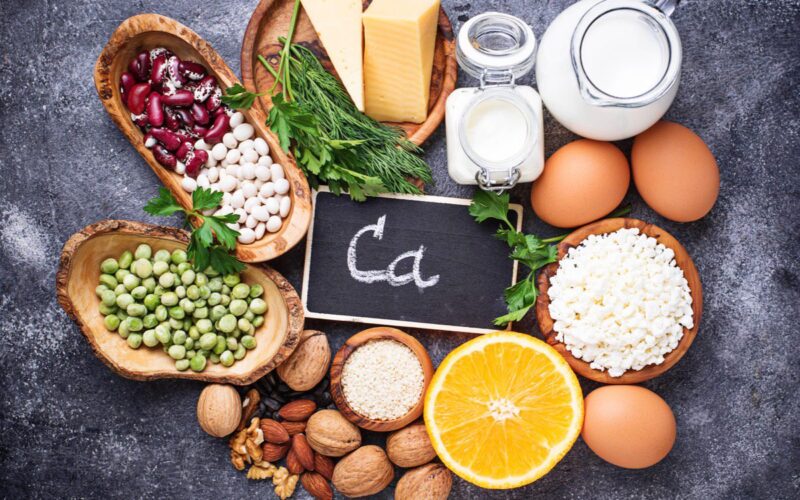
Copper is a mineral that is found throughout the body. It helps your body make red blood cells and keeps nerve cells and your immune system healthy. It also helps form collagen, a key part of bones and connective tissue. Copper may also act as an antioxidant, reducing free radicals that can damage cells and DNA. Copper helps the body absorb iron. Your body also needs copper to make energy.
Your body does not need much copper. Many people do not get enough copper in their diet, but it is rare to be truly deficient in copper. Signs of possible copper deficiency include anemia, low body temperature, bone fractures and osteoporosis, low white blood cell count, irregular heartbeat, loss of pigment from the skin, and thyroid problems.
People who take high amounts of zinc, iron, or vitamin C may need more copper, but you should ask your health care provider before taking copper supplements. Too much copper can be dangerous.
Foods that contain copper include oysters, liver, whole grain breads and cereals, shellfish, dark green leafy vegetables, dried legumes, nuts, and chocolate.
Uses
Anemia
Taking copper supplements may help people who have anemia because of copper deficiency. Copper works together with iron to form red blood cells.
Osteoarthritis
Animal studies suggest that taking copper by mouth may help prevent and slow arthritis, but evidence in humans is lacking. Copper bracelets are often marketed to people with both osteoarthritis and rheumatoid arthritis as a way to relieve symptoms, but there is no evidence that they work.
Osteoporosis
There is some slight evidence that taking copper along with zinc, manganese, and calcium might help slow the rate of bone loss among postmenopausal women.
Dietary Sources
Copper is found in these foods:
- Seafood, such as oysters, squid, lobster, mussels, crab, and clams
- Organ meats, such as beef liver, kidneys, and heart
- Nuts and nut butters, such as cashews, filberts, macadamia nuts, pecans, almonds, and pistachios
- Legumes, such as soybeans, lentils, navy beans, and peanuts
- Chocolate, such as unsweetened or semisweet baker’s chocolate and cocoa
- Enriched cereals, such as bran flakes, shredded wheat, and raisin bran
- Fruits and vegetables, such as dried fruits, mushrooms, tomatoes, potatoes, sweet potatoes, bananas, grapes, and avocado
- Blackstrap molasses
- Black pepper
Available Forms
Multivitamins that include minerals usually have copper. Copper is also available as a separate oral supplement, and can be found as a topical gel, and in topical solutions.
How to Take It
The best way to get enough copper is through your diet. For your body to use copper, you need to have a balance of zinc and manganese. The following lists provide the recommended daily dietary intake of copper for children and adults from the Food and Nutrition Board at the Institute of Medicine.
Pediatric
- For infants from birth to 6 months: 200 mcg daily
- For infants 7 to 12 months: 220 mcg daily
- For children 1 to 3 years: 340 mcg daily
- For children 4 to 8 years: 440 mcg daily
- For children 9 to 13 years: 700 mcg daily
- For children 14 to 18 years: 890 mcg daily
Children should get copper from foods. DO NOT give copper supplements to children.
Adult
- For adults 19 years and older: 900 mcg daily
- For pregnant women: 1,000 mcg daily
- For breastfeeding women: 1,300 mcg daily
If you take a copper supplement, you should also take a zinc supplement (8 to 15 mg of zinc for every 1 mg of copper), as an imbalance of these two minerals can cause other health problems.
Precautions
Because of the potential for side effects and interactions with medications, you should take dietary supplements only under the supervision of a knowledgeable health care provider.
Too much copper can cause nausea, vomiting, stomach pain, headache, dizziness, weakness, diarrhea, and a metallic taste in the mouth. Copper toxicity is rare but can cause heart problems, jaundice, coma, even death. DO NOT use copper supplements if you have diarrhea.
Water containing copper concentrations greater than 6 mg/L may cause stomach problems, such as nausea and vomiting. If you have well water, you may want to get the water tested for mineral content.
You can also get copper without knowing it from using copper cookware and from water coming through new copper pipes. Avoid unlined copper cookware. Copper can leach out of pipes into water, especially hot water, if it sits in copper pipes for a long time. Cook with cold water to avoid problems. Flushing the pipes by running cold water for 2 to 3 minutes can reduce copper. If you have blue-green stains around your faucet or sink, or if you detect a metallic taste to your water, you may want to have your water tested by a certified laboratory.
Children and people with Wilson disease (which causes a build up of copper in the brain, liver, kidneys, and eyes), and people with hereditary conditions including idiopathic copper toxicosis and childhood cirrhosis, should not take copper supplements.
Possible Interactions
If you are being treated with any of the following medications, you should not use copper supplements without first talking to your health care provider.
Birth control pills and estrogen following menopause: Birth control medications and estrogen replacement for post-menopausal women can increase blood levels of copper.
Nonsteroidal anti-inflammatory drugs (NSAIDs): These pain relievers include aspirin, ibuprofen (Advil, Motrin), and naproxen (Aleve). Copper binds to NSAIDs and may enhance their anti-inflammatory activity.
Penicillamine: Penicillamine, a medication used to treat Wilson disease and rheumatoid arthritis, reduces copper levels. Copper may lower the amount of penicillamine your body absorbs.
Allopurinol (Zyloprim): Test tube studies suggest that allopurinol, a medication used to treat gout, may reduce copper levels.
Cimetidine (Tagamet): Animal studies show that cimetidine, a medication used to treat ulcers and gastric esophageal reflux disease (GERD), may raise copper levels in the body.
Nifedipine (Procardia or Adalat): In a human study, people who took nifedipine had lower levels of copper in their red blood cells.
Zinc: Several laboratory and human studies have found that taking high levels of zinc supplements over long periods of time may lower the body’s ability to absorb copper. The same does not seem to be true of eating foods that have copper. Ask your provider if you need zinc and copper supplementation.
Araya M, Pizarro F, Olivares M, Arredondo M, Gonzalez M, Mendez M. Understanding copper homeostasis in humans and copper effects on health. Biol Res . 2006;39(1):183-7.
Borkow G, Gabbay J, Zatcoff RC. Could chronic wounds not heal due to too low copper levels? Med Hypotheses . 2008;70(3):610-3.
Bugel, S., Harper, A., Rock, E., O’Connor, J. M., Bonham, M. P., and Strain, J. J. Effect of copper supplementation on indices of copper status and certain CVD risk markers in young healthy women. BrJ Nutr . 2005;94(2):231-236.
Christen Y. Oxidative stress and Alzheimer’s disease. Am J Clin Nutr . 2000;71(2):621S-629S.
Daroff: Bradley’s Neurology in Clinical Practice . 6th ed. Philadelphia, PA: Elsevier Saunders; 2012.
Geerling BJ, Badart-Smook A, Stockbrügger RW, Brummer R-JM. Comprehensive nutritional status in recently diagnosed patients with inflammatory bowel disease compared with population controls. EAur J Clin Nutr . 2000;54:514-521.
Harless W, Crowell E, Abraham J. Anemia and neutropenia associated with copper deficiency of unclear etiology. Am J Hematol . 2006;81(7):546-9.
Huff JD, Keung YK, Thakuri M, Beaty MW, Hurd DD, Owen J, Molnar I. Copper deficiency causes reversible myelodysplasia. Am J Hematol . 2007;82(7):625-30.
Kumar N, Butz JA, Burritt MF. Clinical significance of the laboratory determination of low serum copper in adults. Clin Chem Lab Med . 2007;45(10):1402-10.
Lein D, Lichtmannegger J, Heinzmann U, Summer KH. Dissolution of copper-rich granules in hepatic lysosomes by D-penicillamine prevents the development of fulminant hepatitis in Long-Evans cinnamon rats. J Hepatol . 2000;32(2):193-201.
Mahabir S, Spitz MR, Barrera SL, Beaver SH, Etzel C, Forman MR. Dietary zinc, copper and selenium, and risk of lung cancer. Int J Cancer . 2007;120(5):1108-15.
Milanino R, Marrella M, Crivellente F, Benoni G, Cuzzolin L. Nutritional supplementation with copper in the rat. Effects on adjuvant arthritis development and on some in vivo- and ex vivo-markers of blood neutrophils. Inflamm Res . 2000;49(5):214-223.
Nagano T, Toyoda T, Tanabe H, et al., Clinical features of hematological disorders caused by copper deficiency during long-term enteral nutrition. Intern Med . 2005;44(6):554-9.
Richmond SJ, Brown SR, Campion PD, Porter AJ, Moffett JA, Jackson DA, Featherstone VA, Taylor AJ. Therapeutic effects of magnetic and copper bracelets in osteoarthritis: a randomised placebo-controlled crossover trial. Complement Ther Med . 2009 Oct-Dec;17(5-6):249-56.
Rottkamp CA, Nunomura A, Raina AK, Sayre LM, Perry G, Smith MA. Oxidative stress, antioxidants, and Alzheimer’s disease. Alzheimer Disease Assoc Disorders . 2000;14(Suppl 1):S62-S66.
Strause L, Saltman P, Smith KT, et al. Spinal bone loss in postmenopausal women supplemented with calcium and trace minerals. J Nutr . 1994;124:1060-4.
Tamura T, Turnlund JR. Effect of long-term, high-copper intake on the concentrations of plasma homocysteine and B vitamins in young men. Nutrition . 2004;20(9):757-9.
Thomson SW, Heimburger DC, Cornwell PE, et al. Correlates of total plasma homocysteine: folic acid, copper, and cervical dysplasia. Nutrition . 2000;16(6):411-416.
Turnlund, J. R., Keyes, W. R., Kim, S. K., and Domek, J. M. Long-term high copper intake: effects on copper absorption, retention, and homeostasis in men. Am J Clin Nutr . 2005;81(4):822-828.