
Thrombotic Thrombocytopenic Purpura (TTP)

Patient Tools

Read, save, and share this guide

Use these quick tools to make this medical article easier to read, print, save, or share with a family member.

Patient Mode

Understand this article easily

Switch between simple English and easy Bangla patient notes. This is for education and does not replace a doctor consultation.

Thrombocytopenia is a condition in which you have a low blood platelet count. Platelets (thrombocytes) are colorless blood cells that help blood clot. Platelets stop bleeding by clumping and forming plugs in blood vessel injuries. Thrombocytopenia might occur as a result of a bone marrow...

For severe symptoms, danger signs, pregnancy, child illness, or sudden worsening, seek urgent medical care.

বাংলা রোগী নোট এখনো যোগ করা হয়নি। পোস্ট এডিটরে “RX Bangla Patient Mode” বক্স থেকে সহজ বাংলা সারাংশ যোগ করুন।

এই তথ্য শিক্ষা ও সচেতনতার জন্য। এটি ডাক্তারি পরীক্ষা, রোগ নির্ণয় বা প্রেসক্রিপশনের বিকল্প নয়।

Article Summary

Thrombocytopenia is a condition in which you have a low blood platelet count. Platelets (thrombocytes) are colorless blood cells that help blood clot. Platelets stop bleeding by clumping and forming plugs in blood vessel injuries. Thrombocytopenia might occur as a result of a bone marrow disorder such as leukemia or an immune system problem. Or it can be a side effect of taking certain medications....

Key Takeaways

  • This article explains Causes of TTP: in simple medical language.
  • This article explains Symptoms of TTP: in simple medical language.
  • This article explains Diagnostic Tests for TTP: in simple medical language.
  • This article explains Treatment for TTP: in simple medical language.
Educational health guideWritten for patient understanding and clinical awareness.
Reviewed content workflowUse writer and reviewer profiles for stronger trust.
Emergency safety firstUrgent warning signs are highlighted below.

Seek urgent medical care if you notice

These warning signs are general safety guidance. Local emergency numbers and clinical judgment should always come first.

  • Fever with very low white blood cells or known immune suppression.
  • Unusual bruising, persistent bleeding, black stools, or severe weakness.
  • Shortness of breath, fainting, confusion, or rapidly worsening fatigue.
1

Emergency now

Use emergency care for severe, sudden, rapidly worsening, or life-threatening symptoms.

2

See a doctor

Book a professional medical evaluation if symptoms persist, worsen, recur often, affect daily activities, or occur in a high-risk patient.

3

Learn safely

Use this article to understand possible causes, tests, treatment options, prevention, and questions to ask your clinician.

Before reading

RX Patient Tools

Use these quick guides before reading the article, or return to them when you need help preparing questions for a doctor.

Start here Choose the right pathway for symptoms, reports, medicines, or urgent warning signs. Disease article roadmap Read this topic step by step: meaning, symptoms, warning signs, diagnosis, treatment, prevention, and follow-up. Treatment planner Prepare questions about treatment choices, benefits, risks, side effects, and follow-up. Family & caregiver guide Organize symptoms, reports, medicines, questions, and follow-up safely. Nutrition & diet guide Prepare food, hydration, supplement, and medicine-timing questions safely. Prevention guide Organize risk factors, protective habits, screening, and warning signs. Recovery guide Prepare a safe plan for activity, rehabilitation, warning signs, and follow-up.
Definition

platelet count, which can increase bleeding risk. সহজ বাংলা: প্লাটিলেট কম।" data-rx-term="thrombocytopenia" data-rx-definition="Thrombocytopenia means low platelet count, which can increase bleeding risk. সহজ বাংলা: প্লাটিলেট কম।">Thrombocytopenia is a condition in which you have a low blood platelet count. Platelets (thrombocytes) are colorless blood cells that help blood clot. Platelets stop bleeding by clumping and forming plugs in blood vessel injuries.

platelet count, which can increase bleeding risk. সহজ বাংলা: প্লাটিলেট কম।" data-rx-term="thrombocytopenia" data-rx-definition="Thrombocytopenia means low platelet count, which can increase bleeding risk. সহজ বাংলা: প্লাটিলেট কম।">Thrombocytopenia might occur as a result of a bone marrow disorder such as leukemia or an immune system problem. Or it can be a side effect of taking certain medications. It affects both children and adults.

platelet count, which can increase bleeding risk. সহজ বাংলা: প্লাটিলেট কম।" data-rx-term="thrombocytopenia" data-rx-definition="Thrombocytopenia means low platelet count, which can increase bleeding risk. সহজ বাংলা: প্লাটিলেট কম।">Thrombocytopenia can be mild and cause few signs or symptoms. In rare cases, the number of platelets can be so low that dangerous internal bleeding occurs. Treatment options are available.

Thrombotic thrombocytopenic purpura (TTP) may sound like a complicated medical term, but we’re here to break it down for you in simple, easy-to-understand language. In this article, we’ll explain what TTP is, its various types, common causes, symptoms, diagnostic tests, treatment options, and medications. Our aim is to make this complex medical condition accessible to everyone.

What is TTP? TTP, short for Thrombotic Thrombocytopenic Purpura, is a rare and serious medical condition that affects your blood. It’s important to know that TTP is a blood disorder, but don’t let the fancy name intimidate you. Let’s explore it step by step.

Types of TTP:

There are two main types of TTP:

  1. Congenital TTP: This type is rare and usually present from birth due to a genetic mutation.
  2. Acquired TTP: This is the more common type, and it develops later in life, often as a result of certain triggers.

Causes of TTP:

TTP occurs when there’s a problem with a protein called ADAMTS13, which helps prevent blood clotting. When this protein isn’t working correctly, it can lead to TTP. Here are some common causes and triggers:

platelet count, which can increase bleeding risk. সহজ বাংলা: প্লাটিলেট কম।" data-rx-term="thrombocytopenia" data-rx-definition="Thrombocytopenia means low platelet count, which can increase bleeding risk. সহজ বাংলা: প্লাটিলেট কম।">Thrombocytopenia means you have fewer than 150,000 platelets per microliter of circulating blood. Because each platelet lives only about 10 days, your body normally renews your platelet supply continually by producing new platelets in your bone marrow.

platelet count, which can increase bleeding risk. সহজ বাংলা: প্লাটিলেট কম।" data-rx-term="thrombocytopenia" data-rx-definition="Thrombocytopenia means low platelet count, which can increase bleeding risk. সহজ বাংলা: প্লাটিলেট কম।">Thrombocytopenia rarely is inherited; or it can be caused by a number of medications or conditions. Whatever the cause, circulating platelets are reduced by one or more of the following processes: trapping of platelets in the spleen, decreased platelet production or increased destruction of platelets.

Trapped platelets

The spleen is a small organ about the size of your fist situated just below your rib cage on the left side of your abdomen. Normally, your spleen works to fight infection and filter unwanted material from your blood. An enlarged spleen — which can be caused by a number of disorders — can harbor too many platelets, which decreases the number of platelets in circulation.

Decreased production of platelets

Platelets are produced in your bone marrow. Factors that can decrease platelet production include:

  • Leukemia and other cancers
  • Some types of anemia
  • Viral infections, such as hepatitis C or HIV
  • Chemotherapy drugs and radiation therapy
  • Heavy alcohol consumption

Increased breakdown of platelets

Some conditions can cause your body to use up or destroy platelets faster than they’re produced, leading to a shortage of platelets in your bloodstream. Examples of such conditions include:

  • Pregnancy. platelet count, which can increase bleeding risk. সহজ বাংলা: প্লাটিলেট কম।" data-rx-term="thrombocytopenia" data-rx-definition="Thrombocytopenia means low platelet count, which can increase bleeding risk. সহজ বাংলা: প্লাটিলেট কম।">Thrombocytopenia caused by pregnancy is usually mild and improves soon after childbirth.
  • Immune platelet count, which can increase bleeding risk. সহজ বাংলা: প্লাটিলেট কম।" data-rx-term="thrombocytopenia" data-rx-definition="Thrombocytopenia means low platelet count, which can increase bleeding risk. সহজ বাংলা: প্লাটিলেট কম।">thrombocytopenia. Autoimmune diseases, such as lupus and pain, swelling, stiffness, or reduced movement. সহজ বাংলা: জয়েন্টের প্রদাহ।" data-rx-term="arthritis" data-rx-definition="Arthritis means joint inflammation causing pain, swelling, stiffness, or reduced movement. সহজ বাংলা: জয়েন্টের প্রদাহ।">arthritis: Rheumatoid arthritis is an autoimmune joint disease causing infection, or irritation, often causing pain, swelling, heat, or redness. সহজ বাংলা: শরীরের প্রদাহ; ব্যথা, ফোলা বা লালভাব হতে পারে।" data-rx-term="inflammation" data-rx-definition="Inflammation is the body’s response to injury, infection, or irritation, often causing pain, swelling, heat, or redness. সহজ বাংলা: শরীরের প্রদাহ; ব্যথা, ফোলা বা লালভাব হতে পারে।">inflammation, pain, and swelling. সহজ বাংলা: রোগপ্রতিরোধ ব্যবস্থার ভুল আক্রমণে জয়েন্টের প্রদাহ।" data-rx-term="rheumatoid arthritis" data-rx-definition="Rheumatoid arthritis is an autoimmune joint disease causing inflammation, pain, and swelling. সহজ বাংলা: রোগপ্রতিরোধ ব্যবস্থার ভুল আক্রমণে জয়েন্টের প্রদাহ।">rheumatoid arthritis, cause this type. The body’s immune system mistakenly attacks and destroys platelets. If the exact cause of this condition isn’t known, it’s called idiopathic thrombocytopenic purpura. This type more often affects children.
  • Bacteria in the blood. Severe bacterial infections involving the blood (bacteremia) can destroy platelets.
  • Thrombotic thrombocytopenic purpura. This is a rare condition that occurs when small blood clots suddenly form throughout your body, using up large numbers of platelets.
  • Hemolytic uremic syndrome. This rare disorder causes a sharp drop in platelets, destruction of red blood cells and impairs kidney function.
  • Medications. Certain medications can reduce the number of platelets in your blood. Sometimes a drug confuses the immune system and causes it to destroy platelets. Examples include heparin, quinine, sulfa-containing antibiotics and anticonvulsants.
  • Autoimmune disorders: Your immune system may mistakenly attack and destroy ADAMTS13.
  • Infections: Certain infections can trigger TTP.
  • Medications: Some drugs can increase the risk of TTP.
  • Pregnancy: TTP can occur during pregnancy or shortly after giving birth.
  • Other medical conditions: Conditions like cancer or organ transplants can also be linked to TTP.

Symptoms of TTP:

TTP can cause a range of symptoms, and it’s important to recognize them early. Common symptoms include:

  1. Unexplained bruises and purplish spots on the skin (purpura).
  2. Fatigue and weakness.
  3. Fever.
  4. Confusion or changes in mental alertness.
  5. Shortness of breath.
  6. Headache.
  7. Abdominal pain.
  8. Pale or yellow skin (jaundice).

If you notice any of these symptoms, it’s crucial to seek medical attention promptly.

Thrombocytopenia signs and symptoms may include:

  • Easy or excessive bruising (purpura)
  • Superficial bleeding into the skin that appears as a rash of pinpoint-sized reddish-purple spots (petechiae), usually on the lower legs
  • Prolonged bleeding from cuts
  • Bleeding from your gums or nose
  • Blood in urine or stools
  • Unusually heavy menstrual flows
  • Fatigue
  • Enlarged spleen

When to see a doctor

Make an appointment with your doctor if you have signs of thrombocytopenia that worry you.

Bleeding that won’t stop is a medical emergency. Seek immediate help for bleeding that can’t be controlled by the usual first-aid techniques, such as applying pressure to the area.
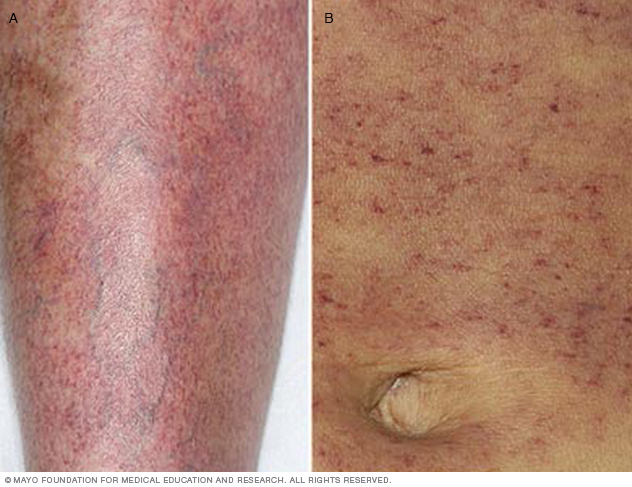
Petechiae – Symptoms

Diagnostic Tests for TTP:

To diagnose TTP, doctors may use several tests to examine your blood and rule out other conditions. Some common diagnostic tests include:

  1. Complete Blood Count (CBC): This measures the number of platelets in your blood, which is usually low in TTP.
  2. Blood Smear: A microscopic examination of your blood to check for abnormal cells.
  3. ADAMTS13 Activity Test: This test checks the activity of the ADAMTS13 protein.
  4. Kidney Function Tests: TTP can affect kidney function, so these tests help assess kidney health.
  5. Coagulation Tests: To evaluate how your blood clots.

Treatment for TTP:

Treatment for TTP aims to stop the formation of blood clots and manage symptoms. Here are some common treatments:

  1. Plasma Exchange (Plasmapheresis): This procedure removes and replaces the plasma in your blood, which can help remove harmful antibodies and improve clotting.
  2. Steroids: Medications like corticosteroids may be prescribed to suppress the immune system’s response.
  3. Immune Globulin: Intravenous immune globulin (IVIG) may be given to boost the immune system.
  4. Rituximab: This medication can help reduce the autoimmune response.
  5. Surgery: In severe cases, surgery may be required to remove clots or damaged tissue.

Drugs Used in TTP Treatment:

Several medications may be used to treat TTP and manage its symptoms. Here are some commonly prescribed drugs:

  1. Prednisone: A steroid that reduces inflammation.
  2. Plavix (Clopidogrel): Helps prevent platelets from sticking together.
  3. Soliris (Eculizumab): A medication that targets the immune system to reduce the risk of TTP episodes.
  4. Rituxan (Rituximab): Suppresses the immune response.
  5. Immune Globulin (IVIG): Boosts the immune system’s ability to fight TTP.

Conclusion:

Thrombotic Thrombocytopenic Purpura (TTP) is a rare but serious blood disorder that can affect anyone. While it may seem complex at first, understanding its types, causes, symptoms, diagnostic tests, and treatment options is essential for early detection and effective management.

If you or someone you know experiences TTP symptoms, don’t hesitate to seek medical attention. With proper diagnosis and treatment, TTP can be managed, and its impact on your health minimized. Remember, knowledge is power, and being informed about TTP can make a significant difference in your or your loved one’s journey to recovery.


Disclaimer: Each person’s journey is unique, treatment plan, life style, food habit, hormonal condition, immune system, chronic disease condition, previous medical  history is also unique. So always seek the best advice from a qualified medical professional or health care provider before trying any treatments to ensure to find out the best plan for you. This guide is for general information and educational purposes only. If you or someone are suffering from this disease condition bookmark this website or share with someone who might find it useful! Boost your knowledge and stay ahead in your health journey. Thank you for giving your valuable time to read the article.


Doctor visit helper

Prepare before seeing a doctor

A simple rural-patient checklist to help you explain symptoms clearly, ask better questions, and avoid unsafe self-treatment.

Safety note: This is not a prescription or diagnosis. For severe symptoms, pregnancy danger signs, children with serious illness, chest pain, breathing difficulty, stroke-like weakness, or major injury, seek urgent care.

Which doctor may help?

Start with a registered doctor or the nearest qualified health center.

What to tell the doctor

  • Write when the problem started and how it changed.
  • Bring old prescriptions, investigation reports, and current medicines.
  • Write allergies, pregnancy status, diabetes, kidney/liver disease, and major past illnesses.
  • Bring one family member if the patient is weak, elderly, confused, or a child.

Questions to ask

  • What is the most likely cause of my symptoms?
  • Which danger signs mean I should go to hospital quickly?
  • Which tests are necessary now, and which can wait?
  • How should I take medicines safely and what side effects should I watch for?
  • When should I come for follow-up?

Tests to discuss

  • Vital signs: temperature, pulse, blood pressure, oxygen saturation
  • Basic physical examination by a clinician
  • CBC, urine test, blood sugar, or imaging only when clinically needed

Avoid these mistakes

  • Do not use antibiotics, steroid tablets/injections, or strong painkillers without proper medical advice.
  • Do not hide pregnancy, kidney disease, ulcer, allergy, or blood thinner use.
  • Do not delay emergency care when danger signs are present.

Medicine safety and first-aid guide

This section is for patient education only. It does not replace a doctor, pharmacist, or emergency care.

Safe first steps

  • Avoid heavy lifting, sudden bending, and prolonged bed rest.
  • Use comfortable posture and gentle movement as tolerated.
  • Discuss physiotherapy, X-ray, or MRI only when clinically needed.

OTC medicine safety

  • For mild back pain, pain-relief medicine may be discussed with a doctor or pharmacist.
  • Avoid repeated painkiller use if you have kidney disease, stomach ulcer, uncontrolled blood pressure, or are taking blood thinners.

Avoid these mistakes

  • Do not start antibiotics without a proper medical decision.
  • Do not use steroid tablets or injections casually for quick relief.
  • Do not delay emergency care because of home remedies.

Get urgent help if

  • Back pain with leg weakness, numbness around private area, loss of urine/stool control, fever, cancer history, or major injury needs urgent care.
Medicine names, dose, and timing must be decided by a qualified clinician or pharmacist after checking age, pregnancy, allergy, other diseases, and current medicines.

For rural patients and family caregivers

Patient health record and symptom diary

Write your symptoms, medicines already taken, test results, and questions before visiting a doctor. This note stays on your device unless you print or copy it.

Doctor to discuss: Medicine doctor / pediatrician for children / qualified clinician
Tests to discuss with doctor
  • Temperature chart and hydration assessment
  • CBC with platelet count if fever persists or dengue/other infection is possible
  • Urine test, malaria/dengue tests, chest evaluation, or blood culture only when clinically indicated
Questions to ask
  • What is the most likely cause of my symptoms?
  • Which warning signs mean I should go to emergency care?
  • Which tests are really needed now?
  • Which medicines are safe for my age, pregnancy status, allergy, kidney/liver/stomach condition, and current medicines?
  • Do I need antibiotics, or is this more likely viral?

Emergency warning signs such as chest pain, severe breathing difficulty, sudden weakness, confusion, severe dehydration, major injury, or loss of bladder/bowel control need urgent medical care. Do not wait for online information.

Safe pathway to proper treatment

Care roadmap for: Thrombotic Thrombocytopenic Purpura (TTP)

Use this simple roadmap to understand the next safe steps. It is educational and does not replace examination by a doctor.

Go to emergency care if you notice:
  • Severe or rapidly worsening symptoms
  • Breathing difficulty, chest pain, fainting, confusion, severe weakness, major injury, or severe dehydration
Doctor / service to discuss: Qualified healthcare provider; specialist depends on symptoms and examination.
  1. Step 1

    Check danger signs first

    If danger signs are present, seek emergency care and do not wait for online information.

  2. Step 2

    Record the symptom story

    Write when symptoms started, severity, medicines already taken, allergies, pregnancy status, and test results.

  3. Step 3

    Visit a qualified clinician

    A doctor, nurse, or qualified healthcare provider can examine you and decide which tests or treatment are needed.

  4. Step 4

    Do only useful tests

    Do tests after clinical assessment. Avoid unnecessary tests, random antibiotics, or repeated medicines without diagnosis.

  5. Step 5

    Follow up and return early if worse

    If symptoms worsen, new warning signs appear, or treatment is not helping, return for review quickly.

Rural patient practical tips
  • Take a written symptom diary and all previous prescriptions/test reports.
  • Do not hide medicines already taken, even herbal or over-the-counter medicines.
  • Ask which warning signs mean urgent referral to hospital.

This roadmap is for education. A real diagnosis and treatment plan requires history, examination, and clinical judgment.

RX Patient Help

Ask a health question safely

Write your symptom story. A health professional or site editor can review it before any answer is prepared. This box is not for emergency care.

Emergency first: Severe chest pain, breathing trouble, unconsciousness, stroke signs, severe injury, heavy bleeding, or rapidly worsening symptoms need urgent local medical care now.

Frequently Asked Questions

Is this article a replacement for a doctor?

No. It is educational content only. Patients should consult a qualified clinician for diagnosis and treatment.

When should I seek urgent care?

Seek urgent care for severe symptoms, rapidly worsening condition, breathing difficulty, severe pain, neurological changes, or any emergency warning sign.

References

Add references, clinical guidelines, textbooks, journal articles, or trusted medical sources here. You can edit this area from the RX Article Professional Blocks panel.
