
Ziziphus mauritiana, also known as Indian jujube, Indian plum, Chinese date, Chinese apple, and dunks is a tropical fruit tree species belonging to the family Rhamnaceae. It is often confused with the closely related Chinese jujube (Z. jujuba), but whereas Z. jujuba prefers temperate climates, Z. mauritiana is tropical to subtropical.[rx]
Ziziphus mauritiana is a spiny, evergreen shrub or small tree up to 15 m high, with a trunk 40 cm or more in diameter; spreading crown; stipular spines, and many drooping branches. The fruit is of variable shape and size. It can be oval, obovate, oblong or round, and can be 1-2.5 in (2.5-6.25 cm) long, depending on the variety. The flesh is white and crisp. When slightly underripe, this fruit is a bit juicy and has a pleasant aroma. The fruit’s skin is smooth, glossy, thin but tight.
The species is believed to have originated in the Indo-Malaysian region of South-East Asia.[rx] It is now widely naturalized throughout the Old World tropics from Southern Africa through the Middle East to the Indian Subcontinent and China, Indomalaya, and into Australasia and the Pacific Islands.[4] It can form dense stands and become invasive in some areas, including Fiji and Australia, and has become a serious environmental weed in Northern Australia. It is a fast-growing tree with a medium lifespan, that can quickly reach up to 10–40 ft (3 to 12 m) tall.
| Indian jujube Quick Facts | |
|---|---|
| Name: | Indian jujube |
| Scientific Name: | Ziziphus mauritiana |
| Origin | Southern Asia and eastern Africa and is now widely naturalized from tropical Africa to Afghanistan and China |
| Colors | Green when young which turns light-green to yellow, later becomes partially or wholly burnt-orange or red-brown or all-red |
| Shapes | Drupe Variable in shape and size. It can be oval, obovate, oblong or round, and can be 1-2.5 in (2.5-6.25 cm) long |
| Flesh colors | White |
| Taste | Sweet and sour |
| Health benefits | Treat gastrointestinal disorders, Cancer Treatment, Insomnia Treatment, Skin Heath , Increase Immunity, Bone Strength, Protecting against Cold and Cough, Lower Blood Pressure, Strengthening the Muscles, Bones and Teeth, Circulation Issues, Increase Energy, Blood Detoxification, Helps Calm Down Nervous System, Stress and Anxiety, Weight Control, Quick Healing of Wounds |
Ziziphus mauritiana, also known as Indian jujube, Chinese date, ber, Chinee apple is a tropical fruit tree species belonging to the family Rhamnaceae. The species is believed to have originated in the Indo-Malaysian region of South-East Asia. It is now widely naturalized throughout the Old World tropics from Southern Africa through the Middle East to the Indian Subcontinent and China, Indo-Malaya, and into Australasia and the Pacific Islands.[3] It can form dense stands and become invasive in some areas, including Fiji and Australia, and has become a serious environmental weed in Northern Australia. Few of the most popular common names of the plants are Bear Tree, Ber, Chinee Apple, Common Jujube, Cottony Jujube, Desert Apple, Dunks, Indian Cherry, Indian Jujube, Indian Plum, Jujube, Sour Jujube, Yunnan Jujube, Yunnan Spiny Jujube, Chinese date, jujube, Chinese apple and Malay jujube. The name ‘Ziziphus’ is often erroneously written as Zizyphus. The generic name is derived from the Latinized version of the Arabic vernacular name ‘zizouf’ for Z. jujuba.
Plant Description
Indian jujube is a much-branched, spiny, evergreen bushy shrub or a tree that grows up to 15 m high, with a trunk 40 cm or more in diameter. The plant is found growing in roadsides, agricultural land, river levees, margins of springs, alluvial flats, natural forests, riparian zones, ruderal/disturbed, thickets along river banks, hills and slopes, pastures, grasslands, open woodlands, floodplains, inland watercourses, disturbed sites, waste areas in semi-arid, tropical and sub-tropical regions. The plant grows best on sandy loam, neutral or slightly alkaline. It also grows well on laterite, medium black soils with good drainage, or sandy, gravelly, alluvial soil of dry riverbeds where it is vigorously spontaneous. Even moderately saline soils are tolerated. The plant has dark grey or dull black and irregularly fissured bark. Branches are numerous and drooping. The twigs are tomentose. The spines are solitary or borne in pairs at the base of the leaves, 5 to 7 mm long
Stems and Leaves
The young stems have a zig-zagging nature, are finely hairy (i.e. pubescent or tomentose), and are greenish or whitish in color. They usually bear a single curved thorn that is 5-20 mm long and a leaf at each joint. Older stems have a dark grey to blackish colored bark that is rough and somewhat furrowed.
The alternately arranged leaves are borne on stalks that are 2-16 mm long. These leaves are relatively small 20-80 mm long and 8-50 mm wide and somewhat oval in shape or egg-shaped in outline. Their upper surfaces are dark green in color, glabrous and glossy; while their lower surfaces are covered with whitish or rusty colored hairs. These leaves have three conspicuous main veins and finely toothed or almost entire margins. Depending on the climate, the foliage of the Z. mauritiana may be evergreen or deciduous.
Flowers and Fruit
The inconspicuous flowers that are 5-8 mm across are greenish, greenish-yellow or whitish in color. They may either have male and female parts or only male parts. These flowers are usually arranged in small loose clusters in the leaf forks (i.e. axils), with each cluster usually containing 10-15 flowers. The individual flowers are borne on short hairy stalks up to 4 mm long and consist of five hairy sepals that are fused at the base, five membranous petals, five stamens, and the bisexual flowers also have an ovary with two or three styles. Flowering mostly occurs from late summer through to early winter.
Fertile flowers are followed by drupe that can be variable in shape and size. It can be oval, obovate, oblong, or round, and can be 1-2.5 in (2.5-6.25 cm) long, depending on the variety. Fruits are initially green turning to light-green to yellow, later becoming partially or wholly burnt-orange or red-brown or all-red as they are completely mature. Skin is smooth or rough, glossy, thin but tough. When slightly under-ripe, the flesh is white, crisp, juicy, acid or subacid to sweet, somewhat astringent, much like that of a crabapple. Fully ripe fruits are less crisp and somewhat mealy. Overripe fruits are wrinkled; the flesh is buff-colored, soft, spongy, and musky. The fruit consists of a single hard stone which consists of two rounded or oval-shaped seeds that are 6-8 mm long that have hard outer skin.
Health benefits of Indian Jujube
The most interesting health benefits of Indian jujube include its ability to treat cancer, improve the health of the skin, cleanse the blood, relieve stress, stimulate restful sleep, strengthen the immune system, protect the liver, aid in weight loss, increase bone mineral density, and detoxify the body. Listed below are a few of the benefits
1. Cancer Treatment
Although the exact mechanisms and specific relationships between Indian jujube and cancer are still being investigated, earlier results point to a positive correlation between the bioactive compounds in Indian jujube and a reduction in free radical activity and the spread of cancerous cells. Antioxidants in Indian jujube make this a very effective preventative method for cancer as well as other chronic conditions, including heart disease.
2. Lowering Blood Pressure
Indian jujube is rich in potassium and Vitamin B-complex, this delicious Jujube fruit is found to decrease high blood pressure to a considerable degree.
3. Skin Heath
Indian jujube juice and extract have been used topically to treat various irritations and inflammations on the skin, including and psoriasis, eczema, acne. Additionally, you can consume jujube fruit to get many of the same effects. It can also help to prevent the appearance of wrinkles and scars, as well as keep the skin tight and energized with oxygenated blood.
4. Treat gastrointestinal disorders
Indian jujube fruits are also associated with improving digestive processes within the body. This is mostly attributed to its fiber content, but the saponins and triterpenoids also play a part in this by optimizing the uptake of nutrients and promoting the healthy movement of food through the bowels. This can help prevent constipation, cramping, bloating, and excess flatulence, as well as more serious gastrointestinal conditions, like colorectal cancer.
5. Bone Strength
One of the best ways to strengthen your bones is to make sure that your mineral intake is optimal. By increasing minerals like calcium, phosphorous, and iron (all of which are prevalent in jujubes), you can ensure that your bones will remain hardy and strong for years to come. As we age, we tend to suffer from osteoporosis and other bone degradation conditions, so including Indian jujube fruit in your diet can slow or reverse this trend.
6. Increasing Energy
Indian jujube fruit is a good source of energy too. It works on the nervous system very effectively thus reducing fatigue and helping in regaining energy.
7. Strengthening the Muscles, Bones, and Teeth
The presence of a good quantity of calcium and phosphorous in this fruit has proven to support in strengthening muscles, bones, and teeth.
8. Blood Detoxification
Saponins and alkaloids found in Indian jujube fruit have been directly connected with purifying the blood and eliminating harmful toxins from the body’s systems. This antioxidant effect can help prevent a large number of disorders and diseases, and also ease the stress on the immune and lymphatic system.
9. Quick Healing of Wounds
Loaded with some important amino acids, Ber fruit helps body cells to build different types of proteins that is essential for healing wounds caused by external factors.
10. Weight Control
Eating fruits and vegetables is a common suggestion for people attempting to lose weight, and Indian jujube is another that can easily be added to that list. With a low-calorie count and a high protein and fiber level, Indian jujube can satisfy your nutritional needs and fill you up, which will prevent you from snacking in between meals. This will help you maintain your diet or prevent any additional weight gain.
11. Stress and Anxiety
Indian jujube has been proven to have certain anxiolytic and soothing effects on the body. By using the Indian jujube oil extract or consuming the fruits themselves can have an impact on your hormonal levels and induce a calm, relaxed sensation throughout your body and mind. For people who regularly suffer from chronic stress or anxiety, snacking on some dried Indian jujube or seeking a jujube supplement can help ease the mind and protect the body from the serious side effects of extended exposure to stress hormones.
12. Helps Calm Down Nervous System
Indian jujube fruit has a soothing property of calming the nervous system down and thus works as an anti-depressant. It helps in relieving stress and anxiety. It also cures various sleeping disorders like insomnia.
13. Increase Immunity
The presence of flavonoids naturally captures free radicals in the blood circulatory system that cause heart blockage and many other cardiovascular problems. Some other flavonoids consist of a good quantity of antioxidant, anti-inflammatory, and anti-cancerous characteristics. These help in reducing the risk of cancer cells formation, cure various digestive disorders, and decrease allergies and hence increasing immunity.
14. Insomnia Treatment
Consuming the seeds of the extract of the Indian jujube fruit can be a good remedy for people suffering from insomnia or restlessness. The soothing nature of the organic compounds contained in this beneficial fruit can calm the body and mind, so if you find yourself unable to sleep at night, then perhaps a small Indian jujube decoction is exactly what you need.
15. Circulation Issues
Indian jujube fruit is a rich source of both iron and phosphorous, key ingredients in red blood cells. If you suffer from the low iron content in your blood or anemia, you may experience symptoms like muscle weakness, fatigue, indigestion, lightheadedness, and cognitive confusion. By increasing your iron and phosphorous content with Indian jujube fruit, you can increase blood flow, thus oxygenating your organ systems and extremities more effectively, giving you an energy boost!
Traditional uses and benefits of Indian Jujube fruit
- Fruits are applied on cuts and ulcers, and are used in pulmonary ailments and fevers; and, mixed with salt and chili peppers, are given in indigestion and biliousness.
- Dried ripe fruit is a mild laxative.
- Seeds are sedative and are taken, sometimes with buttermilk, to halt nausea, vomiting, and abdominal pains in pregnancy.
- They check diarrhea and are poultice on wounds.
- Mixed with oil, they are rubbed on rheumatic areas.
- Leaves are applied as poultices and are helpful in liver troubles, asthma, and fever and, together with catechu, are administered when an astringent is needed, as on wounds.
- Bitter, astringent bark decoction is taken to halt diarrhea and dysentery and relieve gingivitis.
- The root is purgative.
- Root decoction is given as a febrifuge, taenicide, and emmenagogue, and the powdered root is dusted on wounds.
- Juice of the root bark is said to alleviate gout and rheumatism.
- An infusion of the flowers serves as an eye lotion.
- Chinese date fruit seeds bear soothing components that calm the mind and improve the desire to sleep. Thus, it is a good cure for Insomnia.
- Fruit strengthens the digestive system and prevents digestive disorders.
- Saponin and Alkaloid components present in the fruit expel harmful toxins from the body.
- It benefits a lot in patients suffering from gallstone disease.
- Dried fruit decoction of Chinese date cures cough, cold, chronic constipation, and fever.
- It improves lactation in nursing mothers.
- Juice made from fruits is considered to reduce irritation and inflammation on the skin.
- Fresh leaves of Chinese dates are boiled in water for half an hour. The water bath is used to wash the whole body to cure scabies. It also treats hair fall.
- Dried leaf powder is taken orally with water for Diabetes.
- Chinese data prevents the growth of cancer cells. It starts the production of White Blood Cells.
- It is low in calories and high in protein intake and helps in controlling the body weight.
- It prevents the condition of Osteoporosis.
- It is widely used to treat Hepatitis.
- It is a good cure for Cirrhosis.
- It is optimal in curing Spleen Disease.
- Fruit is believed to purify the blood and aid in weak digestion in India.
- Fruits sliced or crushed are applied to cuts and ulcers.
- Leaves are applied as poultices and are helpful in liver troubles, asthma, and fever and, together with catechu, are administered when an astringent is needed, as on wounds.
- Decoction of the bark and leaves is an effective astringent in dysentery and diarrhea and issued in the Philippines in bowel ailments.
- Bitter, astringent bark decoction is taken to halt diarrhea and dysentery and relieve gingivitis.
- The bark paste is applied to sores.
- The bark is regarded as a tonic for indigestion in Java.
- A poultice of the bark has been used for stomachache in Peninsular Malaysia.
- Leaves of Ber tree are used to treat typhoid in children and induce sweating to reduce fever.
- The root is also used to reduce fever formed due to other diseases like small pox, chickenpox, and measles.
- The seed of the Jujube fruit is used to make medicines for the liver, heart, and digestive organs.
- It is also found useful in the treatment of itching, which is caused by several skin disorders, hysteria.
- It acts as an energy booster in cases of fatigue, loss of energy, and lack of appetite.
- Seeds are also used for the treatment of diarrhea.
- It is used to treat anemia and purpura.
Ayurvedic health benefits of Indian jujube
- Fever: Drink a cup of root decoction twice a day. OR: Take dried fruit with Honey two times a day.
- Urticaria: Add 250 ml soda in 100 g chopped Chinese date. Have it once a day.
- Stomach Ache: Prepare an infusion of bark. Take two times a day
- Conjunctivitis: Prepare an infusion of leaves. Use as an eye drop twice a day.
- Abscess: Apply leaf paste on the affected area.
- Wounds: Make an infusion of the leaves. Wash the wounds with it. OR: Powder the dried root and apply to old Wounds.
- Constipation: Take one teaspoon of Chinese date powder with one cup of hot water twice a day.
- Anorexia: Prepare root decoction. Drink 3-4 times a day.
- Insomnia: Take half a teaspoon of fruit powder with hot water at bedtime
- Cold: Take a handful of dried Chinese Dates. Add 2 to 3 cups of water to it. Boil for 15 to 20 minutes. Strain and drink it. Have it two times a day, for 3 to 4 days.
- Jaundice: The seed decoction of Chinese date is mixed with salty water. It is taken orally 3 times a day for 2 months to cure Jaundice.
- Depression: Grind Rosemary, Skullcap, Chinese date, and Oats together. Take this powder twice a day with lukewarm water.
- Cough: Prepare a decoction of Descurainia Seed and Chinese date fruit. Take it twice a day.
- Piles: Bake fresh leaves of Chinese date. Pour some Castor oil over the leaves. Apply over the affected area twice a day. Repeat for a week.
- Night Sweat: Take equal quantity of Licorice, Chinese date, Turmeric, Seneca snakeroot, Japanese Rush, and Wheat. Grind them together. Have half teaspoon twice a day.
- Cold: Make the juice of a Chinese date. Add some Black pepper and take it twice a day.
- Insect Bites: Grind the leaves of Chinese dates to make a paste. Add a few drops of Lemon juice. Use as a Poultice.
Culinary Uses
- Ber fruits are very nutritious and are usually eaten fresh.
- Ripe fruits are mostly consumed raw but are sometimes stewed in India.
- Slightly under-ripe fruits are candied by a process of pricking, immersing in a salt solution.
- Ripe fruits are preserved by sun-drying and a powder is prepared for out-of-season purposes.
- Fruits are also eaten in other forms, such as dried, candied, pickled, juice, or as ber butter.
- Fruit is eaten fresh both flesh and peel or can be made into a refreshing drink by macerating fruits in water.
- It can also be eaten boiled, as an addition to rice or millet, stewed or baked.
- Unripe fruits are eaten with chili, salt, and sugar or pickle or made into chutney.
- Fruits can be made into fritters, jams, or candied fruits.
- Fruit can be dried and processed into a floury meal, beer butter, or a cheese-like paste, used as a condiment.
- Fermented pulp is pressed into cakes resembling gingerbread.
- Jujube liqueur is made and sold as Crema de ponsigue in Venezuela.
- Seed kernels are eaten in times of famine.
- Young leaves are cooked as a vegetable in Indonesia.
- Surplus fruits are sun-dried transformed into various products such as porridge, traditional cakes, mahewu, and also fermented to produce a spirit called Kachasu in Zimbabwe.
- Wine made from fermented jujubes called hong Zao jiu is available in China.
- Indian Jujubes are featured in the popular ginseng chicken dish called samgyetang in Korea.
- Chinese jujube butter can be made by cooking ripe fruits with water, sugar, and seasonings such as cinnamon, clove, nutmeg, lemon and vinegar.
- Dried fruits minus the seed are pounded with tamarind, red chilies, salt, and jaggery to make a dough and dried again in Tamil Nadu, India.
- Poached jujubes are added to fruit compotes.
Ber chutney
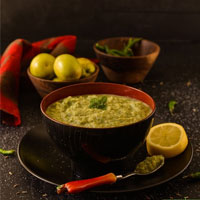
Ingredients
- 15 ber or Indian berry
- 1/2 cup fresh mint
- 3/4 tsp. black salt
- 1/2 tsp. sugar
- 2 tbsp. lemon juice
- 1/2 tsp. cumin powder, roasted
- 2 green chilies, chopped
- 1/2 tsp. asafetida
- Salt, to taste
- Water, as needed
Directions
- Wash the ber, and chop it into small pieces. Throw the stones away.
- Put all the ingredients in a mixie jar, add some water, and grind it into a smooth paste.
- Transfer the chutney into a bowl or jar. You can refrigerate it, or serve it immediately.
Indian Jujube Pickle
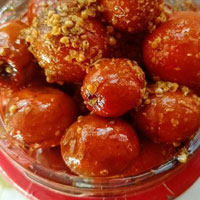
Ingredients
- 30 Indian Jujubes
- 300 ml Mustard oil
- 1 tablespoon fennel seeds, crushed
- 2 tablespoons mustard seeds, crushed.
- Salt
Direction
- Sundry the Indian Jujubes for 4-5 days.
- Once they are ready, wash them and pat dry.
- Now heat mustard oil in a pan.
- Once it receives the smoking point, add the crushed fennel seeds and mustard seeds.
- Switch off the gas immediately.
- Add the jujubes and salt.
- Stir well.
- Let the jujubes sit till they cooled.
- Once cooled, bottle them.
- Put the jar in the sunshine for another 10 days to get excellent results.
Indian jujube Salad

Ingredients
- 2 cup washed Indian jujube
- 1 tsp. sugar/jaggery
- 1/2 tsp. salt
- 2 green chilies chopped
- 2 tsp. fresh coriander leaves
- 1 tsp. mustard oil (optional)
Direction
- Smash lightly ripen Indian jujube with the help of a spoon or hand thumb.
- Add all the ingredients and mix well.
- Serve them and enjoy the taste
Indian Jujube Muffins
Ingredients
- 1 cup All-purpose Flour
- 2/3 cup Sugar
- 1 tsp. Baking powder
- 1/3 cup Vegetable oil
- pinch salt
- 5 tips. Vanilla essence
- 1/2 cup Buttermilk
- 1 egg large
- 1/2 cup Jujubes few more + tbsp.
Directions
- In one bowl, sift the dry ingredients except for the sugar and jujubes.
- Add sugar to it and mix with a whisk. Make a pool in the middle.
- In a smaller bowl, mix the wet ingredients.
- Pour in the middle of the dry.
- Mix with a whisk until just combined.
- Fold in the jujubes.
- Put them up to 3/4 of the liner in a muffin tray. Put a few jujubes on top.
- Bake in a preheated oven at 180C for 25 min or until they are springy to touch.
- They shall not rise as much and don’t get scared to see the sugar off the jujube melting in the batter.
Strawberry Jujubes

Ingredients
- 40 Grams Sugar
- 01 Tablespoon Food Coloring r more accordingly
- 30 Grams Gelatin
- 1 Teaspoon Strawberry Essence
- 100 Milliliters Strawberry Puree (sieved to remove seeds)
- 300 Milliliters water
- 5 Tablespoons Icing Sugar for Dusting
Directions
- Measure out 150 ml boiling water and stir the gelatin into this.
- Pour 150 ml more boiling water into another bowl and stir in the sugar to dissolve
- Once the gelatin has dissolved, mix it with the sugar bowl then work in the strawberry purée before adding a little coloring and adjusting the taste with a little strawberry essence.
- Pour the resultant mixture into a tin about 1 cm deep, lined with cling film, and set aside until cooled and set.
- Once set, turn onto a cutting block and cut into squares.
- Dust the squares with icing sugar and serve.
Other facts
- This quick-growing tree starts producing fruits within three years.
- Timber is hard, strong, fine-grained, and reddish in color and is most often used to make agricultural implements.
- Branches are used as a framework in house construction and the wood makes good charcoal.
- In addition, this species is used as firewood in many areas.
- This thorny tree makes good live fencing and is an excellent agroforestry tree to use in hedges.
- Fruits are used to stupefy fish in Ethiopia.
- Leaves are readily eaten by camels, cattle, and goats and are considered nutritious.
- In India and Queensland, the flowers are rated as a minor source of nectar for honeybees.
- Timbers have been used to line wells, to make legs for bedsteads, boat ribs, agricultural implements, tool handles, and other lathe-turned items.
- Wood is used for general construction, furniture and cabinetwork, tool handles, agricultural implements, tent pegs, golf clubs, gun stocks, sandals, yokes, harrows, toys, turnery, hose-poles, household utensils, legs for bedsteads, bowling pins, baseball bats, boat ribs, chisels, and packaging.
- It is also suitable for the production of veneer and plywood.
- In Kenya, the bark yields a non-fading, cinnamon-colored dye.
- Leaves provide a ready source of nutritious fodder for cattle, goats, sheep, and camels and feed for tasar silkworms which provide the highly prized Tasar silk.
- In Burma, the fruit is used in dyeing silk.
- mauritiana is well suited for home gardens.
- The tree is useful as a living fence; its spiny stems and branches deter livestock.
Precautions
- Strong doses of the bark or root may be toxic.
- Avoid use during pregnancy and breastfeeding.
- Avoid if having acute diarrhea.
- Excessive amount of Indian jujube may cause Heat exhaustion in the whole body.
- Due to heat exhaustion or phlegm, the high dosage may leads to insomnia disease.
References
- https://www.ncbi.nlm.nih.gov/pmc/articles/PMC3649719/
- https://www.ncbi.nlm.nih.gov/pmc/articles/PMC6315720/
- https://www.ncbi.nlm.nih.gov/pmc/articles/PMC3419346/
- https://www.ncbi.nlm.nih.gov/books/NBK11795/
- https://www.ncbi.nlm.nih.gov/pmc/articles/PMC5291486/
- https://fruits.edpsciences.org/articles/fruits/abs/2012/05/fruits120033/fruits120033.html
- http://www.fao.org/3/cb2395en/CB2395EN.pdf
- https://www.fao.org/in-action/inpho/crop-compendium/fruits-vegetables/en/
- https://www.fao.org/3/cb2395en/online/src/html/fruit-and-vegetables.html
- http://www.fao.org/3/cb2395en/CB2395EN.pdf
- https://en.wikipedia.org/wiki/Fruit
- https://en.wikipedia.org/wiki/List_of_food_plants_native_to_the_Americas
- https://en.wikipedia.org/wiki/List_of_culinary_fruits
- https://www.hsph.harvard.edu/nutritionsource/what-should-you-eat/vegetables-and-fruits/
- https://www.betterhealth.vic.gov.au/health/healthyliving/fruit-and-vegetables
- https://www.cdc.gov/healthyweight/healthy_eating/fruits_vegetables.html
- https://www.botanical-online.com/en/botany/fruits-types-characteristics
- https://www.fda.gov/food/laboratory-methods-food/mpm-v-9-fruits-and-fruit-products-v-51-v-78
- https://www.fda.gov/food/food-labeling-nutrition/nutrition-information-raw-fruits-vegetables-and-fish
- https://onlinelibrary.wiley.com/doi/abs/10.1111/mcn.12208
- http://news.discovery.com/earth/
- https://www.cabi.org/isc/datasheet/
- https://www.science.org/
- https://plants.ces.ncsu.edu/plants/
- https://www.sciencedirect.com/topics/agricultural-and-biological-sciences/fruit-vegetable
- https://www.researchgate.net/publication/
- https://www.ams.usda.gov/grades-standards/fruits
- https://www.aphis.usda.gov/aphis/resources/traveler/intl-travel/fruits-vegetables/fruits-vegetables
- https://snaped.fns.usda.gov/seasonal-produce-guide
- https://www.nass.usda.gov/Publications/Highlights/2015/FruitsNutsBerries_AgCensusHighlights.pdf
- https://plants.usda.gov/home/plantProfile?
- https://www.fs.fed.us/wildflowers/ethnobotany/food/nuts.shtml
- https://downloads.usda.library.cornell.edu/usda-esmis/files/zs25x846c/sf269213r/6t054c23t/ncit0521.pdf
- https://agr.wa.gov/departments/business-and-marketing-support/farm-to-school-toolkit/
- https://health.gov/sites/default/files/2020-01/DGA2000.pdf
- https://www.farmers.gov/archived/cfap2/specialty
- https://www.hsph.harvard.edu/nutritionsource/
- https://www.foodsafety.gov/food-safety-charts/food-safety-during-power-outage
- https://clinicaltrials.gov/ct2/show/
- https://botany.org/home/careers-jobs/careers-in-botany/what-is-botany.html
- https://www.healthbenefitstimes.com/category/fruits
- http://www.hear.org/pier/species/
- https://www.itis.gov/servlet/SingleRpt/SingleRpt?
- http://www.theplantlist.org/tpl1.1/record/
- https://www.fs.fed.us/database/feis/plants/tree/
- https://www.itis.gov/servlet/SingleRpt/SingleRpt?
- https://www.itis.gov/servlet/SingleRpt/SingleRpt?search_topic=TSN&search_value=28595#null
- https://davesgarden.com/guides/pf/go/64220/
- http://www.hear.org/pier/species/ziziphus_mauritiana.htm
- https://npgsweb.ars-grin.gov/gringlobal/taxonomydetail.aspx?id=42285
- http://issg.org/database/species/ecology.asp?si=214&fr=1&sts=&lang=EN
- http://www.iucngisd.org/gisd/species.php?sc=214
- https://plants.usda.gov/core/profile?symbol=ZIMA
- https://en.wikipedia.org/wiki/Ziziphus_mauritiana
- https://gd.eppo.int/taxon/ZIPMAhttps://uses.plantnet-project.org/en/Ziziphus_mauritiana
- http://www.worldagroforestry.org/treedb/AFTPDFS/Ziziphus_mauritiana.PDF
- http://www.flowersofindia.net/catalog/slides/Ber.html
- https://uses.plantnet-project.org/en/Ziziphus_mauritiana_(PROSEA)

