
Syzygium aqueum /Watery Rose Apple with its scientific name Syzygium aquarium is a tropical, evergreen, and low-growing small tree. Botanically, it belongs to the Myrtaceae family and genus Syzygium. It is also called Water Apple and Bell Fruit. The Rose Apple has different names in various languages such as French: Jambosier D’eau, Pomme D’eau; Japanese: Mizu Renbu; Spanish: Manzana De Agua, Perita Costena; Thai: Machomphu-Pa, Chom Pu Pa and Malaysia: Jambu Chili, Jambu Ayer. Water Rose Apple, Malay Rose Apple, Jambu, and Java Rose Apple are the four different types of Rose Apple that are grown all over the world.
This succulent fruit, when mature, has a bright red color, is crunchy, quite sweet in taste, being widely eaten, and relished as such. Ripened water apple has extensive culinary uses, as it infuses a delicious essence into salads, juices, smoothies, ice creams, and jams. Rose apple is highly rich in nutrients like protein, fiber, calcium, iron, vitamin A and vitamin C. Its bark contains an alkaloid compound Jambosine, which has therapeutic properties against diabetes. Organic compounds like betulinic acid and friedelolactone are also present in it.
The fruit has several health benefits including protection against diabetes, a better digestive system, improved immune system, cancer prevention, reduced fever, and treatment against epileptic seizures. Despite the similarity in its name, rose apples are not similar to apples. In fact, they are interrelated to guavas.
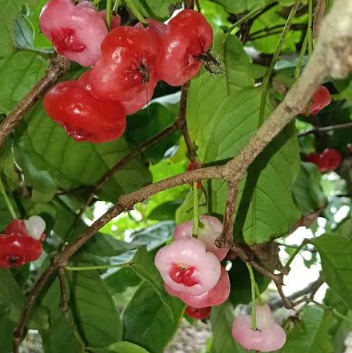
| Watery Rose Apple Quick Facts | |
|---|---|
| Name: | Watery Rose Apple |
| Scientific Name: | Syzygium aqueum |
| Origin | East Indies and Malaya, also cultivated in Ceylon, the Pacific Islands, India, and former Indochina |
| Colors | White, Pink-red |
| Shapes | Bell-shaped, Length: 5–8 cm |
| Flesh colors | White, Creamy |
| Taste | Mild sweet |
| Calories | 25 Kcal Kcal./cup |
| Major nutrients | Vitamin C (24.78%) Vitamin B3 (5.00%) Carbohydrate(4.38%) Dietary Fiber (3.95%) Calcium (2.90%) |
| Health benefits | Prevent Diabetes, Prevent Constipation, Prevent muscle cramps, Skin Health, Eliminate free radicals |
A Rose Apple is neither an apple nor a rose. It belongs to the same family of plums, apricots, peaches, cherries, raspberries, pears, and almonds. It is a sensitive fruit that gets bruises easily. It does better in wet, warm, and humid areas with adequate rainfall. The tree bears a fruit of about 2 kg after the growth of four years. This fruit is rich in polyphenols, potassium, vitamin C, and dietary fiber.
| Name | Rose Apple |
|---|---|
| Scientific Name | Syzygium aquarium |
| Native | East Indies and Malaya, also cultivated in Ceylon, the Pacific Islands, India and former Indochina. |
| Common/English Name | Bell Fruit, Watery Rose Apple, Water Cherry, Bell Apple, Water Apple |
| Name in Other Languages | Brazil: Jambeiro Aguado, Jambo Portuguese: D’agua Chinese: Shui Lian Wu; Dominican Republic (Spanish): Cajuilito Solimán; Dutch: Djamboe Aer; French: Jambosier D’eau, Pomme D’eau; German: Wasserjambuse, Wachsjambuse; Indonesia: Aceh: Jambi Raya, Jambi Iye; Bali: Jambu Er, Njamu Er; Batak: Jambu Erang, Jambu Aek, Besemah: Jambu Ayik Bimba: Jambu Jene, Bugis: Jambu Saiom, Jambu Salo; Boeol, Sulawesi, Manado: Takaw; Ceram, Moluccas, Ambon: Kepet, O’uno; Kalimantan, Dyak: Kubal; Gajo: Jambu Airjemerl; G orontalo: Omuto, Upo; Halmaheira: Yarem, Rowane; Jambi: Jambu Pingping , Java: Jambu Air, Jambu Uwer, Lampong: Jambu Air, Jambu Kelinga; Lingga: Jambu Bertih; Madurese: Jambhu Wir; Makassar: Jambu Jene; Malay, Bengkoelen: Jambu Keling; Manado: Gora; Minangkabau: Jambu Aye; Nias: Samba; Oelias: Rutu Putio, Jambu Waelo; Papua: Purori, Ansahmoh,; Sangir: Compose; Sawoe: Wo Luba Kume; Singkep: Jambu Aer; Serawaj: Jambu Ayak; Solor: Bluwo, Bluwa; Sulawesi, Moluccas: Kebes, Kouoa; Sundanese: Jambu Air; Ternate: Gora Yadi ; Tidore: Yadi; Toraja: Jambu, Wua Usa; Japanese: Mizu Renbu; Malaysia: Jambu Chili, Jambu Ayer; Papua New Guinea: Lal Lau; Philippines (Bisaya): Tambis; Spanish: Manzana De Agua, Perita Costena; Suriname: Pommerak; Thai: Machomphu-Pa, Chom Pu Pa |
| Plant Growth Habit | Tropical, evergreen, low |
| Growing Climate | Warm and humid climates with adequate rainfall |
| Soil | Well-drained |
| Plant Size | 3–10 m |
| Bark | Flaky brown |
| Branchlets | Wide spreading |
| Stem | 30 cm |
| Leaf | Narrow and glossy |
| Edible parts of the plants | Fruits: consumed as fruit salad or made pickle Leaves: used to wrap fermented sticky rice |
| Flowering Season | Midsummer (from June- August) |
| Flower | Greenish-white or creamy-white, Width: 2 to 4 in (5-10 cm), Diameter: 7.5-10 cm |
| Fruit shape & size | Bell-shaped, length: 5–8 cm |
| Fruit color | Pink-red |
| Flesh color | White |
| Fruit peel | Thin with smooth texture |
| Flavor/aroma | Not tart, simply aromatic |
| Fruit Taste | Mild sweet |
| Seed | 1 or 2, grey in color |
| Varieties/Types | Java Rose Apple, Malay Rose Apple, Jambu, Water Rose Apple |
| Fruit Season | Early winter to Late fall |
| Major Nutritions | Vitamin C (Ascorbic acid)22.3 mg (24.78%) Vitamin B3 (Niacin) 0.8 mg (5.00%) Carbohydrate 5.7 g (4.38%) Total dietary Fiber 1.5 g (3.95%) Calcium, Ca 29 mg (2.90%) Potassium, K 123 mg (2.62%) Vitamin A 17 µg (2.43%) Vitamin B2 (Riboflavin) 0.03 mg (2.31%) Copper, Cu 0.016 mg (1.78%) Vitamin B1 (Thiamin) 0.02 mg (1.67%) Manganese, Mn 0.029 mg (1.26%) Protein 0.6 g (1.20%) Magnesium, Mg 5 mg (1.19%) Phosphorus, P 8 mg (1.14%) Iron, Fe 0.07 mg (0.88%) |
| Calories in 1cup (100 g) | 25 Kcal. |
| Health Benefits |
|
| Traditional uses |
|
| Precautions |
|
| How to Eat |
|
| Other Facts |
|
Watery Rose apple Scientific Classification
Scientific Name: Syzygium aqueum
| Rank | Scientific Name & (Common Name) |
|---|---|
| Kingdom | Plantae (Plants) |
| Subkingdom | Tracheobionta (Vascular plants) |
| Superdivision | Spermatophyta (Seed plants) |
| Division | Magnoliophyta (Flowering plants) |
| Class | Magnoliopsida (Dicotyledons) |
| Subclass | Rosidae |
| Order | Myrtales |
| Family | Myrtaceae (Myrtle family) |
| Genus | Syzygium P. Br. ex Gaertn. (Syzygium) |
| Species | Syzygium aqueum (Burm. f.) Alston (Watery roseapple) |
| Synonyms |
|
Historical reports suggest that the plant was originally indigenous to the Southeast Asian region, most probably the current country of Java, but with time, through the activity of traders, was distributed to other parts of the world. Today, the plant is cultivated in most of the tropical countries, including the Indian subcontinent and the sub-Saharan African regions (Benin, Democratic Republic of Congo, and Cameroon), as well as in South America and the warmer parts of America.
History
Probably it was originated in the East Indies and Malaya. Besides the inherent countries, it is also cultivated in Ceylon, India, Pacific Islands, and Indochina.
Plant
The Watery rose apple tree grows to a height of 6 m to 15 m, and has a grayish-brown bark. The leaves are thin, narrowly lanceolate, and coriaceous, spanning a length of 10 cm to 23 cm and a width of 2.5 cm to 5 cm, with along acuminate apex, cuneate base, and petioles measuring 0.5 to 1 cm in length. The flowers are terminal with single-branched cymes of about 2 cm in length. A funnel form of hypanthium, measuring about 7 to 10 mm in length, is seen to narrow into a short pseudoterminal of 3 to 4 mm in length. Two pairs of fleshy, unequal, persistent, glabrous, or sparsely puberulent sepals are present, one pair measuring about 6 to 8 mm in length and the other 4 to 6 mm. Four orbicular to ovate-orbicular concave petals with a white to greenish-white coloration are present (12 to 20 mm in length), along with long creamy white filaments (10 to 50 mm long). The tree bears whitish- to pinkish-yellow subglobose berries with a fleshy pericarp (10 to 15 mm thick). Usually, a single subglobose seed is present, having a diameter of 2 to 2.5 cm and bearing testa closely coherent to the cotyledons.
Fruit
The tree bears fruit from early winter to the late fall. The fruit is bell-shaped, about 5 to 8 cm long. The fruit is pink to red in color with white texture flesh. The color of the flesh differs in the type of cultivar grown. The fruits which are ripened have a light and faint aroma with a moderately sweet taste. Each fruit possesses one or two grey seeds. The fruit has got smooth and thin skin.
Nutritional value
Watery Rose Apple possesses a rich amount of iron, calcium, fiber, Vitamin C, protein and Vitamin A. 100 gm of Rose Apple contains calcium (29 mg), potassium (123 mg), sulfur (13 mg). The same amount of Rose Apple provides Vitamin C (24.78%), Total fat (0.86%), Iron (0.88%), and Phosphorus (1.14%).
Nutritional value of Rose Apple
Calories 25 Kcal.Calories from Fat 7.74 Kcal.
| Proximity | Amount | % DV |
|---|---|---|
| Water | 93 g | N/D |
| Energy | 25 Kcal | N/D |
| Energy | 105 kJ | N/D |
| Protein | 0.6 g | 1.20% |
| Total Fat (lipid) | 0.3 g | 0.86% |
| Ash | 0.4 g | N/D |
| Carbohydrate | 5.7 g | 4.38% |
| Total dietary Fiber | 1.5 g | 3.95% |
| Minerals | Amount | % DV |
|---|---|---|
| Calcium, Ca | 29 mg | 2.90% |
| Potassium, K | 123 mg | 2.62% |
| Copper, Cu | 0.016 mg | 1.78% |
| Manganese, Mn | 0.029 mg | 1.26% |
| Magnesium, Mg | 5 mg | 1.19% |
| Phosphorus, P | 8 mg | 1.14% |
| Iron, Fe | 0.07 mg | 0.88% |
| Zinc, Zn | 0.06 mg | 0.55% |
| Chloride | 4 mg | 0.17% |
| Sulphur | 13 mg | N/D |
| Vitamins | Amount | % DV |
|---|---|---|
| Vitamin C (Ascorbic acid) | 22.3 mg | 24.78% |
| Vitamin B3 (Niacin) | 0.8 mg | 5.00% |
| Vitamin A | 17 µg | 2.43% |
| Vitamin B2 (Riboflavin) | 0.03 mg | 2.31% |
| Vitamin B1 (Thiamin) | 0.02 mg | 1.67% |
Health Benefits of Watery Rose Apple
1. Fights Free Radical Damage
Watery Rose Apple is rich in Vitamin C which prevents the damage of free radicals, pollutants, and toxic chemicals which leads to the health ailments such as heart disease, cancer, and arthritis. Free radicals are developed in the body when the body is exposed to radiation, tobacco, or smoke and during the process of breaking down food.
Vitamin C enhances white blood cells production and also assists in functioning. As Vitamin C is an antioxidant, it eliminates oxidative damage and enhances smooth functioning. It is also believed that Vitamin C effectively boosts the immune system to counteract colds.
2. Reduced Risk of Stroke
The presence of Vitamin C in the Watery Rose Apple lowers the chances of stroke and health ailments such as inflammation, oxidative damage, cardiac health, atherosclerosis, blood pressure, and endothelial health. The research summarizes that the development of plaque in the body results in stroke or heart attack which could be reduced with Vitamin C. 22 mg of Vitamin C is obtained from 100 grams of Rose Apple.
3. Boost good HDL Cholesterol
Watery Rose Apple is the source of Niacin which is used to add cholesterol. The studies show that Niacin enhances HDL cholesterol levels and reduces triglycerides and LDL cholesterol.
4. Prevent Diabetes
The research has shown that the use of Watery Rose Apple reduces the level of blood glucose by enhancing the activities of carbohydrate metabolic enzymes such as glucose-6-phosphate dehydrogenase, hexokinase, and glucose-6-phosphatase.(1)
5. Prevent Constipation
Dietary fiber in Watery Rose Apple supports the digestive system in the material movement and stimulates stool which is helpful for those having irregular stools or constipation. It supports healthy weight and reduces the chances of heart disease and diabetes.
6. Prevent muscle cramping
Watery Rose Apple also possesses an adequate amount of potassium which enhances the strength of muscles and reduces muscle cramps which is lead due to the low level of potassium.
7. Skin Health
An adequate amount of Vitamin A and C could be obtained from the Watery Rose Apple which helps to prevent the damage from the oxidative stress caused by the poor diet, stress, and pollution. It also reduces the dryness of the skin and reduces wrinkles.
8. Antimicrobial Activity
Pre-clinical studies have shown that an extract prepared from the bark of the Watery Rose Apple was effective against Staphylococcus aureus, Yersinia enterocolitica, Staphylo coccus hominins, Staphylococcus cohnii, and Staphylococ cus warneri. A phytochemical correlation suggests that the observed effect is due to the presence of increased amounts of tannin. An extract prepared from the leaves is also reported to be useful against A. faecalis, A. hydrophilia, B. cereus, and S. aureus.
Studies have also shown that the phytochemicals friedelin, beta-amyrin acetate, betulinic acid, and lupeol, isolated from the bark, are effective against the dermatophytes Microsporum audouinii, Trichophyton mentagro phytates, and Trichophyton Sudanese. The ethanolic extracts of the leaf were also observed to be effective against Mycobacterium smegmatis. Additionally, the leaf extracts showed potent antiviral effects against herpes simplex virus types I and II and on the virus involved in vesicular stomatitis. Recent studies have also shown that the leaf extract possesses potent antibacterial effects against Propionibacterium acnes, the organism responsible for acne.
9. Anti-inflammatory Activity
Chronic or recurrent inflammation in the tissues results in oxidative stress, and this may play a contributory role in the initiation and/or progression and promoting of cancer cell growth. Regular administration of non-steroidal anti-inflammatory drugs (NSAIDs) reduces the risks of certain cancers, thereby asserting the fact that modulation of cellular signaling involving chronic inflammatory response by anti-inflammatory agents offers an important strategy in molecular target-based chemoprevention and cytoprotection. However, long-term administrations of NSAIDs can cause ulcerations on the gastrointestinal tract, which may become a major clinical problem.
10. Analgesic Activity
Pain is defined as an unpleasant sensory and emotional experience associated with actual or potential tissue damage or described in terms of such damage. The sensation can be characterized as a multi-dimensional experience in which several components are involved: motivational, emotional, sensory-discriminative, affective, and cognitive. The analgesic drugs currently in use are either narcotics or non- narcotics and have proven side effects and toxic effects. There is a need, therefore, for non-toxic agents that are safe and preferably of dietary origin. Avila-Peña et al. evaluated the analgesic potential of the hydro-alcoholic extract of the leaf of rose apple, using the standard hot plate and formalin tests, in rats. Additionally, the observed analgesic effect was enhanced by naloxone, suggesting a possible additive effect.
Health Benefits of Watery Rose Apple Plant
1. Antioxidant Benefits
An antioxidant restricts the molecule’s oxidation which damages the cells because of the production of free radicals which could be eliminated with Selenium, vitamin C, Lycopene, Beta Carotene, Vitamin E, Zeaxanthin, and Lutein. Free radicals are the cause of various ailments such as Cataracts, Alzheimer’s disease, cancer, Parkinson’s disease, diabetes, heart disease, and cancer.
a. The leaves of the Watery Rose Apple plant possess hepatoprotective and antioxidant properties. The examination of the leaves for the antioxidant properties shows that it possesses the hepaprotective activity which is comparable to the silymarin drug. (2)
b. The report which was published by the American Journal of BioScience summarizes that the barks of Roseapple assist to prohibit the free radicals. As a result, this plant could be studied due to its potential of bioactivity for discovering the efficacy of its use as a medicine. (3)
2. Prevent Acne
Acne vulgaris is a skin condition that leads to inflammation caused due to skin infection. The research shows that the leaves of Rose Apple possess anti-acne properties such as anti-inflammatory, antioxidant, and antibacterial properties. The experiment also shows that the presence of synergic actions results in antioxidant, antibacterial and anti-inflammatory activities. Thus, S. Jambos assist in the anti-acne activities. This study helps to know about the herbal medicines whereas various clinical trials are being continued. (4)
3. Cure Leaver Damage
Liver damage leads to various liver diseases which are caused due to the excessive consumption of alcohol, anemia, malnutrition, infection, and hepatotoxic drugs. The research which was conducted by Gujarat Ayurved University shows that the leaves extract of Watery Rose Apple contains a liver protective agent. It leads to the efficacy in the change in function of the liver than the disease control group. The efficacy was worthy of comparison to the standard drug. (5)
Traditional usage
Bark
The decoction made from astringent bark is used in folkloric medicine of Malaysia to treat thrush.
Fruit
It is served as a salad at the childbirth ceremony. In India, the fruit is also used as a tonic to enhance the liver and brain.
Flower
The fever could be lessened from the sweetened prepared from the flowers.
Leaf
The decoction made from the leaves acts as an expectorant and diuretic which treats rheumatism and also cures sore eyes.
Seeds
The health conditions such as dysentery, catarrh, and diarrhea could be treated with the use of seeds. The people of Nicaragua use the infusion of roasted and powdered seeds to treat diabetes. The Colombian people believe that the seeds possess pain-killer properties.
Root
The root is used by the people of Cuban to treat epilepsy.
Medicinal uses
- Root bark and fruit are used in the Chinese system of traditional medicine as blood coolants.
- Fruit peel strengthens the spleen, warm stomach, and treats deep ulcers and tumors.
- Fruit is used as a tonic for the brain and liver.
- Flowers have antipyretic effects and seeds treat dysentery, diarrhea, and catarrh.
- The bark is used to treat asthma, hoarseness, and bronchitis.
How to eat
Watery Rose Apple could be consumed raw or preserved in the form of jellies and jams. It is also added to the desserts. It is also used to make fruit sauce or syrup.
Precautions
Watery Rose Apple possesses the risk of toxicity. The seeds and roots are poisonous. The leaves, roots, and stems of the plant contain a mysterious amount of cyanide or prussic acid or hydrocyanic acid which it could be harmful.
From Where To Buy

- 100% NATURAL & ORGANIC: Naturally hydrate and moisturize your skin with our refreshing Rosewater. It's USDA organic certified with ZERO additives, artificial fragrances & alcohol. Use it as a facial mist for a radiant glow or hair for a bright shine.
- SKIN BENEFITS: Our Rose Water has anti-aging & anti-inflammatory properties to promote youthful skin & reduce skin irritation & redness. It maintains the skin's pH balance to clean pores and reduce Acne, Wrinkles, Fine Lines, Sun Damage & Dark Spots.
- HAIR CARE: Our floral rose water for hair replenishes lost moisture for smoother, shinier & healthier hair. With rose hydrosol, it relieves dry hair from heat damage from blow dryers & other appliances and decreases dandruff & promotes hair growth.
- MULTI-PURPOSE: Our toner for face will keep you feeling beautiful all day long. It works as a makeup setting spray & remover to start and finish your day feeling refreshed. With its beautiful rose scent, you'll never want to leave home without it!
- SAFE FOR ALL SKIN TYPES: Our fresh facial toner is Cruelty-free, Paraben-free, Sulfate-free, Gluten-free, & safe for all skin types. It's bottled in the USA in a glass bottle for a luxurious, spa-like experience in the comfort of your own home.

or

- LUNCHBOX READY - don't forget to pack our freeze-dried fuji apples, each bag is the equivalent to one cup of fresh fruit
- QUALITY FOOD - Our Fuji Apples are freeze-dried, a gentle dehydration process used for preservation of high quality foods
- NUTRIOUSLY DELICIOUS - an excellent source of antioxidants essential for energy levels and overall health.
- 100% ALL NATURAL - made with real fruits and contains zero artificial colors or preservatives
- ALLERGY SENSITIVE - peanut-free, tree-nut free, soy-free, dairy free and gluten-free
References
- https://www.ncbi.nlm.nih.gov/pmc/articles/PMC3649719/
- https://www.ncbi.nlm.nih.gov/pmc/articles/PMC6315720/
- https://www.ncbi.nlm.nih.gov/pmc/articles/PMC3419346/
- https://www.ncbi.nlm.nih.gov/books/NBK11795/
- https://www.ncbi.nlm.nih.gov/pmc/articles/PMC5291486/
- https://fruits.edpsciences.org/articles/fruits/abs/2012/05/fruits120033/fruits120033.html
- http://www.fao.org/3/cb2395en/CB2395EN.pdf
- https://www.fao.org/in-action/inpho/crop-compendium/fruits-vegetables/en/
- https://www.fao.org/3/cb2395en/online/src/html/fruit-and-vegetables.html
- http://www.fao.org/3/cb2395en/CB2395EN.pdf
- https://en.wikipedia.org/wiki/Fruit
- https://en.wikipedia.org/wiki/List_of_food_plants_native_to_the_Americas
- https://en.wikipedia.org/wiki/List_of_culinary_fruits
- https://www.hsph.harvard.edu/nutritionsource/what-should-you-eat/vegetables-and-fruits/
- https://www.betterhealth.vic.gov.au/health/healthyliving/fruit-and-vegetables
- https://www.cdc.gov/healthyweight/healthy_eating/fruits_vegetables.html
- https://www.botanical-online.com/en/botany/fruits-types-characteristics
- https://www.fda.gov/food/laboratory-methods-food/mpm-v-9-fruits-and-fruit-products-v-51-v-78
- https://www.fda.gov/food/food-labeling-nutrition/nutrition-information-raw-fruits-vegetables-and-fish
- https://onlinelibrary.wiley.com/doi/abs/10.1111/mcn.12208
- http://news.discovery.com/earth/
- https://www.cabi.org/isc/datasheet/
- https://www.science.org/
- https://plants.ces.ncsu.edu/plants/
- https://www.sciencedirect.com/topics/agricultural-and-biological-sciences/fruit-vegetable
- https://www.researchgate.net/publication/
- https://www.ams.usda.gov/grades-standards/fruits
- https://www.aphis.usda.gov/aphis/resources/traveler/intl-travel/fruits-vegetables/fruits-vegetables
- https://snaped.fns.usda.gov/seasonal-produce-guide
- https://www.nass.usda.gov/Publications/Highlights/2015/FruitsNutsBerries_AgCensusHighlights.pdf
- https://plants.usda.gov/home/plantProfile?
- https://www.fs.fed.us/wildflowers/ethnobotany/food/nuts.shtml
- https://downloads.usda.library.cornell.edu/usda-esmis/files/zs25x846c/sf269213r/6t054c23t/ncit0521.pdf
- https://agr.wa.gov/departments/business-and-marketing-support/farm-to-school-toolkit/
- https://health.gov/sites/default/files/2020-01/DGA2000.pdf
- https://www.farmers.gov/archived/cfap2/specialty
- https://www.hsph.harvard.edu/nutritionsource/
- https://www.foodsafety.gov/food-safety-charts/food-safety-during-power-outage
- https://clinicaltrials.gov/ct2/show/
- https://botany.org/home/careers-jobs/careers-in-botany/what-is-botany.html
- https://www.healthbenefitstimes.com/category/fruits
- http://www.hear.org/pier/species/
- https://www.itis.gov/servlet/SingleRpt/SingleRpt?
- http://www.theplantlist.org/tpl1.1/record/
- https://www.fs.fed.us/database/feis/plants/tree/
- https://www.itis.gov/servlet/SingleRpt/SingleRpt?
- https://eol.org/pages/

