
The pineapple (Ananas comosus) is a tropical plant with edible fruit and is the most economically significant plant in the family Bromeliaceae. The pineapple is indigenous to South America, where it has been cultivated for many centuries. The introduction of the pineapple to Europe in the 17th century made it a significant cultural icon of luxury. Since the 1820s, pineapple has been commercially grown in greenhouses and many tropical plantations. Further, it is the third most important tropical fruit in world production. In the 20th century, Hawaii was a dominant producer of pineapples, especially in the US. However, by 2016, Costa Rica, Brazil, and the Philippines accounted for nearly one-third of the world’s production of pineapples.[rx]
| Pineapple Quick Facts | |
|---|---|
| Name: | Pineapple |
| Scientific Name: | Ananas comosus |
| Origin | Inherent to South American Tropics and was introduced widely during 16th and 17th century. |
| Colors | Yellowish to orange, greenish |
| Shapes | Oval to cylindrical, 15 to 25 cm long, 14 to 17 cm diameter |
| Flesh colors | Pale to golden yellow |
| Taste | Sweet, tart |
| Calories | 452 Kcal./cup |
| Major nutrients | Vitamin C (480.67%) Manganese (364.74%) Copper (110.56%) Carbohydrate (91.34%) Vitamin B6 (78.00%) |
| Health benefits | Lower inflammation, Prevents cancer, Enhance immunity, Lowers constipation, Blood pressure regulation |
Pineapple with its botanical name Ananas comosus belongs to the family Bromeliaceae possesses various health-promoting properties. Pineapples are wide cylindrical in shape, have scaly green, yellow, or brown skin, and spiny blue to green leaves. The plant is tolerable to drought and grows upto 5 feet tall and bears the fruit of 15 to 25 cm long with a spiky and tough exterior. The fruit weighs upto 2.5 kg. It has a sweet and tart taste. Pineapples are also known as Common Edible Pineapple, Ananas Bromeliad, Ababa, Ananas, Anana, Anaras, Andras, Anarash, Aneh, Apangdang, Anansi, Bonat, Bhutan Cathar, Danas, Kanas, Ennanansi, and Manias.
Inherent to Paraguay, the pineapple was named from the Spanish word pina which means pinecone. It is a fruit which has 100 to 200 fruitlets fused together. Its cultivation was started from northward to still warm regions along with Indians and was discovered by those explorers who claimed the Americas back in 1492. It became a hearty food source on ships. In these present days, pineapples are highly produced by Southeast Asia, Thailand. Historically, Hawaii produces pineapples in the largest quantities but it is now cultivated largely in the Philippines, Brazil, and Costa Rica.
Pineapple contains Bromelain which is an enzyme that assists in food digestion by breaking down food to the lower feeling of heaviness and bloating. It provides medicinal benefits such as preventing lung disorders, improving the respiratory system, curing infections such as cold, cough, assisting to lose weight, improving the digestion process, preventing cancer, lowering inflammation, improving immunity, strengthening bones, and promoting blood circulation.
Plant
Pineapple is an herbaceous and perennial plant that measures 3.3 to 4.9 feet tall. The plant has a short and stocky stem that bears tough and waxy leaves. The plant usually produces up to 200 flowers. When the first fruit is produced, side shoots form in the leaf axils of the main stem. Leaves are long, trough-shaped, narrow with the sharp spines on the margins that are 30-100 cm long encircling a thick stem. The color of the flower varies which depends on variety from light purple to red. It consists of many long pointed bracts having three petalled flowers in their axils. Flowers turn into fruits without being pollinated. Ovaries form into berries which are large, compact, and multiple accessory fruit. Fruits are organized in two interlocking helices, eight in one direction and thirteen in other. Fruits have roughly diamond-shaped with flattened sides.
Leaves
Leaves are long-pointed; needle tipped which bears sharp and upcurved spines on margins. Leaves measure about 20 to 72 inches long, 5 to 8 cm wide. It might be green or diversely striped with yellow, red, or ivory down the middle or near margins.
Flowers
When the flower blooms, the stem elongates and enlarges near the apex puts outward the bloom of small red or purple flowers. Hummingbirds pollinate flowers and the flowers, later on, develop into small and hard seeds. Seeds are not used to grow pineapples commercially.
Fruit
Fruits are oval to cylindrical in shape and the compound fruits are developed from many small fruits which are fused together. It is fleshy and juicy. The stem serves as a fibrous core. The rind is tough and waxy which might be yellow, dark green, yellow to orange, or reddish in color. The flesh is nearly white to yellow. Fruit weighs about 1 to 2.5 kg.
History
The herb is inherent to South America and was originated from areas between Southern Brazil and Paraguay. Natives of Paraguay and Southern Brazil spread pineapple to South America and reached ultimately Central America, the Caribbean, and Mexico where it was been cultivated by Aztecs and Mayas. In 1493, the pineapple was confronted on the leeward island of Guadeloupe. He called it pina de Indes which means pine of the Indians and brought it back to Europe which makes the pineapple the first bromeliad to leave New World. It was introduced in the early 19th century in the -Philippines, Hawaii, Guam, and Zimbabwe. Firstly this fruit was introduced in Hawaii which was brought by a Spanish ship. Portuguese introduced it to India from Brazil in 1550.
Dutch brought pineapple to Northern Europe from their colony in Surinam. The first pineapple was cultivated successfully in Europe which was grown by Pieter de la Court in 1658 at Meerburg. In 1733, the pineapple was presented to King Louis XV. In 1796, Catherine the Great consumed pineapples that were grown on her own estates before her death. Pineapples became the symbol of wealth due to the expense of direct import and vast cost in equipment and labor prescribed to grow them in a temperate climate with the use of hothouses called pineries. Initially, it was used to display at dinner parties rather than consumption and was used till it began to rot. On British estates, the production of the fruit started in the second half of the 18th century which becomes the subject of antagonism between wealthy aristocrats.
John Kidwell introduced the pineapple industry to Hawaii. In the 1900s, the pineapple was cultivated on a large scale by US companies. In 1899, the famous pineapple industrialists known as James Dole moved to Hawaii and started their plantation in 1900. IN 1901 and 1917, the pineapple was grown by the companies Dole and Del Monte on the island of Oahu. About 60 acres of land was acquired by Dole’s pineapple company in 1901.
In 1909, pineapple cultivation was started by Maui Pineapple Company on the island of Maui. In 2006, Dole and Maui Pineapple Company were considered as the largest growers of pineapples in Hawaii after Del Monte announced the withdrawal in Hawaii from pineapple cultivation.
Nutritional value of Pineapple, raw, all varieties
Calories 452 Kcal. Calories from Fat 9.81 Kcal.
| Proximity | Amount | % DV |
|---|---|---|
| Water | 778.3 g | N/D |
| Energy | 452 Kcal | N/D |
| Energy | 1891 kJ | N/D |
| Protein | 4.89 g | 9.78% |
| Total Fat (lipid) | 1.09 g | 3.11% |
| Ash | 1.99 g | N/D |
| Carbohydrate | 118.74 g | 91.34% |
| Total dietary Fiber | 12.7 g | 33.42% |
| Total Sugars | 89.14 g | N/D |
| Sucrose | 54.21 g | N/D |
| Glucose (dextrose) | 15.66 g | N/D |
| Fructose | 19.19 g | N/D |
| Minerals | Amount | % DV |
|---|---|---|
| Calcium, Ca | 118 mg | 11.80% |
| Iron, Fe | 2.62 mg | 32.75% |
| Magnesium, Mg | 109 mg | 25.95% |
| Phosphorus, P | 72 mg | 10.29% |
| Potassium, K | 986 mg | 20.98% |
| Sodium, Na | 9 mg | 0.60% |
| Zinc, Zn | 1.09 mg | 9.91% |
| Copper, Cu | 0.995 mg | 110.56% |
| Manganese, Mn | 8.389 mg | 364.74% |
| Selenium, Se | 0.9 µg | 1.64% |
| Vitamins | Amount | % DV |
|---|---|---|
| Water-soluble Vitamins | ||
| Vitamin B1 (Thiamin) | 0.715 mg | 59.58% |
| Vitamin B2 (Riboflavin) | 0.29 mg | 22.31% |
| Vitamin B3 (Niacin) | 4.525 mg | 28.28% |
| Vitamin B5 (Pantothenic acid) | 1.928 mg | 38.56% |
| Vitamin B6 (Pyridoxine) | 1.014 mg | 78.00% |
| Vitamin B9 (Folate) | 163 µg | 40.75% |
| Folic Acid | 0 µg | N/D |
| Folate, food | 163 µg | N/D |
| Folate, DEF | 163 µg | N/D |
| Choline | 49.8 mg | 9.05% |
| Vitamin C (Ascorbic acid) | 432.6 mg | 480.67% |
| Fat-soluble Vitamins | ||
| Vitamin A, RAE | 27 µg | 3.86% |
| Vitamin A, IU | 525 IU | N/D |
| Beta Carotene | 317 µg | N/D |
| Betaine | 0.9 mg | N/D |
| Vitamin E (alpha-tocopherol) | 0.18 mg | 1.20% |
| Vitamin K (phylloquinone) | 6.3 µg | 5.25% |
| Lipids | Amount | % DV |
|---|---|---|
| Fatty acids, total saturated | 0.081 g | N/D |
| Palmitic acid 16:00 (Hexadecanoic acid) | 0.045 g | N/D |
| Stearic acid 18:00 (Octadecanoic acid) | 0.027 g | N/D |
| Fatty acids, total monounsaturated | 0.118 g | N/D |
| Palmitoleic acid 16:1 (hexadecenoic acid) | 0.009 g | N/D |
| Oleic acid 18:1 (octadecenoic acid) | 0.109 g | N/D |
| Fatty acids, total polyunsaturated | 0.362 g | N/D |
| Linoleic acid 18:2 (octadecadienoic acid) | 0.208 g | N/D |
| Linolenic acid 18:3 (Octadecatrienoic acid) | 0.154 g | N/D |
| Phytosterols | 54 mg | N/D |
| Amino acids | Amount | % DV |
|---|---|---|
| Tryptophan | 0.045 g | 10.23% |
| Threonine | 0.172 g | 9.77% |
| Isoleucine | 0.172 g | 10.29% |
| Leucine | 0.217 g | 5.87% |
| Lysine | 0.235 g | 7.03% |
| Methionine | 0.109 g | N/D |
| Cystine | 0.127 g | N/D |
| Phenylalanine | 0.19 g | N/D |
| Tyrosine | 0.172 g | N/D |
| Valine | 0.217 g | 10.27% |
| Arginine | 0.172 g | N/D |
| Histidine | 0.091 g | 7.39% |
| Alanine | 0.299 g | N/D |
| Aspartic acid | 1.095 g | N/D |
| Glutamic acid | 0.715 g | N/D |
| Glycine | 0.217 g | N/D |
| Proline | 0.154 g | N/D |
| Serine | 0.317 g | N/D |
| Flavones | Amount | % DV |
|---|---|---|
| Apigenin | 0 mg | N/D |
| Luteolin | 0.1 mg | N/D |
| Flavonols | Amount | % DV |
|---|---|---|
| Apigenin | 0 mg | N/D |
| Luteolin | 0.1 mg | N/D |
*Above mentioned Percent Daily Values (%DVs) are based on 2,000 calorie diet intake. Daily values (DVs) may be different depending upon your daily calorie needs. Mentioned values are recommended by the U.S. Department of Agriculture. They are not rxharun.com recommendations. Calculations are based on average age of 19 to 50 years and weigh 194 lbs. Source: https://ndb.nal.usda.gov/
Health Benefits of Pineapple
Along with the minerals and vitamins found in pineapple, it has a high content of Vitamin C which is helpful to suppress colds, coughs, and flu symptoms. Vitamin C is a natural antioxidant, is essential to synthesize collagen which is the predominant protein in the body for healthy organs, blood vessels, tissue support, skin, bone strength, and heavy metal absorption. The research shows that consumption of pineapples prevents indigestion, arthritis inflammation, bruising, clotting, and harmful bacteria. It is a tropical fruit that has been used for centuries its numerous health benefits besides its taste.
- Lower inflammation
Pineapple is a great source of bromelain which is helpful to treat sports injuries. Bromelain is a proteolytic enzyme which is a combination of enzymes that digest protein. The anti-inflammatory properties help to lower bruising and swelling. It is a scavenger enzyme that assists in eliminating damaged cells. It triggers the body’s production of substances that counteract pain and lower swelling and it possesses chemicals that prevent clotting of blood. It treats various conditions such as lowering inflammation from injuries and infections. It lowers osteoarthritic pain associated with gout, arthritis, chronic inflammation, and joint pain. Bromelain is useful for lowering inflammation and swelling. It has chemicals that obstruct the growth of tumor cells and slow down the clotting of blood.
- Prevents cancer
Pineapple has bromelain which acts as anti-cancer properties. It suppresses the growth of cancer cells. Moreover, beta carotene helps to prevent colon cancer and prostate cancer. This fruit has been associated with the prevention of cancers in the throat, mouth, and breast as it has a high content of antioxidants such as beta carotene, vitamin A, flavonoid compounds, bromelain, and manganese. Manganese is a vital cofactor of superoxide dismutase which scavenges free radicals which is related to various cancers.
- Enhance immunity
Pineapple provides 130% of Vitamin C in a single serving which makes it the delicious and richest source of ascorbic acid. Vitamin C helps to lower illnesses and promote the immune system with stimulation of white blood cells activity and acts as an antioxidant that counteracts harmful effects of free radicals. Free radicals are the harmful byproduct of cellular metabolism that damages organ systems and also disturb function and causes mutation of healthy cells to cancerous ones. Vitamin C found in pineapple helps to defend.
- Lowers constipation
Pineapple helps to support digestion and lower constipation and bloating. It breaks down protein faster which speeds up digestion and lowers constipation and bloating in the process. Moreover, bromelain assists in the treatment of bowel problems such as ulcerative colitis and lower ulcers and swellings. The consumption of pineapple protects from various health problems such as diarrhea, constipation, atherosclerosis, irritable bowel syndrome, high blood pressure, and blood clotting. The high content of fiber promotes food passage through the digestive tract and stimulates the release of digestive juices and gastric which assist in the desolvation of food. It adds bulk to loose stool which treats IBS and diarrhea. Bromelain assists in the stimulation of the digestion of protein, treats digestive diseases and lowers inflammation of the gut.
- Blood pressure regulation
Pineapple is a great source of minerals and potassium. The deficiency of potassium results in health problems. Potassium has vasodilator activities that ease tension and stress of blood vessels and promote blood circulation to various body parts. Relaxation of blood vessels helps to lower blood pressure and the flow of blood is less restricted. It prevents blocking of blood flow and lower plaque accumulation in vessels and arteries which prevents the chances of health conditions such as heart attacks, atherosclerosis, and strokes.
- Supports digestion
Pineapple has the enzyme bromelain which supports digestion by breaking down proteins. It is used in marinades as bromelain assist in tenderizing meat. Pineapple juice has protein which lowers the inevitable spike in levels of blood sugar. It keeps the teeth and gums healthy and strong. This fruit prevents plaque formation and restricts the activity of bacteria in the mouth by lowering the chances of periodontal diseases and gingivitis. Bromelain breaks down proteins in food effectively. Dietary fiber and Vitamin C are found in ample amounts which promote metabolism and assist in the digestion of food. It promotes the movements of the bowel and eliminates intestinal parasites such as tapeworms. An intake of pineapple juice could effectively counteract motion sickness and nausea.
- Vision health
Pineapple assists loss of vision for older adults which is caused by damage to the retina. Add pineapple to the diet which lowers the chances of diseases as it contains beta-carotene which is essential for healthy eyes. Vitamin A and beta carotene are vital nutrients for the development of eye health. With its deficiency, one could suffer from vision loss. Daily intake of pineapple juice helps to lower the chances of macular degeneration in old ages. Antioxidants assist to maintain the good health of the eyes and prevent its related problems.
- Bone health
Magnesium is found in small bit amounts in the body but the diet we consume every day might not be rich in magnesium. Magnesium is vital for the construction of DNA and is essential to strengthen bones and connective tissues. Pineapples are a great source of magnesium. Pineapple juice provides 73% of magnesium in one cup. During child development, pineapples support bone growth in old age and also strengthen them.
- Hair and nails health
Pineapples are great for hair health that assist in the prevention of hair loss and also thicken hair strands. Pineapples are a great source of Vitamin C which also prevents the chances of hair loss. The antioxidant properties help to combat free radicals that damage the growth of hair. It provides nourishment to follicles of hair. Its extracts are rich in enzymes that provide nutrients to follicles of hair. It promotes elasticity as well as thickness which makes it sturdier and more resistant to breaking. Bromelain helps to counteract scalp inflammation and prevents infections of the scalp which are the cause of unwanted hair loss. It has a high content of vitamins that effectively counteract deficiency symptoms of vitamins such as brittle and cracked nails. Apply the wedges of pineapple directly on nails which helps to soften and strengthen them.
- Skin health
Pineapples have vitamin C which makes them treat acne effectively. Use it topically or consume it for treating acne and other inflammatory problems related to the skin. Bromelain helps to enhance the healing effect of Vitamin C. It has collagen synthesizing properties that counteract fighting processes and makes the skin firm and smooth. Amino acids and vitamin C nourish damaged cells and tissues which enhance the repairing process. Apply the juice of pineapples to the face and let it remain for 10 to 15 minutes and then wash off with lukewarm water. Make a hydrating pack by combining crushed pineapples with some milk and egg yolk and apply it on dry. Pineapples have alpha hydroxyl acid which provides you radiant and hydrated skin.
Types of Pineapple
The pineapple plant is really a bromeliad that is indigenous to South America. Soon after its finding simply by European visitors, it rapidly increased in recognition and after this is cultivated in huge farms on Hawaii, in addition to being a legendary icon for the state. The variability grown in Hawaii is the graceful cayenne, which can be seen in grocery stores in fresh as well as refined types. The groups differ in accordance with the pineapple’s dimension, industrial accessibility as well as sweet taste. The pineapple is gathered into 4 major classes with plenty of types in every class.
1. Smooth Cayenne:
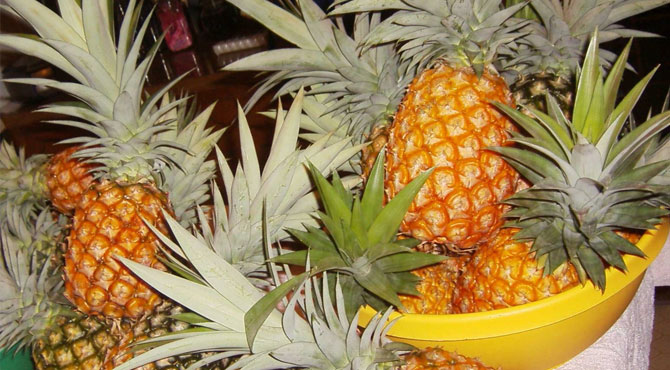
The graceful cayenne pineapple is certainly the most famous of all of the types because of its lower dietary fiber content, ailment resistance, wealthy flavor, juiciness along reduced acidic content. It features a yellow-colored inside as well as orange outside and is also mostly utilized for processed pineapple. It really is referred to as smooth cayenne because of its beginning in Cayenne, French Guyana, and since it provides an even skin along with hardly any sticking out spines.
Smooth Cayenne pineapple started just before 1820 and was the kind local Venezuelans grew. The Spanish consider it Cayena Lisa. Since that time, this kind was a major pineapple within Hawaii, Australia as well as Taiwan. Modern-day cultivars that came about from reproduction or even choice of all-natural variations from the Smooth Cayenne consist of Typhoon, St. Michael, Palin, Charlotte Rothschild, Monet Lirio, Perolera, Esmeralda, Bumanguesa, Hilo, and Giant Kew. These types of cultivars are cultivated around the world.
2. Abacaxi:
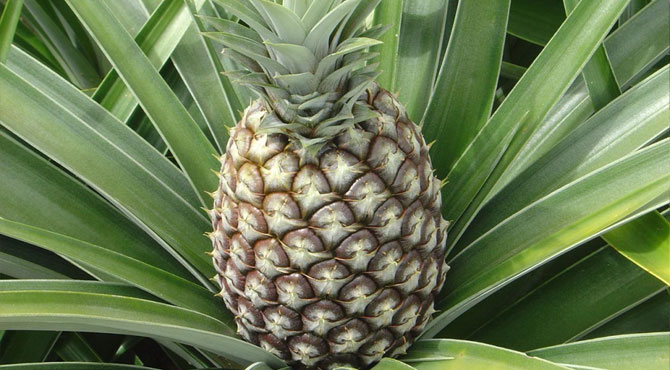
Abacaxi is definitely the Portuguese term for pineapple. The abacaxi can also be referred to as Pernambuco pineapple which is a typical selection of Brazil. The fruit may differ extensively in weight from 2.2 to 11 lbs., and is also extremely disease-proof, having a spiny external. The fruit usually includes a tiny core, along with white or even very pale yellow flesh, and is also undoubtedly one of a lot more scrumptious types. The abacaxi is frequently very soft for industrial handling and shipping.
Nowadays, Abacaxi kinds are wide-ranging within Brazil, the Bahamas, and also South Florida. Panare, Eleuthera, Black Jamaica, Chocona, English, Brecheche, Sugar Slice, Santa Marta, Caicara, Congo Red, Criolla as well as Sugarloaf are titles of pineapple cultivars based on the initial Abacaxi pineapple choice.
3. Red Spanish:
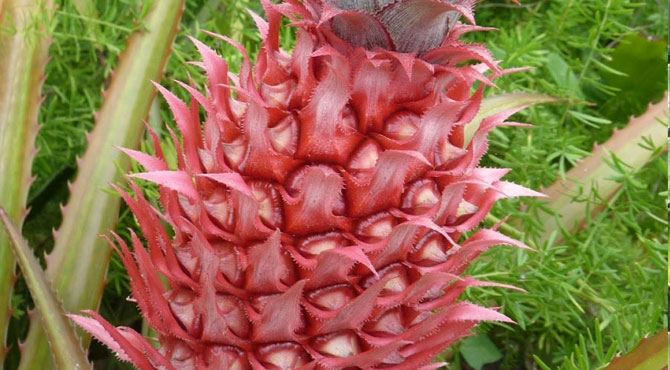
It features a spiny, red-orange external, varies from 3 to 6 lbs. which has a squarish design, pale yellow fibrous flesh, fragrant as well as delicious acid taste. This particular selection is cultivated in Florida, the West Indies, Cuba, and also Puerto Rico.
The Red Spanish is sold mainly towards the fresh market. The hard covering tends to make this particular variety popular amongst shippers. The red Spanish deals with shipping perfectly and is also resistant to fruit decay.
4. Queen:
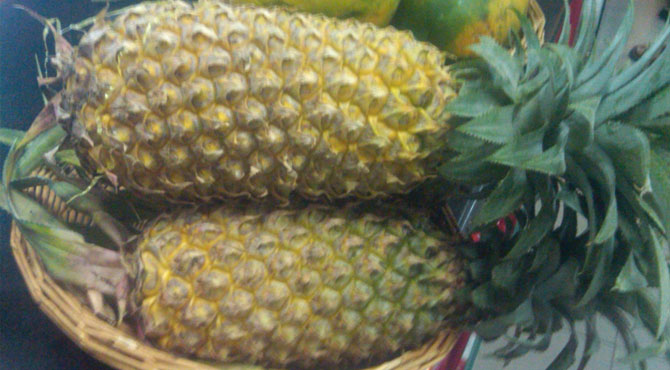
The Queen pineapple is grown in South Africa, Australia as well as the Philippines. It’s really a smaller-sized, more compact range which usually varies in weight from 1 to 2 1/2 lbs. It’s a cold- as well as disease-resistant range along with deep yellow flesh along with a conical form. The fruit is succulent as well as aromatic along with tiny soluble fiber.
The pineapple is really a fresh fruit, eaten worldwide like a healthy treat as well as naturally healthy food. The Queen pineapple is really a sweet orange pineapple, which makes it a popular component within salads or even stir-fry cooking, however, it is, in addition, a fantastic enhance for beverages or any other drinks.
Queen pineapples are created throughout the year, however, the ‘King of Fruit’, since it is also known, is at its very best throughout the summertime. Pineapple farming is really a labor rigorous procedure that requires upto Eighteen months, to supply scrumptious, yellow bananas!
Traditional uses
- Pineapple fruit is used for gonorrhea and indigestion.
- Leaves are useful for gonorrhea and venereal diseases.
- In the Moluccas, unripe fruits are used as a vermifuge for children and abortifacient by women.
- Unripe fruits are used in Malacca for the treatment of gonorrhea.
- In India, the juice extracted from ripe fruit is considered to be a diuretic.
- In Brazil, ripe fruit is used for dyspepsia and to aid digestion.
- In the Philippines, juice extracted from ripe fruit is considered to be laxative, diuretic, digestive, and cooling.
- In Peninsular Malaysia, the decoction made from leaves is used to cure venereal diseases.
- In India, leaves sap is used as anthelminthic and purgative and also for hiccough.
- Consume fruit and root or apply topically to get anti-inflammatory and proteolytic activity.
- Consume ripe fruit to ease a sore throat.
- Pineapple juice helps to promote digestion and also prevents seasickness.
- Unripe fruit enhances appetite, promotes digestion, relieves discomfort from sore throats, and provides relief from dyspepsia.
- The ripe fruit helps to lower excessive gastric acid.
- Apply the juice of ripe fruit to boils, itches, and burns.
- Leaves are useful for fractures and to ease painful menstruation.
- It helps to maintain the health of bones and muscles and relieves pain and muscular fatigue.
Precautions
- Pineapple causes anaphylaxis in some people.
- People who are allergic to latex might be allergic to pineapple as well.
- Symptoms such as hives, intense itching, swelling of the face, throat, tongue, and lips, flushing of the face, difficulty in breathing, intense itching or hives, constipation, sinus congestion, dizziness, fainting, and anaphylactic shock might be experienced.
- Consume it in moderate amounts due to the presence of fructose in it.
- Unripe fruits are harmful and cause gastrointestinal upset and throat irritation.
- Sap obtained from leaves contains calcium oxalate crystals and ethyl acrylate which causes severe mouth pain and minor skin irritation if swallowed.
- Avoid use by breastfeeding mothers.
- It should not be used on the eyes.
- Avoid the people who are scheduled for surgery.
How to Eat
- Pineapple fruit is consumed fresh and used raw in desserts and fruit salads.
- Chop and add it to sauces, soups, stews, casserole, curries, prawns, fish, stir fry vegetables, and meats.
- Dried slices of pineapple are used as snacks. Fruits are susceptible to canning as spirals, slices, spears, chunks, cubes, and titbits.
- Fruits are made into chutneys, pickles, candies, crystallized glace fruit, jams, sweets, syrup cakes, juices, ice cream, pastries, drinks, sherbets, beverages, wine, and punch.
- Pour the pineapple juice into ice cube trays and freeze.
- By-products of canning are used for producing pineapple wine and vinegar.
- Pineapple chunks are used as toppings for pizza and grilled rings on hamburgers.
- Pineapples crushed are used in sweets, yogurt, ice cream, and jam.
- Juice extracted from pineapples is served as a beverage and used as a major ingredient in cocktails such as pina colada.
- Flowering stem and terminal buds are consumed as vegetables or consumed raw.
- Young shoots are added to curries and salads.
- Sugar syrup is acquired from pressed juice.
- Mix the diced pineapple with grated ginger, chopped shrimp with little olive oil. Add seasonings to taste and serve it with shrimp on a bed of romaine lettuce.
- Sprinkle maple syrup on slices of pineapple and broil it till brown. Then serve it plain or with yogurt.
- Grated fennel, chopped pineapple, and cashews go well together and are also used as a side dish to chicken.
References
- https://www.ncbi.nlm.nih.gov/pmc/articles/PMC3649719/
- https://www.ncbi.nlm.nih.gov/pmc/articles/PMC6315720/
- https://www.ncbi.nlm.nih.gov/pmc/articles/PMC3419346/
- https://www.ncbi.nlm.nih.gov/books/NBK11795/
- https://www.ncbi.nlm.nih.gov/pmc/articles/PMC5291486/
- https://fruits.edpsciences.org/articles/fruits/abs/2012/05/fruits120033/fruits120033.html
- http://www.fao.org/3/cb2395en/CB2395EN.pdf
- https://www.fao.org/in-action/inpho/crop-compendium/fruits-vegetables/en/
- https://www.fao.org/3/cb2395en/online/src/html/fruit-and-vegetables.html
- http://www.fao.org/3/cb2395en/CB2395EN.pdf
- https://en.wikipedia.org/wiki/Fruit
- https://en.wikipedia.org/wiki/List_of_food_plants_native_to_the_Americas
- https://en.wikipedia.org/wiki/List_of_culinary_fruits
- https://www.hsph.harvard.edu/nutritionsource/what-should-you-eat/vegetables-and-fruits/
- https://www.betterhealth.vic.gov.au/health/healthyliving/fruit-and-vegetables
- https://www.cdc.gov/healthyweight/healthy_eating/fruits_vegetables.html
- https://www.botanical-online.com/en/botany/fruits-types-characteristics
- https://www.fda.gov/food/laboratory-methods-food/mpm-v-9-fruits-and-fruit-products-v-51-v-78
- https://www.fda.gov/food/food-labeling-nutrition/nutrition-information-raw-fruits-vegetables-and-fish
- https://onlinelibrary.wiley.com/doi/abs/10.1111/mcn.12208
- http://news.discovery.com/earth/
- https://www.cabi.org/isc/datasheet/
- https://www.science.org/
- https://plants.ces.ncsu.edu/plants/
- https://www.sciencedirect.com/topics/agricultural-and-biological-sciences/fruit-vegetable
- https://www.researchgate.net/publication/
- https://www.ams.usda.gov/grades-standards/fruits
- https://www.aphis.usda.gov/aphis/resources/traveler/intl-travel/fruits-vegetables/fruits-vegetables
- https://snaped.fns.usda.gov/seasonal-produce-guide
- https://www.nass.usda.gov/Publications/Highlights/2015/FruitsNutsBerries_AgCensusHighlights.pdf
- https://plants.usda.gov/home/plantProfile?
- https://www.fs.fed.us/wildflowers/ethnobotany/food/nuts.shtml
- https://downloads.usda.library.cornell.edu/usda-esmis/files/zs25x846c/sf269213r/6t054c23t/ncit0521.pdf
- https://agr.wa.gov/departments/business-and-marketing-support/farm-to-school-toolkit/
- https://health.gov/sites/default/files/2020-01/DGA2000.pdf
- https://www.farmers.gov/archived/cfap2/specialty
- https://www.hsph.harvard.edu/nutritionsource/
- https://www.foodsafety.gov/food-safety-charts/food-safety-during-power-outage
- https://clinicaltrials.gov/ct2/show/
- https://botany.org/home/careers-jobs/careers-in-botany/what-is-botany.html
- https://www.healthbenefitstimes.com/category/fruits
- http://www.hear.org/pier/species/
- https://www.itis.gov/servlet/SingleRpt/SingleRpt?
- http://www.theplantlist.org/tpl1.1/record/
- https://www.fs.fed.us/database/feis/plants/tree/
- https://www.itis.gov/servlet/SingleRpt/SingleRpt?
- https://eol.org/pages/
- https://www.itis.gov/servlet/SingleRpt/SingleRpt?search_topic=TSN&search_value=42335#null
- https://davesgarden.com/guides/pf/go/803/
- https://www.healthline.com/health/pineapple-allergy#risk-factors3
- http://www.whfoods.com/genpage.php?tname=foodspice&dbid=34
- http://www.planetayurveda.com/library/pineapple-ananas-comosus
- http://www.gyanunlimited.com/health/pineapple-juice-precautions-side-effects-and-warnings/8639/
- http://listovative.com/top-10-uses-and-health-benefits-of-pineapple/
- https://www.organicfacts.net/health-benefits/fruit/pineapples.html

