
Symptoms of Angina Pectoris Diagnosis(Latin for squeezing of the chest) – is chest pain, discomfort, or tightness that occurs when an area of the heart muscle is receiving decreased blood oxygen supply. It is not a disease itself, but rather a symptom of coronary artery disease, the most common type of heart disease.
Angina is a Latin word describing a spasmodic, cramplike, choking feeling or suffocating pain; pectoris is the Latin word for chest. These words aptly describe the basic clinical manifestations of angina pectoris, commonly called angina, the classic expression of ischemic heart disease. The term angina pectoris was first used in 1768 in a lecture by Dr. William Heberden to distinguish the “strangling” sensation of angina from the word dolor, which means pain. A definition of angina is “a characteristic thoracic pain, usually substernal; precipitated chiefly by exercise, emotion, or a heavy meal; relieved by vasodilator drugs and a few minutes’ rest; and a result of a moderate inadequacy of the coronary circulation.”1 Another description of angina states that it is a “discomfort in the chest or adjacent areas caused by myocardial ischemia. It is usually brought on by exertion and associated with a disturbance in myocardial function, but without myocardial necrosis.” The major clinical characteristic of angina is chest pain. However, the word “pain” is seldom used by the victim.
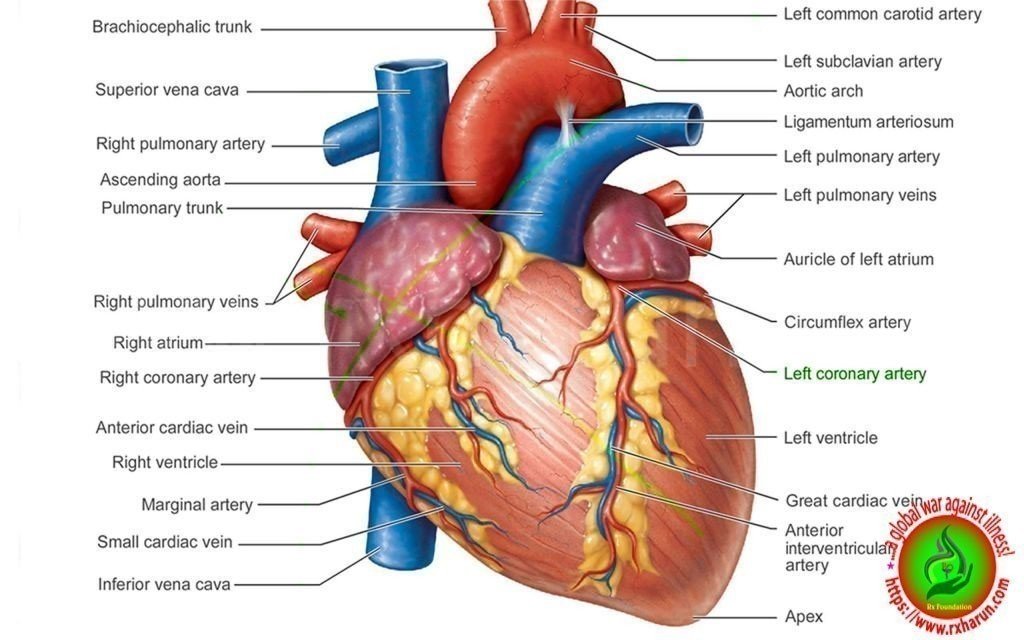
The lack of oxygen rich blood to the heart is usually a result of narrower coronary arteries due to plaque buildup, a condition called atherosclerosis. Narrow arteries increase the risk of pain, coronary artery disease, heart attack, and death.
Types of Angina Pectoris

- Unstable angina – is characterized by sudden pain that doesn’t go away on its own or respond to rest or medication. This type is caused by a blood clot that blocks the blood vessel, and it will cause a heart attack if the blockage isn’t removed.
- Stable angina – is characterized by regular episodes of pain triggered by physical exercise or activity, smoking, eating large meals, or extreme temperatures. This occurs because the arteries have accumulated deposits, narrowing the pathway for blood to move through.
- Variant angina – is caused by a spasm in a coronary artery, causing it to temporarily narrow. This is a specific form of unstable angina that can occur at any time (no trigger event causes it to happen).

- Silent ischemia – Patients with coronary artery disease (particularly patients with diabetes) may have ischemia without symptoms. Silent ischemia sometimes manifests as transient asymptomatic ST-T abnormalities seen during stress testing or 24-h Holter monitoring. Radionuclide studies can sometimes document asymptomatic myocardial ischemia during physical or mental stress. Silent ischemia and angina pectoris may coexist, occurring at different times. Prognosis depends on severity of the coronary artery disease.
- Nocturnal angina – May occur if a dream causes striking changes in respiration, pulse rate, and BP. Nocturnal angina may also be a sign of recurrent LV failure, an equivalent of nocturnal dyspnea. The recumbent position increases venous return, stretching the myocardium and increasing wall stress, which increases oxygen demand.
- Angina decubitus – Is angina that occurs spontaneously during rest. It is usually accompanied by a modestly increased heart rate and a sometimes markedly higher BP, which increase oxygen demand. These increases may be the cause of rest angina or the result of ischemia induced by plaque rupture and thrombus formation. If angina is not relieved, unmet myocardial oxygen demand increases further, making MI more likely.
Causes of Angina Pectoris

Your heart muscle needs a constant supply of oxygen. The coronary arteries carry blood containing oxygen to the heart.
When the heart muscle has to work harder, it needs more oxygen. Symptoms of angina occur when the coronary arteries are narrowed or blocked by atherosclerosis or by a blood clot.
The most common cause of angina is coronary artery disease. Angina pectoris is the medical term for this type of chest pain.
Stable angina is less serious than unstable angina, but it can be very painful or uncomfortable.

There are many risk factors for coronary artery disease. Some include:
- Diabetes
- High blood pressure
- High LDL cholesterol and low HDL cholesterol
- Smoking
- Anything that makes the heart muscle need more oxygen or reduces the amount of oxygen it receives can cause an angina attack in someone with heart disease, including:
- Cold weather
- Exercise
- Emotional stress
- Large meals
Other causes of angina include
- Abnormal heart rhythms (your heart beats very quickly or your heart rhythm is not regular)
- Anemia
- Coronary artery spasm (also called Prinzmetal’s angina)
- Heart failure
- Heart valve disease
- Hyperthyroidism (overactive thyroid)
Major Causes of Angina
- Age (≥ 45 years for men, ≥ 55 for women)
- Smoking
- Diabetes mellitus
- Dyslipidemia
- Family history of premature cardiovascular disease (men <55 years, female <65 years old)
- Hypertension
- Kidney disease (microalbuminuria or GFR<60 mL/min)
- Obesity (BMI ≥ 30 kg/m2)
- Physical inactivity
- Prolonged psychosocial stress[17]
- Conditions that exacerbate or provoke angina
- Medications
- Vasodilators
- Excessive thyroid hormone replacement
- Vasoconstrictors
- Polycythemia, which thickens the blood, slowing its flow through the heart muscle
- Hypothermia
- Hypervolemia
- Hypovolemia
Other medical problems
- Esophageal disorders
- Gastroesophageal Reflux Disease (GERD)
- Hyperthyroidism
- Hypoxemia
- Profound anemia
- Uncontrolled hypertension
Other cardiac problems
- Bradyarrhythmia
- Hypertrophic cardiomyopathy
- Tachyarrhythmia
- Valvular heart disease[24][25]
Myocardial ischemia can result from
- A reduction of blood flow to the heart that can be caused by stenosis, spasm, or acute occlusion (by an embolus) of the heart’s arteries.
- The resistance of the blood vessels. This can be caused by narrowing of the blood vessels; a decrease in radius.[26] Blood flow is proportional to the radius of the artery to the fourth power.[27]
- Reduced oxygen-carrying capacity of the blood, due to several factors such as a decrease in oxygen tension and hemoglobin concentration.[28] This decreases the ability of hemoglobin to carry oxygen to myocardial tissue.[29]
- Atherosclerosis is the most common cause of stenosis (narrowing of the blood vessels) of the heart’s arteries and, hence, angina pectoris. Some people with chest pain have normal or minimal narrowing of heart arteries; in these patients, vasospasm is a more likely cause for the pain, sometimes in the context of Prinzmetal’s angina and syndrome X.
- Myocardial ischemia also can be the result of factors affecting blood composition, such asthe reduced oxygen-carrying capacity of blood, as seen with severe anemia (low number of red blood cells), or long-term smoking.
Other causes of angina include
- Abnormal heart rhythms (your heart beats very quickly or your heart rhythm is not regular)
- anemia
- Coronary artery spasm (also called Prinzmetal’s angina)
- Heart failure
- Heart valve disease
- Hyperthyroidism (overactive thyroid)
Symptoms of Angina pectoris
Patients should be asked about the frequency of angina, severity of pain, and number of nitroglycerin pills used during episodes. Symptomatology reported by patients with angina commonly includes the following:
-
Retrosternal chest discomfort (pressure, heaviness, squeezing, burning, or choking sensation) as opposed to frank pain
-
Pain localized primarily in the epigastrium, back, neck, jaw, or shoulders
-
Pain precipitated by exertion, eating, exposure to cold, or emotional stress, lasting for about 1-5 minutes and relieved by rest or nitroglycerin
-
Pain intensity that does not change with respiration, cough, or change in position
Typically, the chest pain feel like tightness, heavy pressure, squeezing, or a crushing feeling. It may spread to the:
- Arm (most often the left)
- Back
- Jaw
- Neck
- Shoulder
Some people say the pain feels like gas or indigestion.
Less common symptoms of angina may include:
- Fatigue
- Shortness of breath
- Weakness
- Dizziness or light-headedness
- Nausea, vomiting, and sweating
- Palpitations
Pain from stable angina:
- Most often comes on after activity or stress
- Lasts an average of 1 to 15 minutes
- Is relieved with rest or a medicine called nitroglycerin
Angina attacks can occur at any time during the day. Most occur between 6 a.m. and noon.

Angina decubitus (a variant of angina pectoris that occurs at night while the patient is recumbent) may occur.
The following should be taken into account in the physical examination
-
For most patients with stable angina, physical examination findings are normal
-
A positive Levine sign suggests angina pectoris
-
Signs of abnormal lipid metabolism or of diffuse atherosclerosis may be noted
-
Examination of patients during the angina attack may be more helpful
-
Pain produced by chest wall pressure is usually of chest wall origin
-
Myocardial ischemia comes about when the myocardium (the heart muscle) receives insufficient blood and oxygen to function normally either because of increased oxygen demand by the myocardium or because of decreased supply to the myocardium.
-
This inadequate perfusion of blood and the resulting reduced delivery of oxygen and nutrients are directly correlated to blocked or narrowed blood vessels.
-
Some experience “autonomic symptoms” (related to increased activity of the autonomic nervous system) such as nausea, vomiting, and pallor.
-
Major risk factors for angina include cigarette smoking, diabetes, high cholesterol, high blood pressure, sedentary lifestyle, and family history of premature heart disease.
-
A variant form of angina—Prinzmetal’s angina—occurs in patients with normal coronary arteries or insignificant atherosclerosis. It is believed caused by spasms of the artery. It occurs more in younger women.[Rx]
Diagnosis of Angina pectoris
Diagnostic studies that may be employed include the following
-
Chest radiography: Usually normal in angina pectoris but may show cardiomegaly in patients with previous MI, ischemic cardiomyopathy, pericardial effusion, or acute pulmonary edema
-
Graded exercise stress testing: This is the most widely used test for the evaluation of patients presenting with chest pain and can be performed alone and in conjunction with echocardiography or myocardial perfusion scintigraphy
-
Coronary artery calcium (CAC) scoring by fast CT: The primary fast CT methods for this application are electron-beam CT (EBCT) and multidetector CD (MDCT)
Other tests that may be useful include the following
-
ECG (including exercise with ECG monitoring and ambulatory ECG monitoring)
-
Selective coronary angiography (the definitive diagnostic test for evaluating the anatomic extent and severity of CAD)
-
Asymptomatic high-risk patients or patients with atypical or typical angina who have inconclusive exercise stress test results, cannot undergo exercise stress testing or need to undergo major noncardiac surgery
Patients in whom invasive coronary angiography was unable to locate a major coronary artery or graft
- Electron beam CT – Can detect the amount of calcium present in coronary artery plaque. The calcium score (from 1 to 100) is roughly proportional to the risk of subsequent coronary events. However, because calcium may be present in the absence of significant stenosis, the score does not correlate well with the need for angioplasty or CABG. Thus, the American Heart Association recommends that screening with electron beam CT should be done only for select groups of patients and is most valuable when combined with historical and clinical data to estimate the risk of death or nonfatal MI.
- Cardiac MRI – Has become invaluable in evaluating many cardiac and great vessel abnormalities. It may be used to evaluate CAD by several techniques, which enable direct visualization of coronary stenosis, assessment of flow in the coronary arteries, evaluation of myocardial perfusion and metabolism, evaluation of wall motion abnormalities during stress, and assessment of infarcted myocardium vs viable myocardium.
- Multidetector-row CT (MDRCT) coronary angiography – Can accurately identify coronary stenosis and has a number of advantages. The test is noninvasive, can exclude coronary stenosis with high accuracy, can establish stent or bypass graft patency, can show cardiac and coronary venous anatomy, and can assess calcified and noncalcified plaque burden. However, radiation exposure is significant, and the test is not suitable for patients with a heart rate of >65 beats/min, those with irregular heartbeats, and pregnant women. Patients must also be able to hold their breath for 15 to 20 sec, 3 to 4 times during the study.
- Stress testing – is needed to confirm the diagnosis, evaluate disease severity, determine appropriate exercise levels for the patient, and help predict prognosis. If the clinical or working diagnosis is unstable angina, early stress testing is contraindicated.
- For CAD – the most accurate tests are stress echocardiography and myocardial perfusion imaging with single-photon emission CT (SPECT) or PET. However, these tests are more expensive than simple stress testing with ECG.
Angiography
- Intravascular ultrasonography – Provides images of coronary artery structure. An ultrasound probe on the tip of a catheter is inserted in the coronary arteries during angiography. This test can provide more information about coronary anatomy than other tests; it is indicated when the nature of lesions is unclear or when apparent disease severity does not match symptom severity. Used with angioplasty, it can help ensure optimal placement of stents.
- Coronary angiography – Is the standard for diagnosing CAD but is not always necessary to confirm the diagnosis. It is indicated primarily to locate and assess severity of coronary artery lesions when revascularization (percutaneous coronary intervention [PCI] or coronary artery bypass grafting [CABG]) is being considered. Angiography may also be indicated when knowledge of coronary anatomy is necessary to advise about work or lifestyle needs (eg, discontinuing job or sports activities).
- Guidewires with pressure or flow sensors can be used to estimate blood flow across stenoses. Blood flow is expressed as fractional flow reserve (FFR), which is the ratio of maximal flow through the stenotic area to normal maximal flow. These flow measurements are most useful when evaluating the need for angioplasty or CABG in patients with lesions of questionable severity (40 to 70% stenosis). An FFR of 1.0 is considered normal, while an FFR < 0.75 to 0.8 is associated with myocardial ischemia. Lesions with an FFR > 0.8 are less likely to benefit from stent placement.
Imaging
- Cardiac MRI – Has become invaluable in evaluating many cardiac and great vessel abnormalities. It may be used to evaluate CAD by several techniques, which enable direct visualization of coronary stenosis, assessment of flow in the coronary arteries, evaluation of myocardial perfusion and metabolism, evaluation of wall motion abnormalities during stress, and assessment of infarcted myocardium vs viable myocardium
- Electron beam CT – Can detect the amount of calcium present in coronary artery plaque. The calcium score (from 1 to 100) is roughly proportional to the risk of subsequent coronary events. However, because calcium may be present in the absence of significant stenosis, the score does not correlate well with the need for angioplasty or CABG. Thus, the American Heart Association recommends that screening with electron beam CT should be done only for select groups of patients and is most valuable when combined with historical and clinical data to estimate risk of death or nonfatal MI. These groups may include asymptomatic patients with an intermediate Framingham 10-yr risk estimate of 10 to 20% and symptomatic patients with equivocal stress test results. Electron beam CT is particularly useful in ruling out significant CAD in patients presenting to the emergency department with atypical symptoms, normal troponin levels, and a low probability of hemodynamically significant coronary disease. These patients may have noninvasive testing as outpatients.
- Multidetector row CT (MDRCT) coronary angiography – can accurately identify coronary stenosis and has a number of advantages. The test is noninvasive, can exclude coronary stenosis with high accuracy, can establish stent or bypass graft patency, can show cardiac and coronary venous anatomy, and can assess calcified and noncalcified plaque burden. However, radiation exposure is significant, and the test is not suitable for patients with a heart rate of >65 beats/min, those with irregular heart beats, and pregnant women. Patients must also be able to hold their breath for 15 to 20 sec, 3 to 4 times during the study.
References
- https://www.ncbi.nlm.nih.gov/pmc/articles/PMC3922315/
- https://www.ncbi.nlm.nih.gov/pmc/articles/PMC4653970/
- https://www.ncbi.nlm.nih.gov/pmc/articles/PMC1994474/
- https://www.ncbi.nlm.nih.gov/pmc/articles/PMC1994448/
- https://www.ncbi.nlm.nih.gov/pubmed/15860376
- https://www.ncbi.nlm.nih.gov/pubmed/16860010
- https://www.ncbi.nlm.nih.gov/pmc/articles/PMC3096292/
- https://www.ncbi.nlm.nih.gov/pmc/articles/PMC1547669/
- https://en.wikipedia.org/wiki/Angina
- https://www.sciencedirect.com/topics/medicine-and-dentistry/angina-pectoris
- https://www.sciencedirect.com/topics/agricultural-and-biological-sciences/angina-pectoris
- https://www.sciencedaily.com/releases/1998/06/980623044903.htm
- https://www.heart.org/en/health-topics/heart-attack/angina-chest-pain/angina-pectoris-stable-angina
- http://esciencenews.com/sources/science.daily/angina-pectoris-stable-angina
- https://www.heart.org/en/health-topics/heart-attack/angina-chest-pain/angina-pectoris-stable-angina
- https://www.webmd.com/heart-disease/heart-disease-angina

