
Makabuhay (Tinospora cordifolia) or Guduchi is a popular Ayurveda medicinal plant, also called Heavenly elixir or divine nectar, widely used to promote overall health. Makabuhay (Guduchi) claims health benefits for diabetes, glucose metabolism, inflammation, immune system support, and neurology.
Scientific Name: Tinospora cordifolia
Also knows as:
Makabuhay (Tagalog), Heavenly elixir (English), Guduchi, Gulancha Tinospora (India); Punjabi: Gllow, Telugu: Tippa-teega, Tamil: Shindilakodi, Malayalam: Amruthu, Chittamruthu, Kannada: Amrutha balli, Khmer: bândaul pich, Sinhala: Rasakinda, Thai: boraphét, Pali: galocī, Hindi:geloy, Gujarati: galac, garo, Sanskrit: guduchi, amrta, cinnodbhava, Bengali: Gulancha, Marathi: Guduchi, gulvel, Odia: Guluchi.
Makabuhay plant (Tinospora Cordifolia) also popularly known as Indian Guduchi, giloya or Heavenly elixir is a native plant from tropical and subtropical rainforests in the Far East such as in India, Philippines, Sri Lanka and Malaysia.
Makabuhay as it is called in the Philippines has a long history of medicinal use in India also called Guduchi. Makabuhay has long been used in Ayurveda medicine (traditional medicine in India) for thousands of years. Ayurvedic practitioners in India used Makabuhay to promote longevity, prevent diseases and to treat various illnesses from arthritis to treatment of cancer.
In the Philippines, Makabuhay plant extract is traditionally combined with coconut oil to treat rheumatism and arthritis, abdominal pains (kabag), scabies, skin ulcers and others.
Makabuhay can be found in wild forests and can be identified by its heart shaped leaves. Makabuhay is a shrub whose aerial roots climb other trees usually neem or mango trees. Makabuhay plant has succulent bark that is creamy white to grey in colour; it has deep clefts spotted with lenticels. It has a sweet-acidic-bitter taste. Makabuhay has yellow flowers, growing in lax racemes from nodes on old wood. Makabuhay bears fruits that are drupes, turning red as it ripens.
Makabuhay (Tinospora cordifolia) contains many chemicals that are known to have antioxidant activities while a few can even fight cancer cells in animal studies. However, most of the scientific studies that are made on the medicinal uses of Makabuhay are limited to animals or in test tubes. Scientific studies on humans are insufficient
Makabuhay Traditional Medicinal Uses
Makabuhay is largely used in traditional herbal medicine for various conditions.
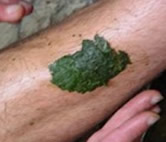 Makabuhay roots, stems and leaves are used as herbal treatment for fevers, malaria. Makabuhay leaves and roots are pounded then dissolved in cold water. Applied with a soft cloth over the nape, forehead, underarms and other body parts to bring down the body temperature.
- Makabuhay poultice is used to treat gout, arthritis, and rheumatism by reducing pain and edema.
- Makabuhay is used to treat skin diseases (athlete’s foot, scabies, etc.), promotes wound healing and alleviate skin itching.
- Makabuhay tonic is believed to promote overall good health and longevity, improves memory, improves skin tone and texture, and provides energy.
- Makabuhay tonic is also used to treat fever and malaria.
- Makabuhay tonic is used to treat gastrointestinal and digestive problems, which includes diarrhea, hyperacidity, abdominal pains, gas pains (kabag), vomiting, dyspepsia, dysentery, colitis, constipation, loss of appetite and even worm infestation.
- Makabuhay is also used in the treatment of diabetes, heart problems, hepatitis, anemia, impotence, tuberculosis, jaundice,
Other Scientific Studies Relating to Makabuhay (Tinospora cordifolia)
Diabetes and Tinospora Cordifolia
A research conducted in the Indian Medicine Research Laboratory in Sri Ramachandra University, studied the mechanism of the active ingredients of Tinospora cordifolia against key marker cells of insulin dependent glucose transporter-4 (Glut-4) and the predominant protein that influences glucose metabolism. According to results, the Glut-4 and the dominant protein were modulated by Tinospora cordifolia, Moreover, the uptake of glucose was likewise mediated suggesting the anti-diabetic properties of TC compounds. (Phytomedicine Feb 2013: Anti-diabetic Property of Tinospora Cordifolia)
Anti-Radiation Properties of Tinospora Cordifolia
In a clinical report from the Radiation and Cancer Biology Laboratory of the University of Rajasthan, India, the anti-radiation property of Tinospora cordifolia has been positively identified. In the study of a group of male mice that was subjected to gamma radiation, results have shown that those pre-treated with Tinospora cordifolia extracts exhibited less testicular lesions as compared to a control group. This suggests the radiation protective activity of Tinospora cordifolia in testicular radiation induced lesions. (eCAM 2011: Radiation-induced Testicular Injury and its Amelioration by Tinospora Cordifolia Extract)
Anti-Cancer Properties of Tinospora cordifolia
The Division of Ethnopharmacology of Loyola College in India conducted a study on the effects of Tinospora cordifolia extracts against induced hepatocellular carcinoma (HCC) in rats to determine its potential use in cancer therapy. Results have shown that those treated with Tinospora cordifolia extracts (TCE) exhibited an increased level of antioxidants and detoxification enzymes, and decreased serum transaminase level and hepatic marker enzymes to near normal. TCE likewise reduced tumor incidence and reversed the damaged hepatocytes to normal. The study concludes that TCE exhibits preventive effect against chemically induced hepatocellular carcinoma in rats and further suggests that Tinospora cordifolia extract can be a potent chemopreventive drug for HCC. (Investigational New Drugs, August 2011: Chemopreventive potential of Epoxy clerodane diterpene from Tinospora cordifolia against diethylnitrosamine-induced hepatocellular carcinoma)
Tinospora cordifolia activity against Allergy
The efficacy of Tinospora cordifolia (TC) extract in patients of allergic rhinitis was assessed in a randomized double blind placebo controlled trial in the Department of Pharmacology, Indira Gandhi Medical College, India. Results have shown that those treated with Tinospora cordifolia extracts exhibited less symptoms as against those who were not. The statistical results indicated a significant difference that confirms the effectiveness of Tinospora cordifolia against allergic rhinitis. (Journal of Ethnopharmacology. January 2005: Efficacy of Tinospora cordifolia in allergic rhinitis)
Effects of Tinospora cordifolia to Osteoporosis and Osteoarthritis
The Division of Endocrinology, University of Göttingen in Germany conducted a laboratory investigation on the effects of beta-Ecdysone (ECD), a steroid found in Tinospora cordifolia extract on joints, epiphyseal cartilage and trabecular tissues in rats. The study has shown that rats subjected to treatment of ECD have developed thicker joint cartilage and thicker epiphyseal growth plate. The study suggests that Tinospora cordifolia has antiosteoporotic effects and may be of value in the prevention and treatment of osteoporosis and osteoarthritis which is of increasing importance due to aging and obesity among individuals. (Phytomedicine, April 2010: Beneficial effects of beta-Ecdysone on the joint, epiphyseal cartilage tissue and trabecular bone in ovariectomized rats)
Makabuhay Usage, Dosage
Where can I get or buy Makabuhay plant?
 Makabuhay thrives in the wild. The roots, branches and leaves are harvested and used (see below for preparations). The plant can be bought from your local horticulturist for propagation in your garden.
Commercially extracted Makabuhay (Tinospora cordifolia) oil extract called Guduchi can also be bought in most health stores specializing in Ayurveda. Amzon listed: Morpheme Guduchi (Tinospora Cordifolia) – 500mg Extract – 60 Veg Capsules
Makabuhay Tea Preparation
- gather fresh Makabuhay leaves and stems,
- cut in small pieces
- wash with fresh water
- boil 50 grams of Makabuhay leaves to a liter of water
- let it seep for 10 minutes
- remove from heat
- strain
- drink while warm up to 2 cups a day.
Makabuhay Poultice Preparation
- gather fresh leaves, stems and roots
- wash with fresh clean water
- pound in a mortar
- grounded leaves and stems may be applied or a juice extract may be used
- other herbs and coconut oil may also be mixed.
- applied directly onto the affected area.
Makabuhay Decoction
A spoonful of dried leaves and thinly chopped stems are boiled in a cup of water. Drink one cup per day.
Makabuhay / Guduchi use Warnings and Side Effects
Makabuhay herbal medicine is generally for topical application and moderate intake.
Pregnancy and breast-feeding: There are no sufficient studies made on the side effects of Makabuhay plant (Tinospora cordifolia) in pregnancy and breast-feeding. Stay on the safe side and avoid use.
Diabetes. Makabuhay (Tinospora cordifolia) might have a side effect of lowering the blood sugar levels. Caution is advised if you have diabetes. The doses of your diabetes medicine might need to be adjusted.
“Autoimmune diseases” such as multiple sclerosis (MS), lupus (systemic lupus erythematosus, SLE), rheumatoid arthritis (RA), or other conditions: Makabuhay plant (Tinospora cordifolia) might activate the immune system and can worsen the symptoms of autoimmune diseases.
Surgery. Makabuhay might affect blood sugar levels, so there is a concern that it might interfere with blood sugar control during and after surgery. Refrain from taking Makabuhay at least 2 weeks before surgery.

