
Distal Phalanges Fractures/Phalangeal fractures of the hand are a common injury that presents to the emergency department and clinic. Injuries can occur at the proximal, middle, or distal phalanx. For the vast majority of phalanx fractures, an acceptable reduction is manageable with non-operative treatment. Early intervention is vital to allow healing and return of function.
The phalanges are the bones that make up the fingers of the hand and the toes of the foot. There are 56 phalanges in the human body, with fourteen on each hand and foot. Three phalanges are present on each finger and toe, with the exception of the thumb and large toe, which possess only two. The middle and far phalanges of the fourth and fifth toes are often fused together (symphalangism).[rx] The phalanges of the hand are commonly known as the finger bones. The phalanges of the foot differ from the hand in that they are often shorter and more compressed, especially in the proximal phalanges, those closest to the torso.
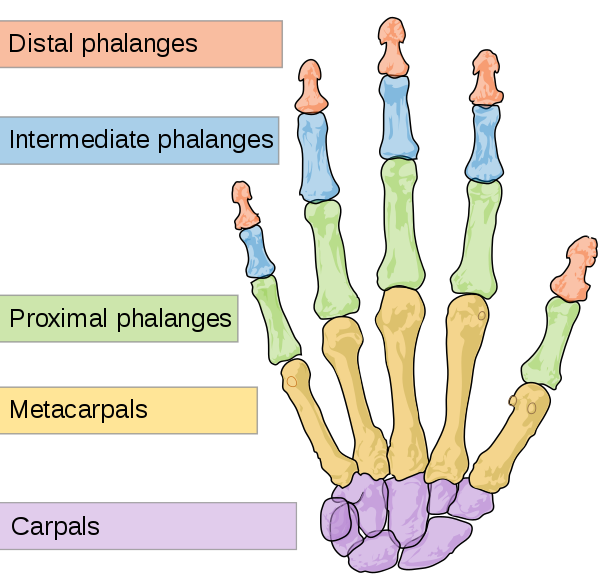
Anatomy of Distal Phalanges Fractures
The proximal and middle phalanges of the hand all possess a head, neck, shaft, and base. The distal phalanx divides into the tuft, shaft, and base. The proximal phalanx receives stabilization from the surrounding anatomy, including proper and accessory collateral ligaments, volar plate, and extensor/flexor tendons. The middle phalanx has two main insertions: the central slip (extensor mechanism) and the flexor digitorum superficialis (FDS). The distal phalanx anatomy includes distal interphalangeal joint (DIPJ), which is enveloped by the extensor and flexor tendons along with the volar plate and collateral ligaments. The flexor digitorum profundus (FDP) inserts at the volar metaphysis of the distal phalanx. At proximal interphalangeal joint (PIPJ), the flexor digitorum profundus and the flexor digitorum superficialis are within one sheath. The flexor digitorum superficialis is volar, and the flexor digitorum profundus is dorsal. As the tendons transverse the PIPJ the flexor digitorum superficialis bifurcates into two slips that form the Camper’s chiasm which inserts on the volar aspect of the middle phalanx. This important anatomic relationship that can lead to a swan neck deformity (a hyperextended PIPJ and flexed DIPJ).[rx]
Pathophysiology
Phalanx fractures displace according to the level at which the fracture occurs due to the eloquent soft tissue and tendon involvement of the phalanx.
Distal Phalanx
Distal phalanx fractures are usually nondisplaced or comminuted fractures. They classify into tuft (tip), shaft, or articular injuries.
-
Tuft fractures usually result from a crushing mechanism such as hitting the tip of a finger with a hammer. A tuft fracture is frequently an open fracture due to its common association with injury to the surrounding soft tissues or nail bed. Even without surrounding soft tissue injury, the fracture is considered open in the presence of a nail bed injury.
- Shaft fractures
- Intra-articular fractures are associated with extensor tendon avulsion (Mallet’s finger) or flexor digitorum profundus tendon avulsion (Jersey’s finger).[rx]
-
Mallet finger
-
The traumatic loss of the terminal extension at the level of the DIPJ
-
-
Jersey Finger
-
Hyperextension injury with avulsion of flexor digitorum profundus[rx]
-
-
Middle Phalanx
Middle phalanx fractures occur in an apex dorsal or volar angulation depending on location. Apex dorsal angulation results from the fracture occurring proximal to the flexor digitorum superficialis (FDS) insertion so that the fragment becomes displaced by the pull of the central slip. Apex volar angulation occurs if the fracture is distal to the flexor digitorum superficialis insertion. A fracture through the middle third may angulate in either direction or not at all as a result of the inherent stability provided by an intact and prolonged flexor digitorum superficialis insertion.
Proximal Phalanx
Proximal phalanx fractures occur in an apex volar angulation (dorsal angulation). The proximal fragment flexes due to interossei, and the distal phalanx extends due to the central slip.
Causes Of Distal Phalanges Fractures

- Injury to the phalanges – occurs with direct, blunt trauma, penetrating trauma, and crush injuries.
- Sudden forceful fall down
- Road traffic accident
- Falls – Falling onto an outstretched hand is one of the most common causes of broken and fractures.
- Sports injuries – Many fractures occur during contact sports or sports in which you might fall onto an outstretched hand — such as in-line skating or snowboarding.
- Motor vehicle crashes – Motor vehicle crashes can cause wrist bones to break, sometimes into many pieces, and often require surgical repair.
- Have osteoporosis – a disease that weakens your bones
- Eave low muscle mass or poor muscle strength – or lack agility and have poor balance (these conditions make you more likely to fall)
- Walk or do other activities in the snow or on the ice – or do activities that require a lot of forwarding momenta, such as in-line skating and skiing
- Wave an inadequate intake of calcium or vitamin D
- Football or soccer, especially on artificial turf
- Rugby
- Horseback riding
- Hockey
- Skiing
- Snowboarding
- In-line skating
- Jumping on a trampoline
Symptoms Of Distal Phalanx Fractures
Common symptoms of radial and phalangeal fractures include
- Severe pain that might worsen when gripping or squeezing or moving your hand or wrist
- Swelling
- Tenderness
- Bruising
- Obvious deformity, such as a bent wrist
- Pain
- The wrist hanging in a deformed way
- Pain, especially when flexing the wrist
- Deformity of the wrist, causing it to look crooked and bent.
- Your wrist is in great pain.
- Your wrist, arm, or hand is numb.
- Your fingers are pale.
- Other symptoms include immediate swelling and/or bruising near the fracture, grinding sounds with arm movements and potential numbness, and tingling in the arm/hand.
Diagnosis of Distal Phalanges Fractures
History and Physical
The main component to focus on assessment are:
-
History – handedness, occupation, time of injury, place of injury (work-related)
-
Mechanism of injury – magnitude, direction, point of contact, and type of force that caused the trauma
-
Soft tissue damage
-
Finger alignment – cascade, digit scissoring, rotational defect
-
Open vs. Closed
-
Tendon nerve vessel damage – tendon ruptures may accompany dislocations such as the terminal extensor tendon rupture in the distal interphalangeal joint dislocation or a central slip rupture in a proximal interphalangeal joint dislocation. Tendon damage otherwise only usually occurs with associated lacerations or open combined injuries. Nerves and vessels are rarely injured as part of a simple fracture or dislocation but often suffer injury in major open hand trauma.
Radiographs
Diagnostic tests to consider include:
-
Radiographs – PA and lateral and oblique
-
CT – rarely needed. May occasionally be helpful in operative planning with complex peri-articular fractures such as pilon fractures at the base of middle phalanx fractures. It can be used to detect foreign bodies like plastic, glass, and wood.
-
Ultrasound – detect objects that lack radiopacity
-
MRI – unclear diagnosis, foreign material, or tumor
Mostly phalangeal fractures are described by location (head, neck, shaft, base) and pattern (transverse, spiral, oblique, comminuted).[rx]
Treatment of Distal Phalanges Fractures
Non-Surgical
Treatment available can be broadly
- Get medical help immediately – If you fall on an outstretched arm, get into a car accident or are hit while playing a sport and feel intense pain in your shoulder area, then get medical care immediately. Phalanx fractures cause significant pain in the front part of your shoulder, closer to the base of your hand. You’ll innately know that something is seriously wrong because you won’t be able to lift your arm up.
-
Apply ice to your fractured area– After you get home from the hospital phalangeal fractures (regardless if you had surgery or not), you should apply a bag of crushed ice (or something cold) to your injured in order to reduce the swelling and numb the pain. Ice therapy is effective for acute (recent) injuries that involve swelling because it reduces blood flow by constricting local blood vessels. Apply the crushed ice to your clavicle for 15 minutes three to five times daily until the soreness and inflammation eventually fades awayLightly exercise after the pain fades – After a couple of weeks when the swelling has subsided and the pain has faded away, remove your arm sling for short periods and carefully move your arm in all different directions. Don’t aggravate the phalangeal fractures so that it hurts, but gently reintroduce movements to the involved joints and muscles. Start cautiously, maybe starting with light calisthenics and then progress to holding light weights (five-pound weights to start).
- Practice stretching and strengthening exercises – of the fingers, elbow, and shoulder if your doctor recommends them.
- A splint – which you might use for a few days to a week while the swelling goes down; if a splint is used initially, a cast is usually put on about a week later.
- A cast – which you might need for three to five weeks or longer, depending on how bad the break is (you might need a second cast if the first one gets too loose after the swelling goes away.)
- Get a supportive arm sling – Due to their anatomical position, phalangeal fractures can’t be cast like a broken limb can. Instead, a supportive arm sling or “figure-eight” splint is typically used for support and comfort, either immediately after the injury if it’s just a hairline fracture or following surgery, if it’s a complicated fracture. A figure-eight splint wraps around both shoulders and the base of your neck in order to support the injured shoulder and keep it positioned up and back. Sometimes a larger swath of material is wrapped around the sling to keep it closer to your body. You’ll need to wear the sling constantly until there is no pain with arm movements, which takes between two to four weeks for children or four to eight weeks for adults.
- Get a referral to physical therapy – Once you’ve recovered and able to remove your arm sling splint for good, you’ll likely notice that the muscles surrounding your shoulder and upper chest look smaller and feel weaker. That’s because muscle tissue atrophies without movement. If this occurs, then you’ll need to get a referral for some physical rehabilitation. Rehab can start once you are cleared by your orthopedist, are pain-free, and can perform all the basic arm and shoulder movements. A physiotherapist or athletic trainer can show you specific rehabilitation exercises and stretches to restore your muscle strength, joint movements, and flexibility
- A splint – which you might use for a few days to a week while the swelling goes down; if a splint is used initially, a cast is usually put on about a week later.
- A cast – which you might need for six to eight weeks or longer, depending on how bad the break is (you might need a second cast if the first one gets too loose after the swelling goes away.)
Rest Your Hand
- Depending on what you do for a living and if the injury is to your dominant side, you may need to take a couple of weeks off work to recuperate.
- Healing takes between four to six weeks in younger people and up to 12 weeks in the elderly, but it depends on the severity of the radial and phalangeal fractures
- Athletes in good health are typically able to resume their sporting activities within two months of breaking they’re depending on the severity of the break and the specific sport.
- Sleeping on your back (with the sling on) is necessary to keep the pressure off your shoulder and prevent stress.
Eat Nutritiously During Your Recovery
All bones and tissues in the body need certain nutrients in order to heal properly and in a timely manner. Eating a nutritious and balanced diet that includes lots of minerals and vitamins is proven to help heal broken bones of all types, including. Therefore, focus on eating lots of fresh produce (fruits and veggies), whole grains, lean meats, and fish to give your body the building blocks needed to properly repair your. In addition, drink plenty of purified water, milk, and other dairy-based beverages to augment what you eat.
- Broken bones need ample minerals (calcium, phosphorus, magnesium, boron) and protein to become strong and healthy again.
- Excellent sources of minerals/protein include dairy products, tofu, beans, broccoli, nuts and seeds, sardines, and salmon.
- Important vitamins that are needed for bone healing include vitamin C (needed to make collagen), vitamin D (crucial for mineral absorption), and vitamin K (binds calcium to bones and triggers collagen formation).
- Conversely, don’t consume food or drink that is known to impair bone/tissue healing, such as alcoholic beverages, sodas, most fast food items, and foods made with lots of refined sugars and preservatives.
Follow-Up Care
- You will need to see your doctor regularly until your fracture heals. During these visits, he or will take x-rays to make sure the bone is healing in a good position. After the bone has healed, you will be able to gradually return to your normal activities.
Breathing Exercise
- To elevate breathing problems or remove lung congestion if needed.
Medication
The following medications may be considered doctor to relieve acute and immediate pain
- Antibiotic – Cefuroxime or Azithromycin, or Flucloxacillin or any others cephalosporin/quinolone antibiotic must be used to prevent infection or clotted blood remove to prevent furthers swelling and edema
- Antidepressants – A drug that blocks pain messages from your brain and boosts the effects of endorphins (your body’s natural painkillers).
- Corticosteroids – Also known as oral steroids, these medications reduce inflammation. To healing the nerve inflammation and clotted blood in the joints.
- Muscle Relaxants – These medications provide relief from associated muscle spasms.
- Neuropathic Agents – Drugs(pregabalin & gabapentin) that address neuropathic—or nerve-related—pain. This includes burning, numbness, and tingling.
- Opioids – Also known as narcotics, these medications are intense pain relievers that should only be used under a doctor’s careful supervision.
- Topical Medications – These prescription-strength creams, gels, ointments, patches, and sprays help relieve pain and inflammation through the skin.
- NSAIDs – Prescription-strength drugs that reduce both pain and inflammation. Pain medicines and anti-inflammatory drugs help to relieve pain and stiffness, allowing for increased mobility and exercise. There are many common over-the-counter medicines called non-steroidal anti-inflammatory drugs (NSAIDs). They include and Ketorolac, Aceclofenac, naproxen
- Calcium & vitamin D3 – to improve bone health and healing fracture.
- Glucosamine & Diacerein, Chondroitin sulfate – can be used to tightening the loose tension, cartilage, ligament, and cartilage, ligament regenerate cartilage or inhabit the further degeneration of cartilage, ligament
- Dietary supplement -to remove general weakness & improved health.
Proximal Phalanx Fractures
-
Extraarticular with less than 10 degrees angulation or under 2 mm shortening and no rotational deformity Stable, transverse fracture
-
Dorsal splinting in intrinsic plus position for 3 weeks
-
Buddy taping
-
Operative
-
Reducible but unstable isolated fractures
-
Closed reduction internal fixation (CRIF)
-
-
Intra-articular fractures with displacement
-
Open reduction internal fixation (ORIF)
-
Closed reduction and internal fixation of proximal phalanx shaft fractures can be accomplished longitudinally through the metacarpal phalangeal joint but not the metacarpal head, or just through the metacarpal head. The wires for either of these options are run in a parallel fashion, cross, or run transversely into the phalanx.
Middle Phalanx Fractures
Proximal intra-articular fractures may be comminuted with axial load and considered “pilon” fractures. If the volar portion of the proximal base fracture constitutes approximately 40% of the articular surface, then it carries the majority of the proper collateral ligament insertion. Also, the accessory ligament and volar plate insertions, which make the fracture unstable. Dorsal proximal base fractures may be considered central slip avulsions.
Non-operative
-
Non-displaced
-
Dynamic splinting for 2to 3 weeks
-
Operative
-
Transverse fractures with greater than 10 degrees angulation or 2 mm shortening or rotationally deformed
-
Closed reduction percutaneous pinning (CRPP) vs. ORIF
-
-
Irreducible and unstable fractures
-
CRPP vs. ORIF
-
Distal Phalanx Fractures
- Open fractures – Tuft fracture is considered open in the presence of a nail bed injury. When the seal of the nail plate with the hyponychium has been broken, and the tuft fracture is displaced. This injury represents an open fracture that should receive treatment on the day of injury with debridement, followed by direct nail matrix repair. Stenting of the nail fold may be required to allow for the nail to grow [rx]
- Volar subluxed mallet finger fractures involving 30% of the articular surface
- Jersey finger injuries
References
- https://www.ncbi.nlm.nih.gov/books/NBK545182/
- https://www.ncbi.nlm.nih.gov/books/NBK557625/
- https://www.ncbi.nlm.nih.gov/books/NBK547684/
- https://www.ncbi.nlm.nih.gov/books/NBK436006/
- https://www.ncbi.nlm.nih.gov/books/NBK470462/
- https://www.ncbi.nlm.nih.gov/books/NBK536960/
- https://pubmed.ncbi.nlm.nih.gov/32491557/
