
Vitamin B12 Deficiency – Causes, Symptoms, Treatment

Patient Tools

Read, save, and share this guide

Use these quick tools to make this medical article easier to read, print, save, or share with a family member.

Patient Mode

Understand this article easily

Switch between simple English and easy Bangla patient notes. This is for education and does not replace a doctor consultation.

Vitamin B12also called cobalamin is a water-soluble vitamin that has a key role in the normal functioning of the brain and nervous system, and the formation of red blood cells. It is one of eight B vitamins. It is involved in the metabolism of every cell of the human body, especially affecting DNA synthesis, fatty acid and amino acid metabolism. No fungi, plants, or...

For severe symptoms, danger signs, pregnancy, child illness, or sudden worsening, seek urgent medical care.

বাংলা রোগী নোট এখনো যোগ করা হয়নি। পোস্ট এডিটরে “RX Bangla Patient Mode” বক্স থেকে সহজ বাংলা সারাংশ যোগ করুন।

এই তথ্য শিক্ষা ও সচেতনতার জন্য। এটি ডাক্তারি পরীক্ষা, রোগ নির্ণয় বা প্রেসক্রিপশনের বিকল্প নয়।

Article Summary

Vitamin B12also called cobalamin is a water-soluble vitamin that has a key role in the normal functioning of the brain and nervous system, and the formation of red blood cells. It is one of eight B vitamins. It is involved in the metabolism of every cell of the human body, especially affecting DNA synthesis, fatty acid and amino acid metabolism. No fungi, plants, or animals (including humans) are capable of producing vitamin B12. Only bacteria and archaea have the enzymes needed for its synthesis. Some substantial sources of...

Key Takeaways

  • This article explains Causes in simple medical language.
  • This article explains Symptoms of vitamin B12 deficiency in simple medical language.
  • This article explains A B12 deficiency can go undiagnosed for years, but this is how you know it's time to take notice. in simple medical language.
Educational health guideWritten for patient understanding and clinical awareness.
Reviewed content workflowUse writer and reviewer profiles for stronger trust.
Emergency safety firstUrgent warning signs are highlighted below.

Seek urgent medical care if you notice

These warning signs are general safety guidance. Local emergency numbers and clinical judgment should always come first.

  • Severe symptoms, breathing difficulty, fainting, confusion, or rapidly worsening illness.
  • New weakness, severe pain, high fever, or symptoms after a serious injury.
  • Any symptom that feels urgent, unusual, or unsafe for the patient.
1

Emergency now

Use emergency care for severe, sudden, rapidly worsening, or life-threatening symptoms.

2

See a doctor

Book a professional medical evaluation if symptoms persist, worsen, recur often, affect daily activities, or occur in a high-risk patient.

3

Learn safely

Use this article to understand possible causes, tests, treatment options, prevention, and questions to ask your clinician.

Before reading

RX Patient Tools

Use these quick guides before reading the article, or return to them when you need help preparing questions for a doctor.

Start here Choose the right pathway for symptoms, reports, medicines, or urgent warning signs. Disease article roadmap Read this topic step by step: meaning, symptoms, warning signs, diagnosis, treatment, prevention, and follow-up. Treatment planner Prepare questions about treatment choices, benefits, risks, side effects, and follow-up. Family & caregiver guide Organize symptoms, reports, medicines, questions, and follow-up safely. Nutrition & diet guide Prepare food, hydration, supplement, and medicine-timing questions safely. Prevention guide Organize risk factors, protective habits, screening, and warning signs. Recovery guide Prepare a safe plan for activity, rehabilitation, warning signs, and follow-up.

Vitamin B12also called cobalamin is a water-soluble vitamin that has a key role in the normal functioning of the brain and nervous system, and the formation of red blood cells. It is one of eight B vitamins. It is involved in the metabolism of every cell of the human body, especially affecting DNA synthesis, fatty acid and amino acid metabolism. No fungi, plants, or animals (including humans) are capable of producing vitamin B12. Only bacteria and archaea have the enzymes needed for its synthesis. Some substantial sources of B12 include animal products (shellfish, meat), fortified food products, and dietary supplements.B12 is the largest and most structurally complicated vitamin and can be produced industrially only through bacterial fermentation synthesis, typically used to manufacture B12 for fortified foods and supplements.

                            Vitamin B12

Vitamin B12 Deficiency - Causes, Symptoms, Treatment
Rx


Vitamin B12 Deficiency - Causes, Symptoms, Treatment

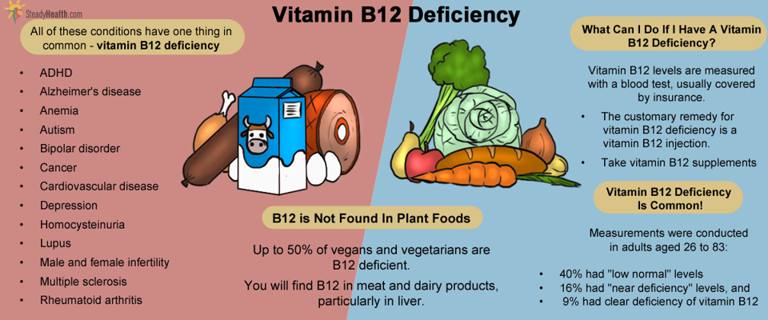
Structurally vitamin B12  are a large mollecules & in this reason it inter in the body  by converting into cyanocobalamone.Booster dose such as injection form are the best for patient benefit.
Vitamin B12 Deficiency - Causes, Symptoms, Treatment
Rx

Causes

  • Inadequate dietary intake of vitamin B12. Vitamin B12 occurs in animal products (eggs, meat, milk) and in some edible alge. B12 isolated from bacterial cultures is also added to many fortified foods, and available as a dietary supplement. Vegans, and to a lesser degree vegetarians, may also be at risk for B12 deficiency due to inadequate dietary intake of B12, if they do not supplement. Children are at a higher risk for B12 deficiency due to inadequate dietary intake, as they have fewer vitamin stores and a relatively larger vitamin need per calorie of food intake.
  • Selective impaired absorption of vitamin B12 due to intrinsic factor deficiency. This may be caused by the loss of gastric parietal cells in chronic atrophic gastritis (in which case, the resulting megaloblastic anemia takes the name of “pernicious anemia”), or may result from wide surgical resection of stomach (for any reason), or from rare hereditary causes of impaired synthesis of intrinsic factor. B12 deficiency is more common in the elderly because gastric intrinsic factor, necessary for absorption of the vitamin, is deficient, due to atrophic gastritis.
  • Impaired absorption of vitamin B12 in the setting of a more generalized malabsorption or maldigestion syndrome. This includes any form due to structural damage or wide surgical resection of the terminal ileum (the principal site of vitamin B12 absorption).
  • Forms of achlorhydria (including that artificially induced by drugs such as proton pump inhibitors and histamine 2 receptor antagonists) can cause B12 malabsorption from foods, since acid is needed to split B12 from food proteins and salivary binding proteins. This process is thought to be the most common cause of low B12 in the elderly, who often have some degree of achlorhydria without being formally low in intrinsic factor. This process does not affect absorption of small amounts of B12 in supplements such as multivitamins, since it is not bound to proteins, as is the B12 in foods.
  • Surgical removal of the small bowel (for example in Crohn’s disease) such that the patient presents with short bowel syndrome and is unable to absorb vitamin B12. This can be treated with regular injections of vitamin B12.
  • Long-term use of ranitidine hydrochloride may contribute to deficiency of vitamin B12.
  • Untreated celiac disease may also cause impaired absorption of this vitamin, probably due to damage to the small bowel mucosa. In some people, vitamin B12 deficiency may persist despite treatment with a gluten-free diet and require supplementation.
  • Some bariatric surgical procedures, especially those that involve removal of part of the stomach, such as Roux-en-Y gastric bypass surgery. (Procedures such as the adjustable gastric band type do not appear to affect B12 metabolism significantly).
  • Bacterial overgrowth within portions of the small intestine, such as may occur in blind loop syndrome, (a condition due to a loop forming in the intestine) may result in increased consumption of intestinal vitamin B12 by these bacteria.
  • The insulin is low or not working well. সহজ বাংলা: রক্তে চিনি বেশি থাকার রোগ।" data-rx-term="diabetes" data-rx-definition="Diabetes is a condition where blood sugar stays too high because insulin is low or not working well. সহজ বাংলা: রক্তে চিনি বেশি থাকার রোগ।">diabetes medication metformin may interfere with B12 dietary absorption.
  • A genetic disorder, transcobalamin II deficiency can be a cause.
  • Alcoholism – if a “diet” of excessive alcohol intake is substituted for a diet adequate in sources of B12.
  • Nitrous oxide exposure, and recreational use.
  • Infection with the Diphyllobothrium latum tapeworm

Symptoms of vitamin B12 deficiency

Anaemia and anaemia caused by a lack of vitamin B12 can result in symptoms which include:

  • Extreme tiredness or fatigue
  • A lack of energy or lethargy
  • Being out of breath
  • Feeling faint
  • pain in the head or upper neck. সহজ বাংলা: মাথাব্যথা।" data-rx-term="headache" data-rx-definition="Headache means pain in the head or upper neck. সহজ বাংলা: মাথাব্যথা।">Headache
  • Ringing in the ears (tinnitus)
  • Lack of appetite

More specific symptoms linked to a lack of vitamin B12 include:

  • Yellowing of the skin
  • Sore, red tongue
  • Mouth ulcers
  • Changes or loss of some sense of touch
  • Feeling less pain
  • Walking problems
  • Vision problems
  • Mood changes, irritability, depression or psychosis
  • Symptoms of dementia

Recommended Intakes

Intake recommendations for vitamin B12 and other nutrients are provided in the Dietary Reference Intakes (DRIs) developed by the Food and Nutrition Board (FNB) at the Institute of Medicine (IOM) of the National Academies (formerly National Academy of Sciences) . DRI is the general term for a set of reference values used for planning and assessing nutrient intakes of healthy people. These values, which vary by age and gender , include:

  • Recommended Dietary Allowance (RDA): average daily level of intake sufficient to meet the nutrient requirements of nearly all (97%–98%) healthy individuals.
  • Adequate Intake (AI): established when evidence is insufficient to develop an RDA and is set at a level assumed to ensure nutritional adequacy.
  • Tolerable Upper Intake Level (UL): maximum daily intake unlikely to cause adverse health effects .

Table 1 lists the current RDAs for vitamin B12 in micrograms (mcg) . For infants aged 0 to 12 months, the FNB established an AI for vitamin B12 that is equivalent to the mean intake of vitamin B12 in healthy, breastfed infants.

Table 1: Recommended Dietary Allowances (RDAs) for Vitamin B12 
Age Male Female Pregnancy Lactation
0–6 months* 0.4 mcg 0.4 mcg
7–12 months* 0.5 mcg 0.5 mcg
1–3 years 0.9 mcg 0.9 mcg
4–8 years 1.2 mcg 1.2 mcg
9–13 years 1.8 mcg 1.8 mcg
14+ years 2.4 mcg 2.4 mcg 2.6 mcg 2.8 mcg

* Adequate Intake

Selected Food Sources of Vitamin B12 

Food Micrograms (mcg)
per serving
Percent DV*
Clams, cooked, 3 ounces 84.1 1,402
Liver, beef, cooked, 3 ounces 70.7 1,178
Breakfast cereals, fortified with 100% of the DV for vitamin B12, 1 serving 6.0 100
Trout, rainbow, wild, cooked, 3 ounces 5.4 90
Salmon, sockeye, cooked, 3 ounces 4.8 80
Trout, rainbow, farmed, cooked, 3 ounces 3.5 58
Tuna fish, light, canned in water, 3 ounces 2.5 42
Cheeseburger, double patty and bun, 1 sandwich 2.1 35
Haddock, cooked, 3 ounces 1.8 30
Breakfast cereals, fortified with 25% of the DV for vitamin B12, 1 serving 1.5 25
Beef, top sirloin, broiled, 3 ounces 1.4 23
Milk, low-fat, 1 cup 1.2 18
Yogurt, fruit, low-fat, 8 ounces 1.1 18
Cheese, Swiss, 1 ounce 0.9 15
Beef taco, 1 soft taco 0.9 15
Ham, cured, roasted, 3 ounces 0.6 10
Egg, whole, hard boiled, 1 large 0.6 10
Chicken, breast meat, roasted, 3 ounces 0.3 5

*DV = Daily Value. DVs were developed by the U.S. Food and Drug Administration (FDA) to help consumers determine the level of various nutrients in a standard serving of food in relation to their approximate requirement for it. The DV for vitamin B12 is 6.0 mcg. However, the FDA does not require food labels to list vitamin B12 content unless a food has been fortified with this nutrient. Foods providing 20% or more of the DV are considered to be high sources of a nutrient, but foods providing lower percentages of the DV also contribute to a healthful diet. The U.S. Department of Agriculture’s (USDA’s) Nutrient

A B12 deficiency can go undiagnosed for years, but this is how you know it’s time to take notice.

Earlier this month, a friend of mine barely avoided a nasty fall when she passed out during a hiking trip. Her diagnosis? B12 deficiency. Once she learned the symptoms, she realized it had been progressing for months unnoticed, and her experience isn’t rare. It’s time to put B12 in the spotlight.Vitamin B12 is vital for your nervous system and for creating DNA and RNA, the building blocks of every cell in your body. You need B12 to maintain everything from your mood to your digestion. Yet many people have no idea about the signs and symptoms of low B12.In fact, a B12 deficiency can go undiagnosed for years, despite causing difficult symptoms like extreme fatigue, shortness of breath, and muscle weakness. If you keep forgetting your to-do list or have trouble finding the right words, pay attention. The same goes for any numbness or tingling in your hands and feet.It’s easy to miss the signs of B12 deficiency or chalk them up to stress or busyness. But if one or more of the following are true for you, it’s time to take notice:

Bottom line: B12 deficiency can be devastating, and it’s easily avoidable. Supplementing is quick and incredibly safe; because B12 is a water-soluble vitamin, your body uses what you need and your kidneys simply flush away the rest, without any side effects.

The most effective way to take a B12 supplement is sublingually or as a shot. Since most people don’t like the idea of injections, a sublingual supplement is the simple answer. (“Sublingual” just means using drops or a lozenge that melts in your mouth. It’s especially useful for people who don’t absorb B12 well in their stomachs because of medication use or other digestive issues.)

Health Risks from Excessive Vitamin B12

The IOM did not establish a UL for vitamin B12 because of its low potential for toxicity. In Dietary Reference Intakes: Thiamin, Riboflavin, Niacin, Vitamin B6, Folate, Vitamin B12, Pantothenic Acid, Biotin, and Choline, the IOM states that “no adverse effects have been associated with excess vitamin B12 intake from food and supplements in healthy individuals” .

Findings from intervention trials support these conclusions. In the NORVIT and HOPE 2 trials, vitamin B12 supplementation (in combination with folic acid and vitamin B6) did not cause any serious adverse events when administered at doses of 0.4 mg for 40 months (NORVIT trial) and 1.0 mg for 5 years (HOPE 2 trial) .

Interactions with Medications

Vitamin B12 has the potential to interact with certain medications. In addition, several types of medications might adversely affect vitamin B12 levels. A few examples are provided below. Individuals taking these and other medications on a regular basis should discuss their vitamin B12 status with their healthcare providers.

Chloramphenicol

Chloramphenicol (Chloromycetin®) is a bacteriostatic bacterial infections. সহজ বাংলা: ব্যাকটেরিয়ার সংক্রমণের ওষুধ।" data-rx-term="antibiotic" data-rx-definition="An antibiotic is a medicine used to treat bacterial infections. সহজ বাংলা: ব্যাকটেরিয়ার সংক্রমণের ওষুধ।">antibiotic. Limited evidence from case reports indicates that chloramphenicol can interfere with the red blood cell response to supplemental vitamin B12 in some patients .

Proton pump inhibitors

Proton pump inhibitors, such as omeprazole (Prilosec®) and lansoprazole (Prevacid®), are used to treat gastroesophageal reflux disease and peptic ulcer disease. These drugs can interfere with vitamin B12 absorption from food by slowing the release of gastric acid into the stomach . However, the evidence is conflicting on whether proton pump inhibitor use affects vitamin B12 status . As a precaution, health care providers should monitor vitamin B12 status in patients taking proton pump inhibitors for prolonged periods .

H2 receptor antagonists

Histamine H2 receptor antagonists, used to treat peptic ulcer disease, include cimetidine (Tagamet®), famotidine (Pepcid®), and ranitidine (Zantac®). These medications can interfere with the absorption of vitamin B12 from food by slowing the release of hydrochloric acid into the stomach. Although H2 receptor antagonists have the potential to cause vitamin B12 deficiency , no evidence indicates that they promote vitamin B12 deficiency, even after long-term use . Clinically significant effects may be more likely in patients with inadequate vitamin B12 stores, especially those using H2 receptor antagonists continuously for more than 2 years .

Metformin

Metformin, a hypoglycemic agent used to treat insulin is low or not working well. সহজ বাংলা: রক্তে চিনি বেশি থাকার রোগ।" data-rx-term="diabetes" data-rx-definition="Diabetes is a condition where blood sugar stays too high because insulin is low or not working well. সহজ বাংলা: রক্তে চিনি বেশি থাকার রোগ।">diabetes, might reduce the absorption of vitamin B12 , possibly through alterations in intestinal mobility, increased bacterial overgrowth, or alterations in the calcium-dependent uptake by ileal cells of the vitamin B12-intrinsic factor complex . Small studies and case reports suggest that 10%–30% of patients who take metformin have reduced vitamin B12 absorption . In a randomized, placebo controlled trial in patients with type 2 diabetes, metformin treatment for 4.3 years significantly decreased vitamin B12 levels by 19% and raised the risk of vitamin B12 deficiency by 7.2% compared with placebo . Some studies suggest that supplemental calcium might help improve the vitamin B12 malabsorption caused by metformin, but not all researchers agree .

Vitamin B12 and Healthful Diets

The federal government’s 2015-2020 Dietary Guidelines for Americans notes that “Nutritional needs should be met primarily from foods. … Foods in nutrient-dense forms contain essential vitamins and minerals and also dietary fiber and other naturally occurring substances that may have positive health effects. In some cases, fortified foods and dietary supplements may be useful in providing one or more nutrients that otherwise may be consumed in less-than-recommended amounts.”

The Dietary Guidelines for Americans describes a healthy eating pattern as one that

  • Fish and red meat are excellent sources of vitamin B12. Poultry and eggs also contain vitamin B12.
  • Includes a variety of vegetables, fruits, whole grains, fat-free or low-fat milk and milk products, and oils.Milk and milk products are good sources of vitamin B12. Many ready-to-eat breakfast cereals are fortified with vitamin B12.
  • Includes a variety of protein foods, including seafood, lean meats and poultry, eggs, legumes (beans and peas), nuts, seeds, and soy products.
  • Limits saturated and trans fats, added sugars, and sodium.
  • Stays within your daily calorie needs.

References

Doctor visit helper

Prepare before seeing a doctor

A simple rural-patient checklist to help you explain symptoms clearly, ask better questions, and avoid unsafe self-treatment.

Safety note: This is not a prescription or diagnosis. For severe symptoms, pregnancy danger signs, children with serious illness, chest pain, breathing difficulty, stroke-like weakness, or major injury, seek urgent care.

Which doctor may help?

Start with a registered doctor or the nearest qualified health center.

What to tell the doctor

  • Write when the problem started and how it changed.
  • Bring old prescriptions, investigation reports, and current medicines.
  • Write allergies, pregnancy status, diabetes, kidney/liver disease, and major past illnesses.
  • Bring one family member if the patient is weak, elderly, confused, or a child.

Questions to ask

  • What is the most likely cause of my symptoms?
  • Which danger signs mean I should go to hospital quickly?
  • Which tests are necessary now, and which can wait?
  • How should I take medicines safely and what side effects should I watch for?
  • When should I come for follow-up?

Tests to discuss

  • Vital signs: temperature, pulse, blood pressure, oxygen saturation
  • Basic physical examination by a clinician
  • CBC, urine test, blood sugar, or imaging only when clinically needed

Avoid these mistakes

  • Do not use antibiotics, steroid tablets/injections, or strong painkillers without proper medical advice.
  • Do not hide pregnancy, kidney disease, ulcer, allergy, or blood thinner use.
  • Do not delay emergency care when danger signs are present.

Medicine safety and first-aid guide

This section is for patient education only. It does not replace a doctor, pharmacist, or emergency care.

Safe first steps

  • Avoid heavy lifting, sudden bending, and prolonged bed rest.
  • Use comfortable posture and gentle movement as tolerated.
  • Discuss physiotherapy, X-ray, or MRI only when clinically needed.

OTC medicine safety

  • For mild back pain, pain-relief medicine may be discussed with a doctor or pharmacist.
  • Avoid repeated painkiller use if you have kidney disease, stomach ulcer, uncontrolled blood pressure, or are taking blood thinners.

Avoid these mistakes

  • Do not start antibiotics without a proper medical decision.
  • Do not use steroid tablets or injections casually for quick relief.
  • Do not delay emergency care because of home remedies.

Get urgent help if

  • Back pain with leg weakness, numbness around private area, loss of urine/stool control, fever, cancer history, or major injury needs urgent care.
Medicine names, dose, and timing must be decided by a qualified clinician or pharmacist after checking age, pregnancy, allergy, other diseases, and current medicines.

For rural patients and family caregivers

Patient health record and symptom diary

Write your symptoms, medicines already taken, test results, and questions before visiting a doctor. This note stays on your device unless you print or copy it.

Doctor to discuss: Doctor / qualified healthcare provider
Tests to discuss with doctor
  • Basic vital signs: temperature, pulse, blood pressure, oxygen level if needed
  • Relevant blood, urine, imaging, or specialist tests only after clinical assessment
Questions to ask
  • What is the most likely cause of my symptoms?
  • Which warning signs mean I should go to emergency care?
  • Which tests are really needed now?
  • Which medicines are safe for my age, pregnancy status, allergy, kidney/liver/stomach condition, and current medicines?

Emergency warning signs such as chest pain, severe breathing difficulty, sudden weakness, confusion, severe dehydration, major injury, or loss of bladder/bowel control need urgent medical care. Do not wait for online information.

Safe pathway to proper treatment

Care roadmap for: Vitamin B12 Deficiency – Causes, Symptoms, Treatment

Use this simple roadmap to understand the next safe steps. It is educational and does not replace examination by a doctor.

Go to emergency care if you notice:
  • Severe or rapidly worsening symptoms
  • Breathing difficulty, chest pain, fainting, confusion, severe weakness, major injury, or severe dehydration
Doctor / service to discuss: Qualified healthcare provider; specialist depends on symptoms and examination.
  1. Step 1

    Check danger signs first

    If danger signs are present, seek emergency care and do not wait for online information.

  2. Step 2

    Record the symptom story

    Write when symptoms started, severity, medicines already taken, allergies, pregnancy status, and test results.

  3. Step 3

    Visit a qualified clinician

    A doctor, nurse, or qualified healthcare provider can examine you and decide which tests or treatment are needed.

  4. Step 4

    Do only useful tests

    Do tests after clinical assessment. Avoid unnecessary tests, random antibiotics, or repeated medicines without diagnosis.

  5. Step 5

    Follow up and return early if worse

    If symptoms worsen, new warning signs appear, or treatment is not helping, return for review quickly.

Rural patient practical tips
  • Take a written symptom diary and all previous prescriptions/test reports.
  • Do not hide medicines already taken, even herbal or over-the-counter medicines.
  • Ask which warning signs mean urgent referral to hospital.

This roadmap is for education. A real diagnosis and treatment plan requires history, examination, and clinical judgment.

RX Patient Help

Ask a health question safely

Write your symptom story. A health professional or site editor can review it before any answer is prepared. This box is not for emergency care.

Emergency first: Severe chest pain, breathing trouble, unconsciousness, stroke signs, severe injury, heavy bleeding, or rapidly worsening symptoms need urgent local medical care now.

Frequently Asked Questions

Is this article a replacement for a doctor?

No. It is educational content only. Patients should consult a qualified clinician for diagnosis and treatment.

When should I seek urgent care?

Seek urgent care for severe symptoms, rapidly worsening condition, breathing difficulty, severe pain, neurological changes, or any emergency warning sign.

References

Add references, clinical guidelines, textbooks, journal articles, or trusted medical sources here. You can edit this area from the RX Article Professional Blocks panel.
