
Do hormones cause insomnia? estrogen cause insomnia?

Patient Tools

Read, save, and share this guide

Use these quick tools to make this medical article easier to read, print, save, or share with a family member.

Patient Mode

Understand this article easily

Switch between simple English and easy Bangla patient notes. This is for education and does not replace a doctor consultation.

Do hormones cause insomnia What is the hormone that makes you sleepy? melatonin or somnipathy is a medical disorder of the sleep patterns of a person or animal. Some sleep disorders are serious enough to interfere with normal physical, mental, social and emotional functioning. Polysomnography and actigraphy are tests commonly ordered for some sleep...

For severe symptoms, danger signs, pregnancy, child illness, or sudden worsening, seek urgent medical care.

বাংলা রোগী নোট এখনো যোগ করা হয়নি। পোস্ট এডিটরে “RX Bangla Patient Mode” বক্স থেকে সহজ বাংলা সারাংশ যোগ করুন।

এই তথ্য শিক্ষা ও সচেতনতার জন্য। এটি ডাক্তারি পরীক্ষা, রোগ নির্ণয় বা প্রেসক্রিপশনের বিকল্প নয়।

Article Summary

Do hormones cause insomnia What is the hormone that makes you sleepy? melatonin or somnipathy is a medical disorder of the sleep patterns of a person or animal. Some sleep disorders are serious enough to interfere with normal physical, mental, social and emotional functioning. Polysomnography and actigraphy are tests commonly ordered for some sleep disorders Some sleep disorders are serious enough to interfere with normal physical, mental, social and emotional functioning. Polysomnography and actigraphy are tests commonly ordered...

Key Takeaways

  • This article explains What is the hormone that makes you sleepy? melatonin in simple medical language.
  • This article explains What are hormones? in simple medical language.
  • This article explains Hormones affect sleeping through our stress levels in simple medical language.
  • This article explains Hormones released during sleep boost our immune system and make us hungry in simple medical language.
Educational health guideWritten for patient understanding and clinical awareness.
Reviewed content workflowUse writer and reviewer profiles for stronger trust.
Emergency safety firstUrgent warning signs are highlighted below.

Seek urgent medical care if you notice

These warning signs are general safety guidance. Local emergency numbers and clinical judgment should always come first.

  • New or worsening weakness, numbness, or loss of coordination.
  • Loss of bladder or bowel control, or numbness around the groin or saddle area.
  • Back or neck pain with fever, recent major injury, cancer history, or unexplained weight loss.
1

Emergency now

Use emergency care for severe, sudden, rapidly worsening, or life-threatening symptoms.

2

See a doctor

Book a professional medical evaluation if symptoms persist, worsen, recur often, affect daily activities, or occur in a high-risk patient.

3

Learn safely

Use this article to understand possible causes, tests, treatment options, prevention, and questions to ask your clinician.

Do hormones cause insomnia What is the hormone that makes you sleepy? melatonin or somnipathy is a medical disorder of the sleep patterns of a person or animal. Some sleep disorders are serious enough to interfere with normal physical, mental, social and emotional functioning. Polysomnography and actigraphy are tests commonly ordered for some sleep disorders

Some sleep disorders are serious enough to interfere with normal physical, mental, social and emotional functioning. Polysomnography and actigraphy are tests commonly ordered for some sleep disorders.

Disruptions in sleep can be caused by a variety of issues, from teeth grinding (bruxism) to night terrors. When a person suffers from difficulty falling asleep and/or staying asleep with no obvious cause, it is referred to as insomnia.

Sleep disorders are broadly classified into dyssomnias, parasomnias, circadian rhythm sleep disorders involving the timing of sleep, and other disorders including ones caused by medical or psychological conditions and sleeping sickness.

What is the hormone that makes you sleepy? melatonin

Do hormones cause insomnia? estrogen cause insomnia?

The activities we do during the day – from having a fight with a partner to using our iPhones at night – also affect our hormone levels and, in turn, our quality of sleep. Jan Faukner/Shutterstock

When it comes to motives for getting a good night’s sleep we don’t usually think about our body’s hormones. But sleep allows many of our hormones to replenish so we have the optimal energy, immunity, appetite and coping ability to face the day’s highs and lows.

The activities we do during the day – from having a fight with a partner, using our iPhones at night, running in a race, to travelling overseas – also affect our hormone levels and, in turn, our quality of sleep.

For both men and women, changes in our levels of sex hormones can affect how well we sleep. These differences also change with age.

Understanding the connections between hormones and sleep may help improve your own sleep and well-being.

What are hormones?

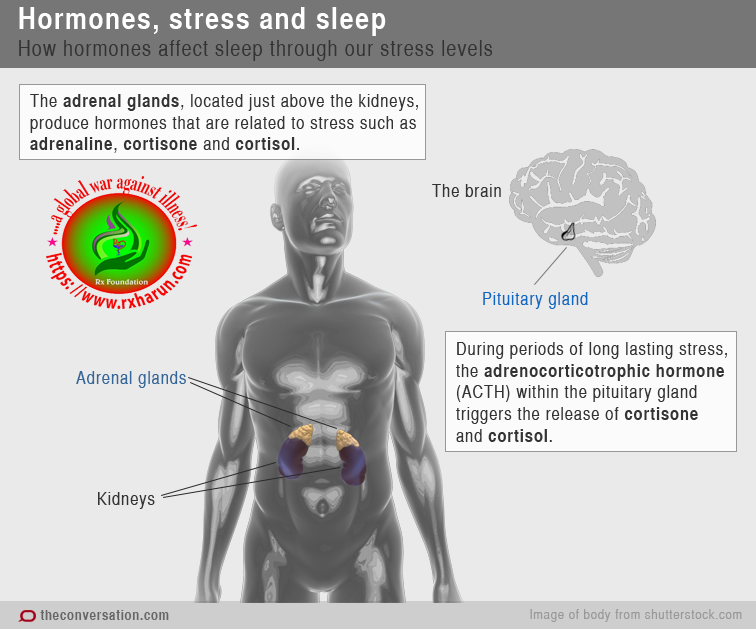
Our body’s hormones are like chemical messages in the bloodstream which cause a change in a particular cell or organ and surrounding tissues. The hormone adrenaline, for example, is produced by the adrenal glands (on top of the kidneys) and helps prepare the body’s “fight or flight” response during times of stress.

Hormones control many of the body’s processes, including growth, development, reproduction, responding to stress, metabolism and energy balance.

Hormones are linked with sleep in a number of ways.

Hormones affect sleeping through our stress levels

Some hormones, such as adrenaline, make us feel more alert and prepared for action. This then makes it hard for us to go to sleep. To prevent this effect it’s best to do relaxing activities before bedtime, rather than stressful work tasks or intense exercise.

When stress is long lasting, adrenocorticotrophic hormone within the pituitary gland (attached to the base of the brain) triggers the release of cortisone and cortisol from the adrenal glands.
Do hormones cause insomnia? estrogen cause insomnia?

Levels of adrenocorticotrophic hormone tend be higher in people with insomnia than in good sleepers. This suggests that excessive arousal and ongoing stressors contribute to the insomnia.

Elite athletes can have difficulty getting to sleep because they tend to have high levels of cortisol throughout the day, including in the evening.

Hormones released during sleep boost our immune system and make us hungry

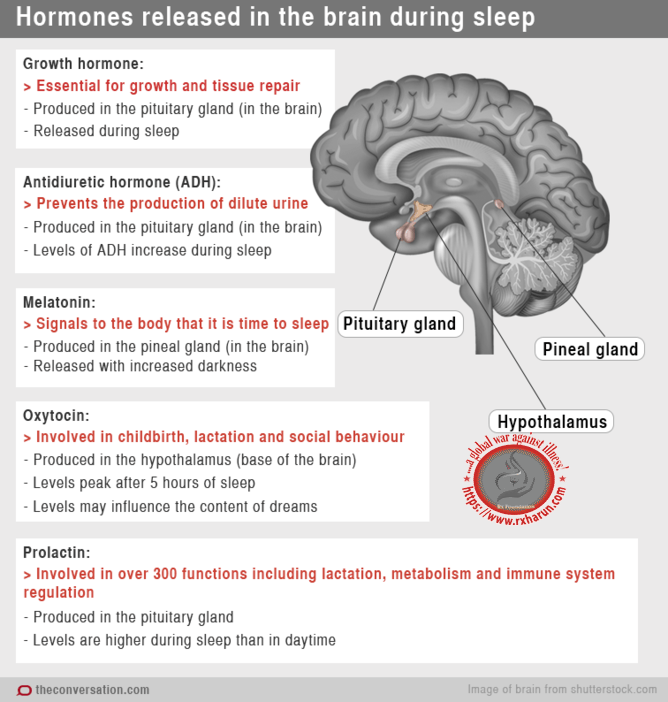
Sleep is a time when several of the body’s hormones are released into the bloodstream. These include growth hormone, which is essential for growth and tissue repair, including in adults.

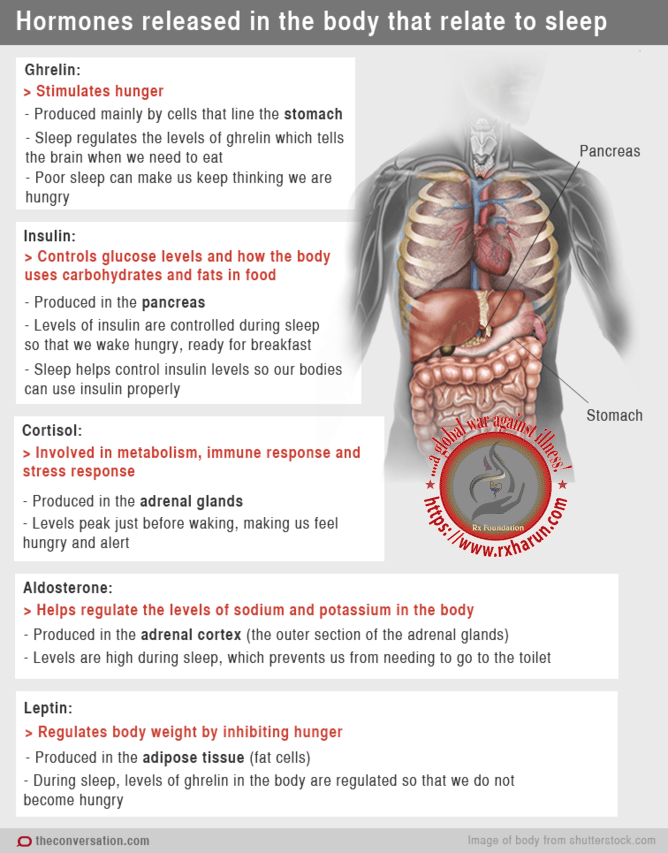
Sleep helps to balance our appetite by maintaining optimal levels of the hormones ghrelin and leptin. So, when we get less sleep than normal we may feel an urge to eat more.

Sleep also controls levels of the hormones insulin and cortisol so that we wake up hungry, prompting us to eat breakfast, and we are prepared for facing daytime stress.

If we get less sleep than normal our levels of prolactin may get out of balance and we can end up with a weakened immune system, difficulty concentrating and carbohydrate cravings during the day.

Hormones stop us from having to get up in the night to go to the bathroom

Changes in hormonal levels during sleep, including higher levels of aldosterone and antidiuretic hormone, prevent us from needing to go to the toilet. In children, while the hormonal system is still developing, bedwetting may be partly influenced by low levels of antidiuretic hormone.
Do hormones cause insomnia? estrogen cause insomnia?

Hormones make us feel sleeping at night

Hormone levels also influence the timing of when we feel sleepy and awake – our body clock or sleep-wake cycle. The hormone melatonin is released with darkness and tells our body it’s time to sleep. This is why being around too much bright light before bed can affect our sleep as it can stop the release of melatonin. It’s also why it can be hard for night-time shift workers to sleep during the day.

While artificial melatonin is available, taking the wrong dosage and at the wrong time of day can make things worse, so it’s best used with the guidance of a medical doctor.

Hormones give us a wake-up call in the morning

Levels of the hormone cortisol dip at bedtime and increase during the night, peaking just before waking. This acts like a wake-up signal, turning on our appetite and energy.

When we travel long distances our body’s sleep-wake cycle takes a while to adjust. So increased cortisol levels and hunger may occur at inappropriate times of the day.
Do hormones cause insomnia? estrogen cause insomnia?

For women, changes in sex hormones affect sleep

The relationship between hormones and the sleep-wake cycle in women is further influenced by the menstrual cycle. Just before a woman’s period, hormonal changes, including the sudden drop in levels of progesterone, affect the body’s temperature control, which in turn can reduce the amount of “REM” sleep. This is the stage of sleep when most of our dreams occur.

For women with severe premenstrual symptoms reduced levels of melatonin before bedtime just before their menstrual period can cause poor sleep, including night-time awakenings or daytime sleepiness.

Changes in hormone levels also contribute to sleeping difficulties during pregnancy. Increased progesterone levels can cause daytime sleepiness, particularly in the first trimester. High levels of oestrogen and progesterone during pregnancy can also cause nasal swelling and lead to snoring.

During menopause, low levels of oestrogen may contribute to sleeping difficulties. Changes in hormone levels mean that body temperature is less stable and there may be increases in adrenaline levels, both of which can affect sleep.

The loss of oestrogen causes body fat to move more to the stomach area, which increases the chances of women having snoring and sleep apnoea.

For men, testosterone levels affect sleep

For men, levels of testosterone are highest during sleep and require at least three hours of sleep to reach this peak. Low levels of testosterone in men, which can occur with sleep deprivation, ageing and physical problems, have been associated with a reduction in sleep efficiency and changes to the stages of sleep men experience.

Testosterone can be taken as a drug but abuse of it can lead to other sleep problems.

Hormones influence our dreams

Finally, as we sleep, our hormones, including levels of oxytocin and cortisol, may influence the content of our dreams.

By doing things to promote good sleep, such as reducing stress, engaging in relaxing evening routines before bed, going to bed and getting up at regular times, or seeking professional help for sleeping difficulties, we can facilitate the replenishing activities of our hormones that help us make the most of our day and optimise our well-being.

This article is part of an occasional series, Chemical Messengers, on hormones and the body. Stay tuned for other articles on hunger, mood and sexual desire.

References

Do hormones cause insomnia? estrogen cause insomnia?

Doctor visit helper

Prepare before seeing a doctor

A simple rural-patient checklist to help you explain symptoms clearly, ask better questions, and avoid unsafe self-treatment.

Safety note: This is not a prescription or diagnosis. For severe symptoms, pregnancy danger signs, children with serious illness, chest pain, breathing difficulty, stroke-like weakness, or major injury, seek urgent care.

Which doctor may help?

Orthopedic doctor, spine specialist, neurologist, or physiotherapist depending on severity.

What to tell the doctor

  • Mark pain area and whether pain travels to leg.
  • Write numbness, weakness, bladder/bowel problem, fever, injury, or night pain if present.
  • Bring previous X-ray/MRI and medicine list.

Questions to ask

  • Is this muscle pain, disc problem, nerve pressure, arthritis, infection, or another cause?
  • Do I need X-ray or MRI now?
  • Which activities should I avoid and which exercises are safe?
  • When can I return to work?

Tests to discuss

  • Spine and neurological examination
  • Straight leg raise or similar nerve tension tests
  • X-ray if trauma/deformity/chronic pain is suspected
  • MRI if leg weakness, sciatica, or red flags are present

Avoid these mistakes

  • Avoid heavy lifting, long bed rest, and untrained spinal manipulation.
  • Avoid NSAIDs if ulcer, kidney disease, blood thinner use, pregnancy, or allergy unless doctor says safe.

Medicine safety and first-aid guide

This section is for patient education only. It does not replace a doctor, pharmacist, or emergency care.

Safe first steps

  • Drink safe fluids and monitor temperature.
  • In dengue-prone areas, discuss CBC and platelet count when fever persists or warning signs appear.
  • Use tepid sponging for high fever discomfort; avoid ice-cold bathing.

OTC medicine safety

  • For fever, common fever medicine may be discussed with a clinician or pharmacist.
  • Avoid aspirin/ibuprofen-like medicines in suspected dengue unless a doctor says it is safe.

Avoid these mistakes

  • Do not start antibiotics without a proper medical decision.
  • Do not use steroid tablets or injections casually for quick relief.
  • Do not delay emergency care because of home remedies.

Get urgent help if

  • Fever with breathing difficulty, confusion, repeated vomiting, bleeding, severe weakness, stiff neck, or dehydration needs urgent care.
Medicine names, dose, and timing must be decided by a qualified clinician or pharmacist after checking age, pregnancy, allergy, other diseases, and current medicines.

For rural patients and family caregivers

Patient health record and symptom diary

Write your symptoms, medicines already taken, test results, and questions before visiting a doctor. This note stays on your device unless you print or copy it.

Doctor to discuss: Doctor / qualified healthcare provider
Tests to discuss with doctor
  • Basic vital signs: temperature, pulse, blood pressure, oxygen level if needed
  • Relevant blood, urine, imaging, or specialist tests only after clinical assessment
Questions to ask
  • What is the most likely cause of my symptoms?
  • Which warning signs mean I should go to emergency care?
  • Which tests are really needed now?
  • Which medicines are safe for my age, pregnancy status, allergy, kidney/liver/stomach condition, and current medicines?

Emergency warning signs such as chest pain, severe breathing difficulty, sudden weakness, confusion, severe dehydration, major injury, or loss of bladder/bowel control need urgent medical care. Do not wait for online information.

Safe pathway to proper treatment

Care roadmap for: Do hormones cause insomnia? estrogen cause insomnia?

Use this simple roadmap to understand the next safe steps. It is educational and does not replace examination by a doctor.

Go to emergency care if you notice:
  • Severe or rapidly worsening symptoms
  • Breathing difficulty, chest pain, fainting, confusion, severe weakness, major injury, or severe dehydration
Doctor / service to discuss: Qualified healthcare provider; specialist depends on symptoms and examination.
  1. Step 1

    Check danger signs first

    If danger signs are present, seek emergency care and do not wait for online information.

  2. Step 2

    Record the symptom story

    Write when symptoms started, severity, medicines already taken, allergies, pregnancy status, and test results.

  3. Step 3

    Visit a qualified clinician

    A doctor, nurse, or qualified healthcare provider can examine you and decide which tests or treatment are needed.

  4. Step 4

    Do only useful tests

    Do tests after clinical assessment. Avoid unnecessary tests, random antibiotics, or repeated medicines without diagnosis.

  5. Step 5

    Follow up and return early if worse

    If symptoms worsen, new warning signs appear, or treatment is not helping, return for review quickly.

Rural patient practical tips
  • Take a written symptom diary and all previous prescriptions/test reports.
  • Do not hide medicines already taken, even herbal or over-the-counter medicines.
  • Ask which warning signs mean urgent referral to hospital.

This roadmap is for education. A real diagnosis and treatment plan requires history, examination, and clinical judgment.

RX Patient Help

Ask a health question safely

Write your symptom story. A health professional or site editor can review it before any answer is prepared. This box is not for emergency care.

Emergency first: Severe chest pain, breathing trouble, unconsciousness, stroke signs, severe injury, heavy bleeding, or rapidly worsening symptoms need urgent local medical care now.

Frequently Asked Questions

Is this article a replacement for a doctor?

No. It is educational content only. Patients should consult a qualified clinician for diagnosis and treatment.

When should I seek urgent care?

Seek urgent care for severe symptoms, rapidly worsening condition, breathing difficulty, severe pain, neurological changes, or any emergency warning sign.

References

Add references, clinical guidelines, textbooks, journal articles, or trusted medical sources here. You can edit this area from the RX Article Professional Blocks panel.
