Acute leukemia is a fast-growing blood cancer. It starts in the bone marrow, which is the soft part inside your bones where new blood cells are made. In acute leukemia, very young “blast” cells grow out of control. These blasts do not grow into normal working blood cells, so the body cannot fight infection, carry oxygen, or stop bleeding properly. Without treatment, the disease can worsen in weeks or months, so it is a medical emergency.
Acute leukemia is called “acute” because it comes on quickly and gets worse fast. It is different from chronic leukemia, which usually grows slowly over years. In acute leukemia, most abnormal cells are immature blasts, while in chronic leukemia the cells are more mature and may work a little. This is why doctors start treatment soon after diagnosis for acute leukemia.
Acute leukemia is a fast-growing cancer of the blood and bone marrow. In this disease, very immature blood cells (called “blasts”) grow out of control and crowd out normal red blood cells, white blood cells, and platelets. This causes tiredness, infections, and bleeding, and it needs quick treatment to protect life. There are two main types: acute myeloid leukemia (AML) and acute lymphoblastic leukemia (ALL).
There are two main broad groups of acute leukemia: acute myeloid leukemia (AML) and acute lymphoblastic (or lymphocytic) leukemia (ALL). AML comes from myeloid stem cells, which make some white cells, red cells, and platelets. ALL comes from lymphoid stem cells, which make a special type of white cell called lymphocytes. There are also rare mixed forms that show features of both.
In modern medicine, doctors classify acute leukemia using cell appearance, special surface markers, chromosome changes, and gene mutations. Systems such as the World Health Organization (WHO) and newer International Consensus Classification (ICC) use these features to define many subtypes. These subtypes help predict how the disease behaves and which treatments may work best.
Other names of acute leukemia
Doctors and patients may use several other names or related terms when talking about acute leukemia. These do not always mean the same thing, but they are closely linked ideas:
Blastic leukaemia or blast crisis (phase with many blasts)
Mixed phenotype acute leukaemia (MPAL)
Acute undifferentiated leukaemia
These terms all point to very fast-growing cancers of early blood-forming cells in the bone marrow.
The production of abnormal leukocytes defines leukemia as either a primary or secondary process. They can be classified as acute or chronic based on the rapidity of proliferation and myeloid or lymphoid based on the cell of origin. Predominant subtypes are acute myeloid leukemia (AML) and chronic myeloid leukemia (CML), which involve the myeloid lineage; acute lymphoblastic leukemia (ALL); and chronic lymphocytic leukemia (CLL), which involve the lymphoid lineage. Other less common variants, such as mature B-cell and T-cell leukemias, and NK cell-related leukemias, to name a few, arise from mature white blood cells. However, with the advent of next-generation sequencing (NGS) and the identification of various biomarkers, the World Health Organization (WHO) classification was updated in 2016, introducing significant changes to the traditional classification of acute leukemias and myeloid neoplasms.[rx] GLOBOCAN, a global observatory for cancer trends, showed a global incidence of 474,519 cases, with 67,784 in North America. The Age-Standardized Rates are around 11 per 100,000, with a mortality rate of approximately 3.2.[rx]
Many genetic risk factors have been identified, such as Klinefelter and Down syndromes, ataxia telangiectasia, Bloom syndrome, and telomeropathies such as Fanconi anemia, dyskeratosis congenita, and Shwachman-Diamond syndrome; germline mutations in RUNX1, CEBPA, to name a few. Viral infections associated with Epstein-Barr virus, human T-lymphotropic virus, ionizing radiation exposure, radiation therapy, environmental exposure with benzene, smoking history, history of chemotherapy with alkylating agents, and topoisomerase II agents have also been implicated in the development of acute leukemias. Symptoms are nonspecific and can include fever, fatigue, weight loss, bone pain, bruising, or bleeding. Definitive diagnoses often require bone marrow biopsy, the results of which help the hematologists and stem cell transplant physicians regarding the selection of treatment options ranging from chemotherapy to allogeneic stem cell transplantation. The prognosis varies depending on the leukemia subtype.
Types of leukemia
Acute vs chronic myeloid leukemia: Blasts, which are immature and dysfunctional cells, normally make up 1% to 5% of marrow cells. Acute leukemias are characterized by greater than 20% blasts on peripheral blood smear or bone marrow, leading to a more rapid onset of symptoms. In contrast, chronic leukemia has less than 20% blasts with a relatively chronic onset of symptoms. The accelerated/blast phase is a transformation of chronic myeloid leukemia into an acute phase with a significantly higher degree of blasts.[rx][rx][rx]
As such, the 4 major subtypes of leukemia are:
Acute lymphoblastic leukemia (ALL): ALL occurs in patients with the blastic transformation of B and T cells. It is the most common leukemia in the pediatric population, accounting for up to 80% of cases in this group vs 20% of cases in adults. Pediatric regimens predominantly inform treatment for adolescents and young adults, with better survival rates.
Acute myelogenous leukemia (AML): AML is characterized by greater than 20% myeloid blasts and is the most common acute leukemia in adults. It is the most aggressive cancer with a variable prognosis depending on the molecular subtypes.
Chronic lymphocytic leukemia (CLL): CLL occurs from the proliferation of monoclonal lymphoid cells. Most cases occur in people aged 60 to 70. CLL is considered an indolent disease, for the most part, meaning not all patients with a diagnosis need to start treatment until symptomatic from the disease.
Chronic myelogenous leukemia (CML): CML typically arises from reciprocal translocation and fusion of BCR on chromosome 22 and ABL1 on chromosome 9, resulting in dysregulated tyrosine kinase on chromosome 22 called the Philadelphia (Ph) chromosome. This, in turn, causes a monoclonal population of dysfunctional granulocytes, predominantly neutrophils, basophils, and eosinophils.[1][3][5][6]
Types of acute leukemia
Below is a simple list of 30 important types and subtypes. The names can look complex, but each short note explains the key idea in easy words. Most names come from the WHO and ICC systems.
Acute myeloid leukemia with t(8;21); RUNX1-RUNX1T1 This AML type has a swap (translocation) between chromosomes 8 and 21 that joins two genes called RUNX1 and RUNX1T1. It often shows large blasts with specific rod-like Auer bodies and can respond well to standard chemotherapy.
Acute myeloid leukemia with inv(16) or t(16;16); CBFB-MYH11 Here, chromosome 16 is rearranged and joins CBFB and MYH11 genes. The disease often has both myeloid and monocytic features, and patients may have high white cells and enlarged spleen but can have good outcomes with proper treatment.
Acute promyelocytic leukemia (APL) with PML-RARA This type has a special fusion between PML and RARA genes and causes many promyelocytes. It has a high risk of dangerous bleeding, but modern treatment with all-trans retinoic acid (ATRA) and arsenic trioxide gives very high cure rates.
AML with mutated NPM1 In this AML subtype, the NPM1 gene is changed in a typical pattern. It often shows many blasts without clear maturation in blood and marrow. If certain other bad markers are absent, this type can have a relatively better prognosis.
AML with biallelic CEBPA mutations Both copies of the CEBPA gene are mutated in this AML. Patients often have normal chromosomes otherwise, and this pattern can be linked to more favorable outcomes with intensive chemotherapy.
AML with mutated RUNX1 This type has a mutation in the RUNX1 gene without the classic t(8;21) translocation. It often has poor-risk features, and patients may need stronger or more advanced treatments such as stem cell transplant.
AML with myelodysplasia-related changes Here, AML develops from earlier bone marrow disease or shows clear long-standing cell shape problems (dysplasia). It is often seen in older adults and can be harder to cure than some other AML types.
Therapy-related AML This acute leukemia appears after prior chemotherapy or radiation for another cancer. The DNA damage from earlier treatment contributes to new mutations. It usually has complex chromosome changes and is often considered high-risk.
AML, minimally differentiated (M0) In this AML, blasts look very primitive and show few signs of maturing into myeloid cells. Special stains and flow cytometry are needed to prove they are myeloid blasts.
AML without maturation (M1) Blasts show myeloid features but little maturation beyond that stage. The bone marrow is packed with blasts, and normal blood cell production is strongly reduced.
AML with maturation (M2) In this type, there are many blasts but also some more mature myeloid cells. It often overlaps with genetic categories such as t(8;21) AML, and prognosis depends on the exact genetic findings.
Acute myelomonocytic leukemia (M4) This AML shows both myeloid and monocyte-like cells. Patients may have swollen gums, skin spots, or organ involvement due to monocytic cell spread.
Acute monoblastic/monocytic leukemia (M5) Most blasts are monoblasts or monocytes. Gum swelling, skin leukemia spots, and high blood levels of lysozyme can appear. This type often needs prompt intensive treatment.
Acute erythroid leukemia This rare AML has many abnormal early red cell precursors in the marrow. It often has very low normal red cells and platelets and is usually aggressive.
Acute megakaryoblastic leukemia Here the blasts are early platelet-forming cells (megakaryoblasts). It is more common in children and in people with Down syndrome. Fibrosis in the marrow can make bone marrow sampling difficult.
B-cell acute lymphoblastic leukemia, NOS This ALL type arises from early B-cell lymphoblasts without a defining genetic abnormality. It is common in children and treated with multi-drug chemotherapy and sometimes targeted drugs.
B-ALL with BCR-ABL1 (Philadelphia-positive ALL) This type carries the t(9;22) translocation, creating the BCR-ABL1 fusion gene. It behaves aggressively, but targeted tyrosine kinase inhibitors plus chemotherapy have greatly improved outcomes.
B-ALL with ETV6-RUNX1 (t(12;21)) A translocation between chromosomes 12 and 21 creates ETV6-RUNX1. It is common in childhood ALL and is often linked with good survival when treated with modern protocols.
B-ALL with hyperdiploidy In this subtype, leukemia cells have more chromosomes than normal (often 51–65). It is frequent in children and usually has favorable risk if no other high-risk changes are present.
B-ALL with hypodiploidy Here, leukemia cells have fewer chromosomes than normal. This pattern is usually associated with high-risk disease and a greater chance of relapse.
T-cell acute lymphoblastic leukemia T-ALL starts from early T-cell lymphoblasts. Patients often have a large mass in the chest and high white blood cell counts. Intensive chemotherapy, sometimes with stem cell transplant, is needed.
Early T-cell precursor (ETP) ALL This special T-ALL shows features of very early T-cell and stem-cell-like blasts. It often has high-risk genetic patterns and may respond better to very intensive or novel regimens.
Mixed phenotype acute leukemia, B/myeloid In this mixed type, some blasts look and test like B-lymphoblasts and others like myeloid blasts. Diagnosis needs detailed flow cytometry and genetic tests, and treatment is complex.
Mixed phenotype acute leukemia, T/myeloid This MPAL subtype shows both T-cell and myeloid features. Outcomes can be poorer than for “single-lineage” AML or ALL, and transplants are often considered.
MPAL with BCR-ABL1 These leukemias show both mixed phenotype features and the BCR-ABL1 fusion. They are high-risk but may benefit from adding tyrosine kinase inhibitors to AML/ALL-type chemotherapy.
MPAL with KMT2A (MLL) rearrangement This subtype has changes in the KMT2A gene (formerly MLL). It often appears in infants and can be very aggressive. Treatment usually includes strong chemotherapy and transplant.
Acute undifferentiated leukemia Here, blasts do not clearly show myeloid or lymphoid markers even with advanced tests. It is rare and usually managed with intensive regimens similar to high-risk acute leukemia.
Acute basophilic leukemia This AML subtype shows blasts with basophilic features and may cause very high histamine levels, leading to flushing and low blood pressure. It is rare and often aggressive.
Acute panmyelosis with myelofibrosis This rare disease has acute involvement of many myeloid lines plus scar tissue (fibrosis) in the bone marrow. It leads to severe low blood counts and often needs early transplant.
Myeloid leukemia associated with Down syndrome (ML-DS) This acute leukemia happens in children with Down syndrome and has special biology. Some cases respond very well to reduced-intensity chemotherapy tailored to their higher drug sensitivity.
Causes of acute leukemia
Acute leukemia usually develops because of gene changes (mutations) inside bone marrow stem cells. Often there is no single clear cause, but many risk factors can increase the chance.
Random DNA mistakes during cell division Every time a stem cell divides, its DNA must copy. Small random errors can happen. Most are harmless, but some hit important control genes and may start leukemia after many years.
Inherited genetic syndromes Some people are born with gene changes that raise leukemia risk, such as Down syndrome or certain bone marrow failure syndromes. Not everyone with these conditions gets leukemia, but risk is higher.
Previous chemotherapy for another cancer Some chemotherapy drugs damage DNA in normal stem cells. Years later, this damage can lead to therapy-related AML or ALL, which often have complex chromosome changes.
Previous radiation therapy or high radiation exposure High-dose radiation from cancer treatment or rare accidents can injure marrow stem cells. This damage may cause mutations that later turn into acute leukemia.
Long-term benzene exposure Benzene is a chemical used in some industries and is present in gasoline and cigarette smoke. Long, heavy exposure is linked with a higher risk of AML.
Smoking tobacco Cigarette smoke carries many cancer-causing chemicals, including benzene-like compounds. Smoking over many years increases the chance of AML in adults.
Pre-existing myelodysplastic syndromes (MDS) People with MDS have abnormal bone marrow and low blood counts. Over time, MDS can change into AML with myelodysplasia-related changes, which is a form of acute leukemia.
Pre-existing myeloproliferative neoplasms (MPN) Diseases such as polycythemia vera or myelofibrosis may slowly evolve into “blast phase” or secondary AML. This is usually a high-risk type.
High-dose environmental radiation (rare) Survivors of nuclear accidents or atomic bombs showed increased rates of leukemia years later. This is an example of strong environmental DNA damage.
Certain chemotherapy classes (alkylating agents, topoisomerase inhibitors) Some drug groups are especially linked to therapy-related AML because they strongly damage DNA cross-links or break strands, leading to later mutations.
Strong family history of leukemia or related cancers Families with many blood cancers may carry hidden germline mutations in genes such as RUNX1 or CEBPA. These inherited changes can give a background risk for acute leukemia.
Age (older adulthood for AML) The risk of AML rises with age because DNA damage builds up and bone marrow stem cells become less stable. However, ALL is more common in children.
Male sex (for some acute leukemia types) Some studies show a slightly higher rate of certain acute leukemias in males, although the reason is not fully clear. It may reflect hormone effects, lifestyle, or gene differences.
Immune system defects Primary immune deficiency or long-term immune weakening may allow abnormal clones to grow and escape normal immune control, increasing leukemia risk.
Chronic viral infections (e.g., HTLV-1 for some leukemias) Some viruses can insert their genetic material into host cells. This can disturb cell growth pathways and contribute to certain leukemias and lymphomas.
Exposure to some pesticides and industrial chemicals Studies suggest that intense occupational or farm exposure to some chemicals may raise leukemia risk, although the link is not always strong or simple.
High body weight and metabolic factors Obesity and related inflammation and hormone changes may slightly increase risk of some blood cancers, including certain acute leukemias in adults.
Pre-existing bone marrow failure syndromes Conditions where the marrow already works poorly, such as aplastic anemia, can rarely transform into acute leukemia after years of instability.
Chronic inflammatory or autoimmune diseases Ongoing inflammation, plus use of strong immune-suppressing drugs, may create an environment where mutated clones can expand toward leukemia.
Unknown or idiopathic causes In many people, no clear risk factor is found. Their leukemia likely comes from random DNA damage and complex gene-environment interactions that we cannot fully track.
Symptoms of acute leukemia
Acute leukemia symptoms happen because normal blood cells are low and abnormal cells build up in marrow and organs. They often appear over a few weeks and keep getting worse.
Tiredness and weakness (fatigue) Low red blood cells mean less oxygen reaches the body. People feel very tired, weak, short of breath on small effort, and may look pale.
Frequent or severe infections Normal white cells drop, and abnormal blasts do not fight germs. Patients may get repeated fevers, sore throats, lung infections, or urinary infections that do not settle easily.
Fever and chills without clear cause Fever can come from infection or from inflammatory chemicals released by leukemia cells. People may have night sweats and feel unwell even when tests do not show an obvious infection.
Easy bruising and bleeding Platelets become low, so bruises appear after small bumps, and nosebleeds or gum bleeding are common. Cuts may take longer to stop bleeding, and women may have heavy periods.
Tiny red or purple spots on the skin (petechiae) Petechiae are small pin-point spots caused by bleeding under the skin when platelets are very low. They often show on legs or in areas where clothes press tightly.
Bone or joint pain The bone marrow fills with blasts and becomes crowded. This can cause deep bone pain or aching joints, especially in children with ALL.
Swollen lymph nodes Lymph nodes in the neck, armpits, or groin can enlarge as leukemia cells collect there. They may feel rubbery but usually not very painful.
Enlarged liver or spleen The liver and spleen can swell when they fill with leukemia cells. People may feel a fullness or dull pain under the ribs, or a doctor may feel these organs on exam.
Unplanned weight loss and poor appetite Cancer cells use up energy and release chemicals that reduce appetite. People may lose weight without trying and feel early fullness when eating.
Shortness of breath Low red blood cells and sometimes high white cell counts reduce oxygen delivery and blood flow. Simple activities like climbing stairs can cause breathlessness and chest discomfort.
Pale skin and mucous membranes Anemia makes the skin and inner eyelids look pale. This can be a visible sign that red blood cell levels are low and should be checked.
Headaches, dizziness, or confusion Very low red cells or very high white cells can affect blood flow to the brain. People may get headaches, feel light-headed, or in severe cases become confused or drowsy.
Chest pain or fullness (especially in T-ALL with chest mass) In T-cell ALL, a large group of cells can grow in the chest and press on airways or blood vessels. This can cause chest pain, cough, and breathing trouble and is an emergency warning sign.
Night sweats and feeling very unwell Night sweats, weakness, and a general feeling of sickness often come together as the body reacts to cancer-related inflammation.
Swollen gums or skin lumps (leukemia cutis) In some monocytic or myelomonocytic leukemias, cells collect in gums and skin. Gums may overgrow and bleed, and skin may show purple or brown raised spots.
Diagnostic tests for acute leukemia
Doctors do several steps to confirm acute leukemia and to find the exact type. They use the history, physical exam, manual bedside tests, laboratory and pathology tests, electrodiagnostic tests to check the heart and nerves, and imaging to look at organs.
Physical exam tests
1. Full general physical examination The doctor looks at the patient’s overall state: body build, level of alertness, breathing pattern, and skin color. They check vital signs like temperature, pulse, and blood pressure to look for fever, infection, or low blood volume.
2. Skin and mucous membrane inspection The doctor inspects skin, mouth, and eyes for bruises, petechiae, pallor, rashes, or leukemia skin spots. These clues suggest low platelets, anemia, or leukemia cell deposits.
3. Lymph node examination The neck, armpit, and groin are felt carefully to find enlarged lymph nodes. Size, texture, and tenderness help decide if swelling may be reactive (from infection) or due to leukemia or lymphoma.
4. Abdominal exam for liver and spleen The doctor gently presses and taps the abdomen to feel for an enlarged liver or spleen. The edge and distance below the ribs are noted. Enlargement suggests cell build-up from leukemia or portal pressure problems.
Manual bedside tests
5. Manual pulse and blood pressure assessment By feeling the pulse and measuring blood pressure manually, the doctor can detect shock, dehydration, or heart strain. Very fast pulse with low pressure may indicate severe infection or bleeding in leukemia.
6. Bone tenderness check (sternal or long bone pressure) Gentle pressure over the breastbone or long bones can show deep bone pain. Marked tenderness suggests packed, diseased bone marrow as in acute leukemia.
7. Neurologic screening exam The doctor checks strength, feeling, reflexes, and basic mental status. This helps detect central nervous system involvement or complications like bleeding or high white cell counts.
Laboratory and pathological tests
8. Complete blood count (CBC) with differential CBC measures red cells, white cells, hemoglobin, and platelets. In acute leukemia, there may be very high or low white cells, low red cells and platelets, and blasts seen on the automated or manual differential. This test is the first big clue.
9. Peripheral blood smear (manual film review) A thin blood film is stained and examined under a microscope. The pathologist looks for blasts, Auer rods, abnormal lymphocytes, or other shapes. This manual step refines the diagnosis suggested by the CBC machine.
10. Bone marrow aspiration Liquid bone marrow is taken, usually from the hip bone, with a needle under local anesthesia. The sample is smeared on slides and examined to measure blast percentage, cell lines, and early signs of specific subtypes.
11. Bone marrow biopsy (core) A small cylinder of bone and marrow is removed to study the overall structure. It shows cellularity, fibrosis, and how blasts replace normal tissue. Together with aspiration, it confirms acute leukemia and helps classify it.
12. Flow cytometry (immunophenotyping) Flow cytometry uses antibodies that stick to specific markers on cell surfaces. A laser then reads these signals and shows which markers the blasts express. This tells whether the leukemia is myeloid, B-cell, T-cell, or mixed.
13. Cytogenetic analysis (karyotype and FISH) Chromosome studies on marrow cells, including full karyotype and FISH tests, detect translocations such as t(8;21), t(15;17), or t(9;22). These results define many named subtypes and guide targeted therapies.
14. Molecular genetic tests (PCR and next-generation sequencing) Molecular tests search for specific gene mutations or fusion genes, such as NPM1, FLT3, CEBPA, or BCR-ABL1. They detect changes even at very low levels and are used both for diagnosis and minimal residual disease monitoring.
15. Coagulation profile (PT, aPTT, fibrinogen, D-dimer) These blood tests check the clotting system. In APL and some other acute leukemias, severe clotting problems and bleeding may appear, so early detection helps start life-saving supportive care.
16. Cerebrospinal fluid (CSF) examination by lumbar puncture A small amount of fluid around the brain and spinal cord is removed using a needle in the lower back. This test looks for leukemia cells in the central nervous system, which is especially important in ALL.
Electrodiagnostic tests
17. Electrocardiogram (ECG) An ECG records the electrical activity of the heart. Before and during treatment, it helps detect heart rhythm problems, drug-related changes, or underlying heart disease, which are important for safe chemotherapy planning.
18. Nerve conduction studies / electromyography (EMG) when needed These tests measure how nerves and muscles carry signals. They are not routine for diagnosis, but they are used when patients develop nerve symptoms, for example from certain drugs or from vitamin problems in long illness.
Imaging tests
19. Chest X-ray A chest X-ray can show lung infection, fluid around the lungs or heart, or a large mass in the chest in T-ALL. This helps in staging and in urgent care decisions, such as starting antibiotics or steroids.
20. Ultrasound, CT, or MRI scans Ultrasound can measure liver and spleen size, while CT or MRI can look more closely at lymph nodes, chest masses, or organ involvement. These scans help plan procedures, assess complications, and follow response to treatment.
Non-Pharmacological Treatments
1. Patient and family education Clear, repeated teaching about what acute leukemia is, how chemotherapy works, and what side effects to watch for helps reduce fear and confusion. Education often includes simple written leaflets, videos, and one-to-one talks with nurses or doctors. When people understand their illness, they make safer choices and seek help earlier when problems start.
2. Infection-prevention hygiene program Because acute leukemia and its treatments weaken the immune system, simple hygiene rules are vital. This means washing hands often, using alcohol hand rub, wearing masks in crowded places, and asking sick visitors to stay away. These small actions lower the chance of dangerous infections during low-immunity periods.
3. Neutropenic precautions in hospital When white blood cells are very low, hospitals may use “protective isolation.” This can include a single room, limited visitors, and special cleaning. Staff wear gloves and sometimes masks. The goal is to keep germs away from the patient while the bone marrow is not able to fight infection.
4. Vaccination planning Certain vaccines (like flu and COVID-19) can lower the risk of severe infection, but timing matters. Usually, inactivated (non-live) vaccines are given before intensive chemotherapy or after immune recovery. Live vaccines are usually avoided. The oncologist decides the best schedule based on blood counts and treatment phase.
5. Nutritional counseling A dietitian helps the patient eat enough calories and protein when appetite is poor and nausea is common. Soft, easy-to-chew foods and frequent small meals are often suggested. The dietitian also checks for vitamin or mineral problems and suggests safe supplements if needed, always coordinating with the oncology team.
6. Neutropenic-safe (“low-germ”) diet Many centers advise avoiding raw meat, raw fish, unpasteurized milk, and unwashed fruits or salads when white cells are low. Foods should be well cooked and prepared with careful hygiene. This reduces the chance that food will introduce dangerous bacteria or fungi into the body when defenses are weak.
7. Oral care and mouth-sore prevention Chemotherapy often causes mouth sores. Regular gentle tooth-brushing with a soft brush, bland rinses (like salt and baking soda), and avoiding alcohol mouthwashes help protect the mouth. Good oral care lowers infection risk and makes eating less painful, which supports nutrition and healing.
8. Physical therapy (physiotherapy) Acute leukemia and long hospital stays can weaken muscles and joints. A physiotherapist teaches simple bed exercises, walking plans, and stretching to maintain strength and balance. Safe movement, even when tired, can reduce blood clots, improve mood, and help recovery.
9. Occupational therapy Occupational therapists help patients manage daily tasks like bathing, dressing, and getting around safely at home. They may suggest grab bars, shower seats, or energy-saving tricks. This support keeps independence and reduces falls and accidents during treatment.
10. Psychological counseling and psychotherapy A new diagnosis of acute leukemia is emotionally shocking. Counseling offers a safe place to talk about fear, sadness, anger, or uncertainty. Therapists may use simple talk therapy or cognitive behavioral therapy to manage anxiety, depression, and sleep problems, and to help with coping skills.
11. Support groups (in-person or online) Meeting others with leukemia or other cancers helps patients feel less alone. People can share real-life tips about side effects, work, school, relationships, and hope. Support groups may be led by nurses, psychologists, or trained peers, and can be in person or online.
12. Social work and practical support Social workers help with money problems, travel to the hospital, school and work letters, and insurance or disability forms. They also connect families with charities, housing near treatment centers, and local support services. This reduces stress so families can focus more on care and recovery.
13. Spiritual or faith-based support (if desired) Some patients find comfort in prayer, meditation, or talking with a faith leader. Hospitals often have chaplains or quiet rooms. This kind of support is optional, but for some people it brings strength and peace during treatment.
14. Palliative care (symptom management) Palliative care is not only for the end of life. It is specialized care that focuses on pain, nausea, breathlessness, anxiety, and overall quality of life, from diagnosis onwards. It works together with leukemia treatment to make daily life more comfortable.
15. Fatigue-management strategies Cancer-related tiredness is very common. Simple tools include setting small daily goals, taking planned rest breaks, doing light exercise like walking, and asking for help with heavy tasks. Good sleep habits and treatment of causes like anemia or depression also help reduce fatigue.
16. Relaxation training and breathing exercises Guided breathing, progressive muscle relaxation, and simple mindfulness exercises can reduce anxiety, pain, and insomnia. These techniques are easy to learn and can be used during procedures, before chemotherapy, or at home when feeling overwhelmed.
17. Music therapy and art therapy Listening to or creating music and art can help express feelings that are hard to put into words. These therapies reduce stress and improve mood. They are safe, non-invasive, and often enjoyable for both adults and children with acute leukemia.
18. Sleep hygiene counseling Steroids, hospital noise, and worry often disturb sleep. Sleep hygiene includes regular sleep and wake times, limiting screens before bed, using relaxation techniques, and avoiding caffeine late in the day. Good sleep supports immune function and emotional health.
19. Smoking and alcohol cessation support If the patient smokes or drinks regularly, stopping is strongly advised. Smoking impairs healing, increases infection risk, and may worsen treatment outcomes. Alcohol can stress the liver, which is already busy handling chemotherapy drugs. Counseling, nicotine replacement, or other tools can help.
20. Fertility counseling and preservation Some chemotherapy and radiation can cause infertility. Before starting treatment, especially in young people, doctors may discuss sperm banking or egg/embryo freezing. This planning helps protect future family choices as much as possible.
21. School or work reintegration planning For children and teens, teachers and school nurses can help adjust workload, exam timing, and attendance. For adults, occupational health or HR can adjust hours, duties, or remote work. Planning early makes return to normal life smoother when health allows.
22. Falls and safety assessment at home Weakness, anemia, and medicines can increase fall risk. Simple home changes, like removing loose rugs, adding night-lights, and using handrails, can prevent injury. A nurse or therapist may do a safety check and suggest easy adjustments.
23. Pain self-management education Alongside prescribed pain medicines, patients learn how to track pain, recognize patterns, and use non-drug methods like heat, cold packs, relaxation, or distraction. Understanding when pain signals an emergency (like sudden chest pain or severe headache) is also very important.
24. Caregiver training and support Family members often give daily care, help with medicines, and watch for warning signs. Training teaches them safe lifting, hygiene, and what symptoms need urgent medical help. Support for caregivers reduces burnout and improves care quality.
25. Financial and legal counseling Long treatment can stress family finances. Counselors may help with insurance appeals, payment plans, or special funds. They can also explain medical leave laws and help plan basic legal documents, if needed, in a calm and informed way.
26. Telemedicine and remote monitoring Video visits, phone calls, and secure messaging allow follow-up without always going to the hospital. Remote symptom reporting and lab review can catch problems early and reduce travel stress, especially for people who live far away.
27. Exercise programs tailored to blood counts Supervised, low-impact exercise (like slow walking or light cycling) can be continued when blood counts are safe. The team adjusts activity level based on hemoglobin and platelet counts to reduce bleeding or heart-strain risks. Even small amounts of movement can improve strength and mood.
28. Rehabilitation after stem cell transplant If a stem cell transplant is done, rehab programs later help rebuild strength, lung function, and daily living skills. They include exercise, breathing exercises, and sometimes cognitive training to deal with “chemo brain” or memory problems.
29. Nutrition for gut protection During intensive treatment, the gut lining can be fragile. A dietitian may suggest low-fiber foods during severe diarrhea, plenty of fluids, and gradual re-introduction of fiber when the gut heals. This individualized plan helps maintain weight and hydration.
30. Long-term survivorship care plans After remission, patients still need regular check-ups. Survivorship plans summarize past treatments, potential late side effects (like heart problems or second cancers), and recommended screening tests. This written plan helps patients and future doctors protect long-term health.
Drug Treatments
Warning: These medicines are powerful chemotherapy and targeted cancer drugs. Only cancer specialists can decide which drugs are right, what doses are safe, and when to use them.
1. Cytarabine Cytarabine is a backbone drug for many AML regimens, including the standard “7+3” schedule. It is a cytotoxic drug that blocks DNA building in leukemia cells, so they cannot divide. It is given by vein and sometimes into the spinal fluid, at different doses for induction and consolidation phases.
2. Daunorubicin Daunorubicin is an anthracycline chemotherapy drug used with cytarabine in the “7+3” regimen. It damages DNA in leukemia cells and creates free radicals, which triggers cell death. It is given as a short IV infusion on a few days of the induction cycle, but dosing is limited by possible heart toxicity and low blood counts.
3. Idarubicin Idarubicin is another anthracycline used instead of daunorubicin in some AML protocols. It enters cells more easily and strongly blocks the enzyme topoisomerase II, which leukemia cells need to manage DNA. Doctors choose dose and schedule carefully to balance effectiveness against risks like heart damage and severe bone marrow suppression.
4. Mitoxantrone Mitoxantrone is an anthracenedione used in some AML regimens and salvage protocols. It intercalates into DNA and interferes with topoisomerase II, causing DNA breaks and cell death. It can be added to cytarabine to intensify treatment, but cumulative doses are limited because of potential heart toxicity and profound blood count drops.
5. Doxorubicin Doxorubicin is a classic anthracycline used in some acute leukemia protocols and related conditions. It binds DNA and generates free radicals that damage cell components. Because it can injure the heart, total lifetime dose is capped, and patients may have heart tests (like echocardiograms) before and during treatment.
6. Liposomal daunorubicin/cytarabine (VYXEOS) VYXEOS is a fixed-dose liposomal combination of daunorubicin and cytarabine in a 1:5 molar ratio, approved for certain high-risk or therapy-related AML types. The liposome helps deliver both drugs to leukemia cells in a controlled way, which can improve outcomes in selected adult AML patients compared with separate standard drugs.
7. Low-dose cytarabine combinations In older or frail patients, low-dose cytarabine can be used instead of intensive “7+3.” It is given under the skin rather than by continuous infusion. In modern care, low-dose cytarabine is often combined with targeted drugs like glasdegib or venetoclax to improve remission rates in people who cannot tolerate intensive chemotherapy.
8. Azacitidine Azacitidine is a hypomethylating agent that changes how leukemia cell DNA is chemically “marked.” This can switch on genes that help cells mature and die. It is used for older AML patients and those with myelodysplastic syndromes, often in combination with venetoclax, especially when intensive chemotherapy is not safe.
9. Decitabine Decitabine is a similar hypomethylating drug that also targets DNA methylation in leukemia cells. It can be used alone or with venetoclax for older or unfit AML patients. Treatment is given in cycles, and blood counts are monitored closely to balance leukemia control with infection and bleeding risks.
10. Venetoclax (VENCLEXTA) Venetoclax is a targeted oral drug that blocks BCL-2, a protein that helps leukemia cells stay alive. The FDA has approved venetoclax in combination with azacitidine, decitabine, or low-dose cytarabine for newly diagnosed AML in adults who are 75+ or cannot receive intensive chemotherapy. Doctors start venetoclax with a gradual “ramp-up” dose and monitor for tumor lysis and severe neutropenia.
11. Glasdegib (DAURISMO) Glasdegib is an oral inhibitor of the Hedgehog pathway. It is approved with low-dose cytarabine for newly diagnosed AML in older adults or those with serious other illnesses that prevent intensive therapy. By blocking Hedgehog signaling, glasdegib may target leukemia stem cells and improve survival when added to low-dose cytarabine.
12. Imatinib (first-generation TKI) Imatinib is a tyrosine kinase inhibitor used when acute leukemia involves the BCR-ABL (Philadelphia) chromosome, such as Ph-positive ALL or CML in blast crisis. It blocks the abnormal BCR-ABL protein that drives cancer cell growth. It is given orally with chemotherapy, and the dose is adjusted based on side effects and liver function.
13. Second-generation TKIs (dasatinib, nilotinib, others) Dasatinib and nilotinib are stronger TKIs used when imatinib is not tolerated or the leukemia is resistant, especially in Ph-positive ALL or CML blast phase. They target BCR-ABL and other kinases. Side effects can include fluid around the lungs (with dasatinib) and heart rhythm changes, so careful monitoring is needed.
14. FLT3 inhibitors (midostaurin, gilteritinib) In AML with FLT3 gene mutations, leukemic cells grow and divide more aggressively. FLT3 inhibitors such as midostaurin (often used during induction and consolidation) or gilteritinib (often used in relapsed disease) block this signaling. They are added to chemotherapy or used later, and they can improve remission rates in FLT3-mutated AML.
15. IDH1 and IDH2 inhibitors For AML with IDH1 or IDH2 mutations, drugs like ivosidenib (IDH1) or enasidenib (IDH2) help leukemia cells mature instead of staying as blasts. These targeted agents are usually oral and may be used in relapsed or unfit patients. A special side effect called “differentiation syndrome” must be recognized and treated quickly.
16. Asparaginase/pegaspargase Asparaginase is a key drug in many ALL regimens. It breaks down asparagine, an amino acid leukemia lymphoblasts depend on. Normal cells can make asparagine, but leukemia cells cannot, so they die when this amino acid is removed. Pegaspargase is a long-acting form. Side effects can include allergies, blood-clot problems, and pancreas or liver irritation.
17. Vincristine Vincristine is a vinca alkaloid that stops microtubules from working in dividing cells. It is widely used in ALL multi-drug protocols. Because it can damage nerves, doses are limited, and patients are monitored for numbness, weakness, or constipation linked to nerve and gut effects.
18. Glucocorticoids (prednisone, dexamethasone) Steroids like prednisone and dexamethasone are key drugs in ALL regimens. They trigger leukemia lymphoblast death and also reduce nausea and allergic reactions to other chemotherapy. Long-term or high doses can cause high blood sugar, mood changes, infections, and bone thinning, so they are used in well-planned cycles.
19. Monoclonal antibodies and BiTEs (e.g., blinatumomab) Some acute leukemias, especially B-cell ALL, express targets like CD19 or CD22. Drugs such as blinatumomab (a BiTE antibody) connect T cells to leukemia cells and help the immune system kill them. These agents are used in specific subtypes and often require hospital monitoring at the start for cytokine release syndrome and neurologic side effects.
20. CAR-T cell therapy (e.g., tisagenlecleucel in selected ALL) In certain relapsed or refractory B-cell ALL cases, CAR-T therapy may be used. T cells are taken from the patient, genetically changed to recognize leukemia cells, grown in the lab, and then infused back. This can lead to deep remissions but requires care in specialized centers because of strong immune reactions and long-term monitoring needs.
Drugs Approved for Leukemia
This page lists cancer drugs approved by the Food and Drug Administration (FDA) for leukemia. The list includes generic and brand names. This page also lists common drug combinations used in leukemia. The individual drugs in the combinations are FDA-approved. However, drug combinations themselves usually are not approved, but are widely used.
Drugs Approved for Acute Lymphoblastic Leukemia (ALL)
Always ask the oncology team before using any supplement. Some “natural” products can interact with chemotherapy or increase bleeding risk.
1. Vitamin D Vitamin D supports bone health, muscle function, and immune regulation. In some leukemia patients, levels may be low due to poor sun exposure and nutrition. Doctors may recommend a specific daily dose (for example 800–2000 IU/day) based on blood tests, to avoid both deficiency and overdose.
2. Omega-3 fatty acids (fish oil) Omega-3 fats from fish oil may help with inflammation, heart health, and appetite. A moderate dose can be suggested if there is no bleeding or platelet problem. Very high doses may increase bleeding risk, especially when platelets are low, so oncologists usually prefer conservative amounts.
3. Vitamin B12 B12 is vital for normal red blood cell production and nerve function. Deficiency can worsen anemia and tiredness. If blood tests show a clear B12 deficiency, injections or oral tablets may be given, with doses based on lab values and kidney function.
4. Folate (folic acid) Folate is needed for DNA building and red blood cell production. In acute leukemia, doctors are careful with folate because some chemotherapy drugs, like methotrexate, interact with folate pathways. Supplementation is only done under specialist guidance and at doses that fit the overall treatment plan.
5. Iron (only if deficient) Iron supplements can help when there is true iron deficiency, but many leukemia patients are anemic due to bone marrow failure, not low iron. Giving iron without proof of deficiency can be harmful. Iron is usually added only after blood tests show low iron stores and when approved by the hematologist.
6. Zinc Zinc supports wound healing and immune functions. Mild supplementation may be reasonable in proven deficiency or poor intake, but excess zinc can disturb copper balance and affect blood counts. Small, supervised doses are usually safest.
7. Probiotics (with caution) Probiotics may support gut health, but in severely immune-suppressed patients there is a small risk of infection from live bacteria. Some centers avoid probiotics during very low white blood counts. If used, they should be simple, well-studied products under doctor supervision.
8. Whey protein or medical nutrition shakes High-protein drinks can help maintain weight and muscle mass when appetite is poor. Formulas chosen for leukemia patients are usually pasteurized and nutritionally complete. The dietitian adjusts the number of shakes per day based on calorie needs and tolerance.
9. Glutamine (for gut and muscle support – center dependent) Glutamine is an amino acid sometimes studied for mouth-sore and gut protection. Evidence is mixed, so many centers do not use it routinely. If used, doses are chosen carefully, and treatment is stopped if there is any sign of intolerance or if it conflicts with chemotherapy plans.
10. Curcumin and plant extracts (research stage) Curcumin, green-tea extracts, and other plant molecules have been studied in labs for anti-cancer effects. However, their clinical benefit in acute leukemia is not proven, and some can interact with chemotherapy or affect liver enzymes. For safety, most oncologists recommend avoiding strong herbal extracts during active treatment unless part of a clinical trial.
Immune-Booster, Regenerative and Stem Cell–Related Drugs
1. Filgrastim (G-CSF) Filgrastim is a growth factor that stimulates the bone marrow to make more neutrophils. It can shorten the time white cells stay very low after chemotherapy, which may reduce infection risk. It is given as daily injections for a short period and adjusted based on blood counts and side effects like bone pain.
2. Pegfilgrastim (long-acting G-CSF) Pegfilgrastim is a long-acting form of G-CSF. Usually one injection per chemotherapy cycle is enough, instead of many daily shots. It has similar effects and side effects to filgrastim, and helps white cells recover more quickly in selected regimens when the benefits outweigh risks.
3. Sargramostim (GM-CSF) Sargramostim stimulates a broader range of blood cells, including neutrophils and monocytes. It may be used after some intensive regimens or stem cell transplants to speed immune recovery. It can cause fever, bone pain, and fluid retention, so dosing and monitoring are important.
4. Epoetin alfa and related agents Erythropoiesis-stimulating agents (ESAs) like epoetin alfa can stimulate red blood cell production and reduce transfusion needs in some cancer patients. In acute leukemia, their use is cautious and individualized because they may affect clot risk and disease control. They are usually reserved for selected cases with clear need and close supervision.
5. Thrombopoietin receptor agonists (like eltrombopag) in selected settings Eltrombopag and similar drugs stimulate platelet production. In some bone-marrow-failure situations or after transplants they may help raise platelet counts. Their role in acute leukemia is limited and evolving, and they are used mainly within research or special cases, due to complex interactions with the disease and liver.
6. Hematopoietic stem cell transplantation (HSCT) products Allogeneic stem cell transplant is not a “pill,” but it uses donor stem cells as a regenerative therapy. High-dose chemotherapy (and sometimes radiation) is given to wipe out leukemia cells and the old marrow. Donor stem cells are then infused through a vein. Over time, these cells rebuild the patient’s blood and immune system and can provide a “graft-versus-leukemia” effect that helps keep the cancer away.
You can start chemotherapy, radiotherapy and target therapy treatment when the conservative all treatment will not response
The following types of treatment are used:
Chemotherapy
Chemotherapy (also called chemo) uses drugs to stop the growth of cancer cells, either by killing the cells or by stopping them from dividing. The way the chemotherapy is given depends on the subtype of AML being treated and whether the leukemia cells have spread to the central nervous system (CNS; brain and spinal cord).
Systemic chemotherapy is when chemotherapy drugs are taken by mouth or injected into a vein or muscle. When given this way, the drugs enter the bloodstream and can reach cancer cells throughout the body.
Systemic chemotherapy drugs used to treat AML include:
Here are chemotherapy (cytotoxic) drugs that may be used in acute leukemia treatment (ALL and/or AML), depending on the subtype, age group, risk level, and phase (induction, consolidation, relapse, transplant conditioning).
Cytotoxic chemotherapy drugs for acute leukemia
1) Cytarabine (Ara-C)
Description/Use: Backbone drug for AML (“7+3”) and also used in ALL and CNS-directed therapy. Mechanism: A cytidine analog that becomes incorporated into DNA and blocks DNA polymerase, killing rapidly dividing cells (S-phase). Key side effects: Severe bone marrow suppression (low WBC/platelets/anemia), infections, mouth sores, nausea/vomiting; high doses can cause neuro/eye toxicity.
2) Daunorubicin
Description/Use: Classic AML/ALL anthracycline partner with cytarabine in induction. Mechanism: Intercalates DNA, inhibits topoisomerase II, and generates free radicals → DNA breaks. Key side effects: Myelosuppression, mucositis, hair loss, heart toxicity (dose-related cardiomyopathy), red/orange urine.
3) Idarubicin
Description/Use: Anthracycline alternative to daunorubicin in AML induction. Mechanism: Anthracycline DNA intercalation + topoisomerase II inhibition → double-strand breaks. Key side effects: Myelosuppression, mucositis, hair loss, cardiotoxicity.
4) Doxorubicin
Description/Use: Used in some ALL regimens (anthracycline class). Mechanism: DNA intercalation + topoisomerase II inhibition + free radical damage. Key side effects: Myelosuppression, nausea, mucositis, hair loss, cardiotoxicity.
5) Mitoxantrone
Description/Use: Anthracenedione used in AML and sometimes ALL regimens. Mechanism: Topoisomerase II inhibition and DNA strand break formation (anthracycline-like). Key side effects: Myelosuppression, infections, mucositis; can still cause heart damage (generally less than anthracyclines, but not zero).
6) Etoposide
Description/Use: Common add-on in some AML/ALL combinations and salvage regimens. Mechanism: Topoisomerase II inhibitor → prevents DNA re-ligation → DNA breaks. Key side effects: Myelosuppression, nausea, hair loss, low blood pressure during infusion; rare secondary leukemia risk.
7) Teniposide
Description/Use: Etoposide-like drug sometimes used in ALL (especially pediatric/relapse protocols). Mechanism: Topoisomerase II inhibition → DNA damage. Key side effects: Myelosuppression, infections, mucositis, nausea/hair loss.
8) Vincristine
Description/Use: Core ALL drug and also used in some AML/other acute leukemia settings. Mechanism: Blocks microtubule formation → stops mitosis (M-phase arrest). Key side effects:Peripheral neuropathy (numbness/tingling/weakness), constipation/ileus, jaw pain; relatively less marrow suppression than many chemo drugs.
Description/Use: Formulation used in certain relapsed/refractory ALL settings. Mechanism: Same as vincristine (microtubule inhibition) with altered delivery. Key side effects: Neuropathy and constipation remain key; can still cause cytopenias.
10) Cyclophosphamide
Description/Use: Alkylating agent used in ALL combinations and sometimes transplant-conditioning. Mechanism: DNA cross-linking after metabolic activation → prevents DNA replication. Key side effects: Myelosuppression, nausea, hair loss, hemorrhagic cystitis (bladder irritation/bleeding), infertility risk.
11) Ifosfamide
Description/Use: Related alkylator sometimes used in salvage/conditioning-type regimens for aggressive hematologic cancers. Mechanism: DNA alkylation/cross-linking. Key side effects: Myelosuppression, nausea, bladder toxicity, neurotoxicity (confusion/somnolence), kidney salt-wasting.
12) Methotrexate
Description/Use: Key ALL drug; also used intrathecally for CNS leukemia. Mechanism: Folate antagonist → inhibits DHFR → blocks thymidine/purine synthesis → stops DNA replication. Key side effects: Mouth sores, liver irritation, low blood counts, kidney issues at high dose; intrathecal use can cause headache/chemical meningitis.
13) 6-Mercaptopurine (6-MP)
Description/Use: Backbone oral antimetabolite in ALL maintenance. Mechanism: Purine analog → interferes with purine synthesis and DNA/RNA formation. Key side effects: Myelosuppression, liver toxicity (elevated enzymes/jaundice), infections.
14) 6-Thioguanine (6-TG)
Description/Use: Purine analog used in some ALL/AML protocols. Mechanism: Incorporates into DNA/RNA → faulty nucleic acids → cell death. Key side effects: Myelosuppression, infections, liver toxicity (including rare sinusoidal/vascular injury).
15) Fludarabine
Description/Use: Purine analog used in some AML salvage regimens (e.g., FLAG-type combinations). Mechanism: Inhibits DNA polymerase/ribonucleotide reductase → blocks DNA synthesis. Key side effects: Profound immunosuppression (low lymphocytes), infections, myelosuppression.
16) Cladribine
Description/Use: Purine analog sometimes combined with cytarabine in AML settings. Mechanism: DNA strand breaks + inhibition of DNA repair/synthesis. Key side effects: Myelosuppression, infections, fever.
17) Clofarabine
Description/Use: Nucleoside analog used in relapsed/refractory acute leukemias (especially pediatric ALL; also AML combinations). Mechanism: Inhibits DNA polymerase and ribonucleotide reductase; disrupts mitochondria → apoptosis. Key side effects: Severe cytopenias/infections, fever, liver enzyme rise, capillary leak/hypotension (can occur).
18) Nelarabine
Description/Use: Used mainly for T-cell ALL/T-cell lymphoblastic leukemia/lymphoma. Mechanism: Prodrug of ara-G → incorporated into DNA → stops DNA synthesis (T-cell selective activity). Key side effects:Neurotoxicity (sleepiness, neuropathy, weakness), myelosuppression.
19) Azacitidine
Description/Use: “Chemo” (hypomethylating cytidine analog) used in AML, especially less-intensive approaches. Mechanism: Incorporates into RNA/DNA and inhibits DNA methyltransferase → abnormal cells lose growth advantage. Key side effects: Cytopenias, infections, fatigue, injection-site reactions, nausea.
20) Decitabine
Description/Use: Similar to azacitidine; used in AML (often older/unfit patients). Mechanism: DNA incorporation + DNA methyltransferase inhibition → epigenetic re-programming and cell death. Key side effects: Cytopenias, infections, fatigue, nausea.
21) Hydroxyurea
Description/Use: Often used early to rapidly lower very high white counts (cytoreduction) in acute leukemia while planning definitive therapy. Mechanism: Inhibits ribonucleotide reductase → lowers DNA building blocks → slows DNA synthesis. Key side effects: Low blood counts, mouth sores, GI upset, skin/nail changes.
22) Amsacrine
Description/Use: Older “salvage” chemo drug sometimes used in refractory AML in some centers/regions. Mechanism: DNA intercalation + topoisomerase II inhibition. Key side effects: Myelosuppression, mucositis, nausea; heart rhythm changes can occur.
23) Topotecan
Description/Use: Topoisomerase-I inhibitor studied/used in some relapsed AML regimens (often combined with cytarabine). Mechanism: Inhibits topoisomerase I → blocks single-strand break repair → DNA damage. Key side effects: Strong myelosuppression, infections, diarrhea/mucositis, fatigue.
24) L-Asparaginase (native enzyme)
Description/Use: Core ALL drug class. Mechanism: Breaks down circulating asparagine; many ALL cells can’t make enough → they starve and die. Key side effects: Allergy reactions, pancreatitis, liver toxicity, clotting/bleeding problems, high blood sugar.
25) Pegaspargase (PEG-L-asparaginase)
Description/Use: Long-acting asparaginase used widely in ALL protocols. Mechanism: Same as asparaginase (asparagine depletion), with longer duration. Key side effects: Same class toxicities—hypersensitivity, pancreatitis, thrombosis/bleeding, liver injury.
26) Calaspargase pegol
Description/Use: Another long-acting PEG-asparaginase for ALL (pediatric/young adult use). Mechanism: Asparagine depletion (enzyme therapy). Key side effects: Liver enzyme rise, pancreatitis, clotting problems, hypersensitivity (class effects).
Description/Use: Used when patients can’t tolerate E. coli–derived asparaginase (ALL). Mechanism: Asparagine depletion (same class mechanism). Key side effects: Similar class effects—hypersensitivity, pancreatitis, liver injury, clotting abnormalities.
28) Busulfan
Description/Use: Alkylator commonly used in stem-cell transplant conditioning for acute leukemias. Mechanism: DNA cross-linking → prevents replication. Key side effects: Profound marrow suppression, mucositis, liver veno-occlusive disease, lung toxicity, seizures (risk depends on protocol).
29) Melphalan
Description/Use: Alkylator used in some transplant-conditioning regimens. Mechanism: DNA alkylation/cross-linking. Key side effects: Severe mucositis, myelosuppression, infections, nausea.
30) Thiotepa
Description/Use: Alkylating agent used in certain transplant-conditioning regimens (including CNS-penetrating approaches). Mechanism: DNA alkylation/cross-linking. Key side effects: Myelosuppression, mucositis, skin irritation (drug can come out in sweat), infection risk.
These drug names are pulled from major cancer references listing chemo drugs used for ALL and AML. Combinations of these drugs may be used. Other chemotherapy drugs not listed here may also be used.
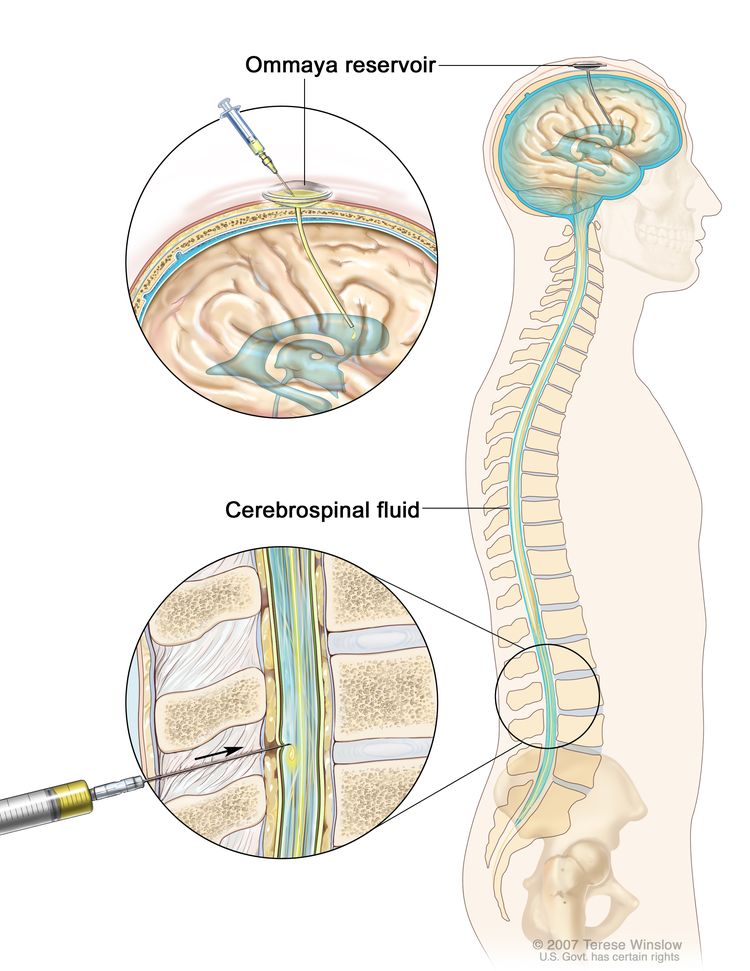
Intrathecal chemotherapy may be used to treat AML that has spread to the CNS (brain and spinal cord). Intrathecal chemotherapy is a method of placing chemotherapy directly into the cerebrospinal fluid, which is the fluid that surrounds the brain and spinal cord. This approach is used because the blood-brain barrier, a protective layer around the brain, can prevent chemotherapy drugs given by mouth or into a vein from reaching the CNS. Cytarabine and methotrexate are two chemotherapy drugs given as intrathecal chemotherapy to treat AML. These drugs can also be given systemically.
Intrathecal chemotherapy. Anticancer drugs are injected into the intrathecal space, which is the space that holds the cerebrospinal fluid (CSF, shown in blue). There are two different ways to do this. One way, shown in the top part of the figure, is to inject the drugs into an Ommaya reservoir (a dome-shaped container that is placed under the scalp during surgery; it holds the drugs as they flow through a small tube into the brain). The other way, shown in the bottom part of the figure, is to inject the drugs directly into the CSF in the lower part of the spinal column, after a small area on the lower back is numbed.
Radiation therapy uses high-energy x-rays or other types of radiation to kill cancer cells or keep them from growing. AML is sometimes treated with external radiation therapy. This type of radiation therapy uses a machine outside the body to send radiation toward the area of the body with cancer. Total-body irradiation sends radiation toward the whole body. It is a type of external radiation that may be used to prepare the body for a stem cell transplant when the leukemia has recurred.
A) Targeted radiotherapy drugs (radioimmunotherapy / radiopharmaceuticals)
Iodine-131 apamistamab (Iomab-B; anti-CD45, radiolabeled antibody) Description: Targets CD45 on blood/marrow cells to deliver radiation mainly to marrow before transplant in relapsed/refractory AML (studied in SIERRA). Mechanism: Antibody binds CD45 → I-131 emits radiation locally → damages DNA in targeted cells. Common side effects: Low blood counts/infections, infusion reactions, liver/thyroid exposure risks, fatigue.
Iodine-131 BC8 (anti-CD45 radioimmunotherapy) Description: A CD45 antibody labeled with I-131 used to increase marrow-focused radiation as part of transplant conditioning. Mechanism: CD45 targeting → higher radiation to marrow/spleen/lymphoid sites than whole body. Common side effects: Prolonged cytopenias, infections, liver injury risk, thyroid uptake (needs protection protocols).
Yttrium-90 DOTA-BC8 (anti-CD45, beta-emitter approach) Description: CD45-directed radiotherapy explored for myeloid leukemias as conditioning intensification. Mechanism: Antibody targets CD45 → Y-90 beta radiation damages nearby cells. Common side effects: Cytopenias, infections, organ dose concerns (liver/kidney depending on distribution).
Astatine-211 BC8-B10 (anti-CD45, alpha-emitter trial) Description: Investigated before donor stem-cell transplant for high-risk AML/ALL/MDS. Mechanism: Alpha particles deliver very high-energy, short-range radiation → potent DNA damage in targeted cells. Common side effects: Low blood counts, infections, mucositis, organ-dose related toxicity depending on dosing.
Actinium-225 BC8 (anti-CD45, alpha-emitter—preclinical/early development) Description: Preclinical development of BC8 labeled with Ac-225 as a high-potency targeted radiation approach. Mechanism: CD45 targeting → Ac-225 decay chain releases multiple alpha particles → strong local cell killing. Common side effects: Expected: severe cytopenias, infections; potential off-target organ toxicity.
Iodine-131 M195 (anti-CD33 radioimmunotherapy) Description: Older clinical work using I-131 labeled anti-CD33 antibody in relapsed/refractory myeloid leukemias. Mechanism: Binds CD33 on myeloid blasts → beta radiation causes DNA breaks. Common side effects: Cytopenias, infusion reactions, liver effects, fatigue.
Iodine-131 anti-CD33 antibodies (M195/HuM195 platform before transplant) Description: Used as “cytoreduction” before bone marrow transplant in some studies. Mechanism: Targets CD33+ leukemia cells → delivers radiation to marrow/leukemia sites. Common side effects: Liver toxicity (bilirubin rise reported), cytopenias, infections.
Bismuth-213 lintuzumab (anti-CD33, alpha-emitter) Description: Alpha-particle radioimmunotherapy studied with cytarabine in AML. Mechanism: CD33 targeting → very short-range alpha radiation → intense DNA damage in bound/near cells. Common side effects: Myelosuppression, infections, fever, infusion reactions.
Actinium-225 lintuzumab (Actimab-A; anti-CD33, alpha-emitter) Description: Clinical trials show feasibility and anti-leukemic activity in AML (often with low-dose cytarabine). Mechanism: CD33 targeting → Ac-225 releases multiple alpha emissions → lethal double-strand DNA breaks. Common side effects: Cytopenias, infections, fatigue, infusion reactions; liver/bone marrow toxicity risk.
Thorium-227 CD33-TTC (CD33-targeted thorium conjugate; preclinical) Description: Preclinical CD33-targeted alpha-emitting thorium conjugate explored for AML. Mechanism: Antibody targets CD33 → Th-227 delivers alpha radiation → DNA damage and cell death. Common side effects: Expected: cytopenias, infections; organ-dose toxicity possible.
Rhenium-188 anti-CD66 (marrow-targeted radioimmunotherapy) Description: Used to intensify conditioning before allogeneic transplant in high-risk AML/MDS. Mechanism: Anti-CD66 binds myeloid lineage/marrow → Re-188 beta radiation boosts marrow dose. Common side effects: Cytopenias, infections, kidney/organ radiation exposure depending on dosimetry.
Yttrium-90 anti-CD66 (marrow-targeted radioimmunotherapy; trials) Description: Studied to raise bone-marrow radiation dose before transplant. Mechanism: Anti-CD66 targets marrow → Y-90 beta radiation kills nearby marrow/leukemia cells. Common side effects: Cytopenias, infections, organ toxicity (dose-dependent).
B) Chemo drugs commonly used in TBI-based transplant conditioning (not “radiation drugs,” but often paired with TBI)
Cyclophosphamide Mechanism: Alkylates DNA → crosslinks → cell death. Common side effects: Low counts/infections, nausea, hair loss, bladder irritation/bleeding risk, heart toxicity at high doses.
Etoposide (VP-16) Mechanism: Topoisomerase II inhibitor → DNA breaks. Common side effects: Low counts, mucositis, nausea, low blood pressure during infusion, secondary leukemia risk (rare). TBI+etoposide is a known conditioning combination in ALL and sometimes AML.
Fludarabine Mechanism: Purine analog → blocks DNA synthesis/repair → immune suppression. Common side effects: Severe immune suppression/infections, low counts, neurotoxicity (rare), nausea. Fludarabine is used in some TBI-based conditioning regimens.
Busulfan Mechanism: Alkylating agent → DNA crosslinks → marrow ablation. Common side effects: Seizure risk (needs prevention in practice), liver injury (VOD/SOS), lung toxicity, low counts.
Melphalan Mechanism: Alkylates DNA → crosslinks. Common side effects: Severe mucositis, low counts, infections, nausea.
Thiotepa Mechanism: Alkylating agent that penetrates CNS well. Common side effects: Low counts, mucositis, skin irritation (drug can come out in sweat), infections.
Cytarabine (Ara-C) Mechanism: Pyrimidine analog → inhibits DNA polymerase → stops DNA synthesis. Common side effects: Low counts, fever, mucositis, rash; high-dose can cause cerebellar/eye toxicity.
Clofarabine Mechanism: Purine nucleoside analog → blocks DNA synthesis and repair. Common side effects: Low counts, infections, liver enzyme rise, capillary leak/hypotension (can be serious).
Cladribine Mechanism: Purine analog → DNA strand breaks and apoptosis. Common side effects: Prolonged low lymphocytes, infections, fever, rash.
ATG (Anti-thymocyte globulin) Mechanism: Antibodies that deplete T-cells → lowers graft rejection/GVHD risk in some protocols. Common side effects: Infusion reactions, serum sickness, infections due to immune suppression.
C) Drugs to prevent/relieve radiation-related side effects (commonly used around TBI or focal radiation)
Amifostine (radioprotective agent) Mechanism: Prodrug converted in normal tissues to a free-radical scavenger → protects healthy cells from radiation damage. Common side effects: Low blood pressure, nausea/vomiting, flushing, allergic reactions.
Palifermin (keratinocyte growth factor) Mechanism: Stimulates epithelial growth/repair → reduces severity/duration of oral mucositis from chemo ± radiation. Common side effects: Mouth/tongue thickening sensation, rash, swelling, taste changes.
Ondansetron (5-HT3 blocker anti-nausea) Mechanism: Blocks serotonin 5-HT3 signaling involved in radiation/chemo nausea and vomiting. Common side effects: Constipation, headache, QT prolongation risk in some patients.
Aprepitant (NK1 receptor blocker anti-nausea) Mechanism: Blocks substance P (NK1) pathway → helps prevent delayed nausea/vomiting. Common side effects: Fatigue, hiccups, drug interactions (CYP3A4).
Dexamethasone (steroid; anti-nausea/anti-inflammation) Mechanism: Reduces inflammation and helps antiemetic regimens; can reduce edema around irradiated tissues. Common side effects: High blood sugar, mood changes, insomnia, infection risk with prolonged use.
Morphine (or other strong opioid for severe mucositis pain) Mechanism: μ-opioid receptor agonist → blocks pain signaling. Common side effects: Constipation, sleepiness, nausea, breathing suppression (dose-related).
Fluconazole (antifungal prophylaxis in profound immune suppression) Mechanism: Inhibits fungal ergosterol synthesis (CYP450 enzyme). Common side effects: Liver enzyme elevation, nausea, drug interactions.
Acyclovir (antiviral prophylaxis) Mechanism: Inhibits viral DNA polymerase after activation in infected cells → suppresses HSV/VZV reactivation. Common side effects: Kidney irritation (esp. dehydration), nausea, headache.
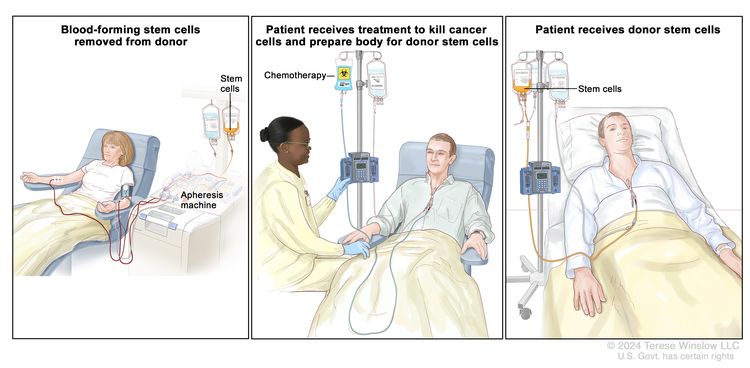
High doses of chemotherapy are given to kill cancer cells. Healthy cells, including blood-forming cells, are also destroyed by the cancer treatment. Stem cell transplant is a treatment to replace the blood-forming cells. Stem cells (immature blood cells) are removed from the blood or bone marrow of the patient or a donor and are frozen and stored. After the patient completes chemotherapy and/or total-body irradiation, the stored stem cells are thawed and given back to the patient through an infusion. These reinfused stem cells grow into (and restore) the body’s blood cells.
EnlargeDonor stem cell transplant. (Step 1): Four to five days before donor stem cell collection, the donor receives a medicine to increase the number of stem cells circulating through their bloodstream (not shown). The blood-forming stem cells are then collected from the donor through a large vein in their arm. The blood flows through an apheresis machine that removes the stem cells. The rest of the blood is returned to the donor through a vein in their other arm. (Step 2): The patient receives chemotherapy to kill cancer cells and prepare their body for the donor stem cells. The patient may also receive radiation therapy (not shown). (Step 3): The patient receives an infusion of the donor stem cells.
Targeted therapy uses drugs or other substances to identify and attack specific cancer cells. Your doctor may suggest biomarker tests to help predict your response to certain targeted therapy drugs. Learn more about Biomarker Testing for Cancer Treatment.
Midostaurin (Rydapt) – AML with FLT3 mutation (often with chemo). Mechanism: Multi-kinase inhibitor that blocks FLT3 signaling, slowing leukemia cell growth. Key side effects: Low blood counts, infections/fever, nausea/vomiting, rash.
Gilteritinib (Xospata) – Relapsed/refractory FLT3-mutated AML. Mechanism:FLT3 inhibitor (blocks FLT3-driven survival signals). Key side effects: Low counts/infections, liver enzyme rise, diarrhea, fatigue; can cause heart rhythm issues in some.
Quizartinib (Vanflyta) – Newly diagnosed FLT3-ITD+ AML (with chemo/maintenance). Mechanism: More selective FLT3-ITD inhibitor, reducing growth signaling. Key side effects: QT prolongation (rhythm risk), low counts, infections, nausea.
Ivosidenib (Tibsovo) – IDH1-mutated AML (selected settings). Mechanism: Inhibits mutant IDH1, lowering “oncometabolite” (2-HG) and helping cells mature (differentiate). Key side effects: Differentiation syndrome, liver enzyme rise, fatigue, diarrhea.
Olutasidenib (Rezlidhia) – Relapsed/refractory IDH1-mutated AML. Mechanism:IDH1 inhibitor that blocks mutant enzyme activity and supports differentiation. Key side effects: Differentiation syndrome, liver toxicity, nausea, fatigue.
Enasidenib (Idhifa) – IDH2-mutated AML (selected settings). Mechanism:IDH2 inhibitor → reduces abnormal metabolite → promotes differentiation. Key side effects: Differentiation syndrome, high bilirubin, nausea/diarrhea, fatigue.
Venetoclax (Venclexta) – Commonly used in AML combos (especially older/unfit patients). Mechanism:BCL-2 inhibitor → removes a “survival shield,” pushing leukemia cells into apoptosis (cell death). Key side effects: Very low counts/infections, tumor lysis risk (especially early), diarrhea, fatigue.
Glasdegib (Daurismo) – AML (certain older/unfit settings, often with low-dose chemo). Mechanism:Hedgehog pathway (SMO) inhibitor → reduces leukemia stem-cell signaling. Key side effects: Low counts, taste changes, muscle spasms, fatigue.
Gemtuzumab ozogamicin (Mylotarg) – CD33+ AML (selected regimens). Mechanism:Anti-CD33 antibody–drug conjugate (ADC) delivers a toxin into CD33+ leukemia cells. Key side effects: Low counts/infections, infusion reactions, liver injury (including VOD/SOS risk).
Revumenib (Revuforj) – AML with susceptible NPM1 mutation (and also used for some KMT2A-related acute leukemias). Mechanism:Menin inhibitor—blocks menin’s interaction with leukemia-driving proteins, reducing abnormal gene programs. Key side effects: Low counts, infections, differentiation syndrome, nausea.
Azacitidine – AML/MDS-related AML (epigenetic “targeted” therapy). Mechanism: Hypomethylating agent that changes DNA methylation patterns and can restore normal gene control. Key side effects: Low counts/infections, nausea, diarrhea/constipation, injection-site reactions.
Decitabine – AML (selected settings; epigenetic). Mechanism: Hypomethylating agent similar to azacitidine, altering methylation to hinder leukemia growth. Key side effects: Low counts/infections, fatigue, nausea.
Oral azacitidine (Onureg) – Maintenance after remission in some AML patients. Mechanism: Ongoing hypomethylation effect to suppress regrowth of leukemia clones. Key side effects: Nausea/vomiting, diarrhea, low counts.
Targeted therapy mainly for ALL (especially B-ALL)
Blinatumomab (Blincyto) – CD19+ B-ALL (MRD+, relapsed/refractory, and some consolidation uses). Mechanism:Bispecific T-cell engager (CD19 × CD3)—brings T cells to leukemia cells to kill them. Key side effects: Cytokine release syndrome (CRS), neurologic effects (confusion/seizure risk), infections, low counts.
Inotuzumab ozogamicin (Besponsa) – Relapsed/refractory CD22+ B-ALL. Mechanism:Anti-CD22 ADC delivers a toxin into CD22+ leukemia cells. Key side effects: Low counts/infections, liver injury (VOD/SOS risk), infusion reactions.
Tisagenlecleucel (Kymriah) – CAR-T for relapsed/refractory B-ALL (pediatric/young adult indications). Mechanism: Patient’s T cells engineered to target CD19 and destroy leukemia cells. Key side effects: CRS, neurotoxicity, prolonged low counts/infections.
Rituximab (Rituxan) – CD20+ B-ALL (added to some chemo regimens). Mechanism:Anti-CD20 monoclonal antibody triggers immune killing of CD20+ blasts. Key side effects: Infusion reactions, low immunoglobulins/infections, hepatitis B reactivation risk.
Tyrosine kinase inhibitors for Ph+ ALL (BCR-ABL1)
Imatinib (Gleevec) – Ph+ ALL. Mechanism: Blocks BCR-ABL1 tyrosine kinase, shutting down growth signaling. Key side effects: Fluid retention, muscle cramps, low counts, liver enzyme rise.
Dasatinib (Sprycel) – Ph+ ALL. Mechanism: BCR-ABL1 (and SRC family) inhibitor; often more potent than imatinib. Key side effects: Low counts, fluid around lungs (pleural effusion), bleeding risk.
Nilotinib (Tasigna) – Sometimes used for Ph+ ALL protocols. Mechanism: BCR-ABL1 inhibitor (2nd generation). Key side effects: QT prolongation, metabolic effects (glucose/lipids), low counts.
Ponatinib (Iclusig) – Ph+ ALL, especially with resistant mutations (like T315I). Mechanism: Broad BCR-ABL1 inhibitor designed to hit resistant forms. Key side effects: Blood clots/arterial events risk, high blood pressure, pancreatitis, liver toxicity.
Bosutinib (Bosulif) – Sometimes used when other TKIs aren’t tolerated/working. Mechanism: BCR-ABL1 inhibitor. Key side effects: Diarrhea, liver enzyme rise, low counts.
Differentiation / “precision” therapy for APL (a subtype of AML)
All-trans retinoic acid (ATRA, tretinoin) – Acute promyelocytic leukemia (APL). Mechanism: Forces APL cells to differentiate (mature) instead of staying “stuck” as blasts. Key side effects: Differentiation syndrome, headache, dry skin/lips, liver enzyme rise.
Arsenic trioxide (ATO) – APL (often with ATRA). Mechanism: Targets the PML-RARA fusion pathway and promotes degradation/differentiation. Key side effects: QT prolongation, electrolyte problems, differentiation syndrome, fatigue.
Additional targeted/precision agents often used off-label or in trials in acute leukemia (still “targeted”)
(These are real drugs, but use depends on local protocols and approvals.)
Sorafenib – Sometimes used in FLT3-mutated AML (off-label in some settings). Mechanism: Multi-kinase inhibitor (including FLT3 among others). Key side effects: Hand-foot skin reaction, diarrhea, high blood pressure, fatigue.
Selinexor – Studied in AML (not a classic frontline AML targeted standard). Mechanism: XPO1 inhibitor → traps tumor-suppressor proteins in the nucleus. Key side effects: Nausea, fatigue, low sodium, low counts.
Ruxolitinib – Studied for “Ph-like” ALL with JAK/STAT pathway activation (trial-based). Mechanism:JAK1/2 inhibitor that blocks growth signaling in JAK-driven disease. Key side effects: Low counts, infections, dizziness, liver enzyme rise.
Everolimus – Sometimes explored in ALL/AML combinations (pathway targeted). Mechanism:mTOR inhibitor → blocks growth/protein synthesis signaling. Key side effects: Mouth sores, infections, high sugar/lipids, low counts.
Bortezomib (Velcade) – Used in some ALL regimens (especially certain relapsed settings / trials). Mechanism:Proteasome inhibitor → disrupts protein recycling and survival signaling. Key side effects: Nerve pain/neuropathy, low counts, diarrhea/constipation, shingles reactivation risk.
Other drug therapy
Arsenic trioxide and all-trans retinoic acid (ATRA) are anticancer drugs that kill leukemia cells, stop the leukemia cells from dividing, or help the leukemia cells mature into white blood cells. These drugs are used in the treatment of a subtype of AML called acute promyelocytic leukemia.
Surgeries and Procedures
1. Central venous catheter (Port or Hickman line) placement A small surgery is done to place a central line into a large vein in the chest. This device makes it easier and safer to give chemotherapy, blood products, and IV medicines over many months. It reduces the need for repeated needle sticks in small veins and helps protect fragile veins.
2. Bone marrow (trephine) and bone marrow aspiration A needle is used to remove bone marrow cells, usually from the hip bone. This is vital for diagnosis, classification of leukemia type, and measuring treatment response. It may be repeated at key points in the treatment plan. Local anesthesia and sometimes light sedation are used to reduce pain.
3. Lumbar puncture with intrathecal chemotherapy A lumbar puncture draws fluid from around the spinal cord to check for leukemia cells in the central nervous system. At the same time, chemotherapy medicine can be injected into the spinal fluid to prevent or treat leukemia there. The procedure uses a thin needle and is usually done with local anesthetic and sometimes sedation.
4. Leukapheresis (in selected cases) When the blood has extremely high numbers of leukemia cells, leukapheresis may be used before or during early treatment. Blood is taken out through a machine, excess leukemia cells are removed, and the rest of the blood is returned. This is done to reduce the risk of problems like stroke or lung damage from very thick blood.
5. Splenectomy (rare, selected patients) In uncommon situations where the spleen is extremely enlarged and causing pain, low blood counts, or risk of rupture, surgery to remove the spleen (splenectomy) may be considered. This is rare in acute leukemia and only done after careful risk-benefit discussion, because the spleen is an important organ for fighting infections.
Prevention Strategies
Primary prevention of acute leukemia is limited, but some risk factors can be reduced:
Avoid smoking and second-hand smoke – smoking is linked to higher AML risk.
Limit exposure to benzene and other industrial chemicals when possible, by following work safety rules and protective equipment guidance.
Use medical imaging wisely – only have CT scans and X-rays when clearly needed, to avoid unnecessary radiation.
Follow safety rules around radiation at work – especially in medical or industrial jobs with radiation exposure.
Treat and monitor pre-leukemic conditions like myelodysplastic syndromes early, under specialist care.
Avoid unnecessary chemotherapy and radiation – when other safe treatment options exist for non-leukemia illnesses, discuss them with doctors.
Maintain a healthy lifestyle – good diet, exercise, and weight control support general health and may help the body cope better with any future illness.
Protect from chronic viral infections – safe sex, clean needles, and vaccination (for example, hepatitis B where appropriate) reduce some cancer-linked infections.
Family genetic counseling for high-risk syndromes – in rare inherited conditions that increase leukemia risk, early expert follow-up may allow quicker diagnosis and better outcomes.
Regular medical check-ups after high-risk treatments – people who had chemotherapy or radiation for other cancers should attend long-term follow-up clinics to catch any blood changes early.
When to See a Doctor
You should seek urgent medical help immediately (emergency) if:
You have a high fever, shaking chills, or feel suddenly very unwell, especially during or after chemotherapy.
You notice sudden trouble breathing, chest pain, confusion, or severe headache.
Bleeding will not stop, you have many new bruises or tiny red spots, or there is blood in vomit, urine, or stool.
You feel extremely weak, dizzy, or faint, as if you might pass out.
You should contact your leukemia team or clinic soon if:
You have lasting tiredness, night sweats, unexplained weight loss, or swollen lymph nodes.
You develop new bone pain, belly fullness, or a feeling of pressure under the left ribs.
You cannot eat and drink enough due to nausea, mouth sores, or diarrhea.
You have mood changes, sleep problems, or strong worry that affects daily life.
For any new symptom that feels “not right,” people with acute leukemia should call their hematology team early, because problems can worsen quickly.
Diet: What to Eat and What to Avoid
Eat well-cooked protein foods – such as cooked chicken, fish, eggs, lentils, and beans to support healing and blood cell repair.
Choose soft, easy foods – soups, smoothies, yogurt, mashed potatoes, and soft fruits are often easier when the mouth is sore or when you feel weak.
Include cooked vegetables and peeled fruits – they add vitamins and minerals. When neutrophils are very low, they should be washed well and usually cooked.
Drink plenty of safe fluids – water, herbal teas, and clear broths help protect the kidneys and prevent dehydration, especially during chemotherapy.
Eat small, frequent meals – instead of three large meals, several small snacks can be easier when you feel nauseated or full quickly.
Avoid or limit (especially when white cells are low):
Raw or undercooked meat, fish, and eggs – these can carry bacteria or parasites.
Unpasteurized milk, cheese, and juices – they may contain harmful germs.
Buffet or street foods that sit at room temperature – because they can grow bacteria quickly.
Alcohol – it can stress the liver and interact with medicines; many patients are advised to avoid it completely during treatment.
Herbal teas and supplements without approval – some “natural” products affect how chemotherapy is processed in the liver; always ask the oncology team first.
Frequently Asked Questions (FAQs)
1. Is acute leukemia always an emergency? Yes. Acute leukemia grows fast and can become life-threatening in weeks if not treated. That is why doctors begin tests and treatment quickly after diagnosis to control the disease and prevent serious infections or bleeding.
2. What is the difference between AML and ALL? AML starts from myeloid cells, while ALL starts from lymphoid cells. The cell type changes which drugs are used and how long treatment lasts. In simple terms, AML is more common in adults, and ALL is more common in children, but both can occur at any age.
3. Can acute leukemia be cured? Yes, many people—especially younger patients and those who reach deep remission—can be cured. Cure chances depend on leukemia subtype, genetic changes in the leukemia cells, age, overall health, and how well the disease responds to first treatment.
4. Why do I need so many different drugs? Leukemia cells are clever and can escape single-drug treatment. Combination therapy attacks them in several ways at once, which makes remission more likely and reduces the risk of rapid resistance. Each drug has a specific role in the regimen.
5. What is “induction” and “consolidation”? Induction is the first intense phase of treatment that aims to put the leukemia into remission by clearing visible blasts from blood and bone marrow. Consolidation is later chemotherapy (and sometimes transplant) that aims to kill hidden leukemia cells and keep remission going.
6. Will I lose my hair? Many standard chemotherapy drugs used for acute leukemia cause hair loss or thinning. Hair usually starts to fall out a few weeks after treatment begins. Most people’s hair grows back after treatment ends, although texture and color can change.
7. Why are blood transfusions needed? Leukemia and chemotherapy both lower normal blood cells. Red blood cell transfusions treat severe anemia and reduce shortness of breath and fatigue. Platelet transfusions reduce the risk of serious bleeding when platelet counts are very low.
8. What are the main dangers of treatment? The biggest risks are severe infections, bleeding, and organ problems such as heart or liver damage from some drugs. This is why patients are monitored closely, often in hospital, and why side effects must be reported early so the team can act quickly.
9. How long will treatment last? ALL treatment often lasts 2–3 years, with an intensive early phase and a long maintenance phase. AML treatment is usually shorter but very intense, often with several cycles and sometimes a stem cell transplant. Exact length varies by protocol and patient.
10. Can I go to school or work during treatment? Many people cannot attend school or work normally during intensive phases because of low blood counts and hospital stays. However, some can study or work part-time during quieter phases. The team usually provides letters and helps plan safe return when it is medically okay.
11. Is acute leukemia hereditary? Most cases are not directly inherited. However, some rare genetic syndromes and inherited mutations can increase the risk of leukemia. If there is strong family history or known syndromes, genetic counseling can help assess risk.
12. What is minimal residual disease (MRD)? MRD means very small numbers of leukemia cells left after treatment that cannot be seen under a microscope but can be detected with sensitive tests. MRD results help doctors judge relapse risk and decide if stronger treatment, like transplant, is needed.
13. Will I need a stem cell transplant? Not everyone does. Transplant is usually considered when leukemia has high-risk features, when remission is hard to achieve, or when there is a high chance of relapse. The decision depends on leukemia genetics, patient age, overall health, and donor availability.
14. What happens after remission? After remission, follow-up visits, blood tests, and sometimes bone marrow tests are done regularly. Patients may receive consolidation or maintenance therapy. Survivorship care then focuses on late side effects, mental health, and lifestyle changes to support long-term recovery.
15. Where can I find trustworthy information? Reliable sources include national cancer institutes, large university hospitals, and official drug-regulatory websites. These sites provide updated, evidence-based information on acute leukemia, treatments, side effects, and clinical trials, written for both patients and professionals.
American Cancer Society — Key Statistics for ALL: https://www.cancer.org/cancer/types/acute-lymphocytic-leukemia/about/key-statistics.html
American Cancer Society — Treating ALL: https://www.cancer.org/cancer/types/acute-lymphocytic-leukemia/treating.html
American Cancer Society — Tests for AML (Diagnosis): https://www.cancer.org/cancer/types/acute-myeloid-leukemia/detection-diagnosis-staging/how-diagnosed.html
British Society for Haematology — Tumour lysis syndrome guideline page: https://b-s-h.org.uk/guidelines/guidelines/updated-guidelines-for-the-diagnosis-and-management-of-tumour-lysis-syndrome-in-adults-and-children
NICE — Venetoclax + azacitidine for untreated AML (TA765): https://www.nice.org.uk/guidance/ta765
NICE — Oral azacitidine maintenance for AML (TA827): https://www.nice.org.uk/guidance/TA827/chapter/1-Recommendations
ClinicalTrials.gov — Venetoclax + azacitidine study (NCT02993523): https://www.clinicaltrials.gov/study/NCT02993523
St. Jude — Childhood ALL treatment overview: https://www.stjude.org/care-treatment/treatment/childhood-cancer/leukemia-lymphoma/acute-lymphoblastic-leukemia-all.html