Affiliate marketing is promoting other people’s products in return for a small commission for each sale. You’ve probably seen headings marked “affiliate link” or “sponsored post” on many of the websites you visit; or maybe you’ve already taken the first step and signed up to an affiliate network.
If you are new to affiliate marketing, let’s cover how it works. First, find an affiliate program or network you are interested in. Look at the program overview, including the type of products or services, payment methods, and commissions they offer.
If it appeals to you, sign up and wait for confirmation of your acceptance. Then, start creating content, adding the custom links the program provides. Those links track when one of your users makes a purchase, and you’ll earn a small commission.
You can work with individual companies or affiliate networks, where you register and choose the programs that interest you. The programs are generally divided into categories to make selection easier. Once approved, start promoting your affiliate links on your website, in newsletters, on social media, and anywhere else you’re permitted to share links.
The network sends you a payment when you’ve reached the minimum payment level. Payment methods vary, and usually include PayPal, bank transfers, and checks.
Types of Affiliate Marketing Websites
Affiliate websites are often categorized by merchants (advertisers) and affiliate networks. There are currently no industry-wide standards for the categorization. The following types of websites are generic, yet are commonly understood and used by affiliate marketers.
Search affiliates that utilize pay-per-click search engines to promote the advertisers’ offers (i.e., search arbitrage)
Price comparison service websites and directories
Loyalty websites, are typically characterized by providing a reward or incentive system for purchases via points, miles, cash back
Cause-Related Marketing sites that offer charitable donations
Coupon and rebate websites that focus on sales promotions
Content and niche market websites, including product review sites
Personal websites
Weblogs and websites syndication feeds
E-mail marketing list affiliates (i.e., owners of large opt-in -mail lists that typically employ e-mail drip marketing) and newsletter list affiliates, which are typically more content-heavy
Registration path or co-registration affiliates who include offers from other merchants during the registration process on their own website
Shopping directories that list merchants by categories without providing coupons, price comparisons, or other features based on information that changes frequently, thus requiring continual updates
Cost per action networks (i.e., top-tier affiliates) that expose offers from the advertiser with which they are affiliated with their own network of affiliates
Websites using adbars (e.g. AdSense) to display context-sensitive advertising for products on the site
Virtual currency that offers advertising views in exchange for a handout of virtual currency in a game or other virtual platform.
File-Sharing: Web sites that host directories of music, movies, games and other software. Users upload content to file-hosting sites and then post descriptions of the material and their download links on directory sites. Uploaders are paid by the file-hosting sites based on the number of times their files are downloaded. The file-hosting sites sell premium download access to the files to the general public. The websites that host the directory services sell advertising and do not host the files themselves.
Video sharing websites: YouTube videos are often utilized by affiliates to do affiliate marketing. A person would create a video and place a link to the affiliate product they are promoting in the video itself and within the description.
The Merchant
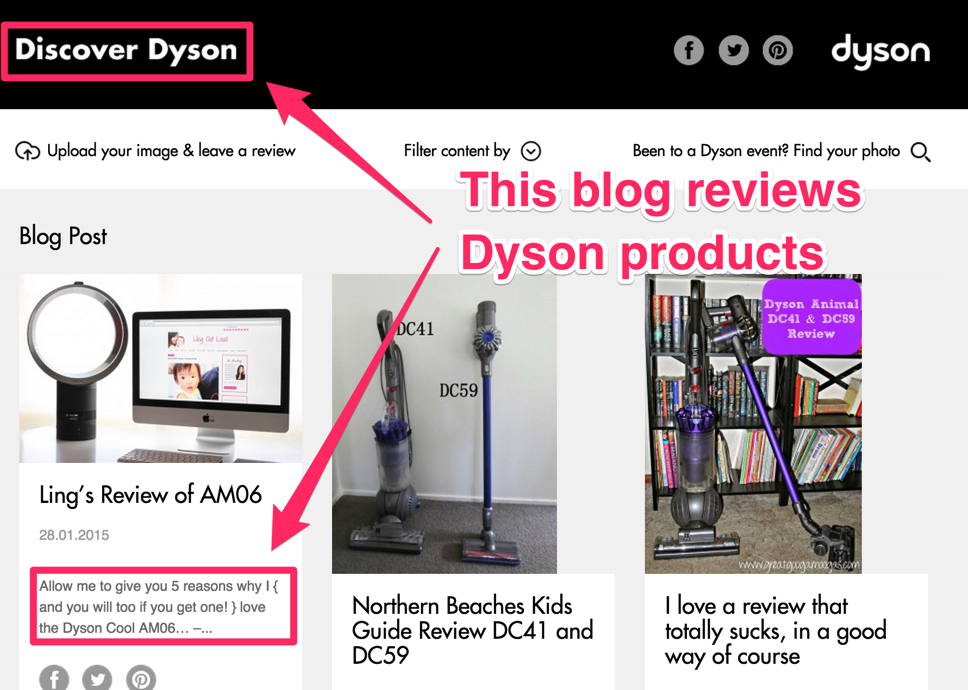
Sometimes also known as the creator, the seller, the brand, the retailer, or the vendor. This is the party that creates the product. It can be a big company, like Dyson, who produces vacuum cleaners.
From solo entrepreneurs to startups to massive Fortune 500 companies, anyone could be the merchant behind an affiliate marketing program. They don’t even have to be actively involved. They just have to have a product to sell.
The Affiliate Marketers
This party is sometimes also known as the publisher. Affiliates can also range from single individuals to entire companies. An affiliate marketing business can produce a few hundred dollars in commissions each month or tens of millions of dollars.
It’s where the marketing happens. An affiliate promotes one or multiple affiliate products and tries to attract and convince potential customers of the value of the merchant’s product so that they end up buying it.
It could also be an entire site dedicated to finding cool products related to certain topic and promoting those affiliate products.
The Consumer
The customer or consumer makes the affiliate system go ’round. Without sales, there aren’t any commissions to hand out and no revenue to be shared.
The affiliate will try to market to the consumer on whatever channel they see fit, whether that’s a social network, digital billboards or through a search engine using content marketing on a blog.
The consumer needs to know they are part of an affiliate marketing system. Usually a short disclaimer like “If you purchase items on this site, I may earn a small commission. Thanks for supporting our work.” is fine.
The consumer will not typically pay a higher price to the affiliate marketer, as the cost of the affiliate network is already included in the retail price.
The Affiliate Network
Only some consider the network part of the affiliate marketing equation. However, I believe that an affiliate marketing guide needs to include networks, because, in many cases, a network works as an intermediary between the affiliate and the merchant.
While you could technically promote someone else’s course and arrange a direct revenue share with them, letting a network such as ClickBank or Commission Junction handle the payment and product delivery puts a more serious note on your affiliate marketing.
Sometimes, affiliates have to go through an affiliate network to even be able to promote the product. For example, this happens if the merchant only manages their affiliate program on that network.
The affiliate network then also serves as a database of lots of products, out of which the affiliate marketer can choose which to promote.
In the case of promoting consumer products, like tools, books, toys and household items, the biggest affiliate network, by far, is Amazon.
Their Amazon Associates affiliate program lets you promote any item that is sold on their platform.
Anyone can sign up and then generate a custom affiliate link to Amazon products. If someone purchases through your link, you earn a small commission.
With the basic terms clarified, let’s get an overview of how you can best get started with building your affiliate marketing business.
As I said, there are basically two sides of the affiliate marketing equation to choose from, assuming you are not going to build an affiliate network like Commission Junction.
You can become a merchant and have others promote your product, in exchange for giving them a commission from the sales that they make.
Or, you can become an affiliate marketer for several products and market those to consumers, in order to make money.
While most people start by taking the affiliate route and it definitely is the easier path to take, building enough traffic to make a meaningful income just from affiliate sales isn’t quick or easy.
That’s why I’ll walk you through the four basic steps to get started on both sides of the affiliate marketing industry.
How to Become an Affiliate Merchant
If you want to become an affiliate program merchant and then make money by having affiliates sell your product, here are the steps to follow.
First, you need to have a product idea. I’ll show you a few ways to generate those ideas, based off what’s already popular, in the next section.
Second, you have to validate your idea. You could just go ahead and build your idea. What if people don’t even want it? An idea is only good if people want it to come to life.
Third, you have to create the product. Since creating a physical product usually comes with huge investment and risks, I’ll only show you ways to create digital products. These are the best place to get started since they typically only require your time and little or no money.
Also, once your product is created and released, you need to find affiliates to promote your product — this is where affiliate networks can help.
Step 1: Coming Up with an Affiliate Product Idea
If you want to make money with an affiliate marketing business, you can’t be attached to your idea.
Instead, just look at what products and services are already out there. Consider how you can improve upon them, by delivering something that solves the problems with those products.
You can, of course, always, choose a topic you’re interested or involved in.
Imagine you’re a stay at home parent, for a second.
Maybe you want to create a product that makes household chores easier. For example, you could look for a vacuum robot to get some ideas.
Perfect!
Just by looking at the individual reviews, you can instantly see what’s bad about these robots and what you could potentially improve upon.
No virtual walls that tell the robot where to go and where not to go is a common problem, mentioned in six out of the ten reviews of the top products!
Lack of a remote control was also a common ‘con.’
However, the virtual wall came up again and again and again.
Therefore, a great idea could be to develop a virtual wall that works for all vacuum robots.
I imagine you could sell anyone who owns a vacuum robot a system that works as a virtual wall, so their robot only cleans a predefined space.
Now that’s a valid idea!
This works for anything, I’ll show you.
Another way to do research is to use a tool called Buzzsumo, which shows you what’s popular, based on social shares.
Even if you’re into building sandcastles, you can instantly see what content has been recently popular.
If you go on YouTube and search for ‘build a sandcastle,’ you’ll find thousands of results.
Apparently, people really want to know how to build cool sandcastles. So, what could you do?
Record a series of videos where you show people, step-by-step, how to build 5 very specific, epic sandcastles.
Or, you can do a write-up of all of the tools you need to build epic sandcastles.
You could even come up with some forms or stencils that people can use to make building epic sandcastles a whole lot easier.
Step 2: Validate Your Idea
In order to not end up doing a great series of sandcastle videos that no one wants to buy, you have to first validate your idea.
How do you do that?
Simple: You ask people to pay you for it.
How do you find these people? Easy.
Take the URL from one of the sandcastle posts on Buzzsumo and plug it into a tool like Keyhole.
They’ll give you a list people who tweeted a link or about specific topics.
You can then directly tell them about your idea, by hitting the reply button…
Make sure to ask them whether or not they would buy your idea — not just if they like it.
Anyone will say that they like something just to be nice.
If they respond with a yes, you need to directly follow up with an ask to buy.
Saying they will spend money is not the same as spending it.
When people are interested in your product, give them a chance to buy. You can simply use PayPal and say you’re going to build it if you get a certain amount of orders.
Once you cross your threshold and make sure that people want it, you can start creating the product.
Step 3: Create the Product
There are a ton of steps to follow for creating a product and this isn’t an entrepreneurship guide, but I want to point you to some good starters.
I’m only give you resources for starting digital products, because I don’t want you to waste precious time and money on creating a physical product on your first try 🙂
These are good starting points. Creating digital products is a lot easier, since it just takes time and sometimes a little financial investment, but usually not more than a service fee or a one-time price for software.
Once you have the product created and delivered to your initial buyers, it’s time to open up the affiliate network.
Step 4: Finding Affiliate Program Partners
The tech part is the easy thing here.
With tools like Gumroad or Digital Product Delivery, you can easily set up affiliate program partners and allow them to collect commissions.
Another great affiliate marketing tool is Everflow. Not only does it help you recruit affiliates, but you can also use it to:
optimize and structure your affiliate campaigns
manage and track revenue and spend
manage and track performance, and optimize campaigns immediately based on data
automate your processes
project manage your campaigns and assign tasks
After you selected a platform comes the tough part: finding partners that have an audience who is interested in what you have to sell.
Let’s stick with the sandcastle guide example.
Do you think there’s anyone out there who sells something remotely related?
Actually, there is.
When you enter “learn to build sandcastles,” into a search engine, several sites pop up that sell educational material about it.
Partnering up with them on a sale together would be an easy pitch because it’s a perfect fit.
The more niche your product is, the easier it will be to pitch to fellow merchants.
You can simply send them an email, introduce yourself and your product and ask them if they want to partner on a sale together, where you’ll share revenue.
Pro tip: Affiliate commissions of 50 percent or higher are very common with digital products because you have no cost of replication. Don’t be greedy here, split the pot evenly and everyone wins.
Googling “toy review blog” also gives plenty of results, where people write toy reviews.
What’s more, lots of YouTube channels review specific categories of toys. If you find one that reviews kids’ toys, they’d probably also be a good fit for your affiliate product.
Just try finding one person to partner up with and start your first affiliate promotion. You can adjust commissions and details later, the important part is to get started. Or if you need help, you can always work with an affiliate marketing agency that can help you kick start things.
However, you could also start the journey on the other side of the fence and just become an affiliate yourself.
Affiliate Marketing Tools to Boost Sales and Drive Quality Traffic to Your Product Offerings
For those thinking about ditching the 9 to 5 routine and taking the affiliate route, you’ll want to make sure to have the top affiliate marketing tools at your disposal.
If you’re not already familiar, affiliate marketing enables people to earn income by promoting other companies’ products or services. And one of the main challenges of affiliate marketing is managing multiple product offerings at the same time.
In fact, most affiliate marketers prefer to promote no more than 10 products.
So, if you really want to make some money in the affiliate marketing game, you’ll need to have the right software to optimize different offers across multiple platforms.
1. Best Chatbot for Affiliate Marketing: MobileMonkey
The best live chat software allows you to proactively engage with customers and prospects in order to grow revenue, generate leads, and offer real-time support across multiple channels. And for affiliate marketers, live chat combined with chatbot automation can be extremely powerful.
In fact, studies have shown that live chat software:
Boosts website engagement rates by 3X
Increases conversions on websites by 45%
Makes consumers 63% more likely to return to a website
Most web chat software is only available to use on a company’s website, you can engage with customers across multiple channels, whether that’s a website, SMS text messages, or other messaging apps.
There are a lot of web chat examples for marketing affiliates to choose from, such as:
Qualify and generate leads
Increase engagement on Instagram
Build a sales chatbot
Get more reviews
Run a Facebook giveaway
Send bulk text messages and Facebook Messenger chat blasts
The ability to use live chat on different marketing channels, all from one unified inbox, is a game-changer for affiliate marketers.
2. Affiliate Marketing Tools for Ad Tracking: Voluum
Voluum is an ad tracking platform that’s designed specifically for affiliate marketers. You can use Voluum to track all of your advertising campaigns, analyze data for insights, and optimize your ads performance. Voluum is an affiliate marketing tool that works with most all advertising traffic sources and comes with pre-built templates for the following platforms, and more.
Additionally, Voluum supports all advertising formats, including the following:
Native ads
Search ads
Display banners
Push notification ads
Pop ads
Social media ads
Email advertising
Video ads
3. Network Performance Analytics for Affiliate Marketers: AffJet
AffJet allows you to see your earnings across different affiliate networks all from one dashboard.
This enables affiliates to demote poor-performing links, double down on missed opportunities, and boost commissions.
AffJet has a simple setup process where all you have to do is add your affiliate networks and import your data into the dashboard.
From there, you can apply filters to see the data that’s most important to your business from one or across multiple networks, track trends to spot new opportunities, and construct detailed reports to share with others or save for your own reference.
4. Affiliate Marketing Tools for Ad Intelligence: AdPlexity
AdPlexity is one of the best tools for ad intelligence. The platform allows you to keep track of your competitors’ profitable ads across a number of different ad types, including:
Desktop
Mobile
Native
Push
Ecommerce
Enterprise
So, what can AdPlexity do? Let’s take the Mobile ads product as an example.
AdPlexity’s Mobile product keeps track of your competitor’s most profitable ad campaigns on mobile traffic sources. This helps you make better marketing decisions by learning what ads are already successful.
So instead of trying to build everything from scratch, hoping that you’ve created some ads that will have high-performance, you can simply copy what’s already working and make it your own.
AdPlexity provides comprehensive data on profitable campaigns, which include the following capabilities for mobile ads specifically:
See campaigns running in over 75 countries.
Uncover profitable campaigns running on mobile popup traffic sources.
Analyze in-app ads running on thousands of Android apps that AdPlexity monitors.
Download every landing page with page dependencies (images, CSS, javascript, etc.) in a zip file straight off AdPlexity’s user interface.
Uncover hidden campaigns that are running exclusively on mobile carrier traffic (120+ carriers supported).
Get real-time insights into campaigns running on mobile ad exchanges.
Find ads promoting affiliate offers from 100 affiliate networks.
Search by keyword, advertiser, publisher, affiliate network, and more.
If AdPlexity doesn’t have enough firepower for you, take a look at WhatRunsWhere. WhatRunsWhere is another ad spy platform that gives you actionable insights into your digital strategy.
5. Affiliate Marketing Tools for Improving Website Ad Performance: AdThrive
Many affiliate marketers choose to place Google AdSense on their sites which allows you to set up ad blocks that other sites can pay to use.
And although getting additional income from AdSense is fine, it’s hard to build a successful online business when you’re only making a few dollars in ads per 1K website visitors. Which is where AdThrive comes in.
AdThrive works with your team to optimize your ads for improved performance.
How does AdThrive improve your ad performance? They take a deep dive look into your analytics to understand the advertisers who will see the best performance on your site.
As a result, you can expect higher click-through rates on your ads, which will help you to generate more revenue.
6. Affiliate Marketing Tools for Ad Campaigns: Zeropark
If you’re a strong performance marketer yourself and want to manage your own ads, try Zeropark.
Zeropark is an advertising platform that makes it possible to quickly launch ad campaigns in a number of unique formats. This includes:
In-app native ads
Pop-up ads
In-page push ads
Push notification ads
Domain redirects
The Zeropark platform has access to billions of monthly clicks across its different formats which means there will almost always be inventory.
This is a great way to test new product offers to see if they convert before you decide to invest additional resources into them.
One key benefit of Zeropark is its rapid campaign approval process. If you’re familiar with Facebook ads and other ad platforms, then you know it can take time for ads to be approved. Worse yet, they can be denied, which is common in the affiliate marketing space.
Even if an ad is denied, unlike platforms like Facebook that will give you a vague reason as to why and leave you to figure that out on your own, Zeropark has a dedicated team for fast campaign approval, and will provide details on how to get rejected ads approved.
7. Affiliate Marketing Tools for Facebook: MobileMonkey
MobileMonkey has a plethora of digital marketing tools available on its platform built specifically for Facebook Messenger. In the infographic below, you’ll find ten MobileMonkey marketing use cases of Facebook Messenger for business. One of the more popular MobileMonkey Facebook marketing tools are Facebook Messenger ads. Messenger ads present a rare opportunity that savvy digital marketers are taking advantage of in 2020.
And that’s because Facebook Messenger ads are different than regular Facebook ads. Most importantly, Messenger ads perform better than normal Facebook ads because they start a more engaging conversation with chatbots.
A couple of types of Facebook Messenger ads exist. There’s an ad viewed on any Facebook property that directs traffic to Messenger. And then there’s sponsored content that’s native in Messenger.
Another cool thing about Facebook Messenger ad experiences is that they can take place across the Facebook family of apps, including the Facebook newsfeed, Instagram newsfeed, Facebook and Instagram Stories, Marketplace, Messenger, and others.
And Facebook Messenger ads differ from your average Facebook ad because they always lead to a conversational experience between your business the prospect.
Here are the top 4 reasons to use Facebook Messenger ads:
Messenger ads outperform other ads by 2X-10X
Instant lead and data capture
More features available for personalization
Automated lead qualification and follow-ups with chatbots
8. Affiliate Marketing Tools to Find Domains: Flippa
One problem affiliate marketers constantly run into is the need to build a new website from scratch for each of their new product offerings. Not only is this time consuming, but it also means you’ll have almost zero SEO power, which takes years to build.
Flippa is a domain marketplace where affiliates can find existing domains for sale that already have a domain authority (DA) score that won’t make it impossible for consumers to find your content.
When you have multiple offerings and you want to get to market fast, check through Flippa to see what’s available and relevant to your next offering.
9. Marketplace for Affiliate Marketers: ClickBank
ClickBank is a leading global retailer with its own affiliate marketplace. If you’re looking for products to sell with a reliable payout history, ClickBank could be a good opportunity.
Its resources include opportunities to sell with the marketplace, discover and shop for innovative products, find top-performing products to promote, and learn how to make money online with courses in performance marketing.
Typically, ClickBank is used by a few different types of affiliates:
Affiliates that are just starting out and looking to learn the ropes of how to sell products online.
People wanting to start a side hustle for supplemental income.
Existing affiliates who are adding to their portfolio of products and can use ClickBank to more or less automate additional sales.
ClickBank has partnered with affiliates around the world to sell to over 200 million customers. Affiliates choose ClickBank because of its evolving inventory of digital and physical goods.
Additionally, if you’re looking for reliability, ClickBank claims to have never missed a payment in over 20 years.
If you don’t find what you’re looking for in ClickBank, take a peek at ShareASale. Similar to ClickBank, ShareASale is an affiliate marketing network where affiliates can find products to promote and earn a commission for referrals on those products.
10. Affiliate Marketing Tools to Build Landing Pages: Unbounce
Unbounce is one of the most popular landing page builders for digital marketers because there are no coding skills required, and they have some of the best lead generation tools.
Its ‘Conversion Intelligence’ and ‘Smart Traffic’ features help to set Unbounce apart from the competition.
When you’re running highly-targeted campaigns, such as account-based marketing campaigns, you need your entire funnel to be tailored to its audience. This is why custom-built landing pages are so important.
If you think about it, when you click on an ad that’s promoting (for example) chatbots for affiliate marketer and you landed on a homepage that isn’t specifically about affiliate marketing, the chances of converting that traffic drops.
However, if you were redirected to a landing page that says in big bold letters, “The Best Chatbot Platform For Affiliate Marketers”, you’ve found exactly what you were looking for.
So, when you build your marketing funnels, use a tool like Unbounce to quickly create multiple, campaigns specific landing pages. Conversion rates are guaranteed to go up, and search engines will reward you for it.
With Unbounce, you can duplicate your most successful landing pages to save time and build high converting pages in bulk. Furthermore, you can A/B test variations of landing pages to see which messaging and designs perform best.
11. Affiliate Marketing Tools for Link Tracking: Rebrandly
Rebrandly provides the easiest way to create, measure, and manage short URLs with a custom domain name. For affiliates, you’ve likely heard of link cloaking, which is what Rebrandly does best. Link cloaking is the process of disguising your affiliate link URL, provided by an affiliate program, to obfuscate your affiliate ID and make the link shorter.
This protects your affiliate commissions by making the affiliate ID less visible and makes the link more visually appealing to visitors.
Think of Bitly, but with superior analytics, more tools, additional customization, and less expensive. It’s a no-brainer to choose Rebrandly over Bitly, in my opinion.
The best part about Rebrandly is being able to tie your brand to your short links, for example, instead of bit.ly/1213546851615464, you can create a link that people will actually want to click, such as mobilemonkey.cool/social-media-tools.
The result of putting your brand on your links is more clicks. According to a study, branded links can increase CTR by up to 34%.
Use Rebrandly to track everything happening with your links around the internet, quickly build UTM parameters with their Chrome Extension, and get deeper insights into the content that’s driving you the best web traffic.
12. Affiliate Marketing Tools for Link Cloaking: ThirstyAffilates
In addition to Rebrandly, there’s a WordPress plugin called ThirstyAffiliates, which is geared specifically towards affiliate marketers, and also has link cloaking as a key feature.
Although ThirstyAffiliates isn’t as powerful or polished as Rebrandly, its WordPress plugin does have some features that make it attractive to affiliate marketers.
So, if you’re using WordPress for your blog as an affiliate marketer, give ThirstyAffiliates a look in addition to Rebrandly.
13. Affiliate Marketing Tools to Build a Mailing List: ThriveLeads
Thrive Leads is a lead generation tool and plugin for WordPress sites. It combines many different types of opt-in forms into one plugin and gives you a simple drag-and-drop editor to create great designs.
Furthermore, you can get a conversion boost by showing relevant offers to your visitors based on posts, categories, tags, and more. ThriveLeads is a sophisticated plugin, not your old-school list building plugin. It commonly updates with new conversion tactics and growth hacking strategies that are proven to grow contact lists quickly.
If you’re not using WordPress, consider using a tool such as HelloBar or Leadformly.
14. Affiliate Marketing Tools for Instagram & Pinterest: Tailwind
Most marketers know of social media marketing tools for scheduling and management such as AgoraPulse, Buffer, and Hootsuite.
However, affiliate marketers selling physical retail products online fully understand the power of Pinterest and Instagram.
Tailwind is a social media scheduler and analytics tool built specifically for Pinterest and Instagram.
The focus on visual content makes marketing on Instagram and Pinterest fundamentally different from marketing on Twitter or Facebook, for example.
Tailwind’s Instagram marketing tool consist of the following:
SmartSchedule: Save time by scheduling photos and videos with Auto Post. Let Tailwind pick the post times when your audience is most engaged.
Hashtag Finder: Reach more people with a mix of popular and relevant niche Instagram hashtags to get discovered by the right followers.
Time-Saving Shortcuts: Save top-performing Instagram hashtag lists, tag relevant users and locations, and format your caption all in one place.
Content Plans: Not sure what to post? Content Plans provide ready to use post ideas customized to your business type so you’re always ready to create.
Visual Planning: Drag and drop to preview your 9-grid and guarantee your profile always looks polished.
Free Landing Page: Create a branded landing page for free, then send a stream of traffic from your Instagram bio to your most important content.
Add Clickable Links: Add a link to any Instagram post in a single step. Tailwind will instantly update your custom landing page behind the scenes so everyone can click through to your website, blog post, or product listing.
Additionally, Tailwind provides similar tools for Pinterest, as well as analytics dashboards and reports.
15. Affiliate Marketing Tools for Amazon: AAWP
If you’re an affiliate marketer that sells products on Amazon, and you’re using WordPress, you’ll want to know about AAWP, which stands for “Amazon Affiliate WordPress Plugin.” Product prices constantly change on Amazon, which is a nightmare for affiliate marketers.
AAWP provides up-to-date information where affiliate links will be generated and products, prices, as well as discounts will be refreshed automatically. Many other features are available on AAWP, however, the ability to keep up to date information on your site via marketing automation tools is by far the most valuable.
16. Affiliate Marketing Tools for SMS Text Messages: MobileMonkey
There are a number of ways to sell products online using chatbots.
One of the ways is SMS marketing with MobileMonkey, which is a no-brainer ecommerce marketing tool. And that’s because text message marketing is instant, convenient, and universal.
Even more important, SMS marketing produces results that can’t be ignored. For example, take a look at these SMS marketing statistics for marketing and sales teams:
Using MobileMonkey SMS marketing tools for ecommerce, you can set yourself apart from the competition by significantly increasing open rates, response rates, and conversion rates.
Text message marketing enables companies to send their audiences bulk SMS messages, as well as personalized text messages at scale.
Additionally, you can use MobileMonkey opt-in tools such as the website chat SMS opt-in widget, web page pop-up forms for desktop and mobile, and SMS keyword opt-in tools.
Here are just a few of the different SMS marketing campaigns you can run with MobileMonkey:
Bulk text messaging
SMS drip campaign automation
Automated responses and proactive messaging
If you’re still skeptical of SMS marketing, check out these 60 SMS marketing statistics that every ecommerce marketing professional should know about.
4 Steps to Become an Online Affiliate Marketer
Similarly to becoming a merchant, there are also four steps to start your journey as an affiliate marketer.
First, you need to start reviewing products in your niche. That can be done on a YouTube channel, on a blog or even just using live streams on Periscope.
Second, you have to collect emails, so you can connect with your audience at any time you want and don’t have to hope for them to see your content.
Third, you can use joint venture webinars to make a lot of sales in a short period of time, while simultaneously growing your email list and creating new content.
Finally, once your affiliate marketing business starts making money, you can scale your growth with pay per click advertising.
Step 1: Review Products in Your Niche
It’s easier to get started as an affiliate because you’re skipping the ‘have an idea’ and ‘creating an idea’ parts of becoming a merchant.
You already use and like plenty of products, so all you have to do get started is to publicly talk about them.
Start by looking at the partners in step 4 for becoming a merchant, because that’s what you’re trying to start in this step.
Over 300,000 subscribers for Hot Wheels? I’m sure whatever your niche is, it’s less specific.
Note:A special kind of review, that usually does really well, is the comparison with a direct competitor.
Whatever you’re reviewing, make sure you are honest and even handed.
If your reviews aren’t genuinely helpful, people will sense immediately that you’re just trying to make a quick buck.
As Pat Flynn points out, in his affiliate marketing guide, involved affiliate marketing is by far the most profitable, because you can relate to the product, instead of just promoting something that might make you a lot of cash.
When you don’t even know the product, how can you credibly promote it?
Note: This is a little different for consumer products than it is for online courses or books created by individuals. If you’ve known a person for a long time and trust them and know their work is great, then that’s a different thing.
When you write reviews on your blog, you can use an affiliate link to link to the products you promote.
You can recognize them on other blogs by the long “/ref…” tail, at the end of the regular link.
This is usually the first step to start making commissions.
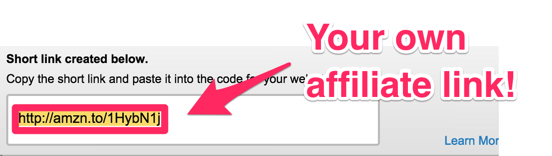
Simply sign up to Amazon Associates and you can then proceed to get your own affiliate link to any product on Amazon.
Just go to the product page and click on “Share affiliate link.” You’ll get a link that’ll give you a commission if people purchase through it.
However, if you only rely on people using the affiliate links in your reviews, you need lots of traffic to start making serious money.
If you can contact your audience directly, you can market to them whenever you like, not just when they come to your website.
This is where step two comes in.
Step 2: Build an Email List of Your Prospects
Email is still one of the best marketing channels today, so don’t miss out on it.
I’ll show you a few super easy ways to collect email addresses from your website visitors.
Hello Bar puts a call to action on top of your website. Whenever someone visits your website, they’ll see this bar at the top.
You can offer them an ebook (maybe bundle together your 3 best product reviews) or a special review video.
Once they click on your Hello Bar, you can redirect people to the page where they can enter their email in exchange for the content.
You can also use Hello Bar to create an exit gate. This is a popup that will lay over the screen when visitors are about to leave your website.
It is triggered by their mouse moving to the top area of the browser.
I use it to get more Facebook likes on Quick Sprout:
You can also redirect people to your lead magnet and get their email address this way.
Just don’t over do it.
If you give your visitors 20 things to do, it’s unlikely that they’ll do anything at all.
Just have one call to action in your sidebar. Again, it should offer people something in exchange for their email address.
Since you’re collecting email addresses around a very specific topic, such as finding the best straightening iron, juice maker, mini-oven, etc., you don’t need a lot of them to make the email list worth your time.
Even with less than 500 people on your list, you can create significant sales.
Just make sure to keep your audience engaged, by sending them regular updates, ideally once a week.
Don’t make it all sales. Just let them know when you have a new review up.
For example, I email out every single post that we do on Quick Sprout with a very simple description of what it’s about:
Every now and then, send them a specific call to action to buy a product. Perhaps you just found a new favorite in the latest review and think it’s really great.
You can update your audience on your change of mind, the reasons why and recommend that they switch to that product also.
Step 3: Educate Your Audience With Webinars
Webinars are awesome.
Imagine you want to buy a new fridge.
What makes you want to buy a fridge more:
Reading a review on a blog
Seeing a live presentation of a fridge in action
Number two, of course!
Using a tool like LeadPages, you can create a simple landing page where people can sign up for your webinar.
Promote your webinar on social media for a week in advance and get people to sign up.
Webinars are great to engage with your audience one on one, show them the product you’re promoting live and answer any questions that they might have.
You can:
present the product’s features
show different use cases of the product
talk about its benefits and drawbacks
tell people your personal history with the product
help your audience get the most out of it
Imagine how fired up your audience will get when they see all of the cool things your product can help them do.
Pointing to your affiliate link and sharing it at the end of the webinar is a soft sell and comes naturally since you just spent an hour talking about the product.
It won’t feel forced and your consumers can still take all of the time that they want to make up their mind on whether they’ll actually buy.
Pro tip: Can you get your merchant to give you a special deal for your audience? If you promise to get their product in front of a couple hundred people, they’ll often happily give you a discount or special bundle to further incentivize people to buy.
Step 4: Grow Your Business with PPC Advertising
Once your affiliate marketing business starts to picks up steam, you can start thinking about paid advertising.
I’m not going to show you how to do it here, since I recently published a guide on both Facebook Ads, as well as Google ads, but remember: only do this once you have a way of making back your money.
Conversions are all that matters here.
You can use PPC advertising to:
get people to sign up for your webinar
grow your email list
make more sales
For example, if you Google “learn leadpages,” you can see that LeadPages themselves are advertising for this keyword, running Google ads, promoting their weekly live webinar.
So, keywords related to learning about your product or topic would be a good start.
You can also target your competition. For example, right under the LeadPages ad, there’s an ad from Unbounce.
These guys also provide a software for creating landing pages, so it’s an easy way for them to get in front of someone else’s audience.
Now, while you could try to target people who are just trying to find a review of your product, you’d probably be better off improving your SEO.
The percentage of people who buy straight through your link after reading a review is naturally low, so imagine paying for these reads. Depending on the product price, you only get a few dollars or even cents per sale, so the margin you can spend on ads is not very big.
In most cases, your best off promoting sign-ups to your email list.
As a matter of fact, getting people to sign up for a webinar with ads is the best way to go.
You will win in three ways:
They’ll be on your email list and you can contact them again at any time
There’s a chance that they’ll attend your live webinar and buy the product
You can put them on an autoresponder email sequence that encourages them to buy
For example, John Lee Dumas, from Entrepreneur On Fire, often runs webinars and puts them right on his homepage.
As soon as you opt into the webinar, he also starts sending you a series of automated emails.
On those emails, he offers you other courses and free tools, like a webinar course, where you’ll learn how to do webinars to make sales.
If you opt into those, you’ll be sent 10 email lessons over several days. At the end, he invites you to buy a more extensive course on webinars.
After you’ve already learned a lot about webinars, you’re introduced to his more thorough and detailed course that’ll teach you even more.
He even shows a behind-the-scenes walk-through of the course, so you get a sneak peek.
Once he knows how many people will end up buying the full course from the autoresponder series, he can easily calculate how much he can spend on ads to get people to sign up for the webinar or webinar course.
So, with this strategy, you have several chances of getting your consumers to buy your product.
They have a chance to buy after the autoresponder series, on the webinar, and from future emails.
When your sales start coming in from that many sources and begin to grow, that’s when you can really blow up your business with paid advertising by just driving traffic to the sales mechanisms that already work.
How Does Affiliate Marketing Work?
Let’s get into the details of how affiliate marketing works. There are three main players in an affiliate marketing arrangement:
You and your website—the “affiliate.”
The affiliate company (or network). In the simplest affiliate arrangements, you work directly with a single company to promote one or more of their products. There are more complex affiliate networks that provide an opportunity to earn affiliate revenue on a range of products, such as Amazon, Impact, and ShareASale.
The customer. This is a member of your audience who uses your affiliate link to purchase a product from the affiliate company or network.
A company that offers an affiliate marketing program may call it by a different name—these programs are also commonly called partner programs or referral programs.
Here’s how each party benefits from affiliate marketing:
From your recommendation, your audience learns about a product, course, or tool that may be useful to them;
From your recommendation, the company selling the product, course, or tool gets new customers they may not have found otherwise;
As a result of the sales to your audience, the company gives you a commission.
When done the right way, affiliate marketing can be a win–win–win.
But at the center of this is one thing: your audience’s trust.
When your audience believes you have their best interests at heart and trusts your recommendations, then all three parties in the affiliate marketing relationship ultimately benefit.
A lot of people worry about getting involved with affiliate marketing because it might make them look slimy or too salesy.
That’s why I’ve made it part of my mission to teach people how to do affiliate marketing in a way that makes it a win for everyone.
The biggest element to success with affiliate marketing?
Trust.
Earn trust from your audience first, and only recommend affiliate products that you’ve used yourself and know your audience will benefit from.
And you know what?
A lot of people do it the wrong way by taking an income-first rather than a serve-first approach.
These folks push random products and over-promote them without providing true value to their audience.
This has given affiliate marketing a really bad rap in some quarters, causing many ethically minded entrepreneurs to be wary of affiliate marketing.
But thankfully, you CAN do it right, maintaining your audience’s trust and having them thank you for your recommendations.
Benefits of Affiliate Marketing (and Drawbacks)
As with anything, affiliate marketing has its upsides and its downsides.
Later in this guide, I’ll give you the guidance you need to go about affiliate marketing smartly so you can make the most of the opportunities out there and avoid the potential downsides.
Here are the main pros and cons of affiliate marketing.
Affiliate Marketing Pros
Low barrier to entry. Affiliate marketing is easy to get started with, and costs little. Most affiliate programs are free to join, and you don’t have to create, stock, or ship products, which also means less hassle/responsibility.
Low risk. You’re not the product owner, so you don’t lose anything if a customer doesn’t buy.
Passive income potential. Affiliate marketing provides the potential for passive income.
More freedom. When you start earning passive income, you can work anytime and from anywhere, as long as you have internet access.
Affiliate Marketing Cons
Not a quick fix. It can take time to generate the amount of traffic needed to result in substantial income.
Less control. You don’t own or control the product/service you’re recommending, so you can’t control the quality or customer experience.
Competition and audience fatigue. An attractive affiliate program means you might be competing with others for customers.
Offer fatigue. Audiences can also get “offer fatigue” if they see too much ongoing promotion from you.
Not all affiliate programs are created equal. While most companies that offer affiliate commissions are stable and ethical, there are shady companies out there too, some of which may not pay what they say they will. It’s important to do your homework.
Risk of link hijacking. Unscrupulous individuals may hijack your affiliate links, known as “clickjacking,” potentially stealing your commission in the process.
How Much Do Affiliate Marketers Make?
The beauty of affiliate marketing is that you don’t have to invest the time and effort to create a product to sell.
You can begin selling something as an affiliate as soon as you have a platform to sell it on. In this way, affiliate marketing can be a great way to earn some extra income without a lot of hassle or upfront cost.
That said, it’s not a way to get rich quick.
Like all passive income ideas, it takes time and effort to create a decent revenue stream.
Although affiliate marketing has been my number one source of income for a while, it took me a while to get to where I am, including building close relationships with the companies I’m an affiliate for.
In my very first month doing affiliate marketing (December 2008), I earned a whopping $163.16:
Here’s how I did in December 2009, the month that marked my first full year as an affiliate marketer:
And here’s what my affiliate income looked like in December 2017, the last month I published an income report:
As you can see, I’ve done really well with affiliate marketing in the past 10 years—but it’s taken a lot of time and hard work to get to that point.
So, how much can you make once you’re up and running with affiliate marketing?
That depends primarily on how committed you are to making it work and how much time, energy, and focus you’re willing to put into it. It also hinges on a few other factors:
The commission percentage you receive for each sale of an affiliate product or service.
The size of your audience.
How successful you are at promoting those products or services to your audience.
Typical commission percentages vary depending on the affiliate company you partner with, and the types of products or services you’re promoting.
Digital products and services typically offer higher margins due to their lower costs of production and fulfillment—there are no raw materials, manufacturing, shelf space, shipping costs, etc.
These margins can be as high as 50 percent.
On the other hand, because of all the aforementioned costs, physical products tend to offer lower percentage margins, sometimes in the single digits.
Thankfully, there is no real limit on how much you can make as an affiliate marketer.
Affiliate marketing can be a great way to augment your existing income, or even become your main source of income if you’re willing to make the commitment.
But in either case, if you’re looking for long-term success with affiliate marketing, you have to be willing to do it the right way.
The Top 7 Uses of Affiliate Marketing
Aside from the traditional ways of promoting affiliate marketing links, there are distinctive new trends in recent years. This next section looks at some of these trends and more traditional ways of promoting affiliate links.
1. Influencer Marketing
Influencers are one of the top faces of today’s affiliate marketing, thanks to social media and sites like YouTube.
Celebrities Kim Kardashian, Kylie Jenner, and Selena Gomez are among the world’s top influencers. However, many ordinary people have become famous just because of their influencer status and ability to create engaging content and interact with their audience.
Photographer Murad Osmann, TikTokker Addison Rae, and cleaning expert Mrs. Hinch are examples of top influencers that built their platform from the ground up.
While brands often pay influencers to promote products, it also makes sense for them to share affiliate links with their followers in return for commissions.
If you’re a business with a considerable or passionate audience, then consider influencer marketing.
For instance, on Instagram, you can share and promote your links by:
Tagging the brand when you’re promoting their product.
Add links to your bio.
Use Instagram Stories and IGTV to talk about and promote products.
Create product comparisons and gift guides to educate your audience.
When you add links, make sure to include a strong CTA to encourage visitors to click like Instagram influencer Ashley Spivey does.
One final tip: choose products that make sense for your brand or niche and only share products you like. Your audience needs to trust you have their best interests in mind.
2. Blogging
Affiliate marketing is often the go-to choice for bloggers wanting to monetize content.
Bloggers generally specialize in a specific niche and share products or services of interest to their audience. For instance, it could be customer management systems, health trackers, or credit cards.
This type of affiliate program works well with niche businesses, and the further you can niche down, the better.
One example is Spencer Haws of Niche Pursuits. Besides his main site, he owns several profitable niche sites. You can see how Haws adds affiliate marketing links in the image below:
To implement affiliate marketing on your blog, include links in blog posts, or add banners, video clips, even pop-ups. Social and email can also help you share your links.
However, only include links when they’re natural and don’t oversell. If you have a newsletter, share your links through special offers, gift lists, product comparisons.
Finally, concentrate on sharing links that are useful and offer value to your subscribers. Don’t just go for the sale—make sure you provide value first.
3. Referral Links
When you’ve signed up for an affiliate platform, you gain access to a personalized link, known as a referral link.
When visitors to your blog, newsletter, or social media page click on the link and make a purchase, you earn a commission.
For instance, BigCommerce has its own high-paying affiliate program, which pays $1,500 for every enterprise referral.
Businesses regularly sending out newsletters or writing blogs/reviews usually find this strategy a good fit. However, you can also use referral links in:
reviews/tutorials
resource pages
some forums
banners and video content
blog posts
However you use referral links, make sure your content is useful and your links are contextual and visible.
If you send out content to new subscribers, focus on building customer relationships and trust before adding your links. With social media, it’s not good form to share affiliate links directly, but do share links to your published content with affiliate links.
One final tip, don’t forget the usual standards for creating good content, such as using keywords, including CTAs, and creating clickable titles.
4. Microsites
Microsites or mini-sites are separate from the main website and are often used to target specific audiences. Brands may use them alongside other marketing efforts, like blogging or social media.
A microsite’s format varies from single pages to promote specific products or services to a collection of pages. It may have its own domain or be a sub-domain of the main site.
Typically, brands use microsites to highlight something specific. This could be:
individual events
products, campaigns
content/branded content
However, it’s not just branding using microsites. Regular affiliates create them too. Here is an example.
As you’ve likely guessed from its name, ShaverGuru.com creates content around shavers and includes extensive reviews to help buyers find the right razor.
Whether a microsite is appropriate for your purpose depends on a variety of factors, such as:
The role in your customer journey.
If you need to keep the site up long term.
If you’re testing campaigns or keywords.
You’re an affiliate targeting a specific niche.
To improve your chances of success with microsites, ensure you:
Write detailed, media-rich content.
Highlight features and benefits so visitors can read content at a glance.
Include a mix of content to suit visitors’ preferences— for example, video content.
Add reviews of products you’ve tried and tested—and be honest.
Use a combination of products from different affiliate programs for a more comprehensive mix.
Have a range of products at different price points.
One last piece of advice. Take a tip from ShaverGuru by including a “Check Price On Amazon” hyperlink, taking visitors directly to your affiliate products.
5. Social Media Sites
Affiliate marketers can advertise on Facebook and other social media sites, but you must check your ads comply with the guidelines on each channel.
Sharing your affiliate marketing links on Facebook or similar sites could be ideal for affiliates with a large following or a very niche product.
Some ways of sharing your links include:
Facebook ads
personal pages
groups
promotional posts
6. Email Lists
Email lists are another popular way to share affiliate links with your audience.
Marketers set up email lists of their registered users through services like MailChimp, AWeber, or a similar service. Usually, they give some incentive for signing up, like a free training session, templates, or an eBook.
The newsletters often include affiliate links, allowing the marketer to make money when a subscriber clicks on a link and makes a purchase.
Marketers with an existing email list and engaged subscribers can benefit from this type of affiliate link promotion, no matter what niche they are in.
This method is suitable when you already have a list or share valuable content with your audience, such as training and tips. Time-limited and exclusive offers from affiliate programs are effective, too.
For example, Digitalmarketer.com uses this strategy, promoting both its own and affiliate marketing products.
7. Create Videos
People don’t just like video content. They love it. Just look at YouTube and its 2.1 billion active users.
Social media sites like Facebook, Instagram, and TikTok are perfect for sharing video content, too.
Video content is easily consumable for busy people and perfect for showing people how they can use a product, how it benefits them, and for highlighting the pros and cons.
The usual best practice is adding affiliate products, pinning them underneath the video on YouTube, adding them to your bio, and being active on your community page, like the gaming product channel Worth a Buy.
Consider using this approach to instill confidence in your consumers and if video demonstrations help illustrate your product’s benefits.
Affiliate Marketing Mistakes and Strategies to Avoid
Though many people are successful with affiliate marketing, there can be a dark side, too.
As with any other business that involves making money, affiliate marketing is the target of various types of fraud, like cookie stuffing or dropping. However, there are other practices to steer clear of, including:
Creating poor quality content: Gone are the days when you can produce keyword-loaded content and dominate Google. Instead, write quality content and add value to each article.
Using the “hard sell” approach: Concentrate on relationship-building rather than the direct sales approach. Once a customer trusts you, they’re more prone to buy what you recommend.
Failing to check the legitimacy of products: That health product may sound impressive and pay high commissions, but does it do what it claims? Choose your products carefully and read reviews online.
Misleading buyers: It should go without saying, but the lure of commissions can cause some affiliates to misrepresent the benefits of products. By making bold claims, you may get more click-throughs, but it’s unethical and could also be illegal.
As an affiliate marketer, your reputation is everything. If your audience doesn’t trust or believe you, you won’t earn any income. Focus on your audience first and foremost.
How to Track Affiliate Marketing Success
How can you tell if your marketing efforts are working? By tracking metrics.
Start with your affiliate programs dashboard, and see what this tells you. Affiliates using ad programs like Google, Facebook, or Amazon can also use their dashboards to monitor stats for individual channels.
There are also affiliate marketing tools that help track performance, gather analytics, and provide competitor data.
Here are the key affiliate metrics to pay attention to:
clickthroughs
ad spend
ROI
conversion rates
net monthly sales
overall revenue
These metrics will tell you how often people click on your links and how often they buy. Pay attention to what type of content is most effective at driving sales and create more of that type of content.
How to Pick the Right Affiliate Marketing Strategy for Your Business
Affiliate marketing is a viable monetization method for any business, but the success of your campaign relies on choosing the right strategy. Here’s how to pick the right affiliate marketing strategy for your business.
Ensure the strategy works for your audience
Do they hang out on social media? On forums? Do they search Google looking for answers? Know where your potential customers are and target them there.
Understanding the kind of content your audience responds to
What gets them clicking to find out more or sign up for a product?
Which offers work best for your particular crowd?
Is it free gifts? Competitions? Discounts? The right offers can make or break your affiliate marketing campaigns.
Use A/B testing
Compare the results and use this data to refine your affiliate strategy.
Understand your customers’ pain points
Address those issues with detailed content and relevant products.
Frequently asked questions about affiliate marketing tools to use
Q: What is affiliate marketing?
A: Affiliate marketing is a type of performance-based marketing in which a business rewards one or more affiliates for each visitor or customer brought to the site by the affiliate’s own marketing efforts.
Always keep your audience in mind.
Prioritize quality over quantity when it comes to leads.
Make sure you have a subscriber list.
Conversion rates matter more than commissions.
Make sure you track your progress.
You must follow the rules of your affiliate network or affiliate business partner.
Q: What is an affiliate network?
A: An affiliate network is a platform where merchants and affiliates can connect and promote products and services.
Affiliate networks offer a variety of affiliate programs and products to choose from, making it easy for affiliates to find products and services to promote and monetize.
Q: What do affiliate marketers need to do?
A: Here’s 5 steps to get you started with affiliate marketing.
Learn about affiliate marketing and join a platform.
Pick an offer that you want to promote.
Create unique affiliate links for each offer.
Ensure the platform provides customer support.
Ask your account manager to help you get started by sending emails to potential affiliate prospects who will help promote your business.
Q: What is an affiliate ID?
A: An affiliate ID is a unique identifier that is used to track sales and conversions from your affiliate links.
When someone clicks on your affiliate link, the affiliate ID is used to track the sale and determine the commission you earn.
Q: How do I find the right affiliate program for my brand?
A: A company does not always offer affiliate programs. Some companies manage affiliate programs themselves, while others use affiliate networks.
Visit an affiliate marketplace or platform to find affiliate programs. Look for top performing affiliate platforms based on your niche. Listed below are a few popular ones:
MobileMonkey Ambassador Program
AffiliateNetwork
AvantLink
CJ by Conversant
ClickBank
FlexOffers
LinkConnector
RevenueWire
ShareASale
Q: What is the best way to learn about affiliate marketing?
A: The best way to learn about affiliate marketing is to find a mentor or take an online course. There are a variety of resources available to help beginners get started in affiliate marketing, such as the marketing tools we’ve suggested throughout this article.
Affiliate marketing can be a lucrative and rewarding career, but it takes effort to be successful.
Q: How do I start affiliate marketing successfully?
A: It is important to find a good product or service to promote and also be familiar with the company’s affiliate program.
You can then market the product or service using various marketing techniques, such as social media, email, or paid advertising.
Q: Is affiliate marketing easy?
A: It can be easy to find an affiliate program, but it takes work to promote products and services. You must have a good understanding of the product you are marketing, the commission structure, the available support from the business partner, and how the affiliate marketing process works in order to be successful. Additionally, you need to be familiar with various marketing techniques in order to reach your target market.
Q: What type of traffic should I expect from affiliate marketing?
A: This will vary depending on the offer that is being promoted, but typically you can expect targeted traffic from your efforts marketing a product you are affiliated with.
For businesses that partner with affiliates, traffic from affiliate marketing is usually more targeted and warm than traffic from other sources, such as digital ads.
Q: What are the tools that I need for affiliate marketing?
A: Here’s a few of our favorite affiliate marketing tools (you can find a full list and exact details on each of these in the above article).
The best chat marketing platform: MobileMonkey
You can access the best live chat software for growing revenue, generating leads, and offering real-time support across multiple channels as a result of proactively engaging with your customers and prospects. Live chat combined with chatbot automation can be extremely powerful for affiliate marketers.
The best ad tracking tool: Voluum
Affiliate marketers can track their ads with Volume, an ad tracking platform designed specifically for them.
Voluum lets you track all of your advertising campaigns, analyze data for insights, and optimize your ads.
The best analytics tool: AffJet
Your affiliate earnings can be viewed across different affiliate networks from one dashboard with affJet.
As a result, affiliates are able to demote poorly performing links, double down on missed opportunities, and increase commissions.
The best ad intelligence tool: AdPlexity
In terms of ad intelligence, AdPlexity is among the best. Your competitor’s profitable ads can be tracked across a variety of ad types, including:
PC/Desktop
A mobile device
Native
Push
Ecommerce
Enterprise
The best Facebook and Instagram marketing tool: MobileMonkey
The MobileMonkey platform includes a number of marketing tools designed specifically for Facebook Messenger.
The Facebook Messenger ad feature is one of MobileMonkey’s most popular Facebook marketing tools. Marketers who are savvy about digital are taking advantage of messenger ads in 2022.
Other tools needed include:
Yoast SEO: We always add this SEO plugin to any site we work on. Yoast SEO provides advanced SEO functionality to every page.
SEMRush: When it comes to keyword research, fixing SEO mistakes, and competitor analysis, SEMRush is our go-to tool.
Ahrefs: With Ahrefs, marketers can see in-depth information about new and lost backlinks, sites that link to broken pages on their site, as well as competitor backlinks.
Grammarly: If your affiliate site regularly publishes content, Grammarly is a must-have. In other words, it is much more than a spellchecker. Grammarly does more than just point out spelling errors. Additionally, it identifies grammatical errors such as the incorrect use of words and commas.
Q: What are some benefits of affiliate marketing?
A: Affiliate marketing is a great way to generate passive income. It’s a low-risk way to start your own business.
There are a variety of affiliate marketing programs available, so you can find one that fits your interests and expertise.
Affiliate marketing can help you build relationships with customers and prospects.
Lastly, it’s a great way to learn about marketing techniques and how to reach your target market.
Q: What are some common myths about affiliate marketing?
A: Some common myths about affiliate marketing include:
Myth: Affiliate marketing is a pyramid scheme.
Reality: Affiliate marketing is not a pyramid scheme. A pyramid scheme is a business model in which members of a sales force are paid commissions for recruiting new members, who then must also pay to join the sales force.
Myth: Affiliate marketing is a scam.
Reality: Affiliate marketing is not a scam. A scam is a fraudulent business scheme in which the promoter takes money from investors but does not provide anything of value in return. Whereas, affiliate marketing is promoting a valuable business that an affiliate’s audience can benefit from.
Myth: Affiliate marketing is easy.
Reality: Affiliate marketing is not easy. It requires hard work and dedication to succeed. However, with the right tools and resources, it is possible to achieve success as an affiliate marketer.
Myth: Affiliate marketing is only for experienced marketers.
Reality: Affiliate marketing is not only for experienced marketers. Newcomers can also be successful if they are willing to learn and put in the work. There are a variety of resources available to help beginners get started in affiliate marketing.
Myth: Affiliate marketing is a one-time thing.
Reality: Affiliate marketing is not a one-time thing. It is a continuous process that requires dedication and hard work to be successful. However, if you are able to establish a good foundation and create a plan of action, you can continue to see results over time.
Myth: Affiliate marketing is a waste of time.
Reality: Affiliate marketing is not a waste of time. If you are willing to put in the work, you can achieve success as an affiliate marketer. There are a variety of resources available to help beginners get started in affiliate marketing, such as the marketing tools we’ve suggested throughout this article.
Q: Can affiliate marketing be a business?
A: Performance-based affiliate marketing is a form of online marketing. You can then recommend the best products to them and earn more affiliate income if you know what your audience likes.
There are a variety of affiliate marketing programs, so it’s important to find one that aligns with your interests and expertise.
Q: How do I promote my business with affiliate links?
A: You can promote your affiliate links in a number of ways, including social media, blog posts, and email marketing. You can also place affiliate banners on your website or use other promotional materials to drive traffic to your affiliate links.
Q: Is affiliate marketing still profitable in 2022?
A: Affiliate marketing is estimated to be worth $16 billion, and it grows by about 10% a year, according to an Awin report.
As a content creator with an established audience, like blog subscribers or social media followers, it is a popular method for passive income.
Q: Why is affiliate marketing so hard?
A: Affiliate marketing takes a lot of work to create high-quality content that will attract attention and drive traffic to your affiliate links. You also need to be knowledgeable about the products you are promoting in order to provide accurate and helpful information to your audience.
But, with the right set of tools (like we’ve provided in this article, you can become an affiliate marketing expert!)
Q: What’s the best way to find profitable affiliate programs?
A: The best way to find profitable affiliate programs is to research the products and services that you are interested in and find programs that offer a commission for sales. You can also look for networks that offer a variety of affiliate programs to choose from.
Consider MobileMonkey’s Ambassador Program, a partnership endeavor that rewards affiliates for their effort, knowledge and promotion with lucrative revenue opportunity, as well as the end audience using the tool to grow their business.
Q: How do I track my affiliate marketing progress?
A: You can track your affiliate marketing progress by using a variety of tools, including Google Analytics and affiliate marketing network analytics.
These tools will help you to measure your website traffic, conversions, and sales.
Q: What’s the best way to learn affiliate marketing?
A: The best way to learn affiliate marketing is to find a mentor or take an online course. There are a variety of resources available to help beginners get started in affiliate marketing, such as the marketing tools we’ve suggested throughout this article.
Affiliate marketing can be a lucrative and rewarding career, but it takes hard work and determination to be successful.
Q: Can affiliate marketing be done without a website?
A: Affiliate marketing can be done without a website, but it is recommended that you have a website to host your content and promote your affiliate links. A website gives you a place to share your content with the world and provides a platform for you to build an audience of followers.
Q: How long does it usually take to see results from affiliate marketing?
A: It usually takes a few months to see results from affiliate marketing, but the length of time will vary depending on the products you promote and the methods you use to promote them. It’s important to be patient and keep working at it until you see results.
Q: Where can I post my affiliate links for free?
A: You can post your affiliate links on a number of websites for free, including your own website, social media platforms, and forums.
You can also use paid advertising to promote your affiliate links.
Q: How do you promote a link?
A: Here are a few cool ways to promote an affiliate referral link:
Reviews of products
Using email and newsletters
Tutorials
As part of video content
A social media platform
You can display banners on your website
The resource pages on your website
There are many other ways to promote a link, and the ones that work best for you will depend on your audience and the type of content you produce.
How do I find affiliate marketing partners?
Begin by looking at affiliate marketing networks in your niche. Compare the types of products, commissions, and payment methods.
Look at the tools and products you already use. Hosting companies and marketing tools often have affiliate programs.
Another way is to look for well-known sites in your niche and see if they have an affiliate program. Or just search for “affiliates + your niche” and go through the results.
How do I start affiliate marketing from scratch?
1. First up, decide on your platform. You don’t need to be a blog or newsletter, although some programs have restrictions.
2. Choose products to promote that are of interest to your audience.
3. Read the terms and conditions and apply for the affiliate program.
4. Add your links to blog posts, newsletters, long-form content, underneath your videos on YouTube and social media.
5. Finally, don’t forget to mention the link your sharing is for an affiliate product, and you’re receiving a commission.
What type of content is best for affiliate marketing?
Wherever you can link affiliate products naturally—for instance, if you review pet products, add a direct link so your readers can click through and make a purchase.
Or send out a list of the best presents for pets in the run-up to holidays and share it in a newsletter or as a YouTube video review with your affiliate links underneath.
What is affiliate marketing?
Affiliate marketing is the process of earning income every time you promote someone elses products or services. If you generate a sale for the company, you get paid. If you don’t generate a sale, you do not get paid.
How much money can you make as an affiliate marketer?
Affiliate income is not consistent. You’ll look at income on an annual basis instead of monthly. A decent affiliate can make anywhere from $10,000 a year to $400,000. A super affiliate can make upwards of $1,500,000 a year.