
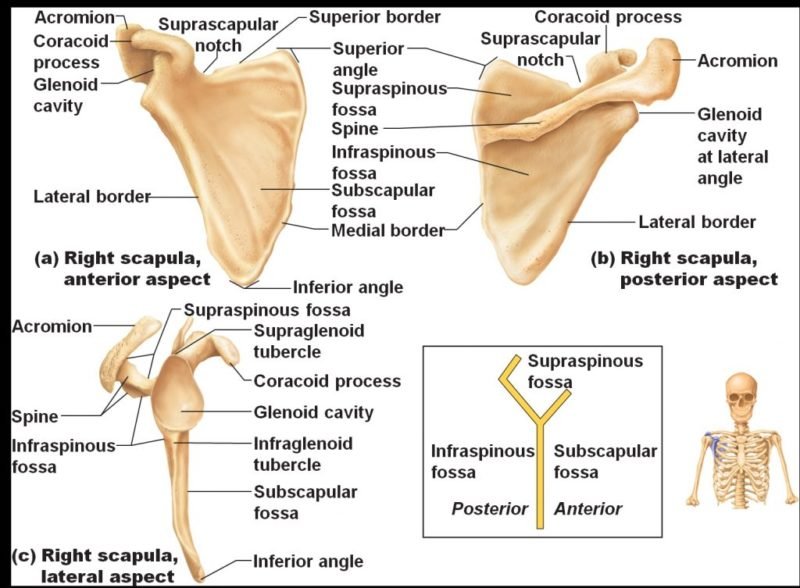
List of Muscle Attachment of Arms and Forearms/shoulder a girdle or pectoral girdle is the set of bones in the appendicular skeleton which connects to the arm on each side. In humans it consists of the clavicle and scapula; in those species with three bones in the shoulder, it consists of the clavicle, scapula, and coracoid. Some mammalian species (such as the dog and the horse) have only the scapula.
The pectoral girdles are to the upper limbs as the pelvic girdle is to the lower limbs; the girdles are the parts of the appendicular skeleton that anchor the appendages to the axial skeleton.
Joints Of Shoulder Girdle
Acromioclavicular joint
The acromioclavicular joint is the articulation between the acromion process of the scapula and the lateral end of the clavicle. It is a plane type of synovial joint. The acromion of the scapula rotates on the acromial end of the clavicle.
Sternoclavicular joint
The sternoclavicular joint is the articulation of the manubrium of the sternum and the first costal cartilage with the medial end of the clavicle. It is a saddle type of synovial joint but functions as a plane joint. The sternoclavicular joint accommodates a wide range of scapula movements and can be raised to a 60° angle.
Scapulocostal joint
The scapulocostal joint (also known as the scapulothoracic joint) is a physiological joint formed by an articulation of the anterior scapula and the posterior thoracic rib cage. It is musculotendinous in nature and is formed predominantly by the trapezius, rhomboids and serratus anterior muscles.
Suprahumeral joint
The superhumeral joint (also known as the subacromial joint) is a physiological joint formed by an articulation of the coracoacromial ligament and the head of the humerus. It is formed by the gap between the humerus and the acromion process of the scapula. This space is filled mostly by the subacromial bursa and the tendon of the supraspinatus. This joint plays a role during complex movements while the arm is fully flexed at the glenohumeral joint, such as changing a lightbulb or painting a ceiling.
Muscle attachment of Shoulder joint
Anterior Axioappendicular Muscles (Thoracoappendicular Muscles)[rx]
Pectoralis major
-
Function: flexion, adduction, medial rotation of the humerus.
-
Origin: clavicular head: medial clavicle anteriorly, sternocostal head: anterior sternum and costal cartilages of ribs 1 to 6 as well as external oblique aponeurosis
-
Insertion: the lateral edge of an intertrabecular groove of the humerus
-
Innervation: medial pectoral nerve (C8, T1) lateral pectoral nerve (C5, C6, C7) of brachial plexus
Pectoralis minor
-
Function: Depression of the shoulder, protraction of the scapula
-
Origin: Third, fourth, fifth ribs close to their respective costal cartilages
-
Insertion: Coracoid process
-
Innervation: Medial pectoral nerve (C8, T1)
Subclavius
-
Function: Depression and stabilization of the clavicle
-
Origin: First rib medially
-
Insertion: Middle of the clavicle, inferiorly
-
Innervation: Nerve to subclavius (C5, C6)
Serratus anterior
-
Function: Protraction of scapula, rotation of the scapula
-
Origin: Lateral first to the eighth rib
-
Insertion: anterior scapula, medially
-
Innervation: long thoracic nerve (C5, C6, C7)
Posterior Axioappendicular Muscles
Superficial layer
Latissimus dorsi
-
Function: Adduction, medial rotation, extension of humerus
-
Origin: Spinous processes of seventh to 12th thoracic vertebrae, iliac crest, thoracolumbar fascia, and inferior third and fourth rib
-
Insertion: Intertubercular groove of humerus
-
Innervation: Thoracodorsal nerve (C5,C6,C7)
Trapezius
-
Function: Elevation, depression, and retraction of the scapula, rotation of glenoid cavity
-
Origin: Superior nuchal line, nuchal ligament, occipital protuberance, spinous processes of C7- T12
-
Insertion: Spine of scapula, acromion, and lateral clavicle
-
Innervation: CN XI
Deep Layer
Levator scapulae
-
Function: Adduction, medial rotation, an extension of humerus
-
Origin: Transverse processes of C1 through C4 vertebrae
-
Insertion: Scapula at its medial border
-
Innervation: Thoracodorsal nerve (C5, C6, C7)
Rhomboid major
-
Function: Retraction of scapula and depression of glenoid cavity
-
Origin: Spinous processes of T2 through T5 vertebrae
-
Insertion: Inferior aspect of medial scapula
-
Innervation: Dorsal scapular nerve (C4, C5)
Rhomboid minor
-
Function: Retraction of scapula and depression of glenoid cavity
-
Origin: Nuchal ligament as well as spines of C7 and T1 vertebrae
-
Insertion: Superior aspect of medial scapula
-
Innervation: Dorsal scapular nerve (C4, C5)
Scapulohumeral (Intrinsic Shoulder Muscles)
Deltoid
-
Function: Anterior part: flexion and medial rotation of the arm, middle part: the abduction of arm, posterior part: extension and lateral rotation of the arm
-
Origin: Lateral clavicle, acromion and scapular spine
-
Insertion: Deltoid tuberosity
-
Innervation: Axillary nerve (C5, C6)
Teres major
-
Function: Adduction and medial rotation of the arm
-
Origin: Posterior surface of scapula at its inferior angle
-
Insertion: Intertubercular groove on its medial aspect
-
Innervation: Lower scapular nerve (C5, C6)
Supraspinatus
-
Function: Initiation of arm abduction
-
Origin: Posterior scapula, superior to the scapular spine
-
Insertion: Superior aspect of the greater tubercle
-
Innervation: Suprascapular nerve (C5, C6)
-
Part of rotator cuff muscles
Infraspinatus
-
Function: Lateral rotation of arm
-
Origin: Posterior scapula, inferior to the scapular spine
-
Insertion: Greater tubercle of the humerus, between the supraspinatus and teres minor insertion
-
Innervation: Suprascapular nerve (C5, C6)
-
Part of rotator cuff muscles
Teres minor
-
Function: Lateral rotation of the arm
-
Origin: Posterior surface of scapula at its inferior angle
-
Insertion: Inferior aspect of the greater tubercle
-
Innervation: Axillary nerve (C5, C6)
-
Part of rotator cuff muscles
Subscapularis
-
Function: Adduction and medial rotation of the arm
-
Origin: Anterior aspect of scapula
-
Insertion: Lesser tubercle of humerus
-
Innervation: Subscapular nerves (C5, C6, C7)
-
Part of rotator cuff muscles
*Rotator cuff muscles: supraspinatus, infraspinatus, teres minor, subscapularis
Muscles of Anterior Compartment of Arm (Flexors of Arm)
Biceps brachii
-
Function: Major flexion of forearm, supination of the forearm, resists dislocation of the shoulder
-
Origin: Short head originates from the coracoid process. The long head is from the supraglenoid tubercle of the scapula
-
Insertion: Radial tuberosity and forearm fascia (as bicipital aponeurosis)
-
Innervation: Musculocutaneous nerve (C5, C6)
Brachialis
-
Function: Flexion of forearm
-
Origin: Distal anterior humerus
-
Insertion: Coronoid process and ulnar tuberosity
-
Innervation: musculocutaneous nerve (C5, C6, C7 small contribution)
Coracobrachialis
-
Function: Flexion and adduction of the arm
-
Origin: Coracoid process
-
Insertion: Middle of the humerus, on its medial aspect
-
Innervation: Musculocutaneous nerve (C5, C6, C7)
Muscles of Posterior Compartment of Arm (Extensors of Arm)
Triceps brachii
-
Function: Major extensor of the forearm, resists dislocation of the shoulder
-
Origin: Lateral head: above the radial groove, medial head: below the radial groove, long head: infraglenoid tubercle of the scapula
-
Insertion: Olecranon process of ulna and forearm fascia
-
Innervation: Radial nerve (C6,C7,C8)
Anconeus
-
Function: Extension of the forearm, stabilization of elbow joint
-
Origin: Lateral epicondyle of humerus
-
Insertion: Olecranon process and posterior ulna
-
Innervation: Radial nerve (C7, C8, T1)
Muscles of Anterior Compartment of Forearm (Flexors of Forearm)
Superficial layer
Pronator teres
-
Function: Pronation of radio-ulnar joint
-
Origin: Coronoid process and medial epicondyle of humerus
-
Insertion: Lateral surface of the radius
-
Innervation: Median nerve (C6, C7)
Flexor carpi radialis
-
Function: Flexion and adduction at the wrist
-
Origin: Medial epicondyle of humerus
-
Insertion: Base of second metacarpal
-
Innervation: Median nerve (C6, C7)
Palmaris longus
-
Function: Flexion at the wrist, tensing of the palmar aponeurosis
-
Origin: Medial epicondyle of humerus
-
Insertion: Flexor retinaculum
-
Innervation: Median nerve (C7, C8)
Flexor carpi ulnaris
-
Function: Flexion and adduction at the wrist
-
Origin: Medial epicondyle of humerus and olecranon
-
Insertion: Pisiform, hook of hamate and fifth metacarpal
-
Innervation: Median nerve (C7, C8)
Intermediate Layer
Flexor digitorum superficialis
-
Function: Flexion of the proximal interphalangeal joint of the second, third, fourth, and fifth finger. Also has a weaker flexion action on the metacarpophalangeal joints of the same fingers
-
Origin: Medial epicondyle, coronoid process, and anterior radius
-
Insertion: Second, third, fourth, and fifth middle phalanges
-
Innervation: Median nerve (C7, C8, T1)
Deep Layer
Flexor digitorum profundus
-
Function: Flexion of the distal interphalangeal joint of the second, third, fourth, and fifth finger
-
Origin: Medial and the anterior surface of the proximal ulna and interosseous membrane
-
Insertion: Second, third, fourth, and fifth distal phalanges
-
Innervation: Ulnar nerve (C8, T1) for the medial part, anterior interosseous nerve (C8,T1) for the lateral
Flexor pollicis longus
-
Function: Flexion of the interphalangeal joint of the thumb
-
Origin: Anterior aspect of radius as well as interosseous membrane
-
Insertion: Base of distal phalanx of thumb
-
Innervation: Anterior interosseous nerve (C7, C8)
Pronator quadratus
-
Function: Pronator of the forearm
-
Origin: Anterior aspect of distal ulna
-
Insertion: Anterior aspect of the distal radius
-
Innervation: Anterior interosseous nerve (C7, C8)
Brachioradialis
-
Function: Weak flexor of the forearm
-
Origin: Proximal supracondylar ridge on the humerus
-
Insertion: Lateral surface of the distal end of radius
-
Innervation: Radial nerve (C5, C6, C7)
Muscles of Posterior Compartment of Forearm
Superficial
Extensor carpi radialis longus
-
Function: Extension and abduction of the wrist
-
Origin: Proximal supracondylar ridge on the humerus
-
Insertion: Dorsal base of the second metacarpal
-
Innervation: Radial nerve (C6, C7)
Extensor carpi radialis brevis
-
Function: Extension and abduction of the wrist
-
Origin: Lateral epicondyle of humerus
-
Insertion: Dorsal base of the third metacarpal
-
Innervation: Deep branch of the radial nerve (C7, C8)
Extensor digitorum
-
Function: Extension of the proximal interphalangeal joint of the second, third, fourth, and fifth fingers. Also has a weaker extension action on the metacarpophalangeal joints of the same fingers
-
Origin: Lateral epicondyle of humerus
-
Insertion: Extensor expansions on the dorsal aspect of second, third, fourth, and fifth middle and distal phalanges
-
Innervation: Posterior interosseous nerve (C7, C8)
Extensor digit minimi
-
Function: Extension of the little finger at the metacarpophalangeal joint and interphalangeal joint
-
Origin: Lateral epicondyle of humerus
-
Insertion: Extensor expansion on the dorsal aspect of fifth phalanx
-
Innervation: Posterior interosseous nerve (C7, C8)
Extensor carpi ulnaris
-
Function: Extension and adduction of the wrist
-
Origin: Lateral epicondyle of the humerus and posterior ulna
-
Insertion: Fifth metacarpal base
-
Innervation: Posterior interosseous nerve (C7, C8)
Deep Layer
Extensor indices
-
Function: Extension of the index finger
-
Origin: Dorsal surface of distal ulna and interosseous membrane
-
Insertion: Extensor expansion of second finger
-
Innervation: Posterior interosseous nerve (C7, C8)
Supinator
-
Function: Supination of the forearm
-
Origin: Lateral epicondyle and supinator crest of ulna
-
Insertion: Lateral surface of radius
-
Innervation: Deep branch of radial nerve (C7, C8)
Abductor policies longus
-
Function: Abduction of the thumb by acting on the carpometacarpal joint and the metacarpophalangeal joint
-
Origin: Dorsal aspects of the proximal radius, ulna, and interosseous membrane
-
Insertion: Base of the first metacarpal
-
Innervation: Posterior interosseous nerve (C7, C8)
Extensor pollicus longus
-
Function: Extension of the thumb by acting on the carpometacarpal joint, the metacarpophalangeal joint, and the interphalangeal joint.
-
Origin: Dorsal aspects of the middle ulna and interosseous membrane
-
Insertion: Distal phalanx of 1st finger
-
Innervation: Posterior interosseous nerve (C7, C8)
Extensor pollicus brevis
-
Function: Extension of the thumb by acting on the carpometacarpal joint and the metacarpophalangeal joint
-
Origin: Dorsal aspects of middle radius and interosseous membrane
-
Insertion: Distal phalanx of 1st finger
-
innervation: Posterior interosseous nerve (C7, C8)
Intrinsic Muscles of Hand
Thenar muscles
Opponents policies
-
Function: Opposition of the thumb
-
Origin: Flexor retinaculum and tubercle of trapezium
-
Insertion: Lateral aspect of first metacarpal
-
Innervation: Recurrent branch of median nerve (C8, T1)
Abductor policies Brevis
-
Function: Abduction of the thumb at the metacarpophalangeal joint
-
Origin: Flexor retinaculum and tubercle of scaphoid
-
Insertion: Lateral aspect of proximal phalanx of first finger
-
Innervation: Recurrent branch of median nerve (C8, T1)
Flexor pollicus brevis
-
Function: Flexion of the thumb at the metacarpophalangeal joint
-
Origin: Flexor retinaculum and tubercle of trapezium
-
Insertion: Lateral aspect of proximal phalanx of first finger
-
Innervation: Recurrent branch of median nerve (C8, T1)
Adductor Compartment
Adductor pollicus
-
Function: Adduction of the thumb
-
Origin: Second, third metacarpal, and capitate
-
Insertion: Proximal phalanx and extensor expansion of 1st finger
-
Innervation: Deep branch of ulnar nerve (C8, T1)
Hypothenar Muscles
Abductor digiti minimi
-
Function: Abduction of the little finger at the metacarpophalangeal joint
-
Origin: Pisiform
-
Insertion: Medial aspect of proximal phalanx of fifth finger
-
Innervation: Deep branch of ulnar nerve (C8, T1)
Flexor digiti minimi brevis
-
Function: Flexion of the little finger at the metacarpophalangeal joint
-
Origin: Flexor retinaculum and hook of hamate
-
Insertion: Medial aspect of proximal phalanx of fifth finger
-
Innervation: Deep branch of ulnar nerve (C8, T1)
Opponens digiti minimi
-
Function: Opposition of the little finger
-
Origin: Flexor retinaculum and hook of hamate
-
Insertion: Medial aspect of fifth metacarpal
-
Innervation: Deep branch of ulnar nerve (C8, T1)
Short Muscles
Lubricants
-
Function: Flexion of the metacarpophalangeal joints with extension of the interphalangeal joints
-
Origin: Arise from tendons of flexor digitorum profundus. First 2 are unipennate, and the third and fourth are bipennate
-
Insertion: Extensor expansions of second, third, fourth, and fifth finger
-
Innervation: Median nerve (C8, T1) for the lateral 2 lumbricals, deep branch of ulnar nerve (C8, T1) for the medial 2 lumbricals
Dorsal interossei
-
Function: Abduction of the second, third, and fourth finger away from the axial line
-
Origin: Adjacent metacarpals
-
Insertion: Extensor expansions and proximal phalanges of the second, third, and fourth fingers
-
Innervation: Deep branch of ulnar nerve (C8, T1)
Palmar interossei
-
Function: Adduction of the second, third, and fourth finger towards the axial line
-
Origin: Palmar surfaces of second, fourth, and fifth metacarpals
-
Insertion: Extensor expansions and proximal phalanges of the second, fourth, and fifth fingers
-
Innervation: Deep branch of ulnar nerve (C8, T1)
Surgical Considerations
The deltoid is a significant factor when considering the anterior surgical approach to gain access to the shoulder joint. Some of these technical procedures include, but are not limited to the following:
-
Open Bankart repair/capsular reconstructions – indicated in the setting of recurrent anterior (or other directional) instability of the shoulder
-
Shoulder arthroplasty – indicated for cases of post-traumatic deformity, advanced degenerative arthritis, and/or avascular necrosis includes hemiarthroplasty, total shoulder arthroplasty (TSA), reverse total shoulder arthroplasty (TSA)
-
Rotator cuff repair contemporary – indications remain somewhat controversial although most of these procedures are now being performed arthroscopically popular approaches (as opposed to the deltopectoral approach) include the mini-open approach (lateral deltoid-splitting approach)
References
- https://www.ncbi.nlm.nih.gov/books/NBK507892/
- https://www.ncbi.nlm.nih.gov/books/NBK525990/
- https://www.ncbi.nlm.nih.gov/books/NBK537258/
- https://www.ncbi.nlm.nih.gov/books/NBK499858/
- https://www.ncbi.nlm.nih.gov/books/NBK545221/
- https://www.ncbi.nlm.nih.gov/books/NBK537056/
- https://www.ncbi.nlm.nih.gov/books/NBK482410/
- https://teachmeanatomy.info/upper-limb/bones/clavicle/
- https://www.kenhub.com/en/library/anatomy/the-clavicle
