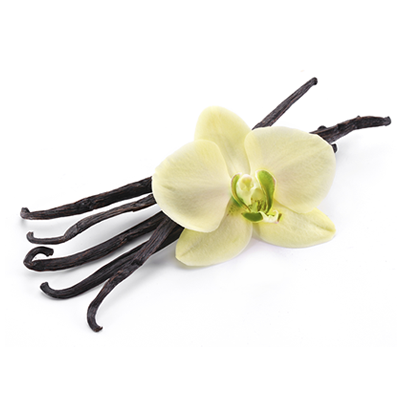
Vanilla planifolia commonly known as Vanilla comes from the long, greenish-yellow seedpods of a fragrant tropical vanilla orchid and is native to Mesoamerica – Mexico and Guatemala. It is a member of the orchid family, the largest and oldest family of flowering plants in the world. It is the only edible fruit of the entire orchid family, which includes approximately 25,000 orchid varieties and over 10,000 hybrids. It grows best in the moist, tropical regions of the world 15-1/2 degrees to the north and south of the Equator. Only two species — Vanilla planifolia and Vanilla tahitensis are grown for commercial use as a flavoring or fragrance. Vanilla is grown commercially in Madagascar, Mexico, Indonesia, and Tahiti.
Vanilla Scientific Classification
| Scientific name | Vanilla planifolia |
|---|---|
| Kingdom | Plantae |
| Subkingdom | Tracheobionta |
| Order | Orchidales |
| Family | Orchidaceae |
| Genus | Vanilla Mill. |
| Species | Vanilla planifolia Jacks. |
| Super division | Spermatophyta |
| Division | Magnoliophyta |
| Class | Liliopsida |
| Sub Class | Liliidae |
Vanilla is the most labor-demanding agricultural product in the world that is why it is so expensive. The entire process of vanilla cultivation, pollination and harvesting is done by hand, without using machinery, chemical fertilizers or pesticides. It is the second-most costly spice on earth after saffron. Its complex flavor, impossible to tire of, makes vanilla, decade in and decade out, by far the most popular ice cream and gives every kind of food, from chocolate bars to lobster, richness and depth. Its mysterious fragrance, redolent of its tropical origins, is used by parfumiers for its allure and by hospitals for its deeply calming effect. Once you know its story, you could never call vanilla plain.
Plant
Vanilla is a succulent, herbaceous, perennial vine climbing trees or other support to a height of 12–15 m by means of long adventitious roots opposite the leaves. It is found growing in a humid, evergreen tropical forest and watershed areas climbing up trees. It thrives in friable, well drained, loamy soil rich in organic matter. Stems are cylindrical long 1–2 cm diameter, dark green simple or branched. Leaves are alternate, fleshy and sub-sessile. Lamina flat, oblong-elliptical to lanceolate 8–25 × 5–8 cm, apex acute to acuminate. In flowers sepals and petals are erect-spreading, yellow-green, fleshy, rigid; sepals 3 – oblanceolate, 3.5–5.5 × 1.1–1.3 cm, margins straight, apex acute to obtuse; petals elliptic-oblanceolate, abaxially keeled, thinner than sepals, 3.5–5.5 × 1.1–1.3 cm, apex acute to obtuse; lip adnate to column for 1.5–2 cm, yellow-green, becoming dark yellow toward apex, lamina gullet-like, cuneate, rhomboid, with apical retuse lobule; disc with central tuft of retrorse scales, an hairy to apex; column white, slender, 3–3.5 cm, margins slightly sinuate, adaxially bearded; pollinia – 2, yellow; ovary pedicellate, 3–5 cm.
Fruit
Fruit of the vanilla plant is actually a pendulous, narrow cylindrical capsule, 10–25 cm by 0.8–1.5 cm, obscurely 3 angled splitting longitudinally when ripe. Fruit is normally green when young turning to dark brown as they mature. Within the capsules numerous seeds are found that are globose, 0.4 mm diameter and are normally black in color. Because of its unique taste it is found used in several food items throughout the world.
History
Vanilla planifolia originated from Mesoamerica – Mexico and Guatemala. The Totonac Indians of Papantla in north-central Vera Cruz, were the first to cultivate vanilla and the oldest use of vanilla use related to the pre-Columbian Maya of south eastern Mexico (Lubinsky et al. 2008). It has been cultivated and escaped or persisted in many areas of the tropics and the south Pacific. Today, the most important exporters are Madagascar and Réunion (formerly called Bourbon), even before México. In Asia, Indonesia is the most successful producer.
Nutritional Value
Apart from their wonderful taste, vanilla is a good source of nutrients, vitamins and minerals. Consuming 208 gram of vanilla offers 0.478 mg of Manganese,26.31 g of Carbohydrate, 0.15 mg of Copper,0.198 mg of Vitamin B2, 308 mg of Potassium,25 mg of Magnesium,0.884 mg of Vitamin B3, 0.054 mg of Vitamin B6 and 0.25 mg of Iron.
Vanilla Varieties
The orchid family, with 20,000 members, is the largest family of flowering plants in the world, but vanilla is its only edible product. There are 150 varieties of vanilla orchid, but only two of them, Bourbon and Tahitian, ore used commercially.
Bourbon is the original vanilla that the Spanish found in Mexico, and most of it is grown in Madagascar and Reunion (which supply three-quarters of the world’s high-quality beans), with smaller contributions from India, Indonesia and China. Mexico is now a minor producer.
Tahitian vanilla is a variety of Bourbon vanilla that has mutated into a separate species. It has a markedly floral fragrance and its flavor carries licorice, prune and dried cherry notes.
1. Bourbon/Madagascar Vanilla
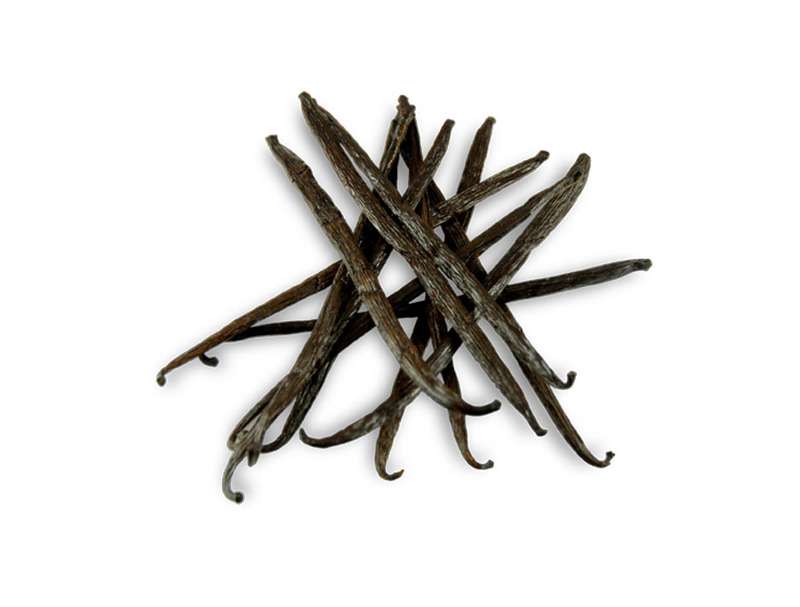 The generic term for V.planifolia that’s grown in Indian Ocean islands, “Bourbon,” comes from Ile de Bourbon, (Reunion’s former name) and not from a type of whiskey. 75% of the world’s Bourbon/Madagascar vanilla supply comes from Madagascar and Reunion. Its flavors are rich and balanced and it has a robust aroma. It can be used in both cold and cooked preparations.
2. Indonesian Vanilla
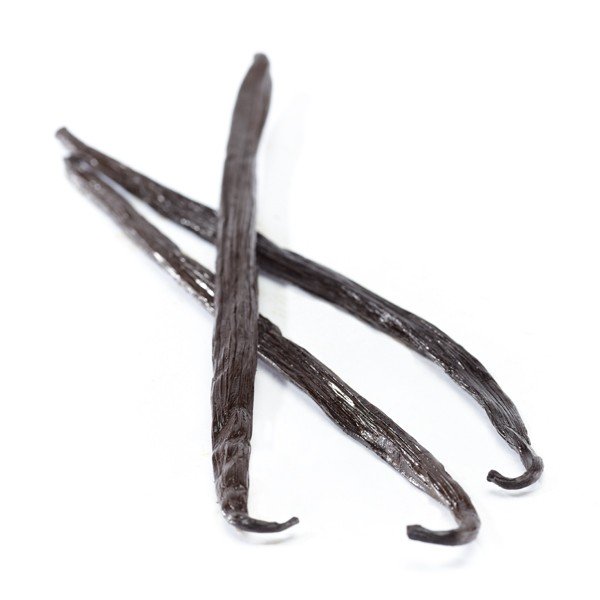 Because some farmers harvest pods before their phenolic flavor profile has developed, vanilla from this area differs in quality: it can range from deep and full-bodied to light and woody. Some Indonesian farmers also use a short-term curing process that imparts a harsh, smoky flavor. Indonesian vanilla is often combined with synthetic or Bourbon vanilla. It is best used in cooked preparations.
3. Mexican Vanilla
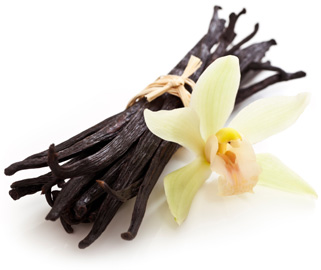 Its flavor is smooth, creamy and spicy with delicate top notes and its aroma is unique, fruity and winy aromas. It can be used in hot dishes, but it is really good in cold preparations or those that need a short cooking time.
4. Tahitian Vanilla
 Tahitian vanilla is the product of V. planifolia stock that was crossbred with V. pompona (a variety that is normally used in the perfume industry) during the early 1880s. It doesn’t have as much natural vanillin as Bourbon, but flavor comes from heliotropin (anis aldehyde), giving it a sweeter and fruitier taste, reminiscent of cherries or raisins. It has a lovely, sweet floral scent. Even though its pod is fatter than Bourbon vanilla’s, it doesn’t hold as many seeds. It is best used in cooked foods such as sauces, compotes and desserts; it also works well with meats.
5. West Indian Vanilla
West Indian vanilla is actually a lower grade than the Bourbon/Madagascar or Mexican beans and has naturally low vanillin content. Since its taste is too poor for culinary uses, it is mostly used to make perfumes. Some extracts using West Indian or Mexican vanilla also use coumarin (derived from the tonka tree, both Canadian and US officials classify it as a toxic substance).
Health Benefits of Vanilla
Vanilla, apart from being a flavoring agent is also a therapeutic herb. Vanilla essential oil is used as a medicinal product to cure many diseases and vanilla beans, powdered or extract, also used in the treatment of many medical conditions. Vanilla acts as an antioxidant, anti-carcinogenic, antidepressant and aphrodisiac providing numerous health benefits. Major health benefits of vanilla are:
1. Antibacterial
Researchers evaluated the effectiveness of vanilla oil for preventing certain bacteria. The testing also evaluated ylang ylang and patchouli oils. For the bacteria in question – a strain of Staph. – Vanilla was able to prevent its development.
Essential oils with antibacterial benefits are extremely useful. In today’s age of chemical synthetics and overuse, we find ourselves with more harm than benefit when using commercial antibacterial products. To stop the spread of dangerous bacteria without risking our health is invaluable!(1)
2. Anti-ageing Benefits
Vanilla is wonderful source of antioxidants which prevent and reverse skin damage caused by free radicals. It helps to slow down signs of ageing like fine lines, wrinkles and age spots. It is extensively used in the cosmetic industry for its fragrance and anti-ageing benefits. Applying raw vanilla beans infused with organic oil imparts a great chocolaty fragrance besides making your skin smooth and soft.
3. Anti-depressant
As we all know that essential oils are often used for their uplifting, antidepressant abilities thanks to their simple applications and quick results. Simply smelling a fragrance can so quickly and effectively reach and affect the brain!
Vanilla has been studied for its in vitro ability to relieve depression. Tracking markers of depression in mice, researchers were able to determine antidepressant activity with the vanillin compound.(2)
4. Relieve Pain
Vanillin is a compound of magical properties. It acts as a pain reliever as well as has anesthetic properties. These properties make it appropriate for naturally relieving pain. It helps soothe toothache, pain due to inflammation etc.
5. Lowers Blood Pressure
Vanilla oil’s sedative effects on the body allow it to naturally lower blood pressure by relaxing the body and mind. High blood pressure is the state when the pressure on the arteries and blood vessels becomes too high and the arterial wall becomes distorted, causing extra stress on the heart. High blood pressure levels can put you at risk for having a stroke, heart attack and diabetes.
Main cause of high blood pressure is stress; by relaxing the muscles and mind, vanilla oil is able to lower blood pressure levels. Vanilla oil helps you to get more sleep, which is another easy way to lower blood pressure levels. Vanilla oil serves as a natural remedy for high blood pressure because it also acts as an antioxidant, so it reduces oxidative stress and dilates the arteries.
6. Soothes Burns
Vanilla has been used as a traditional remedy to heal burns, wounds and cuts. Concentrated vanilla extracts or essential oil should not be used directly on recent burns. Topical treatments containing vanilla extracts might be helpful. It is recommended to consult your doctor before using any such home remedies for burns.
7. Anti-cancer
As usual with cancer and essential oils, the preface for this discussion is that more research must be executed. Thanks in no small part to its antioxidant ability, though, vanillin and substances that contain it (like vanilla!) are among the oils and compounds considered for anticancer ability.
Until we know more specifically how these actions work in the body and the best ways to incorporate them for direct effectiveness, we can enjoy using a substance that cancer doesn’t like!(3)
8. Promotes Healthy Skin
Vanilla is a good source of B-vitamins like niacin, thiamin, Vitamin B6 and pantothenic acid which play an important role in the maintenance of healthy skin. The antioxidant properties of vanilla help to protect your skin from damage caused by environmental pollutants and toxins. You can prepare a scrub to revive your skin from within. All you need to do is slice open 5 vanilla beans to scrape out its seeds. Add these seeds along with 3 tablespoons of brown sugar and 2 drops vanilla essential oil to freshly squeezed lemon juice. Mix the ingredients and apply it on your face. Massage for a few minutes and then rinse off with warm water. Then, splash some cold water on your face.
9. Beneficial for Children
Vanilla extract added to a glass of warm water with a teaspoon of sugar can help to reduce fever and fight infections in children. In addition, the taste may also appeal to children.
10. Good for digestion
Vanilla is a natural substance that is good for digestion. There are many ways done by vanilla in enhance digestive health. The distinctive aroma of vanilla is useful to prevent nausea. Another way in preventing gastrointestinal problems with vanilla is vanilla tea. Vanilla tea also prevent vomiting, diarrhea, abdominal pain and prevent abdominal cramps.
11. Boost Cognitive Actions and Mental Health
Vanilla helps to improve mental health and boost cognitive functions. Its antioxidant property and free radical removing activity boost neural functions, decrease risk of nervous breakdown, prevent nervous damage and improve memory. Frequent consumption of vanilla may actually improve cognitive abilities and mental health.
12. Treatment of Anxiety
Certain neurological research have proved that vanilla extract have a positive effect on those suffering from depression and anxiety disorders. Vanilla scent is specifically helpful for this purpose. Drinking water or milk that contains vanilla extract helps reduce anxiety in some people.
This aromatic spice is helpful for your nervous system. Research conducted by the Memorial Sloan-Kettering Hospital in New York indicated that exposure to vanilla aromatherapy has proven to be effective in relieving the symptoms of claustrophobia.
13. Increased libido
Since prehistoric times, vanilla has been regarded an aphrodisiac. However, ongoing aromatherapy researches recommend that vanilla help to increase sexual desire by increasing testosterone levels in men. A 1970s research also claimed that majority of its participants believed that vanilla had cured their impotency. While there is no concrete proof to prove this, experts believe that the aroma of vanilla does induce feelings of pleasure and satiation.
14. Treatment of Cough
Cough syrups normally use vanilla extract as a flavoring to mask their bitter taste. Though additional research is necessary in this regard, the mild anaesthetic properties of vanilla extract can relieve symptoms such as pain from a sore throat or headache.
15. Anti-inflammatory
Also in line with the effects of antioxidants, vanillin is likely to be anti-inflammatory. This effect tends to happen with antioxidant substances thanks to that cellular level repair that takes place.
As non-traditional oil, topical applications are outstanding for performing this effect, massaging it deep into the muscles and joints that are inflamed or applying it to skin that is plagued with inflammation.(4)
16. Dental Health
Vanillin contained in vanilla is similar to capsaicin in chili peppers and euganols in spices such as cinnamon. This compound has a positive effect on the central nervous system. Capsaicin is an effective pain reliever while euganols act as topical anaesthetics. Vanilla possesses both these properties which help fight toothache and infection.
17. Treatment of Acne
The antibacterial properties of vanilla make it beneficial for the treatment of acne. Vanillin, through its antibacterial effects, helps cleanse your skin, decreasing the occurrence of pimples and acne.(5)
18. Aids Weight Loss
Researches have shown that vanilla extract help people lose weight. Though exercise and diet play a main role in weight loss, these efforts can be supplemented with the intake of vanilla extract for greater benefits. Additional research is required to validate this claim.
19. Relieves Nausea
Vanilla extracts help calm the stomach in case of a feeling of nausea. Just add a few drops of vanilla extract to a glass of water and sip it gradually. The amazing vanilla scent helps to relieve the feeling of nausea. In fact, it is as good as nausea medicine and can effectively substitute it.
20. Treatment of Menstrual Problems
Irregular menstrual cycle, pain, premenstrual syndrome (PMS) and other menstrual problems can be cured by including vanilla in regular diet. Vanilla is high in magnesium content that controls the production of hormones that boost functioning of neurotransmitters and so reduce PMS related issues of mood changes and depression. Vanilla’s calcium content reduces pain and irregularities in menstrual periods. Drink vanilla extract in water or as a tea to comfort you from menstrual problems.
21. Aids Wound Healing
Since ancient times vanilla extract is used for healing wounds. Its anti-inflammatory properties can calm inflamed areas on the skin. It is considered a great home remedy for wound healing. Note that the direct use of vanilla extract on open wounds and burns should be avoided.
22. Repels Mosquitoes and Bugs
For a natural pest-deterrent, just mix a tablespoon of vanilla extract with a cup of water and pour into a spray bottle. Spritz it on exposed skin to ward of those irritating mosquitoes, flies and even ticks.
How to Eat
- Vanilla is sold and used as dried fermented beans, vanilla extract, vanilla essence, vanilla powder and vanilla oleoresin.
- Vanilla is used in the food industry in dairy products, followed by beverages, baked goods and confections etc.
- Vanilla is often used as a background note or flavor enhancer to round out the flavor profiles of many products.
- Main application of natural vanilla is for flavoring ice creams and soft drinks.
- Vanilla is an important flavor component in colas and is also used in cream sodas, root beer, some fruit beverages, tea and coffee.
- Vanillin or vanilla flavors are used in many alcoholic beverages, such as whiskeys, cordials and cocktails, to round out and smooth the harsh edges of the alcohol.
- Vanilla is used as a kitchen spice for domestic use.
- Vanilla is extensively used in the flavoring of chocolate, ice-cream, cakes, biscuits, sweets, candies, dry pastries, puddings, gruels, sauces, syrups, milk-based sweet drinks and other confectionary.
- Another popular product is vanilla sugar which is used for butter puddings, bread, crème brulée, sugar glazed fruits and other desserts.
- Vanilla sugar is prepared by adding a pierced vanilla pod to sugar in an air-tight container.
- Vanilla pods are often used whole (being split and the tiny seeds scraped into the mixture) to infuse flavor into cream and custard based sauces.
- Vanilla is used as flavoring in medicinal syrup and tobacco.
Traditional uses and benefits of Vanilla
- In traditional medicine, vanilla beans are used as aphrodisiac, carminative, emenagogue and stimulant and has been claimed to reduce or cure fevers, spasms and caries.
- Vanilla pods have been used as drugs against nervous diseases and hypochondria.
- Drinking water boiled with vanilla beans is a traditional remedy for nausea, vomiting, and stomach upsets.
- Aroma of vanilla help ease nausea.
- Vanilla may prove effective in soothing inflammation as well due to its antioxidant properties.
- Sniffing a few drops of vanilla extract is known to provide stress relief.
- Neurological research reveals that vanilla extract may prove useful in treatment of depression and anxiety disorders.
Other facts
- Vanilla is also used in pharmaceutical products, perfumery, air-fresheners, incense, candles, house-hold, baby and personal care products, aromatherapy and as aroma for tobacco and alcoholic beverages.
- Apart from flavoring food products vanilla is widely used as an odor maskant for paints, industrial chemicals, rubber tires and plastics etc.
- It is used as insect repellent.
- Vanilla is not only used as a flavor in foods and beverages, but also in perfumes.
- Vanilla has many industrial applications such as a flavoring for medicines.
- Spiders don’t like vanilla. Use whole vanilla beans to drive away those eight-legged creatures.
How to choose and store good vanilla beans
Premium quality vanilla beans have a rich, full aroma and are oily to the touch. They should be flexible enough to bend without breaking, and they should be dark brown (almost black).
Vanilla beans will keep forever if stored appropriately in an airtight container in a cool, dark place, or if they are vacuum-packed. While it’s important to keep vanilla beans cool to avoid mildew, they should not be refrigerated or frozen, as this causes them to harden and lose flavor.
If you’re using high-quality Bourbon beans, you may notice after time that they have developed crystals (these often resemble white fur), an indicator that the beans are high in natural vanillin and of good quality. This is a natural process and a delicious one, at that. Enjoy the crystals — they’re full of flavor!
If your vanilla beans have dried out, just add them to warm liquid to draw out the flavor. A dry bean pod added to a mug of hot chocolate or a cup of hot tea results in a delicious experience!
Vanilla’s Other Forms
1. Extract
Know what it takes to make vanilla extract? Alcohol, vanilla beans, and time. The alcohol extracts the flavor compounds from the vanilla bean, then the extract ages to develop more complex flavors. The method is flexible — the extraction time can last days or months, and the aging time can also vary. We love a flexible method, but not too flexible — some vanilla extracts include sugar, corn syrup, and coloring. Keep an eye out for additional ingredients that might not be so necessary.
2. Flavoring
Natural vanilla flavoring is an alcohol-free, glycerin-based product. It is more commonly used in commercial settings, but if you look hard enough you’ll be able to find some to use at home. Cooks Illustrated notes that the consistency is “viscous and a little slick” and that its flavor is sweet. The vanilla flavor it imparts is milder than what you would get from using traditional vanilla extract, so it might not be worth the effort of tracking it down. If you’re looking for an alcohol-free vanilla flavoring, try vanilla powder.
3. Paste
Vanilla paste is actually a mixture of vanilla extract and vanilla seeds with some sugar added. It’s a very suitable product if you use a lot of vanilla, or don’t like scraping vanilla beans. One thing to be aware of is how much sugar is added to the product — some vanilla pastes are 40% sugar and more like jam, which might mean you’ll want to adjust some components of a recipe (or you could just spread a little on slices of buttered toast). Heilala vanilla paste is only 5% sugar and is a safe bet for baking — a teaspoon is equivalent to one vanilla bean. We’ve used it in the test kitchen with great results.
4. Powder
Vanilla powder is dried extract with a cornstarch base. It can be used just like vanilla extract, in equal amounts, and won’t discolor frostings or other color-sensitive recipes. Just mix it in with your dry ingredients.
5. Synthetic Vanillin
You may encounter products that contain synthetic vanillin, which isn’t vanilla at all — this stuff comes from industrial by-products like wood pulp. Synthetic vanilla flavoring is certainly less expensive, but the flavor is flat compared to the real deal. Some might say “you get what you pay for.”
How to Use Vanilla Oil
- To relax your body and mind, massage 10 drops of your homemade vanilla oil infusion into your neck, feet, chest and stomach. This relieves muscle aches, PMS cramps, feelings of anxiety and works as an antibacterial agent.
- To improve sleeping patterns, inhale 3–5 drops of vanilla oil before bed or make your own vanilla oil bath by adding 5–10 drops to warm water.
- To use vanilla oil as a DIY perfume, add 10–20 drops to a spray bottle and mix it with equal parts carrier oil (like jojoba or almond oil) and water. You can spray this vanilla oil mixture on your sheets, furniture, body and hair.
- To use vanilla oil for skin health, add 2–3 drops to your daily face wash or lotion. Try adding 5 drops of pure vanilla oil or a vanilla oil infusion to my Homemade Face Wash.
- To calm burns and wounds, rub 2–3 drops of pure vanilla oil to the needed area.
- For internal benefits, add 5 drops of pure vanilla oil or a vanilla oil infusion to your daily tea or coffee.
- To reduce inflammation in the body, use high-quality vanilla oil or extract in my Carob Bark Recipe.
- To mix dessert with health benefits, add pure vanilla oil or extract to my Raw Vanilla Ice Cream.
References
- https://www.itis.gov/servlet/SingleRpt/SingleRpt?
- http://www.hear.org/pier/species/pyrus_calleryana.htm
- https://npgsweb.ars-grin.gov/gringlobal/taxon/taxonomydetail?
- https://pfaf.org/user/Plant.aspx?
- https://www.wildflower.org/plants/result.php?
- http://www.missouribotanicalgarden.org/PlantFinder/PlantFinderDetails.aspx?
- https://plants.usda.gov/core/profile?
- https://www.invasive.org/browse/subinfo.cfm?
- https://www.cabi.org/isc/datasheet/46188
- https://www.cal-ipc.org/plants/profile/pyrus-calleryana-profile/
- http://www.efloras.org/florataxon.aspx?
- https://texasinvasives.org/plant_database/detail.php?
- http://www.iucngisd.org/gisd/species.php?
- http://www.theplantlist.org/tpl1.1/record/rjp-6009
- https://en.wikipedia.org/wiki/vegetables
- https://gd.eppo.int/taxon/PYUCA
- https://www.illinoiswildflowers.info/savanna/plants/
- https://uses.plantnet-project.org/en/
- https://www.theplantlist.org/tpl1.1/record/
- https://training.ars-grin.gov/gringlobal/taxon/taxonomydetail?
- http://hort.ufl.edu/database/documents/pdf/tree_fact_sheets/
- https://www.illinoiswildflowers.info/trees/plants/callery_pear.htm
- https://www.ncbi.nlm.nih.gov/books/NBK218749/
- https://www.ncbi.nlm.nih.gov/books/NBK551014/
- https://www.ncbi.nlm.nih.gov/books/NBK551727/
- https://www.ncbi.nlm.nih.gov/books/NBK65874/
- https://www.ncbi.nlm.nih.gov/books/NBK304428/
- https://www.ncbi.nlm.nih.gov/books/NBK218759/
- https://www.ncbi.nlm.nih.gov/books/NBK556048/
- https://www.ncbi.nlm.nih.gov/books/NBK218749/
- https://www.niehs.nih.gov/health/topics/agents/vegetables/index.cfm
- https://www.sciencedirect.com/book/9780443062414/vegetable
- https://www.amazon.com/Essential-Oils-Fully-Revised-Updated/dp/1787752291
- https://www.healthbenefitstimes.com/category/herbs-and-spices/
- https://www.frontiersin.org/articles/257193
- https://www.tandfonline.com/toc/tjeo20/current
- https://www.intechopen.com/chapters/68027
- https://onlinelibrary.wiley.com/doi/full/10.1002/ptr.6854
- https://www.nature.com/articles/s41598-020-68823-4
- https://www.cancer.gov/about-cancer/treatment/cam/patient/aromatherapy-pdq
- https://www.researchgate.net/publication/254247133_
- https://link.springer.com/article/10.1365/s10337-010-1680-0
- https://fdc.nal.usda.gov/ndb/foods/show/herb
- https://www.nccih.nih.gov/health/herbsataglance
- https://portal.nifa.usda.gov/web/crisprojectpages/0092887
- https://academic.oup.com/database/article/doi/10.1093/database/bau120
- https://www.cambridge.org/core/journals/weed-science/article/herbicide-effects-of-vegetable/
- https://www.fs.fed.us/wildflowers/ethnobotany/vegetable
- https://www.karger.com/Article/Abstract/501062
- https://en.wikipedia.org/wiki/List_of_plant
- https://en.wikipedia.org/wiki/Types_of_plant_harb
- https://www.britannica.com/topic/
- https://www.planttherapy.com/
- https://academic.oup.com/plphys/article/54/4/560/
- https://www.healthbenefitstimes.com/category/oils/
- https://www.aromaweb.com/essentialoils/default.asp
- https://books.google.com/books/about/Herbs_And_Essential_Oils_Book.html?
- https://books.google.com/books/about/Herbal_herb_for_Health_Beauty.html?id=C_MX9tKpttMC
- https://books.google.com/books/about/Herbal_vegetable_for_Health_Beauty.html?id=C_MX9tKpttMC
- https://www.niehs.nih.gov/health/topics/agents/
- https://www.botanical.com/botanical/mgmh/l/
- https://www.nccih.nih.gov/health/atoz
- https://www.inaturalist.org/taxa
- https://clinicaltrials.gov/ct2/show/NCT02764567
- https://fda.report/Company/Young-Living-Essential-Oils-Lc
- http://www.fao.org/3/ad420e/ad420e.pdf
- https://www.healthywa.wa.gov.au/Articles/A_E/
- https://www.niehs.nih.gov/health/topics/agents/
- https://www.consumerreports.org/health-product-recalls/
- http://theepicentre.com/all-about-vanilla/http://www.frontiercoop.com/community/how-to/all-about-vanillahttps://en.wikipedia.org/wiki/Vanillahttp://theplate.nationalgeographic.com/2014/10/23/plain-vanilla/http://rodellekitchen.com/learn-vanilla-baking/vanilla-fun-factshttp://drericz.com/5-health-benefits-of-vanilla/http://www.diethealthclub.com/health-food/vanilla-health-benefits.htmlhttp://drjockers.com/5-health-benefits-of-natural-vanilla/http://www.earthineer.com/blog/29145/so-vanilla-surprising-uses-and-health-benefitshttp://www.balancedconcepts.net/Vanilla_Essential_Oil.pdfhttp://davesgarden.com/guides/pf/go/1214/http://www.plantnames.unimelb.edu.au/Sorting/Vanilla.htmlhttp://www.hear.org/pier/species/vanilla_planifolia.htmhttps://npgsweb.ars-grin.gov/gringlobal/taxonomydetail.aspx?id=41111https://www.sciencedaily.com/releases/2011/04/110415083336.htmhttp://www.ars-grin.gov/misc/mmpnd/Vanilla.htmlhttp://plants.usda.gov/core/profile?symbol=VAPL2https://www.itis.gov/servlet/SingleRpt/SingleRpt?search_topic=TSN&search_value=43719#null