Ipomoea Aquatica is a semi-aquatic, tropical plant grown as a vegetable for its tender shoots. This plant is known in English as water spinach, river spinach, water morning glory, water convolvulus, or by the more ambiguous names Chinese spinach, Chinese watercress, Chinese convolvulus or swamp cabbage, or kangkong/kangkung in Southeast Asia, and one Choy in Cantonese.[rx][rx] Its place of origin is not known.
| Swamp cabbage Quick Facts | |
|---|---|
| Name: | Swamp cabbage |
| Scientific Name: | Ipomoea Aquatica |
| Origin | Asia, Africa, and southwestern Pacific Islands |
| Colors | Light to dark green (Leaves) |
| Shapes | Alternate, simple, arrow head shaped-lanceolate, Length: 5-15 cm (2-6 inches); Breadth: 2-8 cm (0.8-3 inches) (Leaves) |
| Calories | 11 Kcal./cup |
| Major nutrients | Vitamin C (34.22%) Vitamin A (25.14%) Iron (11.75%) Magnesium (9.52%) Vitamin B9 (8.00%) |
| Health benefits | Skin health, Absorbs minerals, Free radicals, Anti-inflammatory activity, Treats cancer |
SWAMP CABBAGE FACTS
Swamp cabbage is also known as water spinach has a high content of iron and is used as a treatment for intestinal disorders and gastric problems. It can be found in moist soils such as muddy banks and streams. It spreads quickly from the plant fragments. It has floating seeds that allow effective settlement of areas.
| Name | Swamp cabbage |
|---|---|
| Scientific Name | Ipomoea Aquatica |
| Native | Ipomoea aquatic is native to Asia, Africa and the southwestern Pacific Islands. |
| Common/English Name | Water Spinach, River Spinach, Kangkong, Water convolvulus, Water Morning Glory, Chinese Watercress, Chinese spinach, Chinese convolvulus |
| Name in Other Languages | Japanese: asagaona Hausa: áwárwáróó Thai: bai phai Ilokano: baláñgög Malayalam: ballel Portuguese: batata aquatica Spanish: batatilla acuatica Marind: beehob Spanish: boniato de agua Spanish: camotillo Ilokano: cancon Mandarin Chinese: cao coi Kubu: daoen deli dili di Fulfulde: delbol Japanese: en-sai Spanish: espinaca aquática Eastern Panjabi: ganthian Western Panjabi: ganthian Vietnamese: giàu muông Danish: gladgrøntsag Malagasy: ialanda Tidore: kako Minangkabau: kalajau Sanskrit: kalamba Hindi: kalmai saaga Hindi, Bengali, Nepali: kalmi sag Thai Shan: kamchon Sinhalese: kan-kun Malay: kang kong Bentong, Buru, Gorontalo: kangko Madurese: kangkoeĕng Dutch, Javanese: kangkong Palauan, Belau: kangkum Tok pisin: kango Chamorro: kankong Bolango: kanto Tamil: karkarei valli Maluku: kingkoi Korean: kong sim chae Tharu: kramuwan Parbate: kulum sag Mende: laylayduuji French: liseron d’eau Nauruan: lorenzo Fijian: luve ni tombithi Somali: maaloole Korean: mul si keum ch’i Marathi: nadi-shaka Gujarati: nálichi baji Bengali: nalike Bugis: naniri Tengah: nggango dano Karen: no do Marind: oetangko Latin: olus-vagum Cantonese Chinese: ong tung tsoi Fijian: ota karisa Laotian: pak bong phak bong Tonsawang, Gorontalo: panangoi Italian: patate aquatica French: patate aquatique Thai: phak thot yot Tonsawang: pintoer Hindi: pui-sag Minangkabau: roempoen Rarotongan: rukau taviri Atjeh: rumpun Mongondow, Gorontalo: sajor Malay: sajor kankong Lembak: sajoran lalap Puluwatese, Chuukese: seeri Gorontalo: sĕriokang Ririo: sisu lum Batatana: sisu lumi German: Sumpf-Trichterwinde Makian, Galela, Tidore: takako Bisáya, Aklanon, Ilokano: tangkong Makasar: tanidri Pamona: tatanggo Kiribati: te kang kong Telugu: thota-kura Khmer: trâ kuön Buru: utango Italian: vellucchio d’acqua Fijian: wa kumala Polish: wilec wodny |
| Plant Growth Habit | Semiaquatic, herbaceous plant with milky sap |
| Growing Climate | Tropical and subtropical |
| Soil | Moist soil |
| Plant Size | Length: 3 m |
| Stem | Hollow, floating; Length: 3 m (9 ft.) |
| Leaf | Alternate, simple, arrow head shaped-lanceolate, Length: 5-15 cm (2-6 inches); Breadth: 2-8 cm (0.8-3 inches) |
| Flower | Trumpet shaped, white; Diameter: 3-5 cm (1-2 inches) |
| Fruit shape & size | Oval or spherical, woody when matures; Width: 1 cm (1/2 inches) |
| Flavor/aroma | Pleasant, mild and sweet flavor |
| Seed | 1-4 seeds, gray |
| Varieties/Types |
|
| Major Nutritions (Raw) | Vitamin C (Ascorbic acid) 30.8 mg (34.22%) Vitamin A, RAE 176 µg (25.14%) Iron, Fe 0.94 mg (11.75%) Magnesium, Mg 40 mg (9.52%) Vitamin B9 (Folate) 32 µg (8.00%) Threonine 0.078 g (4.43%) Vitamin B2 (Riboflavin) 0.056 mg (4.31%) Calcium, Ca 43 mg (4.30%) Sodium, Na 63 mg (4.20%) Vitamin B6 (Pyridoxine) 0.054 mg (4.15%) |
| Health Benefits |
|
| Calories in 1 cup chopped (56 gm) Raw | 11 Kcal. |
| Precautions |
|
Swamp cabbage Scientific Classification
Scientific Name: Ipomoea aquatica
| Rank | Scientific Name & (Common Name) |
|---|---|
| Kingdom | Plantae (Plants) |
| Subkingdom | Tracheobionta (Vascular plants) |
| Superdivision | Spermatophyta (Seed plants) |
| Division | Magnoliophyta (Flowering plants) |
| Class | Magnoliopsida (Dicotyledons) |
| Subclass | Asteridae |
| Order | Solanales |
| Family | Convolvulaceae (Morning-glory family) |
| Genus | Ipomoea L. (Morning-glory) |
| Species | Ipomoea aquatica Forssk. (Swamp morning-glory) |
| Synonyms |
|
Swamp cabbage (Ipomoea aquatic) is an edible flowering plant in the family Convolvulaceae native to Asia, Africa, and the southwestern Pacific Islands. Swamp cabbage is known under various common names, including Water Spinach, River Spinach, Kangkong, Water convolvulus, Water Morning Glory, Chinese Watercress, Chinese spinach, and Chinese convolvulus.
It is a semiaquatic, herbaceous plant with milky sap which grows up to 3 m long. Swamp cabbage survives in tropical and subtropical regions. The leaves are alternate, simple, arrowhead shaped-lanceolate, and very variable in size from about 5-15 cm (2-6 inches) long and 2-8 cm (0.8-3 inches) broad. The flowers are trumpet-shaped, white, and 3-5 cm (1-2 inches) in diameter maturing into oval or spherical, woody fruit 1 cm (1/2 inches) wide containing 1 to 4 grayish seeds.
History
Ipomoea aquatic is native to Asia, Africa, and the southwestern Pacific Islands. Since at least 300 A.D., it is used as a medicinal vegetable in Southern Asia. Since 200 B.C. people started to cultivate it. With the arrival of Europeans in the late 1400s, they are aware of its medicinal uses and started carrying water spinach around the entire world. Water spinach was believed to be cultivated in Southeastern Asia and domesticated in India and China.
Nutritional value of Swamp cabbage, Raw
Calories 11 Kcal.Calories from Fat 0.99 Kcal.
| Proximity | Amount | % DV |
|---|---|---|
| Water | 51.78 g | N/D |
| Energy | 11 Kcal | N/D |
| Energy | 44 kJ | N/D |
| Protein | 1.46 g | 2.92% |
| Total Fat (lipid) | 0.11 g | 0.31% |
| Ash | 0.9 g | N/D |
| Carbohydrate | 1.76 g | 1.35% |
| Total dietary Fiber | 1.2 g | 3.16% |
| Minerals | Amount | % DV |
|---|---|---|
| Calcium, Ca | 43 mg | 4.30% |
| Iron, Fe | 0.94 mg | 11.75% |
| Magnesium, Mg | 40 mg | 9.52% |
| Phosphorus, P | 22 mg | 3.14% |
| Potassium, K | 175 mg | 3.72% |
| Sodium, Na | 63 mg | 4.20% |
| Zinc, Zn | 0.1 mg | 0.91% |
| Copper, Cu | 0.013 mg | 1.44% |
| Manganese, Mn | 0.09 mg | 3.91% |
| Selenium, Se | 0.5 µg | 0.91% |
| Vitamins | Amount | % DV |
|---|---|---|
| Water-soluble Vitamins | ||
| Vitamin B1 (Thiamin) | 0.017 mg | 1.42% |
| Vitamin B2 (Riboflavin) | 0.056 mg | 4.31% |
| Vitamin B3 (Niacin) | 0.504 mg | 3.15% |
| Vitamin B5 (Pantothenic acid) | 0.079 mg | 1.58% |
| Vitamin B6 (Pyridoxine) | 0.054 mg | 4.15% |
| Vitamin B9 (Folate) | 32 µg | 8.00% |
| Folic Acid | 0 µg | N/D |
| Folate, food | 32 µg | N/D |
| Folate, DEF | 32 µg | N/D |
| Vitamin C (Ascorbic acid) | 30.8 mg | 34.22% |
| Fat-soluble Vitamins | ||
| Vitamin A, RAE | 176 µg | 25.14% |
| Vitamin A, IU | 3528 IU | N/D |
| Amino acids | Amount | % DV |
|---|---|---|
| Threonine | 0.078 g | 4.43% |
| Isoleucine | 0.058 g | 3.47% |
| Leucine | 0.082 g | 2.22% |
| Lysine | 0.061 g | 1.82% |
| Methionine | 0.025 g | N/D |
| Cystine | 0.016 g | N/D |
| Phenylalanine | 0.071 g | N/D |
| Tyrosine | 0.045 g | N/D |
| Valine | 0.076 g | 3.60% |
| Arginine | 0.083 g | N/D |
| Histidine | 0.026 g | 2.11% |
| Alanine | 0.061 g | N/D |
| Aspartic acid | 0.364 g | N/D |
| Glutamic acid | 0.141 g | N/D |
| Glycine | 0.055 g | N/D |
| Proline | 0.049 g | N/D |
| Serine | 0.068 g | N/D |
*Above mentioned Percent Daily Values (%DVs) are based on 2,000 calorie diet intake. Daily values (DVs) may be different depending upon your daily calorie needs. Mentioned values are recommended by the U.S. Department of Agriculture. They are not rxharun.com recommendations. Calculations are based on average age of 19 to 50 years and weigh 194 lbs. Source: https://ndb.nal.usda.gov/
Health Benefits of Swamp Cabbage
Swamp Cabbage possess various amounts of Vitamin A, Vitamin C, Vitamin B, phosphorus, fiber, iron, amino acids, selenium, and calcium. With these nutrients, Swamp Cabbage provides massive health benefits. Some health benefits provided by Swamp cabbage are listed below:
- Skin health
The study shows that a high intake of Vitamin C reduces the appearance of wrinkles, slows down the aging process as well as skin dryness. Vitamin C is vital for the formation of skin, ligaments, tendons, and blood vessels. It also speeds up the healing process and forms scar tissue.
The cream with Vitamin C reduces the duration of skin redness. A diet rich in antioxidants helps to maintain healthy skin and also prevents skin cancer.
- Absorbs minerals
The digestive system must be able to absorb the nutrients from the food in order to function effectively. The nutrients are absorbed into the bloodstream and cells which assists in the reduction of inflammation and disease growth. Vitamin C with iron raises the absorption of iron in children as well as adults.
- Free radicals
Vitamin C prevents the damage made by harmful molecules known as free radicals, pollutants, and toxic chemicals. The buildup of free radicals in the body leads to various health ailments such as heart disease, cancer, and arthritis. Free radicals are formed during the process of breaking down food or when exposed to tobacco, smoke, and radiation.
- Anti-inflammatory activity
Vitamin A possesses antioxidant properties that eliminate free radicals that are responsible for cellular and tissue damage. It also prevents the cells from being overactive. Food inflammation and inflammation are the results of the immune system being over-reactive to food proteins. The intake of Vitamin A reduces food allergies by prevention of this harmful overreaction. The inflammation is reduced which also reduces the chances of neurodegenerative diseases such as Parkinson’s disease and Alzheimer’s disease.
- Treats cancer
Vitamin A is able to manage malignant cells which help to treat several types of cancer. It is well known that retinoic acid is essential for cell development and to treat cancer. Retinoic acid helps to suppress the bladder, ovarian, breast, prostate, lung, and skin cancer. The evidence shows that the molecular mechanisms found in retinoic acid help to control the fates of cancer cells.
- Immunity power
Vitamin A is known as an immune-boosting vitamin because the immune systems depend on Vitamin A for functioning. It also helps to counteract the health conditions such as cancer, autoimmune diseases, illnesses such as common colds and flu. Vitamin A helps to enhance the children’s immunity. The study shows that the intake of Vitamin A reduced child mortality by 24%. The deficiency of Vitamin A increases the chances of infections such as measles and diarrhea.
- Enhance mood
The functions of neurotransmitters are dependent on the adequate amount of iron in the blood that assists a positive mood. The mood depends on the hormone balance such as dopamine, serotonin, and other hormones. The low levels of oxygen cannot synthesize these hormones in the brain due to which one experiences a low level of energy, bad sleep, poor mood, and lack of motivation.
- Reduce muscle spasms
The deficiency of iron in the body is the cause of restless leg syndrome. It also results in sleep disturbances. Iron is essential for the transport of oxygen to the muscles that reducing the chances of muscle pain as well as muscle spasms.
- Treats anemia
The low presence of hemoglobin and red blood cells is the cause of anemia due to the low transport of oxygen to the cells. Anemia affects brain functions, low energy levels, and low immunity. WHO estimates that about half of the anemia cases are caused due by the deficiency of iron in the world and the remaining others are caused due to genetic factors.
- Treats sleep disorders
Magnesium helps to provide a sound sleep. The lower absorption of nutrients increases the chances of insomnia. The research shows that magnesium helps to reduce the symptoms of insomnia effectively, enhance sleep time, efficiency and onset. It also promotes early awakening and reduces cortisol concentration.
Traditional uses
- The buds are used as a poultice in order to treat skin diseases such as athletes’ feet, ringworm, etc.
- It is also used to promote vomiting in case of poisoning.
- The mixture of Swamp cabbage juice and water is used as a cold compress to cure fever.
- The juice extracted from boiled Swamp cabbage is used to treat constipation.
- It is also used as a treatment for the infestation of intestinal worms.
- Swamp cabbage is used in Indian Ayurveda Medicine as a treatment for liver problems and jaundice.
- The leaves are helpful in treating diabetes in pregnant women.
- It is used as a sedative to enhance sleep and relaxation.
- The sap is also used as an emetic, sedative, and purgative and the flower buds are used to treat ringworm.
- In Sri Lanka, Swamp cabbage is used as a treatment for diabetes mellitus.
How to Eat
- In Asia, it is consumed stir-fried with garlic, chili, or savory paste.
- In Ipoh and Penang, it is prepared with cuttlefish and sauce that is sweet and spicy.
- In Vietnam, Swamp cabbage is used as an ingredient or garnish in cuisines.
- It could be sautéed in cooking oil, garlic, onions, soy sauce, vinegar, and bouillon cube.
Storage of Swamp Cabbage
As Swamp cabbage does not last long, proper care should be taken. By refrigeration, it could last for two days. Those who are allergic to high calcium and fiber should not consume them.
Stir-fried water spinach
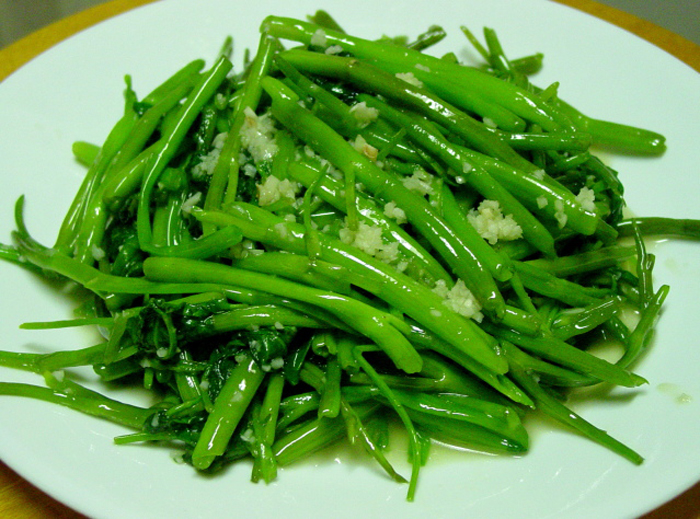
Ingredients:
- ½ or 1 bundle of water spinach or Ong Choy
- 4 cloves garlic crushed
- 2-3 tbsp fish sauce
- 2-3 tbsp canola or vegetable oil
- pinch of salt and pepper to taste
Directions:
- Cut Swamp cabbage into 3-4 inch segments and discard 2 inches of the lower end of a stalk. Clean it carefully. Rinse at least two times to remove dirt or residue. Then drain it.
- Heat the large pan with oil and put crushed garlic. Stir fry the crushed garlic over medium to high heat till it is golden brown. Set half of the garlic aside and remaining some garlic in a pan.
- Then add Swamp cabbage till it is wilt. Add some salt to release water. Reduce heat and cover it for about 1 to 2 minutes. Then add 1-2 tbsp. salted fish sauce, salt, and pepper. The stalks should be slightly crisp.
- Garnish with fried garlic which was set aside.
Water spinach tossed with ginger and preserved bean curd
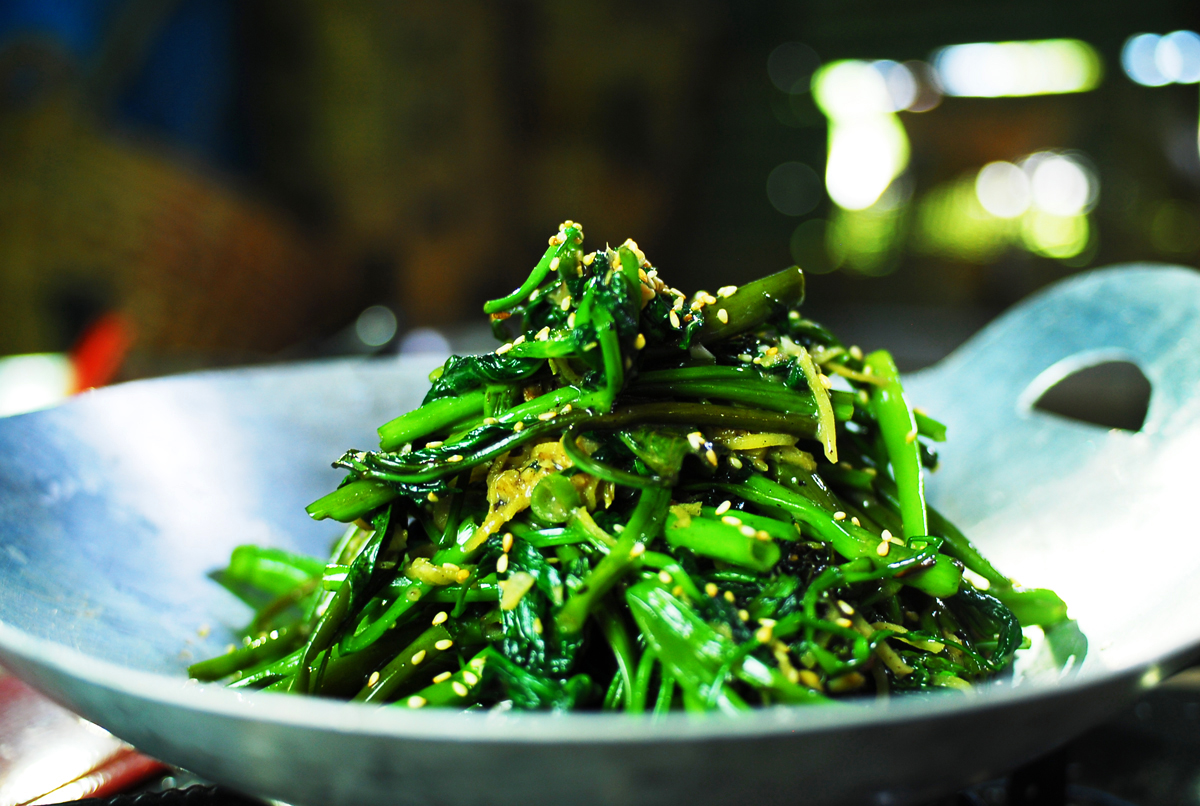
Ingredients:
- 1 tbsp. vegetable oil
- 1 tbsp. julienned ginger
- 1 garlic clove, finely diced
- 200 g water spinach, ton into 5 cm lengths
- 1 tbsp. fermented bean curd
- 2 tsp. sugar
- Pinch of salt
- ½ tsp. toasted sesame seeds
Instructions:
- Heat the wok with oil over high heat. Then add ginger, garlic and stir-fry it. Add Swamp cabbage and cook it till it wilts.
- Add sugar, bean curd, and salt and stir-fry it for another 3 minutes.
- Garnish it with sesame seeds which are toasted.
- Then serve with a jasmine juice.
References
- https://www.ncbi.nlm.nih.gov/pmc/articles/PMC3649719/
- https://www.ncbi.nlm.nih.gov/pmc/articles/PMC3949128/
- https://link.springer.com/book/10.1007/978-0-387-30443-4
- https://www.ncbi.nlm.nih.gov/pmc/articles/PMC4644575/
- https://www.ams.usda.gov/grades-standards/vegetables
- https://www.nal.usda.gov/fnic/fruit-and-vegetable-information
- https://plants.usda.gov/home/plantProfile?
- https://www.ars.usda.gov/plains-area/gfnd/gfhnrc/docs/
- https://www.ers.usda.gov/topics/crops/vegetables-pulses/
- https://www.fas.usda.gov/commodities/fruits-and-vegetables
- https://www.ers.usda.gov/data-products/vegetables-and-pulses-data/vegetables-and-pulses-yearbook-tables/
- https://www.fda.gov/food/food-labeling-nutrition/nutrition-information-raw-vegetables
- https://www.fda.gov/food/food-labeling-nutrition/nutrition-information-raw-fruits-vegetables-and-fish
- https://www.fda.gov/media/70792/download
- https://www.who.int/elena/titles/fruit_vegetables_ncds/en/
- https://www.sciencedirect.com/topics/agricultural-and-biological-sciences/fruit-vegetable
- https://www.sciencedirect.com/topics/food-science/fruit-vegetable
- https://www.sciencedaily.com/vegetables
- https://doi.org/10.1016/B978-0-12-823380-1.00013-7
- https://www.researchgate.net/publication/227160213_Vegetables_and_Vegetable_Products
- https://www.researchgate.net/journal/Journal-of-Vegetable-Crop-Production-1540-7357
- https://www.cancer.gov/about-cancer/causes-prevention/risk/diet/cruciferous-vegetables-fact-sheet
- https://www.cdc.gov/pcd/issues/2016/16_0259.htm
- https://onlinelibrary.wiley.com/doi/book/10.1002/9780470958346
- https://academic.oup.com/jn/article/128/10/1731/
- https://nutrition.org/
- https://www.gbif.org/species/
- https://en.wikipedia.org/wiki/Vegetable
- https://en.wikipedia.org/wiki/List_of_root_vegetables
- https://en.wikipedia.org/wiki/Leaf_vegetable
- https://en.wikipedia.org/wiki/List_of_vegetables
- https://en.wikipedia.org/wiki/Lists_of_foods
- https://www.fao.org/fruits-vegetables-2021/en/
- https://www.itis.gov/servlet/SingleRpt/SingleRpt?
- https://www.fao.org/in-action/inpho/crop-compendium/fruits-vegetables/en/
- https://www.fao.org/family-farming/detail/en/c/1364793/
- https://books.google.com/books/about/Vegetables.html?id=Ce_wAAAAMAAJ
- https://books.google.com/books/about/Vegetables.html?id=6jrlyOPfr24C
- https://nutritiondata.self.com/facts/
- https://www.cabi.org/isc/datasheet/
- https://www.myplate.gov/eat-healthy/vegetables
- https://www.nature.com/articles/162910b0
- https://www.tandfonline.com/doi/abs/10.1080/13669870802380825
- https://www.cochranelibrary.com/cdsr/doi/10.1002/14651858.CD008552.pub2/abstract
- https://www.forbes.com/sites/daphneewingchow/2021/02/28/five-reasons-why-sea-vegetables-could-be-the-future-of-produce/
- https://pfaf.org/USER/Plant.aspx?
- https://https://www.attainable-sustainable.net/five-ways-to-use-beet-greens/plants.ces.ncsu.edu/plants/
- http://www.theplantlist.org/
- https://www.nutritionvalue.org/
- https://snaped.fns.usda.gov/seasonal-produce-guide/
- https://www.canr.msu.edu/news/enjoy_the_taste_and_health_benefits_of_winter_squash
- https://www.livekindly.co/ways-winter-squash-can-improve-your-health/
- https://www.eatingwell.com/article/7871849/health-benefits-of-winter-squash/
- https://www.webmd.com/food-recipes/butternut-squash-health-benefits
- https://www.organicauthority.com/health/8-incredible-nutrition-and-health-benefits-of-butternut-squash
- https://www.organicfacts.net/winter-squash.html
- https://www.nutrition-and-you.com/butternut-squash.html
- https://www.onegreenplanet.org/natural-health/health-benefits-fall-squash-buttercup-turban-carnival/
- https://eatwellenjoylife.com/winter-squash-recipes-health-benefits/
- https://drhealthbenefits.com/food-bevarages/fruits/benefits-of-acorn-squash
- https://www.nutritionletter.tufts.edu/general-nutrition/beyond-pumpkin-harvest-the-health-benefits-of-winter-squash/