Technically speaking, capers are flower buds that are harvested from a bush called Capparis spinosa. The plant also known as Capers, Cabra, caper Bush, Capparis rupestris, caper, Cappero, Caprier, Caprier Épineux, Capre, Caprés, Fabagelle, Himsra is a perennial plant that bears rounded, fleshy leaves and large white to pinkish-white flowers. The plant is thrives across Mediterranean rim mainly from Spain to Israel. The salt water tolerant plant can survive and even flourish in extreme drought. Normally it prefers warm, humid climate and grows in abundance all over the Cyprus, Italy, Greece, North African and some Asia Minor regions. Capers are often used as a seasoning and are usually consumed pickled. Apart from that other species of Capers are also picked along with C. spinosa for their buds or fruits. Other parts of Capers plants are used in the manufacture of medicines and cosmetics.
Plant
Capers are scrambling, sprawling, spiny, evergreen shrub that grows well in warm humid climate throughout the world. Leaves are small, 2 inch long, round to ovate, dark green, semi-succulent and are evergreen. Leaf stipules develop a pair of sharp hooked spines at the base of each leaf petiole. Hands are easily scratched when collecting capers and clothing may catch on the hooked spines when brushing up against a shrub. The shrub begins producing flower (caper) buds from the third year of plantation. As mentioned before, capers are unopened flower buds of the Capparis spinosa plant. Flower buds are picked just before opening when still tight, washed in salt water to remove sand, dried, and finally salted down or pickled in vinegar. Buds are often picked daily because the youngest buds have the best quality.
When Capparis spinosa buds are allowed to mature, they give way to attractive white-petaled flowers (2-3 inch across) with pale purple stamens bloom on long pedicils rising from the leaf axils. Flowers may only last one day, but bloom abundantly from May to early autumn. The flowers ultimately produce oblong, multi-seeded, edible fruits known as caper berries. Caper berries and young shoots with leaves may also be picked and pickled.
Health benefits of Capers
Capers have a pleasant flavor with surprising health benefits. Capers are one of the delicious plants that are grown in the Mediterranean regions. They are used widely in preparation of Mediterranean cuisines. Capers are a storehouse of essential vitamins and other nutrients such as Vitamin A, Vitamin B12, Vitamin E, Vitamin K, fiber and niacin. The nutritional benefits contained in Capers proficiently cures infection, digestive disorders, cancer, diabetes etc. It improves metabolic rate of a person. This way your digestion system is supported and remains healthy. In this article we will tell you about few of the health benefits of Capers for our body
1. Good for Diabetes
Capers are quite beneficial for people suffering from diabetes. Research has shown that Capers have substances which have beneficial effects for people suffering from Diabetes.
Capers help to reduce the high blood sugar levels, high cholesterol levels and correct the functioning of liver in Diabetic people. Capers reduce the levels of triglycerides in Diabetic people. They also showed no side effects on kidneys and liver. (1), (2)
2. Good for people aiming for weight loss
If you want to lose excess body weight, you need to maintain a diet low in carbohydrates and calories. You also need to incorporate a diet rich in fiber that helps in making us satiated for a long time.
Capers are a perfect combination of high fiber content and low calories. They are really good for people wanting to shed extra pounds from their body.
3. Lowers cholesterol
Cholesterol like LDL and VLDL, triglycerides in excess amounts can damage our body and causes diseases of the heart, brain, etc. Capparis spinosa or capers extracts have shown to reduce the levels of all these harmful lipids in the body as per a research study.(3)
4. Healthy Bones
Capers consist of good amount of Vitamin K that helps to increase the density of your bones. It help to lowers the chances of bone-related issues such as osteoporosis, arthritis etc. which happens due to reduction in bone density.
5. Protects from harmful ultraviolet rays
As we all know that UV rays can even lead to skin cancers like melanoma. Certain compounds in capers have photo protective properties. They protect us from harmful UV rays and reduce the redness or erythema of skin caused by UV rays. Used it frequently to get benefited.(4)
6. Protects from allergies
Extracts of Capparis Spinosa or capers have also shown anti-allergic effects. Allergies can cause symptoms ranging from mild skin irritation of rash to life-threatening bronchospasm or constriction of bronchus and shortness of breath.
Allergic reaction is cured by certain substances like histamine, mast cells, etc. Capers have substances which have antihistaminic effects and they also control the mast cells which lead to allergic reactions. People suffering from allergies can surely benefit from capers consumption.(5)
7. Prevent Cancer and Skin Ailments
Caper consists of good amount of useful flavonoids like rutin and quercetin which makes it beneficial in preventing cancer and skin ailments. Capers are also good source of Vitamin E that helps to maintain the uniformity of the cells contained by the mucus membrane. People who are suffering from serious skin disorders such as eczema; psoriasis etc. gets benefited by this wonder fruit.(6)
8. Boosts immunity
Capers were studied for their ability to boost immunity. As per the study conducted on certain animals, capers enhanced the immunity levels and made the animals very strong and capable of fighting infections.
Extracts of capers have increased the phagocytic activity in these animals. Phagocytes are the cells which engulf harmful microbes like bacteria. They also encouraged the action of cytokines, which are very important immune modulatory substances. People consuming capers frequently will surely enjoy a strong immune system and good overall health.(7)
9. Helps in Digestion
Capers are loaded with fiber that helps in weight management and supports digestion. Numerous types of chronic digestion issues like constipation are easily cured on consuming this amazing fruit. It eases the movement of bowel in the body and its elimination from the body.
10. Moistens Skin
Regular Intake of capers in your diet is considered to be good for your skin. This provides moisture to your skin and gives relief from dryness and other related dry skin problems.(8)
11. Treats anemia
Anemia is the lack of sufficient hemoglobin in the blood. This leads to excessive tiredness, fatigue if mild and shortness of breath and even heart failure if very severe.
Capers consist of good amount of iron which promotes the formation of hemoglobin in the body and cures anemia. They also have vitamin C which enables the absorption of iron from the alimentary system.
12. Help in relieving congestion
Many people suffer from excess production of phlegm or mucus which gathers in the chest and respiratory passages. This leads to chest tightness, pain in the chest, etc. Capers make the respiratory tract healthy, get rid of excess mucus or phlegm and relieve the congestion.
13. Stronger Teeth
Capers have been an excellent source of various minerals such as iron, copper, calcium and sodium. Calcium is very beneficial for preserving the density of bones and teeth in your body. Consumption of capers keeps your teeth strong and healthy. Problems like tooth decay, broken and brittle teeth, swollen gum and other tooth issues can be easily avoided with regular consumption of this fruit.
14. Anti-Ageing
Capers are a powerhouse of antioxidants they help to get rid of aging symptoms like wrinkles, fine lines and looseness of skin. These radicals initiate oxidization reaction in the body and destroy the tissues and cells. It throws out harmful elements and toxins from the body to avoid the occurrence of skin disorders.
15. Good for Eyes
Capers consist of good amount of vitamin A that is considered to be very beneficial for healthy vision. It also helps in treating eye problems and associated cancers.
16. Get rid of flatulence
Improper digestion leads to excess production of gas in the intestines. This excess gas is released out like flatus. Flatulence can be a really awkward problem. It makes us lose self-confidence when we are out in amongst the people. Capers improve digestion, maintain the health of digestive tract and help us to get rid of flatulence.
17. Reduces Skin Disorders
Capers are enriched with Vitamin E and antioxidants, capers show calming action towards a wide range of skin disorders like irritation, rashes, acne, redness, pimples and inflammation. Because of this it is one of the special ingredients in variety of skin care and cosmetic products.
18. Healthy Hair
Capers consist of good amount of Vitamin B and iron which makes it one of the most advantageous fruit for promoting hair growth and prevention of hair loss. Vitamin B is very essential for ensuring adequate and smooth flow of blood in the scalp. This makes hairs roots, hair strands and scalp strong, healthy, shiny and nourished.
19. Relieves constipation
As we have mentioned before, Capers are a rich source of fiber. The fiber in the diet is totally essential for maintaining a healthy digestive system. Lack of sufficient fiber in the diet leads to constipation which is very troublesome.
Constipation, in turn, can lead to many other problems like piles or hemorrhoids, anal fissure, etc. which are very painful. A caper with their high fiber content helps us get rid of constipation and prevent the complications of constipation. Fiber in capers absorbs water and makes stool very soft and easy to pass through our gut.
History of Capers
Capers are native to the Mediterranean region and in some parts of Asia. Capers are supposed to have been in existence since 2,000 BC. They were first mentioned as an ingredient in the book, Gilgamesh, considered as the oldest written story in the world and found on ancient Sumerian clay tablets. In the Bible, in the book of Ecclesiastes, caper berries were known for its aphrodisiac properties. The Hebrew word for caper berry was closely attributed to the Hebrew word for desire.
Both Apicius, believed to have first written a cooking book in the first century, and Dioscorides, a pharmacologist who served as a surgeon to Nero’s armies, made mention of capers. The ancient Greeks and Romans have used capers not only for culinary purposes but were also used as medicines. The ancient Greece made use of capers to prevent flatulence.
Other Medicinal Uses of Capers
- Boils: Grind the bark with water and apply on the boils twice a day.
- Heartburns: Boil the leaves, strain, cool and drink twice a day.
- Stomach Diseases: Extract the juice of the bark and take one tbsp twice a day.
- Constipation: Extract the juice of the bark and take one tbsp twice a day or prepare bark decoction and take one tbsp with luke warm water.
- Fever: Take some leaves, soak in a jug of water and drink it whole day.
- Anorexia: Prepare bark decoction and take one tbsp with luke water.
- Indigestion: Take some leaves, soak in a jug of water and drink it whole day.
- Baldness: Take a Bark of Caper and Indian Mulberry. Grind them together and cook it with mustard oil and apply on Scalp daily.
- Kidney Stone: Take equal amount of caper roots, caper thorns, milk thistle, Aerva lanata, pavonia. Grind them together. Boil in water till it remains one fourth. Have 3 tbsp twice a day.
Traditional Medicinal benefits of Capers
- Root bark is used internally in the treatment of gastrointestinal infections, diarrhea, gout and rheumatism.
- Externally, it is used to treat skin conditions, capillary weakness and easy bruising.
- Stem bark if taken before meals it will increase the appetite.
- Unopened flower buds are laxative.
- They are used internally in the treatment of coughs, and externally to treat eye infections.
- Decoction of the plant is used to treat vaginal thrush.
- Leaves are bruised and applied as a poultice in the treatment of gout.
- Caper parts have been used to relieve rheumatic pain in traditional medicines.
- Caper pickles traditionally added to recipes as an appetite stimulant.
- They help reduce stomachache and flatulence conditions.
Culinary Uses
- Flower buds are pickled and used as a flavoring in sauces, salads etc.
- Young fruits and tender branch tips can also be pickled and used as a condiment.
- Flower buds are harvested in the early morning and wilted before pickling them in white vinegar.
- Young shoots are cooked and used like asparagus.
- Unopened flower buds of this shrub are picked and preserved in salt or pickled in vinegar as the culinary capers which are now enjoyed world-wide as garnishes or as pungent flavor additives to a large number of foods including sauces, butters, salads, fish, meats, pizza toppings and hors d’oeuvres.
- Capers are used to bring flavor in a variety of sauces including remoulade or tartare.
- They are great when cooked with cheese.
- Pickled buds used as a flavoring in antipasto salads and as a topping in pizzas.
- Salted and pickled caper bud (called simply a caper) is often used as a seasoning or garnish.
- Mature fruit of the caper shrub are prepared similarly and marketed as caper berries.
- Capers are a distinctive ingredient in Italian cuisine, especially in Sicilian, Aeolian and southern Italian cooking.
- They are commonly used in salads, pasta salads, meat dishes, and pasta sauces.
- Capers are known for being one of the ingredients of tartar sauce.
- They are often served with cold smoked salmon or cured salmon dishes (especially lox and cream cheese).
- Capers and caper berries are sometimes substituted for olives to garnish a martini.
- Dried caper leaves are also used as a substitute for rennet in the manufacturing of high-quality cheese.
Other facts
- An extract of the root is used as a cosmetic and is particularly useful in treating rose-colored rashes and capillary weaknesses.
- Capers are the unripe flower buds of Capparis spinosa.
- Smaller capers are found to be more flavorful than larger ones and are considered to be more expensive than the latter.
- The capers are often found clinging from rocks, or protruding out of cracks or walls, along the mountains.
- Capers may be preserved in many ways- salt, brine, wine, vinegar, or oil.
- In the present time, capers flourish in the Mediterranean and other countries like Algeria, Spain, Italy, Morocco, and France.
- Capers are handpicked as they can be too sensitive and tender to be harvested using machines.
Precautions
- If you are on a low sodium diet you should avoid capers since they are a rich source of sodium.
- Common sign of eating excess capers is extreme thirst. So try to consume it in moderate amounts.
- Capers retain water naturally since they contain a high amount of sodium. Hence this water retention can make you feel bloated. Be careful about eating excessive amount of capers.
- If you suffer from high blood pressure you should avoid eating capers. Excess sodium increases blood volume since it retains water. Excess sodium intake could put the body at risk for heart diseases.
- Capers increase the risk of developing osteoporosis. Sodium decreases your bone density which causes them to lose strength. It also prevents your body from absorbing calcium, which is crucial for building and retaining bone health. The weak bone condition often leads to osteoporosis. And if you already have osteoporosis, better stay away from capers.
- Capers should be avoided when you are pregnant or are undergoing any surgery.
Selection and storage
If you are not from the countryside, then you most likely can find these beautiful tiny olive-green buds filled in a small, tall glass jar submerged in their pickling medium in the spice stores and groceries. Pickled capers can be readily available around the year in the markets.
Traditionally, buds washed in the cold water soon after their harvest and allowed to dry in the sun for few hours before being put into tall jars containing vinegar, brine, or olive oil. Alternatively, they can also be preserved in sea salt alone.
In general, small sized buds (less than 1 cm diameter) are considered more flavorful and therefore, preferred over the larger ones (more than 1 cm diameter). Capers should be preserved by immersing in the pickling medium; otherwise, they will soon become flavorless. Once you open the jar, make sure the bottle is refrigerated for future use. Use stainless steel spoon or fork to fish them out from the container.
Recipe using Capers
1. Mediterranean Lentil Salad
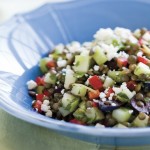
Ingredients
- 1 cup French green lentils (Le Puy)
- 1/2 cup very thinly sliced red onion (use a mandolin if you have one)
- 1 cup loose parsley leaves
- 1/2 cup loose torn basil
- 8 – 10 sun-dried tomatoes, halved or sliced
- 2 Tbs. capers
- 1/4 cup toasted pine nuts
- 1/3 cup grapeseed oil (or extra-virgin olive)
- 3 Tbs. fresh lemon juice
- fresh parmesan shavings (optional)
- pinch of salt and pepper
Directions
- Cook the lentils in the great deal of water in a rolling boil, till tender but still toothy, around 30 minutes. Drain, as needed. Transfer into a large serving bowl.
- To the bowl, add the red onion, parsley, basil, tomatoes, capers and toasted pine nuts.
- In a smaller bowl, whisk together the oil, lemon juice, and also the pinch of salt and pepper. Drizzle dressing over lentils.
- Give everything a good toss. Taste it. Lordy be. Add more salt or lemon juice as needed. Serve along with parmesan shavings if desired.
2. Classic Chicken Piccata

Ingredients
- 2 large lemons
- 6 boneless, skinless, chicken breasts, trimmed and pounded until 1/4 inch thick
- 1 pinch salt
- 1 pinch black pepper
- 1/2 cup flour
- 4 tablespoons olive oil
- 1 small shallot, minced (about 2 tablespoons)
- 1 cup low-sodium chicken broth
- 2 tablespoons capers, drained
- 3 tablespoons unsalted butter, softened
- 2 tablespoons fresh parsley, minced
- Couscous or angel hair pasta, for serving
Directions
- Cut one lemon in half lengthwise. Trim the ends from one half and also cut across into thin slices about 1/8 inch thick; set aside. Juice the remaining half and whole lemon to acquire about 1/4 cup juice; set aside.
- Season both sides of the chicken breasts generously along with salt and pepper. Put flour in a shallow dish or pan. Coat each breast with flour, and shake to eliminate excess.
- Heat 2 tablespoons of olive oil in the large, heavy-bottomed skillet over medium-high heat till hot, about 2 minutes. Cook half the batch within the skillet without moving them till lightly browned on the first side, 2 to 2 1/2 minutes. Turn and cook till the second side is lightly browned, 2 to 2 1/2 minutes longer. Transfer into a plate kept warm within the oven, or cover with aluminum foil. Add the remaining 2 tablespoons of oil to the skillet and heat till shimmering. Add remaining chicken pieces and repeat. Add cooked chicken to previous batch and keep warm in 200 degree oven.
- Using the pan in which you cooked the chicken, sauté the shallots within the oil and browned bits remaining in the pan. Once shallots become translucent, add the chicken broth and lemon slices. Let it cook till lemon slices are well-softened.
- Add the capers and lemon juice, and allow to lessen to concentrate flavors. Remove pan from heat and swirl within the butter till it melts and thickens the sauce. Swirl in the parsley. Spoon over chicken and serve immediately over a bed of couscous or angel hair pasta.
3. N’duja Crusted Cod With Broccoli, Chilli And Pinenuts
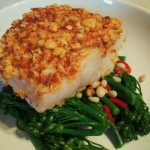
Ingredients
- White bread Slice 1
- Flatleaf parsley, finely chopped 4 Tablespoons
- Anchovies, drained, finely chopped 2
- Egg, hard-boiled, cooked white only, finely chopped 1
- N’duja (or any spreadable pork sausage) 110 Grams Tender-stem broccoli, washed and trimmed into flor 300 Grams
- Cod fillets x 4 175 Grams
- Salt 1 Pinch
- Extra virgin olive oil 2 Tablespoons
- Garlic, finely chopped Clove 1
- Red chili, finely chopped 1
- Pine nuts 1 Tablespoon
- Pepper 1 Pinch
Directions
- In a food processor overwhelm the bread, parsley, anchovies, cooked egg white as well as N’Duja and bend to a paste.
- Spread the paste between two sheets of greaseproof paper and chill within the fridge until firmed up.
- Preheat the oven to 200 centigrade /gas mark 6.
- Blanch the broccoli in the pan of salted, boiling water for 3-4 minutes, or until tender.
- Drain well and set aside to cool.
- When the crust has firmed up, season the cod fillets with salt and pepper.
- Cut the layer of paste into four pieces which are exactly the same size as each cod fillet.
- Place one on top of each piece of cod.
- Place the N’duja-crusted cod fillets onto a baking tray and roast in the oven for 6-8 minutes.
- Meanwhile, heat a glug of olive oil in the pan and lightly saute the garlic and chilli till the garlic is golden-brown.
- Add the pine nuts and also the broccoli and stir-fry for 1-2 minutes, or until warmed through.
- Season, to taste, with salt and pepper.
- To serve, spoon the broccoli in the centre of four serving plates. Place one N’duja-crusted cod fillet on top of each portion.
4. Vitello Tonnato Burger

Ingredients
Burgers
- 1 1/2 pounds best-quality ground veal
- shallot, finely diced
- 2 ounces capers, rinsed and coarsely chopped
- zest of 1 lemon
- a handful of flat-leaf parsley, finely chopped
- drizzle of olive oil
- sea salt and black pepper
- 4 ciabatta rolls halved
- 1 bunch watercress, washed
Tonnato sauce
- 2 egg yolks
- 2 tablespoons lemon juice
- 5 salted anchovy fillets, finely chopped
- 3/4 cup olive oil
- 7 ounces canned sustainable tuna in olive oil, drained
- 1 tablespoon salted capers, rinsed
- splash of white wine vinegar
- squeeze of lemon juice
Crispy capers
- 3 tablespoons olive oil
- 2 tablespoons capers, rinsed and dried
Directions
For the burgers
- Mix together the veal, shallots, capers, lemon zest, parsley and olive oil. Season with pepper along with a little salt (little – the capers are salty).
- Taste for seasoning-if you don’t would like to try the mix raw, cook off a teaspoon or so and then taste.
- Divide the mix into four and shape into balls. Refrigerate for about 1 hour. Shape into burgers about 2-2 1/2 inches in diameter.
To make the sauce
- Whisk together the egg yolks, lemon juice, and anchovies in a food processor till smooth. Then, using the motor running, add the oil in the thin, steady stream.
- Add half the tuna and the capers. Pulse, sufficient to combine, then fold through the remaining tuna. (If making by hand, you might want to coarsely chop the tuna and capers to break them down a little).
- Finish by whisking in the little vinegar and lemon juice to taste. Chill until required – the sauce could keep for up to three days within the refrigerator.
For the crispy capers
- Heat the oil in a tiny pan. Once hot, carefully add the capers and cook over medium heat until crisp (1-2 minutes). Remove through the pan and drain on paper towels.
To cook the burgers
- Preheat a grill pan or outdoor grill.
- Drizzle burgers with olive oil and cook for 2-3 minutes on either side, according to your taste preference.
- Drizzle the ciabatta rolls with olive oil and lightly toast, then spread along with tonnato sauce, layer with a few watercress, and top with a burger.
- Garnish along with crispy capers, if utilizing. Serve along with extra sauce on the side.
5. Eggplant Caponata

Ingredients
- 1 cup celery, diced
- 1 cup carrots, diced
- large yellow onion, diced small
- 1 1/2 cups olive oil
- 5 cloves garlic, crushed (not minced)
- large eggplants, half the skin removed in strips with a vegetable peeler, cut into 1-inch chunks
- 1/2 cup capers in water, drained
- 1 1/2 cups pitted green olives, sliced
- 1 cup pine nuts
- 2 tablespoons brown sugar
- 1/2 cup red wine vinegar
- 2 cups tomato sauce, mixed with 2 tablespoons tomato paste
- 1 bunch basil, leaves only
- Salt and pepper
- zest of 1 lemon
- mint leaves, for garnish
Directions
- In a big Dutch oven, combine the celery, carrots and onion together with the olive oil. Cook over medium heat till the vegetables are nicely caramelized, then add the garlic and cook for an additional 3 minutes.
- Next add the eggplant, tossing and stirring the chunks since they heat up to help them absorb all of the oil. Once they’ve released a bit of water, turn the heat to high and keep stirring. After about 10 minutes, the eggplant will begin to get softer and will also be reduced in size. Then add the capers, olives, and pine nuts, and cook for another 5 minutes.
- Add the brown sugar and the vinegar, and as soon since the vinegar has reduced add the tomato sauce combined with the tomato paste. Cook for an additional Ten minutes and add the basil. Season with salt and pepper. Turn the heat down to medium and cook till the tomato sauce is completely reduced and there is no trace of water left.
- Remove from heat and let rest for around 30 minutes. Serve along with lemon zest and mint on top.
References
- https://www.itis.gov/servlet/SingleRpt/SingleRpt?
- http://www.hear.org/pier/species/pyrus_calleryana.htm
- https://npgsweb.ars-grin.gov/gringlobal/taxon/taxonomydetail?
- https://pfaf.org/user/Plant.aspx?
- https://www.wildflower.org/plants/result.php?
- http://www.missouribotanicalgarden.org/PlantFinder/PlantFinderDetails.aspx?
- https://plants.usda.gov/core/profile?
- https://www.invasive.org/browse/subinfo.cfm?
- https://www.cabi.org/isc/datasheet/46188
- https://www.cal-ipc.org/plants/profile/pyrus-calleryana-profile/
- http://www.efloras.org/florataxon.aspx?
- https://texasinvasives.org/plant_database/detail.php?
- http://www.iucngisd.org/gisd/species.php?
- http://www.theplantlist.org/tpl1.1/record/rjp-6009
- https://en.wikipedia.org/wiki/vegetables
- https://gd.eppo.int/taxon/PYUCA
- https://www.illinoiswildflowers.info/savanna/plants/
- https://uses.plantnet-project.org/en/
- https://www.theplantlist.org/tpl1.1/record/
- https://training.ars-grin.gov/gringlobal/taxon/taxonomydetail?
- http://hort.ufl.edu/database/documents/pdf/tree_fact_sheets/
- https://www.illinoiswildflowers.info/trees/plants/callery_pear.htm
- https://www.ncbi.nlm.nih.gov/books/NBK218749/
- https://www.ncbi.nlm.nih.gov/books/NBK551014/
- https://www.ncbi.nlm.nih.gov/books/NBK551727/
- https://www.ncbi.nlm.nih.gov/books/NBK65874/
- https://www.ncbi.nlm.nih.gov/books/NBK304428/
- https://www.ncbi.nlm.nih.gov/books/NBK218759/
- https://www.ncbi.nlm.nih.gov/books/NBK556048/
- https://www.ncbi.nlm.nih.gov/books/NBK218749/
- https://www.niehs.nih.gov/health/topics/agents/vegetables/index.cfm
- https://www.sciencedirect.com/book/9780443062414/vegetable
- https://www.amazon.com/Essential-Oils-Fully-Revised-Updated/dp/1787752291
- https://www.healthbenefitstimes.com/category/herbs-and-spices/
- https://www.frontiersin.org/articles/257193
- https://www.tandfonline.com/toc/tjeo20/current
- https://www.intechopen.com/chapters/68027
- https://onlinelibrary.wiley.com/doi/full/10.1002/ptr.6854
- https://www.nature.com/articles/s41598-020-68823-4
- https://www.cancer.gov/about-cancer/treatment/cam/patient/aromatherapy-pdq
- https://www.researchgate.net/publication/254247133_
- https://link.springer.com/article/10.1365/s10337-010-1680-0
- https://fdc.nal.usda.gov/ndb/foods/show/herb
- https://www.nccih.nih.gov/health/herbsataglance
- https://portal.nifa.usda.gov/web/crisprojectpages/0092887
- https://academic.oup.com/database/article/doi/10.1093/database/bau120
- https://www.cambridge.org/core/journals/weed-science/article/herbicide-effects-of-vegetable/
- https://www.fs.fed.us/wildflowers/ethnobotany/vegetable
- https://www.karger.com/Article/Abstract/501062
- https://en.wikipedia.org/wiki/List_of_plant
- https://en.wikipedia.org/wiki/Types_of_plant_harb
- https://www.britannica.com/topic/
- https://www.planttherapy.com/
- https://academic.oup.com/plphys/article/54/4/560/
- https://www.healthbenefitstimes.com/category/oils/
- https://www.aromaweb.com/essentialoils/default.asp
- https://books.google.com/books/about/Herbs_And_Essential_Oils_Book.html?
- https://books.google.com/books/about/Herbal_herb_for_Health_Beauty.html?id=C_MX9tKpttMC
- https://books.google.com/books/about/Herbal_vegetable_for_Health_Beauty.html?id=C_MX9tKpttMC
- https://www.niehs.nih.gov/health/topics/agents/
- https://www.botanical.com/botanical/mgmh/l/
- https://www.nccih.nih.gov/health/atoz
- https://www.inaturalist.org/taxa
- https://clinicaltrials.gov/ct2/show/NCT02764567
- https://fda.report/Company/Young-Living-Essential-Oils-Lc
- http://www.fao.org/3/ad420e/ad420e.pdf
- https://www.healthywa.wa.gov.au/Articles/A_E/
- https://www.niehs.nih.gov/health/topics/agents/
- https://www.consumerreports.org/health-product-recalls/
- http://www.theplantlist.org/tpl/record/gcc-128727https://plants.usda.gov/core/profile?symbol=CASP28https://www.itis.gov/servlet/SingleRpt/SingleRpt?search_topic=TSN&search_value=505885#nullhttp://davesgarden.com/guides/pf/go/97056/http://www.pfaf.org/user/Plant.aspx?LatinName=Capparis+spinosahttp://www.missouribotanicalgarden.org/PlantFinder/PlantFinderDetails.aspx?taxonid=278921http://www.floracatalana.net/capparis-spinosa-l-subsp-rupestris-sm-nymanhttps://en.wikipedia.org/wiki/Caper