Nutrient Metabolism defines the molecular fate of nutrients and other dietary compounds in humans, as well as outlining the molecular basis of processes supporting nutrition, such as chemical sensing and appetite control. It focuses on the presentation of nutritional biochemistry, and the reader is given a clear and specific perspective on the events that control the utilization of dietary compounds. Slightly over 100 self-contained chapters cover all essential and important nutrients as well as many other dietary compounds with relevance for human health. An essential read for healthcare professionals and researchers in all areas of health and nutrition who want to access the wealth of nutrition knowledge available today in one single source.
Connecting Other Sugars to Nutrient Metabolism
Sugars, such as galactose, fructose, and glycogen, are catabolized into new products in order to enter the glycolytic pathway.
Key Points
When blood sugar levels drop, glycogen is broken down into glucose -1-phosphate, which is then converted to glucose-6-phosphate and enters glycolysis for ATP production.
In the liver, galactose is converted to glucose-6-phosphate in order to enter the glycolytic pathway.
Fructose is converted into glycogen in the liver and then follows the same pathway as glycogen to enter glycolysis.
Sucrose is broken down into glucose and fructose; glucose enters the pathway directly while fructose is converted to glycogen.
Key Terms
- disaccharide: A sugar, such as sucrose, maltose, or lactose, consisting of two monosaccharides combined together.
- glycogen: A polysaccharide that is the main form of carbohydrate storage in animals; converted to glucose as needed.
- monosaccharide: A simple sugar such as glucose, fructose, or deoxyribose that has a single ring.
You have learned about the catabolism of glucose, which provides energy to living cells. But living things consume more than glucose for food. How does a turkey sandwich end up as ATP in your cells? This happens because all of the catabolic pathways for carbohydrates, proteins, and lipids eventually connect into glycolysis and the citric acid cycle pathways.
Metabolic pathways should be thought of as porous; that is, substances enter from other pathways, and intermediates leave for other pathways. These pathways are not closed systems. Many of the substrates, intermediates, and products in a particular pathway are reactants in other pathways. Like sugars and amino acids, the catabolic pathways of lipids are also connected to the glucose catabolism pathways.

Glycogen Pathway: Glycogen from the liver and muscles, hydrolyzed into glucose-1-phosphate, together with fats and proteins, can feed into the catabolic pathways for carbohydrates.
Glycogen, a polymer of glucose, is an energy-storage molecule in animals. When there is adequate ATP present, excess glucose is shunted into glycogen for storage. Glycogen is made and stored in both the liver and muscles. The glycogen is hydrolyzed into the glucose monomer, glucose-1-phosphate (G-1-P), if blood sugar levels drop. The presence of glycogen as a source of glucose allows ATP to be produced for a longer period of time during exercise. Glycogen is broken down into G-1-P and converted into glucose-6-phosphate (G-6-P) in both muscle and liver cells; this product enters the glycolytic pathway.

Glycogen Structure: Schematic two-dimensional cross-sectional view of glycogen: A core protein of glycogen is surrounded by branches of glucose units. The entire globular granule may contain around 30,000 glucose units.
Galactose is the sugar in milk. Infants have an enzyme in the small intestine that metabolizes lactose to galactose and glucose. In areas where milk products are regularly consumed, adults have also evolved this enzyme. Galactose is converted in the liver to G-6-P and can thus enter the glycolytic pathway.
Fructose is one of the three dietary monosaccharides (along with glucose and galactose) which are absorbed directly into the bloodstream during digestion. Fructose is absorbed from the small intestine and then passes to the liver to be metabolized, primarily to glycogen. The catabolism of both fructose and galactose produces the same number of ATP molecules as glucose.

Fructose Metabolism: Although the metabolism of fructose and glucose share many of the same intermediate structures, they have very different metabolic fates in human metabolism.
Sucrose is a disaccharide with a molecule of glucose and a molecule of fructose bonded together with a glycosidic linkage. The catabolism of sucrose breaks it down to monomers of glucose and fructose. The glucose can directly enter the glycolytic pathway while fructose must first be converted to glycogen, which can be broken down to G-1-P and enter the glycolytic pathway as described above.
Connecting Proteins to Glucose Metabolism Nutrient Metabolism
Excess amino acids are converted into molecules that can enter the pathways of glucose catabolism.
Key Points
Amino acids must be deaminated before entering any of the pathways of glucose catabolism: the amino group is converted to ammonia, which is used by the liver in the synthesis of urea.
Deaminated amino acids can be converted into pyruvate, acetyl CoA, or some components of the citric acid cycle to enter the pathways of glucose catabolism.
Several amino acids can enter the glucose catabolism pathways at multiple locations.
Key Terms
- catabolism: Destructive metabolism, usually including the release of energy and breakdown of materials.
- keto acid: Any carboxylic acid that also contains a ketone group.
- deamination: The removal of an amino group from a compound.
Metabolic pathways should be thought of as porous; that is, substances enter from other pathways and intermediates leave for other pathways. These pathways are not closed systems. Many of the substrates, intermediates, and products in a particular pathway are reactants in other pathways. Proteins are a good example of this phenomenon. They can be broken down into their constituent amino acids and used at various steps of the pathway of glucose catabolism.
Proteins are hydrolyzed by a variety of enzymes in cells. Most of the time, the amino acids are recycled into the synthesis of new proteins or are used as precursors in the synthesis of other important biological molecules, such as hormones, nucleotides, or neurotransmitters. However, if there are excess amino acids, or if the body is in a state of starvation, some amino acids will be shunted into the pathways of glucose catabolism.

Connection of Amino Acids to Glucose Metabolism Pathways: The carbon skeletons of certain amino acids (indicated in boxes) are derived from proteins and can feed into pyruvate, acetyl CoA, and the citric acid cycle.
Each amino acid must have its amino group removed (deamination) prior to the carbon chain’s entry into these pathways. When the amino group is removed from an amino acid, it is converted into ammonia through the urea cycle. The remaining atoms of the amino acid result in a keto acid: a carbon chain with one ketone and one carboxylic acid group. In mammals, the liver synthesizes urea from two ammonia molecules and a carbon dioxide molecule. Thus, urea is the principal waste product in mammals produced from the nitrogen originating in amino acids; it leaves the body in urine. The keto acid can then enter the citric acid cycle.
When deaminated, amino acids can enter the pathways of glucose metabolism as pyruvate, acetyl CoA, or several components of the citric acid cycle. For example, deaminated asparagine and aspartate are converted into oxaloacetate and enter glucose catabolism in the citric acid cycle. Deaminated amino acids can also be converted into another intermediate molecule before entering the pathways. Several amino acids can enter glucose catabolism at multiple locations.
Oxidation of Carbohydrates, Proteins, and Fats Converge on the Tricarboxylic Acid Cycle
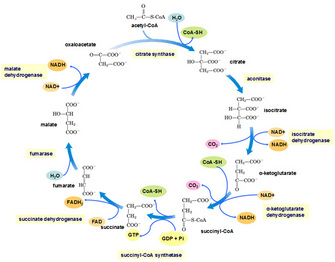
 Figure 3: Reactions of tricarboxylic acid cycle
Interconversion of energy between reduced coenzymes and O2 directs ATP synthesis, but how (and where) are NADH and FADH2 reduced? In aerobic respiration or aerobiosis, all products of nutrients’ degradation converge to a central pathway in the metabolism, the TCA cycle. In this pathway, the acetyl group of acetyl-CoA resulting from the catabolism of glucose, fatty acids, and some amino acids is completely oxidized to CO2 with concomitant reduction of electron transporting coenzymes (NADH and FADH2). Consisting of eight reactions, the cycle starts with condensing acetyl-CoA and oxaloacetate to generate citrate. The next seven reactions regenerate oxaloacetate and include four oxidation reactions in which energy is conserved with the reduction of NAD+ and FAD coenzymes to NADH and FADH2, whose electrons will then be transferred to O2 through the ETS. In addition, a GTP or an ATP molecule is directly formed as an example of substrate-level phosphorylation. In this case, the hydrolysis of the thioester bond of succinyl-CoA with concomitant enzyme phosphorylation is coupled to the transfer of an enzyme-bound phosphate group to GDP or ADP. Importantly, although O2 does not participate directly in this pathway, the TCA cycle only operates in aerobic conditions because the oxidized NAD+ and FAD are regenerated only in the ETS. Also noteworthy is that TCA cycle intermediates may also be used as the precursors of different biosynthetic processes.The TCA cycle is also known as the Krebs cycle, named after its discoverer, Sir Hans Kreb. Krebs based his conception of this cycle on four main observations made in the 1930s. The first was the discovery in 1935 of the sequence of reactions from succinate to fumarate to malate to oxaloacetate by Albert Szent-Gyorgyi, who showed that these dicarboxylic acids present in animal tissues stimulate O2 consumption. The second was the finding of the sequence from citrate to α-ketoglutarate to succinate, in 1937, by Carl Martius and Franz Knoop. Next was the observation by Krebs himself, working on muscle slice cultures, that the addition of tricarboxylic acids even in very low concentrations promoted the oxidation of a much higher amount of pyruvate, suggesting a catalytic effect of these compounds. And the fourth was Krebs’s observation that malonate, an inhibitor of succinate dehydrogenase, completely stopped the oxidation of pyruvate by the addition of tricarboxylic acids and that the addition of oxaloacetate in the medium in this condition generated citrate, which accumulated, thus elegantly showing the cyclic nature of the pathway.
Pathways for Nutrient Degradation that Converge onto the TCA Cycle
Glycolysis

Glycolysis is the pathway in which one glucose molecule is degraded into two pyruvate molecules. Interestingly, during the initial phase, energy is consumed because two ATP molecules are used up to activate glucose and fructose-6-phosphate. Part of the energy derived from the breakdown of the phosphoanhydride bond of ATP is conserved in the formation of phosphate-ester bonds in glucose-6-phosphate and fructose-1,6-biphosphate (Figure 4).In the second part of glycolysis, the majority of the free energy obtained from the oxidation of the aldehyde group of glyceraldehyde 3-phosphate (G3P) is conserved in the acyl-phosphate group of 1,3- bisphosphoglycerate (1,3-BPG), which contains high free energy. Then, part of the potential energy of 1,3BPG, released during its conversion to 3-phosphoglycerate, is coupled to the phosphorylation of ADP to ATP. The second reaction where ATP synthesis occurs is the conversion of phosphoenolpyruvate (PEP) to pyruvate. PEP is a high-energy compound due to its phosphate-ester bond, and therefore the conversion reaction of PEP to pyruvate is coupled with ADP phosphorylation. This mechanism of ATP synthesis is called substrate-level phosphorylation.
For complete oxidation, pyruvate molecules generated in glycolysis are transported to the mitochondrial matrix to be converted into acetyl-CoA in a reaction catalyzed by the multienzyme complex pyruvate dehydrogenase (Figure 5). When Krebs proposed the TCA cycle in 1937, he thought that citrate was synthesized from oxaloacetate and pyruvate (or a derivative of it). Only after Lipmann’s discovery of coenzyme A in 1945 and the subsequent work of R. Stern, S. Ochoa, and F. Lynen did it become clear that the molecule acetyl-CoA donated its acetyl group to oxaloacetate. Until this time, the TCA cycle was seen as a pathway to carbohydrate oxidation only. Most high school textbooks reflect this period of biochemistry knowledge and do not emphasize how the lipid and amino acid degradation pathways converge on the TCA cycle.
The Fatty Acid Oxidation Pathway Intersects the TCA Cycle
Amino Acid Transamination/Deamination Contributes to the TCA Cycle
Function
Role in Glucose Metabolism
The homeostasis of glucose metabolism is carried out by 2 signaling cascades: insulin-mediated glucose uptake (IMGU) and glucose-stimulated insulin secretion (GSIS). The IMGU cascade allows insulin to increase the uptake of glucose from skeletal muscle and adipose tissue and suppresses glucose generation by hepatic cells. Activation of the insulin cascade’s downstream signaling begins when insulin extracellularly interacts with the insulin receptor’s alpha subunit. This interaction leads to conformational changes in the insulin-receptor complex, eventually leading to tyrosine kinase phosphorylation of insulin receptor substrates and subsequent activation of phosphatidylinositol-3-kinase. These downstream events cause the desired translocation of the GLUT-4 transporter from intracellular to extracellular onto skeletal muscle cell’s plasma membrane. Intracellularly, GLUT4 is present within vesicles. The rate at which these GLUT4-vesicles are exocytosed increases due to insulin’s actions or exercise. Thus, by increasing GLUT-4’s presence on the plasma membrane, insulin allows for glucose entry into skeletal muscle cells for metabolism into glycogen.
Role in Glycogen Metabolism
In the liver, insulin affects glycogen metabolism by stimulation of glycogen synthesis. Protein phosphatase I (PPI) is the key molecule in the regulation of glycogen metabolism. Via dephosphorylation, PPI slows the rate of glycogenolysis by inactivating phosphorylase kinase and phosphorylase A. In contrast, PPI accelerates glycogenesis by activating glycogen synthase B. Insulin serves to increase PPI substrate-specific activity on glycogen particles, in turn stimulating the synthesis of glycogen from glucose in the liver.
There are a variety of hepatic metabolic enzymes under the direct control of insulin through gene transcription. This affects gene expression in metabolic pathways. In gluconeogenesis, insulin inhibits gene expression of the rate-limiting step, phosphoenolpyruvate carboxylase, as well as fructose-1,6-bisphosphatase and glucose-6-phosphatase. In glycolysis, gene expression of glucokinase and pyruvate kinase increases. In lipogenesis, the expression is increased of fatty acid synthase, pyruvate dehydrogenase, and acetyl-CoA carboxylase.
Role in Lipid Metabolism
As previously mentioned, insulin increases the expression of some lipogenic enzymes. This is due to glucose stored as a lipid within adipocytes. Thus, an increase in a fatty acid generation will increase glucose uptake by the cells. Insulin further regulates this process by dephosphorylating and subsequently inhibiting hormone-sensitive lipase, leading to inhibition of lipolysis. Ultimately, insulin decreases serum free fatty acid levels.
Role in Protein Metabolism
Protein turnover rate is regulated in part by insulin. Protein synthesis is stimulated by insulin’s increase in intracellular uptake of alanine, arginine, and glutamine (short-chain amino acids) and gene expression of albumin and muscle myosin heavy chain alpha. Regulation of protein breakdown is affected by insulin’s downregulation of hepatic and muscle cell enzymes responsible for protein degradation. The impacted enzymes include ATP-ubiquitin-dependent proteases, and ATP-independent lysosomal proteases, and hydrolases.
Role in Inflammation and Vasodilation
Insulin’s actions within endothelial cells and macrophages have an anti-inflammatory effect on the body. Within endothelial cells, insulin stimulates the expression of endothelial nitric oxide synthase (eNOS). eNOS functions to release nitric oxide (NO), which leads to vasodilation. Insulin suppresses nuclear factor-kappa-B (NF-kB) found intracellularly in endothelial cells. Endothelial NF-KB activates the expression of adhesion molecules, E-selectin, and ICAM-1, which release soluble cell adhesion molecules into the circulation. Studies have linked the presence of cell adhesion molecules on vascular endothelium to the development of atherosclerotic arterial plaques.
Insulin suppresses the generation of O2 radicals and reactive oxygen species (ROS). Within the macrophage, insulin inhibits NADPH oxidase expression by suppressing one of its key components, p47phox. NADPH oxidase aids in generating oxygen radicals, which activate the inhibitor of NF-kB kinase beta (IKKB). IKKB phosphorylates IkB, leading to its degradation. This degradation releases NF-kB, allowing for its translocation in the macrophage’s nucleus. Once in the nucleus, NF-kB stimulates gene transcription of pro-inflammatory proteins that are released into the circulation, such as inducible nitric oxide synthase (iNOS), tumor necrosis factor-alpha (TNF-alpha), interleukin-6 (IL-6), interleukin-8 (IL-8), monocyte chemoattractant protein (MCP-1), and matrix metalloproteinase (MMP)
References
- https://www.ncbi.nlm.nih.gov/books/NBK22259/
- https://www.ncbi.nlm.nih.gov/books/NBK544353/
- https://www.ncbi.nlm.nih.gov/books/NBK22259/
- https://www.ncbi.nlm.nih.gov/pmc/articles/PMC6020734/
- https://www.ncbi.nlm.nih.gov/books/NBK22437/
- https://www.ncbi.nlm.nih.gov/books/NBK9903/
- https://www.ncbi.nlm.nih.gov/books/NBK525983/
- https://www.ncbi.nlm.nih.gov/books/NBK546690/
- https://www.ncbi.nlm.nih.gov/books/NBK326737/
- https://www.ncbi.nlm.nih.gov/books/NBK232461/
- https://www.ncbi.nlm.nih.gov/books/NBK209054/
- https://www.ncbi.nlm.nih.gov/pmc/articles/PMC4224210/
- https://www.ncbi.nlm.nih.gov/books/NBK234933/
- https://www.ncbi.nlm.nih.gov/books/NBK279012/
- https://www.ncbi.nlm.nih.gov/books/NBK6824/
- https://www.ncbi.nlm.nih.gov/books/NBK21154/
- https://www.ncbi.nlm.nih.gov/books/NBK26820/
- https://www.ncbi.nlm.nih.gov/books/NBK224624/
- https://www.ncbi.nlm.nih.gov/books/NBK21475/
- https://www.ncbi.nlm.nih.gov/pmc/articles/PMC3649104/
- https://www.ncbi.nlm.nih.gov/books/NBK248/
- https://www.ncbi.nlm.nih.gov/books/NBK234922/
- https://www.sciencedirect.com/topics/chemistry/metabolic-reaction
- https://www.sciencedirect.com/book/9780124177628/nutrient-metabolism#book-description