Electrolytes Abnormalities; Hypernatremia, Hyponatremia, Hypokalemia, Hyperkalemia

Patient Tools

Read, save, and share this guide

Use these quick tools to make this medical article easier to read, print, save, or share with a family member.

Patient Mode

Understand this article easily

Switch between simple English and easy Bangla patient notes. This is for education and does not replace a doctor consultation.

Electrolytes Abnormalities means the abnormal function of body fluid that plays a vital role in maintaining homeostasis within the body. They help to regulate heart and neurological function, fluid balance, oxygen delivery, acid-base balance and much more. Electrolyte imbalances can develop by the following mechanisms: excessive ingestion; diminished elimination of an...

For severe symptoms, danger signs, pregnancy, child illness, or sudden worsening, seek urgent medical care.

বাংলা রোগী নোট এখনো যোগ করা হয়নি। পোস্ট এডিটরে “RX Bangla Patient Mode” বক্স থেকে সহজ বাংলা সারাংশ যোগ করুন।

এই তথ্য শিক্ষা ও সচেতনতার জন্য। এটি ডাক্তারি পরীক্ষা, রোগ নির্ণয় বা প্রেসক্রিপশনের বিকল্প নয়।

Article Summary

Electrolytes Abnormalities means the abnormal function of body fluid that plays a vital role in maintaining homeostasis within the body. They help to regulate heart and neurological function, fluid balance, oxygen delivery, acid-base balance and much more. Electrolyte imbalances can develop by the following mechanisms: excessive ingestion; diminished elimination of an electrolyte; diminished ingestion or excessive elimination of an electrolyte. The most serious electrolyte disturbances involve abnormalities in the levels of sodium, potassium or calcium....

Key Takeaways

  • This article explains Differential Diagnosis and Evaluation of Hyponatremia in simple medical language.
  • This article explains Differential Diagnosis and Evaluation of Hypernatremia in simple medical language.
  • This article explains Differential Diagnosis and Evaluation of Hypokalemia in simple medical language.
  • This article explains Differential Diagnosis of Hyperkalemia in simple medical language.
Educational health guideWritten for patient understanding and clinical awareness.
Reviewed content workflowUse writer and reviewer profiles for stronger trust.
Emergency safety firstUrgent warning signs are highlighted below.

Seek urgent medical care if you notice

These warning signs are general safety guidance. Local emergency numbers and clinical judgment should always come first.

  • Severe symptoms, breathing difficulty, fainting, confusion, or rapidly worsening illness.
  • New weakness, severe pain, high fever, or symptoms after a serious injury.
  • Any symptom that feels urgent, unusual, or unsafe for the patient.
1

Emergency now

Use emergency care for severe, sudden, rapidly worsening, or life-threatening symptoms.

2

See a doctor

Book a professional medical evaluation if symptoms persist, worsen, recur often, affect daily activities, or occur in a high-risk patient.

3

Learn safely

Use this article to understand possible causes, tests, treatment options, prevention, and questions to ask your clinician.

Before reading

RX Patient Tools

Use these quick guides before reading the article, or return to them when you need help preparing questions for a doctor.

Start here Choose the right pathway for symptoms, reports, medicines, or urgent warning signs. Disease article roadmap Read this topic step by step: meaning, symptoms, warning signs, diagnosis, treatment, prevention, and follow-up. Treatment planner Prepare questions about treatment choices, benefits, risks, side effects, and follow-up. Family & caregiver guide Organize symptoms, reports, medicines, questions, and follow-up safely. Nutrition & diet guide Prepare food, hydration, supplement, and medicine-timing questions safely. Prevention guide Organize risk factors, protective habits, screening, and warning signs. Recovery guide Prepare a safe plan for activity, rehabilitation, warning signs, and follow-up.
Electrolytes Abnormalities means the abnormal function of body fluid that plays a vital role in maintaining homeostasis within the body. They help to regulate heart and neurological function, fluid balance, oxygen delivery, acid-base balance and much more. Electrolyte imbalances can develop by the following mechanisms: excessive ingestion; diminished elimination of an electrolyte; diminished ingestion or excessive elimination of an electrolyte. The most serious electrolyte disturbances involve abnormalities in the levels of sodium, potassium or calcium. Other electrolyte imbalances are less common and often occur in conjunction with major electrolyte changes. Chronic laxative abuse or severe diarrhea or vomiting (gastroenteritis) can lead to electrolyte disturbances along with dehydration. People suffering from bulimia or anorexia nervosa are at especially high risk for an electrolyte imbalance.

Electrolyte Abnormalities

Definition

Routine laboratory studies are common in the intensive care unit; abnormalities are even more common. Typically these studies include a chemistry panel (Chem 10). The differential diagnoses of the most frequent and clinically relevant electrolyte abnormalities are detailed below.

diagnosis: Differential diagnosis is a list of possible conditions that may explain symptoms. সহজ বাংলা: একই লক্ষণের সম্ভাব্য রোগের তালিকা।" data-rx-term="differential diagnosis" data-rx-definition="Differential diagnosis is a list of possible conditions that may explain symptoms. সহজ বাংলা: একই লক্ষণের সম্ভাব্য রোগের তালিকা।">Differential Diagnosis and Evaluation of Hyponatremia

Electrolytes Abnormalities; Hypernatremia, Hyponatremia, Hypokalemia, Hyperkalemia

diagnosis: Differential diagnosis is a list of possible conditions that may explain symptoms. সহজ বাংলা: একই লক্ষণের সম্ভাব্য রোগের তালিকা।" data-rx-term="differential diagnosis" data-rx-definition="Differential diagnosis is a list of possible conditions that may explain symptoms. সহজ বাংলা: একই লক্ষণের সম্ভাব্য রোগের তালিকা।">Differential Diagnosis and Evaluation of Hypernatremia

Electrolytes Abnormalities; Hypernatremia, Hyponatremia, Hypokalemia, Hyperkalemia

diagnosis: Differential diagnosis is a list of possible conditions that may explain symptoms. সহজ বাংলা: একই লক্ষণের সম্ভাব্য রোগের তালিকা।" data-rx-term="differential diagnosis" data-rx-definition="Differential diagnosis is a list of possible conditions that may explain symptoms. সহজ বাংলা: একই লক্ষণের সম্ভাব্য রোগের তালিকা।">Differential Diagnosis and Evaluation of Hypokalemia

Electrolytes Abnormalities; Hypernatremia, Hyponatremia, Hypokalemia, Hyperkalemia

diagnosis: Differential diagnosis is a list of possible conditions that may explain symptoms. সহজ বাংলা: একই লক্ষণের সম্ভাব্য রোগের তালিকা।" data-rx-term="differential diagnosis" data-rx-definition="Differential diagnosis is a list of possible conditions that may explain symptoms. সহজ বাংলা: একই লক্ষণের সম্ভাব্য রোগের তালিকা।">Differential Diagnosis of Hyperkalemia

Electrolytes Abnormalities; Hypernatremia, Hyponatremia, Hypokalemia, Hyperkalemia

diagnosis: Differential diagnosis is a list of possible conditions that may explain symptoms. সহজ বাংলা: একই লক্ষণের সম্ভাব্য রোগের তালিকা।" data-rx-term="differential diagnosis" data-rx-definition="Differential diagnosis is a list of possible conditions that may explain symptoms. সহজ বাংলা: একই লক্ষণের সম্ভাব্য রোগের তালিকা।">Differential Diagnosis of Hypo and Hypercalcemia

Electrolytes Abnormalities; Hypernatremia, Hyponatremia, Hypokalemia, Hyperkalemia

diagnosis: Differential diagnosis is a list of possible conditions that may explain symptoms. সহজ বাংলা: একই লক্ষণের সম্ভাব্য রোগের তালিকা।" data-rx-term="differential diagnosis" data-rx-definition="Differential diagnosis is a list of possible conditions that may explain symptoms. সহজ বাংলা: একই লক্ষণের সম্ভাব্য রোগের তালিকা।">Differential Diagnosis of Hypo and Hypermagnesemia

Electrolytes Abnormalities; Hypernatremia, Hyponatremia, Hypokalemia, Hyperkalemia

diagnosis: Differential diagnosis is a list of possible conditions that may explain symptoms. সহজ বাংলা: একই লক্ষণের সম্ভাব্য রোগের তালিকা।" data-rx-term="differential diagnosis" data-rx-definition="Differential diagnosis is a list of possible conditions that may explain symptoms. সহজ বাংলা: একই লক্ষণের সম্ভাব্য রোগের তালিকা।">Differential Diagnosis of Hypo and Hyperphosphatemia

Electrolytes Abnormalities; Hypernatremia, Hyponatremia, Hypokalemia, Hyperkalemia

Hyponatremia

62M with a history of hepatitis C cirrhosis complicated by hepatocellular carcinoma s/p radiofrequency ablation presenting after referral from hepatology clinic for hyponatremia. One week ago, the patient developed abdominal distension and shortness of breath that resolved after large-volume paracentesis and was started on furosemide 40mg p.o. daily and aldactone 100mg p.o. daily.

After initiating diuretics, the patient noted worsening lower extremity edema, and increased thirst/fluid intake.

He reports two days of fatigue and intermittent confusion supported by family members who reported slowed speech. He otherwise denies abdominal pain, distension, nausea/vomiting, diarrhea/constipation, chest pain or shortness of breath. In the ED, the patient received 1L NS bolus.

PMH:

  • Hepatitis C cirrhosis c/b HCC s/p RFA
  • stiffness, or reduced movement. সহজ বাংলা: জয়েন্টের প্রদাহ।" data-rx-term="arthritis" data-rx-definition="Arthritis means joint inflammation causing pain, swelling, stiffness, or reduced movement. সহজ বাংলা: জয়েন্টের প্রদাহ।">arthritis: Rheumatoid arthritis is an autoimmune joint disease causing infection, or irritation, often causing pain, swelling, heat, or redness. সহজ বাংলা: শরীরের প্রদাহ; ব্যথা, ফোলা বা লালভাব হতে পারে।" data-rx-term="inflammation" data-rx-definition="Inflammation is the body’s response to injury, infection, or irritation, often causing pain, swelling, heat, or redness. সহজ বাংলা: শরীরের প্রদাহ; ব্যথা, ফোলা বা লালভাব হতে পারে।">inflammation, pain, and swelling. সহজ বাংলা: রোগপ্রতিরোধ ব্যবস্থার ভুল আক্রমণে জয়েন্টের প্রদাহ।" data-rx-term="rheumatoid arthritis" data-rx-definition="Rheumatoid arthritis is an autoimmune joint disease causing inflammation, pain, and swelling. সহজ বাংলা: রোগপ্রতিরোধ ব্যবস্থার ভুল আক্রমণে জয়েন্টের প্রদাহ।">Rheumatoid arthritis, well-controlled without medications

PSH:

  • None

FH:

  • Non-contributory.

SHx:

  • Lives with partner, denies current or prior t/e/d abuse
  • HepC contracted from blood transfusions

Meds:

  • Furosemide 40mg p.o. daily
  • Spironolactone 100mg p.o. daily
  • Rifaximin 550mg p.o. b.i.d.

Allergies

NKDA

Physical Exam

VS: T 98.2 HR 80 RR 14 BP 95/70 O2 98% RA
Vent: PRVC, VT 320, RR 35, PEEP 6, FiO2 95%
Gen: Elderly female in no acute distress, alert and answering questions appropriately.
HEENT: NC/AT, PERRL, EOMI, no scleral icterus, MMM.
CV: RRR, normal S1/S2, no murmurs. JVP 8cm.
Lungs: Faint basilar crackles on bilateral lung bases.
Abd: Normoactive bowel sounds, non-distended, non-tender, without rebound/guarding.
Ext: 2+ pitting edema in lower extremities to knees bilaterally. 2+ peripheral pulses, warm and well perfused.
Neuro: AAOx3. CN II-XII intact. No asterixis. Normal gait. Normal FTN/RAM.

Labs/Studies

  • BMP (admission): 112/5.6/88/22/28/1.1/97
  • BMP (+10h): 118/5.4/93/23/26/1.0/133
  • sOsm: 264
  • Urine: Na <20, K 26, Osm 453
  • BNP: 40
  • AST/ALT/AP/TB/Alb: 74/57/91/2.4/2.2

Assessment/Plan

62M hx HepC cirrhosis, newly decompensated with e/o decompensation (new-onset ascites) and hyponatremia.
# hyponatremia: Sodium 114, likely chronic, patient currently asymptomatic without concerning findings on neurological exam. Clinical findings suggestive of hypervolemic hyponatremia 2/2 decompensated cirrhosis resulting in decreased effective arterial blood volume and volume retention. However, the recent initiation of diuretics, mild AKI and early response to isotonic fluids in the ED suggests possible hypovolemic component.

  • 1L fluid restriction
  • q.4.h. sodium check, goal increase of 8mEq per 24h
  • hold diuretics

# hyperkalemia: Potassium 5.6, asymptomatic, AKI vs. medication-induced (aldactone). Continue monitoring.
# AKI: Elevated creatinine 1.1 from baseline 0.7. Likely pre-renal given recent initiation of diuretics. Consider hepatorenal syndrome given decompensated cirrhosis. Follow-up repeat creatinine after 1L NS bolus in ED.
# hepatitis C: decompensated with new-onset ascites. No e/o encephalopathy, continue home rifaximin.

Physiology of Hyponatremia

Electrolytes Abnormalities; Hypernatremia, Hyponatremia, Hypokalemia, Hyperkalemia

Differential Diagnosis of Hyponatremia

Electrolytes Abnormalities; Hypernatremia, Hyponatremia, Hypokalemia, Hyperkalemia

Evaluation of Hyponatremia

  1. Identification of onset (acute vs. chronic)
  2. Presence of symptoms (HA, nausea, confusion, seizures)
  3. Assessment of volume status (edema, JVD, skin turgor, postural BP)
  4. Medical history (cardiac, liver, renal disease), drug history

Hyperglycemic Crises

Blurred vision, numbness

HPI:

56 year-old male with a history of DM, questionable HTN presenting with blurred vision, numbness of fingertips/toes for 2wks. Associated symptoms include dry mouth, polydipsia/polyuria. He states that these symptoms coincide with elevated measurements of blood glucose at home (>500). He ran out of his diabetes medication (metformin) 8mo ago but states his BG was typically between 100-200 with diet/exercise until 2wks ago. He reports recent dietary indiscretions on a trip to Las Vegas.

He denies fevers/chills, CP/SOB, cough, abdominal pain, N/V, or dysuria.

PMH:

  • DM II
  • HTN

PSH:

None

FH:

Several maternal family members with DM.

SHx:

  • No tobacco/drug use
  • 5-6 alcoholic drinks/wk

Meds:

  • Metformin 500mg p.o. b.i.d.

Allergies:

NKDA

Physical Exam

VS: T 37.8 HR 60 RR 14 BP 165/90 O2 99% RA
Gen: Well-appearing, no acute distress, obese
HEENT: PERRL, EOMI, optic discs sharp b/l, no abnormalities visualized
CV: RRR, normal S1/S2, no M/R/G, no additional heart sounds
Lungs: CTAB, no wheezes/crackles
Abd: +BS, soft, NT/ND, no rebound/guarding
Ext: Warm, well-perfused, 2+ pulses, no clubbing/cyanosis/edema
Neuro: AAOx3, CN II-XII intact

Labs/Studies

  • BMP: 135/3.8/102/24/18/1.1/378
  • CBC: 7.4/14.1/42.0/403
  • UA: + glucose, – ketones

Assessment/Plan

56M, hx DM with poor medication adherence presenting with vision changes and stocking/glove paresthesias for 2wks after reported dietary indiscretion found to be hyperglycemic. DKA/HHS unlikely given stable vital signs, normal metabolic panel with exception of isolated hyperglycemia (slight hyponatremia likely related to osmotic effect of elevated serum glucose). Also, no evidence of concerning precipitates for hyperglycemic crisis (no CP/SOB, no F/C, no cough, no abdominal pain, no change in mental status). Patient was discharged home with education on importance of medication adherence, refill of metformin, and follow-up with primary care physician for further management of DM and possible hypertension.

Evaluation of hyperglycemic crises in patients with diabetes

Electrolytes Abnormalities; Hypernatremia, Hyponatremia, Hypokalemia, Hyperkalemia

Key signs/symptoms of HHS/DKA

  • Both: Polyuria, polydipsia, weight loss, hypovolemia (dry MM, skin turgor, tachycardia, hypotension)
  • DKA: Short course (<24h), N/V, diffuse abdominal pain, Kussmaul respirations
  • HHS: Longer course (days/weeks), altered mental status (lethargy, coma, seizure)

Admission Laboratory Data of Patients with HHS vs. DKA

DKA HHS
Glucose (mg/dl) 616 930
pH 7.12 7.30
3-β-hydroxybutyrate (mmol/l) 9.1 1.0
Serum osmolality 323 380
Delta gap (AG-12) 17 11
Na (mEq/l) 134 149
K (mEq/l) 4.5 3.9
Bicarbonate (mEq/l) 9 18


Delirium, ID

A 70 year-old female with a PMH of HTN, DM, hyperlipidemia and stage I breast cancer s/p lumpectomy with sentinel LN biopsy several years ago presented for elective surgery complicated by post-operative bleeding. She is now 4 days post-op and was found to be confused, somnolent and occasionally agitated.

HPI:

The patient could not be interviewed.

PE:

  • VS: Stable and within normal limits
  • General: unremarkable except for crackles in bilateral lung bases
  • MSE: only arouses to sternal rub and becomes agitated, moving all four extremities spontaneously and symmetrically.
  • Reflexes: corneal and gag reflexes present, suppresses eye movements with head turn, deep tendon reflexes 3+ throughout UE/LE bilaterally.

Assessment

70 year-old woman with a history of HTN, DM, hyperlipidemia and breast cancer presents with worsening confusion, somnolence and occasional agitation four days after surgery. The combination of significantly altered consciousness and absence of focal neurological findings, all in the setting of a complicated surgical course suggest delirium.

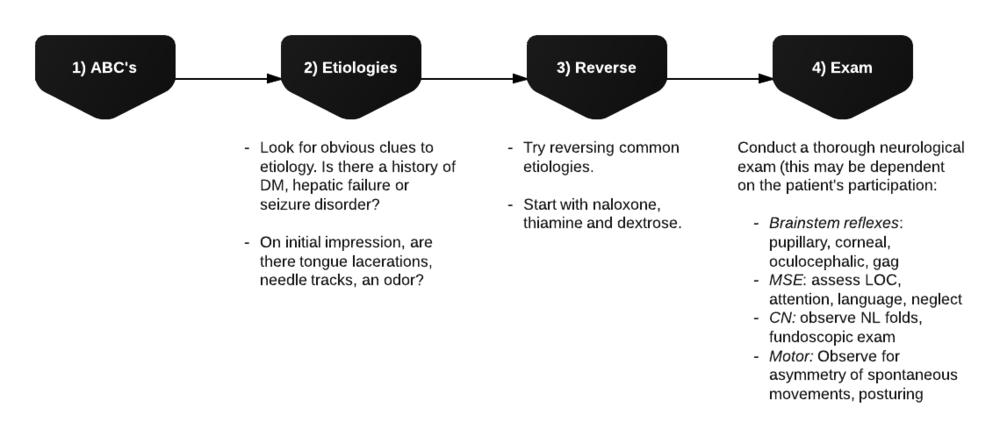
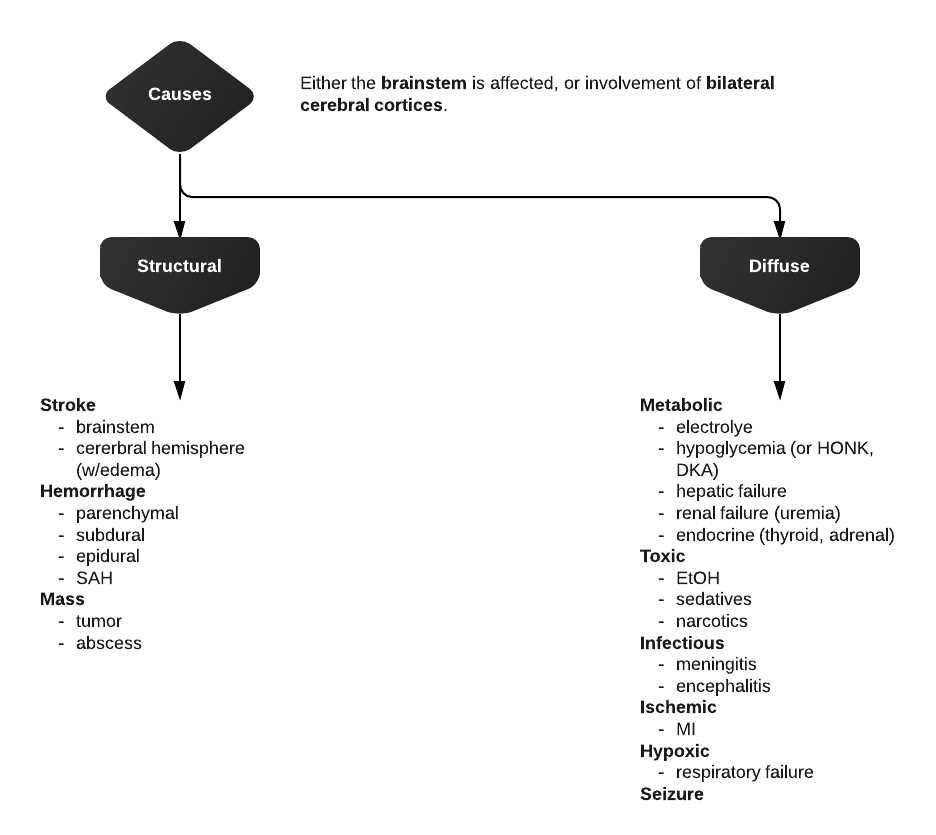
Differential Diagnosis of Altered Mental Status

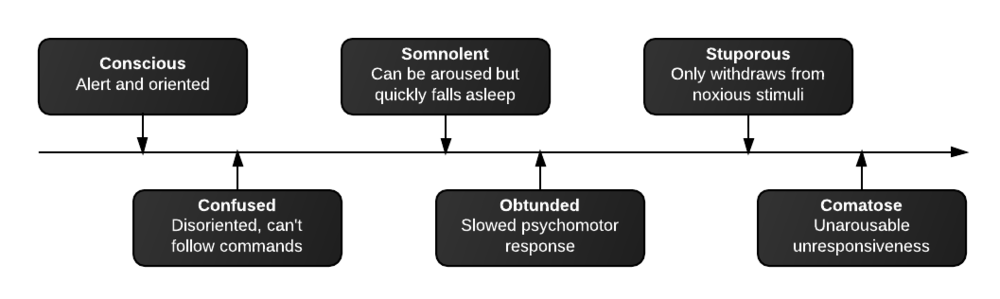
Levels of consciousness

There are different levels of consciousness, they are named in the diagram below but are better described by the characteristics observed.
Electrolytes Abnormalities; Hypernatremia, Hyponatremia, Hypokalemia, Hyperkalemia

Initial assessment

Electrolytes Abnormalities; Hypernatremia, Hyponatremia, Hypokalemia, Hyperkalemia

Differential Diagnosis for Altered Mental Status
Electrolytes Abnormalities; Hypernatremia, Hyponatremia, Hypokalemia, Hyperkalemia

References

Doctor visit helper

Prepare before seeing a doctor

A simple rural-patient checklist to help you explain symptoms clearly, ask better questions, and avoid unsafe self-treatment.

Safety note: This is not a prescription or diagnosis. For severe symptoms, pregnancy danger signs, children with serious illness, chest pain, breathing difficulty, stroke-like weakness, or major injury, seek urgent care.

Which doctor may help?

Start with a registered doctor or the nearest qualified health center.

What to tell the doctor

  • Write when the problem started and how it changed.
  • Bring old prescriptions, investigation reports, and current medicines.
  • Write allergies, pregnancy status, diabetes, kidney/liver disease, and major past illnesses.
  • Bring one family member if the patient is weak, elderly, confused, or a child.

Questions to ask

  • What is the most likely cause of my symptoms?
  • Which danger signs mean I should go to hospital quickly?
  • Which tests are necessary now, and which can wait?
  • How should I take medicines safely and what side effects should I watch for?
  • When should I come for follow-up?

Tests to discuss

  • Vital signs: temperature, pulse, blood pressure, oxygen saturation
  • Basic physical examination by a clinician
  • CBC, urine test, blood sugar, or imaging only when clinically needed

Avoid these mistakes

  • Do not use antibiotics, steroid tablets/injections, or strong painkillers without proper medical advice.
  • Do not hide pregnancy, kidney disease, ulcer, allergy, or blood thinner use.
  • Do not delay emergency care when danger signs are present.

Medicine safety and first-aid guide

This section is for patient education only. It does not replace a doctor, pharmacist, or emergency care.

Safe first steps

  • Avoid heavy lifting, sudden bending, and prolonged bed rest.
  • Use comfortable posture and gentle movement as tolerated.
  • Discuss physiotherapy, X-ray, or MRI only when clinically needed.

OTC medicine safety

  • For mild back pain, pain-relief medicine may be discussed with a doctor or pharmacist.
  • Avoid repeated painkiller use if you have kidney disease, stomach ulcer, uncontrolled blood pressure, or are taking blood thinners.

Avoid these mistakes

  • Do not start antibiotics without a proper medical decision.
  • Do not use steroid tablets or injections casually for quick relief.
  • Do not delay emergency care because of home remedies.

Get urgent help if

  • Back pain with leg weakness, numbness around private area, loss of urine/stool control, fever, cancer history, or major injury needs urgent care.
Medicine names, dose, and timing must be decided by a qualified clinician or pharmacist after checking age, pregnancy, allergy, other diseases, and current medicines.

For rural patients and family caregivers

Patient health record and symptom diary

Write your symptoms, medicines already taken, test results, and questions before visiting a doctor. This note stays on your device unless you print or copy it.

Doctor to discuss: Medicine doctor / pediatrician for children / qualified clinician
Tests to discuss with doctor
  • Temperature chart and hydration assessment
  • CBC with platelet count if fever persists or dengue/other infection is possible
  • Urine test, malaria/dengue tests, chest evaluation, or blood culture only when clinically indicated
Questions to ask
  • What is the most likely cause of my symptoms?
  • Which warning signs mean I should go to emergency care?
  • Which tests are really needed now?
  • Which medicines are safe for my age, pregnancy status, allergy, kidney/liver/stomach condition, and current medicines?
  • Do I need antibiotics, or is this more likely viral?

Emergency warning signs such as chest pain, severe breathing difficulty, sudden weakness, confusion, severe dehydration, major injury, or loss of bladder/bowel control need urgent medical care. Do not wait for online information.

Safe pathway to proper treatment

Care roadmap for: Electrolytes Abnormalities; Hypernatremia, Hyponatremia, Hypokalemia, Hyperkalemia

Use this simple roadmap to understand the next safe steps. It is educational and does not replace examination by a doctor.

Go to emergency care if you notice:
  • Severe or rapidly worsening symptoms
  • Breathing difficulty, chest pain, fainting, confusion, severe weakness, major injury, or severe dehydration
Doctor / service to discuss: Qualified healthcare provider; specialist depends on symptoms and examination.
  1. Step 1

    Check danger signs first

    If danger signs are present, seek emergency care and do not wait for online information.

  2. Step 2

    Record the symptom story

    Write when symptoms started, severity, medicines already taken, allergies, pregnancy status, and test results.

  3. Step 3

    Visit a qualified clinician

    A doctor, nurse, or qualified healthcare provider can examine you and decide which tests or treatment are needed.

  4. Step 4

    Do only useful tests

    Do tests after clinical assessment. Avoid unnecessary tests, random antibiotics, or repeated medicines without diagnosis.

  5. Step 5

    Follow up and return early if worse

    If symptoms worsen, new warning signs appear, or treatment is not helping, return for review quickly.

Rural patient practical tips
  • Take a written symptom diary and all previous prescriptions/test reports.
  • Do not hide medicines already taken, even herbal or over-the-counter medicines.
  • Ask which warning signs mean urgent referral to hospital.

This roadmap is for education. A real diagnosis and treatment plan requires history, examination, and clinical judgment.

RX Patient Help

Ask a health question safely

Write your symptom story. A health professional or site editor can review it before any answer is prepared. This box is not for emergency care.

Emergency first: Severe chest pain, breathing trouble, unconsciousness, stroke signs, severe injury, heavy bleeding, or rapidly worsening symptoms need urgent local medical care now.

Frequently Asked Questions

Is this article a replacement for a doctor?

No. It is educational content only. Patients should consult a qualified clinician for diagnosis and treatment.

When should I seek urgent care?

Seek urgent care for severe symptoms, rapidly worsening condition, breathing difficulty, severe pain, neurological changes, or any emergency warning sign.

References

Add references, clinical guidelines, textbooks, journal articles, or trusted medical sources here. You can edit this area from the RX Article Professional Blocks panel.