
Contraception is the prevention of pregnancy. Contraception, or birth control, also allows couples to plan the timing of pregnancy. Some methods can also protect against infections. Choosing a particular method of birth control depends on many factors, including a woman’s overall health, age, frequency of sexual activity, number of sexual partners, desire to have children in the future, and family medical history. Individuals should work with their health care provider to choose a method that is best for them. It is also important to discuss birth control methods with one’s sexual partner.
What are the different types of contraception?
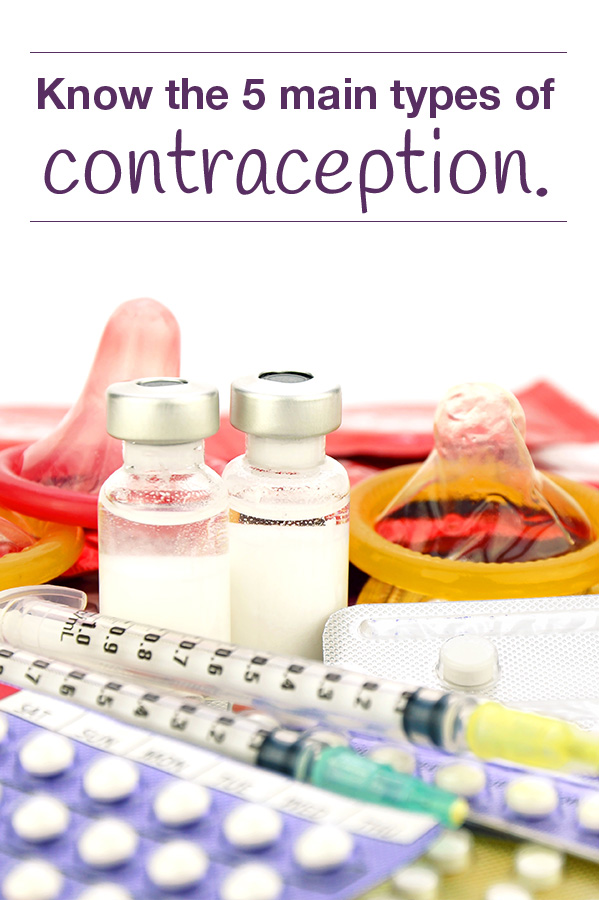
There are many different types of contraception, but not all types are appropriate for all situations. The most appropriate method of birth control depends on an individual’s overall health, age, frequency of sexual activity, number of sexual partners, desire to have children in the future, and family history of certain diseases.
Intrauterine Methods
An intrauterine device (IUD), also known as an intrauterine system (IUS), is a small, T-shaped device that is inserted into the uterus to prevent pregnancy. A health care provider inserts the device. An IUD can remain in place and function effectively for many years at a time. After the recommended length of time, or when the woman no longer needs or desires contraception, a health care provider removes or replaces the device.
- A hormonal IUD or IUS releases a progestin hormone (levonorgestrel) into the uterus.3 The released hormone causes thickening of the cervical? mucus, inhibits sperm from reaching or fertilizing the egg, thins the uterine lining, and may prevent the ovaries from releasing eggs. The failure rate of a hormonal IUS is less than 1%; however, a small percentage of women may experience expulsion of the device and have to have it reinserted.3 Some research also suggests that these IUDs maintain their effectiveness up to a year beyond their recommended use period.4 This method may also be used to treat heavy menstrual bleeding because the hormone often reduces or eliminates uterine bleeding.
- A copper IUD prevents sperm from reaching and fertilizing the egg, and it may prevent the egg from attaching in the womb.3 If fertilization of the egg does occur, the physical presence of the device prevents the fertilized egg from implanting into the lining of the uterus. The failure and expulsion/reinsertion rates of a copper IUD is similar to those of a hormonal IUD.3 Copper IUDs may remain in the body for 10 years.3 A copper IUD is not recommended for women who may be pregnant, have pelvic infections or had uterine perforations during previous IUD insertions. It also is not recommended for women who have cervical? cancer or cancer of the uterus, unexplained vaginal bleeding, or pelvic tuberculosis. Currently, ParaGard® is the only FDA-approved copper IUD.
Implants
Implants are implantable rods. Each rod is matchstick-sized, flexible, and plastic. The method has a failure rate of less than 1%.3 A physician surgically inserts the rod under the skin of the woman’s upper arm.
The rod releases a progestin and can remain implanted for up to 5 years. Currently, Implanon and Nexplanon, which release etonogestrel, are the only implantable rods available in the United States. A two-rod method, Jadelle®, which releases levonorgestrel, is FDA approved but not currently distributed in America. A new levonorgestrel-releasing, two-rod method, Sino-implant (II)®, is in clinical development.
Short-Acting Hormonal Methods
Hormonal methods of birth control use hormones to regulate or stop ovulation and prevent pregnancy. Ovulation is the biological process in which the ovary releases an egg, making it available for fertilization. Hormones can be introduced into the body through various methods, including pills, injections, skin patches, transdermal gels, vaginal rings, intrauterine systems, and implantable rods. Depending on the types of hormones that are used, these methods can prevent ovulation; thicken cervical? mucus, which helps block sperm from reaching the egg; or thin the lining of the uterus. Health care providers prescribe and monitor hormonal contraceptives.
Short-acting hormonal methods (e.g., injectables, pills, patches, rings) are highly effective if used perfectly, but in typical use, they have a range of failure rates.
- Injectable birth control. This method involves the injection of a progestin, Depo-Provera (depot medroxyprogesterone acetate [DMPA]), given in the arm or buttocks once every 3 months.5 This method of birth control can cause a temporary loss of bone density, particularly in adolescents. However, this bone loss is generally regained after discontinuing the use of DMPA. Most patients using injectable birth control should eat a diet rich in calcium and vitamin D or take vitamin supplements while using this medication. A new self-injectable formulation of DMPA, Sayana® Press, is approved in the United Kingdom and is expected to be approved more widely in the near future. This subcutaneous injectable product has a lower amount of hormone and may be more acceptable for some users.
- Progestin-only pills (POPs). A woman takes one pill daily, preferably at the same time each day. POPs may interfere with ovulation or with sperm function. POPs thicken cervical? mucus, making it difficult for sperm to swim into the uterus or to enter the fallopian tube. POPs alter the normal cyclical changes in the uterine lining and may result in unscheduled or breakthrough bleeding. These hormones do not appear to be associated with an increased risk of blood clots.
Combined Hormonal Methods
Combined hormonal methods contain a synthetic estrogen (ethinyl estradiol) and one of the many progestins approved in the United States. All of the products work by inhibiting ovulation and thickening cervical? mucus. The combined estrogen/progestin drugs can be delivered by pills, a patch, or a vaginal ring. The combined hormonal methods have some medical risks, such as blood clots, that are associated with the synthetic estrogen in the product. These risks have not been observed with progestin-only hormonal methods such as injectable birth control, POPs, or hormonal LARCs. Your health care provider can discuss your risk factors and help you select the most appropriate contraceptive method for you.
- Combined oral contraceptives (COCs, “the pill”). COCs contain a synthetic estrogen and a progestin, which functions to inhibit ovulation. A woman takes one pill daily, preferably at the same time each day. Many types of oral contraceptives are available, and a health care provider helps to determine which type best meets a woman’s needs.
- Contraceptive patch. This is a thin, plastic patch that sticks to the skin and releases hormones through the skin into the bloodstream. The patch is placed on the lower abdomen, buttocks, outer arm, or upper body. A new patch is applied once a week for 3 weeks, and no patch is used on the fourth week to enable menstruation.3 Currently, Ortho Evra® is the only patch that is FDA approved.
- Vaginal ring. The ring is thin, flexible, and approximately 2 inches in diameter. It delivers a combination of ethinyl estradiol and a progestin. The ring is inserted into the vagina, where it continually releases hormones for 3 weeks. The woman removes it for the fourth week and reinserts a new ring 7 days later. Risks for this method of contraception are similar to those for the combined oral contraceptive pills. A vaginal ring may not be recommended for women with certain health conditions, including high blood pressure, heart disease, or certain types of cancer.6 Currently, the NuvaRing® is the only FDA-approved vaginal ring. A new contraceptive vaginal ring that can be used for 13 cycles is under clinical development.
Designed to prevent sperm from entering the uterus, barrier methods are removable and may be an option for women who cannot use hormonal methods of contraception. Failure rates for barrier methods differ depending on the method.7
Types of barrier methods that do not require a health care provider visit include the following:
- Male condoms. This condom is a thin sheath that covers the penis to collect sperm and prevent it from entering the woman’s body. Male condoms are generally made of latex or polyurethane, but a natural alternative is lambskin (made from the intestinal membrane of lambs). Latex or polyurethane condoms reduce the risk of spreading sexually transmitted diseases (STDs). Lambskin condoms do not prevent STDs. Male condoms are disposed of after a single use.
- Female condoms. These are thin, flexible plastic pouches. A portion of the condom is inserted into a woman’s vagina before intercourse to prevent sperm from entering the uterus. The female condom also reduces the risk of STDs. Female condoms are disposed of after a single use.
- Contraceptive sponges. These are soft, disposable, spermicide-filled foam sponges. One is inserted into the vagina before intercourse.8 The sponge helps block sperm from entering the uterus, and the spermicide also kills the sperm cells. The sponge should be left in place for at least 6 hours after intercourse and then removed within 30 hours after intercourse. Currently, the Today® Vaginal Contraceptive Sponge is the only sponge approved by the FDA.
- Spermicides. A spermicide can kill sperm cells. A spermicide can be used alone or in combination with a diaphragm or cervical? cap. The most common spermicidal agent is a chemical called nonoxynol-9 (N-9). It is available in several concentrations and forms, including foam, jelly, cream, suppository, and film. A spermicide should be inserted into the vagina close to the uterus no more than 30 minutes prior to intercourse and left in place 6 to 8 hours after intercourse to prevent pregnancy. Spermicides do not prevent the transmission of STDs and may cause allergic reactions or vaginitis (pronounced vaj-uh-NAHY-tis).9
Methods that require a health care provider visit include the following:
- Diaphragms. Each diaphragm is a shallow, flexible cup made of latex or soft rubber that is inserted into the vagina before intercourse, blocking sperm from entering the uterus. Spermicidal cream or jelly should be used with a diaphragm. The diaphragm should remain in place for 6 to 8 hours after intercourse to prevent pregnancy, but it should be removed within 24 hours. Traditional latex diaphragms must be the correct size to work properly, and a health care provider can determine the proper fit.
A diaphragm should be replaced after 1 or 2 years. Women also need to be measured for a new diaphragm after giving birth, having pelvic surgery, or gaining or losing more than 15 pounds.10 Newer diaphragms, such as Caya®, are designed to fit most women and do not require fitting by a health care provider.
- Cervical? caps. These are similar to diaphragms but are smaller and more rigid. The cervical? cap is a thin silicone cup that is inserted into the vagina before intercourse to block sperm from entering the uterus. As with a diaphragm, the cervical cap should be used with spermicidal cream or jelly. The cap must remain in place for 6 to 8 hours after intercourse to prevent pregnancy, but it should be removed within 48 hours. Cervical caps come in different sizes, and a health care provider determines the proper fit.3 With proper care, a cervical? cap can be used for 2 years before replacement.2 Currently, FemCap is the only cervical? cap approved by the FDA.
Emergency contraception can be used after unprotected intercourse or if a condom breaks.
- Copper IUD. The copper IUD is the most effective method of emergency contraception. The device can be inserted within 120 hours of unprotected intercourse. The method is nearly 100% effective at preventing pregnancy and has the added benefit of providing a highly effective method of contraception for as long as the device remains in place. There are very few contraindications to use of the copper IUD, and there are no issues related to weight or obesity associated with the effectiveness of the method.
- Emergency contraceptive pills (ECPs) are hormonal pills, taken either as a single dose or two doses 12 hours apart, that are intended for use in the event of unprotected intercourse. If taken prior to ovulation, the pills can delay or inhibit ovulation for at least 5 days to allow the sperm to become inactive. They also cause thickening of cervical? mucus and may interfere with sperm function. ECPs should be taken as soon as possible after semen exposure and should not be used as a regular contraceptive method. Pregnancy can occur if the pills are taken after ovulation or if the woman has unprotected sex in the same cycle.
Sterilization is a permanent form of birth control that either prevents a woman from getting pregnant or prevents a man from releasing sperm. A health care provider must perform the sterilization procedure, which usually involves surgery. These procedures usually are not reversible.
- A sterilization implant is a nonsurgical method for permanently blocking the fallopian (pronounced fuh-LOH-pee-uhn) tubes.11 A health care provider threads a thin tube through the vagina and into the uterus to place a soft, flexible insert into each fallopian tube. No incisions are necessary. During the next 3 months, scar tissue forms around the inserts and blocks the fallopian tubes so that sperm cannot reach an egg. After 3 months, a health care provider conducts tests to ensure that scar tissue has fully blocked the fallopian tubes. A backup method of contraception is used until the tests show that the tubes are fully blocked.
- Tubal ligation (pronounced TOO-buhl lahy-GEY-shuhn) is a surgical procedure in which a doctor cuts, ties, or seals the fallopian tubes. This procedure blocks the path between the ovaries and the uterus. The sperm cannot reach the egg to fertilize it, and the egg cannot reach the uterus.12
- Vasectomy (va-SEK-tuh-mee) is a surgical procedure that cuts, closes, or blocks the vas deferens (pronounced vas DEF-uh-renz). This procedure blocks the path between the testes and the urethra (yoo-REE-thruh).13 The sperm cannot leave the testes and cannot reach the egg. It can take as long as 3 months for the procedure to be fully effective. A backup method of contraception is used until tests confirm that there is no sperm in the semen.
- Department of Health and Human Services, Office on Women’s Health. (2012). Birth control methods fact sheet. Retrieved September 8, 2016, from http://www.womenshealth.gov/publications/our-publications/fact-sheet/birth-control-methods.html (PDF 136 KB)
- Planned Parenthood Federation of America, Inc. (2014). Birth control. Retrieved February 23, 2016, from http://www.plannedparenthood.org/health-topics/birth-control-4211.htm

- U.S. Food and Drug Administration. (2015). Birth control: Medicines to help you. Retrieved February 17, 2016, from http://www.fda.gov/forconsumers/byaudience/forwomen/freepublications/ucm313215.htm
- Williams, D. D. (2015). IUD, implant contraception effective beyond FDA-approved use. Retrieved June 20, 2016, from https://source.wustl.edu/2015/02/iud-implant-contraception-effective-beyond-fdaapproved-use
- National Center for Biotechnology Information. (2010). Medroxyprogesterone injection. Retrieved February 23, 2016, from https://medlineplus.gov/druginfo/meds/a604039.html
- Centers for Disease Control and Prevention. (2013). U.S. Selected Practice Recommendations for Contraceptive Use, 2013: Adapted from the World Health Organization Selected Practice Recommendations for Contraceptive Use, 2nd Edition. Morbidity and Mortality Weekly Report, 62(RR05), 1–46. Retrieved September 12, 2016, from http://www.cdc.gov/mmwr/preview/mmwrhtml/rr6205a1.htm.
- Trussell, J. (2011). Contraceptive failure in the United States. Contraception, 83(5), 397–404. Retrieved September 12, 2016, from http://www.ncbi.nlm.nih.gov/pubmed/21477680
- Mayer Laboratories, Inc. (2012). Product details. Retrieved June 4, 2012, from http://www.todaysponge.com/about.html
- American College of Obstetricians and Gynecologists. (2014). Barrier methods of contraception. Retrieved February 23, 2016, from https://www.acog.org/~/media/For%20Patients/faq022.pdf?dmc=1&ts=20120604T212254575 (PDF 86 KB)
- Allen, R. E. (2004). Diaphragm fitting. American Family Physician, 69(1), 97–100.
- Conceptus. (2012). What is Essure? Retrieved February 23, 2016, from https://www.essure.com/
- National Library of Medicine, MedlinePlus. (2013). Tubal ligation. Retrieved February 23, 2016, from http://www.nlm.nih.gov/medlineplus/tuballigation.html
- National Library of Medicine, MedlinePlus. (2016). Vasectomy. Retrieved February 23, 2016, from http://www.nlm.nih.gov/medlineplus/ency/article/002995.htm
- Department of Health and Human Services, Office on Women’s Health. (2012). Birth control methods fact sheet. Retrieved September 8, 2016, from http://www.womenshealth.gov/publications/our-publications/fact-sheet/birth-control-methods.html (PDF 136 KB)
- Planned Parenthood Federation of America, Inc. (2014). Birth control. Retrieved February 23, 2016, from http://www.plannedparenthood.org/health-topics/birth-control-4211.htm
- U.S. Food and Drug Administration. (2015). Birth control: Medicines to help you. Retrieved February 17, 2016, from http://www.fda.gov/forconsumers/byaudience/forwomen/freepublications/ucm313215.htm
- Williams, D. D. (2015). IUD, implant contraception effective beyond FDA-approved use. Retrieved June 20, 2016, from https://source.wustl.edu/2015/02/iud-implant-contraception-effective-beyond-fdaapproved-use
- National Center for Biotechnology Information. (2010). Medroxyprogesterone injection. Retrieved February 23, 2016, from https://medlineplus.gov/druginfo/meds/a604039.html
- Centers for Disease Control and Prevention. (2013). U.S. Selected Practice Recommendations for Contraceptive Use, 2013: Adapted from the World Health Organization Selected Practice Recommendations for Contraceptive Use, 2nd Edition. Morbidity and Mortality Weekly Report, 62(RR05), 1–46. Retrieved September 12, 2016, from http://www.cdc.gov/mmwr/preview/mmwrhtml/rr6205a1.htm.
- Trussell, J. (2011). Contraceptive failure in the United States. Contraception, 83(5), 397–404. Retrieved September 12, 2016, from http://www.ncbi.nlm.nih.gov/pubmed/21477680
- Mayer Laboratories, Inc. (2012). Product details. Retrieved June 4, 2012, from http://www.todaysponge.com/about.html
- American College of Obstetricians and Gynecologists. (2014). Barrier methods of contraception. Retrieved February 23, 2016, from https://www.acog.org/~/media/For%20Patients/faq022.pdf?dmc=1&ts=20120604T212254575 (PDF 86 KB)
- Allen, R. E. (2004). Diaphragm fitting. American Family Physician, 69(1), 97–100.
- Conceptus. (2012). What is Essure? Retrieved February 23, 2016, from https://www.essure.com/
- National Library of Medicine, MedlinePlus. (2013). Tubal ligation. Retrieved February 23, 2016, from http://www.nlm.nih.gov/medlineplus/tuballigation.html
- National Library of Medicine, MedlinePlus. (2016). Vasectomy. Retrieved February 23, 2016, from http://www.nlm.nih.gov/medlineplus/ency/article/002995.htm

