
12 Inspirational Speeches

Patient Tools

Read, save, and share this guide

Use these quick tools to make this medical article easier to read, print, save, or share with a family member.

Patient Mode

Understand this article easily

Switch between simple English and easy Bangla patient notes. This is for education and does not replace a doctor consultation.

The most valuable thing an experienced person has is experience. People make mistakes, learn from them, and adapt their life around them to become better people. Those people would then tell tales to others to help teach those lessons so that others would not have...

For severe symptoms, danger signs, pregnancy, child illness, or sudden worsening, seek urgent medical care.

বাংলা রোগী নোট এখনো যোগ করা হয়নি। পোস্ট এডিটরে “RX Bangla Patient Mode” বক্স থেকে সহজ বাংলা সারাংশ যোগ করুন।

এই তথ্য শিক্ষা ও সচেতনতার জন্য। এটি ডাক্তারি পরীক্ষা, রোগ নির্ণয় বা প্রেসক্রিপশনের বিকল্প নয়।

Article Summary

The most valuable thing an experienced person has is experience. People make mistakes, learn from them, and adapt their life around them to become better people. Those people would then tell tales to others to help teach those lessons so that others would not have to make the same mistakes. People still tell these stories today but in a slightly different format — they use...

Key Takeaways

  • This article explains 1. JK Rowling teaches us to not fear failure no matter how bad things become in simple medical language.
  • This article explains 2. Steve Jobs teaches us to never settle in simple medical language.
  • This article explains 3. Admiral William H McRaven teaches us to make our beds every day in simple medical language.
  • This article explains 4. Author David Foster Wallace teaches us that we’re a part of a greater existence in simple medical language.
Educational health guideWritten for patient understanding and clinical awareness.
Reviewed content workflowUse writer and reviewer profiles for stronger trust.
Emergency safety firstUrgent warning signs are highlighted below.

Seek urgent medical care if you notice

These warning signs are general safety guidance. Local emergency numbers and clinical judgment should always come first.

  • Severe symptoms, breathing difficulty, fainting, confusion, or rapidly worsening illness.
  • New weakness, severe pain, high fever, or symptoms after a serious injury.
  • Any symptom that feels urgent, unusual, or unsafe for the patient.
1

Emergency now

Use emergency care for severe, sudden, rapidly worsening, or life-threatening symptoms.

2

See a doctor

Book a professional medical evaluation if symptoms persist, worsen, recur often, affect daily activities, or occur in a high-risk patient.

3

Learn safely

Use this article to understand possible causes, tests, treatment options, prevention, and questions to ask your clinician.

Before reading

RX Patient Tools

Use these quick guides before reading the article, or return to them when you need help preparing questions for a doctor.

Start here Choose the right pathway for symptoms, reports, medicines, or urgent warning signs. Disease article roadmap Read this topic step by step: meaning, symptoms, warning signs, diagnosis, treatment, prevention, and follow-up. Treatment planner Prepare questions about treatment choices, benefits, risks, side effects, and follow-up. Family & caregiver guide Organize symptoms, reports, medicines, questions, and follow-up safely. Nutrition & diet guide Prepare food, hydration, supplement, and medicine-timing questions safely. Prevention guide Organize risk factors, protective habits, screening, and warning signs. Recovery guide Prepare a safe plan for activity, rehabilitation, warning signs, and follow-up.
Definition

The most valuable thing an experienced person has is experience. People make mistakes, learn from them, and adapt their life around them to become better people. Those people would then tell tales to others to help teach those lessons so that others would not have to make the same mistakes.

People still tell these stories today but in a slightly different format — they use speeches to express their experiences. Here are some valuable life lessons you can learn from some of the greatest inspirational speeches:

1. JK Rowling teaches us to not fear failure no matter how bad things become

12 Inspirational Speeches

It is a well-known fact that JK Rowling’s now-famous Harry Potter series was turned down by several publishers before it was finally picked up. Those publishers are likely kicking themselves in the pants right now. However, before that, JK Rowling was in a fairly dire situation and was on the brink of failure. Despite being turned down time and time again, she kept trying. Her efforts paid off. Harry Potter is now a ubiquitous character in today’s world culture. Despite falling over and over again, Rowling kept trying and fulfilled her dreams. You can watch her deliver some valuable life lessons in her Harvard commencement speech video above.

2. Steve Jobs teaches us to never settle

12 Inspirational Speeches

Steve Jobs had a fairly tumultuous life. He co-founded Apple, was kicked out of the company, came back, and then re-defined the mobile phone space with the iPhone. Even if iPhones aren’t the rage they once were, their iconic value is forever written in stone. One thing Jobs never did was settle. He lived life on his terms and was rewarded for it by being dubbed one of the most revolutionary voices in the technology of our time. In the Stanford commencement speech above, Jobs explains how you should never settle for what someone else wants out of your life. It’s your life and you should do what you want with it.

3. Admiral William H McRaven teaches us to make our beds every day
12 Inspirational Speeches

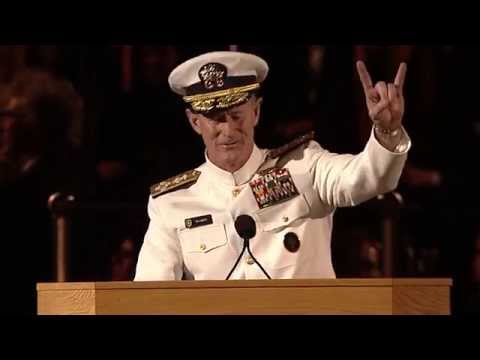
Anyone who has gone through the basic training of military service will tell you it’s pretty difficult. However, every seemingly obnoxious step is a life lesson in disguise. This even applies to flawlessly making one’s bed every single morning. As Admiral William H McRaven teaches us, recruits are taught to make their beds every morning to remind them that even the little things in life matter. After all, how can you be expected to handle the biggest obstacles in your life if you can’t even handle the small and the mundane like making your bed every day? You can watch the entire speech in the video above.

4. Author David Foster Wallace teaches us that we’re a part of a greater existence
12 Inspirational Speeches

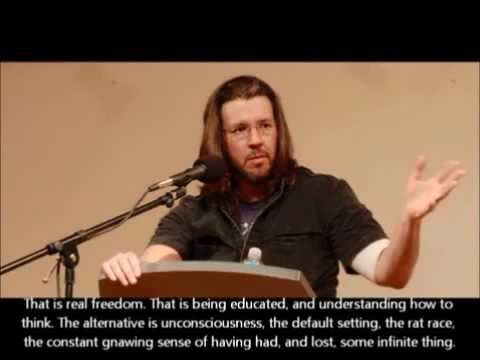
David Foster Wallace found fame in 1987 with his book The Broom of the System. Nearly 20 years later in 2005, he gave a commencement speech at Kenyon College that is worth listening to at least once. In his speech, he reminds us that was are but a part of a huge, dynamic, ever-changing interaction of life forms. To truly experience life, we need to leave our bubbles and interact with others even if it’s unpleasant. Wallace states, “It will be within your power to experience a crowded, hot, slow, consumer-hell type situation as not only meaningful but sacred, on fire with the same force that made the stars: love, fellowship, the mystical oneness of all things deep down.” You can watch the whole speech above.

5. Stephen Colbert teaches us that life isn’t something you can plan
12 Inspirational Speeches

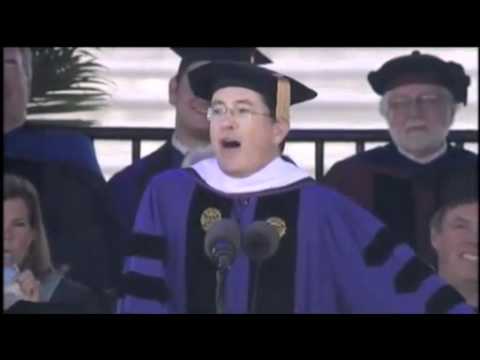
If there is anyone who knows about improvisation, it’s comedian Stephen Colbert. In his commencement speech at Northwestern University in 2011, Colbert reminded students that you cannot plan life. Life throws too many curve balls. There are too many unpredictable things that can happen. The most successful and happy people are not those who have a plan, but those who can roll with the punches and overcome the obstacles. He goes on to cite his time as an improv comic and how all of the actors working together to create a scene out of literally nothing are all working for one another. He states that like improv comedy, you don’t know what happens next in life. You just make it up as you go along. You can watch the whole speech above.

6. Kurt Vonnegut teaches us to not sweat the small stuff

12 Inspirational Speeches

Some of our younger readers may not know Kurt Vonnegut. He is a famous author that found his success during the middle of the last century. In 1999, Kurt Vonnegut was at Agnes Scott College giving a commencement speech. During the speech, he mentioned that to live a more complete life, people needed to let stuff go. He argued that you cannot reasonably expect others to forgive you for your mistakes if you cannot forgive others and that you cannot live life fostering a personal vendetta against others.

7. Neil Gaiman teaches us that success can be distracting.

Neil Gaiman is most known for his work in several literary mediums including journalism, comic books, and novels. In 2012, Gaiman gave a speech at the University of the Arts where he talked about success. He stated that when you become successful, you may be unintentionally swayed from performing the actions that made you successful. Gaiman recalled his early success and how he felt pressured to answer emails all day long and it prevented him from writing as much as he wanted. So he reminds us to keep doing what makes us successful and to not let others get in the way.

8. Barack Obama’s life lessons teach us that you really can beat the odds

12 Inspirational Speeches

We know that not everyone likes Barack Obama but that doesn’t mean the man can’t deliver an amazing speech. In this 2004 keynote speech at the Democratic National Convention, Obama reminds us that it is possible to beat the odds and become something great. He cites his upbringing as an example and how he was never expected to make it as far as he did. It shows that when you’re passionate about something and when you try hard enough, you can accomplish almost anything. It’s important to note that Obama talks about this in 2004 and would become the President of the United States just four years later.

9. Robin Roberts reminds us that we each dare to overcome challenges

12 Inspirational Speeches

Robin Roberts knows a thing or two about courage. She is a breast cancer survivor and has done battle with a rare blood disease called myelodysplastic syndrome. Her sister once had to donate bone marrow just so Robin could remain alive. She was also ESPN’s first African American broadcaster in the early 1990s. She’s a woman who works in an industry predominately populated by men. So when Robin Roberts takes the stage at the ESPYs and delivers a short lecture on having courage, we would do well to listen!

10. Martin Luther King Jr. reminds us that some things are more important than success
12 Inspirational Speeches

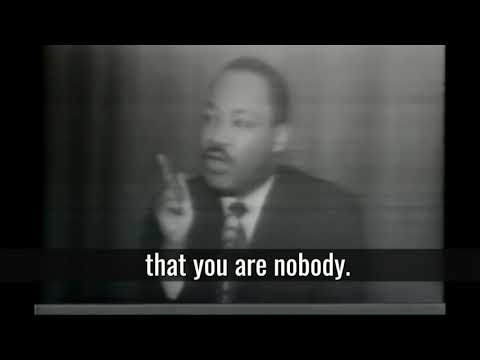
We all know the story of Martin Luther King Jr. So much so that we have a day of the year to celebrate him as a national holiday here in the United States. Most of us have listened to segments of his famous speech where he told the world about a dream he had. The main message of his famous speech is that racial inequality needed to end and he was right. However, he also reminds us that there are things that are more important than success such as equal rights and treating each other with respect and kindness. If you somehow made it through school without watching the famous speech, we’ve got it linked above.

11. Jim Carrey reminds us that even if you keep it safe, you can still fail so you might as well go big

12 Inspirational Speeches

Jim Carrey delivered a commencement speech at Maharishi University recently that went viral. You may know it as the one-minute video that will change your life. They weren’t lying but they weren’t telling the whole truth because the speech was 28 minutes long. During the speech, Carrey talks about his father who wanted to be a comedian but decided to take the safe route and become an accountant. As it turns out, his father was laid off and his family ended up poor anyway. With that, Carrey tells us that you can still end up failing even if you play it safe so you might as well swing for the fences and do what you want to do.

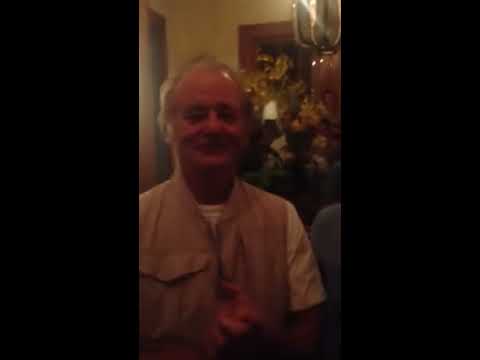
12. Bill Murray teaches us that it’s the hard times that determine if someone loves you
12 Inspirational Speeches

You may have heard the story about Bill Murray crashing someone’s bachelor party and delivering a speech. It turns out the speech was both short and fairly epic. During the speech, Bill Murray challenged the bachelors to travel around the world with the women they love and go to places that are difficult to go to and deal with. He says if you can get back to the United States and you still love each other, then you should get married right then and there. It’s a great message. It’s easy to love one another when times are good but do you still love each other when the times are bad? If so, that’s true love according to Bill Murray.

Final thoughts

Inspiration comes from everywhere and from anyone. Countless speeches and stories can teach us an incalculable number of life lessons.

All these speeches almost share the same message: Don’t be afraid to fail and keep trying.

Doctor visit helper

Prepare before seeing a doctor

A simple rural-patient checklist to help you explain symptoms clearly, ask better questions, and avoid unsafe self-treatment.

Safety note: This is not a prescription or diagnosis. For severe symptoms, pregnancy danger signs, children with serious illness, chest pain, breathing difficulty, stroke-like weakness, or major injury, seek urgent care.

Which doctor may help?

Orthopedic doctor, rheumatologist, or physiotherapist depending on cause.

What to tell the doctor

  • Write which joints hurt, swelling, morning stiffness duration, fever, injury, and walking difficulty.
  • Bring X-ray, uric acid, ESR/CRP, rheumatoid factor, or previous reports if available.

Questions to ask

  • Is this injury, osteoarthritis, rheumatoid arthritis, gout, infection, or another cause?
  • Which exercises, supports, or lifestyle changes are safe?
  • Do I need blood tests or X-ray?

Tests to discuss

  • Joint examination and range of motion
  • X-ray when chronic arthritis or injury is suspected
  • ESR/CRP, uric acid, rheumatoid tests when inflammatory arthritis is suspected

Avoid these mistakes

  • Do not ignore hot swollen joint with fever.
  • Avoid repeated steroid injections/tablets without a clear diagnosis and follow-up.

Medicine safety and first-aid guide

This section is for patient education only. It does not replace a doctor, pharmacist, or emergency care.

Safe first steps

  • Rest, drink safe water, and observe symptoms carefully.
  • Keep a written note of symptoms, duration, temperature, medicines already taken, and allergy history.
  • Seek medical care quickly if symptoms are severe, worsening, or unusual for the patient.

OTC medicine safety

  • For mild pain or fever, ask a registered pharmacist or doctor before using common over-the-counter pain/fever medicines.
  • Do not combine multiple pain medicines without advice, especially if you have kidney disease, liver disease, stomach ulcer, asthma, pregnancy, or take blood thinners.
  • Do not give adult medicines to children unless a qualified clinician advises it.

Avoid these mistakes

  • Do not start antibiotics without a proper medical decision.
  • Do not use steroid tablets or injections casually for quick relief.
  • Do not delay emergency care because of home remedies.

Get urgent help if

  • Severe symptoms, confusion, fainting, breathing difficulty, chest pain, severe dehydration, or sudden weakness need urgent medical care.
Medicine names, dose, and timing must be decided by a qualified clinician or pharmacist after checking age, pregnancy, allergy, other diseases, and current medicines.

For rural patients and family caregivers

Patient health record and symptom diary

Write your symptoms, medicines already taken, test results, and questions before visiting a doctor. This note stays on your device unless you print or copy it.

Doctor to discuss: Doctor / qualified healthcare provider
Tests to discuss with doctor
  • Basic vital signs: temperature, pulse, blood pressure, oxygen level if needed
  • Relevant blood, urine, imaging, or specialist tests only after clinical assessment
Questions to ask
  • What is the most likely cause of my symptoms?
  • Which warning signs mean I should go to emergency care?
  • Which tests are really needed now?
  • Which medicines are safe for my age, pregnancy status, allergy, kidney/liver/stomach condition, and current medicines?

Emergency warning signs such as chest pain, severe breathing difficulty, sudden weakness, confusion, severe dehydration, major injury, or loss of bladder/bowel control need urgent medical care. Do not wait for online information.

Safe pathway to proper treatment

Care roadmap for: 12 Inspirational Speeches

Use this simple roadmap to understand the next safe steps. It is educational and does not replace examination by a doctor.

Go to emergency care if you notice:
  • Severe or rapidly worsening symptoms
  • Breathing difficulty, chest pain, fainting, confusion, severe weakness, major injury, or severe dehydration
Doctor / service to discuss: Qualified healthcare provider; specialist depends on symptoms and examination.
  1. Step 1

    Check danger signs first

    If danger signs are present, seek emergency care and do not wait for online information.

  2. Step 2

    Record the symptom story

    Write when symptoms started, severity, medicines already taken, allergies, pregnancy status, and test results.

  3. Step 3

    Visit a qualified clinician

    A doctor, nurse, or qualified healthcare provider can examine you and decide which tests or treatment are needed.

  4. Step 4

    Do only useful tests

    Do tests after clinical assessment. Avoid unnecessary tests, random antibiotics, or repeated medicines without diagnosis.

  5. Step 5

    Follow up and return early if worse

    If symptoms worsen, new warning signs appear, or treatment is not helping, return for review quickly.

Rural patient practical tips
  • Take a written symptom diary and all previous prescriptions/test reports.
  • Do not hide medicines already taken, even herbal or over-the-counter medicines.
  • Ask which warning signs mean urgent referral to hospital.

This roadmap is for education. A real diagnosis and treatment plan requires history, examination, and clinical judgment.

RX Patient Help

Ask a health question safely

Write your symptom story. A health professional or site editor can review it before any answer is prepared. This box is not for emergency care.

Emergency first: Severe chest pain, breathing trouble, unconsciousness, stroke signs, severe injury, heavy bleeding, or rapidly worsening symptoms need urgent local medical care now.

Frequently Asked Questions

Is this article a replacement for a doctor?

No. It is educational content only. Patients should consult a qualified clinician for diagnosis and treatment.

When should I seek urgent care?

Seek urgent care for severe symptoms, rapidly worsening condition, breathing difficulty, severe pain, neurological changes, or any emergency warning sign.

References

Add references, clinical guidelines, textbooks, journal articles, or trusted medical sources here. You can edit this area from the RX Article Professional Blocks panel.
